
Pygmy Water-lily (Nymphaea tetragona)
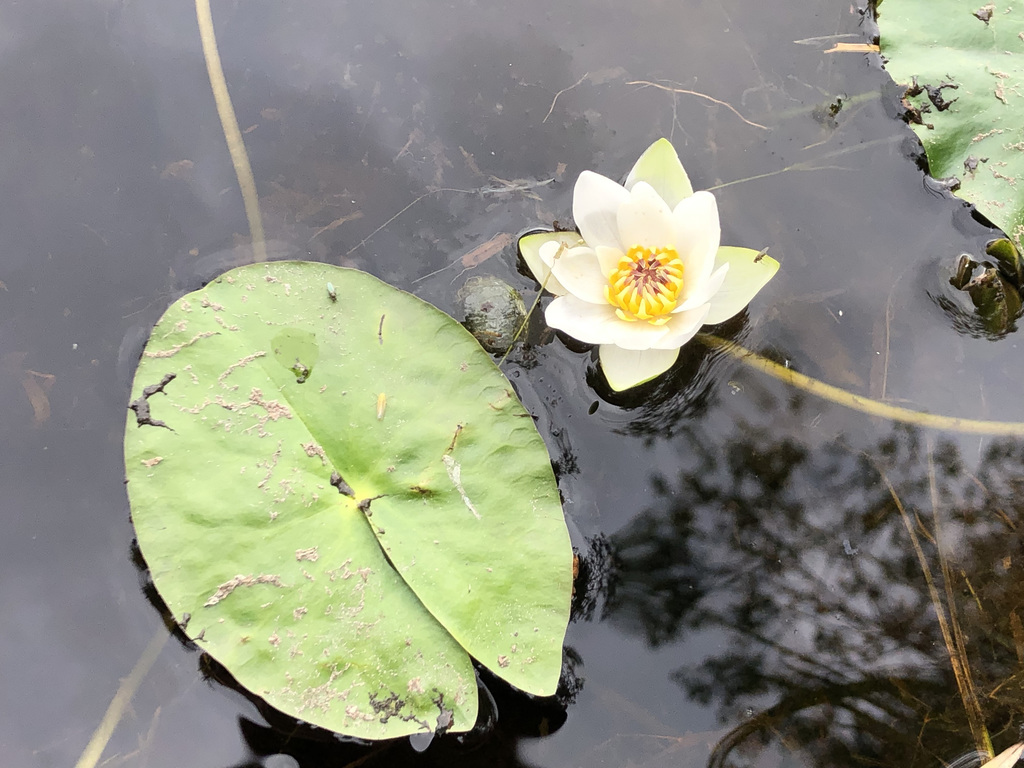
Nymphaea tetragona, known as Pygmy Water-lily or small white water-lily, is the smallest water-lily native to North America. Its floating leaves are only about 1 1/2 to 5 inches long, and its white, cup-shaped flowers, 1 1/2 to 3 inches across, open on the surface of cold, quiet ponds during the short northern summer. A square, four-angled base under the green sepals gives the species its scientific name.
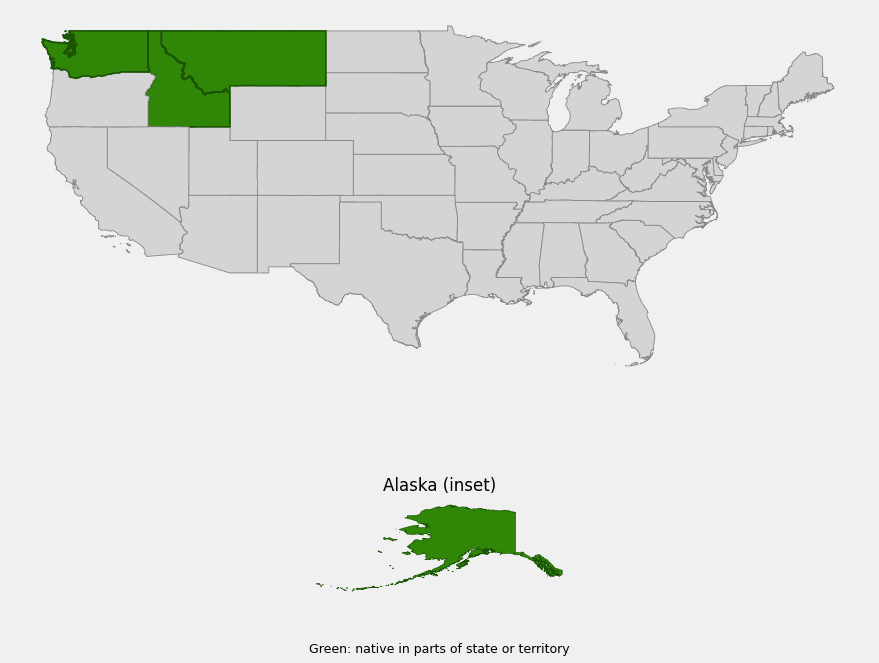
Pygmy water-lily is a boreal plant that ranges across northern Europe and Asia and, in North America, from Alaska across western and central Canada. In the United States it is native mainly to Alaska, where it grows in lakes and ponds of the Interior, Southcentral and the Kenai Peninsula. USDA also records it in northern Idaho, Montana and Washington; in Washington it is known only from historical records in Whatcom County.
In water gardens, this species is the parent of many popular dwarf hardy water-lilies suited to tubs and small ponds. This page covers how to identify the wild plant, its range, how it is grown, and its role in northern wetlands.
Identification
Pygmy water-lily is easy to recognize as a water-lily, but its small size and four-angled flower base separate it from the much larger American white water-lily.
Leaves
The floating leaves are oval to nearly round, about 1 1/4 to 5 inches long, with a deep, narrow notch where the stalk attaches. They are smooth and green above, often mottled with reddish-brown or purple when young, and green to dull purple beneath. The leaf stalks are smooth and arise from an upright, unbranched rhizome on the bottom.
Flowers
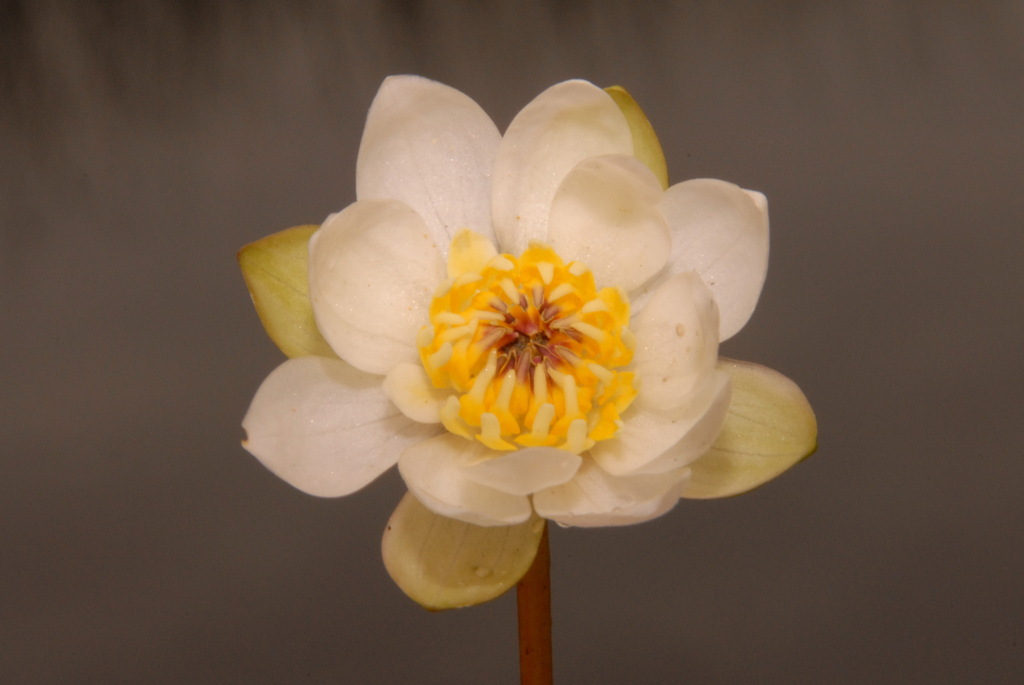
Single white flowers float on the water from June to August. They are about 1 1/4 to 3 inches across, with 4 green sepals and about 10 to 17 white petals around 30 to 70 yellow-orange stamens. The flowers open in the daytime and close in the late afternoon or evening, repeating for a few days. They have little or no fragrance.
The Four-angled Base
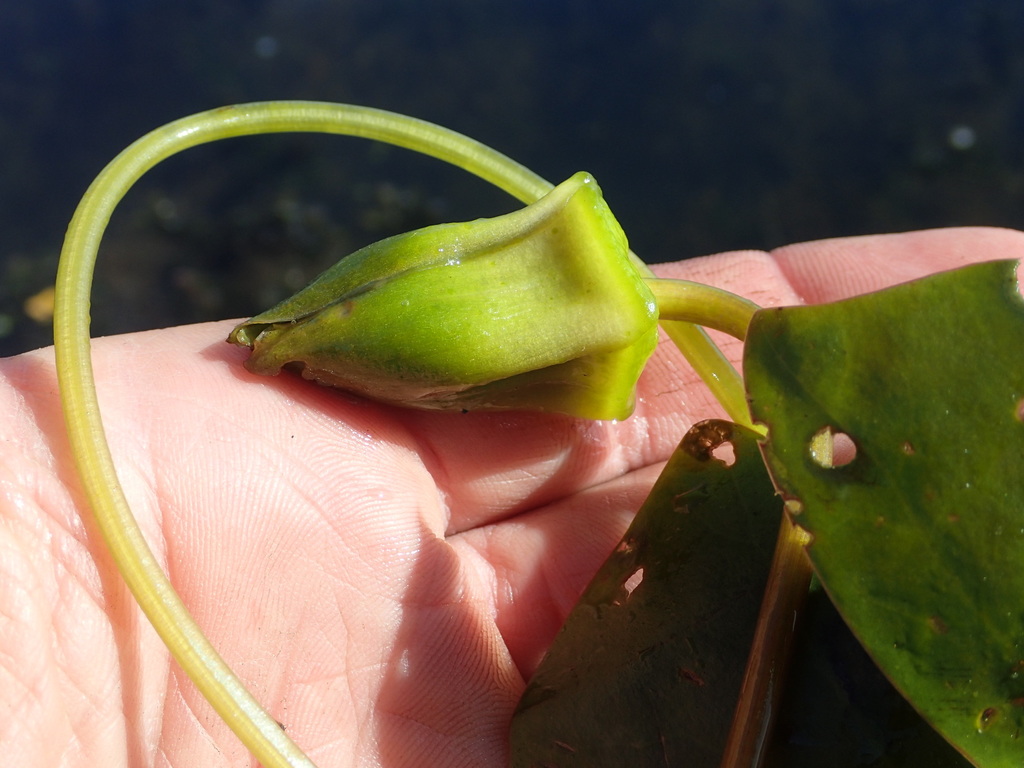
Look at the base of the flower: the four sepals attach along prominent ridges that form a distinct square (tetragon) on the receptacle. This is the most reliable feature for the species and is the meaning of tetragona.
Fruit & Seeds
After flowering, the stalk coils and pulls the developing fruit underwater, where it ripens. The fruit releases small, smooth, egg-shaped seeds, each about a tenth of an inch long, wrapped in a buoyant aril that keeps them afloat for a short time.
Similar Species
American White Water-lily (N. odorata) has much larger, fragrant flowers 3 to 6 inches across and leaves up to a foot wide, and lacks the square receptacle. Dwarf or Leiberg’s water-lily (N. leibergii), of the northern states and Canada, is very similar; it was long treated as part of pygmy water-lily and is separated by technical features of the stamens, stigma and seeds. Yellow pond-lilies such as Variegated Yellow Pond-lily have yellow, globe-shaped flowers.
Quick Facts
| Scientific Name | Nymphaea tetragona Georgi |
| Family | Nymphaeaceae (water-lily family) |
| Plant Type | Aquatic perennial with floating leaves |
| Mature Height | Floats on the surface; leaves 1.25–5 in long |
| Mature Spread | 1–3 ft per plant |
| Growth Rate | Slow to moderate |
| Sun Exposure | Full sun |
| Water Needs | Aquatic; still water about 1–6 ft deep |
| Soil Type | Mucky or silty pond and lake bottoms |
| Soil pH | About 5.5–7.5 |
| Bloom Time | June–August |
| Flower Color | White, with yellow-orange stamens |
| Fall Color | None; leaves die back in fall |
| Fruit | Fleshy, submerged berry-like capsule with small floating seeds |
| Deer Resistant | Yes |
| USDA Hardiness Zones | 2–8 |
Native Range
USDA PLANTS lists pygmy water-lily as native in Alaska, Idaho, Montana and Washington, and in Alberta, British Columbia, Manitoba, the Northwest Territories, Saskatchewan and Yukon. In Alaska it is found in ponds, lakes and slow streams of the Interior (including the Fairbanks and Delta areas), the Copper River basin, the Susitna Valley and the Kenai Peninsula. The Washington records are historical collections from western Whatcom County, and the Idaho and Montana records are rare, outlying occurrences at the southern edge of its range. The Washington Natural Heritage Program considers it historical in that state, and British Columbia lists it as a species of special concern.
USDA also lists a record from Rhode Island, but New England floras do not include pygmy water-lily as a native plant there, and the record most likely reflects a planted garden water-lily. It is not included in the native range on this page. Several other northern states record the closely related dwarf water-lily (Nymphaea leibergii), which was formerly included in this species.
Its habitats are cold, clear to tea-colored, still or slowly moving water: small lakes, ponds, beaver ponds, oxbows and quiet streams, often over soft, organic bottoms. Worldwide, it has one of the widest ranges of any water-lily, extending from Scandinavia and Finland across Siberia to China, Korea, Japan and the Himalaya.
📋 Regional plant lists featuring Pygmy Water-lily: Alaska · Idaho, Eastern Oregon & Eastern Washington · Montana & Wyoming
Growing & Care Guide
The wild species is rarely sold, but pygmy water-lily and its hybrids are classic plants for small water gardens, and dwarf hardy water-lilies sold as “pygmy” types often have N. tetragona in their parentage. Gardeners in Alaska and other cold regions can grow the native species where nursery stock or seed is available. Never dig plants from wild ponds; in Washington and parts of Canada the species is rare.
Light
Give it full sun, at least six hours a day. In shade it produces leaves but few or no flowers.
Soil & Water
Grow it in still or very slow water. In a container pond or tub, plant it in a wide, shallow pot of heavy clay loam or aquatic planting mix (not lightweight potting soil), topped with gravel, and set the pot so the crown is about 6 to 18 inches below the surface. In natural ponds it grows in water roughly 1 to 6 feet deep.
Planting Tips
Plant in late spring after the water warms. Set the rhizome upright with the growing point at the soil surface. A single plant is enough for a half-barrel or small patio pond, where its small leaves will not crowd the surface.
Pruning & Maintenance
Remove yellowing leaves and spent flowers to keep the pond clean. Fertilize potted plants sparingly with aquatic fertilizer tablets during the growing season. The plant is fully winter-hardy as long as the rhizome stays below the ice; in tubs that freeze solid, sink the pot to the bottom of a deeper pond or keep it cold but unfrozen indoors.
Propagation
The species grows from seed, which must be kept wet and sown under water. The upright rhizome rarely branches, so division is limited, and many garden pygmy hybrids are propagated from offsets.
Landscape Uses
- Container water gardens: one of the best water-lilies for tubs, half-barrels and very small ponds
- Cold-climate ponds: extremely winter-hardy for northern water gardens
- Wildlife ponds: floating leaves shade the water and shelter insects and small fish
- Natural pond restoration: suited to cold boreal ponds within its native range in Alaska
- Educational displays: shows the four-angled flower base and life cycle of a true water-lily
Wildlife & Ecological Value
Pygmy water-lily is a modest but useful member of the floating-leaved plant community in northern ponds.
For Pollinators
The flowers are visited by flies, beetles and bees that collect pollen. Like other water-lilies, the flowers open and close over several days, which helps them receive pollen from other plants before self-pollinating.
For Birds
Ducks and other waterfowl eat the seeds, and the leaf pads provide perches and feeding areas for insects that birds eat. Waterbirds also carry seeds between ponds.
For Mammals
Moose, muskrats and beavers feed on water-lily leaves, stalks and rhizomes in northern ponds.
Ecosystem Role
The floating leaves shade the water, keeping it cooler, and their undersides support snails, insect larvae and other invertebrates eaten by fish. Fish may feed on the seeds and help spread them. Beavers, by creating ponds, often create new habitat for the plant.
Cultural & Historical Uses
The species was described by the German naturalist Johann Gottlieb Georgi from plants he collected in eastern Siberia in the 1770s. Its name tetragona, “four-angled,” refers to the square receptacle under the sepals.
Pygmy water-lily played an important role in water-lily breeding. In the late 1800s the French nurseryman Joseph Bory Latour-Marliac and other breeders used it to create small hardy hybrids, and it is a parent of the famous yellow dwarf water-lily ‘Helvola’. Many miniature water-lilies sold for tubs today trace part of their ancestry to it.
In parts of Asia, the rhizomes and seeds of this water-lily have been eaten and used in traditional medicine, and the flowers are used as offerings in Buddhist temples. In North America it has had little traditional use, but it is valued by naturalists as one of the delicate summer flowers of boreal ponds.
Frequently Asked Questions
How big is pygmy water-lily?
It is the smallest native North American water-lily. Its leaves are usually about 1 1/4 to 5 inches long, and its flowers are 1 1/4 to 3 inches across.
Where is pygmy water-lily native in the United States?
Mainly in Alaska. USDA also records it in Idaho and Montana as rare, outlying populations, and in Washington, where it is known only from historical records. A Rhode Island record is not supported by New England floras.
Can I grow pygmy water-lily in a tub or small pond?
Yes. It is ideal for half-barrels and small ponds in full sun. Plant it in a pot of heavy soil with the crown 6 to 18 inches under water. Many dwarf hardy water-lilies sold for containers are pygmy water-lily hybrids.
Is pygmy water-lily fragrant?
Unlike the American white water-lily, its flowers have little or no scent. They open during the day and close in the late afternoon or evening.
What is the difference between Nymphaea tetragona and Nymphaea leibergii?
They are very similar small white water-lilies that were long treated as one species. N. leibergii occurs in the northern states and Canada east to Maine and Quebec, and is separated by technical details of the stamens, stigma and seeds. Many older records of pygmy water-lily from the northern lower 48 belong to N. leibergii.

Looking for a nursery that carries Pygmy Water-lily?
Browse our native plant nursery directory: Alaska · Idaho · Montana · Washington

