
Wai’anae Range Pritchardia (Pritchardia kaalae)
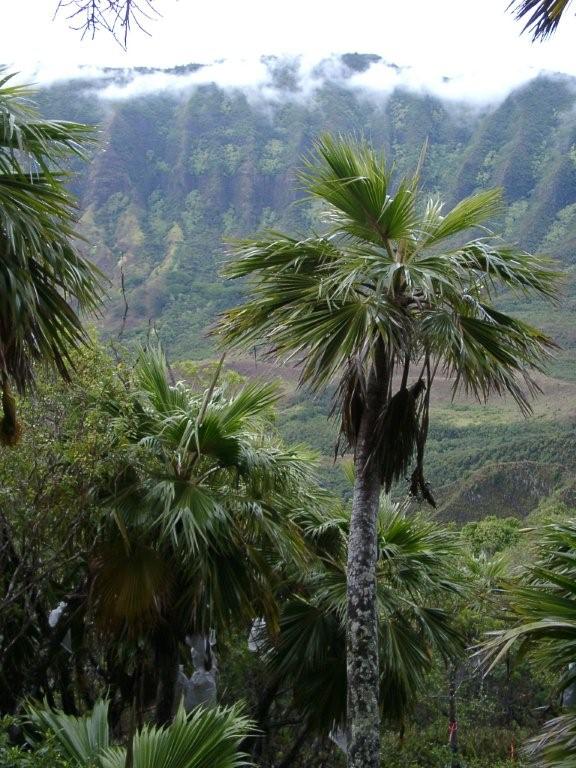
Pritchardia kaalae, the Waiʻanae Range Pritchardia or loulu, is a fan palm found in the wild only in the Waiʻanae Mountains of western Oʻahu, Hawaiʻi. It is one of about two dozen species of Pritchardia native to the Hawaiian Islands, the only palms native to Hawaiʻi. Like its relatives, it has a single straight trunk topped by a rounded crown of large, stiff, fan-shaped leaves, and it bears clusters of small, fragrant yellow flowers followed by round fruits.
Waiʻanae Range pritchardia is federally listed as Endangered under the U.S. Endangered Species Act, a status it has held since 1996. Its wild population is tiny: fewer than about 130 individuals were known in the late 1990s, scattered on steep slopes, ridges and gulch walls of the Waiʻanae Range. Feral goats and pigs, introduced rats that eat the fruits and seeds, invasive weeds and wildfire have kept the wild trees from replacing themselves.
Protected species note: never collect seeds, seedlings or leaves from wild loulu, and never disturb wild trees. Gardeners in Hawaiʻi can grow this palm responsibly by buying plants raised from seed of cultivated trees from a reputable native-plant nursery. This guide covers how to recognize it, where it grows, why it is endangered and how cultivated plants are grown in Hawaiian gardens.
Identification
Hawaiian loulu palms are easy to recognize as a group, with their unarmed fan leaves and clustered yellow flowers, but the species are hard to tell apart. In practice, location is the best clue: a loulu growing wild in the Waiʻanae Mountains is P. kaalae, while the native loulu of the Koʻolau Range on the other side of Oʻahu is Loulu (Pritchardia martii) and related species.
Trunk & Growth Habit
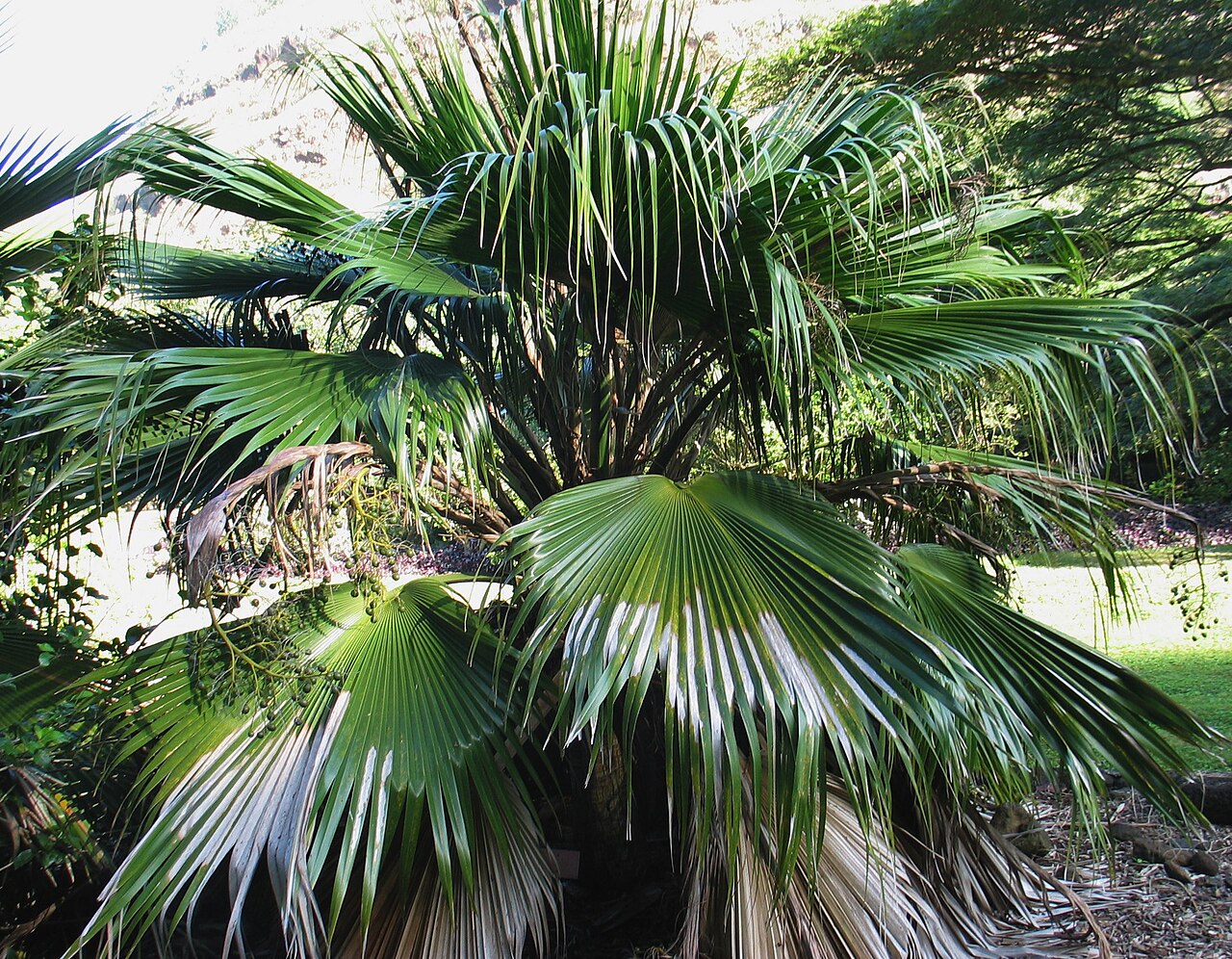
Waiʻanae Range pritchardia is a single-trunked palm that grows slowly to about 15 to 25 feet tall, occasionally a little taller. The gray trunk is about 8 to 12 inches thick, smooth to slightly ringed, and often marked with old leaf scars. Unlike many palms, loulu have no spines on the leaf stalks.
Leaves
The leaves are palmate (fan-shaped), up to about 3 feet across, and held on long, unarmed stalks in a rounded crown. The blade is divided about a third to halfway into many stiff segments, which are green above and paler below. Dead leaves often hang below the crown in a skirt, especially on wild trees. Young leaves are covered with a pale, felt-like layer of scales on the stalks and blade bases.
Flowers
The flowers are small, about a quarter of an inch long, bright yellow and fragrant, packed densely on branched flower stalks that grow from among the leaves. In this species the flower stalks are relatively short and remain within the crown rather than hanging well beyond the leaves. Cultivated trees can flower at almost any time of year.
Fruit
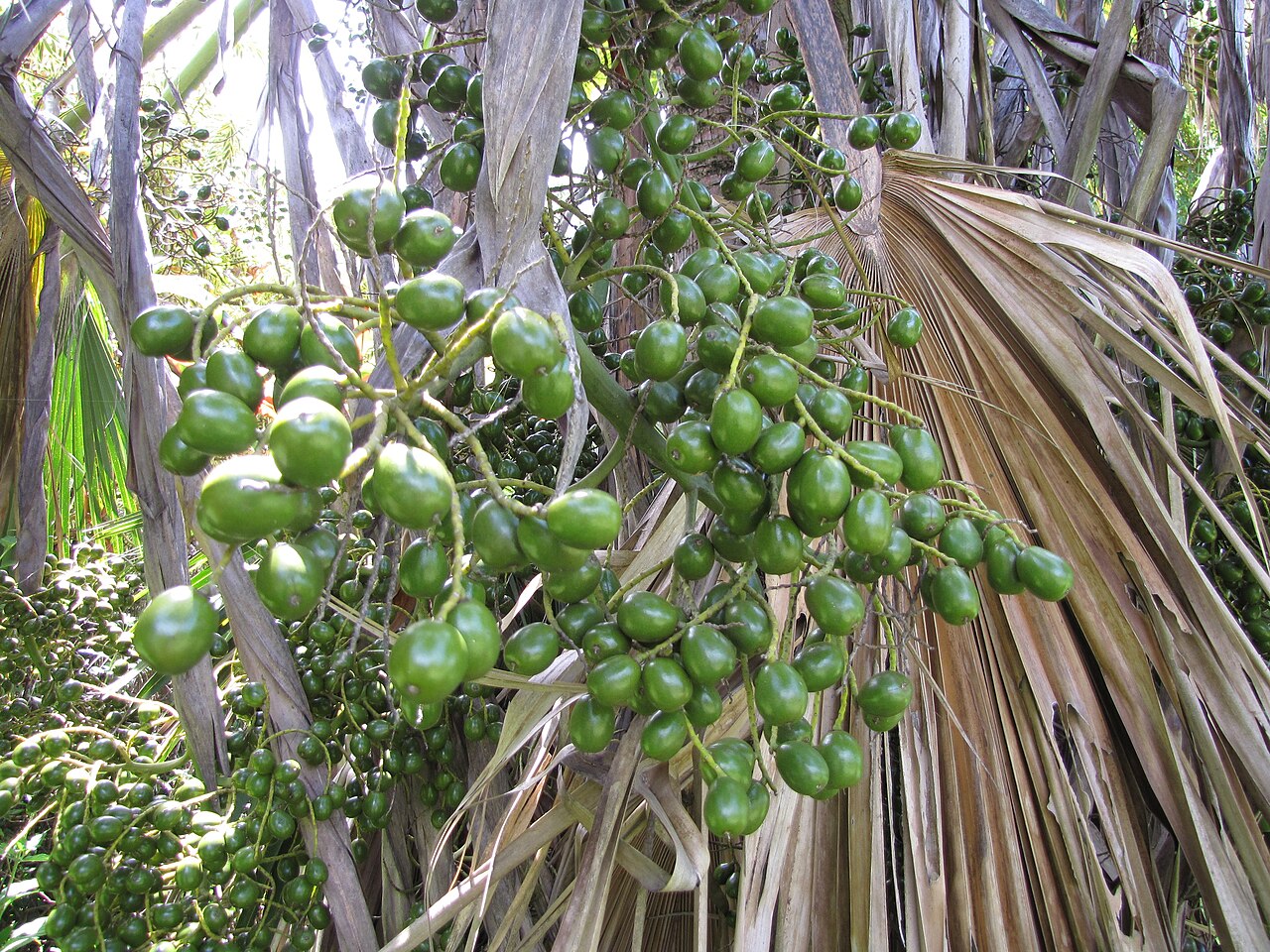
The fruits are round to slightly oval, roughly an inch across, green at first and ripening to dark brown or black. Each contains a single hard seed. The fruits hang in heavy clusters among the leaf bases. On Oʻahu, introduced rats eat many of the fruits and seeds before they can germinate, one of the main reasons the wild population is not regenerating.
Similar Species
Other Hawaiian Pritchardia species, such as Loulu Lelo (Pritchardia hillebrandii), Loulu (Pritchardia remota) and Loulu (Pritchardia beccariana), differ in technical features of the flower stalks, fruit size and leaf hairs. The widely planted Fiji fan palm (Pritchardia pacifica) is not native to Hawaiʻi and has much broader, flatter leaves.
Quick Facts
| Scientific Name | Pritchardia kaalae Rock |
| Family | Arecaceae (palm family) |
| Plant Type | Evergreen single-trunked fan palm |
| Mature Height | 15–25 ft |
| Mature Spread | 8–12 ft |
| Growth Rate | Slow |
| Sun Exposure | Full sun to partial shade |
| Water Needs | Moderate; drought-tolerant once established |
| Soil Type | Well-drained rocky, volcanic or loamy soil |
| Soil pH | About 6.0–7.5 |
| Bloom Time | Variable; can flower through much of the year |
| Flower Color | Yellow |
| Fall Color | None (evergreen) |
| Fruit | Round, dark brown to black, about 1 in, single-seeded |
| Deer Resistant | Not applicable in Hawaii; seedlings are eaten by goats and pigs |
| USDA Hardiness Zones | 10–12 |
Native Range
Waiʻanae Range pritchardia is endemic to the island of Oʻahu, where it grows only in the Waiʻanae Mountains, the older and drier of the island’s two mountain ranges. Wild trees are known from scattered sites in the northern and central Waiʻanae Range, including the ridges and gulches around Mākua Valley and ʻŌhikilolo Ridge, mostly on steep, rocky slopes, cliffs and ridgelines at roughly 1,000 to 2,500 feet in elevation.
Its habitat is dry to mesic (moderately moist) forest and shrubland, often near seeps and on cliff faces where goats and pigs have trouble reaching. Many of the native forests around it have been replaced by invasive grasses, shrubs and trees, and the grass-filled lowlands carry frequent wildfires. Much of the remaining population lies on or near the Mākua Military Reservation, where the U.S. Army’s natural resource program fences populations, controls rats, goats and weeds and grows plants for reintroduction. A small form with shorter leaves was once described as var. minima, but it is not usually recognized today.
Outside its native range, Waiʻanae Range pritchardia is grown in botanical gardens and private gardens elsewhere in Hawaiʻi and in other frost-free regions. Those trees are cultivated, not wild, and do not change its native range.
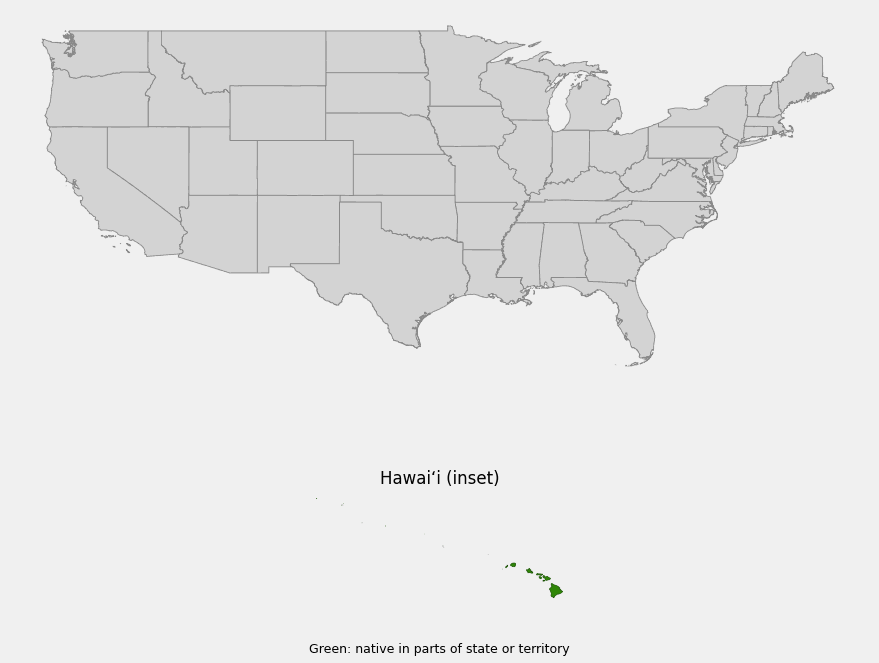
📋 Regional plant lists featuring Wai’anae Range Pritchardia: Hawaii
Growing & Care Guide
Waiʻanae Range pritchardia is a handsome, compact palm for gardens in Hawaiʻi and other frost-free climates, and growing it from cultivated stock helps keep the species in existence. Buy only plants or seeds that a reputable native-plant nursery has raised from cultivated trees, and never collect from wild trees or move plants between islands without checking current rules. Planting it near natural areas on Oʻahu should be coordinated with conservation programs so that garden trees do not mix with or disturb managed wild populations.
Light
Full sun to partial shade. Young plants appreciate some shade; established trees grow and flower best in full sun. Along hot, dry leeward coasts, afternoon shade helps young plants.
Soil & Water
Plant in well-drained soil: rocky, cinder-based or loamy soils all work, and it tolerates the thin, rocky soils of the leeward slopes where it grows naturally. Water regularly while it becomes established. Mature trees are fairly drought-tolerant but look best with occasional deep watering during long dry spells. Avoid soggy soil.
Planting Tips
Plant in a sunny spot with room for a crown about 8 to 12 feet wide. It is slow-growing and stays a modest size for many years, so it suits small gardens and courtyards. Set the plant at the same depth it grew in its container. In containers, use a coarse, fast-draining palm mix. Outside Hawaiʻi, it is suitable only for frost-free climates (roughly zones 10 to 12) or for a large, bright greenhouse.
Pruning & Maintenance
Remove only fully dead leaves; green and yellowing leaves still feed the palm. Do not cut into the trunk. A slow-release palm fertilizer with magnesium and potassium helps prevent yellowing of older leaves. Watch for scale insects and for leaf damage from the native palm leaf moth caterpillar, which rarely harms healthy plants.
Propagation
Propagation is by seed. Fresh seed from cultivated trees germinates in about two to four months when sown in a warm, moist, well-drained mix. Seedlings grow slowly and take several years to form a trunk. Collecting seed from wild trees is not permitted without the proper federal and state permits, and wild seeds are needed for natural regeneration.
Landscape Uses
- Hawaiian native gardens: a compact native palm for sunny, dry to mesic gardens in Hawaiʻi
- Conservation plantings: cultivated plants help preserve the genetics of a critically rare palm
- Specimen tree: a striking focal point with large fan leaves and a slim trunk
- Small gardens and courtyards: slow growth and modest size suit tight spaces
- Educational and botanical gardens: illustrates the unique palms of the Hawaiian Islands
Wildlife & Ecological Value
Loulu palms were once common in Hawaiian forests and played a role in feeding and sheltering native wildlife. Today, wild Waiʻanae Range pritchardia trees are too few to have a large ecological role, but they still support native insects.
For Pollinators
The fragrant yellow flowers produce nectar and pollen. Loulu flowers are visited by a range of insects, including introduced honeybees; the native birds and insects that pollinated them before human arrival are now rare or gone in the lowlands.
For Birds
The fruits may once have been eaten and dispersed by native birds that are now extinct or rare in the Waiʻanae Mountains. Today, few native birds feed on them.
For Mammals
Hawaiʻi has only two native land mammals, the Hawaiian hoary bat and the monk seal, and neither depends on loulu. Introduced mammals are a major threat: rats eat the fruits and seeds, and feral goats and pigs eat seedlings and trample young plants.
Ecosystem Role
Loulu are host plants for the native palm leaf moth (Omiodes blackburni), whose caterpillars feed on the leaves. Fossil evidence and tree molds in lava show that loulu were once widespread in Hawaiian lowland forests. Protecting the remaining Waiʻanae Range trees, along with the dry and mesic forest around them, preserves part of a native ecosystem that has largely vanished from Oʻahu.
Cultural & Historical Uses
The genus Pritchardia was named for William Thomas Pritchard, a nineteenth-century British consul in Fiji, where the first species described in the genus came from. Pritchardia kaalae was described by the botanist Joseph F. Rock in the early twentieth century; its name refers to Kaʻala, the highest peak on Oʻahu and part of the Waiʻanae Range.
Hawaiians call all native fan palms loulu, a name often connected with the word for umbrella, because the large leaves could be held overhead for shade or shelter from rain. Loulu leaves were used for thatching and for plaiting hats (pāpale), fans and other items, and the leaf stalks and trunks had various uses. The young, immature seeds, known as hāwane or wāhane, were eaten as a delicacy.
Today, conservation programs on Oʻahu, including the U.S. Army’s natural resource staff and partners, protect wild trees with fences and rat control, collect seed, and grow plants for reintroduction. Botanical gardens in Hawaiʻi keep living collections, and Hawaiian loulu palms have become popular landscape plants for native gardens across the islands.
Frequently Asked Questions
Is Waiʻanae Range pritchardia endangered?
Yes. Pritchardia kaalae has been federally listed as Endangered since 1996. It grows wild only in the Waiʻanae Mountains of Oʻahu, where only a small number of trees remain.
Can I grow a loulu palm in my garden?
Yes, in Hawaiʻi or another frost-free climate, if you buy a plant or seed raised from cultivated trees by a reputable nursery. Never collect seeds or plants from wild trees.
What does loulu mean?
Loulu is the Hawaiian name for all native fan palms in the genus Pritchardia. The name is often linked to umbrellas, because the large fan leaves could be used for shade and shelter.
Can you eat loulu fruit?
Hawaiians traditionally ate the immature seeds, called hāwane, as a delicacy. Do not collect fruit from wild trees of this endangered species; every seed is needed for regeneration.
How big does Pritchardia kaalae get?
It is a modest palm, usually about 15 to 25 feet tall with a trunk 8 to 12 inches thick and a crown about 8 to 12 feet wide. It grows slowly, so it stays small for many years.

Looking for a nursery that carries Wai’anae Range Pritchardia?
Browse our native plant nursery directory: Hawaii

