
Amazon Frogbit (Limnobium laevigatum)
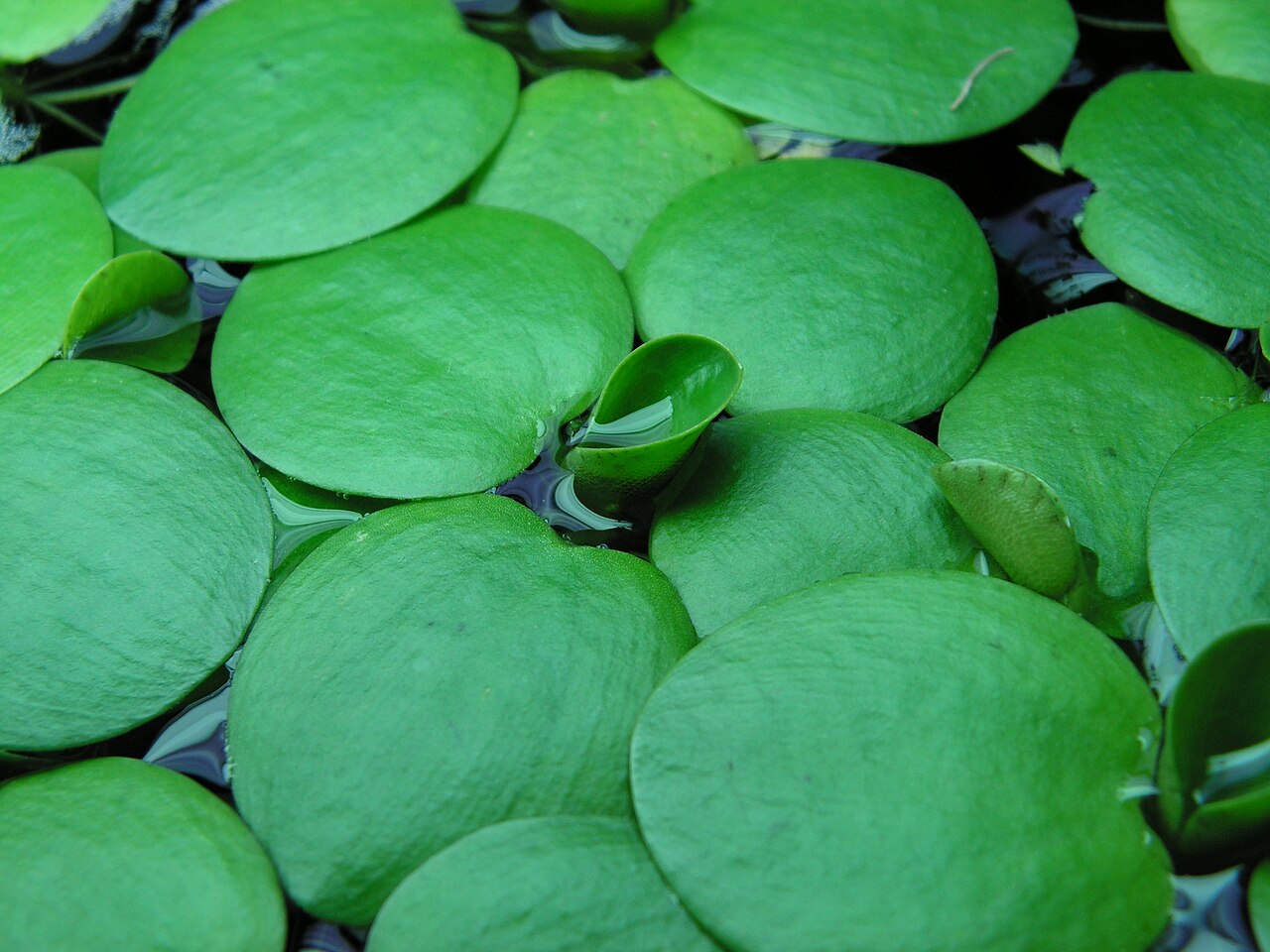
Limnobium laevigatum, the Amazon Frogbit (USDA: West Indian spongeplant; also called South American spongeplant), is a small floating aquatic plant with rosettes of round, glossy green leaves and long, dangling roots. It is one of the most popular floating plants in the aquarium hobby, but it is also a wild native plant of tropical America, including Puerto Rico, where it grows in ponds, ditches and slow, quiet fresh water.
Its native range stretches from Mexico through Central America and the Caribbean to South America. In the United States, USDA PLANTS lists it as native only in Puerto Rico. On the mainland it is not native: it has escaped into the San Joaquin River and the Sacramento–San Joaquin Delta in California, where the California Invasive Plant Council rates it a High impact invasive plant because it forms thick mats that clog waterways.
This guide covers how to identify Amazon frogbit, where it grows wild in Puerto Rico, and how to grow it responsibly in aquariums and ponds. If you live outside its native range, keep it indoors or in fully contained water features, and never release it or dump aquarium water into ditches, streams or lakes.
Identification
Amazon frogbit is a free-floating plant that spreads by short runners to form mats of rosettes on the water surface. Each rosette has a few round to heart-shaped leaves and a tuft of long roots hanging below.
Leaves
Young plants and plants in open water have flat, floating leaves about ½ to 1½ inches across, round to slightly heart-shaped, glossy green above and often mottled with darker spots. The underside has a thick, spongy cushion of air-filled tissue (aerenchyma) that keeps the leaf afloat. As plants become crowded, they produce larger leaves held above the water on stalks, which lack the spongy underside.
Roots & Runners
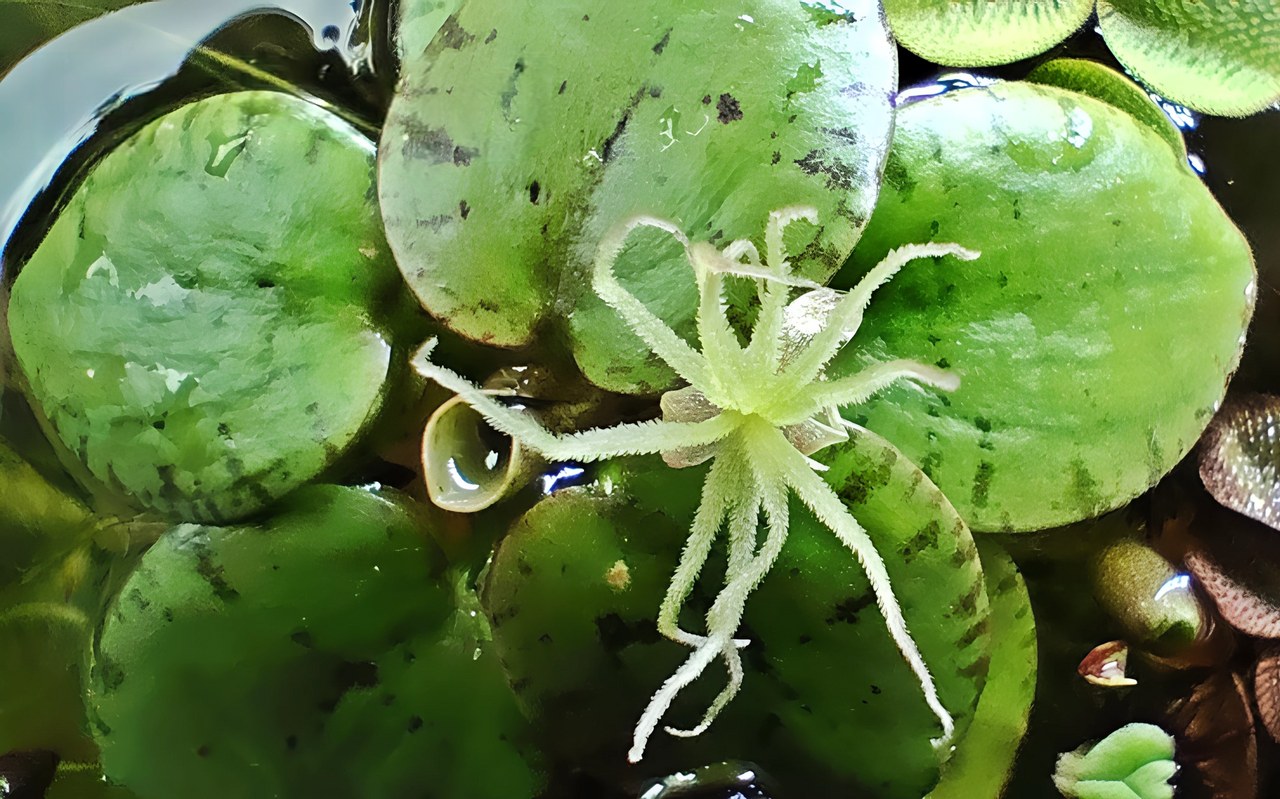
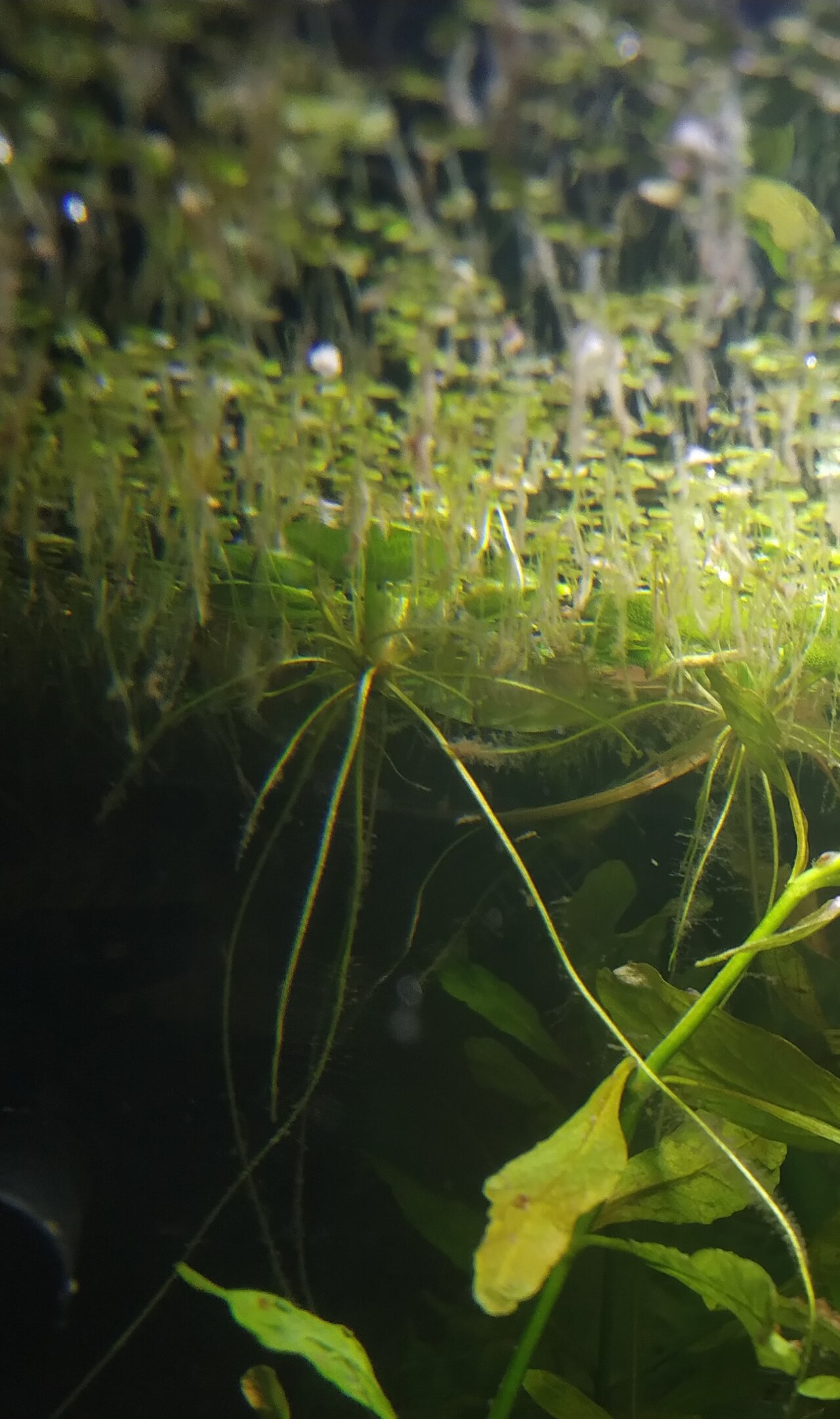
Each rosette has a bundle of long, fine, white to brownish roots covered in tiny root hairs, which may hang several inches to more than a foot into the water. New rosettes form at the ends of short runners (stolons), so one plant quickly becomes a mat.
Flowers & Fruit
The flowers are small, white and short-lived, with separate male and female flowers on the same plant. The female flower is the most noticeable: it has several long, white, forked stigmas that spread like a little starburst. Fruits are small, fleshy capsules that hold many tiny seeds, which float and spread with currents.
Look-alikes
American frogbit (Limnobium spongia), native to the southeastern U.S., is larger, with leaves often 1½ to 3 inches wide and a spongy center that is less obvious on older leaves. Some botanists treat the two as subspecies of one species. European frogbit (Hydrocharis morsus-ranae), an invasive in the Northeast and Great Lakes, has leaves without a spongy underside and showy three-petaled white flowers. Water Lettuce has velvety, ridged leaves, and water hyacinth has swollen leaf stalks and lilac flower spikes. Water pennywort (Largeleaf Pennywort) has round leaves on stalks with the stalk attached to the center of the leaf.
Quick Facts
| Scientific Name | Limnobium laevigatum (Humb. & Bonpl. ex Willd.) Heine (syn. Hydromystria laevigata) |
| Family | Hydrocharitaceae (frogbit family) |
| Plant Type | Free-floating aquatic perennial |
| Mature Height | 1–4 in above the water |
| Mature Spread | Rosettes 2–6 in; spreads into mats |
| Growth Rate | Fast |
| Sun Exposure | Full sun to part shade; bright aquarium light |
| Water Needs | Aquatic; floats on still or slow fresh water |
| Soil Type | None needed; free-floating |
| Soil pH | Water pH about 6.0–7.5 |
| Bloom Time | Intermittent through the year in warm climates |
| Flower Color | White |
| Fall Color | Evergreen in the tropics |
| Fruit | Small fleshy capsule with many tiny seeds |
| Deer Resistant | Not applicable |
| USDA Hardiness Zones | 10–13 outdoors; any zone in an indoor aquarium |
Native Range
Amazon frogbit is native to the American tropics and subtropics, from Mexico through Central America and the West Indies to much of South America, south to Argentina. In the United States it is native only in Puerto Rico, where USDA PLANTS lists it as a native species. It grows in lowland freshwater habitats, including ponds, lagoons, ditches, canals and marshy edges of slow streams.
In California it is an introduced, invasive species. It has been found growing wild in the state since the 2000s and has spread in the San Joaquin River and the Sacramento–San Joaquin Delta, where agencies work to control it. It is believed to have arrived through the aquarium and water-garden trade. USDA marks it as introduced in the lower 48 states, so the mainland is not part of its native range and is not shaded on the map.
In its native habitat it floats in sheltered, nutrient-rich water, often mixed with other floating plants such as duckweeds, water lettuce and mosquito ferns. In dry seasons, plants stranded on wet mud can root and survive until water returns.
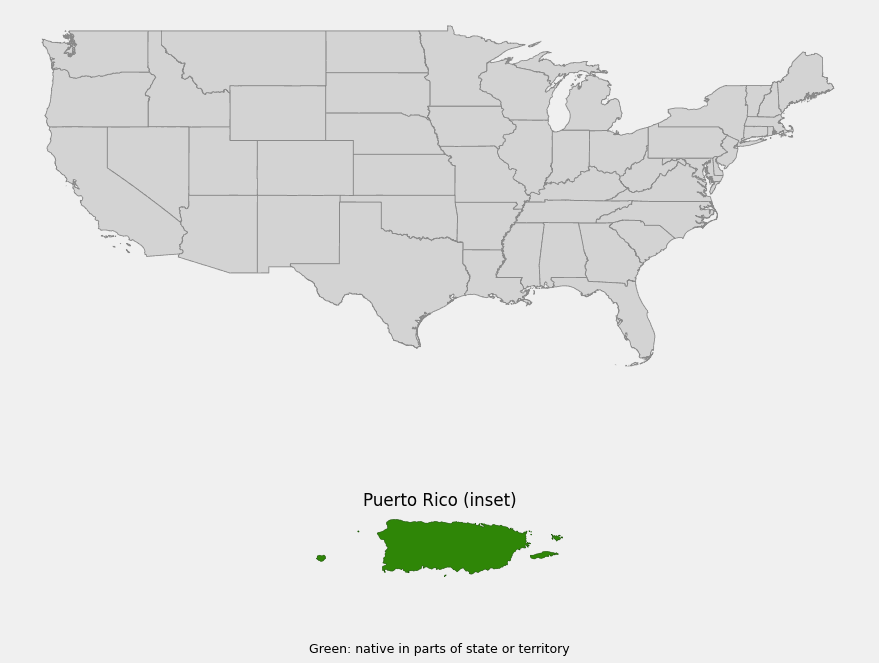
📋 Regional plant lists featuring Amazon Frogbit: Puerto Rico
Growing & Care Guide
Amazon frogbit is one of the easiest floating plants for aquariums, and in Puerto Rico and other frost-free areas within its native range it can be grown outdoors in ponds and containers. On the U.S. mainland, grow it indoors or in fully contained features only, and dispose of extra plants by drying them and putting them in the trash. It is not known to be toxic, but it is not an edible plant.
Light
Bright light is important. In aquariums, it grows best under strong LED lighting, kept a few inches above the leaves to avoid burning them. Outdoors in Puerto Rico it grows in full sun to part shade.
Soil & Water
It needs no soil and floats freely. It prefers still or gently moving water at about 64–84°F (18–29°C), with a pH around 6 to 7.5 and moderate nutrients. Strong filter currents and splashing push it around and wet the tops of the leaves, which can cause rot. Keep the upper surface of the leaves dry and allow some air space under the tank lid.
Planting Tips
Simply float plants on the water surface. In aquariums, a ring of airline tubing or a floating barrier keeps them in one area so they do not block light to plants below. In ponds within its native range, it gives shade and shelter to fish. On the mainland, do not plant it in ponds connected to natural waters, or in any outdoor pond in California and other warm states where it could escape.
Pruning & Maintenance
Thin it regularly. It can cover the surface within weeks, shading plants and fish below and lowering oxygen. Remove extra rosettes and old yellowing leaves. Never dump extra plants or aquarium water into ditches, streams or lakes; let surplus plants dry out completely and put them in the trash.
Propagation
It propagates itself by runners: just separate young rosettes from the parent. It can also set seed when female and male flowers are present, though most aquarium plants spread by runners only.
Landscape Uses
- Aquariums: a popular floating plant that shades the tank and shelters fish and shrimp
- Ponds and container water gardens: in Puerto Rico and other areas within its native range
- Water quality: absorbs nitrogen and phosphorus from the water, competing with algae
- Wildlife ponds: cover for fish, tadpoles and aquatic insects within its native range
Wildlife & Ecological Value
In its native fresh waters, Amazon frogbit provides shade, shelter and food for small aquatic animals, and its mats are part of the floating plant community of tropical ponds and ditches.
For Pollinators
Its small white flowers are visited by small insects, and some pollination happens on the water surface. It is not an important nectar plant.
For Birds
Waterbirds such as gallinules and ducks feed among floating mats, eating plants, seeds and the small animals that live there.
For Mammals
Not significant for mammals.
Ecosystem Role
Its hanging roots shelter small fish, fry, snails, shrimp and aquatic insects, and the leaves shade the water. It absorbs nutrients from the water quickly. Outside its native range this rapid growth becomes a problem: dense mats block light and oxygen exchange, crowd out native plants and clog boat channels and water intakes, as seen in California’s Delta.
Cultural & Historical Uses
The plant was first described in the early 1800s from specimens collected in South America by Alexander von Humboldt and Aimé Bonpland. It has carried several names, including Hydromystria laevigata and Limnobium stoloniferum, and some botanists treat it as Limnobium spongia subsp. laevigatum. The genus name Limnobium means “living in a lake,” and laevigatum means “smooth,” for its glossy leaves.
In the aquarium world it is known as Amazon frogbit and is valued as a hardy, beginner-friendly plant that helps control algae by shading the tank and using excess nutrients. It is widely traded and easy to share among hobbyists, which is also how it has escaped into the wild outside its native range.
Its spread in California has made it a case study in the risks of the aquarium and water-garden trade. Agencies such as the California Department of Parks and Recreation’s Division of Boating and Waterways treat infestations in the Delta, and many places restrict its sale. In Puerto Rico, by contrast, it is a natural part of freshwater wetlands.
Frequently Asked Questions
Is Amazon frogbit native to the United States?
Only to Puerto Rico. USDA PLANTS lists it as native there. On the mainland it is introduced, and in California it has become a High impact invasive plant in the San Joaquin River and the Sacramento–San Joaquin Delta.
Is Amazon frogbit easy to grow in an aquarium?
Yes. It needs bright light, gentle water movement, moderate nutrients and dry leaf tops. It grows quickly and must be thinned regularly.
Why are my Amazon frogbit leaves melting or turning yellow?
Common causes are wet leaf tops from condensation or splashing, too little light, lack of nutrients such as iron and potassium, or strong currents. Keep the leaf surfaces dry, give it more light, and reduce surface agitation.
Is Amazon frogbit the same as American frogbit?
No, though they are close relatives. American frogbit (Limnobium spongia) is native to the southeastern U.S. and has larger leaves. Some botanists treat the two as subspecies of one species.
How do I get rid of extra Amazon frogbit?
Never put it in ditches, streams, lakes or storm drains. Let it dry out completely in a sealed bag or in the sun, then put it in the trash.

Looking for a nursery that carries Amazon Frogbit?
Our nursery directory does not yet include Puerto Rico. Browse the native plant nursery directory by state: Alabama–Arkansas · California · Colorado–Hawaii · Idaho–Kansas · Kentucky–Montana · Nebraska–Oklahoma · Oregon · Pennsylvania–Virginia · Washington · West Virginia–Wyoming

