
Dotleaf Waterlily (Nymphaea ampla)
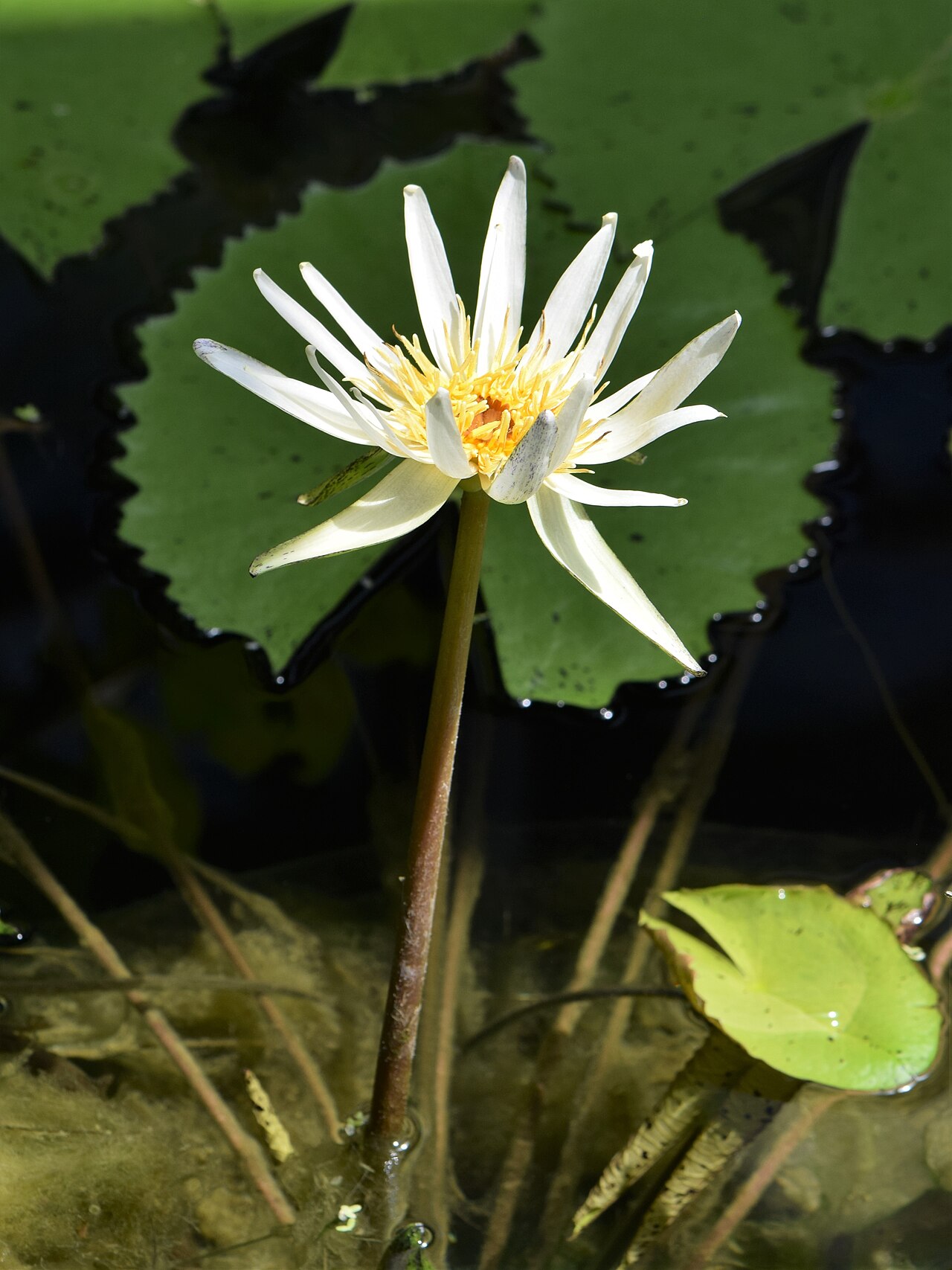
Nymphaea ampla, the dotleaf waterlily, is a tropical white waterlily of ponds, lagoons and canals, known in Puerto Rico as flor de agua or calderón. It has large, leathery floating leaves with sharply toothed edges and purple, dark-dotted undersides (the source of its English name), and fragrant, white, star-shaped flowers held well above the water during the day.
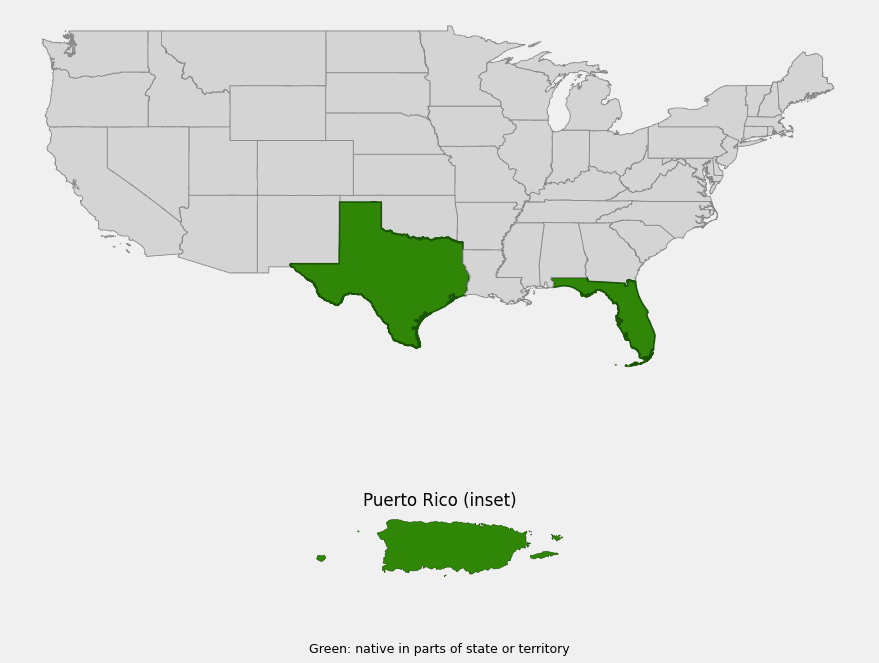
Its native range runs from southern Texas and Florida through Mexico, Central America and the Caribbean to northern and western South America. USDA PLANTS lists it as native in Puerto Rico, the U.S. Virgin Islands, Florida and Texas. It is also called the Mayan water lily: it appears again and again in ancient Maya art.
For water gardeners in Puerto Rico it is the native answer to the many imported tropical waterlilies sold for ponds, and in Florida and South Texas it is a rare native worth growing from nursery stock.
Identification
Several white waterlilies grow in the region. The toothed leaf margins separate dotleaf waterlily from the American white waterlily (Nymphaea odorata), whose leaves are smooth-edged and whose flowers float on the water surface. The yellow waterlily (Nymphaea mexicana) has yellow flowers.
Leaves
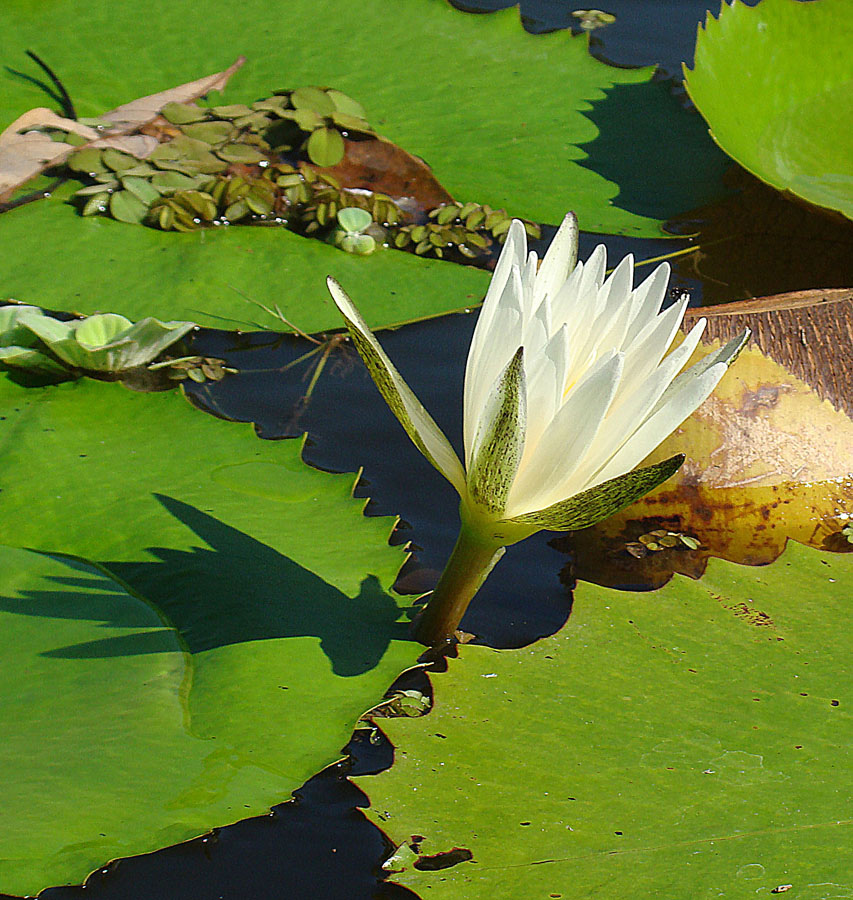
The floating leaves are leathery and round to broadly oval, 6 to 18 inches across, with a deep notch where the stalk attaches and a margin cut into coarse, sharp teeth. The upper surface is green, sometimes blotched, and the underside is purplish and speckled with small dark dots.
Flowers
The flowers are white to yellowish white, about 3 to 7 inches across, with many narrow, pointed petals and a dense center of yellow stamens. They are fragrant, open in the daytime, and are raised several inches above the water on stout stalks. In frost-free climates plants bloom year-round.
Rhizome & Fruit
Plants grow from a dark brown, egg-shaped, unbranched rhizome rooted in the mud and do not spread by runners. After flowering, the stalk bends back into the water, where the fruit ripens below the surface and releases seeds that float briefly before sinking.
Quick Facts
| Scientific Name | Nymphaea ampla (Salisb.) DC. (basionym Castalia ampla Salisb.) |
| Family | Nymphaeaceae (waterlily family) |
| Plant Type | Aquatic perennial with floating leaves |
| Mature Height | Flowers held several inches above the water |
| Mature Spread | 3–6 ft across the water surface |
| Growth Rate | Moderate to fast in warm water |
| Sun Exposure | Full sun |
| Water Needs | Aquatic; still fresh water about 1–3 ft deep |
| Soil Type | Muck, loam or clay pond bottom |
| Soil pH | Slightly acid to alkaline |
| Bloom Time | Year-round in frost-free climates |
| Flower Color | White to yellowish white with yellow stamens |
| Fall Color | None |
| Fruit | Fleshy fruit ripening underwater |
| Deer Resistant | Not applicable in Puerto Rico; no native deer on the island |
| USDA Hardiness Zones | 10–12; tropical, frost-tender |
Native Range
Dotleaf waterlily is a widespread tropical American species. USDA PLANTS lists it as native in Puerto Rico, the U.S. Virgin Islands, Florida and Texas, and beyond U.S. jurisdictions it ranges through Mexico, Central America, the Greater and Lesser Antilles and northern and western South America.
In Puerto Rico it grows in freshwater ponds, lagoons, canals and drainage ditches in the lowlands. In Florida it is native but very rare; the Atlas of Florida Plants maps it from a single county. In Texas it reaches its northern limit in the south of the state.
It is a plant of still or very slow water in full sun, in water roughly one to three feet deep. It does not tolerate salt water, though it grows in freshwater pools and lagoons near the coast.
📋 Regional plant lists featuring Dotleaf Waterlily: Puerto Rico · North & South Florida · South & West Texas
Growing & Care Guide
Dotleaf waterlily is easy in a warm, sunny pond. It needs still water, full sun and a fertile rooting medium, and in frost-free areas it grows and blooms all year.
Light
Full sun, at least six hours a day, for good flowering. In shade it produces leaves but few flowers.
Soil & Water
Grow it in still fresh water about 1 to 3 feet deep over the crown. Plant the rhizome in a wide container of heavy loam or clay topped with gravel, or directly in the muck of a natural pond. Avoid salty or fast-moving water.
Planting Tips
Set the rhizome nearly horizontal with the growing tip just at the soil surface. Start it in shallower water and lower the pot as the leaves lengthen. One plant can cover 3 to 6 feet of water, so allow space for other aquatic plants and open water.
Pruning & Maintenance
Remove yellowing leaves and spent flowers to keep the pond clean. Feed container plants with aquatic fertilizer tablets during the growing season. Divide crowded plants every few years.
Propagation
Divide the rhizome, or sow fresh seed in a pot of wet soil just covered by water. Buy nursery-propagated plants and never take them from the wild, especially in Florida, where the species is rare.
Landscape Uses
- Water gardens: a native tropical waterlily for sunny ponds and large containers
- Wildlife ponds: pads shade the water and shelter fish, frogs and insects
- Native alternatives: replaces imported tropical waterlilies and hybrid cultivars
- Wetland restoration: suited to freshwater ponds and lagoons within its range
Wildlife & Ecological Value
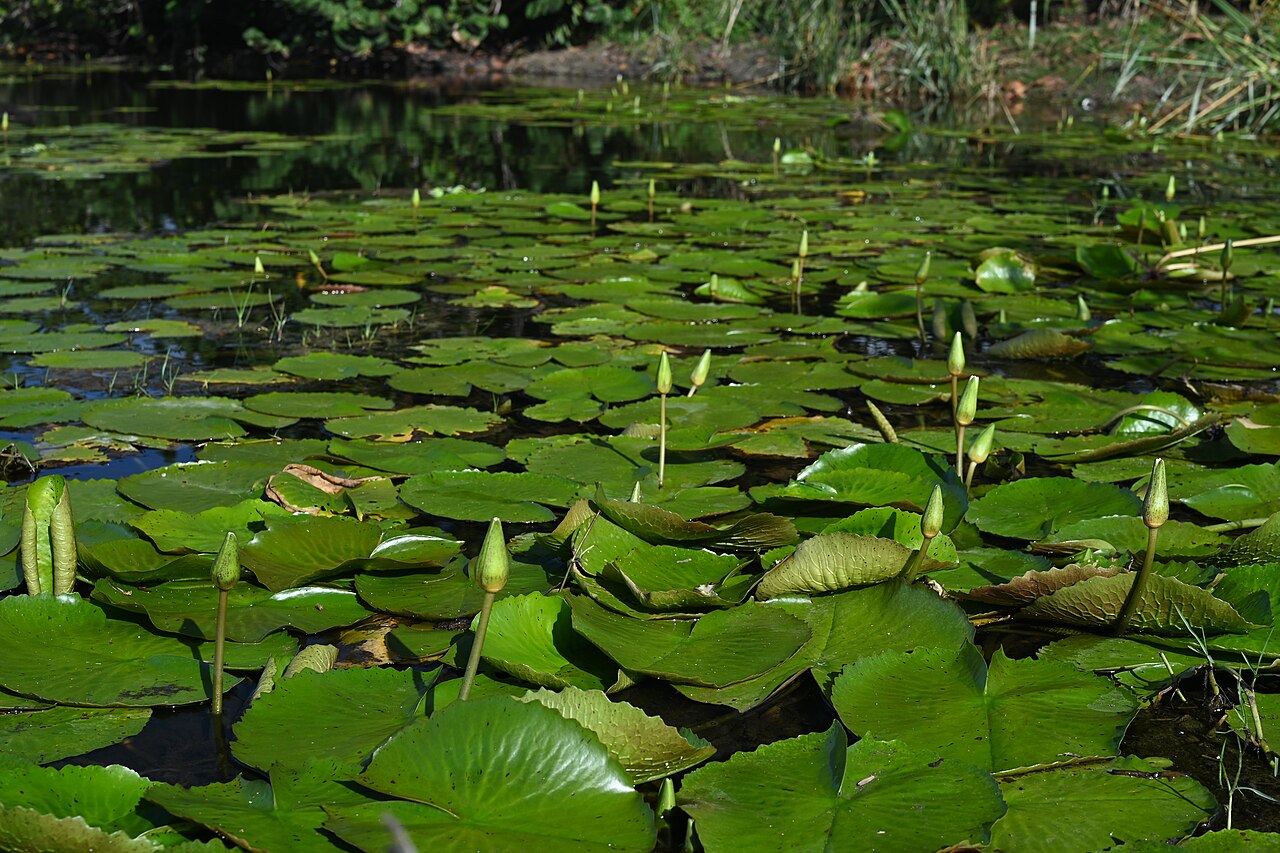
Floating waterlily pads create a whole layer of habitat on the water surface, and the flowers feed pollinating insects.
For Pollinators
The fragrant, day-opening flowers attract bees, beetles and flies, which collect pollen from the dense ring of stamens.
For Birds
Herons and other wading birds hunt among the pads, and gallinules walk across them to forage. The leaves shelter fish and invertebrates that waterbirds eat.
For Mammals
Puerto Rico’s only native land mammals are bats, some of which hunt insects over open ponds. Waterlilies support that insect life.
Ecosystem Role
The floating leaves shade the water, keeping it cooler and discouraging algae, and provide cover and egg-laying sites for fish, frogs, dragonflies and many aquatic invertebrates.
Cultural & Historical Uses
Dotleaf waterlily is the waterlily of ancient Maya art, shown on pottery, carved monuments and murals together with jaguars and Maya kings. One Maya name for it, nikte’ha’, means “flower of the water”, and it was a symbol of life and fertility. The plant has also been reported to have mild sedative effects and was used as a calmative.
The English botanist Richard Anthony Salisbury described the species in 1805 as Castalia ampla; Augustin Pyramus de Candolle moved it to Nymphaea in 1821. The epithet ampla means “large” or “ample”.
NatureServe ranks it globally secure (G5), but it is rare at the edges of its range: it is very local in Florida, and on Guadeloupe it is listed as near threatened on the French red list.
Frequently Asked Questions
Is dotleaf waterlily native to Puerto Rico?
Yes. USDA PLANTS lists it as native in Puerto Rico and the U.S. Virgin Islands, and it is known on the island as flor de agua and calderón.
Is it native to Florida and Texas?
Yes. USDA PLANTS lists it as native in both states, and the Atlas of Florida Plants treats it as native in Florida, where it is very rare.
How do I tell it from other white waterlilies?
Look at the leaf edge: dotleaf waterlily has coarsely toothed leaves with dark-dotted purple undersides, and its flowers stand above the water. The American white waterlily has smooth-edged leaves and flowers that float on the surface.
Can it survive frost?
No. It is a tropical plant, hardy only in frost-free climates. In colder areas it must be brought indoors or treated as an annual.
How deep should the water be?
About 1 to 3 feet over the crown, in still water and full sun.

Looking for a nursery that carries Dotleaf Waterlily?
Our nursery directory does not yet include Puerto Rico. Browse the native plant nursery directory by state: Alabama–Arkansas · California · Colorado–Hawaii · Idaho–Kansas · Kentucky–Montana · Nebraska–Oklahoma · Oregon · Pennsylvania–Virginia · Washington · West Virginia–Wyoming