
Palo de Nigua (Cornutia obovata)
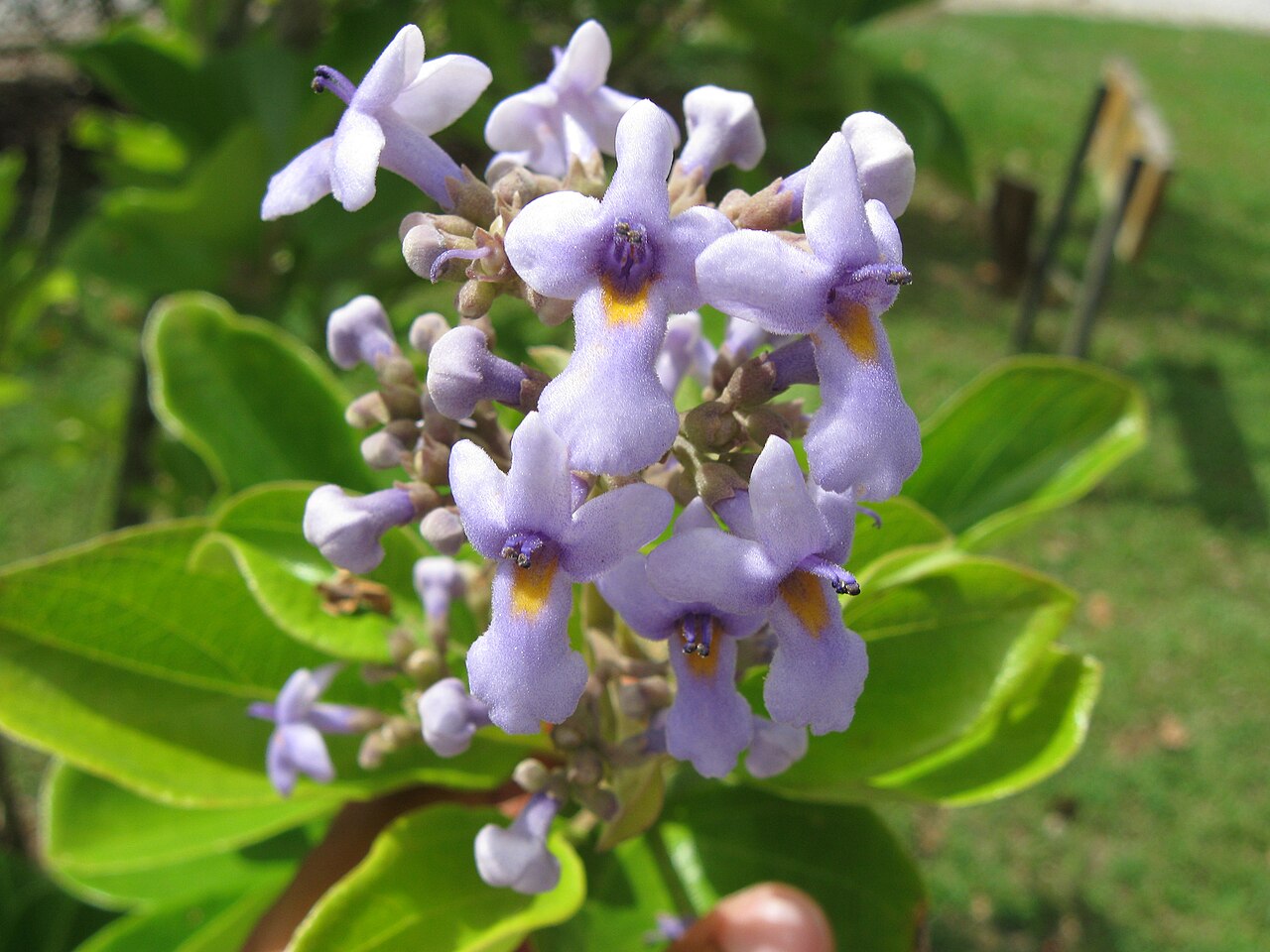
Cornutia obovata, called palo de nigua, nigua or capá jigüerilla in Puerto Rico (USDA PLANTS: nigua), is a small evergreen tree found nowhere in the world except the forested mountain slopes of Puerto Rico. It has broad, soft, opposite leaves and loose clusters of lavender tubular flowers with a bright yellow throat, and it is one of the island’s rarest trees.
Palo de nigua is listed as Endangered under the U.S. Endangered Species Act; the U.S. Fish and Wildlife Service listed it on April 7, 1988. At the time of listing only seven wild individuals were known, and later counts in the 1990s found only eight. Anyone who wants to grow it should obtain nursery-propagated plants only from legitimate conservation or nursery sources, and should never collect plants, cuttings or seed from the wild.
Grown responsibly, it is a lovely small flowering tree for shaded gardens in Puerto Rico and a meaningful addition to native-plant collections, botanical gardens and school or community gardens that want to help keep an endemic species in cultivation.
Identification
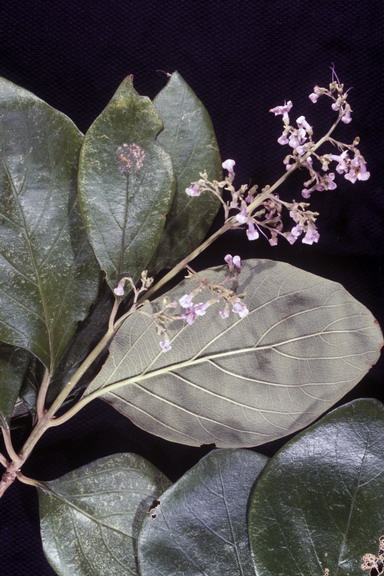
Palo de nigua is recognized by its combination of opposite, broadly oval to obovate leaves that are hairy underneath, pale stems, and terminal clusters of small lavender, two-lipped tubular flowers marked with yellow in the throat. Because so few wild plants remain, most people will only ever see it in cultivation.
Form & Bark
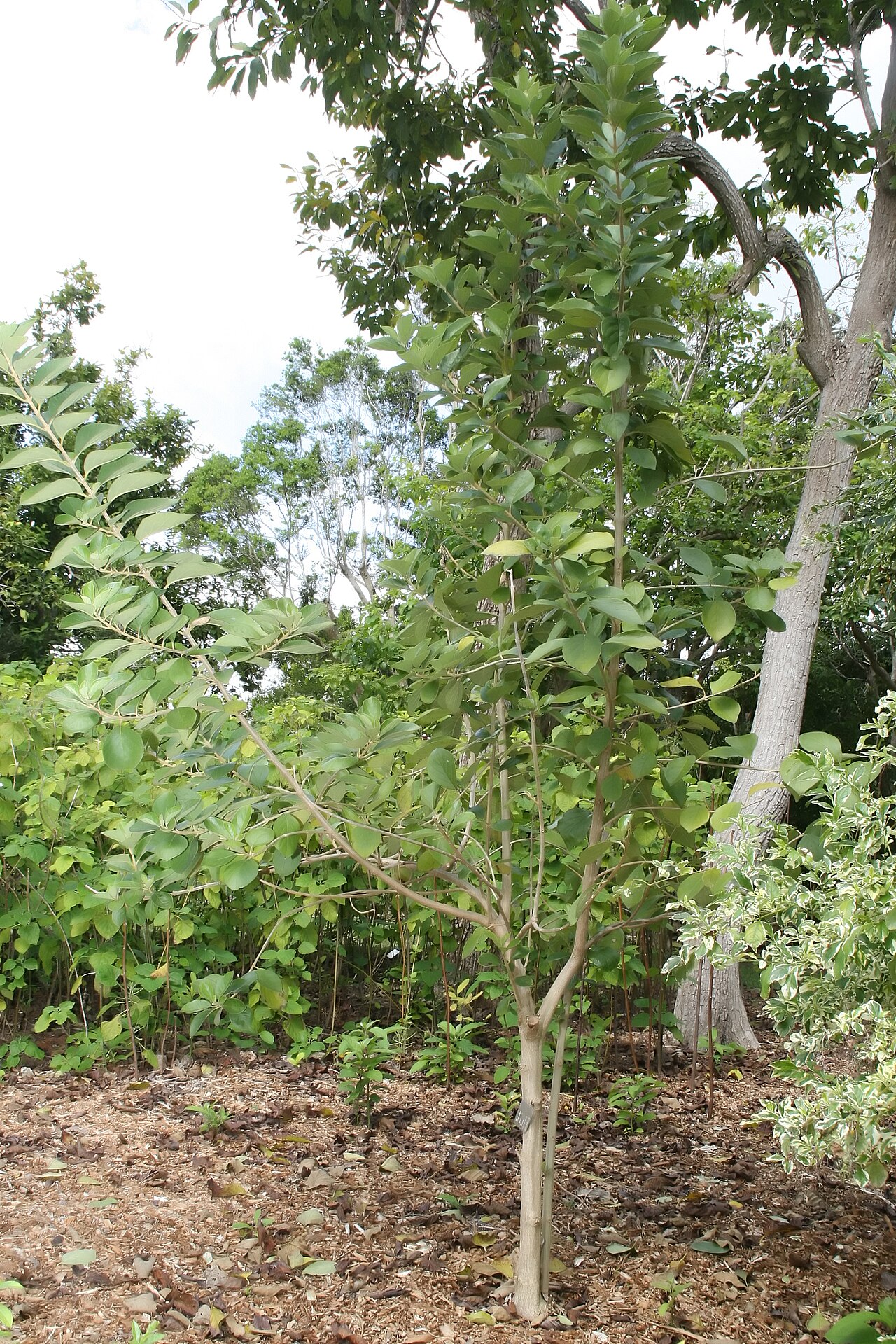
A small evergreen tree reaching about 33 feet (10 m) at most, with a slender trunk up to about 6 inches (15 cm) in diameter. Young plants are often multi-stemmed and upright. The bark is pale gray-brown and smooth to finely roughened, and young twigs are pale and somewhat downy.
Leaves
Leaves are opposite, simple, and oval to obovate (broadest toward the tip, which gives the species its name, obovata). They are fairly large and soft-textured, dull green above with conspicuous veins, and paler and hairy on the underside. The edges are smooth.
Flowers
The flowers are small, tubular and two-lipped, lavender to pale violet with a yellow-orange patch in the throat and dark stamens that protrude from the mouth of the tube. They are borne in loose, branched clusters at the ends of the branches. Flowers on cultivated plants produce nectar that is visited by ants and other insects.
Fruit & Seeds
Like other members of the genus, palo de nigua produces small, rounded, fleshy fruits (drupes) after flowering. Seed production in the wild is very limited because so few plants survive, which is one reason conservation propagation is important.
Similar Species
Out of flower it could be mistaken for other small trees of Puerto Rico’s mountain forests with opposite leaves. Its relatives in the former verbena group, such as capá blanco (Petitia domingensis), have small white flowers instead of lavender ones.
Quick Facts
| Scientific Name | Cornutia obovata Urb. |
| Family | Lamiaceae (mint family); placed in Verbenaceae in older references |
| Plant Type | Small evergreen tree |
| Mature Height | Up to about 33 ft (10 m); usually smaller in cultivation |
| Mature Spread | 8–15 ft |
| Growth Rate | Moderate |
| Sun Exposure | Partial shade to light shade; tolerates morning sun |
| Water Needs | Moderate; keep evenly moist but well drained |
| Soil Type | Well-drained forest soils; occurs on limestone and serpentine |
| Soil pH | Adaptable; slightly acidic to alkaline |
| Bloom Time | Variable; flowers recorded over much of the year |
| Flower Color | Lavender to pale violet with a yellow throat |
| Fall Color | None; evergreen |
| Fruit | Small rounded fleshy drupe |
| Deer Resistant | Not applicable in Puerto Rico; no native deer on the island |
| USDA Hardiness Zones | 11–13; frost-sensitive |
| Other Common Names | Palo de nigua, nigua (USDA PLANTS), capá jigüerilla |
Native Range
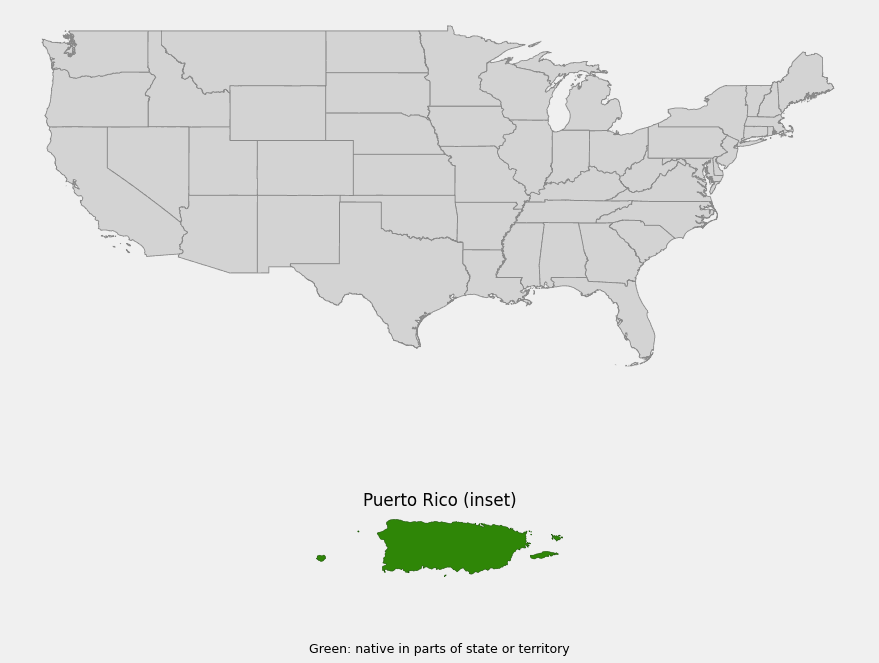
Palo de nigua is endemic to Puerto Rico. USDA PLANTS lists it as native only in Puerto Rico, and it does not occur naturally anywhere in the continental United States or elsewhere in the Caribbean. The few wild plants grow on forested slopes in the island’s mountains, on both limestone and serpentine substrates, and are treated as a single population scattered among a few sites.
The species has been rare for as long as botanists have recorded it. When the U.S. Fish and Wildlife Service listed it as Endangered in 1988, only seven individuals were known in the wild; a count in 1998 found eight. Threats identified for the species include its extremely small numbers, which leave it vulnerable to any single disaster or the slow loss of aging plants, past clearing of Puerto Rico’s mountain forests, and deliberate cutting.
Because of that history, palo de nigua’s future depends heavily on cultivation. Fairchild Tropical Botanic Garden in Coral Gables, Florida, has propagated the species, and nursery-grown plants in gardens act as a living safeguard against loss in the wild. The map above shades Puerto Rico only.
📋 Regional plant lists featuring Palo de Nigua: Puerto Rico
Growing & Care Guide
Only grow palo de nigua from legally obtained, nursery-propagated stock. In cultivation it behaves like a typical understory tree of Puerto Rico’s moist mountain forests: it wants warmth, steady moisture, good drainage and some protection from harsh afternoon sun.
Light
Give it partial shade or bright, dappled light, as under a high tree canopy or on the east side of a building. Morning sun is fine; in hot lowland gardens avoid full afternoon sun, which can scorch the soft leaves. Very deep shade reduces flowering.
Soil & Water
Plant in a well-drained, humus-rich soil. The species grows naturally on both limestone and serpentine, so it is not fussy about pH, but it will not tolerate waterlogging. Keep the soil evenly moist, especially during the first year and through dry spells; a layer of leaf mulch helps keep roots cool and moist.
Planting Tips
Plant at the start of the rainy season in a sheltered spot protected from strong wind. Space at least 10 feet from other trees. Record where the plant came from and keep any nursery labels: provenance information is useful to conservation programs working with rare species.
Pruning & Maintenance
Little pruning is needed. Remove dead or damaged branches and, if a single trunk is wanted, select the strongest stem while the plant is young. Feed lightly with compost or a slow-release fertilizer in spring if growth is poor. Watch for scale insects in dry, sheltered spots.
Propagation
Propagation of palo de nigua is best left to botanical gardens and nurseries working with conservation programs, which use seed or cuttings from documented sources. If your own plant sets fruit, consider contacting a conservation organization or botanical garden rather than distributing seedlings informally. Never collect seed, cuttings or plants from the wild.
Landscape Uses
- Conservation gardens: a living safeguard for one of Puerto Rico’s rarest endemic trees
- Shaded garden accent: a small evergreen tree with lavender flowers for partial shade
- Botanical and school collections: an engaging example of island endemism and endangered-species recovery
- Pollinator plantings: nectar-bearing flowers for insects in shaded gardens
- Native forest restoration: planting by authorized recovery programs within its native range
Wildlife & Ecological Value
With so few plants left in the wild, palo de nigua’s ecological interactions are poorly documented. What is known comes mostly from cultivated plants and from the habits of its close relatives.
For Pollinators
The tubular lavender flowers produce nectar and are shaped for insect visitors such as bees. On cultivated plants, the nectar has been recorded being harvested by the carpenter ant Camponotus abdominalis floridanus.
For Birds
The small fleshy fruits typical of the genus are the kind eaten and dispersed by fruit-eating birds, and the dense evergreen foliage offers cover for small forest birds. Specific bird records for this species are scarce.
For Mammals
Puerto Rico’s only native land mammals are bats. There are no detailed records of bats using this species, but the rarity of the plant means its interactions in the wild have hardly been studied.
Ecosystem Role
As one of Puerto Rico’s endemic trees, palo de nigua is part of the unique biodiversity of the island’s mountain forests. Its survival now depends largely on habitat protection and on cultivated plants grown from documented, legally obtained stock.
Cultural & Historical Uses
The genus Cornutia was named in honor of Jacques-Philippe Cornut, a seventeenth-century French physician and botanist. The species Cornutia obovata was described by the German botanist Ignatz Urban, whose work on the flora of the West Indies named a great many of Puerto Rico’s endemic plants. Like many former verbena-family trees, it is now placed in the mint family, Lamiaceae.
Palo de nigua was added to the U.S. list of endangered species in 1988, when only seven plants were known to survive in the wild. It is one of a group of Puerto Rican trees whose rarity has made them the focus of federal recovery planning and of propagation by botanical gardens. Fairchild Tropical Botanic Garden in Florida has grown the species as part of its conservation work.
Federal law protects endangered plants: under the Endangered Species Act it is illegal to remove or damage listed plants on lands under federal jurisdiction, or to sell them in interstate commerce without a permit. Beyond the legal issues, taking even one wild plant, cutting or batch of seed from a population of only a handful of trees could cause real harm. The right way to help is to grow nursery-propagated plants and to support habitat protection in Puerto Rico’s mountain forests.
Frequently Asked Questions
Is palo de nigua endangered?
Yes. Cornutia obovata is listed as Endangered under the U.S. Endangered Species Act; the U.S. Fish and Wildlife Service listed it on April 7, 1988. Only seven wild plants were known at the time of listing.
Where does palo de nigua grow naturally?
Only in Puerto Rico. It is endemic to the island and grows on forested mountain slopes on limestone and serpentine soils. USDA PLANTS lists it as native in Puerto Rico only.
Can I grow palo de nigua in my garden?
Yes, if you obtain a nursery-propagated plant from a legitimate source. Never collect plants, cuttings or seed from the wild. In the garden it prefers partial shade, steady moisture and well-drained, humus-rich soil.
What do the flowers look like?
Palo de nigua bears loose clusters of small, two-lipped tubular flowers that are lavender to pale violet with a yellow patch in the throat and dark protruding stamens.
How big does palo de nigua get?
It is a small tree, reaching about 33 feet (10 m) at most with a trunk around 6 inches thick. In gardens it usually stays considerably smaller and makes a manageable understory tree.

Looking for a nursery that carries Palo de Nigua?
Our nursery directory does not yet include Puerto Rico. Browse the native plant nursery directory by state: Alabama–Arkansas · California · Colorado–Hawaii · Idaho–Kansas · Kentucky–Montana · Nebraska–Oklahoma · Oregon · Pennsylvania–Virginia · Washington · West Virginia–Wyoming