
Cowhorn Orchid (Cyrtopodium punctatum)
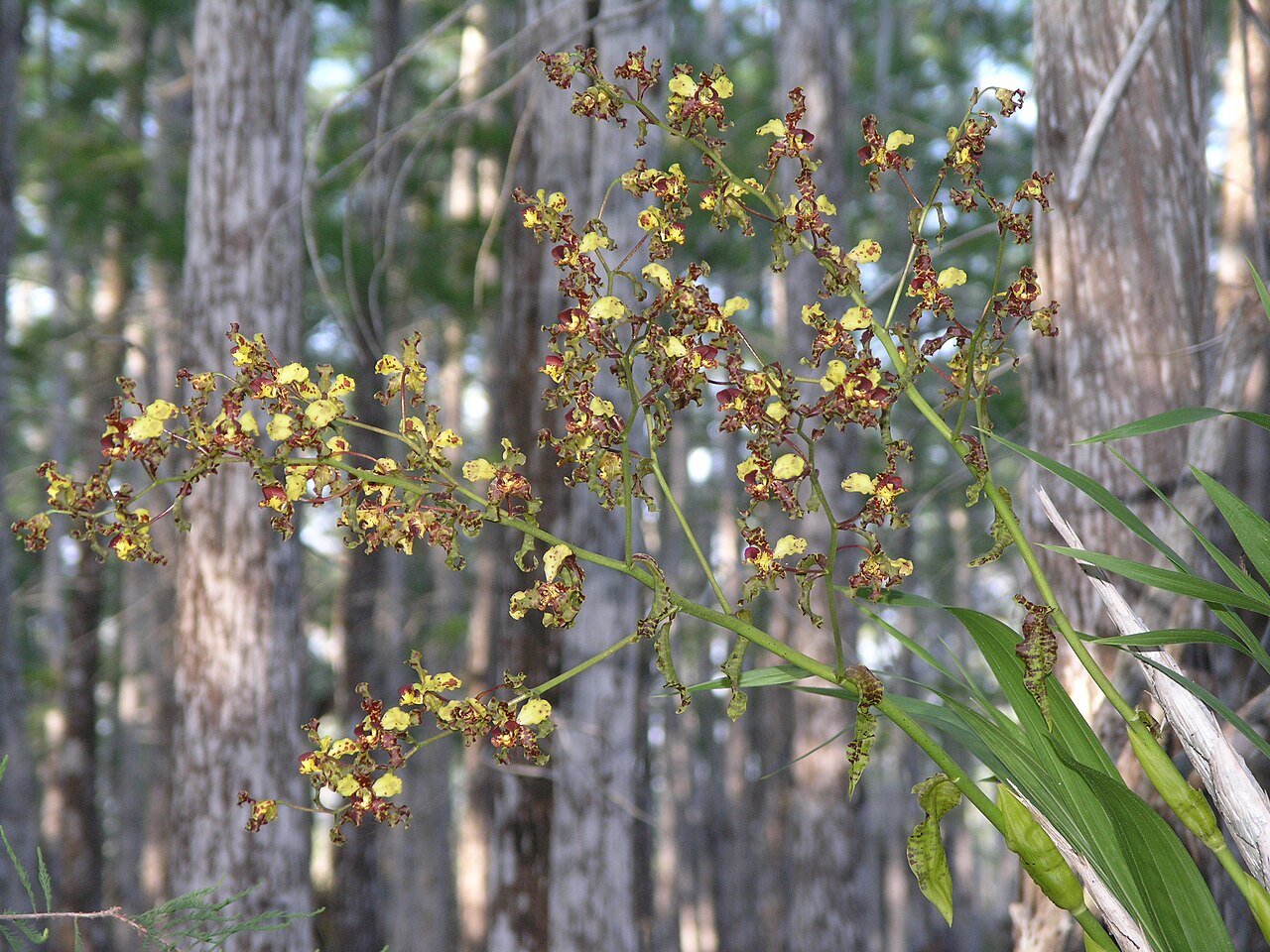
Cyrtopodium punctatum, known as the Cowhorn Orchid or cigar orchid, and in Puerto Rico as cañuela or piñuela, is one of the largest and most spectacular native orchids in the United States. It grows from thick, cigar-shaped pseudobulbs topped with long, grass-like leaves, and in spring sends up branched flower spikes bearing dozens of yellow flowers heavily spotted with maroon (punctatum means “spotted”). Old plants form huge clumps on tree trunks and stumps.
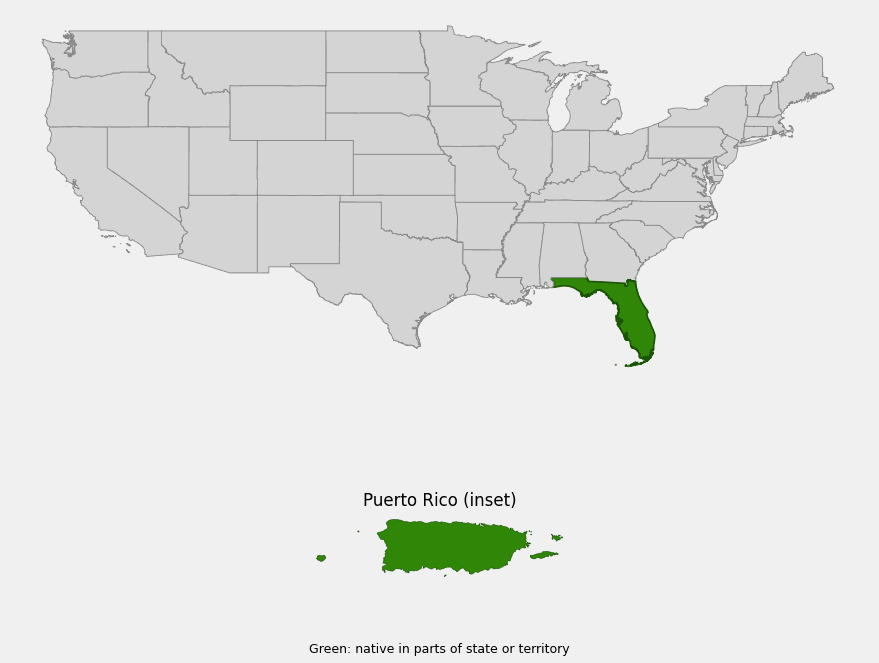
USDA PLANTS lists the cowhorn orchid as native in Florida and Puerto Rico. In both places it is rare and was heavily collected in the twentieth century. The Atlas of Florida Plants lists it as state Endangered in Florida, and the Institute for Regional Conservation (IRC) ranks it critically imperiled in South Florida. In Puerto Rico the Department of Natural and Environmental Resources (DRNA) tracks it as a critical element, and IRC’s preliminary assessment ranks it critically endangered on the island, where it is known from the northern limestone region.
This guide is for gardeners and orchid lovers in South Florida and Puerto Rico. It covers how to recognize the cowhorn orchid, where it grows, and how to grow nursery-raised plants. Buy nursery-propagated (seed-grown) plants only, and never collect cowhorn orchids from the wild.
Identification
Even out of bloom the cowhorn orchid is distinctive: clusters of thick, spindle- or cigar-shaped pseudobulbs, ringed with leaf scars, and a “basket” of upright roots around the base.
Pseudobulbs & Leaves
The pseudobulbs are fleshy, cigar- or horn-shaped stems that store water and food, giving the plant its common names. IRC’s Natives for Your Neighborhood gives the height of the pseudobulbs and leaves together as typically 1 to 3 feet. Each new pseudobulb produces several long, narrow, pleated (plicate) leaves that are deciduous, falling in the dry season to leave the bare, ringed pseudobulbs.
Roots
A unique feature is the mass of stiff, upright, pointed roots that grow from the base of the plant. They form a basket that traps falling leaves and other debris, which decay into a nutrient-rich mulch for the plant.
Flowers
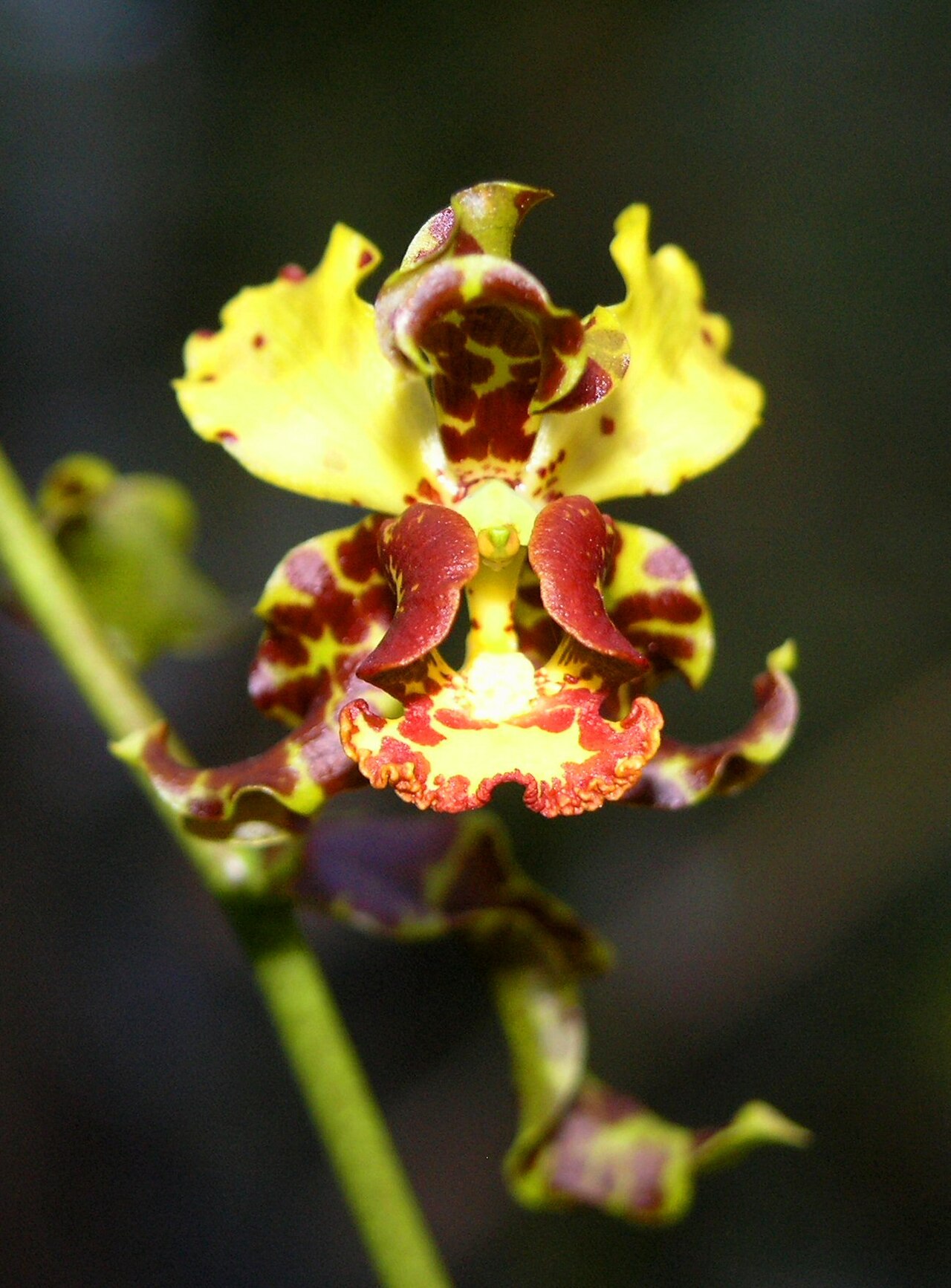
The branched flower spike grows from the base of a new pseudobulb in spring and stands above the leaves. It carries many flowers, each with wavy yellow sepals and petals spotted or blotched with maroon to brown, and a small, three-lobed, ruffled lip edged in red-brown. The bracts along the spike are also wavy and mottled, adding to the show. NFYN gives the flower color as yellow and brown and the flowering season as spring.
Fruit & Seeds
The fruit is a capsule containing numerous minute seeds that drift on the wind. As with all orchids, the seeds need a partner fungus to germinate, which is one reason wild seedlings are rarely seen.
Quick Facts
| Scientific Name | Cyrtopodium punctatum (L.) Lindl.; USDA common name: cowhorn orchid |
| Family | Orchidaceae (orchid family) |
| Plant Type | Large epiphytic (occasionally terrestrial) orchid with deciduous leaves |
| Mature Height | 1–3 ft (pseudobulbs and leaves); flower spike taller |
| Mature Spread | Forms clumps much broader than tall with age |
| Growth Rate | Slow |
| Sun Exposure | Light shade to full sun |
| Water Needs | Moderate in growth; drier in the leafless season |
| Soil Type | Epiphytic in moist, well-drained, humus-rich debris; or a very coarse orchid mix |
| Soil pH | Acidic to neutral |
| Bloom Time | Spring |
| Flower Color | Yellow with maroon to brown spots |
| Fall Color | None; leaves drop in the dry season |
| Fruit | Capsule with numerous minute seeds |
| Deer Resistant | Usually out of reach on trees |
| USDA Hardiness Zones | 10b–12; frost-tender |
Native Range
Cowhorn orchid is native to South Florida, the Caribbean and tropical America. IRC’s Puerto Rico database gives its native range as the Greater Antilles (Puerto Rico, Hispaniola, Cuba and the Cayman Islands), South Florida and northern South America, and IRC’s Florida database adds Central America, noting that it is absent from Jamaica. Within the area PlantNative covers, USDA PLANTS lists it as native in Florida and Puerto Rico.
In Florida IRC records it in Collier, Lee and Miami-Dade counties and in both mainland Monroe County and the Florida Keys, in strand swamps, dome swamps, mangrove swamps, coastal berms, marl prairies, pine rocklands and salt marsh edges. It still grows in Everglades National Park, Big Cypress National Preserve, Fakahatchee Strand, Collier-Seminole State Park, Picayune Strand State Forest and Corkscrew Swamp Sanctuary, but it is presumed extirpated at several Miami-Dade parks, including Bill Baggs Cape Florida State Park and the Deering Estate. In the Keys it was considered extirpated until it was rediscovered in 2017 at John Pennekamp Coral Reef State Park. NFYN notes that it was heavily collected in the twentieth century. The Atlas of Florida Plants lists it as state Endangered.
In Puerto Rico it is a rare plant of the northern limestone hills. IRC cites Ackerman (1995), who reported it as both terrestrial and epiphytic at low to middle elevations in moist forests of the northern limestone region, in Toa Baja, Arecibo and Isabela. Axelrod (2011) listed it as not recently collected but presumed present despite heavy collecting pressure. It was first listed as a rare species in Puerto Rico by Woodbury and colleagues in 1975, and the DRNA has listed it as a critical element since 1988.
📋 Regional plant lists featuring Cowhorn Orchid: Puerto Rico · North & South Florida
Growing & Care Guide
Cowhorn orchids are grown by orchid enthusiasts and botanical gardens, and NFYN notes that nursery plants are primarily grown from seed in sterilized flasks. Because wild populations in both Florida and Puerto Rico have been badly reduced by collecting, buy only seed-grown plants from reputable nurseries and never take plants from the wild.
Light
Give it bright light: NFYN lists light shade to full sun. In the wild it often grows on trees at the sunny edges of swamps and on snags. Plants in too much shade grow weak, thin pseudobulbs and rarely flower.
Soil & Water
In the wild it sits in a nest of its own upright roots filled with decaying leaves. In the garden, mount it on a tree, stump or palm boot, or grow it in a basket or large pot of very coarse, fast-draining orchid mix with some leaf mold. Water regularly while new growth and leaves are developing in the warm, wet season. When the leaves drop in the dry season, water much less; the pseudobulbs store water. It tolerates moderate salt wind if sheltered from direct spray, but not flooding with salt water.
Planting Tips
Fasten mounted plants securely with wire or plant tape until the roots grip; large clumps are heavy. A sunny cabbage palm, a cypress or a sturdy hardwood stump works well. In Florida, choose a frost-free spot or move plants under cover on cold nights.
Pruning & Maintenance
Do not remove old pseudobulbs; they store reserves for flowering. Leave fallen leaves in the root basket, where they become mulch. Remove only spent flower spikes and dead, shriveled pseudobulbs. Feed lightly during active growth.
Propagation
Large clumps can be divided after flowering, keeping several pseudobulbs in each piece. New plants for sale should be raised from seed in sterile laboratory flasks, the method used by commercial and conservation growers.
Landscape Uses
- Specimen orchid: a dramatic spring bloomer on a tree, stump or palm
- Native orchid gardens: South Florida and Puerto Rico native collections
- Conservation education: a showcase of Florida’s rare and over-collected orchids
- Pollinator gardens: spring flowers for native bees
- Containers and baskets: for patios with bright light
Wildlife & Ecological Value
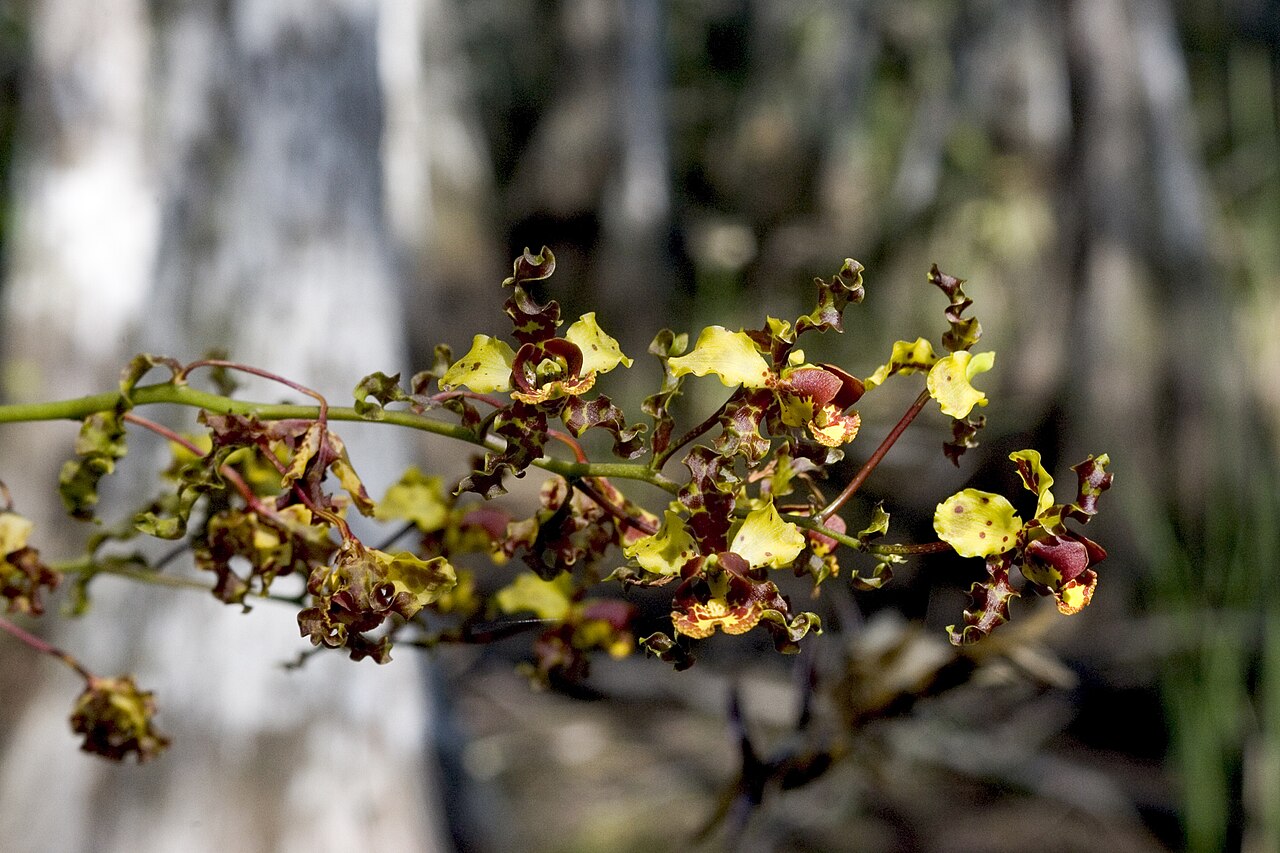
Cowhorn orchids form large, long-lived clumps that create their own small habitats on trees and stumps, and their spring flowers feed bees.
For Pollinators
The flowers are visited by bees. Like many Cyrtopodium species, its spotted yellow flowers resemble the oil- and pollen-rich flowers of other plants, which may help attract bees.
For Birds
Large clumps with root baskets offer perches and hunting spots for small birds and harbor the insects they eat.
For Mammals
It has no notable food value for mammals.
Ecosystem Role
The upright root basket traps leaves and other debris, building a small pocket of compost on the host tree that shelters insects, spiders and small frogs and feeds the orchid.
Cultural & Historical Uses
Linnaeus described this orchid in the eighteenth century as Epidendrum punctatum. The English orchid specialist John Lindley later moved it to Cyrtopodium, a genus named by Robert Brown from the Greek for “curved foot,” a reference to the curved base of the column and lip.
Its English names describe the pseudobulbs, which look like cow horns or cigars. In Puerto Rico it is known as cañuela (“little cane”) and piñuela, both recorded by IRC.
The cowhorn orchid’s story in Florida is one of loss and partial recovery. NFYN notes that it was heavily collected in the twentieth century, and IRC lists it as presumed extirpated at several Miami-Dade parks and hammocks. Today it survives mainly in protected areas, and its rediscovery in the Florida Keys in 2017 was welcome news for conservationists.
Frequently Asked Questions
Is the cowhorn orchid native to Florida and Puerto Rico?
Yes. USDA PLANTS lists Cyrtopodium punctatum as native in both. In Florida it grows in the southern counties and the Keys; in Puerto Rico it is a rare plant of the northern limestone region.
Is the cowhorn orchid protected?
In Florida it is listed as state Endangered (Atlas of Florida Plants). In Puerto Rico the DRNA tracks it as a critical element. Never collect it from the wild; buy seed-grown plants.
Why is it called the cowhorn or cigar orchid?
For its thick, curved, cigar-shaped pseudobulbs. Its Puerto Rican names are cañuela and piñuela.
Why does my cowhorn orchid lose its leaves?
It is naturally deciduous. The leaves drop during the dry season, and the bare pseudobulbs rest until the new growth and flower spikes appear in spring. Reduce watering while it is leafless.
When does it bloom?
In spring. The branched flower spikes rise from the base of new growth and can carry dozens of yellow and maroon flowers for several weeks.

Looking for a nursery that carries Cowhorn Orchid?
Our nursery directory does not yet include Puerto Rico. Browse the native plant nursery directory by state: Alabama–Arkansas · California · Colorado–Hawaii · Idaho–Kansas · Kentucky–Montana · Nebraska–Oklahoma · Oregon · Pennsylvania–Virginia · Washington · West Virginia–Wyoming