
Water Sprite (Ceratopteris thalictroides)
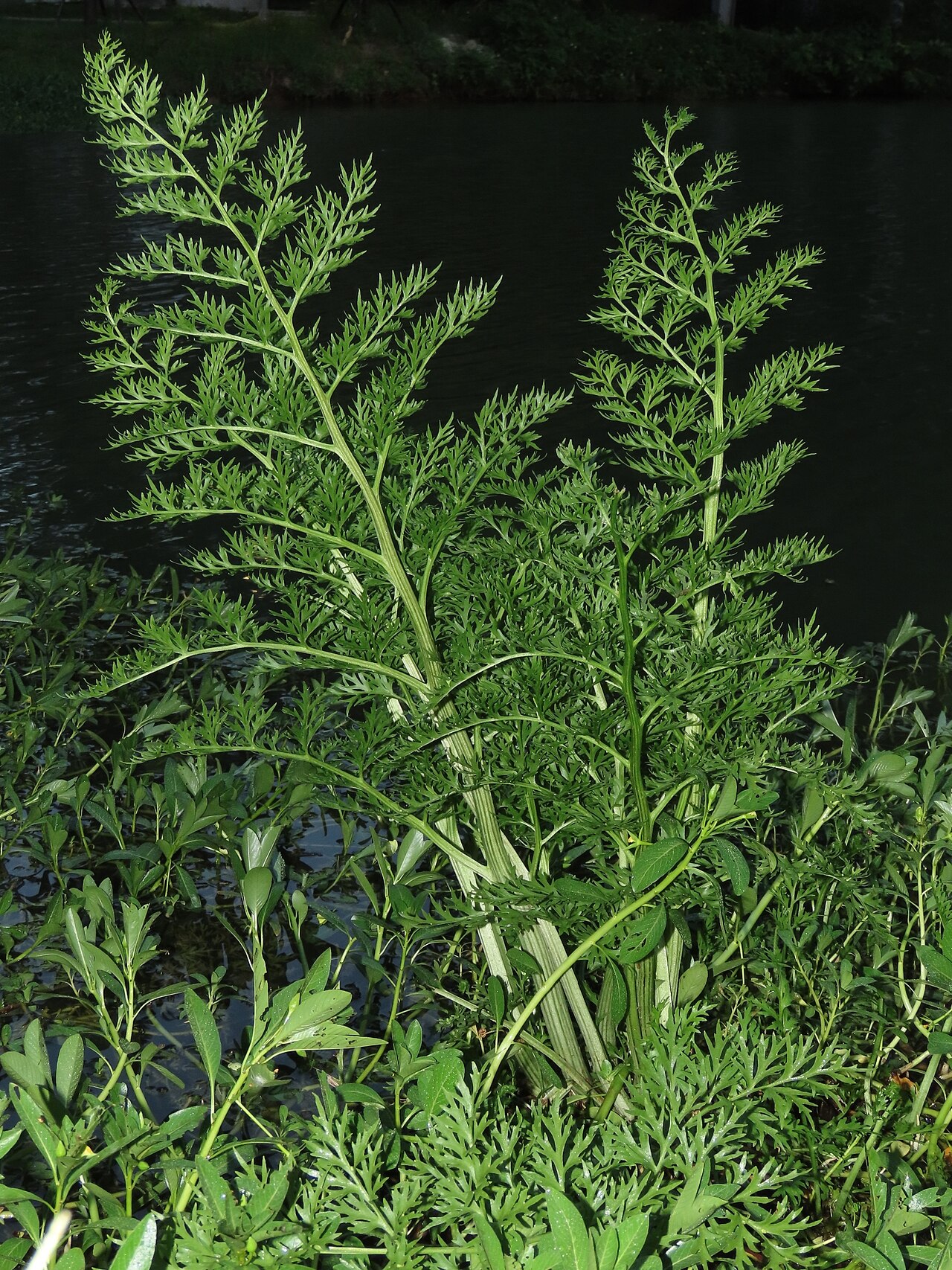
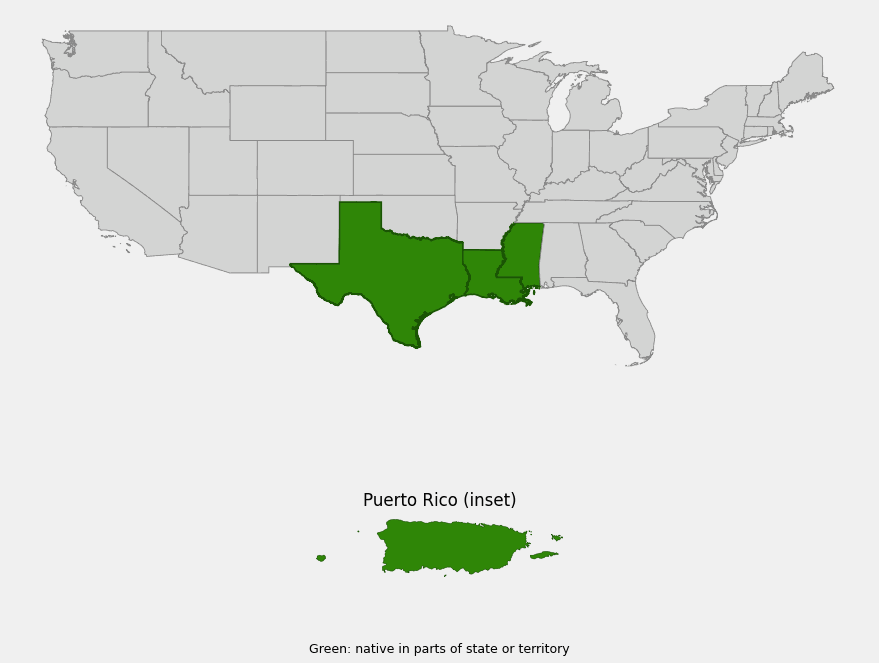
Ceratopteris thalictroides, known as Water Sprite, water fern, Indian fern or water hornfern, is a soft, bright green aquatic fern that grows rooted in mud or floating in shallow, warm, fresh water. It belongs to the maidenhair fern family (Pteridaceae) and is found throughout the tropics and subtropics of the world. In the United States, USDA PLANTS lists it as native in the lower 48 states and in Puerto Rico, where it grows in ditches, marshes, pond edges and wet fields.
Water sprite is one of the most popular aquarium plants. It grows fast, takes up excess nutrients, shades out algae, and can be planted in gravel or simply left floating, where its roots trail down and give cover to baby fish and shrimp. Few gardeners realize that this tank plant is also a wild fern of the Gulf Coast and the Caribbean. It is a short-lived plant that reproduces freely from spores and from tiny plantlets that sprout along its leaves.
Its status in the continental United States is not simple. USDA records it as native from Louisiana, Mississippi and Texas, while the Atlas of Florida Plants treats Florida populations as not native, and plants in California and Hawaii are introduced. This guide covers how to identify water sprite, where it grows wild, how to grow it in aquariums and ponds, and how to keep it from escaping into waters where it does not belong.
Identification
Water sprite is a fern, so it never flowers. What makes it distinctive is its two very different kinds of fronds, its swollen, spongy stalks, and the little plantlets that bud from its leaves.
Growth Habit
Plants form loose rosettes from a short, upright stem, with a mass of fine roots beneath. Rooted plants in mud or shallow water are typically 8 inches to 2 feet tall, occasionally taller in rich, warm sites. Detached plants float freely and keep growing at the surface. The frond stalks are thick, pale green and spongy, filled with air channels that help the plant float.
Sterile Fronds
The first fronds, and those of floating plants, are sterile (they carry no spores). They are broader and more succulent, simple to deeply lobed or once to twice divided, with rounded to lance-shaped segments, and they may lie flat on the water or stand just above it. Their shape varies a great deal, from oak-leaf-like lobes in young plants to lacy, finely cut blades under water, which is why aquarium plants can look quite different from wild ones.
Fertile Fronds
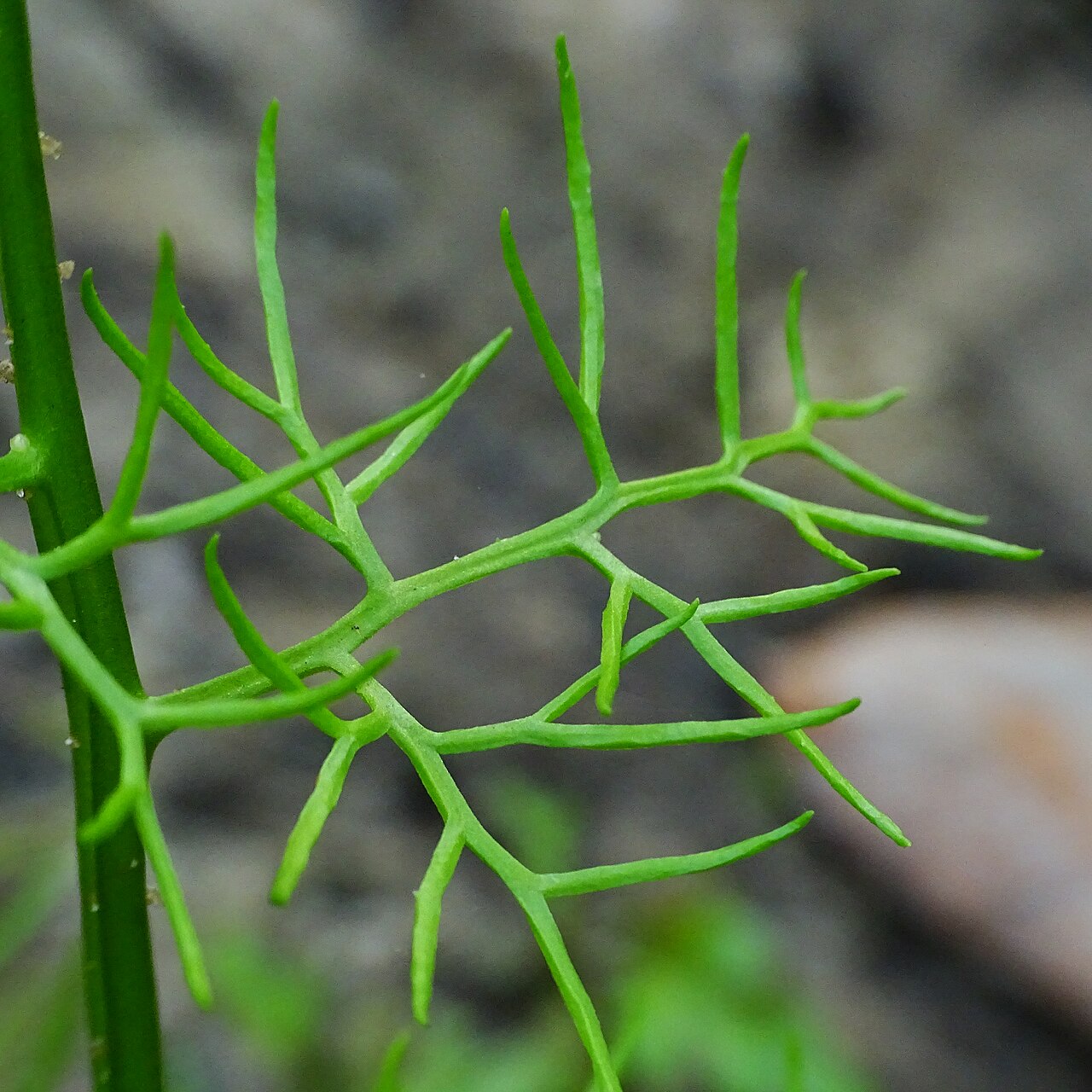
Mature plants send up taller fertile fronds, which are finely divided three or four times into long, very narrow, almost string-like segments. The edges of these segments roll under to cover the spore cases (sporangia) that run along their length, giving the frond a delicate, antler-like look, the source of the name “hornfern.” The large spores are released when the margins dry and open.
Plantlets
Small buds form in the notches between the lobes of older fronds, especially floating ones. Each bud grows into a tiny new plant with its own roots and leaves, which eventually breaks free. This is how a single water sprite can fill an aquarium or a pond edge within a season.
Quick Facts
| Scientific Name | Ceratopteris thalictroides |
| Family | Pteridaceae (maidenhair fern family; formerly Parkeriaceae) |
| Plant Type | Aquatic fern; annual or short-lived perennial |
| Mature Height | 8 in–2 ft (occasionally taller) |
| Mature Spread | 6–18 in per plant; spreads by plantlets |
| Growth Rate | Fast |
| Sun Exposure | Full sun to part shade; moderate light in aquariums |
| Water Needs | Aquatic; mud, shallow water or floating |
| Soil Type | Mud, silt or muck; aquarium sand or gravel |
| Soil pH | About 6.0–7.5 |
| Bloom Time | None (a fern; produces spores) |
| Flower Color | None |
| Fall Color | None; dies back with cold |
| Fruit | None; spores borne under rolled frond margins |
| Deer Resistant | Not applicable (aquatic) |
| USDA Hardiness Zones | 10–13 outdoors; aquarium plant elsewhere |
Native Range
Water sprite is pantropical, native to the warm parts of Asia, Africa, Australia, the Pacific islands and the Americas, and reaching as far north as Japan and Korea in East Asia. In the United States, USDA PLANTS lists it as native in Puerto Rico and in the lower 48 states, with records from Louisiana, Mississippi and Texas, and as native on Guam and Palau in the Pacific. It is introduced in Hawaii.
On the Gulf Coast it is rare and local, a plant of ditches, swamps, marshes, rice fields and the edges of ponds and bayous. Botanists disagree about how much of its mainland occurrence is truly native. The Atlas of Florida Plants classifies it as not native in Florida, where it is believed to have escaped from cultivation, and California records are also escapes. Because it is sold widely for aquariums, new populations near cities are usually assumed to be introduced.
The genus is taxonomically tricky. Related species include Ceratopteris pteridoides, the floating antler fern, which is native in Florida and Louisiana, and Ceratopteris richardii, the “C-fern” used in biology classrooms, which differs only in microscopic spore counts. Genetic studies suggest that what has been called C. thalictroides includes several cryptic species, so the names of American plants may change.
📋 Regional plant lists featuring Water Sprite: Puerto Rico · Alabama, Georgia & Mississippi · Arkansas, Louisiana, Eastern Oklahoma & Eastern Texas
Growing & Care Guide
Water sprite is easy to grow, as long as it stays warm and wet. Most people grow it as an aquarium plant; in frost-free climates it can also grow outdoors at the edges of ponds and water gardens. Buy it from aquarium or water garden suppliers, and never dump aquarium plants or water into ditches, ponds or streams.
Light
In aquariums, moderate to bright light gives compact, lush growth; it tolerates lower light but becomes thinner and leggier. Outdoors it does well in full sun to part shade at the edge of a pond, in a tub garden or in a wet bog area.
Soil & Water
It prefers soft to moderately hard water at about 68–82 °F (20–28 °C) and pH roughly 6 to 7.5. It suffers below about 60 °F and is killed by frost. In a tank, root it in sand or gravel or let it float. Floating plants take nutrients straight from the water, which helps control algae. Outdoors, plant it in wet mud or a pot of heavy soil set so the crown is at or just below the water line.
Planting Tips
When planting in gravel, bury only the roots and keep the crown free, or it may rot. Floating plants need no planting at all. Give it room: rooted plants can reach the surface of a standard aquarium and spread their fronds across it, which may shade slower plants below.
Pruning & Maintenance
Remove yellowing or crowded fronds at the base, and thin out floating mats regularly so light reaches the rest of the tank. Spare plantlets can be given away or composted; never throw them into natural waters. Because it is short-lived, older plants may decline after a year or so, but plantlets usually replace them.
Propagation
Propagation is almost automatic. Detach plantlets that form on older fronds once they have a few roots, and plant them or let them float. Spores sown on wet mud in a warm, humid container also germinate easily, which is why the related C-fern is used in classrooms to show the fern life cycle.
Landscape Uses
- Aquariums: a fast-growing background or floating plant that helps control algae
- Breeding and shrimp tanks: floating roots give cover to fry and shrimp
- Frost-free water gardens: pond margins, tub gardens and bog areas in zones 10–13
- Puerto Rico and Gulf Coast wetlands: a native component of ditches, marshes and swamps
- Teaching: a quick demonstration of fern life cycles and vegetative plantlets
Wildlife & Ecological Value
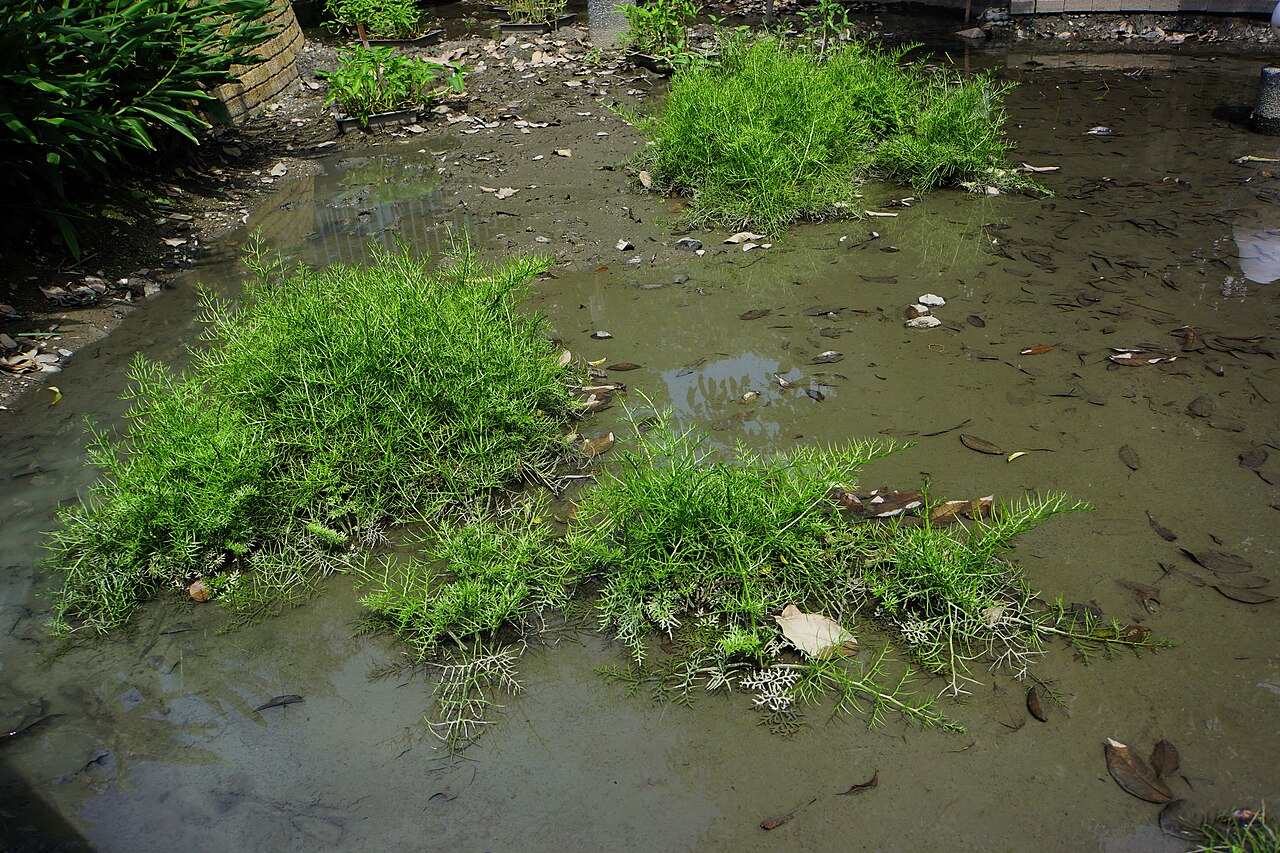
Water sprite is a small part of warm, shallow wetlands, but its dense growth offers shade and cover in water where many young animals live.
For Pollinators
As a fern, water sprite has no flowers and does not feed pollinators. Its fronds and roots shelter aquatic insects such as damselfly and mayfly larvae, which in turn feed fish, frogs and birds.
For Birds
Ducks, moorhens and other marsh birds feed among its floating mats on snails and insects, and waterfowl may eat the soft fronds.
For Mammals
It is of little direct importance to mammals, though grazing wetland animals may nibble the soft fronds.
Ecosystem Role
Water sprite is a fast-growing pioneer of newly flooded or disturbed wet ground, such as rice fields and fresh ditches, where its spores and plantlets let it appear quickly. Its fine roots and floating mats shelter fish fry, tadpoles and invertebrates and take up nutrients from the water.
Cultural & Historical Uses
Linnaeus described the plant in 1753 as Acrostichum thalictroides. The species name means “like Thalictrum,” the meadow-rues, whose finely divided leaves resemble its fronds. The French botanist Adolphe Brongniart moved it to his new genus Ceratopteris (“horn fern”) in 1821.
In parts of tropical Asia and Africa, including Madagascar and Eswatini, the young fronds are cooked and eaten as a vegetable, and water sprite is a common weed of rice paddies across Asia.
Water sprite, also sold as “Indian fern,” has long been an aquarium staple. It remains one of the most recommended beginner plants, and it is one of very few ferns that can live fully underwater. Its close relative Ceratopteris richardii has become a model organism in plant biology, used to study fern genetics and sex determination.
Frequently Asked Questions
Is water sprite native to the United States?
USDA PLANTS lists it as native in Puerto Rico and in Louisiana, Mississippi and Texas, and on Guam and Palau. The Atlas of Florida Plants treats Florida populations as not native, and plants in California and Hawaii are introduced. Because it is a common aquarium plant, some mainland populations may be escapes.
Can water sprite grow fully submerged?
Yes. It grows rooted underwater in aquariums, rooted in mud with fronds emerging above water, or floating at the surface. Submerged plants usually have more finely divided, delicate fronds.
How fast does water sprite grow?
Very fast in warm, well-lit tanks with some nutrients. A single plant can produce dozens of plantlets in a few months. That speed is why it is good for controlling algae, and also why it should be thinned regularly.
Can I grow water sprite in an outdoor pond?
Only in frost-free climates (roughly zones 10–13), or as a summer annual in a tub or pond farther north that you bring indoors before cold weather. It dies at frost and at prolonged water temperatures below about 60 °F.
Is water sprite the same as Ceratopteris cornuta or “broadleaf water sprite”?
Not exactly. The aquarium trade sells several Ceratopteris under similar names. Broad-leaved “water sprite” is usually C. cornuta or a related species, while the lacy form is C. thalictroides. All are grown in the same way.

Looking for a nursery that carries Water Sprite?
Browse our native plant nursery directory: Louisiana & Mississippi · Texas

