
Edible Thistle (Cirsium edule)
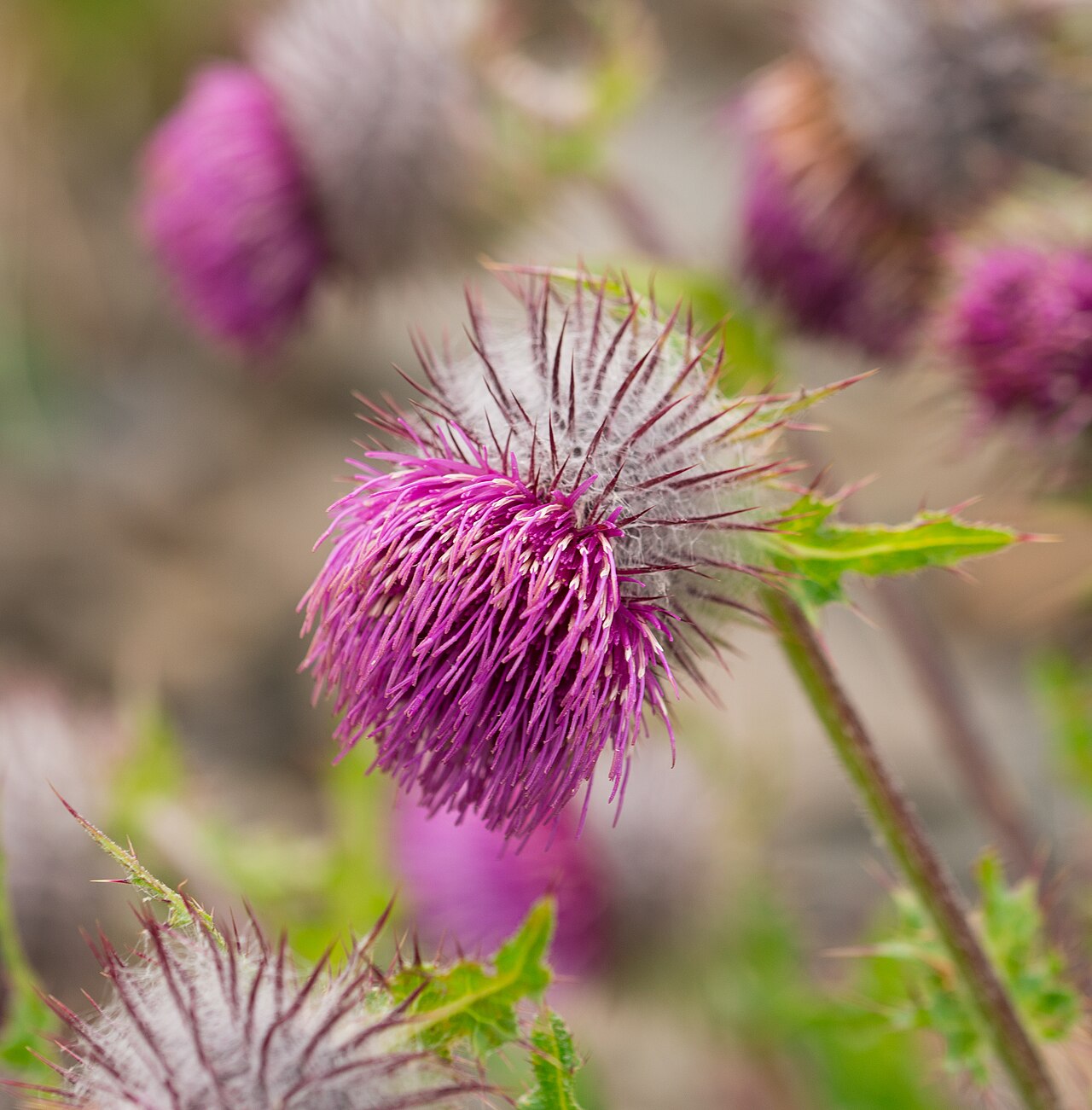
Cirsium edule, the Edible Thistle (also called Indian thistle), is a native thistle of the Pacific Northwest. It grows in moist mountain meadows, forest openings, avalanche chutes and roadsides in the Cascades, the Olympic Mountains and the Coast Mountains, from Oregon and Washington north through British Columbia to southeastern Alaska. From midsummer into early fall, its tall, leafy stems carry nodding, purple-pink flower heads wrapped in silvery, cobwebby hairs.
Its name comes from its use as food: Indigenous peoples of the Northwest peeled and ate the young stems and the roots, which are mild and somewhat like celery or artichoke. To bees and butterflies, it is one of the richest late-summer nectar sources in subalpine meadows, and goldfinches feed on its seeds.
Edible thistle is a native plant and is not the invasive problem that the introduced bull thistle and Canada thistle are. It usually lives for two or a few years, flowering once and then dying after it sets seed. This guide covers how to identify it, where it grows, how to grow it in a wildflower meadow and its value to wildlife.
Identification
Edible thistle is a tall, single-stemmed thistle with soft-spiny leaves and purple heads that often nod. The cobwebby hairs on the flower heads and the moist, montane habitat are good clues.
Stems & Leaves
In its first year it forms a rosette of long, lobed leaves. When it flowers, it sends up a single thick, hollow, rather succulent stem, usually 2 to 6 feet tall, sometimes branched near the top. The leaves are lance-shaped, 4 to 12 inches long at the base and smaller up the stem, with shallow to deep lobes and many weak spines along the edges. They are green, thin and sparsely to moderately cobwebby-hairy, not white-woolly. The stem is often softly hairy but not spiny-winged.
Flower Heads
From July to September, the stems end in one to several flower heads, often nodding at first. Each head is about 1 to 1½ inches across, with an involucre (the base of bracts) that is densely covered in white, cobwebby hairs. The outer bracts end in long, slender, spreading spines. The florets are all disk florets, purple to pinkish lavender.
Fruit
The seeds are small, smooth, light brown achenes, each with a tuft of feathery white bristles that carries it on the wind in late summer and fall.
Look-alikes
Introduced bull thistle (Cirsium vulgare) has stems with spiny wings, very prickly leaves and upright heads with yellow-tipped spines. Introduced Canada thistle (C. arvense) has small, numerous heads and spreads by creeping roots into dense patches. Native Cobwebby Thistle (C. occidentale) is a California and southern Oregon species of drier sites, with white-woolly leaves. Wavyleaf Thistle grows in drier grasslands east of the Cascades and has gray-woolly leaves.
Quick Facts
| Scientific Name | Cirsium edule Nutt. |
| Family | Asteraceae (aster family) |
| Plant Type | Biennial or short-lived perennial; dies after flowering |
| Mature Height | 2–6 ft |
| Mature Spread | 1–2 ft |
| Growth Rate | Fast (flowers in its second or later year) |
| Sun Exposure | Full sun to partial shade |
| Water Needs | Moist; does not tolerate long drought |
| Soil Type | Moist loam, gravelly or disturbed mountain soils |
| Soil pH | About 5.0–7.0 |
| Bloom Time | July–September |
| Flower Color | Purple to pinkish lavender |
| Fall Color | Fluffy white seed heads in late summer and fall |
| Fruit | Achene with a feathery white plume |
| Deer Resistant | Mostly; spiny leaves are seldom browsed |
| USDA Hardiness Zones | 5–8 |
Native Range
Edible thistle is native to the Pacific Northwest. USDA PLANTS lists it in Washington, Oregon, Idaho and Alaska, and it also grows throughout much of British Columbia. Its heartland is the Cascade Range and the Olympic Mountains of Washington, the Oregon Cascades and the Coast Mountains of British Columbia, extending north into southeastern Alaska. Idaho records are at the eastern edge of its range.
It grows mainly at middle to subalpine elevations in the mountains, in moist meadows, forest openings and clearings, avalanche tracks, stream banks and roadsides. It also occurs lower, in moist openings and disturbed ground in forested areas. It often comes up in numbers after logging, fire or road building opens up the forest.
Botanists have described several varieties, including plants of the Wenatchee Mountains on the east side of the Washington Cascades and plants of British Columbia and Alaska that have sometimes been treated as a separate species. USDA PLANTS treats them all under Cirsium edule.
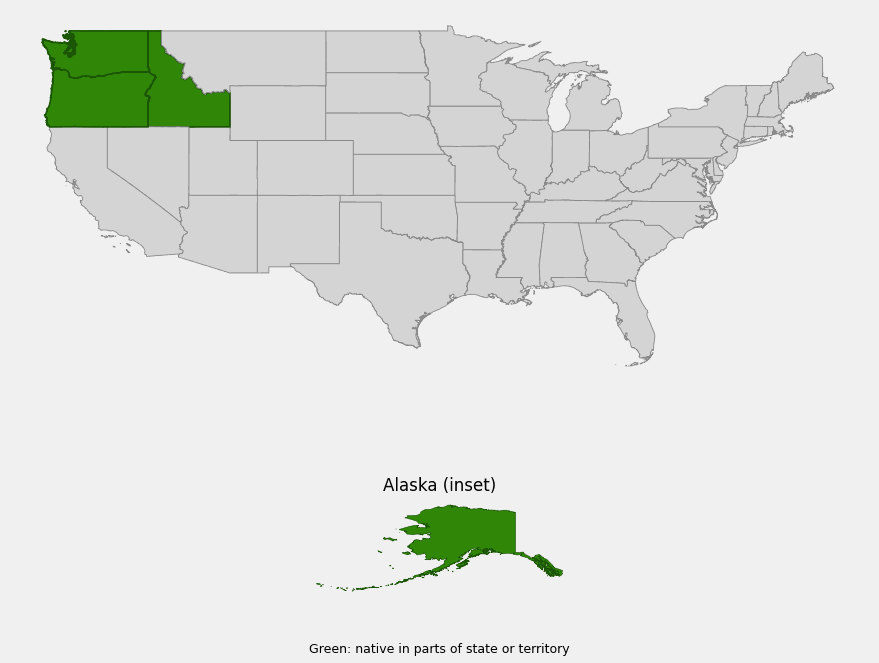
📋 Regional plant lists featuring Edible Thistle: Western Oregon & Western Washington · Idaho, Eastern Oregon & Eastern Washington · Alaska
Growing & Care Guide
Edible thistle is rarely sold, but seed is sometimes available from Pacific Northwest native seed suppliers. It is a good choice for a wild meadow or pollinator garden in the Northwest where you can give it moist soil and room. Because it is biennial and self-seeds, think of it as a plant for naturalistic plantings rather than a formal border. Collect seed only where permitted, and never dig plants from parks or wilderness.
Light
Full sun to partial shade. In its native meadows it gets bright sun, but it tolerates the light shade of forest edges, especially at lower elevations.
Soil & Water
It needs consistently moist, reasonably fertile soil, like that of mountain meadows fed by snowmelt. It handles clay, loam and gravelly soils. In dry, hot gardens it will need summer watering and may struggle.
Planting Tips
Sow seed in fall directly where you want it to grow, or start it in pots outdoors over winter. The first year it forms a rosette; it flowers in the second or a later year and then dies. Plant several years in a row, or let it self-sow, to have flowers every summer. Space plants 1 to 2 feet apart.
Pruning & Maintenance
Wear gloves when handling it. Leave flower heads to ripen if you want seedlings and want to feed goldfinches; cut them off before they open fully if you want to limit spread. Remove the dead stems after seeds have dispersed.
Propagation
From seed only. Fresh seed usually germinates well after a winter outdoors or a few weeks of cold, moist stratification. Seedlings transplant best while small, before the taproot develops.
Landscape Uses
- Pollinator meadows: late-summer nectar for bumble bees and butterflies
- Mountain and cabin gardens: native accent for moist, sunny clearings
- Restoration: revegetating moist openings and disturbed ground in Northwest forests
- Bird gardens: seeds and thistledown for goldfinches
Wildlife & Ecological Value
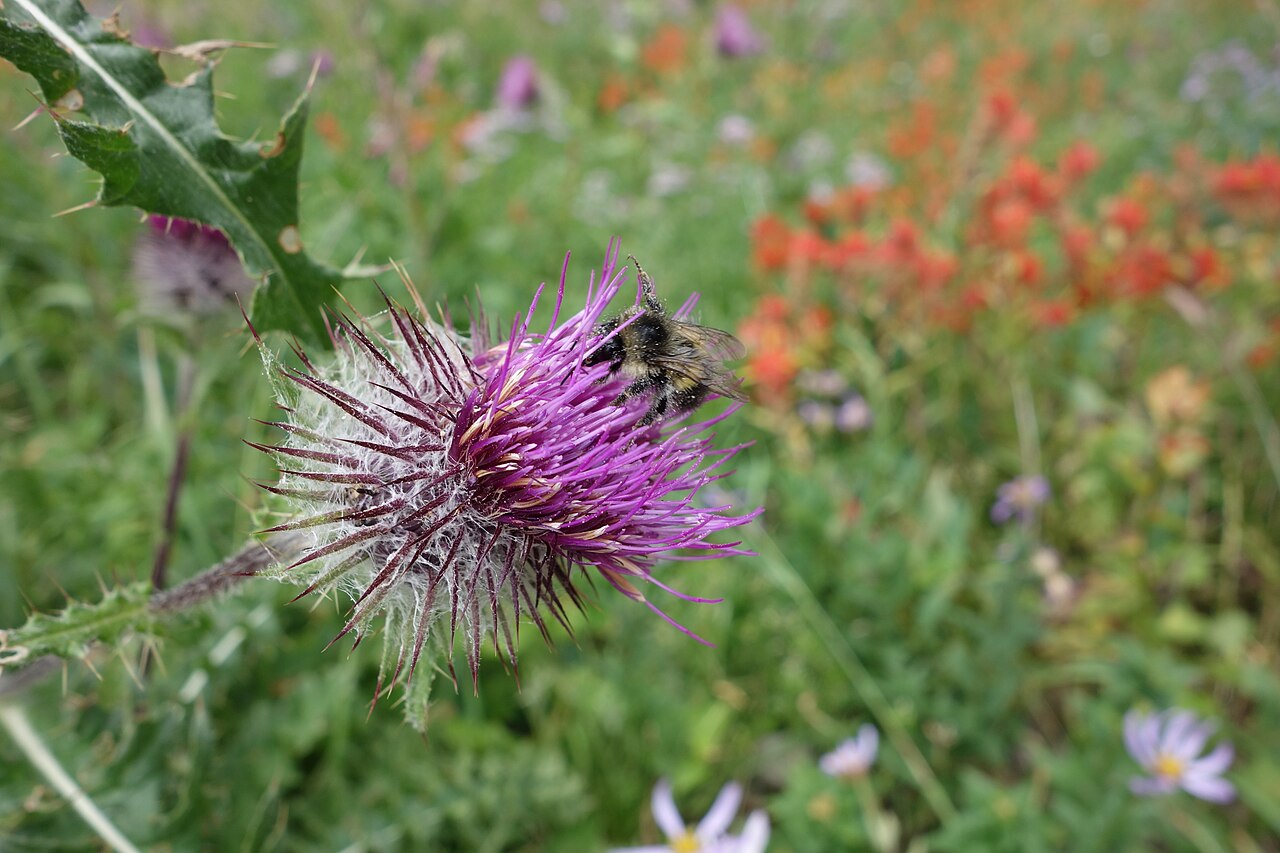
Native thistles like edible thistle are among the most valuable wildflowers for insects and seed-eating birds, and they are very different from the invasive thistles introduced from Europe.
For Pollinators
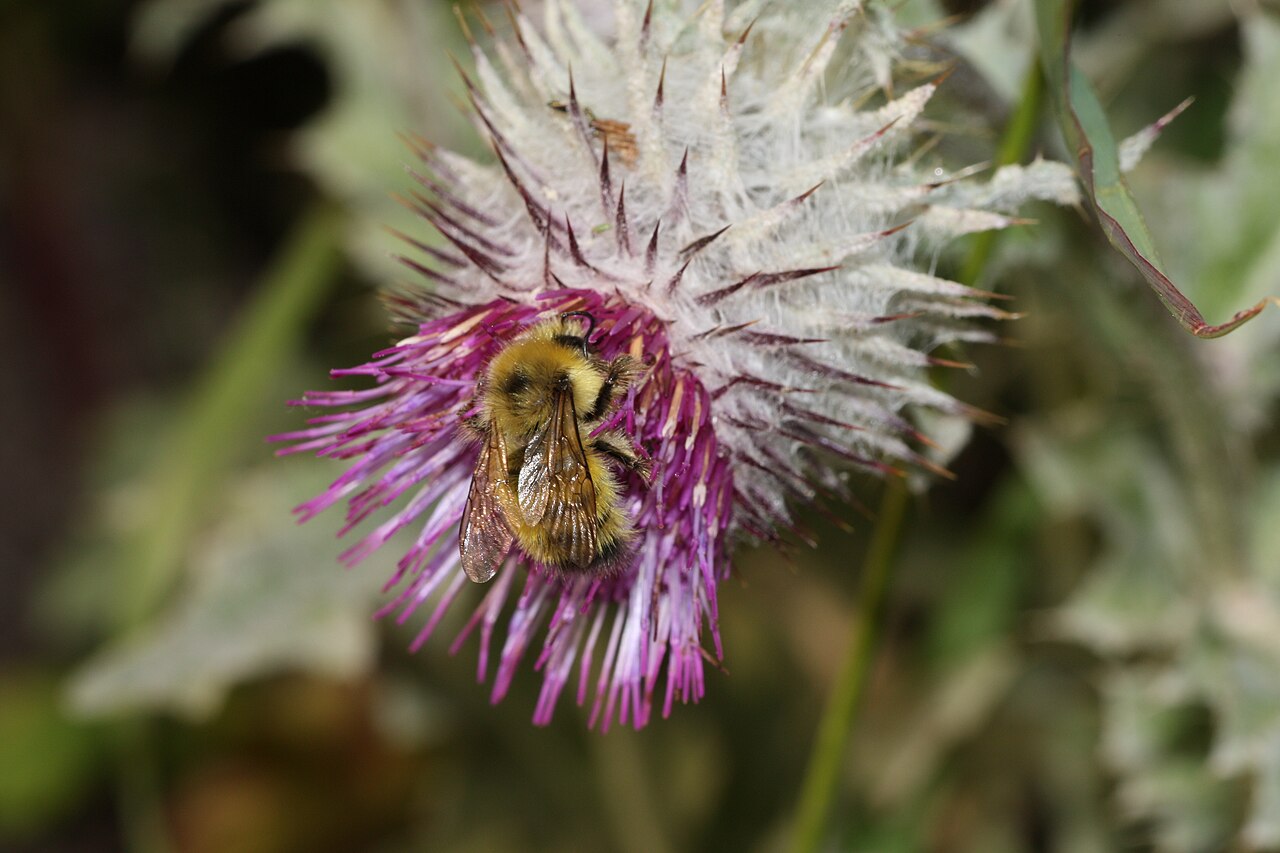
The large heads produce abundant nectar and pollen and are visited by bumble bees, other native bees, butterflies such as fritillaries, swallowtails and painted ladies, and hummingbird moths. Native thistles are larval host plants for the painted lady butterfly.
For Birds
American goldfinches and pine siskins eat the seeds, and goldfinches line their nests with thistledown, timing their late nesting to the thistle bloom. Hummingbirds occasionally visit the flowers.
For Mammals
Deer, elk and bears may occasionally feed on the stems or roots, and rodents eat the fallen seeds. The spiny leaves deter most browsing on older plants.
Ecosystem Role
As a pioneer of disturbed meadows, avalanche paths and forest openings, it helps stabilize soil and provides a late-summer food source in the short mountain growing season. Native thistles also support specialized insects, such as seed-feeding flies and weevils, that do not use introduced thistles.
Cultural & Historical Uses
Thomas Nuttall described Cirsium edule in 1841. The genus name comes from the Greek kirsos, a swollen vein, for which thistles were once used as a remedy, and the species name edule means “edible.”
Several Indigenous peoples of the Pacific Northwest and British Columbia used edible thistle as food. The young stems were peeled of their spiny skin and eaten raw or cooked, and the roots were also eaten. Thistle stems and roots are mild in flavor, sometimes compared to celery or artichoke hearts.
If you want to try it, harvest only where it is common and permitted, take a few stems from a large patch, be sure of the identification and avoid areas sprayed with herbicide along roads. Many people prefer simply to leave it for the bees and goldfinches.
Frequently Asked Questions
Is edible thistle really edible?
Yes. Indigenous peoples of the Pacific Northwest peeled and ate the young stems and roots, raw or cooked. Remove the spiny outer skin, harvest only where it is plentiful and allowed, and avoid roadsides that may have been sprayed.
Is edible thistle invasive?
No. It is a native thistle of the Pacific Northwest and part of natural meadow communities. The problem thistles in the region are introduced bull thistle and Canada thistle.
How do I tell edible thistle from bull thistle?
Edible thistle has stems without spiny wings, softer-spined leaves and purple heads covered in white cobwebby hairs that often nod. Bull thistle has spiny-winged stems, very prickly leaves and upright heads with stiff, yellow-tipped spines.
Where does edible thistle grow?
In moist meadows, forest openings, avalanche chutes and roadsides of the Cascades, Olympics and Coast Mountains, from Oregon and Washington through British Columbia to southeastern Alaska, with records east to Idaho.
Does edible thistle die after flowering?
Usually. It is a biennial or short-lived perennial that blooms once, sets seed and dies. It persists by self-seeding.

Looking for a nursery that carries Edible Thistle?
Browse our native plant nursery directory: Alaska · Idaho · Oregon · Washington

