
Prairie Milkweed (Asclepias sullivantii)
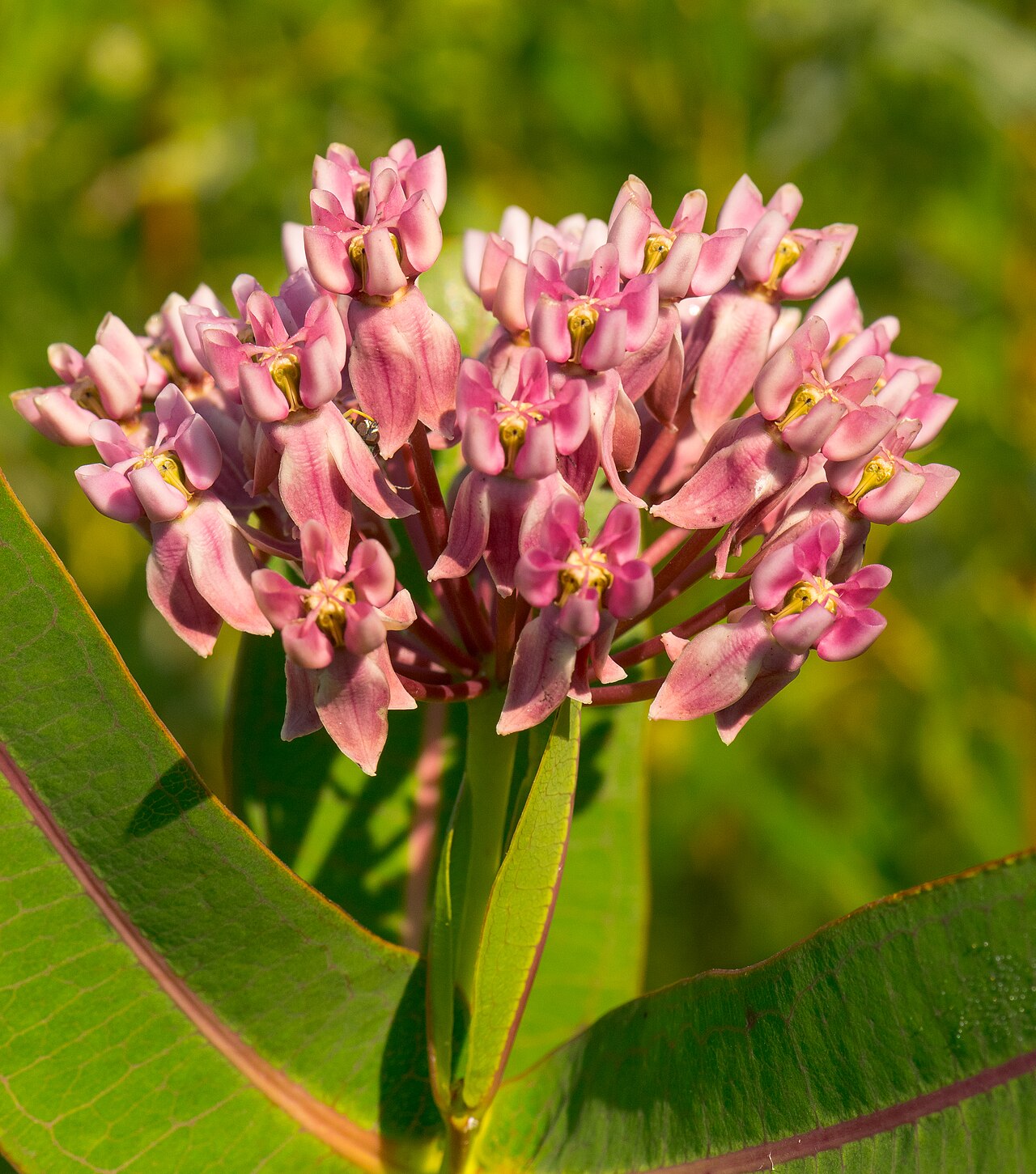
Asclepias sullivantii, the Prairie Milkweed (also called Sullivant’s milkweed or smooth milkweed), is a native milkweed of the tallgrass prairies of the Midwest and eastern Great Plains. It looks much like common milkweed, with rounded clusters of fragrant pink flowers in early summer, but its stems and leaves are completely smooth and hairless, and its thick, blue-green leaves often have a pink midrib.
It is a host plant for monarch butterflies and a rich nectar source for bees and butterflies. Unlike common milkweed, it spreads only modestly, so it suits prairie gardens and plantings where common milkweed would be too aggressive. In the wild it has become uncommon because most of the moist, rich prairies where it grows have been plowed; it is listed as threatened in Wisconsin and Michigan.
Safety note: like all milkweeds, prairie milkweed contains cardiac glycosides (cardenolides) in its milky sap and leaves. It is poisonous to people, pets and livestock if eaten, and the sap can irritate skin and is dangerous if it gets in the eyes. Wear gloves when handling it, wash your hands afterward, and keep children and pets from chewing it.
Identification
Prairie milkweed is an upright, unbranched perennial with opposite leaves, milky sap and umbels of pink flowers. The key features are its smooth, hairless stems and leaves and its clasping, often pink-veined leaves.
Stems & Leaves
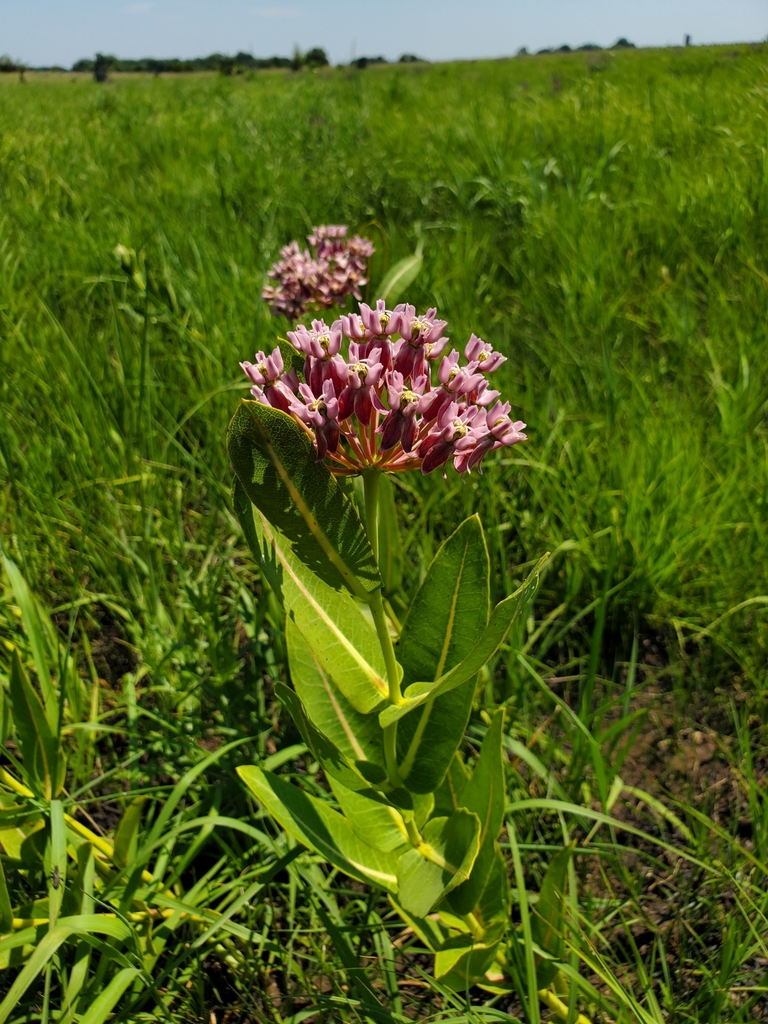
Stems are stout, unbranched, 2 to 3 feet tall, and smooth, often with a waxy bloom. Leaves are opposite, oblong to oval, 3 to 6 inches long, thick and smooth, with rounded or slightly heart-shaped bases that sit directly on or slightly clasp the stem. The midrib is frequently pink to reddish. The plant spreads slowly by rhizomes, forming small groups of stems.
Flowers
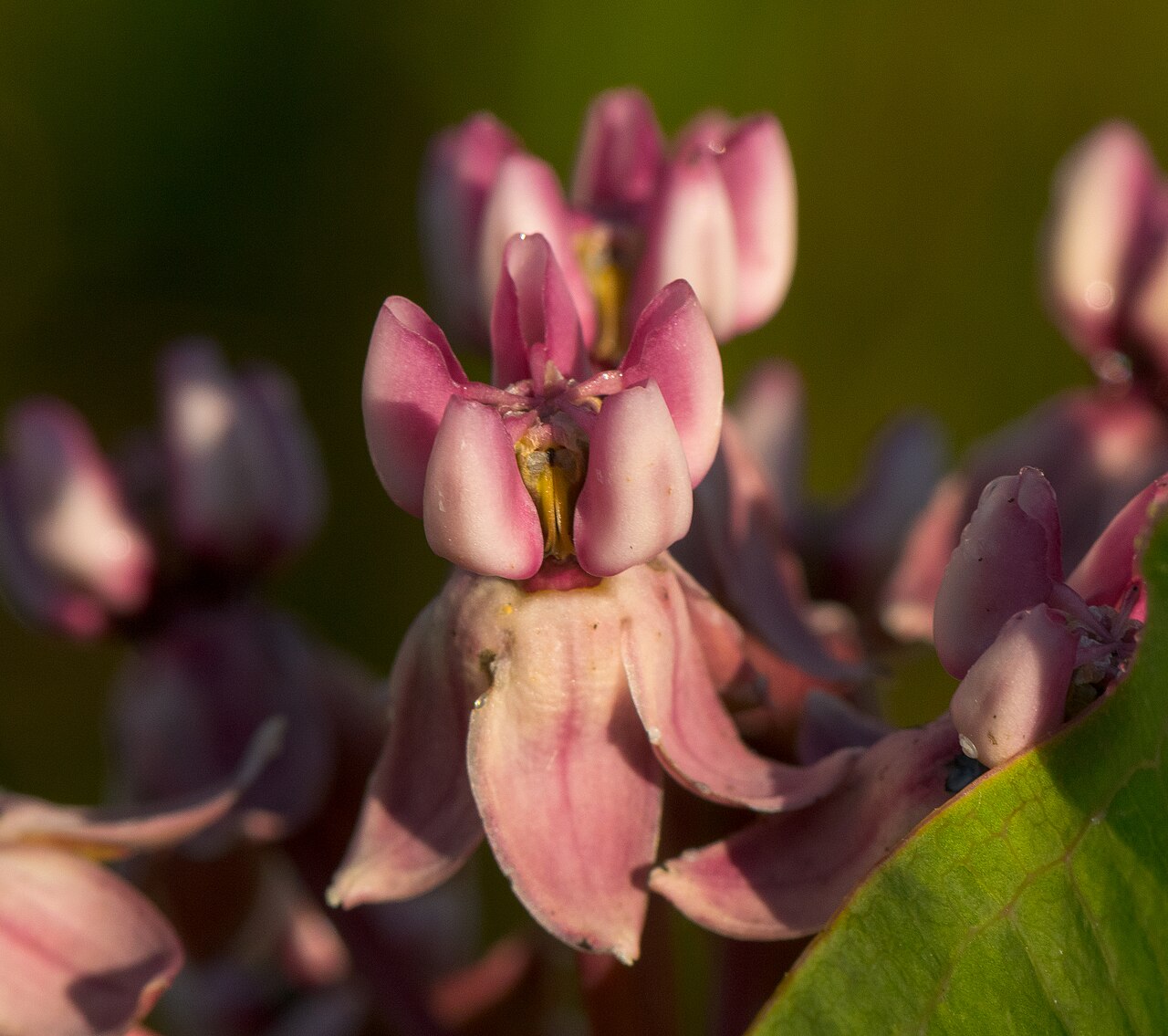
From June to July, it bears one to several rounded umbels of 10 to 40 flowers at the upper leaf nodes. Each flower is about ¾ inch long, with five pink to rose-purple petals bent back and an upright crown of five pink hoods. The flowers are fragrant and slightly larger than those of common milkweed.
Fruit
The seed pods are upright, spindle-shaped, 3 to 5 inches long, and smooth or with a few soft bumps near the tip. In late summer and fall they split to release flat brown seeds, each with a tuft of silky white hairs that carries it on the wind.
Look-alikes
Common Milkweed is very similar but has fine hairs on the stem and on the undersides of its leaves, leaves with short stalks, and warty pods. It also spreads much more aggressively. Purple Milkweed has deeper purple-red flowers and hairy leaves. Showy Milkweed of the West has larger, star-shaped flowers with long, pointed hoods and woolly leaves. Run a finger along the stem and leaves: if they are completely smooth, it is likely prairie milkweed.
Quick Facts
| Scientific Name | Asclepias sullivantii Engelm. ex A. Gray |
| Family | Apocynaceae (dogbane family; milkweeds formerly Asclepiadaceae) |
| Plant Type | Herbaceous perennial |
| Mature Height | 2–3 ft |
| Mature Spread | 1–2 ft; spreads slowly by rhizomes |
| Growth Rate | Moderate |
| Sun Exposure | Full sun |
| Water Needs | Moderate; moist to medium soils |
| Soil Type | Rich loam, clay loam; moist prairie soils |
| Soil pH | About 6.0–8.0 |
| Bloom Time | June–July |
| Flower Color | Pink to rose-purple |
| Fall Color | Leaves turn yellow before dying back |
| Fruit | Smooth upright pods with silky-tufted seeds |
| Deer Resistant | Yes; toxic sap deters deer and rabbits |
| USDA Hardiness Zones | 3–7 |
Native Range
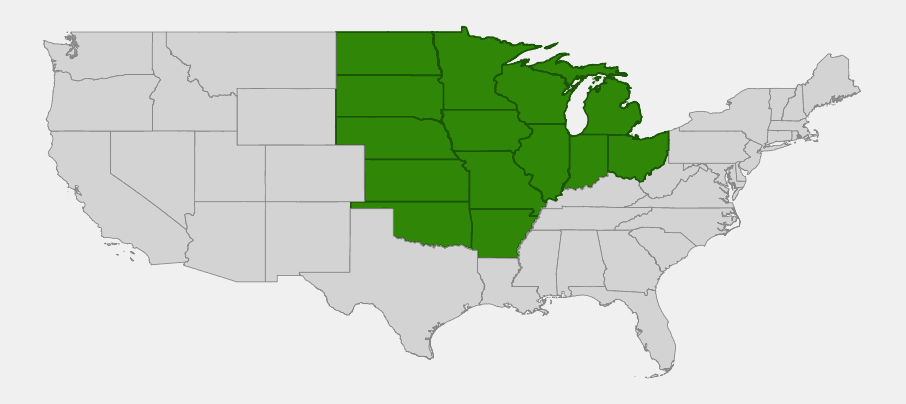
Prairie milkweed is native to the tallgrass prairie region of central North America. USDA PLANTS lists it in Ohio, Indiana, Illinois, Michigan, Wisconsin, Minnesota, Iowa, Missouri, Arkansas, North Dakota, South Dakota, Nebraska, Kansas and Oklahoma, and in Canada in southern Ontario. Its range runs from Ohio and southern Michigan west across the prairie states to the eastern Dakotas, eastern Nebraska and Kansas, and northeastern Oklahoma.
It grows in moist to medium tallgrass prairies, especially low, rich prairies, wet-mesic prairie swales, prairie edges along streams, and the remnant prairie strips along old railroads and roadsides. It favors deep, fertile soils that were among the first to be plowed for farming, so it is now found mostly in prairie remnants and preserves.
Because of this habitat loss, it is uncommon to rare toward the edges of its range. It is listed as a threatened species in Wisconsin and Michigan and tracked as rare in several other states and in Ontario. It is still locally frequent in prairie remnants in Iowa, Illinois, Missouri and Kansas, and it is increasingly included in prairie restorations and native seed mixes.
📋 Regional plant lists featuring Prairie Milkweed: Michigan, Wisconsin & Eastern Minnesota · Illinois, Iowa & Missouri · Ohio & Indiana · Nebraska, Kansas & Eastern Colorado · North Dakota, South Dakota & Western Minnesota · Arkansas, Louisiana, Eastern Oklahoma & Eastern Texas
Growing & Care Guide
Prairie milkweed is a well-behaved, attractive milkweed for sunny gardens and prairie plantings in the Midwest. Plants and seed are available from native nurseries in the region. Because it is rare in some states, buy nursery-propagated plants or seed and never dig plants from the wild. Wear gloves when handling it, since the sap is toxic and irritating.
Light
Full sun. It does not tolerate much shade and flowers poorly when crowded by taller plants.
Soil & Water
It grows best in deep, rich, moist to medium soil, including clay loam, like the low prairies where it grows wild. It tolerates short dry spells once established but prefers more moisture than butterfly weed. It does not need fertilizer.
Planting Tips
Plant small container plants in spring or early summer, spacing them 1 to 2 feet apart; it has a deep taproot-like root system and dislikes being moved later. Combine it with prairie grasses and wildflowers such as mountain mint, blazing star and goldenrods. It spreads slowly by rhizomes, much less than common milkweed.
Pruning & Maintenance
Leave the plants standing through the season so monarch caterpillars can finish feeding. Cut stems back in late fall or early spring. Milkweed aphids (bright yellow aphids) are common on milkweeds; they rarely harm the plant and feed beneficial insects, so avoid insecticides, which also kill caterpillars.
Propagation
Grow from seed. Sow outdoors in fall, or give seeds 30 to 60 days of cold, moist stratification before sowing in spring. Seedlings may take two or three years to flower. Established plants can also be propagated by rhizome cuttings taken in early spring. Wear gloves when handling broken stems.
Landscape Uses
- Monarch and pollinator gardens: a well-behaved milkweed host plant for monarchs
- Prairie restoration: a characteristic forb of moist tallgrass prairie
- Rain gardens and moist borders: tolerates heavy, moist soils
- Cut flowers: fragrant pink umbels; handle stems with gloves
Wildlife & Ecological Value
Like other milkweeds, prairie milkweed is a keystone plant for monarchs and supports a large community of insects.
For Pollinators
Monarch butterfly caterpillars feed on its leaves, and the toxic cardenolides they absorb help protect them from predators. The fragrant flowers produce abundant nectar and attract bumble bees, honey bees, other native bees, monarchs, swallowtails, fritillaries and other butterflies. Milkweed pollen is carried in paired sacs (pollinia) that clip onto the legs of visiting insects.
For Birds
Hummingbirds occasionally visit the flowers. Birds such as goldfinches and orioles may use the silky seed fibers in nests, and insect-eating birds feed on the many insects the plant supports.
For Mammals
Deer, rabbits and livestock generally avoid milkweeds because of their bitter, toxic sap.
Ecosystem Role
Milkweeds host specialized insects found on few other plants, including monarchs, milkweed tussock moths, red milkweed beetles, milkweed longhorn beetles and large milkweed bugs, many of which are brightly colored as a warning that they carry the plant’s toxins. Prairie milkweed is an indicator of high-quality moist prairie.
Cultural & Historical Uses
George Engelmann named this milkweed, and Asa Gray published the name, honoring William Starling Sullivant (1803–1873), an Ohio botanist best known for his studies of mosses and liverworts. Sullivant lived in Columbus, Ohio, near the eastern edge of this milkweed’s range. Asclepias is named for Asklepios, the Greek god of medicine.
Milkweeds were used by many Native American peoples for fiber, food after careful preparation, and medicine. Most records refer to common milkweed or to milkweeds in general rather than to prairie milkweed specifically. Because of the plant’s toxicity, these uses relied on traditional knowledge of preparation and should not be tried at home.
In recent decades prairie milkweed has gained attention through monarch conservation. Research and outreach on native milkweeds have encouraged gardeners in the Midwest to plant regionally native species like prairie milkweed, which offers monarchs a host plant without the aggressive spreading of common milkweed.
Frequently Asked Questions
Is prairie milkweed poisonous?
Yes. Like all milkweeds, it contains cardiac glycosides in its milky sap and leaves that are toxic to people, pets and livestock if eaten. The sap can irritate skin and is especially harmful in the eyes. Wear gloves, wash your hands after handling it, and keep children and pets away from it.
How is prairie milkweed different from common milkweed?
Prairie milkweed has completely smooth, hairless stems and leaves, often with a pink midrib, and leaves that sit directly on the stem. Common milkweed has fuzzy stems and leaf undersides, short leaf stalks and warty pods, and it spreads much more aggressively.
Do monarchs use prairie milkweed?
Yes. Monarch butterflies lay eggs on it and their caterpillars eat the leaves. The flowers also feed adult monarchs and many other butterflies and bees.
Is prairie milkweed invasive or aggressive?
No. It spreads slowly by rhizomes and stays in small clumps, which makes it a better choice than common milkweed for small gardens.
Where does prairie milkweed grow?
In moist to medium tallgrass prairies from Ohio and Michigan west to the eastern Dakotas, Nebraska, Kansas and Oklahoma, and in southern Ontario. It is rare in parts of its range and listed as threatened in Wisconsin and Michigan.

Looking for a nursery that carries Prairie Milkweed?
Browse our native plant nursery directory: Arkansas · Illinois, Indiana, Iowa & Kansas · Michigan, Minnesota & Missouri · Nebraska, North Dakota, Ohio & Oklahoma · South Dakota · Wisconsin

