
Death Valley Sage (Salvia funerea)
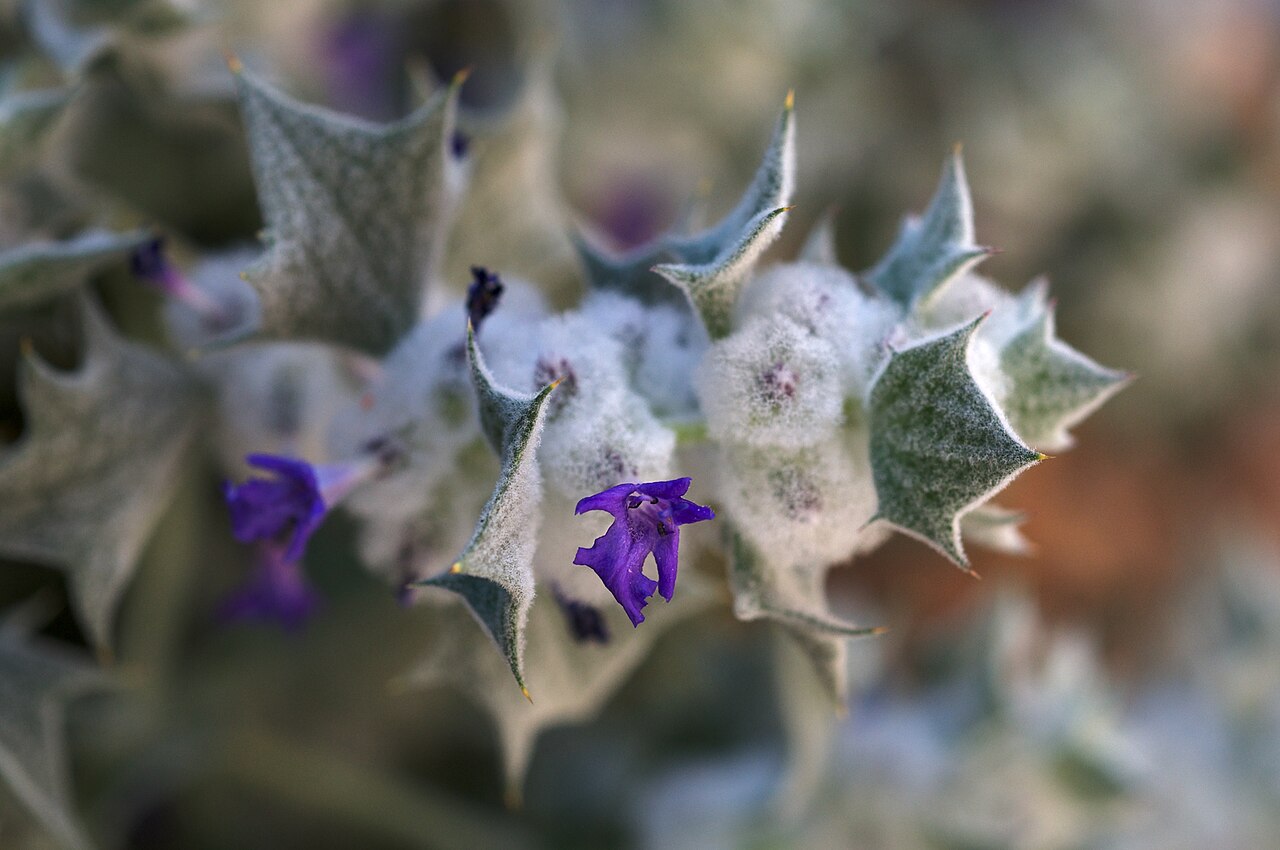
Salvia funerea, known as Death Valley Sage, woolly sage or funeral sage, is a small, densely branched shrub found almost entirely in and around Death Valley, in eastern California and the adjacent edge of Nevada. It grows in some of the hottest, driest terrain in North America: limestone canyon walls and alkaline desert washes in the mountains that ring Death Valley.
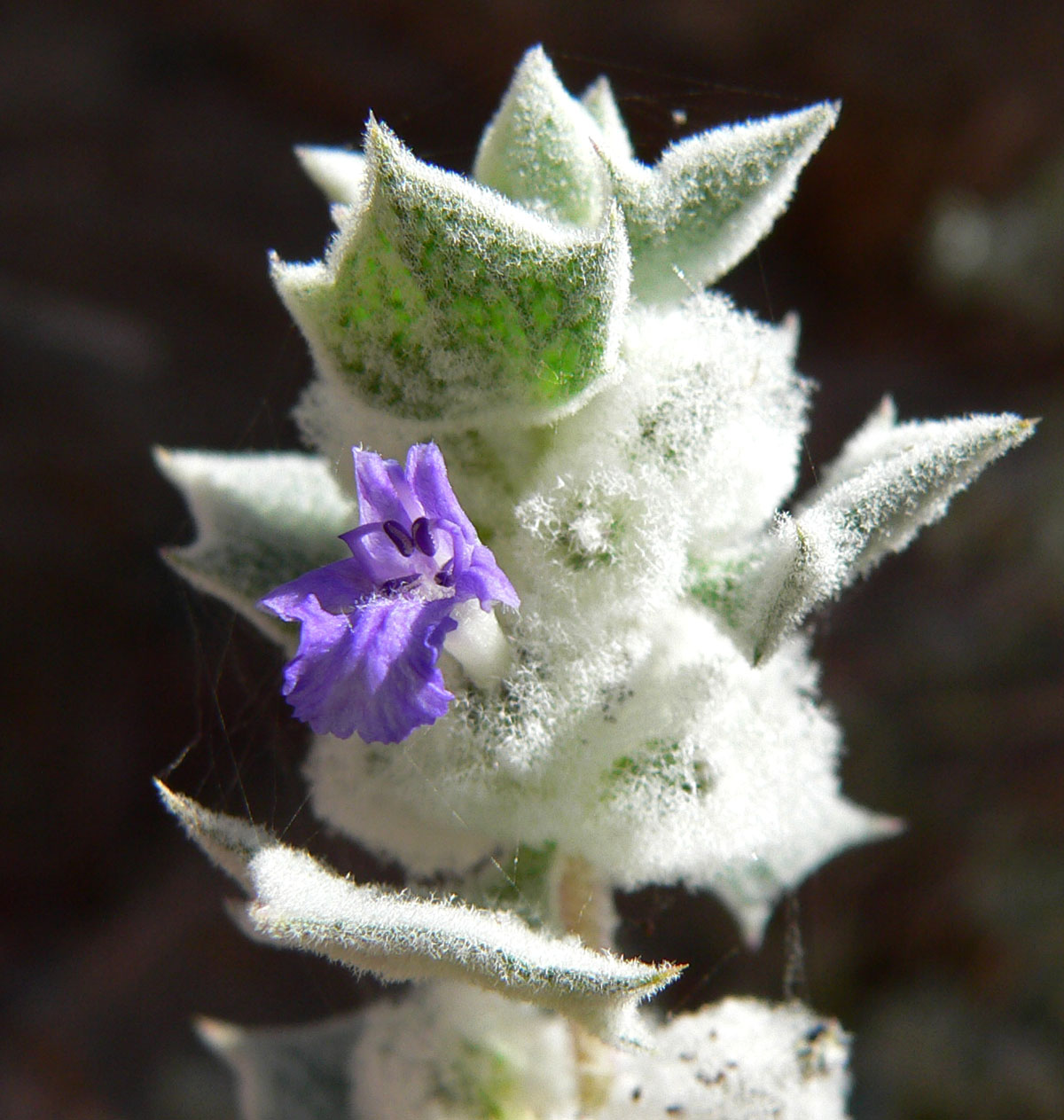
Its most striking feature is its color. The stems, leaves and flower clusters are covered with thick, white, woolly hairs that make the whole plant look ghostly or frosted. The leaves are small, gray-green under the wool, and edged with sharp spines like a tiny holly. In spring, deep violet, two-lipped flowers peek out from the woolly clusters.
Death Valley sage is a narrow endemic of the Mojave Desert and is almost never cultivated, so this guide focuses on how to identify it, where it grows and where to see it, along with its adaptations and ecological role.
Identification
Death Valley sage is easy to recognize where it grows: no other shrub in its canyons combines snowy white wool, spiny holly-like leaves and violet sage flowers.
Growth Habit
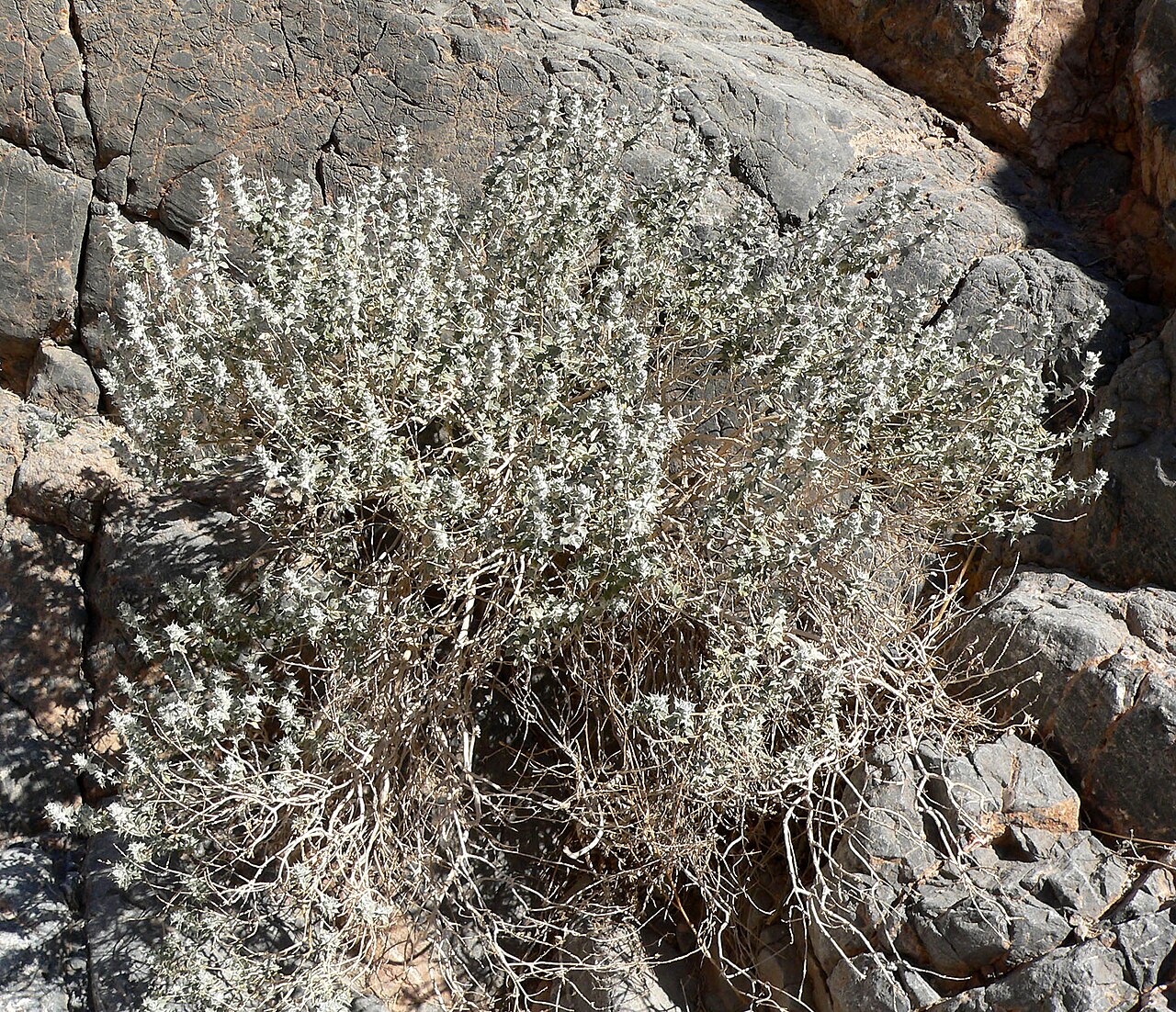
A compact, rounded, intricately branched shrub, usually 1½ to 3 feet tall and about as wide, sometimes slightly larger. The many stiff branches are densely covered in white, woolly hairs. It is semi-deciduous and may drop many of its leaves in the hottest, driest months.
Leaves
Leaves are opposite, small (about ⅜ to ¾ inch long), short-stalked and roughly ovate, with a sharp spine at the tip and often a few spine-tipped teeth along the edges. They are gray-green and felted with hairs, and their spiny outline resembles a miniature holly leaf.
Flowers
Flowers usually appear in small groups of about three in the axils of spiny leaves near the branch tips, from about March to May. The calyx has five spine-tipped, triangular lobes and is buried in wool. The violet, two-lipped corolla has a tube about ½ to ⅝ inch long, with the stamens and style held inside the tube rather than projecting out. In very dry years the plant may not flower at all.
Look-alikes
Desert Holly (Atriplex hymenelytra), which often grows nearby, also has silvery, holly-like leaves, but it has no woolly hairs and bears tiny, inconspicuous flowers rather than violet sage blossoms. Great Basin Sage (Salvia dorrii) has smooth, silvery, spoon-shaped leaves without spines and showy purple-blue flower heads.
Quick Facts
| Scientific Name | Salvia funerea M.E. Jones |
| Family | Lamiaceae (mint family) |
| Plant Type | Semi-deciduous woody shrub |
| Mature Height | 1½–3 ft |
| Mature Spread | 1½–3 ft |
| Growth Rate | Slow |
| Sun Exposure | Full sun |
| Water Needs | Very low; extreme desert conditions |
| Soil Type | Limestone rock, crevices and gravelly, alkaline wash soils |
| Soil pH | Alkaline |
| Bloom Time | March–May; may skip dry years |
| Flower Color | Deep violet to bluish-violet |
| Fall Color | None; white-woolly year-round |
| Fruit | Four small nutlets enclosed in the calyx |
| Deer Resistant | Yes; spiny and woolly, rarely browsed |
| USDA Hardiness Zones | About 8–10 |
Native Range
Death Valley sage has one of the smallest ranges of any western sage. USDA PLANTS lists it as native in California and Nevada. Most populations lie within Death Valley National Park, in Inyo County, California, and in adjacent Nye County, Nevada. It grows along the western slopes of the Amargosa Range (the Funeral, Black and Grapevine Mountains), including Titus Canyon, and in the northern Panamint Range in canyons such as Grotto and Mosaic Canyons.
It is closely tied to limestone and other carbonate rock. It grows on the walls of narrow limestone canyons, in rock crevices, and in dry, alkaline washes with limestone gravels, generally at low to middle elevations of the desert mountains. These are among the hottest places in North America, with summer temperatures that routinely exceed 110°F and annual rainfall of only a few inches.
It grows within creosote bush scrub, often with Creosote Bush, White Bursage, Desert Holly, Brittlebush and Desert Rock Nettle. Because its range is so restricted, it is tracked by the California Native Plant Society as a plant of limited distribution.
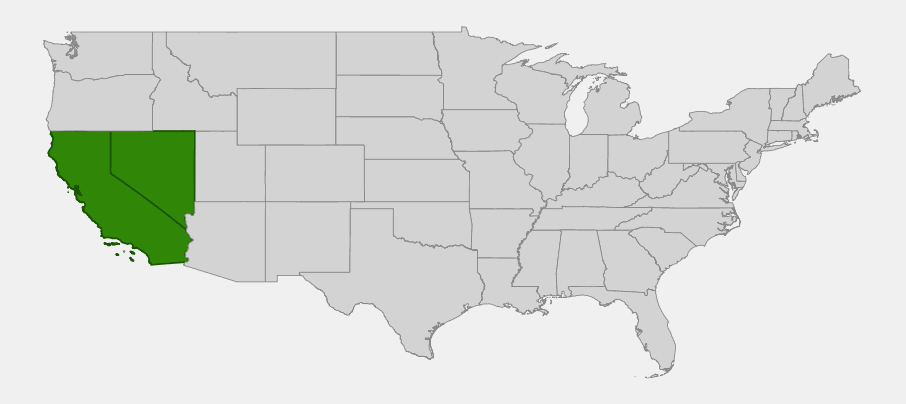
📋 Regional plant lists featuring Death Valley Sage: California & Nevada
Can You Grow It?
Realistically, Death Valley sage is not a garden plant. It is almost never offered by nurseries, and it is regarded as very difficult or unsuitable for cultivation because it needs extreme heat, very sharp drainage, limestone soils and almost no water. It flowers irregularly and its seed is hard to obtain. Most of its range lies within a national park, where collecting plants or seed is prohibited, so never dig or collect it from the wild.
Light
In the wild it grows in full, intense desert sun, often on south- or west-facing rock walls. Any attempt to grow it would need the hottest, sunniest spot available.
Soil & Water
It depends on fast-draining limestone gravel and rock crevices. Rich soil, irrigation and humidity are likely to kill it quickly through root rot. Specialist growers who have tried similar desert shrubs use pure mineral gravel and almost no summer water.
Planting Tips
For gardeners in the Mojave and Great Basin who want the same silvery, drought-proof look, better-behaved native alternatives include Great Basin Sage, White Bursage and Brittlebush, which are grown by desert native plant nurseries.
Pruning & Maintenance
In its habitat it needs no care. In a garden, any pruning should be minimal, removing only dead stems.
Propagation
Seed is rarely available because the plant does not flower every year and grows in hard-to-reach places. It is propagated, if at all, by botanical gardens and specialist growers for research and display, sometimes from cuttings of cultivated stock.
Where to See It
- Titus Canyon, Death Valley National Park: one of the best-known places to see it, along the canyon walls of the one-way Titus Canyon Road
- Mosaic and Grotto Canyons: limestone canyons in the northern Panamint Range near Stovepipe Wells
- Funeral and Black Mountains: canyons and washes on the east side of Death Valley
- Best season: spring, from about March to May, when it may be in flower; visit in cool weather and carry plenty of water
Wildlife & Ecological Value
Death Valley sage is superbly adapted to one of the harshest environments on Earth, and it is a small but important part of the desert canyon plant community.
For Pollinators
Its violet, two-lipped flowers are typical bee flowers in the sage genus, and they are visited by native desert bees in spring. Flowering is irregular, so in good years it can be a useful nectar source in canyons where few plants bloom.
For Birds
The dense, spiny shrubs give cover to small birds and lizards on bare rocky slopes. Seed-eating birds may take the small nutlets.
For Mammals
The spiny, woolly foliage is rarely browsed. Desert bighorn sheep and small rodents share its canyon habitat, but it is not known as an important food plant.
Ecosystem Role
The thick white wool reflects intense sunlight, insulates the leaves and slows water loss in the strong, drying winds that sweep through Death Valley. As a long-lived shrub on bare limestone, it helps stabilize rock debris and offers shade and shelter to seedlings and small animals.
Cultural & Historical Uses
The botanist Marcus E. Jones described Salvia funerea in 1908 from a specimen collected in Inyo County, California. The species name refers to the Funeral Mountains on the California-Nevada border, where it was first found, not to anything gloomy about the plant itself, though “funeral sage” is still one of its common names.
It is closely related to Salvia greatae, the Orocopia sage of the Colorado Desert, another spiny, desert-adapted sage. Both belong to a group of desert sages whose holly-like, spine-tipped leaves are unusual in the mostly soft-leaved genus.
The artist and naturalist Mary Vaux Walcott painted Death Valley sage in watercolor around the early 1930s; the painting is now held by the Smithsonian American Art Museum. Today it is one of the signature plants that visitors to Death Valley National Park look for in its canyons.
Frequently Asked Questions
Where does Death Valley sage grow?
Almost entirely in and around Death Valley National Park, in Inyo County, California, and adjacent Nye County, Nevada, on limestone canyon walls and in alkaline washes.
Why is it so white?
Its stems, leaves and flower clusters are covered in dense, woolly hairs. The wool reflects sunlight, insulates the plant and reduces water loss in extreme heat and drying winds.
Can I grow Death Valley sage?
Realistically, no. It is almost never sold and is considered unsuitable for cultivation because it needs extreme heat, limestone and almost no water. Never collect it from the wild; try Great Basin sage or white bursage instead.
When does it bloom?
Usually from March to May, but it may not flower at all in very dry years.
Why is it called funeral sage?
The name funerea refers to the Funeral Mountains along the California-Nevada border, where it was first collected.

Looking for a nursery that carries Death Valley Sage?
Browse our native plant nursery directory: California · Nevada

