
Desert Rock Nettle (Eucnide urens)
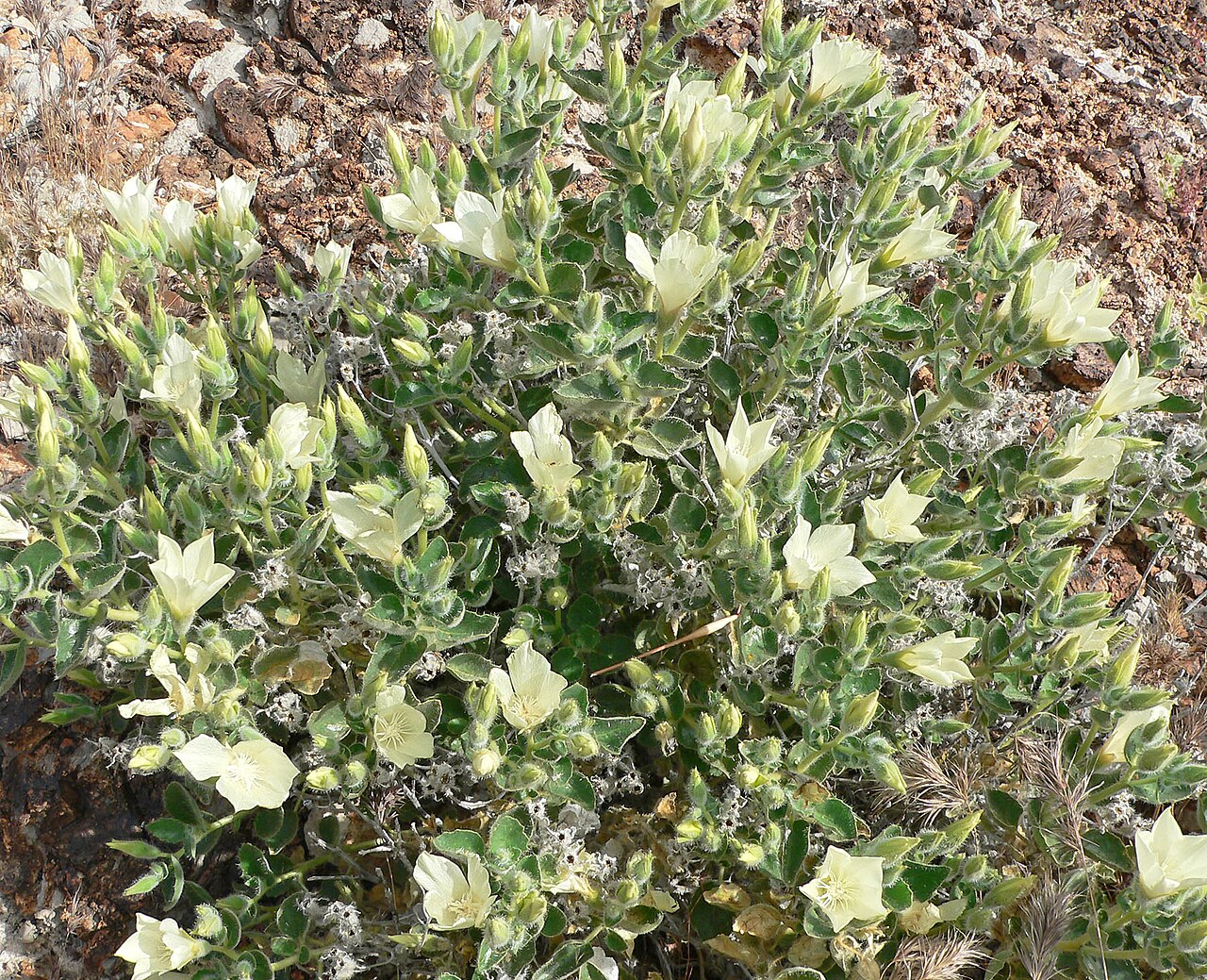
Eucnide urens, known as Desert Rock Nettle, desert stingbush or rock nettle, is a rounded, bushy subshrub of cliffs, canyon walls and rocky washes in the Mojave Desert and nearby deserts. In spring it nearly hides its gray-green foliage under large, silky, pale cream to soft yellow flowers, each with a bright brush of stamens in the center. USDA PLANTS calls it desert stingbush.
The flowers are lovely, but the plant earns both of its common names. Its leaves and stems are covered with barbed hairs that stick to anything, and stinging hairs that deliver a painful, nettle-like burn. It is not a true nettle; it belongs to the blazingstar family (Loasaceae), along with the blazing stars. Safety note: desert rock nettle is covered with stinging hairs that inject an irritant into the skin and cause sharp, burning pain, and barbed hairs that cling to skin and clothing. Do not touch or pick it. If you are stung, remove clinging hairs with tape, wash the area with soap and water, and seek medical advice if the reaction is severe.
Desert rock nettle is best known as a wildflower of places such as Death Valley, Lake Mead, Red Rock Canyon and the Grand Canyon. It is rarely grown in gardens, but it can be a striking plant for experienced desert gardeners with a rock wall far from paths. This guide covers how to identify it, where it grows, how it might be grown, and its value to desert bees.
Identification
Desert rock nettle is easy to recognize: a low, rounded, bristly bush growing out of rock, with large, cream-colored flowers in spring.
Growth Habit
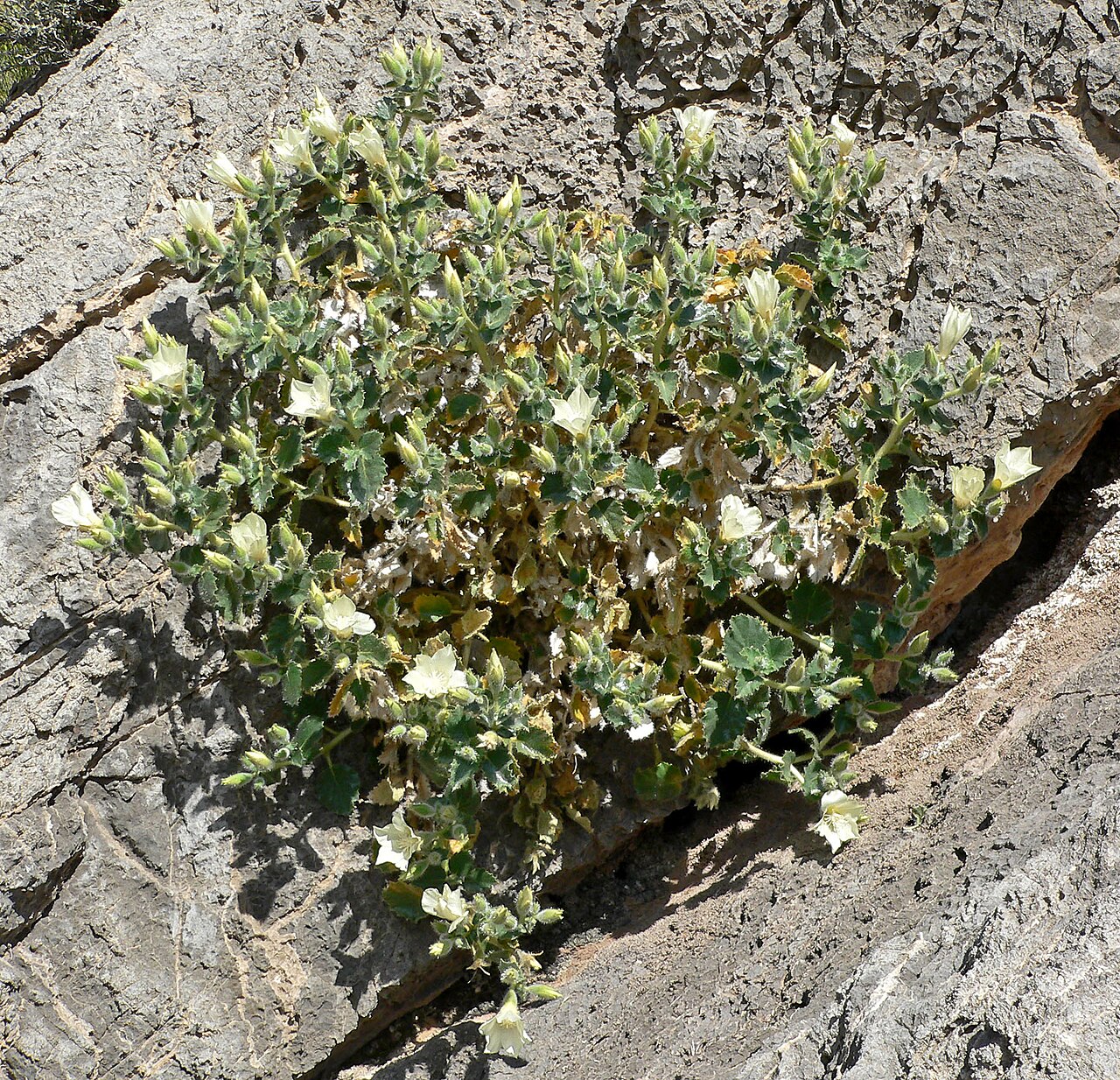
A rounded, densely branched subshrub, usually 1 to 2 feet tall and up to 3 feet across, generally broader than tall. The stems are woody at the base and covered, like the leaves, with stiff hairs. Plants often hang from cracks in cliffs and boulders or sit at the base of rock walls.
Leaves
The leaves are alternate, oval to nearly round, about 1 to 2½ inches long, with coarse, irregular teeth along the edges. They are gray-green and rough to the touch, densely covered with barbed hairs that make them cling like Velcro, mixed with longer stinging hairs.
Flowers
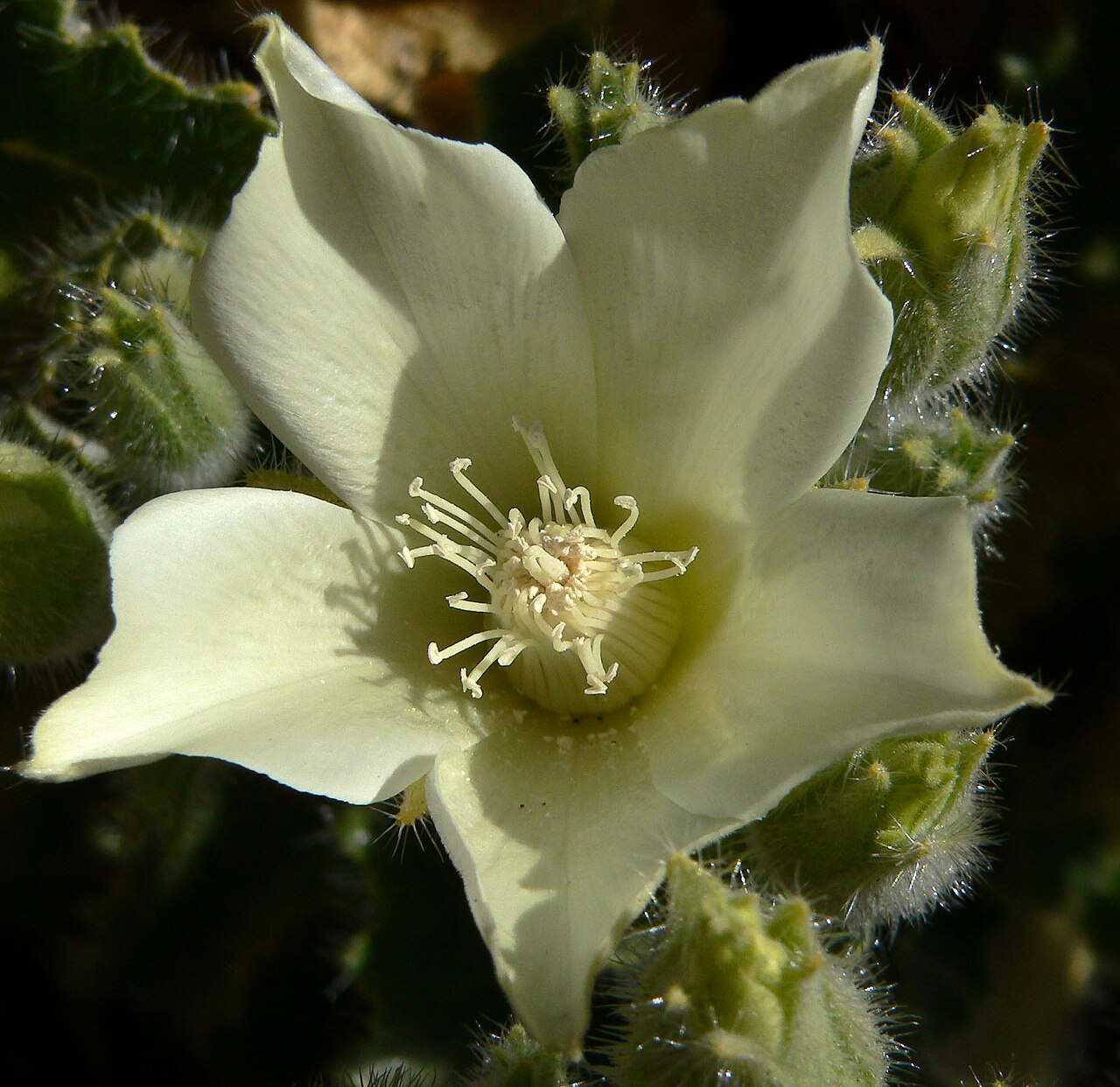
The flowers are large for a desert shrub, about 1½ to 2½ inches across, with five broad, satiny, pale cream to light yellow petals fused at the base into a shallow bowl. A dense cluster of many yellow stamens stands in the center. Flowers are borne in branched clusters at the stem tips and can cover the plant. The main bloom is in spring, roughly April to June.
Fruit & Seeds
Each flower forms a dry, cup- to cone-shaped capsule that opens at the top to release many tiny seeds. The persistent, bristly sepals stay attached to the capsule.
Look-alikes
Other plants in the blazingstar family, such as whitebract blazingstar (Mentzelia involucrata), also have sticky barbed hairs and pale flowers, but they are annuals or herbs with narrow leaves, not rounded shrubs. Its close relative Eucnide rupestris of the Sonoran Desert is an annual with small yellow flowers. In the Mojave, no other cliff-dwelling shrub has such large cream flowers and bristly, toothed leaves.
Quick Facts
| Scientific Name | Eucnide urens (A. Gray) Parry |
| Family | Loasaceae (blazingstar family) |
| Plant Type | Perennial subshrub with stinging hairs |
| Mature Height | 1–2 ft (rarely 3 ft) |
| Mature Spread | 2–3 ft |
| Growth Rate | Slow to moderate |
| Sun Exposure | Full sun |
| Water Needs | Very low; desert rainfall only |
| Soil Type | Rock crevices, rocky and gravelly soils, often limestone |
| Soil pH | Neutral to alkaline (about 7.0–8.5) |
| Bloom Time | April–June |
| Flower Color | Pale cream to light yellow |
| Fall Color | None of note |
| Fruit | Dry capsule with many tiny seeds |
| Deer Resistant | Yes; stinging hairs deter browsers |
| USDA Hardiness Zones | 7–10 |
Native Range
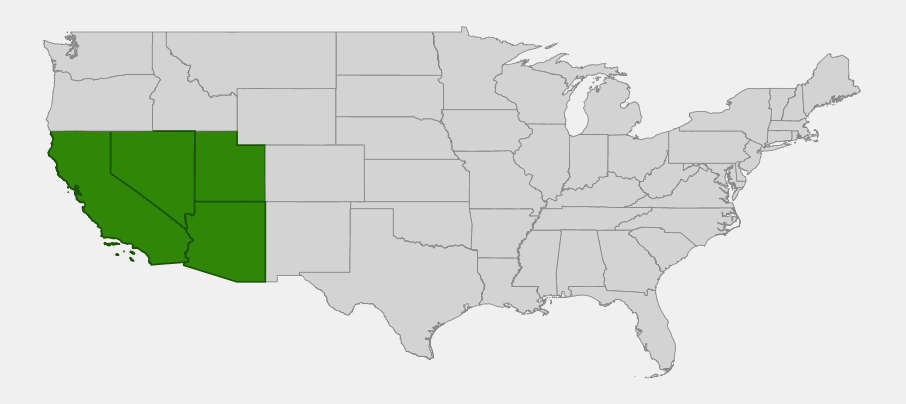
Desert rock nettle is native to the Mojave Desert and adjacent parts of the Great Basin and Sonoran Deserts. USDA PLANTS lists it in four states: California, Nevada, Utah and Arizona. In California it grows in the eastern Mojave Desert, including Death Valley, and into the northern Colorado Desert. It is common in southern Nevada around Las Vegas and Lake Mead, reaches its northeastern limit in southwestern Utah, and grows in western and northern Arizona, including the Grand Canyon. It also extends south into Baja California.
It is a true rock plant. Most plants grow on cliffs, canyon walls, boulder piles and rocky slopes, or in gravelly washes below them, often on limestone. Rooting in cracks lets it reach moisture stored deep in the rock while competition from other plants is low.
It occurs mostly at low and middle elevations, from below sea level in Death Valley to roughly 4,000 to 5,000 feet, together with typical Mojave shrubs such as creosote bush, brittlebush and desert agave.
📋 Regional plant lists featuring Desert Rock Nettle: Arizona & New Mexico · Utah & Western Colorado · California & Nevada
Growing & Care Guide
Desert rock nettle is seldom grown and rarely sold, but it can be raised from seed by patient desert gardeners. Because of its stinging hairs, give it a spot where no one will brush against it, such as the top of a rock wall or a dry slope away from paths, play areas and pets. Wear thick gloves and long sleeves when handling it.
Light
Full sun. It thrives on hot, south- and west-facing rock in the wild.
Soil & Water
Plant in very fast-draining rocky or gravelly soil, ideally between rocks or in a crevice where roots can reach cool, moist pockets. In its native deserts, rainfall is usually enough once it is established. Water occasionally during the first year, and avoid summer watering in heavy soil, which causes rot.
Planting Tips
Sow seed in fall or winter onto a gritty mix and keep it lightly moist until seedlings appear. Move seedlings to their final spot while small, because established plants have deep roots and dislike disturbance. A rock garden or dry stone wall that imitates a desert cliff is the most natural setting.
Pruning & Maintenance
Very little care is needed. If you must trim it, wear heavy gloves, long sleeves and eye protection. Do not shake or brush the plant while it is in seed; the bristly capsules cling to clothing.
Propagation
Grow it from seed. Collect capsules as they dry in early summer, wearing gloves, and store the tiny seeds dry. Seed from local desert seed collectors is sometimes available. It is not commonly propagated from cuttings.
Landscape Uses
- Rock walls and crevice gardens: a cliff-dwelling shrub that suits stony, hot sites
- Desert habitat gardens: spring flowers for native bees in Mojave Desert gardens
- Barrier planting: stinging, bristly foliage discourages people and animals
- Slope stabilization: deep roots in rocky, steep sites
- Wildflower viewing: a spring highlight in Death Valley, Lake Mead and the Grand Canyon
Wildlife & Ecological Value
On bare cliffs and rocky washes, desert rock nettle is one of the few large spring flowers, and it supports insects that depend on desert bloom.
For Pollinators
The large, open flowers with their mass of stamens offer pollen and nectar to native desert bees, and bees are its main visitors. Other insects, including beetles and flies, also visit the flowers in spring.
For Birds
Its direct value to birds is modest, but rock-dwelling birds such as canyon wrens and rock wrens forage for insects among cliff plants like this one.
For Mammals
Its stinging and barbed hairs protect it from browsing by bighorn sheep, burros and other herbivores, which tend to avoid it.
Ecosystem Role
As a pioneer of rock crevices, it helps hold soil on cliffs and in washes and adds flowers to otherwise sparse rocky habitats. Its bristly hairs are an effective defense in a desert where most plants must deal with hungry browsers.
Cultural & Historical Uses
The species was first described by Asa Gray as Mentzelia urens and later moved by Charles Parry to Eucnide. The genus name comes from Greek words meaning “good nettle”, and the species name urens is Latin for “burning” or “stinging”. Both names refer to its stinging hairs.
Its hairs come in two types: barbed, glass-like hairs that hook into skin and fabric, and true stinging hairs that break and release an irritant. Desert hikers soon learn to recognize the plant, and park rangers in Death Valley and Lake Mead often warn visitors not to pick its tempting flowers.
Plants in the blazingstar family, including desert rock nettle, are noted for their rough, clinging hairs, which help protect them from animals and may also help some seeds hitch rides on fur.
Frequently Asked Questions
Does desert rock nettle really sting?
Yes. Its leaves and stems are covered with stinging hairs that cause sharp, burning pain, and barbed hairs that cling to skin and clothing. Look, but do not touch.
Is it related to stinging nettle?
No. It belongs to the blazingstar family (Loasaceae), not the nettle family. It evolved stinging hairs independently.
Where can I see desert rock nettle?
On cliffs, canyon walls and rocky washes in the Mojave Desert, including Death Valley, Lake Mead National Recreation Area, Red Rock Canyon near Las Vegas and the Grand Canyon, mostly in April to June.
Can I grow desert rock nettle?
Yes, in hot, dry gardens in or near its native range, from seed in very fast-draining rocky soil and full sun. Plant it away from paths because of the stinging hairs.
What is the difference between desert rock nettle and desert stingbush?
They are the same plant. USDA PLANTS uses the name desert stingbush, while many field guides and park lists call it desert rock nettle or simply rock nettle.

Looking for a nursery that carries Desert Rock Nettle?
Browse our native plant nursery directory: Arizona · California · Nevada · Utah

