
Deer Oak (Quercus sadleriana)
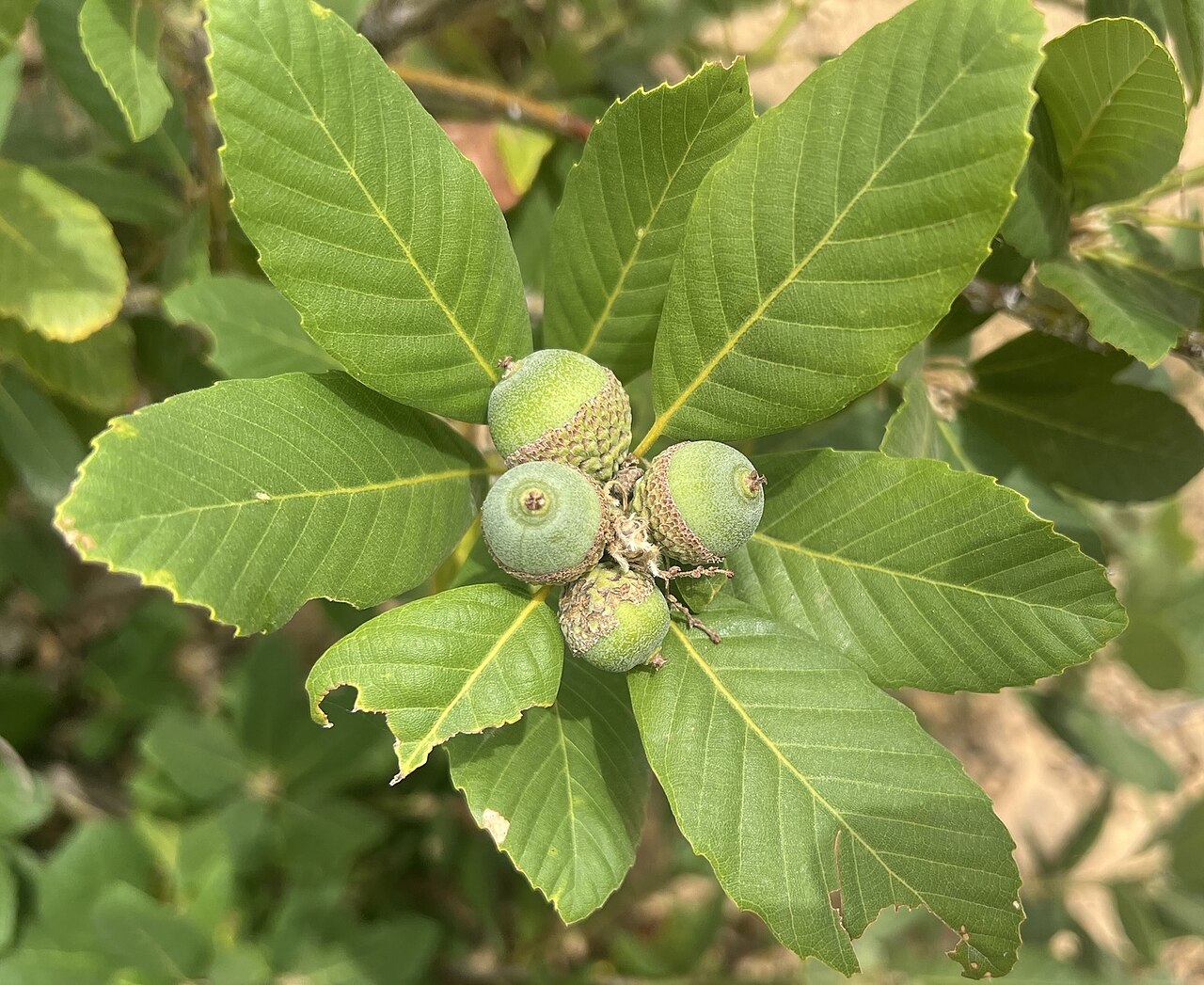
Quercus sadleriana, the Deer Oak (also called Sadler’s oak or Sadler oak), is an evergreen shrub oak found only in the Klamath–Siskiyou Mountains of southwestern Oregon and northwestern California. It grows on rocky mountain slopes, in chaparral and in the understory of mixed conifer forests, mostly between about 2,000 and 7,000 feet.
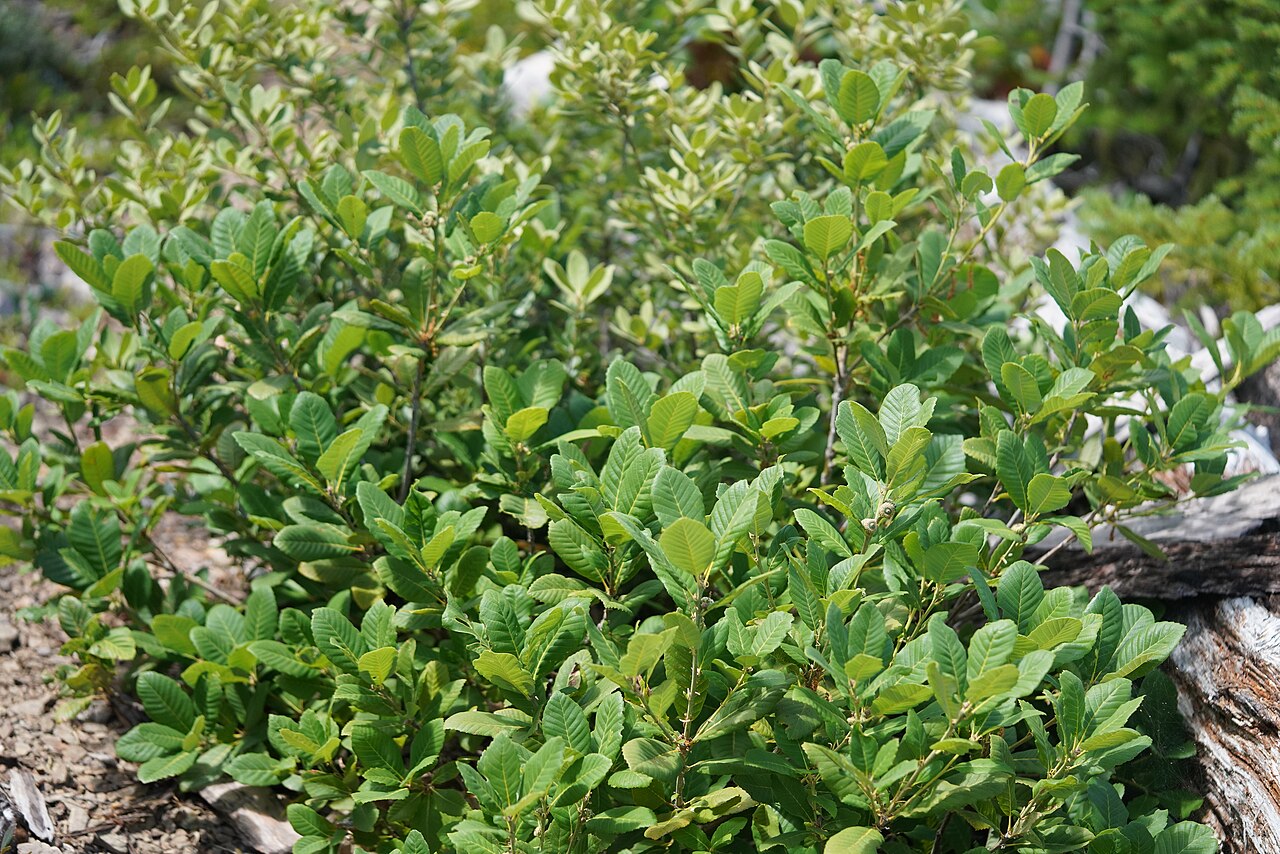
It looks little like a typical oak. Its large, glossy, sharply toothed leaves look like chestnut leaves, and it grows as a dense, rounded shrub 3 to 10 feet tall that spreads by underground stems into clonal patches. Gardeners sometimes mistake it for a rhododendron at first glance. Its sweet acorns are eaten by deer, bears and other wildlife, likely the origin of the name deer oak.
Deer oak is also botanically remarkable: genetic studies show that its closest living relative is Quercus pontica of Turkey and the Caucasus, from which it split roughly 15 million years ago. The IUCN lists it as Near Threatened because of its small range. This guide covers how to identify it, where it grows, how to grow it and its value to wildlife.
Identification
Deer oak is a rhizomatous evergreen shrub with large, chestnut-like, toothed leaves with straight parallel veins, and small acorns in shallow, scaly cups.
Growth Form & Bark
It is a stout, many-stemmed evergreen shrub, usually 3 to 10 feet tall, that spreads by rhizomes and by tip-rooting branches into large clonal colonies. The bark is smooth and gray, and the twigs are reddish-brown and smooth. The buds are fairly large, about ⅓ inch long, with loose, silky-hairy, yellowish to tan scales.
Leaves
The leaves are 3 to 6 inches long and 1½ to 3 inches wide, oval to elliptic, with a pointed tip and regular, shallow teeth, each tipped with a tiny bristle-like point. There are 10 to 15 prominent, straight side veins on each side of the midrib. The upper surface is dark green and glossy; the lower surface is paler and waxy with sparse, tiny star-shaped hairs. Leaves last two to three years.
Flowers
Like all oaks, it bears separate male and female flowers on the same plant from about April to June. The male flowers hang in slender catkins that appear with the new leaves, and the inconspicuous female flowers sit in the leaf axils. It is wind-pollinated.
Acorns & Look-alikes
The acorns mature in a single season, ripening around October. They are borne singly or in pairs on very short stalks, with a light brown nut about ⅔ to ¾ inch long in a shallow, bowl-shaped cup covered with gray, reddish-tipped scales. Tan Oak (including its shrubby form) has similar toothed leaves, but they are densely hairy underneath when young and its acorn cups are covered in long, curling bristles. Huckleberry oak (Quercus vacciniifolia) has much smaller, mostly untoothed leaves, and the shrubby Brewer’s form of Oregon White Oak is deciduous with lobed leaves. Deer oak hybridizes with both.
Quick Facts
| Scientific Name | Quercus sadleriana R. Br. ter |
| Family | Fagaceae (beech and oak family) |
| Plant Type | Evergreen shrub; forms clonal colonies |
| Mature Height | 3–10 ft |
| Mature Spread | 4–10 ft or more by rhizomes |
| Growth Rate | Slow |
| Sun Exposure | Partial shade to full sun |
| Water Needs | Low to moderate; summer-dry adapted |
| Soil Type | Rocky, well-drained, acidic; including serpentine |
| Soil pH | Acidic to neutral (about 5.0–7.0) |
| Bloom Time | April–June (catkins) |
| Flower Color | Yellowish-green catkins |
| Fall Color | None; evergreen |
| Fruit | Acorn maturing in one season; sweet |
| Deer Resistant | No; browsed by deer |
| USDA Hardiness Zones | 6–9 |
Native Range
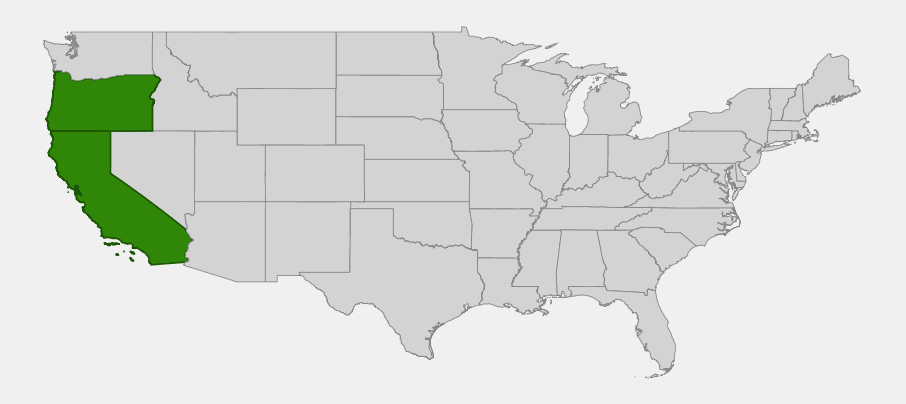
Deer oak is endemic to the Klamath–Siskiyou region. In Oregon it grows in the Siskiyou Mountains and southern Coast Range of Josephine, Curry and Jackson counties, including the Kalmiopsis Wilderness. In California it is found mainly in Del Norte and Siskiyou counties, in the Siskiyou Mountains and neighboring ranges of the northern Coast Ranges. USDA PLANTS lists it in both states.
It grows at about 2,000 to 7,200 feet, mostly in mountainous terrain that has cold, snowy winters and very dry summers. It is common on steep, rocky slopes, especially those facing south or west, and also forms the shrub layer under open to closed stands of conifers. It tolerates a range of acidic soils, including the serpentine soils that make the Klamath–Siskiyou region famous for its rare plants.
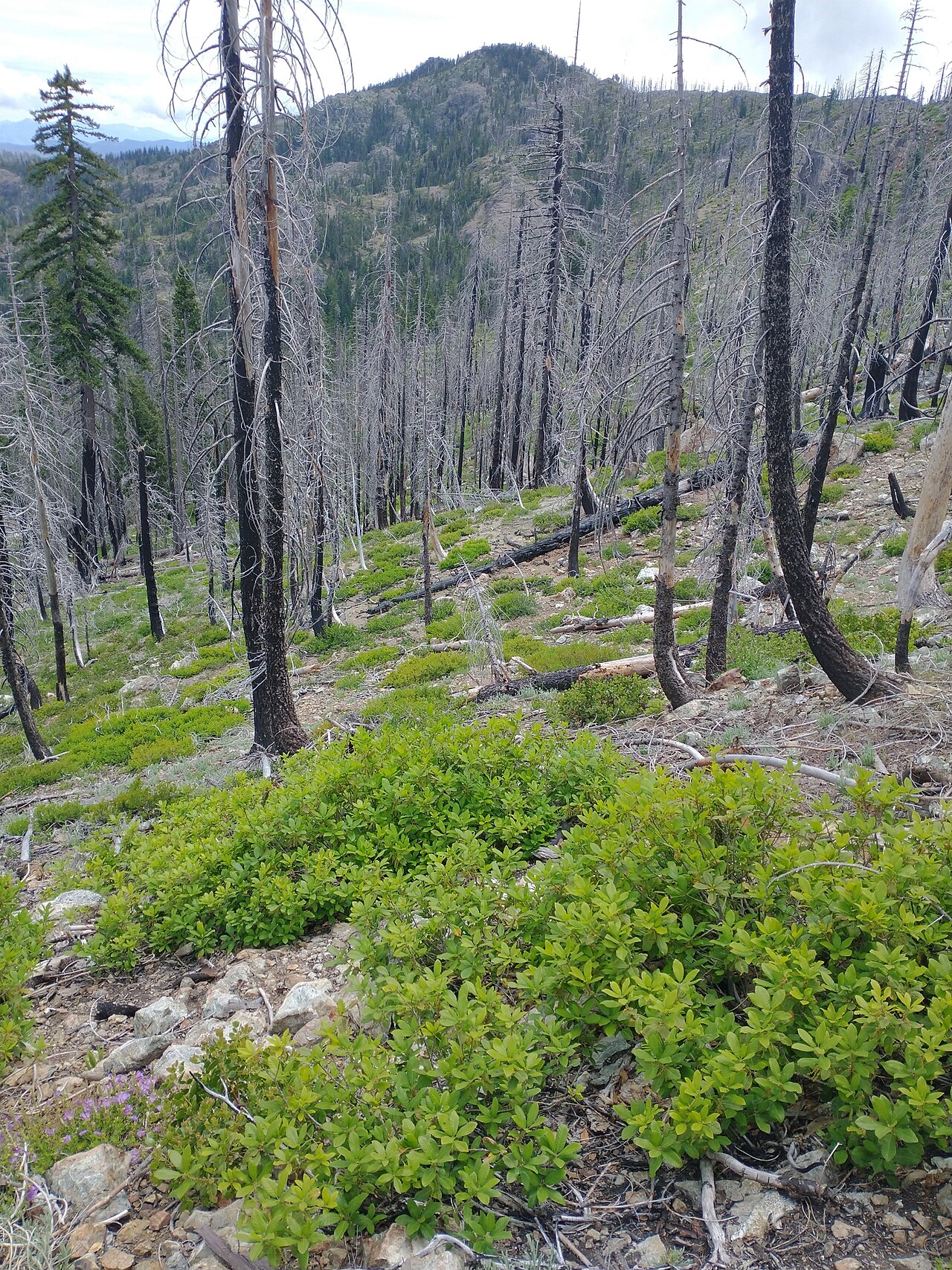
Deer oak is considered a transitional or fire-adapted species. It resprouts vigorously after fire and dominates burned slopes and logged areas for decades until the conifer canopy closes again. Most populations are on national forest land, and fire suppression, which allows fuels to build up and leads to more severe fires, is considered its main long-term threat.
📋 Regional plant lists featuring Deer Oak: Western Oregon & Western Washington · California & Nevada
Growing & Care Guide
Deer oak is uncommon in cultivation, but it is offered occasionally by specialty native nurseries in Oregon and California and by oak collectors, and it is grown in some arboretums. It makes a handsome, slow-growing evergreen shrub for a woodland or rock garden, prized for its bold, chestnut-like foliage. Buy nursery-grown plants or grow it from acorns collected responsibly; never dig wild plants. Raw oak acorns contain tannins, but deer oak acorns are unusually sweet and have traditionally been eaten.
Light
Partial shade to full sun. In hot, low-elevation gardens it does best with afternoon shade; in cooler, coastal or mountain gardens it takes more sun. It also makes a good shade shrub under tall trees.
Soil & Water
Give it well-drained, rocky or gravelly, acidic soil. It is adapted to wet winters and dry summers; water deeply but infrequently the first few summers, then only occasionally. Avoid heavy, poorly drained soils.
Planting Tips
Plant small, container-grown plants in fall or early spring, about 6 to 8 feet apart if you want a massed planting. It suits woodland edges, slopes and naturalistic gardens in the Pacific Northwest and northern California, and it is hardy in cold-winter areas.
Pruning & Maintenance
Little pruning is needed. Remove dead wood, and cut out suckers if you want to keep it to a single clump. It is slow to establish but long-lived. Protect young plants from deer browsing.
Propagation
Sow fresh acorns in fall, outdoors or in deep pots; acorns can be scarce and viability is often low, so sow plenty. Plants can also be increased by layering low branches or separating rooted suckers.
Landscape Uses
- Woodland and shade gardens: bold, evergreen, chestnut-like foliage
- Slope stabilization: spreading rhizomes hold rocky soil
- Wildlife gardens: acorns for deer, bears, birds and rodents
- Collectors’ and arboretum plantings: a botanically unique, relict oak lineage
Wildlife & Ecological Value
Deer oak is an important food and cover plant in the Klamath–Siskiyou mountains.
For Pollinators
Oaks are wind-pollinated, but their leaves feed the caterpillars of many moths and butterflies, which in turn feed birds. Several gall wasps use deer oak, including Neuroterus sadlerensis, which is found only on this species.
For Birds
Jays, woodpeckers, band-tailed pigeons, quail and grouse eat the acorns, and the dense shrubs provide cover and nesting sites.
For Mammals
Black-tailed deer, black bears, squirrels, chipmunks and other small mammals eat the acorns, and deer browse the foliage.
Ecosystem Role
After fire, deer oak quickly resprouts from its rhizomes, holding soil on steep slopes and acting as a nurse plant that shelters young conifers and other seedlings. Its long-lived clonal patches are a key part of the montane chaparral and forest understory of the region.
Cultural & Historical Uses
The Scottish botanist Robert Brown of Campster described Quercus sadleriana in 1871 and named it for the Scottish botanist John Sadler. Brown had seen the plant in 1865 near Sailor’s Diggings (now Waldo), Oregon, close to the California border.
The Karuk people of northwestern California eat the sweet acorns, which can be eaten raw. They also peel the acorns and roast them in baskets over hot coals to make a food called tamiuru.
For more than a century botanists struggled to place deer oak among other oaks. Modern genetic studies placed it with Quercus pontica of Turkey and Georgia in a tiny section of oaks (section Ponticae) that split from the white oaks about 40 million years ago, making these two shrubs living relics of an ancient lineage.
Frequently Asked Questions
Why is it called deer oak?
Its sweet acorns and leaves are eaten by deer and other wildlife, which is the likely origin of the name. It is also called Sadler’s oak.
Is deer oak evergreen?
Yes. Its leaves last two to three years, so the shrub stays green all year.
Where does deer oak grow?
Only in the Klamath–Siskiyou Mountains of southwestern Oregon and northwestern California, on rocky slopes and in conifer forests at about 2,000 to 7,200 feet.
Are deer oak acorns edible?
Yes. They are unusually sweet and have traditionally been eaten raw or roasted by the Karuk people. Be certain of identification before eating any wild food.
Is deer oak endangered?
It is not federally listed. The IUCN rates it Near Threatened because of its small range, though populations are large and regenerate well after fire.

Looking for a nursery that carries Deer Oak?
Browse our native plant nursery directory: California · Oregon

