
Nānū (Gardenia brighamii)
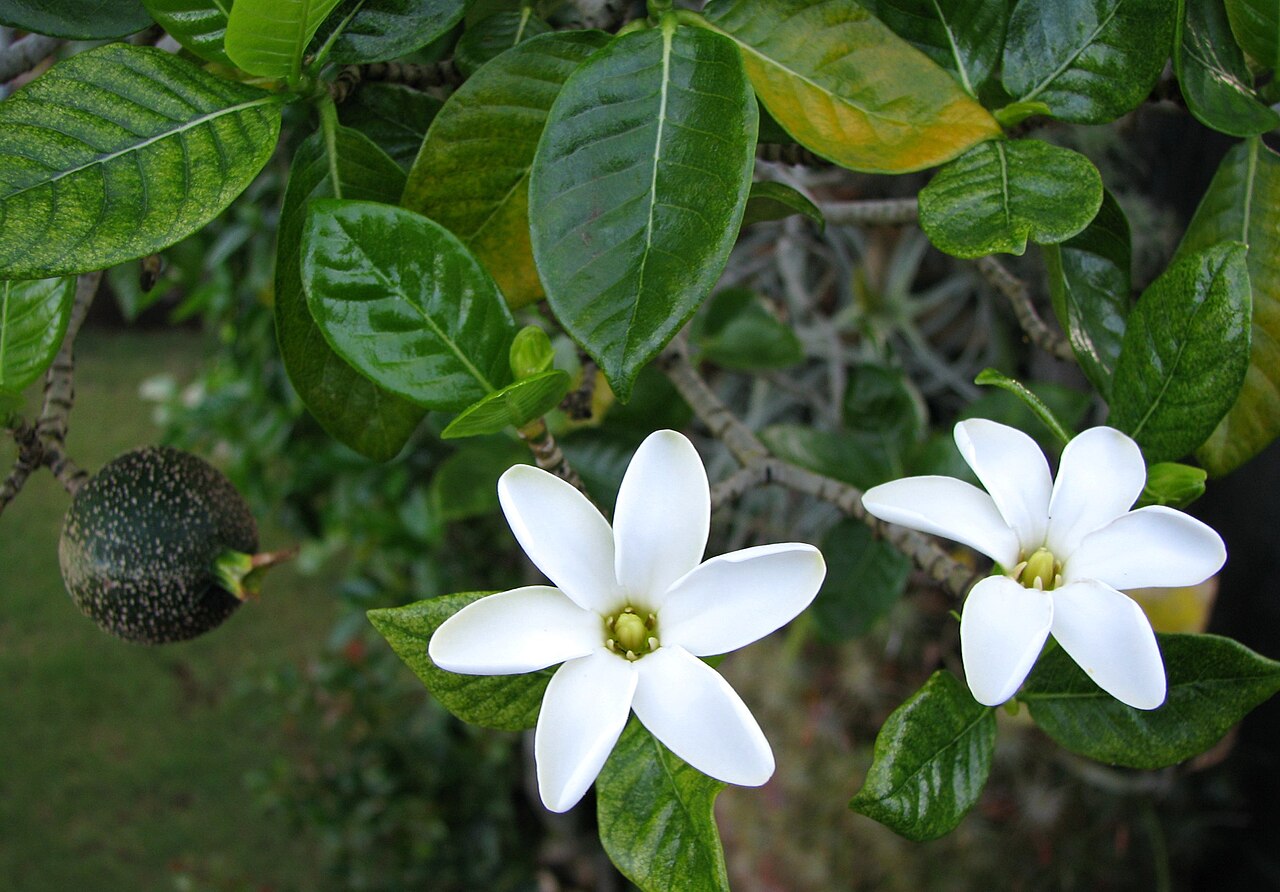
Nānū (Gardenia brighamii), also spelled nāʻū and known in English as Hawaiian gardenia or forest gardenia, is a small tree or large shrub with glossy dark green leaves and pure white, pinwheel-shaped flowers whose scent rivals that of any garden gardenia. It is endemic to the Hawaiian Islands, where it once grew in the lowland dry forests of Oʻahu, Molokaʻi, Lānaʻi, Maui and Hawaiʻi Island.
In the wild, nānū is one of Hawaiʻi’s rarest trees. It is listed as Endangered under the federal Endangered Species Act (listed in 1985), and only a handful of wild trees survive, mainly in the remnant dry forest of Kānepuʻu on Lānaʻi and in the Waiʻanae Mountains of Oʻahu. Most of the dry forest it depended on has been lost to grazing, fire, development and invasive grasses.
In gardens, though, nānū is one of the easiest and most rewarding native plants to grow, and nursery-grown plants are widely available in Hawaiʻi. It is drought tolerant, compact and nearly always in flower. This guide covers how to recognize nānū, where it grew, how to grow it, and its long history in Hawaiian culture.
Identification
Nānū is easy to recognize as a gardenia: glossy leaves, waxy white flowers and a heady fragrance. Its flowers are smaller and simpler than those of the familiar double-flowered garden gardenia from Asia.
Growth Habit & Bark
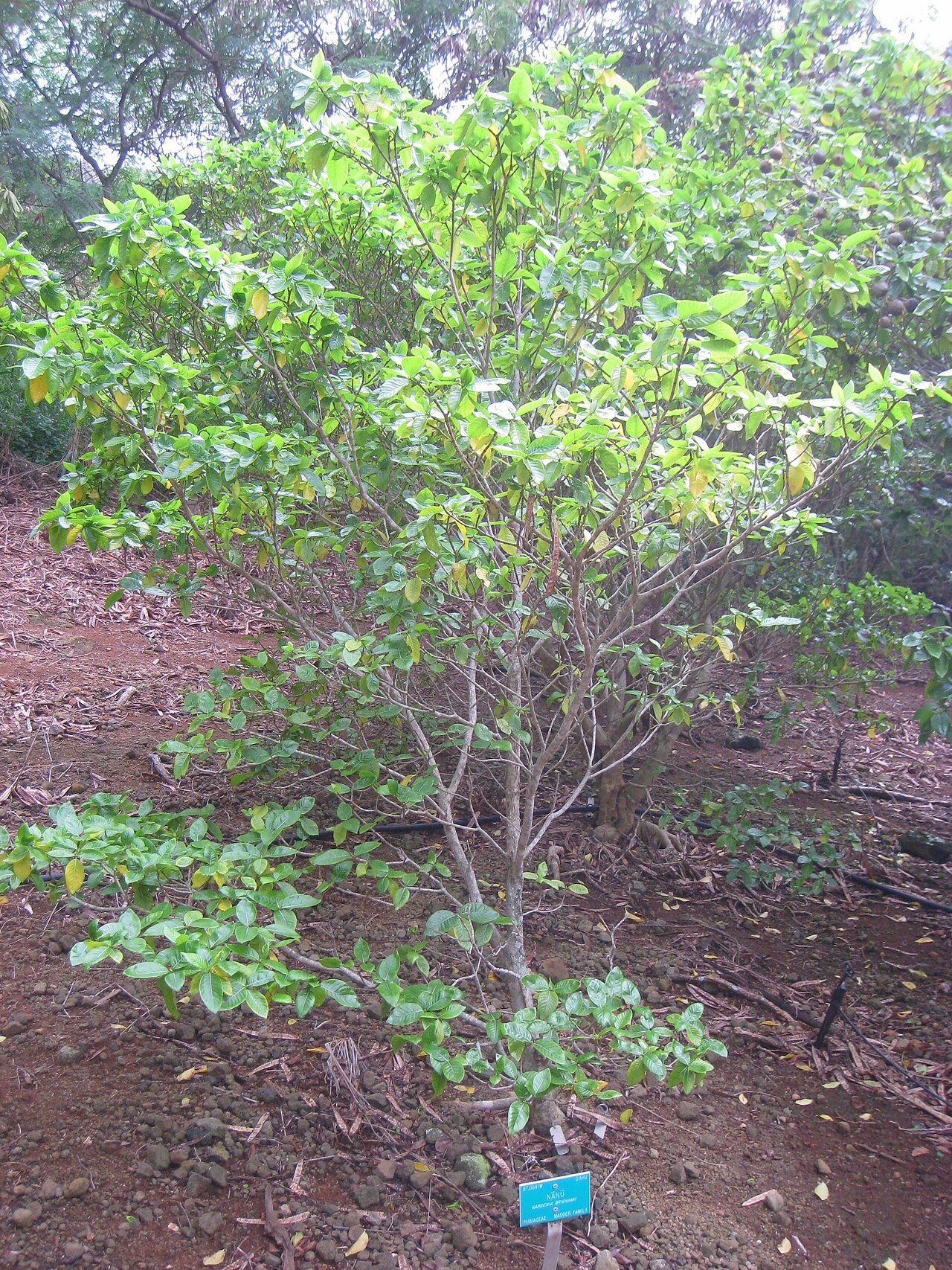
Nānū grows as a rounded shrub or small tree, usually 6 to 15 feet tall in gardens and up to about 20 feet or more for old wild trees, often as wide as or wider than tall. The bark is smooth and pale gray, becoming mottled on older trunks, and the branches are stiff and somewhat open.
Leaves
The leaves are opposite, simple, broadly oval to elliptic, about 1 to 4 inches long, glossy dark to medium green above and paler below, with prominent veins. They cluster toward the ends of the twigs. In very dry periods wild trees may drop some leaves.
Flowers
The flowers are borne singly at the ends of the branches. Each has a slender tube about 3/4 inch long that opens to six (sometimes five to eight) spreading, pure white lobes, forming a pinwheel about 1.5 inches across. They are very fragrant, with a sweet gardenia scent sometimes described as having a hint of coconut. Cultivated plants bloom almost all year; wild populations flower mainly in late fall on Oʻahu and Hawaiʻi Island and in spring on Maui Nui.
Fruit
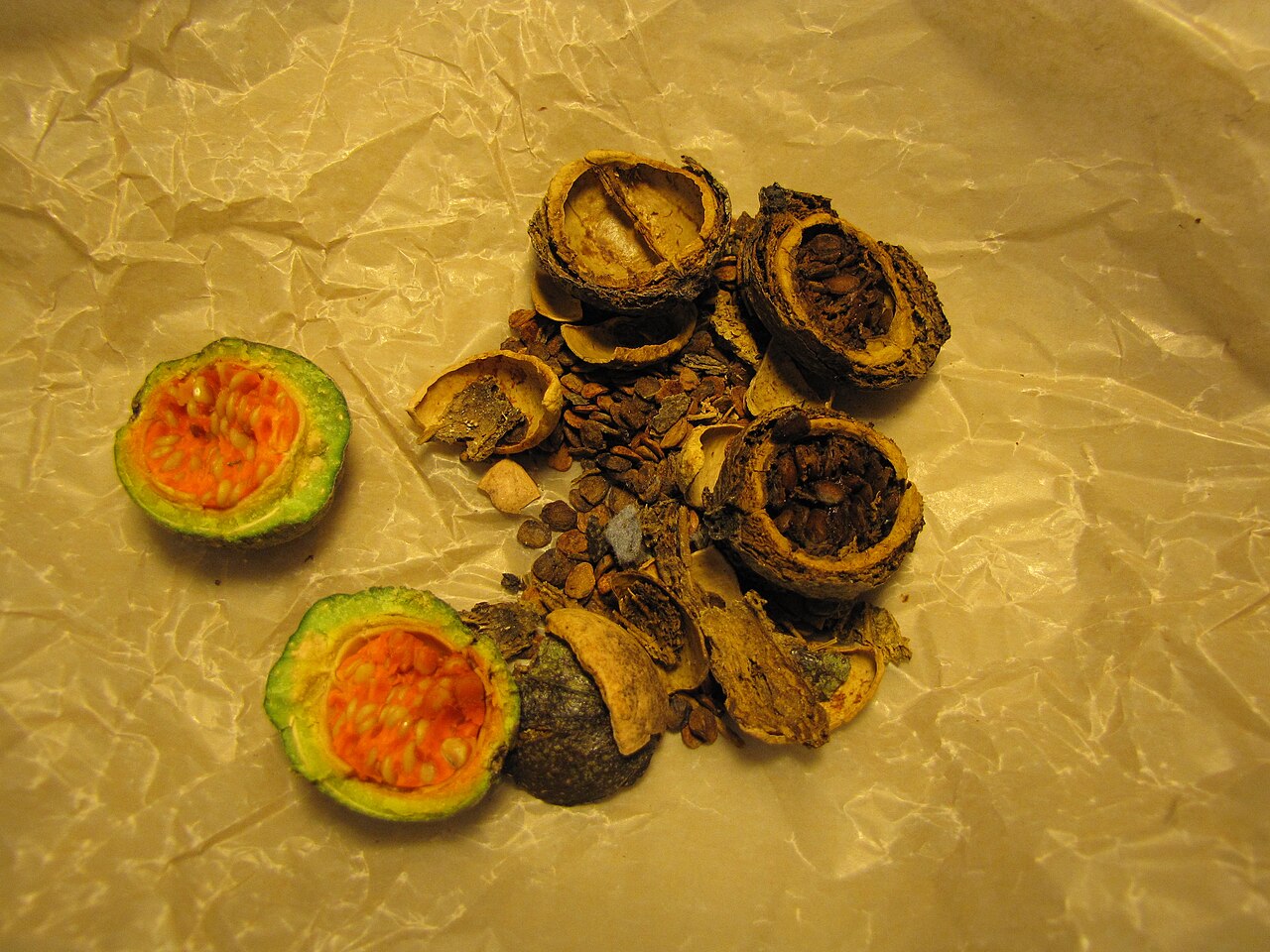
The fruit is round, about 1 inch across or a little larger, and stays dark green for several months before softening and turning yellowish to tan when ripe. Inside are many small, hard, pale seeds embedded in bright orange-yellow pulp. Some trees fruit freely while others rarely do.
Similar Species
Two other native gardenias grow in Hawaiʻi, both endangered and rare: Gardenia mannii of Oʻahu’s wet forests, a larger tree, and G. remyi of mesic and wet forests on Kauaʻi, Molokaʻi, Maui and Hawaiʻi Island. Both grow in wetter places than nānū. The common garden gardenia (G. jasminoides) has larger, often double flowers and is not native.
Quick Facts
| Scientific Name | Gardenia brighamii H. Mann |
| Family | Rubiaceae (coffee family) |
| Plant Type | Shrub or small evergreen tree; endemic to Hawaiʻi |
| Mature Height | 6–15 ft in gardens; old wild trees to about 20–25 ft |
| Mature Spread | 10–15 ft, sometimes wider |
| Growth Rate | Slow to moderate |
| Sun Exposure | Full sun |
| Water Needs | Low once established; drought tolerant |
| Soil Type | Well-drained soil; tolerates clay, sand and cinder |
| Soil pH | About 5.5–7.0 (benefits from acid fertilizer and iron) |
| Bloom Time | Nearly year-round in cultivation; seasonal in the wild |
| Flower Color | Pure white, very fragrant |
| Fall Color | None; evergreen |
| Fruit | Round green fruit ripening yellowish-tan, with orange pulp |
| Deer Resistant | No; browsed by deer and goats in the wild |
| USDA Hardiness Zones | 10b–12 |
Native Range
Nānū is endemic to the Hawaiian Islands, and USDA PLANTS records it only from Hawaiʻi. It was historically known from Oʻahu (the Waiʻanae Mountains and Nuʻuanu Valley), West Molokaʻi, Lānaʻi, West Maui and North Kona on Hawaiʻi Island. Today it is believed extinct in the wild on Molokaʻi, Maui and Hawaiʻi Island, although conservation plantings have been made in several areas.
Its habitat is lowland dry forest, typically at roughly 1,000 to 2,000 feet elevation, on slopes and ridges where rainfall is low and seasonal. Kānepuʻu on Lānaʻi, one of the last remnants of Hawaiian dry forest, still holds the largest group of wild trees, growing with Lama, Olopua and ʻAlaheʻe.
The U.S. Fish and Wildlife Service listed Gardenia brighamii as Endangered on August 21, 1985. Threats include browsing and trampling by goats, deer and cattle, fire carried by invasive grasses such as fountain grass, competition with alien plants, and the very small number of remaining wild trees. Because of this, wild plants and seeds should never be collected; garden plants come from nursery-propagated stock.
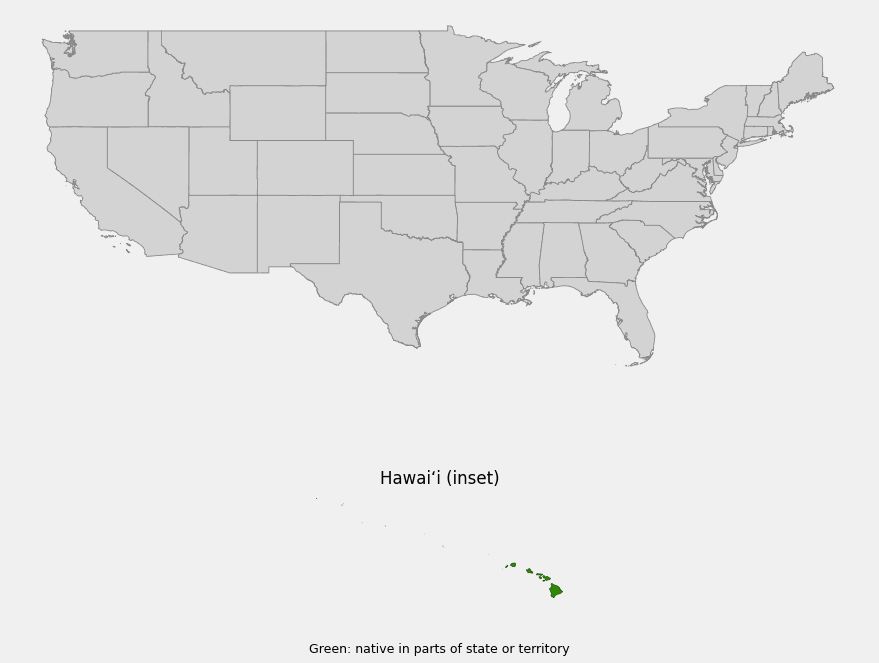
📋 Regional plant lists featuring Nānū: Hawaii
Growing & Care Guide
Nānū is easy to grow in warm, sunny gardens in Hawaiʻi from the coast to moderate elevations. Buy only nursery-propagated plants from Hawaiʻi native plant nurseries; never collect plants, cuttings or seed from the wild. Hawaiʻi also restricts bringing plants in from other states. Outside Hawaiʻi it can be grown in frost-free climates or in a large container that comes indoors in winter.
Light
Plant nānū in full sun for the best flowering. It tolerates some light shade, but plants in shade grow more open and bloom less.
Soil & Water
Nānū is not fussy about soil as long as it drains well, and grows in clay, sandy and cinder soils. Water young plants regularly. Once established, water deeply about once a month during dry spells and otherwise keep watering minimal. Mulch helps keep the roots evenly moist. In containers, use at least a 15-gallon pot and a mix of about equal parts potting soil and cinder for drainage and weight.
Planting Tips
Space plants 4 to 6 feet apart for a hedge or screen, or 10 to 15 feet apart for specimen trees. Feed with a balanced slow-release fertilizer about every six months; avoid high-nitrogen fertilizers, which push leaves at the expense of flowers. Like other gardenias, nānū responds well to occasional iron chelate or a fertilizer for acid-loving plants if leaves yellow.
Pruning & Maintenance
Prune dead twigs and branches as needed and shape lightly after a flush of flowering. Watch for ants, scale insects, mealybugs, thrips, spider mites and aphids; controlling ants helps keep sap-feeders down. The black twig borer can kill twigs and branches, so prune out and dispose of affected wood.
Propagation
Nānū can be grown from seed cleaned of its pulp and sown fresh, and from cuttings or air layers. Use seed only from cultivated plants. Seedlings and young plants grow slowly at first but often begin flowering within a few years.
Landscape Uses
- Specimen tree: a fragrant, compact small tree for yards and courtyards
- Hedges and screens: dense, glossy foliage for low-water hedges
- Containers: grows well in large tubs on patios and lanai
- Lei and fragrance gardens: flowers for lei and evening scent
- Dry forest restoration: conservation plantings of an endangered endemic
Wildlife & Ecological Value
Nānū is a reminder of the rich lowland dry forests that once covered the leeward sides of the Hawaiian Islands, and planting it helps keep the species in existence.
For Pollinators
The long-tubed, fragrant white flowers are typical of moth-pollinated plants, and the scent is strongest in the evening. Native sphinx moths and other night-flying insects are likely visitors.
For Birds
Native birds probably helped disperse the seeds of Hawaiian gardenias in the past, though many of the forest birds of the dry lowlands are now extinct or rare. Introduced birds and rodents feed on the fruit and seeds today.
For Mammals
Hawaiʻi’s only native land mammal, the Hawaiian hoary bat, forages over dry forest. Introduced goats, deer and cattle browse nānū and its seedlings, one of the main reasons it has declined.
Ecosystem Role
Nānū is part of the small-tree layer of Hawaiian dry forest. Restoring it alongside other dry forest trees helps rebuild a plant community that has lost more than 90 percent of its original area.
Cultural & Historical Uses
The bright orange-yellow fruit pulp of nānū was used by early Hawaiians to dye kapa (bark cloth) a rich yellow, and the color itself was called nāʻū or nānū. Today kapa makers still use the fruit to make a golden yellow dye that holds its color when dry.
The hard wood was used to make kua kuku, the anvils on which kapa was beaten, and house posts, and the fragrant flowers were strung into lei.
The genus name honors Alexander Garden (1730–1791), a physician and naturalist of Charleston, South Carolina, and the species name honors William Tufts Brigham (1841–1926), the first director of the Bishop Museum in Honolulu.
Frequently Asked Questions
Is nānū endangered?
Yes. Gardenia brighamii has been listed as Endangered by the U.S. Fish and Wildlife Service since 1985, and only a handful of wild trees remain. It is common in cultivation, so buy nursery-propagated plants and never collect from the wild.
Is nānū easy to grow?
Yes. In warm, sunny gardens it is one of the easiest Hawaiian native trees to grow. It needs well-drained soil, full sun, and little water once established.
How big does Hawaiian gardenia get?
In gardens it usually reaches 6 to 15 feet tall and about as wide. Very old wild trees can reach 20 feet or more.
Can I grow nānū outside Hawaiʻi?
It needs a frost-free climate (USDA zones 10b–12). Elsewhere it can be grown in a large container moved indoors in winter, but Hawaiʻi plants are rarely available on the mainland, and Hawaiʻi restricts bringing plants into the state.
What is nānū used for?
Hawaiians used the fruit pulp for yellow kapa dye, the wood for kapa anvils and house posts, and the flowers for lei. Today it is grown as a fragrant ornamental and in dry forest restoration.

Looking for a nursery that carries Nānū?
Browse our native plant nursery directory: Hawaii

