
Pākahakaha (Lepisorus thunbergianus)
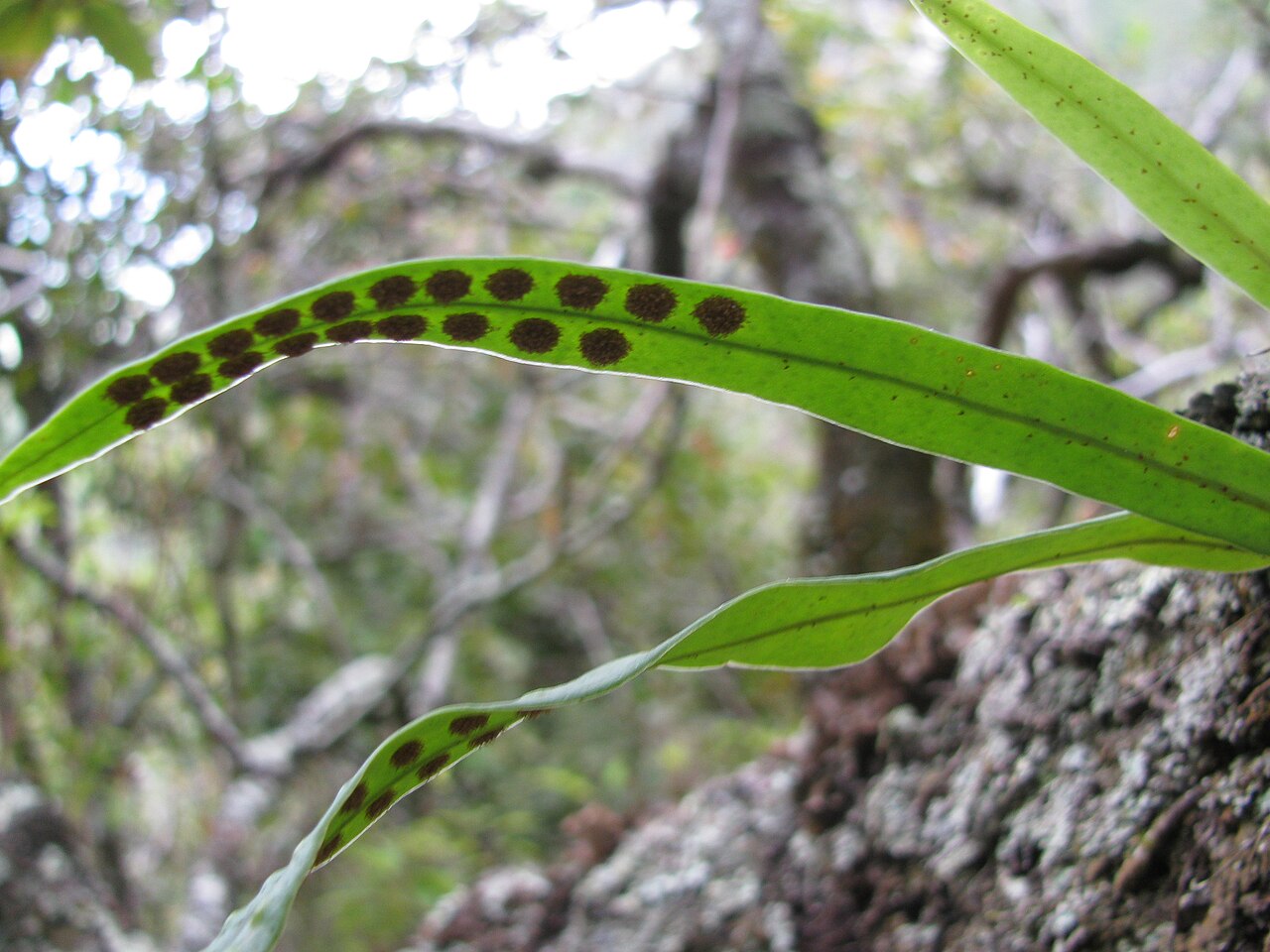
Lepisorus thunbergianus, called Pākahakaha, ʻēkaha ʻākōlea or puaʻa kuhinia in Hawaiian and the weeping fern in English, is a small epiphytic fern with simple, strap-shaped fronds. It grows on tree trunks, branches, mossy logs and rocks, where its narrow, leathery fronds often droop or “weep” from the bark. Rows of large, round, rusty-brown spore dots on the upper half of the fronds make it easy to recognize.
Pākahakaha is indigenous to Hawaiʻi rather than endemic: it also grows across eastern and southern Asia, from Japan, Korea, China and Taiwan to the Philippines and the Himalaya. In Japan it is the familiar nokishinobu, “hiding under the eaves,” because it grows on old thatched and tiled roofs and stone walls. In Hawaiʻi it is a common fern of native forests on the main islands, especially in upland dry to wet forest.
Epiphytic ferns are not the easiest plants to grow outside their habitat, but pākahakaha is one of the more adaptable ones, and it can be grown on a tree, a mounted slab or in a hanging basket where the air stays humid. This guide covers how to identify it, where it grows in Hawaiʻi, and how to grow it.
Identification
Several small Hawaiian ferns have simple, undivided fronds, so look at the shape of the frond and the size and position of the sori.
Growth Habit & Rhizome
Pākahakaha grows from a slender, creeping rhizome about 1.5 to 2.5 mm thick that clings to bark, moss or rock. The rhizome is covered with dense, brown, lance-shaped scales when young. Fronds arise along it every half inch to an inch, forming loose clusters or colonies that can cover a branch or a mossy boulder.
Fronds
The fronds are simple and undivided, usually 3 to 8 inches long (8 to 20 cm) and narrow, nearly linear but widest about a third of the way from the base, tapering to a long point. They are leathery, yellowish green to green or brownish green, with a straw-colored stalk and a clear midrib; the side veins are hidden in the thick blade. In dry weather the fronds curl and roll inward, then flatten again after rain.
Sori & Spores
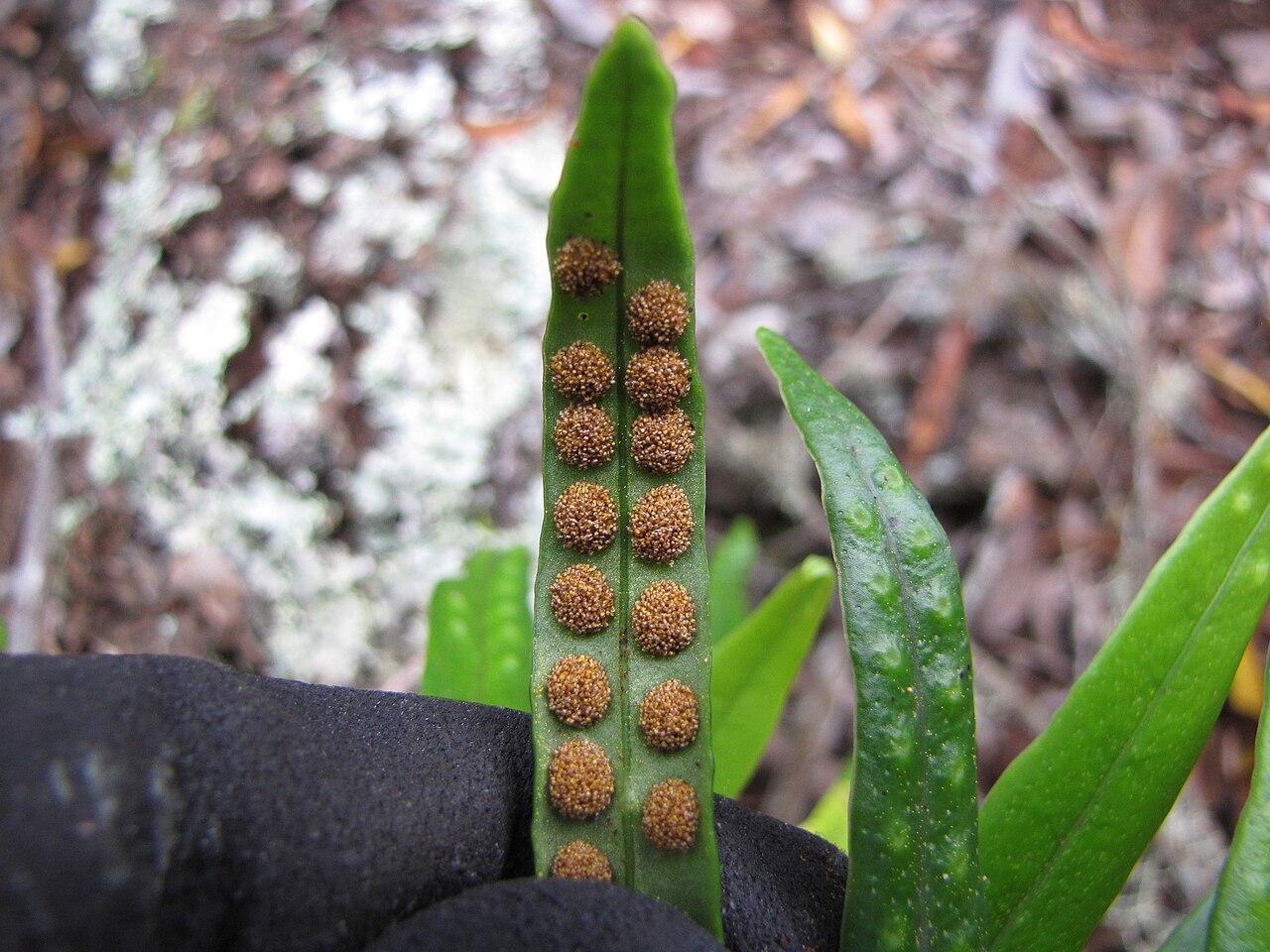
The sori are the best identification feature. They are large, round to oval, 1.5 to 3 mm across, and sit in one row on each side of the midrib on the upper half of the frond, often bulging so they show through as bumps on the upper surface. Young sori are covered by small shield-shaped scales; mature sori turn rusty to dark brown.
Similar Species
The native Hawaiian fern ʻēkaha (Elaphoglossum species) also has simple fronds but spreads spores over the whole underside of special fertile fronds rather than in round dots. The introduced lauaʻe fern (Phymatosorus grossus) has much larger, deeply lobed fronds. On the mainland, the Resurrection Fern fills a similar niche, but its fronds are deeply lobed.
Quick Facts
| Scientific Name | Lepisorus thunbergianus (Kaulf.) Ching |
| Family | Polypodiaceae (polypody family) |
| Plant Type | Small epiphytic fern; indigenous to Hawaiʻi and Asia |
| Mature Height | 3–8 in (fronds) |
| Mature Spread | Creeping; colonies 6–24 in or more |
| Growth Rate | Slow to moderate |
| Sun Exposure | Part shade to bright filtered light |
| Water Needs | Medium; tolerates short dry spells, needs humid air |
| Soil Type | None as an epiphyte; bark, moss, tree fern fiber or coarse epiphyte mix |
| Soil pH | Acidic to neutral, about 5.0–7.0 |
| Bloom Time | None (fern); spores mature through much of the year |
| Flower Color | None |
| Fall Color | None; evergreen |
| Fruit | None; spores in round brown sori |
| Deer Resistant | Yes; rarely browsed |
| USDA Hardiness Zones | 9–12 (some Asian populations are hardier) |
Native Range
Pākahakaha is indigenous to Hawaiʻi, meaning it is native here and also in other parts of the world. USDA PLANTS lists Hawaiʻi as its only U.S. native range. Outside Hawaiʻi it grows from Japan, the Kuril and Ryukyu islands, Korea, China and Taiwan to the Philippines, Southeast Asia, Nepal and northeastern India. Its tiny spores travel on the wind, which is likely how it reached the islands.
In Hawaiʻi it is found on the main islands, growing on trees, shrubs, logs and rocks in dry, mesic and wet forests, and it extends into open subalpine woodland on Maui and Hawaiʻi Island. It is common in upland forests such as Auwahi, Polipoli and the slopes of Haleakalā, and it often grows on ʻōhiʻa, koa, māmane and even on introduced trees such as kukui.
Pākahakaha is not federally listed and is not considered threatened in Hawaiʻi. Botanists treat L. thunbergianus as a variable species complex, and future studies may split it, which could change the name used for Hawaiian plants.
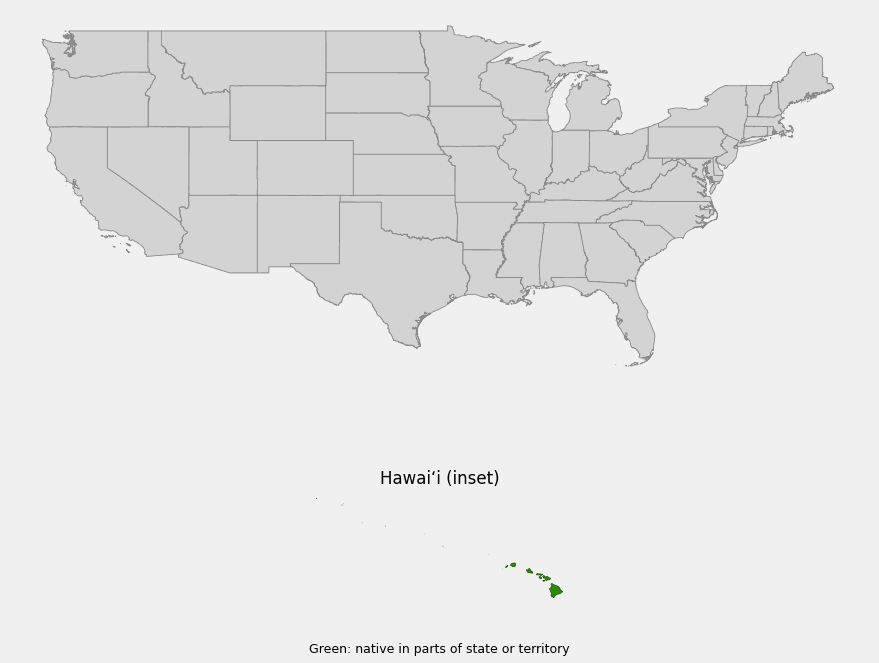
📋 Regional plant lists featuring Pākahakaha: Hawaii
Growing & Care Guide
Like most epiphytic ferns, pākahakaha is harder to grow than a ground fern, because it needs humid air, excellent drainage and a place to cling rather than garden soil. In upland Hawaiian gardens it often establishes itself on trees, rocks and walls, and it can be grown on a mounted slab or in a basket in a shade house or humid patio. Buy plants from Hawaii native plant nurseries or grow it from spores; don’t strip it from trees in the wild.
Light
Give bright, filtered light or part shade, such as the dappled light under a tree canopy or a shade house. Plants tolerate some morning sun in cool, humid sites but scorch in hot afternoon sun, especially in dry lowland gardens.
Soil & Water
Grow pākahakaha on bark, a tree fern slab, a mossy log or rock, or in a very open mix of bark, tree fern fiber and sphagnum. Never plant it in heavy garden soil. Mist or water when the substrate is nearly dry; the fronds curl in drought and recover after watering, but long dry spells weaken plants. High humidity is more important than heavy watering, so avoid soggy, airless conditions.
Planting Tips
To mount a plant, tie a piece of rhizome with some moss onto rough bark, a cork slab or a tree fern panel using fishing line or a soft tie, and keep it moist until new roots grip the surface. In Hawaiʻi, upland gardens above about 1,500 feet with regular rain suit it best; it struggles in hot, dry lowland yards unless kept in a humid shade house. Outside Hawaiʻi, Asian forms are sometimes grown in mild climates and greenhouses, but Hawaiʻi restricts bringing plants in from other states.
Pruning & Maintenance
Remove old, brown fronds by hand. A diluted liquid fertilizer once every month or two in the growing season is enough. Watch for slugs and snails, which eat young fronds, and for scale insects in dry, still air.
Propagation
The easiest method is division: cut a section of rhizome with several fronds and roots and mount it on new bark or slab. Pākahakaha can also be raised from spores sown on sterile, moist peat or a fine fern mix under a cover in bright indirect light; it takes many months to grow from spore to a usable plant.
Landscape Uses
- Tree and rock gardens: a natural epiphyte for trunks, logs and mossy rocks in upland gardens
- Mounted fern displays: grows on slabs and bark in shade houses
- Hanging baskets: small baskets of epiphyte mix in humid patios
- Native forest restoration: part of the epiphyte layer on restored native trees
- Education: an example of an indigenous fern that reached Hawaiʻi by wind-borne spores
Wildlife & Ecological Value
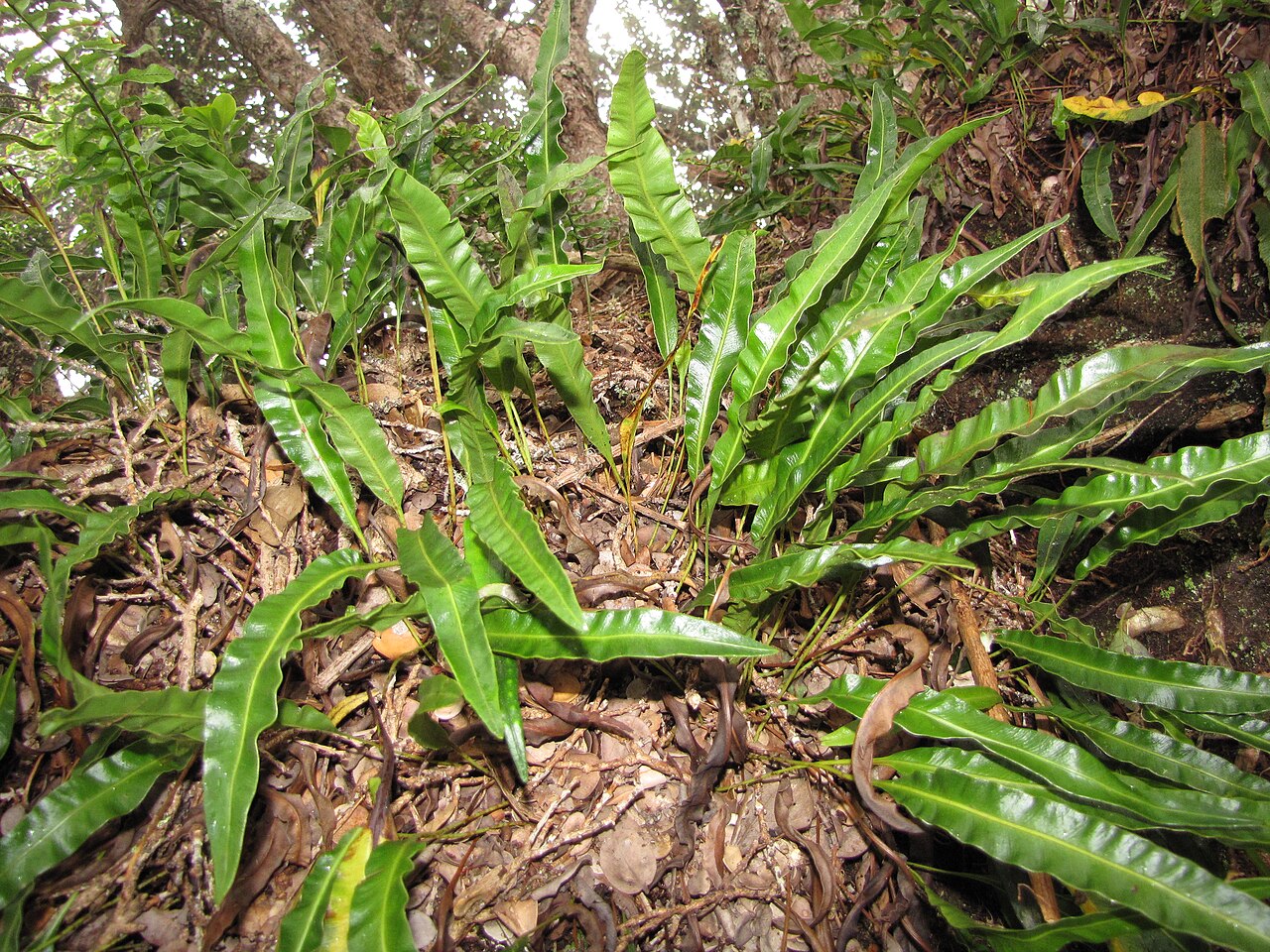
Small epiphytic ferns like pākahakaha are part of the layer of mosses, lichens and ferns that clothes Hawaiian forest trees and supports a world of tiny animals.
For Pollinators
As a fern, pākahakaha has no flowers and does not feed pollinators. Its fronds and the moss around its rhizomes do shelter small invertebrates. In Asia, the fronds are mined by the larvae of a small fly, Chromatomyia masumiae.
For Birds
Hawaiian forest birds glean insects, spiders and snails from epiphyte-covered branches, and mats of ferns and moss provide some nesting material.
For Mammals
Hawaiʻi’s only native land mammal, the Hawaiian hoary bat, hunts insects in the forests where pākahakaha grows. The fern is not an important food for introduced mammals.
Ecosystem Role
Epiphytes capture rainwater, dust and leaf litter, building small pockets of organic matter on branches that feed the forest’s nutrient cycle. Pākahakaha is also a hardy colonizer of rocks and walls. In Asia it has been studied as a natural monitor of airborne mercury, because its fronds record mercury levels in the air.
Cultural & Historical Uses
Hawaiian has several names for this fern, including pākahakaha, ʻēkaha ʻākōlea and puaʻa kuhinia. It is one of many native ferns known to Hawaiians, and ferns of all kinds were gathered for lei, adornment and other uses.
In Japan, this fern’s name nokishinobu means “hiding under the eaves,” after its habit of growing on old roofs, temples and castle walls, including the walls of Himeji Castle. It has also been used in Korean folk medicine.
The species is named after the Swedish naturalist Carl Peter Thunberg, who collected plants in Japan in the 1770s. Fern experts call Lepisorus “notorious for its taxonomic difficulty,” and L. thunbergianus one of its most problematic species, so its classification is still being studied.
Frequently Asked Questions
Is pākahakaha native to Hawaiʻi?
Yes. It is indigenous to Hawaiʻi, which means it arrived on its own, most likely as wind-blown spores, and also grows naturally in eastern and southern Asia. It is not endemic, since it is not found only in Hawaiʻi.
Why is it called the weeping fern?
Its narrow fronds often hang or droop from tree trunks and branches, giving the plant a “weeping” look. In dry weather the fronds also curl up, then flatten again after rain.
Can I grow pākahakaha as a houseplant?
It can be grown indoors on a mounted slab or in a small basket if you provide bright indirect light and high humidity, for example in a bathroom, terrarium or greenhouse. In ordinary dry indoor air it tends to struggle.
What are the brown dots on the fronds?
The round brown dots are sori, clusters of spore cases. They are a normal part of the fern’s reproduction, not a disease or pest.
Is pākahakaha rare?
No. It is a common fern in many Hawaiian upland forests and is not federally listed. Even so, don’t strip it from trees in the wild; propagate it by division or spores, or buy it from a Hawaii native plant nursery.

Looking for a nursery that carries Pākahakaha?
Browse our native plant nursery directory: Hawaii

