
Olonā (Touchardia latifolia)
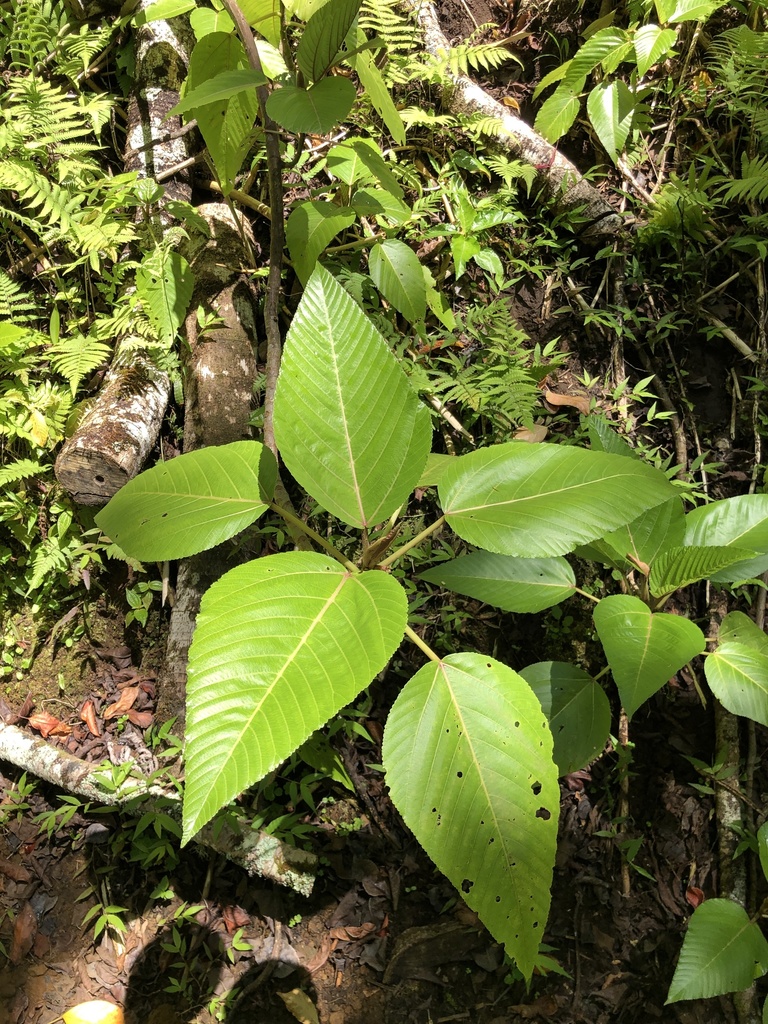
Touchardia latifolia, the Olonā, is an endemic Hawaiian shrub in the nettle family that produced the most prized fiber in old Hawaiʻi. The inner bark of its long, straight stems yields white, silky strands that Native Hawaiians twisted into cordage of exceptional strength and durability, used for fishing nets, carrying nets, lashings and the netting that backed royal feather capes. Western sailors and whalers later sought it out for rope.
Olonā is the only species in its genus, which is found nowhere but Hawaiʻi. Like most of Hawaiʻi’s native nettle relatives, it has no stinging hairs. It is a soft-wooded shrub with large, broad leaves, often with red midribs, that grows in shady, wet valleys and forests on all the main islands except Niʻihau and Kahoʻolawe.
Olonā is much less common than it was when Hawaiians tended it in upland patches, and wild populations are declining. Cultural practitioners and native plant nurseries now grow it again for fiber and restoration. This guide covers how to recognize it, where it grows, how to grow it, and its outstanding place in Hawaiian culture.
Identification
Olonā belongs to the nettle family (Urticaceae), which in Hawaiʻi also includes Māmaki, ʻākōlea (Boehmeria grandis), the Neraudia and Urera species and a rare native stinging nettle. Its leaf shape varies so much from place to place that botanists once split it into more than ten species, all now treated as one.
Growth Habit
Olonā is a sprawling to upright shrub, typically about 4 to 10 feet tall, with several soft-wooded stems that may lean or arch and root where they touch the ground. Under cultivation, Hawaiians favored straight, unbranched stalks about 10 feet tall and an inch or two thick.
Leaves
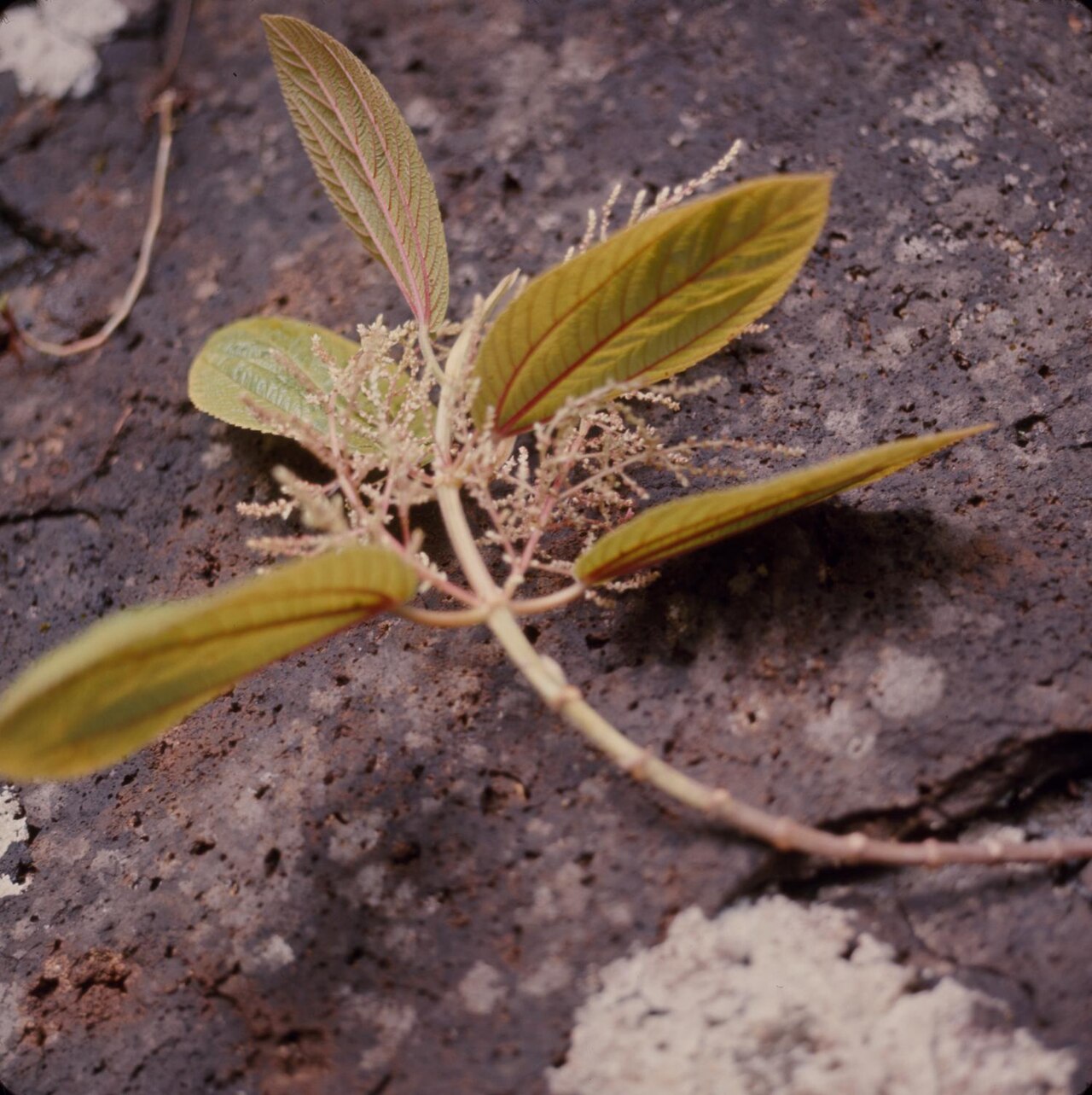
The leaves are alternate, large and broad, ranging from narrowly lance-shaped to broadly elliptic or heart-shaped at the base, with a pointed tip and finely toothed margins. They are medium to dark green, with prominent parallel side veins, and the midrib and stalk are often red. Leaf size, hairiness and redness vary between populations; Hawaiians preferred red-veined forms for fiber.
Flowers
The flowers are tiny and not showy, borne in dense, branched clusters (cymes) in the leaf axils. Male and female flowers occur on the same plant; male flowers are whitish. Flowering is mainly from about May through December.
Fruit
Female flower clusters develop into fleshy, berry-like masses of small achenes that ripen bright to dull orange. The fruit is eaten by slugs, and possibly by birds that help spread the seed.
Similar Species
Māmaki has smaller, rough, often whitish-backed leaves and white, mulberry-like fruit. Urera species (ōpuhe) are larger shrubs or small trees, and some have stinging hairs. ʻĀkōlea (Boehmeria grandis) has opposite leaves, unlike the alternate leaves of olonā.
Quick Facts
| Scientific Name | Touchardia latifolia Gaudich. |
| Family | Urticaceae (nettle family) |
| Plant Type | Soft-wooded shrub; endemic monotypic genus of Hawaiʻi |
| Mature Height | 4–10 ft |
| Mature Spread | 4–8 ft; stems sprawl and root |
| Growth Rate | Fast in good conditions; stems mature in about 12–18 months |
| Sun Exposure | Part shade to shade |
| Water Needs | High; consistently moist |
| Soil Type | Deep, moist, well-drained organic or cinder-based soil |
| Soil pH | Acidic to neutral, about 5.5–7.0 |
| Bloom Time | Mainly May–December |
| Flower Color | Whitish to orange (not showy) |
| Fall Color | None; evergreen |
| Fruit | Fleshy orange, berry-like clusters of small achenes |
| Deer Resistant | No; browsed by feral ungulates and eaten by slugs |
| USDA Hardiness Zones | 10–12 (frost-free, humid) |
Native Range
Olonā is endemic to the Hawaiian Islands. USDA PLANTS records it only from Hawaiʻi, and it grows on Kauaʻi, Oʻahu, Molokaʻi, Lānaʻi, Maui and Hawaiʻi Island. It occurs from about 230 feet to just under 4,000 feet elevation, in areas receiving roughly 50 to well over 100 inches of rain a year.
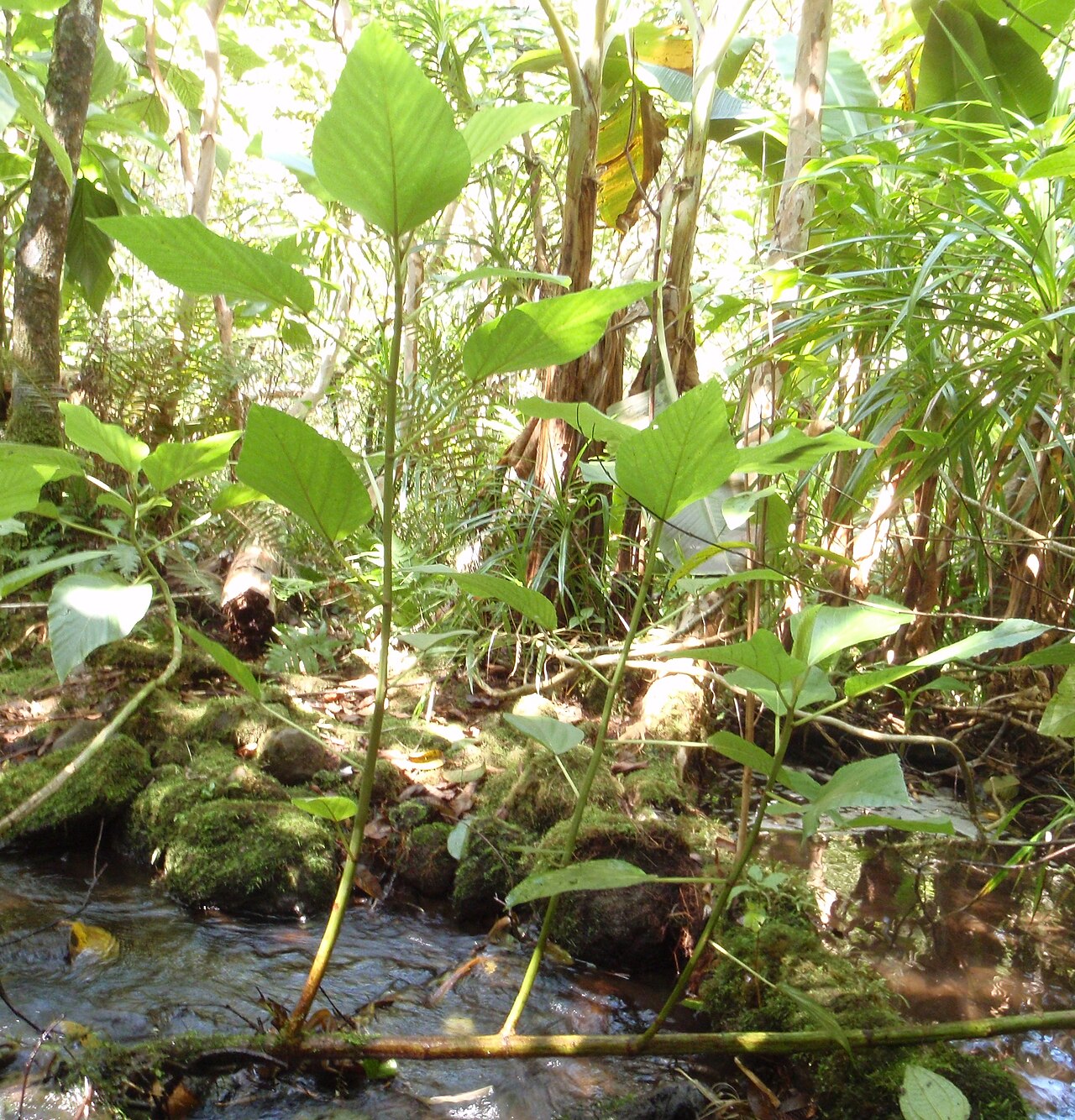
Its home is the shady, humid interior of mesic valleys and wet forests: gulch bottoms, streambanks, steep slopes and wet, mossy areas with deep soil. Historical accounts describe it in “boggy interior valleys” and rainy, mossy uplands, and field studies found that it favors steep or disturbed terrain within wet forest. It often grows with ʻŌhiʻa Lehua, tree ferns and other native ferns, and in old cultivated sites with kukui.
Olonā is not federally listed on the USFWS ECOS database, but it is far less common than in the past and wild populations are in decline. Few seedlings are found in the wild, and many existing stands may be remnants of old Hawaiian plantings. Feral pigs and goats, slugs and the spread of invasive plants into wet forest are major threats.
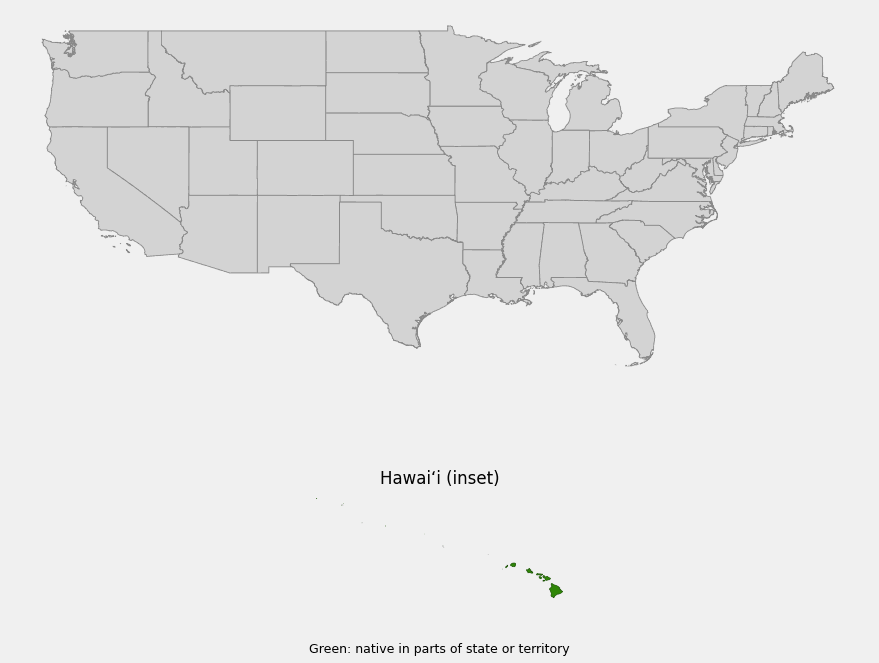
📋 Regional plant lists featuring Olonā: Hawaii
Growing & Care Guide
Olonā is a plant for shady, moist, sheltered gardens in Hawaiʻi, especially windward and upland sites, and for cultural fiber gardens. It is not commonly used as a landscape ornamental, but it grows quickly from cuttings in the right conditions. Buy nursery-propagated plants or cuttings from Hawaiian native plant nurseries and cultural growers; don’t take material from wild stands. Hawaiʻi restricts bringing plants in from other states, and olonā is essentially unavailable outside the islands.
Light
Give olonā shade or bright part shade, ideally among other plants that shelter it. In full sun the large leaves scorch and the plant dries out. Protect it from strong, direct winds, which tear the leaves and dry the soil.
Soil & Water
Plant in deep, moist soil rich in organic matter; cinder amended with compost also works. The soil must drain well but should never dry out, so water during dry spells and mulch heavily. A light foliar feed monthly and a soil feed every few months, depending on rainfall, keep plants vigorous.
Planting Tips
Plant out during the cooler, wetter months so the roots can establish. Olonā roots are fragile and it does not transplant well, so move it carefully from containers without disturbing the root ball. For fiber, space plants so the stems grow straight, and remove side branches as they form, as Hawaiian growers did, to avoid holes in the fiber.
Pruning & Maintenance
Cut mature stalks at about 12 to 18 months if you are harvesting fiber; new shoots will regrow. Otherwise remove old or fallen stems. Watch for slugs, which eat leaves and fruit, and for red spider mites under the leaves, which can be treated with horticultural oil after watering. Avoid insecticides, because olonā hosts the caterpillars of the native Kamehameha butterfly.
Propagation
Olonā roots readily from stem cuttings, and Hawaiians also propagated it from root shoots, layered stalks pressed into the soil, and seed. Fresh seed from ripe orange fruit germinates well; one study reported over 80% germination. Grow cuttings and seedlings in shade with high humidity until well rooted.
Landscape Uses
- Cultural fiber gardens: the traditional source of Hawaiʻi’s strongest cordage
- Shade gardens: bold, large-leaved shrub for moist, sheltered, shady sites
- Butterfly gardens: larval host for the native Kamehameha butterfly
- Streamside plantings: fits wet gulch and streambank restoration
- Forest restoration: understory shrub for mesic and wet forest
Wildlife & Ecological Value
Olonā is part of the rich understory of Hawaiʻi’s wet valleys and a host for one of the state’s few native butterflies.
For Pollinators
The tiny flowers are wind-pollinated, like most nettle relatives, and are not an important nectar source. The leaves are a larval host for the endemic Kamehameha butterfly, or pulelehua (Vanessa tameamea), Hawaiʻi’s state insect, whose caterpillars also feed on māmaki and other native nettle relatives.
For Birds
Native forest birds forage for insects in the dense foliage, and the fleshy orange fruit may be eaten by birds.
For Mammals
Hawaiʻi’s only native land mammal, the Hawaiian hoary bat, hunts insects over the valleys where olonā grows. Introduced pigs, goats and deer damage or eat the plants.
Ecosystem Role
Olonā helps hold soil on steep, wet slopes and streambanks, and its leaf litter enriches the forest floor. As a host of the Kamehameha butterfly and a member of Hawaiʻi’s endemic nettle flora, it supports native insects that depend on these plants.
Cultural & Historical Uses
Olonā was one of the few native plants that Hawaiians cultivated extensively. Wild clumps were called ōpū olonā; tended patches were olonā māla, and large plantings of two acres or more were olonā kīhāpai. Stems were harvested at about 12 to 18 months, the bark stripped and soaked, then scraped on a long, narrow board (papa olonā) with a sharpened shell or a piece of turtle shell until only white ribbons of fiber remained. Men, women and children shared in the harvest, but women made the cordage.
The finished cord was used for fishing nets and lines, kōkō carrying nets, lashings, and the knotted netting that formed the foundation of ʻahu ʻula (feather capes) and mahiole (feather helmets), into which thousands of feathers were tied. Olonā cord bound shark teeth to leiomano and formed wrist loops on daggers, and it was strung with dog teeth in lei niho ʻīlio dance ornaments.
After European contact, olonā cord was valued by sailors and whalers for its strength and resistance to salt water. Today cultural practitioners are reviving olonā cultivation and cordage making, and the plant has become a symbol of Hawaiian ingenuity with native materials.
Frequently Asked Questions
What is olonā used for?
Olonā is famous for its fiber. The inner bark of the stems produces very strong, durable cordage that Hawaiians used for fishing nets, carrying nets, lashings, and the netting base of feather capes and helmets.
Does olonā sting like other nettles?
No. Although it belongs to the nettle family, olonā has no stinging hairs, like most of Hawaiʻi’s native nettle relatives.
Is olonā native to Hawaiʻi?
Yes. It is endemic to Hawaiʻi and is the only species in its genus. It grows on Kauaʻi, Oʻahu, Molokaʻi, Lānaʻi, Maui and Hawaiʻi Island.
Is olonā endangered?
It is not federally listed, but it is much less common than it once was, and wild populations are declining. Growing it in gardens and cultural plantings helps keep it and its traditions alive.
How do I grow olonā?
Grow it from cuttings or seed in shade or part shade, in deep, moist, well-drained soil, sheltered from wind. Keep it watered, watch for slugs, and avoid disturbing the fragile roots when planting.

Looking for a nursery that carries Olonā?
Browse our native plant nursery directory: Hawaii

