
Hinahina (Artemisia mauiensis)
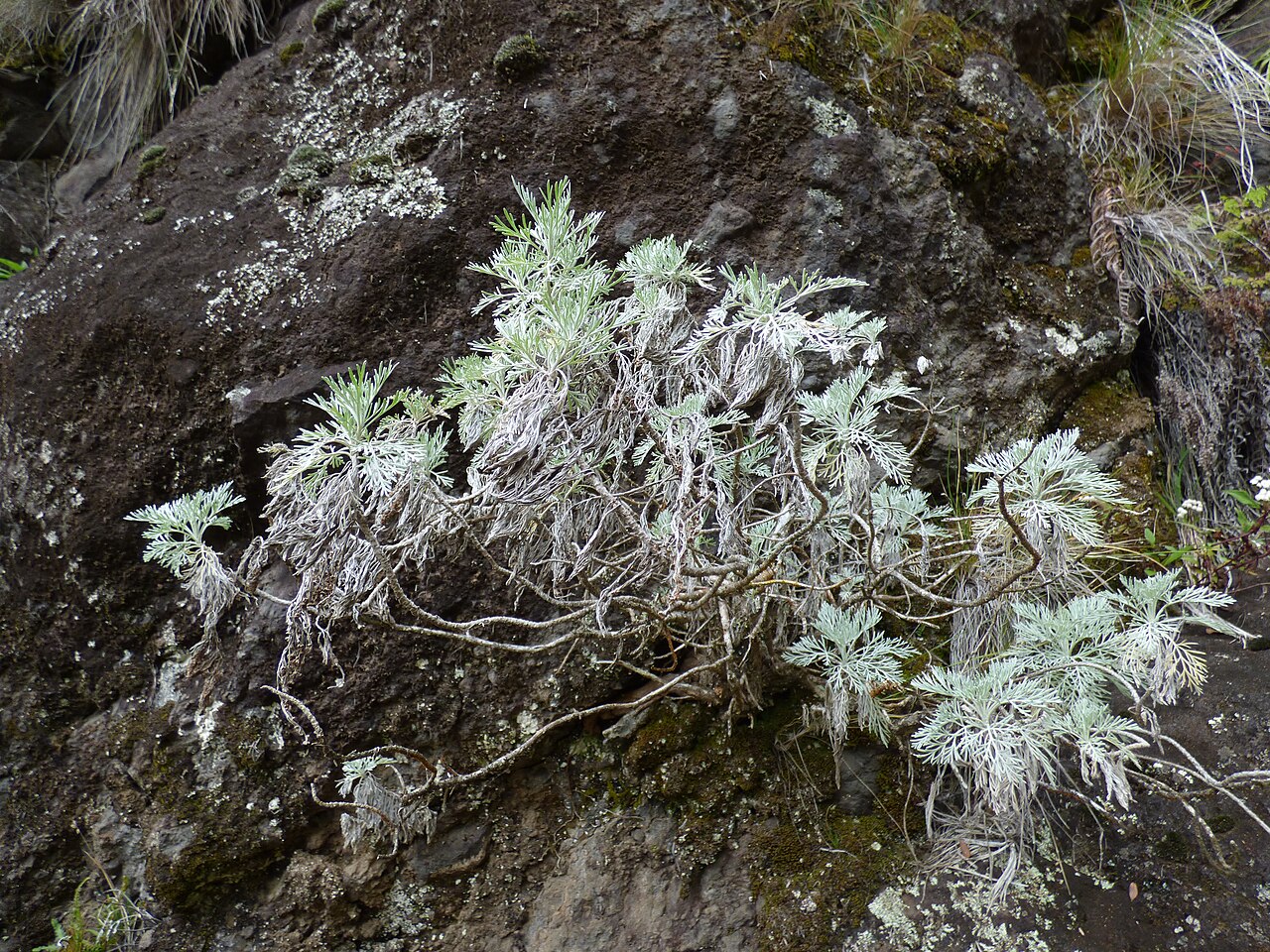
Artemisia mauiensis, called hinahina or ʻāhinahina in Hawaiian and Maui wormwood in English, is a small, silvery shrub of the aster family (Asteraceae) found only on Haleakalā, East Maui. It forms low, sprawling mounds of finely divided, feathery, silver-gray leaves with a faint sagebrush scent, and bears tiny, round, nodding flower heads.
It is one of three Artemisia species endemic to Hawaiʻi, relatives of the sagebrushes of the American West and of culinary tarragon. Maui wormwood grows on cliffs, rock walls and rocky slopes in and around Haleakalā crater and on the mountain’s south slope, mostly between about 6,000 and 7,500 feet. It is not federally listed, but its natural range is small, and it is limited to a single volcano.
Despite its alpine home, hinahina is a popular native garden plant, valued as a Hawaiian substitute for dusty miller, and it grows surprisingly well at low elevations if it has sun and sharp drainage. Buy nursery-propagated plants from a Hawaiʻi native plant nursery, and never collect plants or cuttings from the wild, especially inside Haleakalā National Park, where all plants are protected.
Identification
Hinahina is easy to spot from a distance as a patch of bright silver on dark lava rock. Up close, the deeply cut, almost feather-like leaves and their sage-like smell identify it as an Artemisia.
Growth Habit
A low, sprawling to mounding, somewhat woody shrub, usually under 2 feet tall and occasionally taller, spreading 4 to 5 feet wide. On cliffs and walls the stems often hang down over the rock.
Leaves
Leaves are about 1 to 2 inches long and finely divided into thread-like segments, giving the plant a feathery, lacy look. They are covered with dense, silky hairs that make them silvery gray. Crushed leaves have a faint to strong sage or anise-like aroma and a very bitter taste.
Flowers
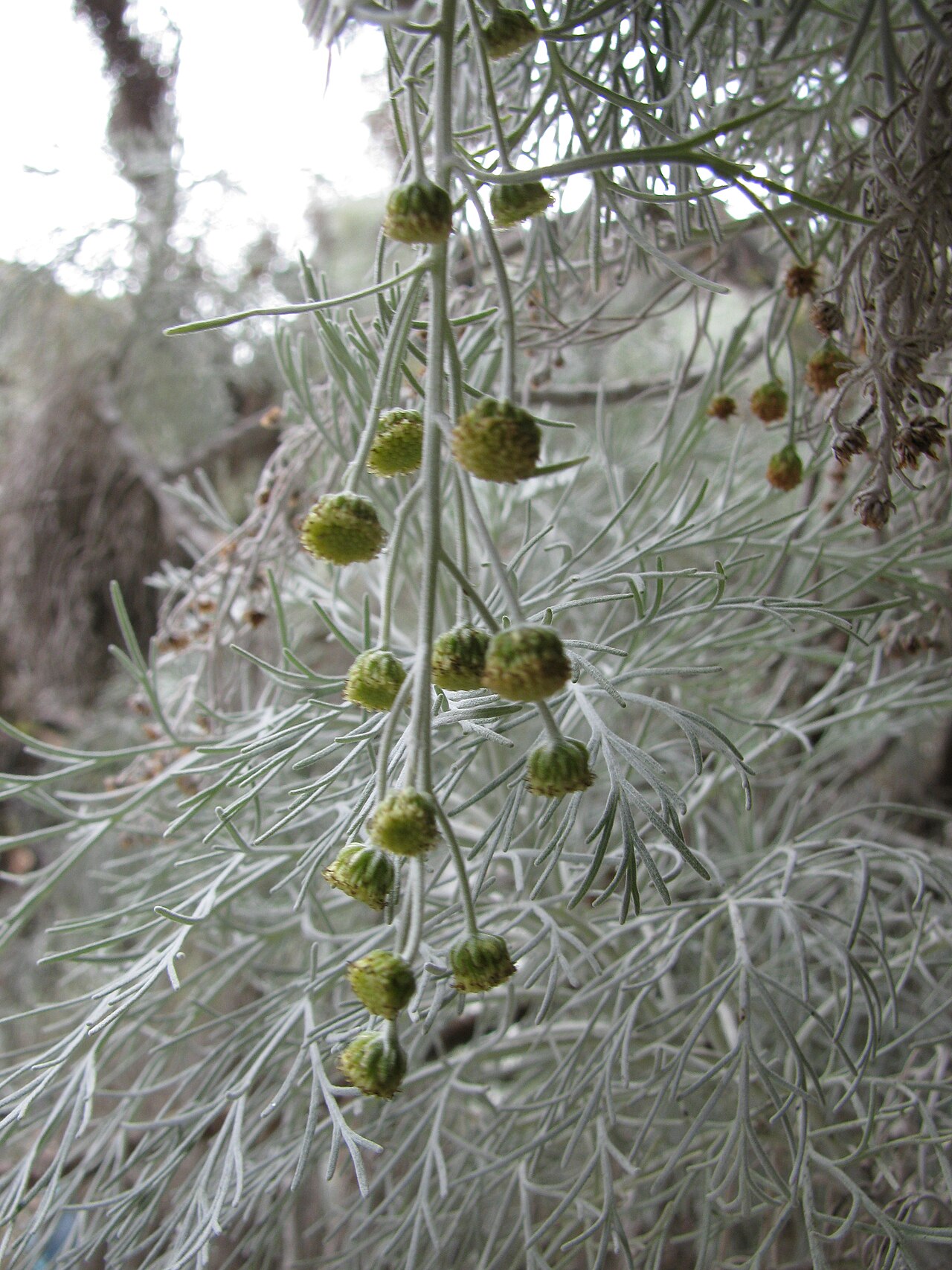
The flower heads are tiny, round, and nodding, borne in long, loose, leafy clusters. They are greenish to brownish cream, without showy petals, and are wind-pollinated like other wormwoods. The plant is grown for its foliage rather than its flowers.
Fruit & Look-alikes
The fruits are tiny, dry achenes without a pappus. The related ʻāhinahina (Artemisia australis), found on all the main islands, is taller, with leaves that are less finely divided. The two can hybridize in gardens. The famous Haleakalā ʻāhinahina, or silversword, shares the Hawaiian name and the silver color, but it is a large rosette plant with sword-shaped leaves.
Quick Facts
| Scientific Name | Artemisia mauiensis (A. Gray) Skottsb. |
| Family | Asteraceae (aster family) |
| Plant Type | Low evergreen shrub; Hawaiian endemic (Maui) |
| Mature Height | 1–3 ft |
| Mature Spread | 4–5 ft |
| Growth Rate | Moderate |
| Sun Exposure | Full sun |
| Water Needs | Low; let soil dry between waterings |
| Soil Type | Very well-drained cinder, rocky or sandy soil |
| Soil pH | Slightly acidic to neutral |
| Bloom Time | Irregular; varies with site and season |
| Flower Color | Greenish to brownish cream (inconspicuous) |
| Fall Color | None; evergreen silver foliage |
| Fruit | Tiny dry achene |
| Deer Resistant | Partly; bitter, aromatic foliage, but goats browse it |
| USDA Hardiness Zones | 9–12 (outdoors in Hawaiʻi, from lowland to upland) |
Native Range
Maui wormwood is endemic to the island of Maui. USDA PLANTS lists it as native only in Hawaiʻi, and the Smithsonian’s Flora of the Hawaiian Islands records it only from East Maui, in Haleakalā crater and on the mountain’s south slope.
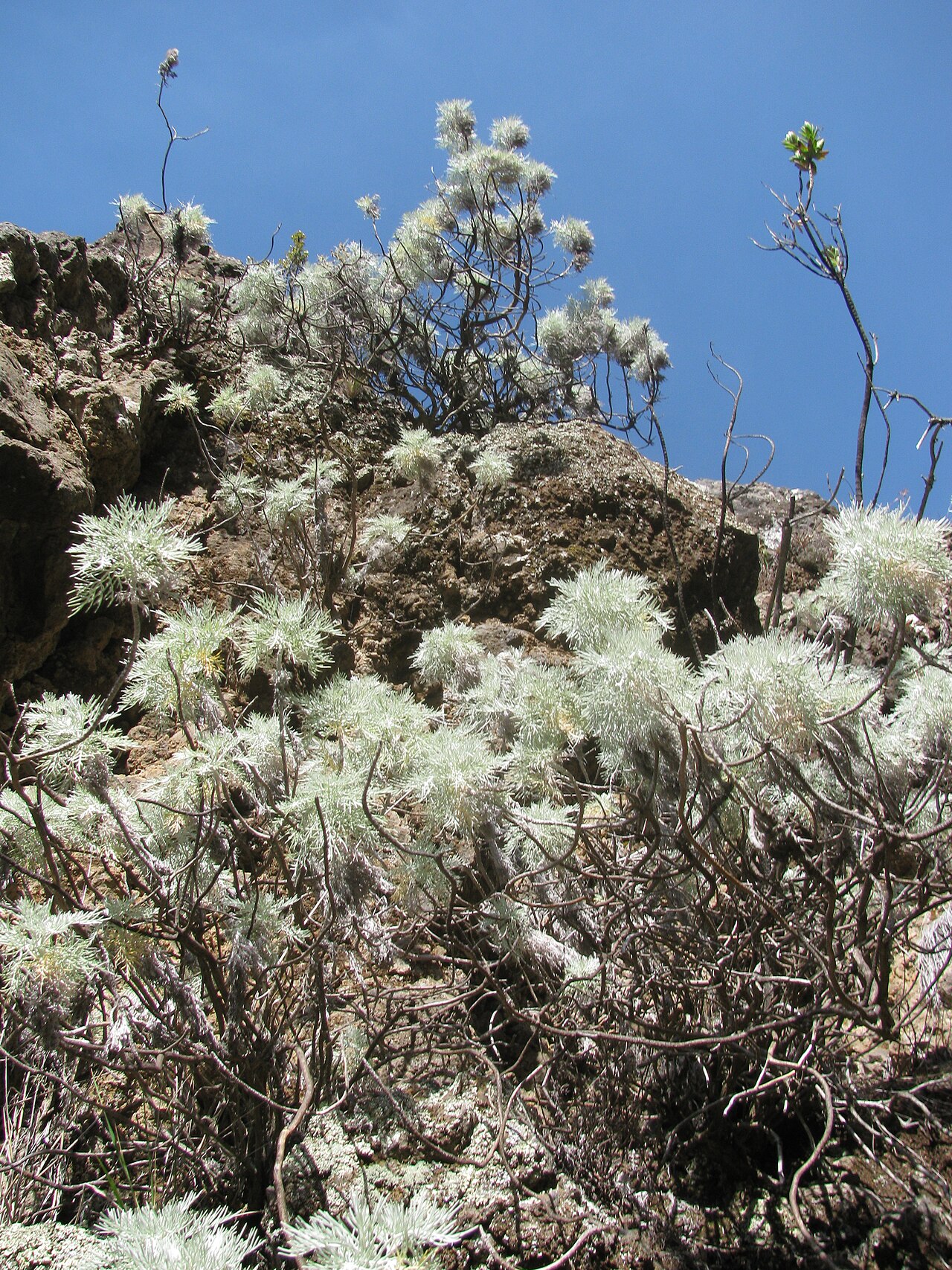
It grows on cliffs, rock walls, gulch sides and rocky slopes in subalpine shrubland, mostly from about 6,200 to 7,500 feet. This is a dry, sunny, windy environment of thin, rocky soils, with cold nights and strong sun, where it grows with pūkiawe, ʻaʻaliʻi, māmane and other upland shrubs. Cliffs protect many plants from goats, which once roamed the crater.
The Smithsonian rates it apparently secure and it has no federal status, but its whole wild range lies on one mountain. Fencing and the removal of feral goats in Haleakalā National Park have helped the subalpine flora recover, and the species is now also grown in restoration plantings on the south slope.
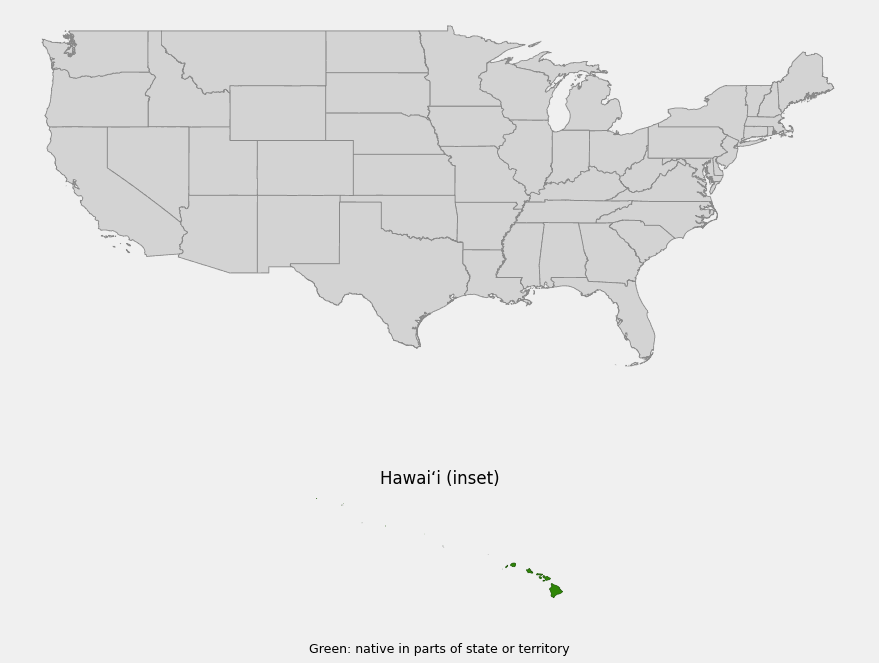
📋 Regional plant lists featuring Hinahina: Hawaii
Growing & Care Guide
Hinahina is one of the easiest Hawaiian natives for a dry, sunny garden, and many native plant nurseries carry it. Although it comes from high on Haleakalā, it grows well in lowland gardens in Hawaiʻi if it has full sun and very good drainage; mid to high elevations suit it best. It is hardy only in mild climates, roughly USDA zones 9–12. Buy nursery-propagated plants from a Hawaiʻi native plant nursery, and never collect from the wild. Hawaiʻi restricts bringing plants in from other states, so look for local growers.
Light
Full sun brings out the best silver color and a compact shape. A south-facing slope, rock wall or raised bed is ideal; in shade it becomes leggy and greener.
Soil & Water
Very well-drained soil, such as cinder, sand or a rocky mix. Once established, water only during long dry spells, and avoid overhead irrigation. Let the soil dry between waterings; overwatering and too much fertilizer both dull the silver color and can cause rot. It has no tolerance for waterlogged soil or salt spray. In pots it dries out faster and needs more frequent watering.
Planting Tips
Use it as a silver accent, in rock gardens, along walls, or massed as a low ground cover. It pairs well with ʻākia, pili grass and other dry-land natives. Keep it away from Artemisia australis if you want to save true seed, since the two can cross.
Pruning & Maintenance
Pruning isn’t needed; it naturally forms a low mound. You can trim off the flower stalks to keep the foliage tidy, unless you want seed, and shape it lightly if it sprawls. Watch for spittlebugs and scale insects.
Propagation
Grown from seed or from cuttings. Home gardeners should propagate only from their own nursery-bought plants.
Landscape Uses
- Silver accent: a native Hawaiian alternative to dusty miller
- Rock gardens and walls: thrives in sharp drainage and cascades over rock
- Dry, sunny native gardens: combines well with ʻākia, pili grass and kuluʻī
- Containers: a fine-textured silver plant for sunny lanai pots
Wildlife & Ecological Value
Hinahina is a small but conspicuous member of Haleakalā’s subalpine plant community.
For Pollinators
The tiny flowers are wind-pollinated and offer little to pollinators, but the shrubs shelter insects, including native moths, in a harsh, open landscape.
For Birds
Low shrubs on the upper slopes of Haleakalā give cover to ground-nesting birds such as the nēnē, Hawaiʻi’s native goose, which forages in subalpine shrubland.
For Mammals
Hawaiʻi’s only native land mammal is the Hawaiian hoary bat. Feral goats once damaged the crater’s vegetation heavily; their removal has helped plants like hinahina.
Ecosystem Role
Growing in cracks and on cliffs, hinahina helps stabilize rocky slopes and is one of the pioneer shrubs on Haleakalā’s cinder and lava.
Cultural & Historical Uses
The Hawaiian names hinahina and ʻāhinahina mean “gray” or “silvery-haired,” describing the foliage. The same names are used for other silvery plants, including the Haleakalā silversword and the beach heliotrope, so the scientific name is the clearest way to be sure which plant is meant.
Early Hawaiians used hinahina leaves to protect stored feather cloaks from insects when they were kept in calabashes, and the pounded leaves were used medicinally for asthma. Today the silvery stems are sometimes used in lei and flower arrangements.
The plant was first described by Asa Gray as a variety of Artemisia australis, and the Swedish botanist Carl Skottsberg later raised it to a species. The genus name honors Artemis, the Greek goddess, and mauiensis refers to Maui. Relatives include absinthe wormwood, tarragon and the sagebrushes of the American West.
Frequently Asked Questions
Is Maui wormwood endangered?
No. Artemisia mauiensis is not federally listed and is rated apparently secure, but it grows wild only on Haleakalā, Maui.
Can hinahina grow at low elevations?
Yes. Although it is native to 6,000–7,500 feet, it grows well in lowland Hawaiian gardens with full sun, sharp drainage and little water.
Is it the same as the Haleakalā silversword?
No. Both are called ʻāhinahina, but the silversword (Argyroxiphium sandwicense) is a large rosette plant. Hinahina is a low, feathery wormwood.
Is hinahina edible?
No. The leaves are extremely bitter, like other wormwoods. It was used medicinally and to repel insects, not as food.
Why is my hinahina turning green?
Too much water, fertilizer or shade. Give it full sun, lean soil and let it dry out between waterings to keep it silver.

Looking for a nursery that carries Hinahina?
Browse our native plant nursery directory: Hawaii

