
ʻŌpelu (Lobelia hypoleuca)
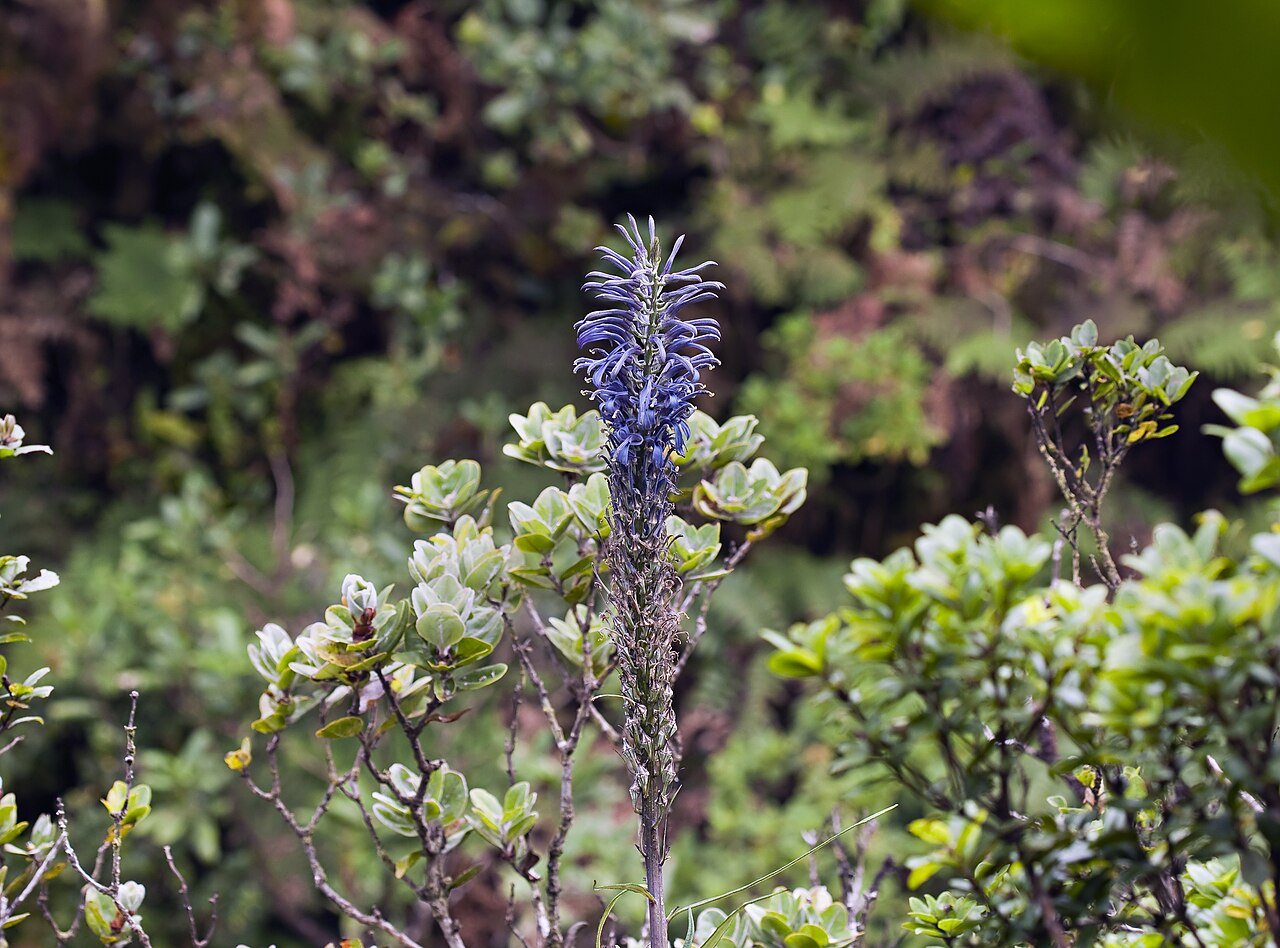
Lobelia hypoleuca is a shrubby Hawaiian lobelia with long, sword-shaped leaves that are green above and snow-white beneath, and tall spikes of curved blue flowers. It has four recorded Hawaiian names: ʻŌpelu, perhaps the most commonly used, along with Kuhiʻaikamoʻowahie, Liua and Moʻowahie. It belongs to the Hawaiian lobelioids of the bellflower family (Campanulaceae), and it grows only in Hawaiʻi.
It is the most widespread of all Hawaiian lobelioids, found on Kauaʻi, Oʻahu, Molokaʻi, Lānaʻi, Maui and Hawaiʻi Island, in mesic and wet forest at about 2,000 to more than 4,900 feet. Because its range is so broad, it is also very variable, especially in leaf size and shape. On a windy ridge, the flashing white undersides of the leaves make it easy to spot.
ʻŌpelu is not federally listed under the Endangered Species Act, although feral pigs, rats, slugs and invasive plants threaten it, as they do all Hawaiian lobelioids. It is occasionally offered by Hawaiʻi native plant nurseries and is grown by collectors, but it is short-lived and best suited to cool, moist upland gardens. Buy only nursery-propagated plants, and never collect plants or seeds from the wild.
Identification
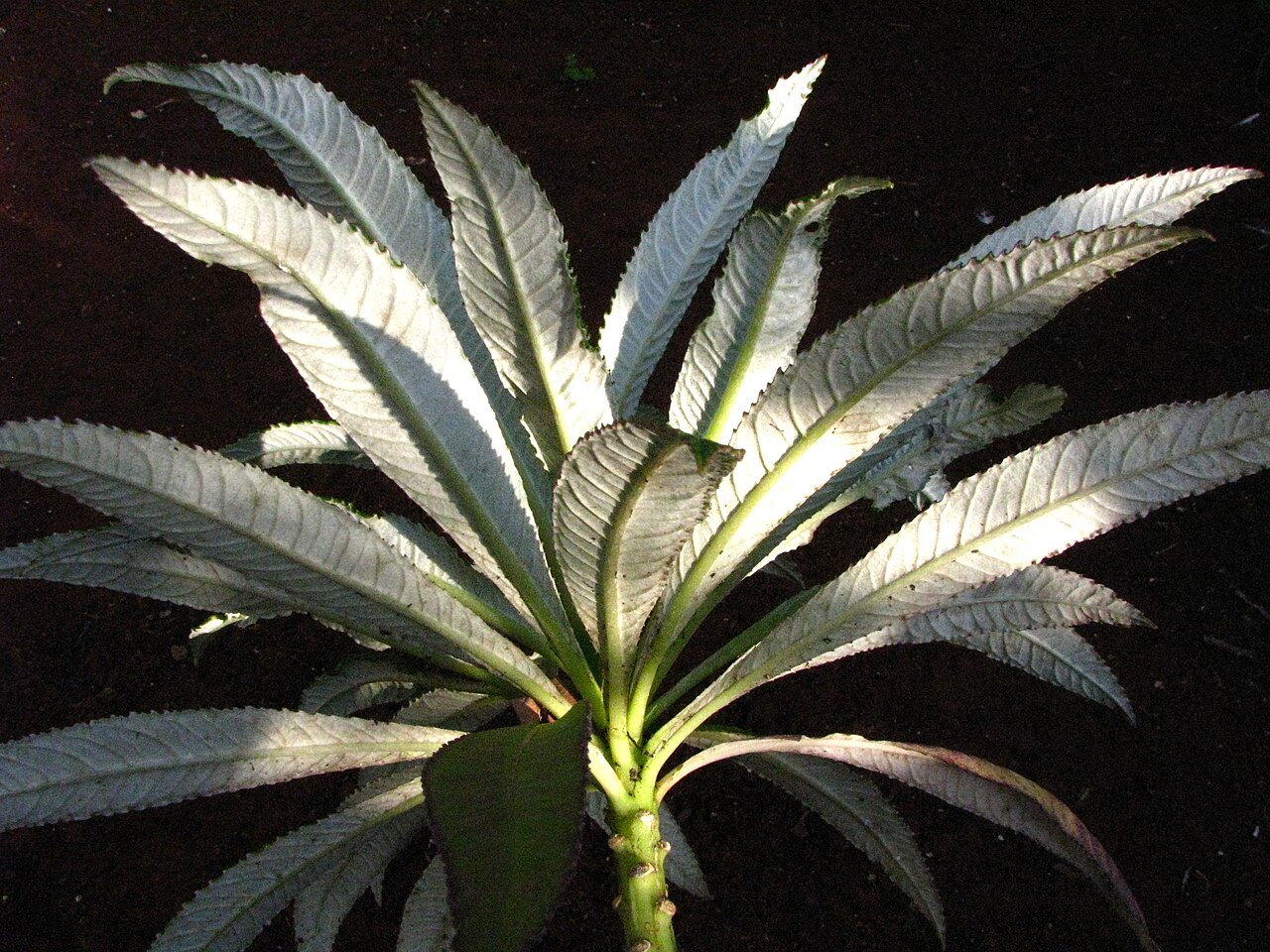
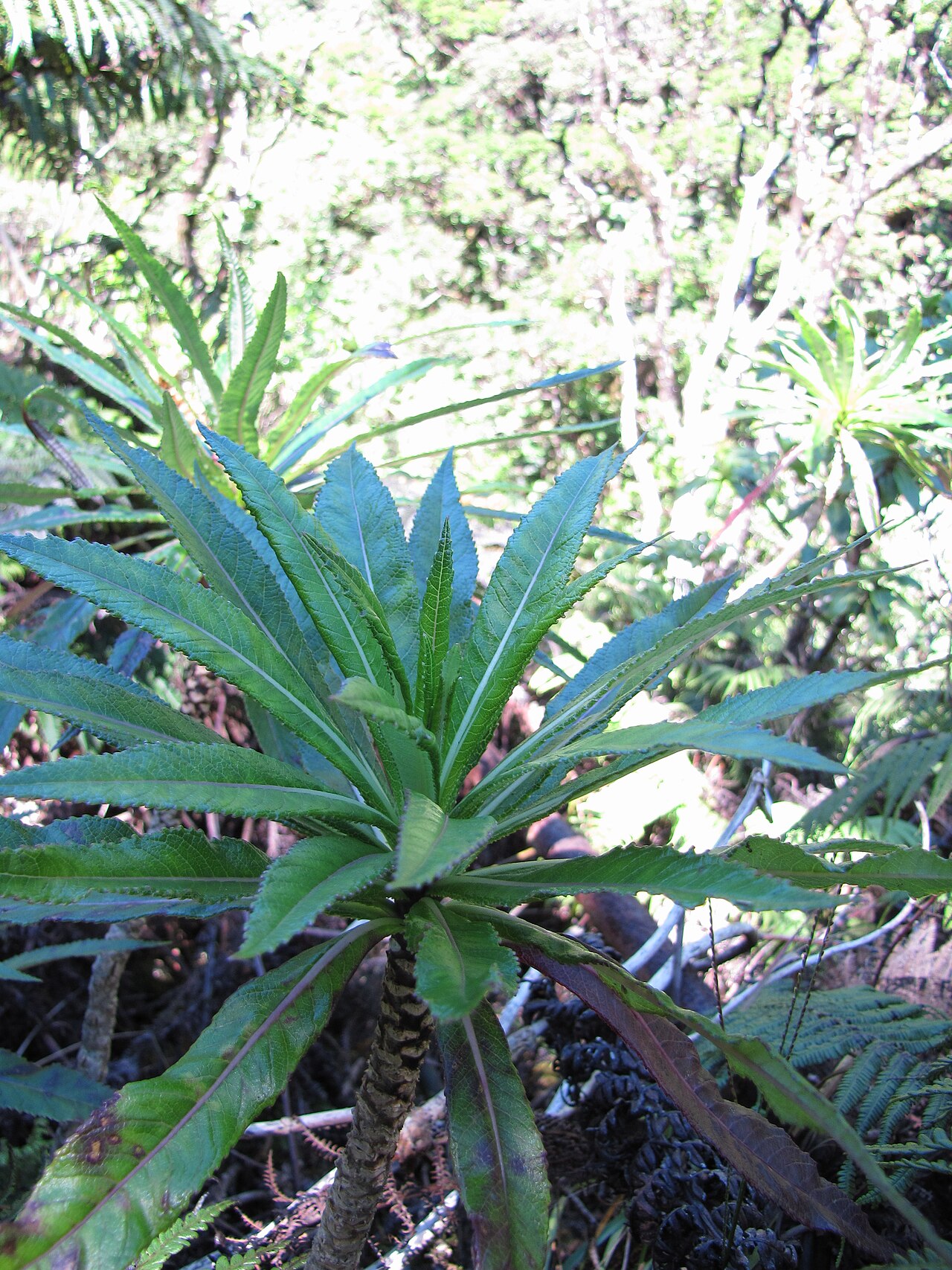
ʻŌpelu looks like a small palm or yucca: a woody stem topped by a dense rosette of long, narrow leaves. Turn over a leaf and the bright white, felted underside identifies it right away.
Growth Habit
A shrub with one or a few woody stems, usually 2 to 6 feet tall but up to about 11 feet. The stems are pale and rough, marked with old leaf scars, and each is topped by a rosette of leaves. Broken stems bleed a milky latex.
Leaves
Leaves are long and narrow, lance- to sword-shaped, up to about 2 feet long, with small teeth along the edges. They are shiny, medium to dark green above and covered with dense, white, woolly hairs beneath, which gives the species its name, hypoleuca, Greek for “white below.” Leaf size and shape vary a great deal from island to island.
Flowers
Plants send up 3 to 7 tall, erect flowering stalks from the rosette, each up to about 16 inches long and crowded with flowers. The flowers are blue to blue-violet, curved and tubular, with the split, two-lipped shape typical of lobelias. Flowering has been recorded mostly from late summer into fall, though timing varies.
Fruit & Look-alikes
The fruits are dry capsules that split open to release many tiny, wind-dispersed seeds. Like many Hawaiian lobelias, plants often die after a heavy bloom. Cyanea and Clermontia species have broader leaves that are not white beneath and fleshy fruits. Other Hawaiian Lobelia species differ in flower color (several are purple, red or whitish) and in leaf shape and hairiness. Some Oʻahu plants in the Waiʻanae Mountains with green, less hairy leaf undersides may be a separate, undescribed taxon.
Quick Facts
| Scientific Name | Lobelia hypoleuca Hillebr. |
| Family | Campanulaceae (bellflower family; Hawaiian lobelioids) |
| Plant Type | Short-lived woody shrub; Hawaiian endemic |
| Mature Height | 2–6 ft (up to 11 ft) |
| Mature Spread | 2–4 ft |
| Growth Rate | Moderate |
| Sun Exposure | Full sun to partial sun |
| Water Needs | Moderate to high; moist but well-drained soil |
| Soil Type | Organic or cinder soils that drain well |
| Soil pH | Acidic to slightly acidic |
| Bloom Time | Mostly late summer to fall |
| Flower Color | Blue to blue-violet |
| Fall Color | None; evergreen leaves with white undersides |
| Fruit | Dry capsule with tiny wind-dispersed seeds |
| Deer Resistant | No; damaged by feral pigs, goats, deer and rats |
| USDA Hardiness Zones | 10–12 (cool, moist uplands of Hawaiʻi) |
Native Range
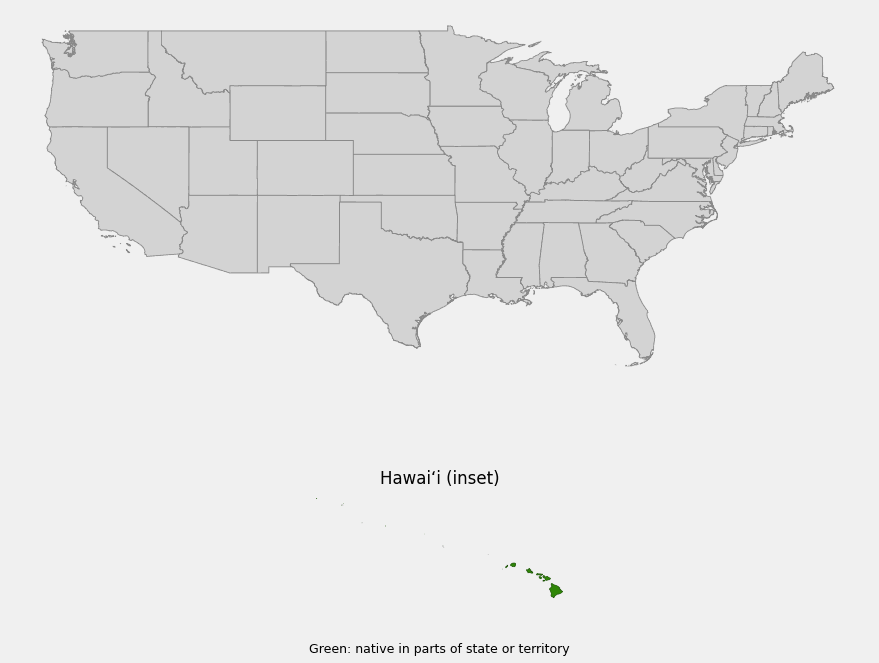
ʻŌpelu is endemic to the Hawaiian Islands and grows nowhere else in the wild. USDA PLANTS lists it as native only in Hawaiʻi. It is the most widespread Hawaiian lobelioid, occurring on all six of the largest islands: Kauaʻi, Oʻahu, Molokaʻi, Lānaʻi, Maui and Hawaiʻi Island.
It grows in mesic to wet forest at about 2,000 to more than 4,900 feet, often on ridges, slopes, cliff faces and banks where it gets good light and air movement. On Oʻahu it occurs in wet forest in the Koʻolau Range and on the slopes of Kaʻala in the Waiʻanae Range. On Lānaʻi, the rancher and naturalist George Munro described a plant in Hoʻokiʻo Gulch about 6 feet tall with 19 flower spikes.
Like other Hawaiian lobelioids, it has soft stems and few chemical defenses, so it is vulnerable to feral pigs, goats, deer and rats, and to slugs that eat seedlings. It survives best in fenced, protected forest and on steep sites that animals cannot easily reach.
📋 Regional plant lists featuring ʻŌpelu: Hawaii
Growing & Care Guide
ʻŌpelu can be grown, but it is a specialist plant for cool, moist upland gardens in Hawaiʻi, and it is short-lived: plants often live only a few years and may die after a heavy bloom. It is occasionally offered by Hawaiʻi native plant nurseries but is still rarely seen in landscapes. Buy only nursery-propagated plants, and never collect plants or seeds from the wild. Hawaiʻi restricts bringing plants in from other states, so gardeners in Hawaiʻi should buy it from local native plant nurseries. Outside Hawaiʻi it is grown only in a few botanical gardens and conservatories.
Light
Full sun to partial sun. In cultivation it does well in full sun on the cooler north and east sides of a property, and with some shade on hotter west and south exposures.
Soil & Water
Use a well-drained organic or cinder-based mix. Keep the soil on the moist side; plants from different islands may differ in how much water they need, but none like to dry out completely or sit in soggy soil.
Planting Tips
Plant it where the white leaf undersides can be seen moving in the wind, such as on a slope or in a large container near a path. It tolerates wind. Cool, humid upland locations give the best results; hot, dry lowland gardens are difficult.
Pruning & Maintenance
Little pruning is needed; remove spent flower spikes and dead leaves. Pests are the main problem: caterpillars or other insects can strip seedlings within days, and slugs and snails eat lobelioid leaves, so check plants often and treat promptly. Because plants are short-lived, keep raising new ones from seed.
Propagation
Nurseries grow it from the tiny seeds, sown on the surface of a fine, moist mix and kept humid. Seedlings must be protected from slugs. Home gardeners should propagate only from their own nursery-bought plants.
Landscape Uses
- Hawaiʻi native gardens: a striking lobelioid for cool, moist upland landscapes
- Specimen and container plants: silvery-white leaf undersides and tall blue flower spikes
- Native plant collections: the most widespread Hawaiian lobelioid
- Conservation and restoration plantings: outplanting in protected mesic and wet forest with appropriate permits
Wildlife & Ecological Value
Like other Hawaiian lobelioids, ʻōpelu is part of a web of native plants, birds and insects that evolved in isolation.
For Pollinators
The curved, tubular blue flowers are visited by nectar-feeding birds and insects. Hawaiian lobelioids evolved largely with nectar-feeding honeycreepers, many of which are now rare or extinct.
For Birds
Native forest birds feed on nectar from the flowers and on insects among the leaves. The tiny, dry seeds are spread mainly by wind rather than by birds.
For Mammals
The Hawaiian hoary bat, Hawaiʻi’s only native land mammal, hunts insects over the forest. Introduced pigs, goats, deer and rats damage or eat lobelias and are among their main threats.
Ecosystem Role
ʻŌpelu is an understory and forest-edge plant of mesic and wet forest. Its wide range across six islands makes it an important part of the native forest flora and a good indicator of how well a forest is protected from feral animals.
Cultural & Historical Uses
ʻŌpelu is one of the few Hawaiian lobelias with several Hawaiian names. ʻŌpelu is also the name of the mackerel scad, a fish, and the plant is said to be named for the resemblance of its leaf to the fish. Moʻowahie means a fragment of wood for burning, and liua (or nuia) means dizzy; the full meaning of kuhiʻaikamoʻowahie is not known.
In early Hawaiian practice, the plant was used to sprinkle water on an image of the rain god to call for rain. The genus Lobelia honors the Flemish botanist Matthias de l’Obel, and the species was described by the German physician and botanist William Hillebrand, author of the first full flora of the Hawaiian Islands.
The Hawaiian lobelioids, more than 125 species in six genera, are the largest plant radiation on any island chain, all descended from a single ancestor that reached Hawaiʻi millions of years ago. Hawaiʻi has about 15 endemic Lobelia species, and ʻōpelu is by far the most widespread.
Frequently Asked Questions
What is the Hawaiian name for Lobelia hypoleuca?
It has four recorded names: ʻōpelu, perhaps the most commonly used, plus kuhiʻaikamoʻowahie, liua and moʻowahie.
Why are the leaves white underneath?
The undersides are covered with dense, white, woolly hairs. The species name hypoleuca means “white below.”
Is ʻōpelu endangered?
It is not federally listed under the Endangered Species Act and is the most widespread Hawaiian lobelioid, but feral animals, rats, slugs and invasive plants threaten it in many areas.
Can I grow it in my garden?
Yes, in cool, moist upland gardens in Hawaiʻi, in sun to partial sun with well-drained, moist soil. It is short-lived, so expect to replace it. Buy only nursery-propagated plants, and never collect from the wild.
Is it poisonous?
No toxicity is well documented, but many lobelias contain alkaloids, so do not eat any part of the plant and keep pets and children from chewing it.

Looking for a nursery that carries ʻŌpelu?
Browse our native plant nursery directory: Hawaii

