
Hāhā (Cyanea grimesiana)
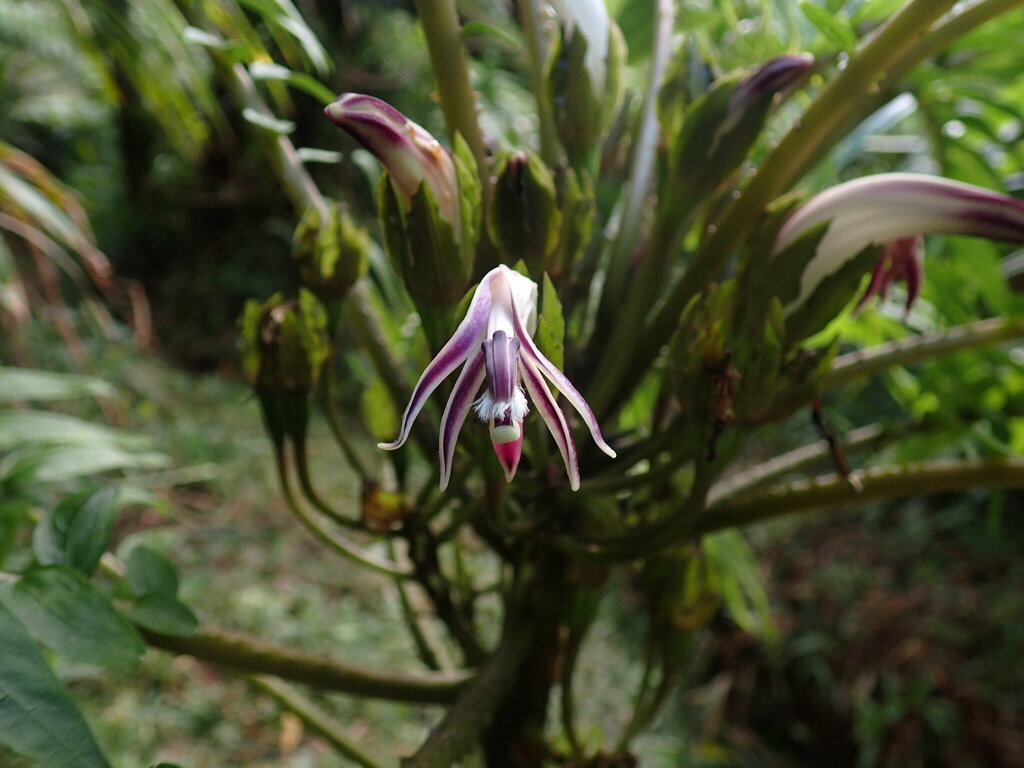
Cyanea grimesiana is a rare Hawaiian lobelioid known in Hawaiian as hāhā, a name shared by other Cyanea, and in English as splitleaf cyanea. It belongs to the bellflower family (Campanulaceae) and to the Hawaiian lobelioids, the largest plant radiation in the islands. It is a slender, palm-like shrub up to about 10 feet tall, with a crown of deeply lobed leaves, prickly stems, curved tubular flowers that are purplish, greenish or yellowish white striped with magenta, and orange berries.
Hāhā is endemic to Hawaiʻi. Both of its recognized subspecies are federally listed as Endangered: ssp. grimesiana (listed in 1996), which survives mainly on Oʻahu and was historically also known from Molokaʻi and other islands of Maui Nui, and ssp. obatae (listed in 1994), found only in the Waiʻanae Mountains of Oʻahu. Very few wild plants remain, in mesic forest gulches and slopes.
Like many Hawaiian lobelioids, it is grown mostly by conservation programs, and it is a demanding plant outside its cool, shady forest habitat. Never collect plants, seeds or cuttings from the wild; obtain plants only from permitted conservation or native plant nurseries. This guide covers how to identify hāhā, where it grows, what it needs in cultivation, and why it matters.
Identification
Hāhā looks like a small, spindly palm or tree fern at first glance: a thin, mostly unbranched stem topped by a rosette of long, deeply cut leaves. The flowers and fruits appear among or below the leaves, right on the stem.
Growth Habit
An unbranched or sparsely branched shrub, usually 3 to 10 feet tall, with a slender stem marked by leaf scars. Stems, leaf stalks and sometimes leaf veins carry small prickles, a common feature of young or shade-grown Cyanea.
Leaves
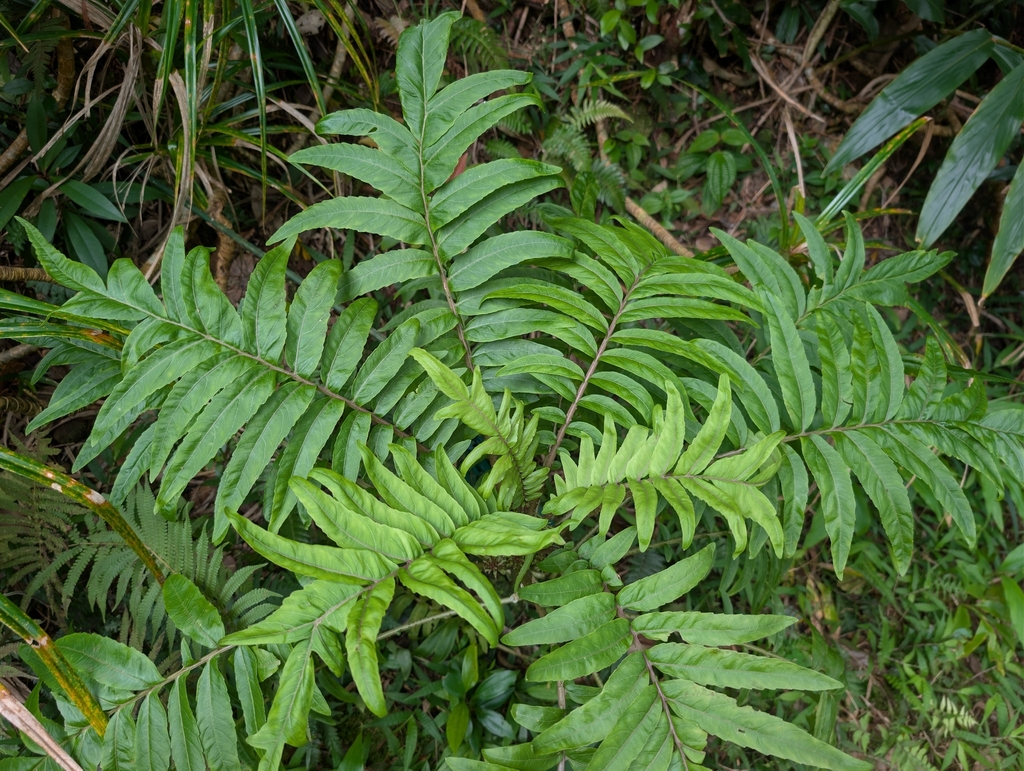
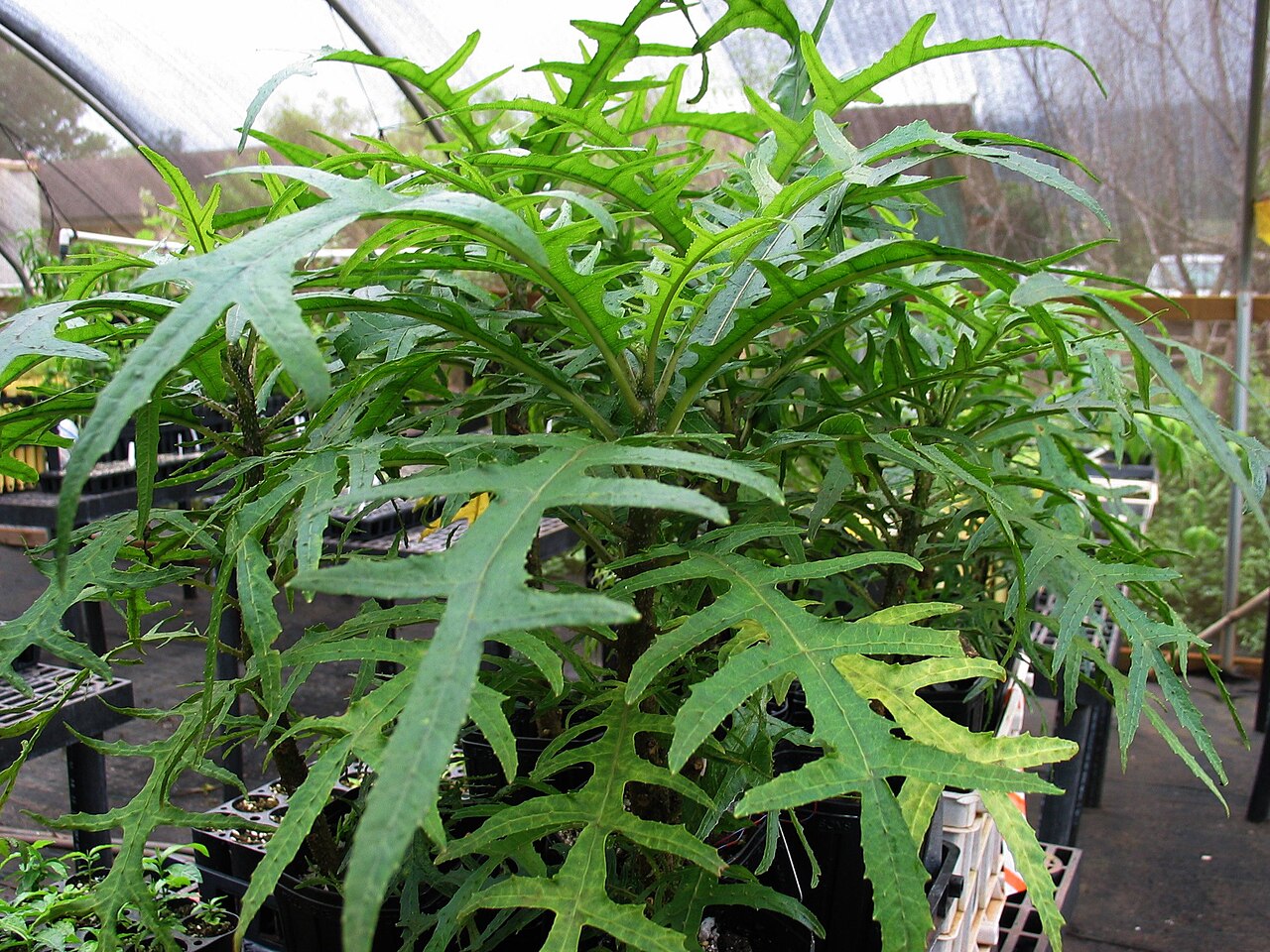
Leaves are clustered in a crown at the stem tip. They are long and pinnately lobed, cut nearly to the midrib into many narrow, toothed segments, which gives a fern-like or split look. Leaf shape varies between the two subspecies and between young and mature plants.
Flowers
Flowers grow in short clusters from the stem among or just below the leaves. Each is a curved, tubular flower up to about 3 inches long, purplish or greenish to yellowish white and often striped with magenta, with the lobes splitting at the tip. The curved tubes fit the bills of nectar-feeding Hawaiian honeycreepers. Plants may bloom at any time of year.
Fruit & Look-alikes
The fruits are fleshy, rounded orange berries with many tiny seeds. Other hāhā, such as Mt. Kaʻala cyanea (Cyanea superba), have large, undivided leaves and white flowers. Tree ferns such as hāpuʻu ʻiʻi can look similar from a distance, but they have true fern fronds and never flower.
Quick Facts
| Scientific Name | Cyanea grimesiana Gaudich. |
| Family | Campanulaceae (bellflower family); Hawaiian lobelioid |
| Plant Type | Palm-like shrub; Hawaiian endemic; federally endangered |
| Mature Height | 3–10 ft |
| Mature Spread | 2–4 ft |
| Growth Rate | Moderate |
| Sun Exposure | Partial to full shade |
| Water Needs | Moderate to high; constant moisture with good drainage |
| Soil Type | Moist, rich, well-drained forest soil |
| Soil pH | Slightly acidic |
| Bloom Time | Can bloom year-round |
| Flower Color | Purplish, greenish or yellowish white, striped with magenta |
| Fall Color | None; evergreen |
| Fruit | Orange berry with many tiny seeds |
| Deer Resistant | No; pigs, goats, rats and slugs damage plants |
| USDA Hardiness Zones | 11–12 (frost-free, mild temperatures) |
Native Range
Hāhā is endemic to the Hawaiian Islands, and USDA PLANTS lists it as native only in Hawaiʻi. Today almost all wild plants are on Oʻahu, in the Waiʻanae Mountains and the Koʻolau Range. Subspecies grimesiana was historically recorded from Molokaʻi and other islands of Maui Nui as well, but it has not been seen on Molokaʻi in decades. Subspecies obatae is restricted to the southern Waiʻanae Mountains.
It grows in mesic (moderately wet) forest and the moister edges of wet forest, usually in shaded gulches, on steep slopes and along stream banks, at roughly 1,000 to 3,000 feet. These sites are cool and humid, with dappled light under a canopy of koa, ʻōhiʻa and other native trees.
Its decline comes from many threats at once: feral pigs and goats, rats that eat fruit and stems, introduced slugs that eat seedlings, invasive plants that crowd the understory, landslides, and the loss of the native birds that once pollinated its flowers and spread its seeds. Conservation programs on Oʻahu fence and weed its habitat, collect seed, and grow plants for outplanting.
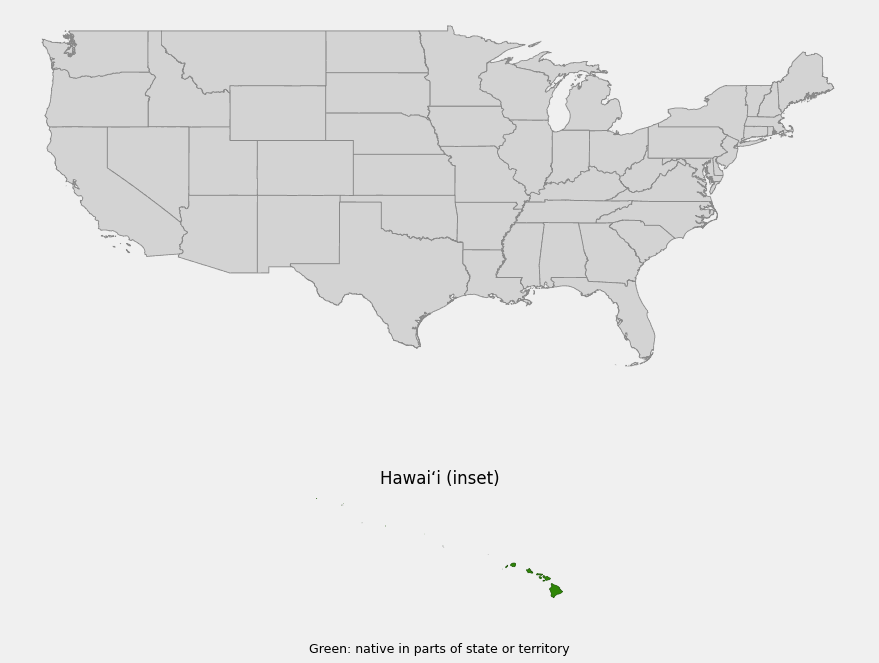
📋 Regional plant lists featuring Hāhā: Hawaii
Growing & Care Guide
Hāhā can be grown, and conservation nurseries on Oʻahu raise it regularly for outplanting, but it is not an easy garden plant. It needs the cool, humid, shaded conditions of a mid-elevation mesic forest, steady moisture and protection from slugs and rats, and it does poorly in hot, dry or windy lowland gardens. As a federally endangered species, it should only come from a permitted conservation program or native plant nursery; never collect plants, seeds or cuttings from the wild. Plants are rarely offered for sale. Hawaiʻi also restricts bringing plants in from other states, so any plant should be sourced within the islands. Outside Hawaiʻi it is grown only in specialist conservatories.
Light
Partial to full shade, such as under a tree canopy or shade cloth. Direct afternoon sun scorches the leaves.
Soil & Water
A rich, moist, well-drained forest soil or a potting mix with plenty of organic matter and some cinder or perlite. Keep the soil evenly moist and the air humid; never let it dry out, but avoid standing water, which rots the stem.
Planting Tips
Plant in a sheltered, shady, humid spot at middle elevations, ideally among other native forest plants. Protect it from wind, which damages the large leaves, and from pigs, rats and slugs. Many growers keep young plants in pots or a shadehouse until they are well established.
Pruning & Maintenance
Little pruning is needed; remove only dead leaves. Control slugs and snails around young plants, and watch for mealybugs, scale and aphids. Feed lightly with a balanced, slow-release fertilizer.
Propagation
Conservation programs grow it from seed cleaned from ripe berries and sown on a moist, sterile mix, and some plants are multiplied by tissue culture in laboratories. Seedlings are slow and vulnerable to rot and slugs. Propagation of endangered plants for outplanting is done under federal and state permits.
Landscape Uses
- Conservation plantings: outplanting into fenced, protected mesic forest with conservation partners
- Botanical and educational gardens: a striking example of Hawaiian lobelioid evolution
- Shade gardens at mid elevation: for experienced growers with cool, humid, shady sites
- Native forest understory: adds a palm-like vertical form among ferns and shrubs
Wildlife & Ecological Value
Hawaiian lobelioids like hāhā evolved alongside native forest birds, and their story is closely tied to the fate of those birds.
For Pollinators
The curved, tubular flowers are adapted for pollination by nectar-feeding honeycreepers with curved bills. With many of those birds now gone from Oʻahu’s lowland and mid-elevation forests, pollination in the wild is limited.
For Birds
Its fleshy berries were probably eaten and spread by native fruit-eating birds, many of which are extinct or rare. Introduced birds may now eat some of the fruits.
For Mammals
Hawaiʻi’s only native land mammal, the Hawaiian hoary bat (ʻōpeʻapeʻa), forages over mesic forest. Introduced rats, pigs and goats are major threats: rats eat fruits and gnaw stems, and pigs and goats trample and eat plants.
Ecosystem Role
It is part of the diverse understory of Oʻahu’s mesic forests. Protecting its habitat also protects many other rare plants, snails and insects that share those gulches.
Cultural & Historical Uses
The French botanist Charles Gaudichaud-Beaupré described Cyanea grimesiana in 1829 from plants collected on the voyage of the Uranie, and it was among the first species placed in the genus Cyanea, which he named. The genus name comes from the Greek for “dark blue,” after the flower color of some species. A botanical plate of the plant appears in the atlas of that voyage.
Hāhā is a general Hawaiian name for many Cyanea species, plants of the deep, misty forest. With roughly 80 described species, Cyanea is the largest plant genus endemic to Hawaiʻi, and many of its species are now endangered or extinct.
Both subspecies of Cyanea grimesiana are federally listed as Endangered (ssp. obatae in 1994 and ssp. grimesiana in 1996). Recovery work includes fencing, weed and rat control, seed banking, tissue culture and outplanting by agencies such as the U.S. Army’s Oʻahu natural resources program, the Plant Extinction Prevention Program and botanical gardens.
Frequently Asked Questions
Is hāhā (Cyanea grimesiana) endangered?
Yes. Both subspecies, ssp. grimesiana and ssp. obatae, are federally listed as Endangered, and very few wild plants remain.
Where does it grow?
Only in Hawaiʻi, today mostly in the Waiʻanae and Koʻolau mountains of Oʻahu, in shaded gulches and slopes of mesic forest. It was historically also known from Molokaʻi and other islands of Maui Nui.
Why is it called splitleaf cyanea?
Its leaves are deeply cut into many narrow lobes, so they look split or almost fern-like.
Can I grow hāhā at home?
It is difficult. It needs cool, humid shade, constant moisture and protection from slugs and rats, and plants should only come from permitted conservation or native plant nurseries. Never collect from the wild.
What pollinates hāhā?
Its curved, tubular flowers are adapted to nectar-feeding Hawaiian honeycreepers. Many of those birds are now gone from its forests, which limits natural pollination.

Looking for a nursery that carries Hāhā?
Browse our native plant nursery directory: Hawaii

