
ʻAe Lau Nui (Polypodium pellucidum)
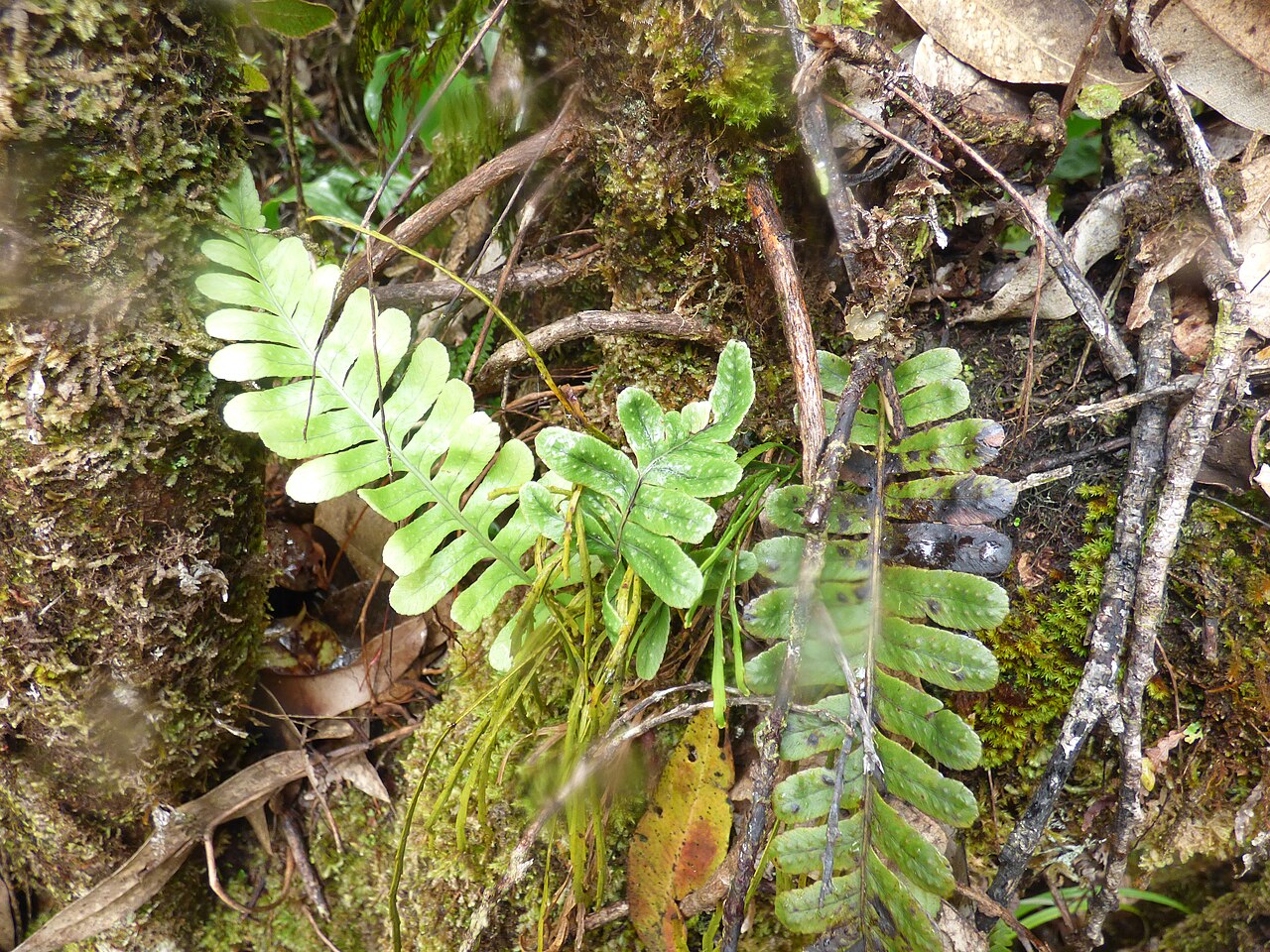
Polypodium pellucidum, known in Hawaiian as ʻAe Lau Nui or simply ʻae, and in English as the Hawaiian polypody or dotted polypody, is a tough, leathery fern found only in the Hawaiian Islands. Its deeply lobed fronds rise from creeping rhizomes on lava, rocks, cinder and mossy tree trunks, and the undersides carry neat rows of round, bright orange spore clusters.
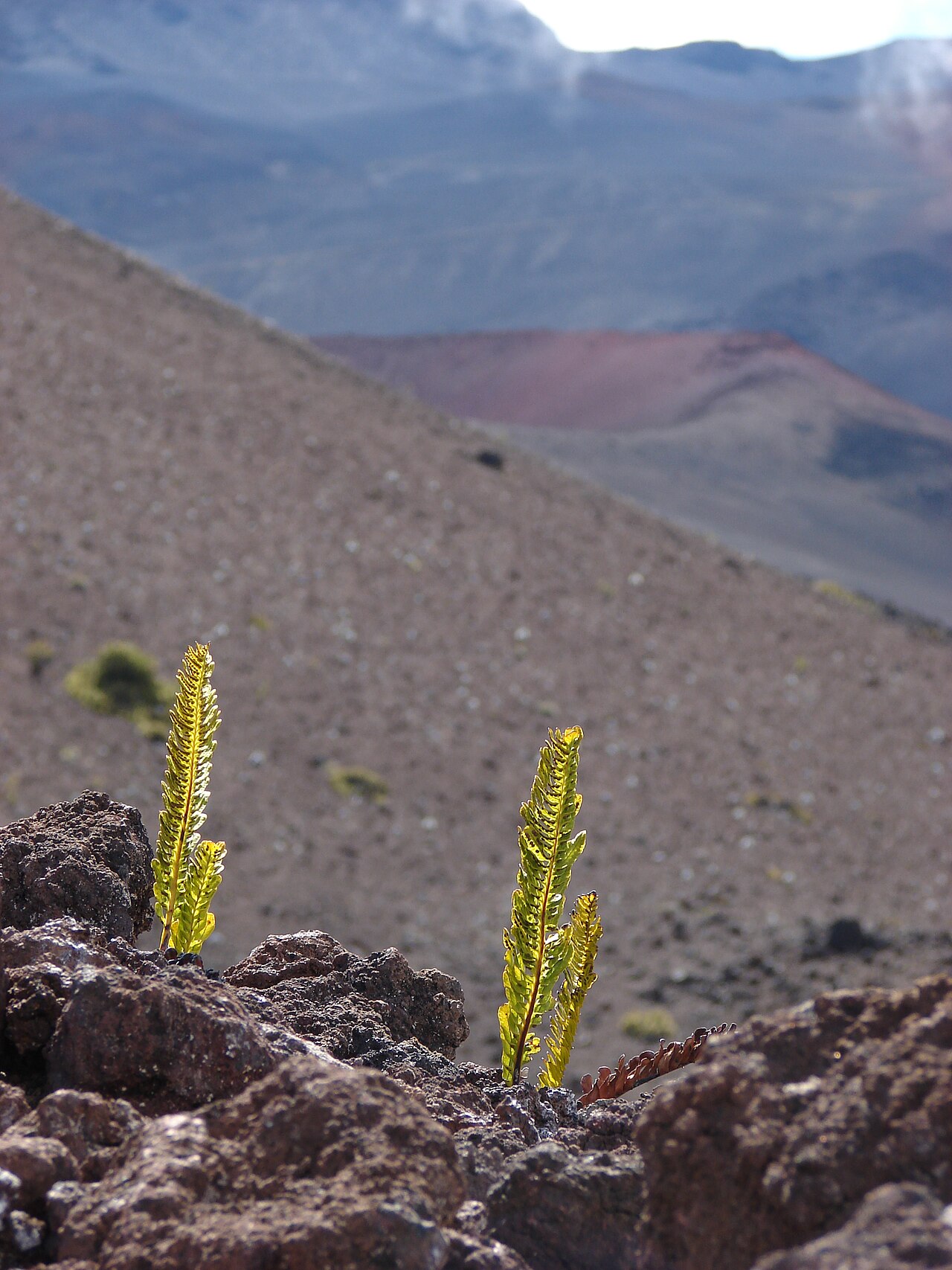
ʻAe lau nui is famous as one of the first plants to colonize new lava flows. On Hawaiʻi Island and Maui it can be found sprouting from small cracks in young, barren lava, and it climbs to the alpine cinder of Haleakalā crater. It also grows in mesic and wet forests, where it may perch on trees. It is a Hawaiian relative of mainland polypodies such as Rock Polypody and Licorice Fern.
Unlike many Hawaiian ferns, ʻae lau nui is fairly adaptable, and it can be grown in rock gardens, lava walls and containers in Hawaiʻi with sharp drainage and some shade. This guide covers how to recognize it, where it grows, how to grow it, and its role in building new ecosystems on lava.
Identification
ʻAe lau nui is quite variable. Botanists recognize several varieties, including the typical var. pellucidum, var. acuminatum, and the small, thick-fronded var. vulcanicum of high-elevation lava and cinder.
Rhizome & Habit
The plant spreads by a creeping, branching rhizome covered with brown scales, which runs over rock, cinder, soil or bark. Fronds come up singly along the rhizome, forming loose patches. On harsh lava plants are small and compact; in shaded forest they are larger and more lush.
Fronds
The fronds are pinnatifid: deeply cut into a series of narrow, oblong, round-tipped lobes on either side of the midrib, but not divided all the way into separate leaflets. They are typically about 4 to 20 inches long, thick and leathery to somewhat fleshy, and medium to yellowish green. The species name pellucidum, “transparent,” refers to the veins, which show as translucent lines when a frond is held up to the light. In full sun on lava, fronds are often yellow-green.
Sori
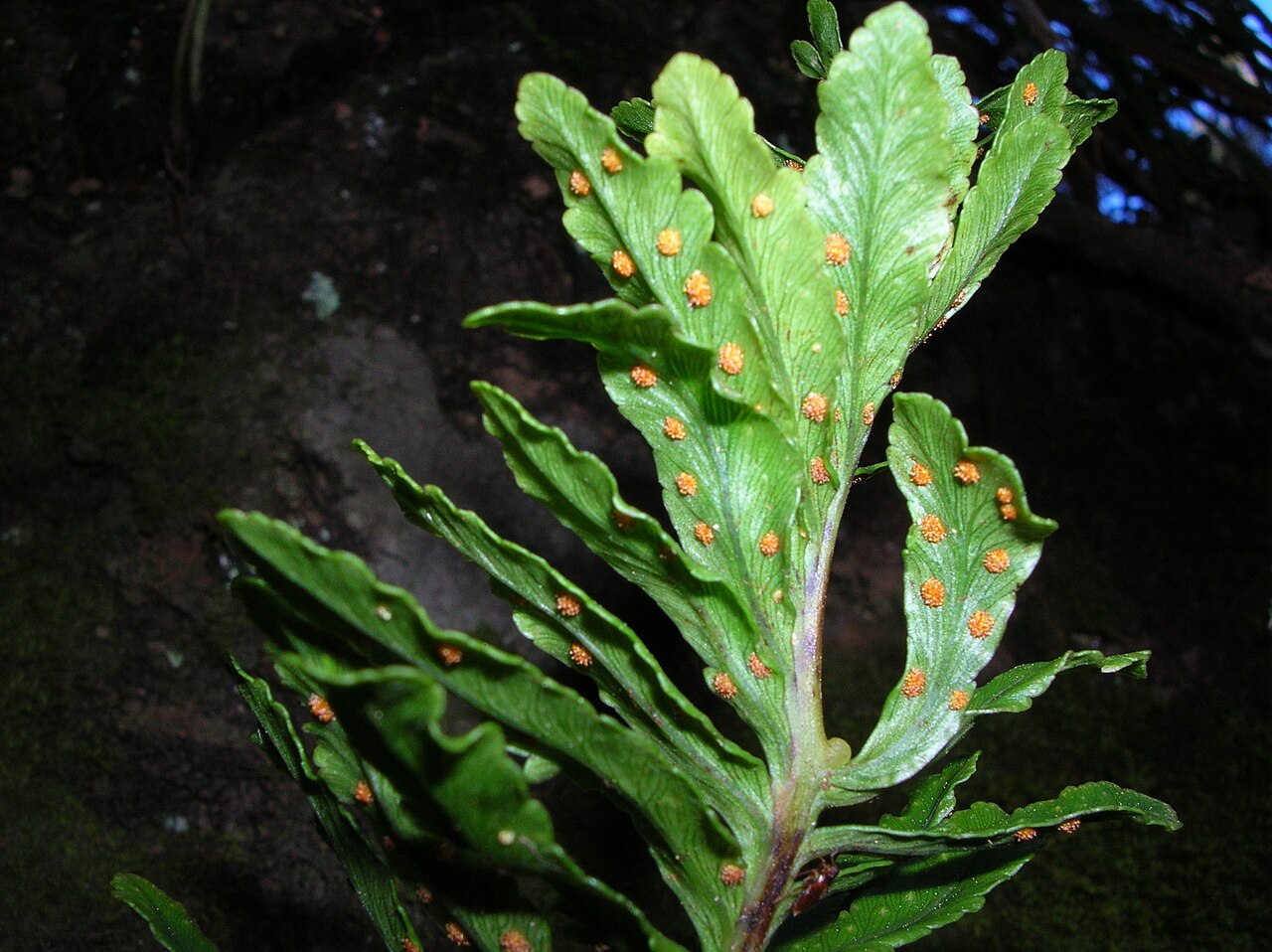
The sori are round, without a cover (indusium), and bright orange to golden when mature. They form a single neat row on each side of the midvein of each lobe, so the frond underside looks dotted, which is the origin of the USDA name “dotted polypody.”
Drought Response
Like many polypodies, ʻae lau nui can withstand dry spells. Fronds may curl or yellow in drought and recover after rain, which helps it survive on bare, fast-draining lava.
Similar Species
Hawaiʻi’s native grammitid ferns, such as Wahine Noho Mauna, are much smaller epiphytes. The introduced Phymatosorus (laua’e) has larger, glossy, fragrant fronds with sori sunk in pits, and the native ʻĀmaʻu, another lava pioneer, is a much larger fern with a short trunk and finely divided fronds.
Quick Facts
| Scientific Name | Polypodium pellucidum Kaulf. |
| Family | Polypodiaceae (polypody family) |
| Plant Type | Evergreen fern, terrestrial, lithophytic or epiphytic; endemic to Hawaiʻi |
| Mature Height | 4–20 in (fronds) |
| Mature Spread | Spreads slowly by rhizomes into patches 1–2 ft or more |
| Growth Rate | Slow |
| Sun Exposure | Full sun to shade (best in part shade) |
| Water Needs | Low to medium; tolerates dry spells |
| Soil Type | Very well-drained lava, cinder, rock crevices or coarse organic mix |
| Soil pH | Acidic to neutral, about 5.0–7.0 |
| Bloom Time | None (fern; produces spores) |
| Flower Color | None |
| Fall Color | None; fronds may yellow in sun or drought |
| Fruit | None; round orange sori in rows |
| Deer Resistant | Moderately; often grows on rock out of reach of browsers |
| USDA Hardiness Zones | 9b–12 (upland plants tolerate cold nights) |
Native Range
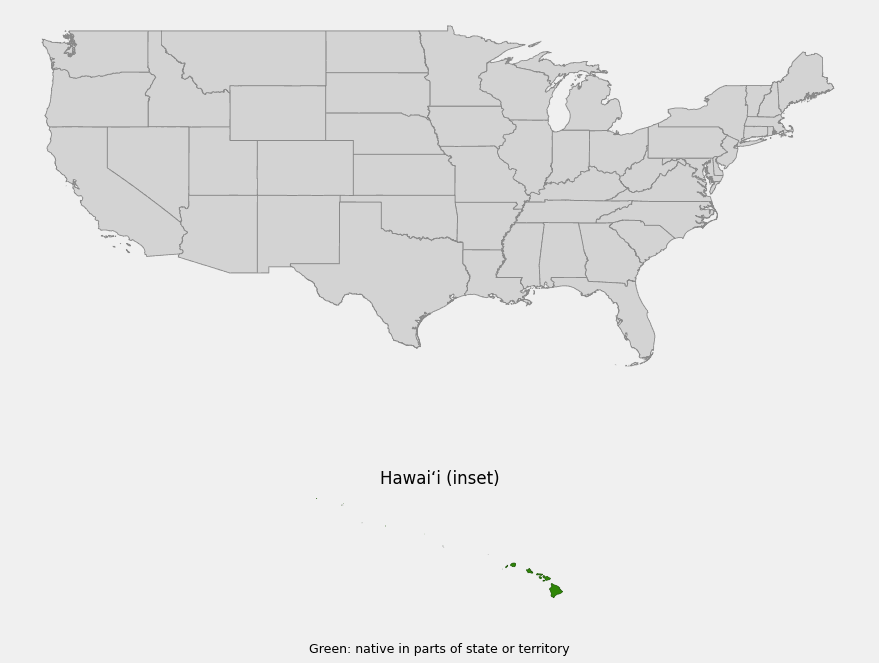
ʻAe lau nui is endemic to the Hawaiian Islands. USDA PLANTS records it only from Hawaiʻi, and it has been recorded on Kauaʻi, Oʻahu, Molokaʻi, Maui and Hawaiʻi Island. It is most abundant on the younger volcanoes of Maui and Hawaiʻi Island, where there is plenty of fresh lava and cinder; most research-grade iNaturalist records come from Hawaiʻi Island and East Maui.
It grows in a remarkable range of habitats: new and young lava flows, cinder fields, rock walls and outcrops, dry to wet shrubland, mesic and wet forest, and alpine cinder deserts. It reaches from middle elevations up to the floor and rim of Haleakalā crater, above 7,000 feet, and is a common fern on the slopes of Kīlauea and Mauna Loa. In forest it may grow on mossy banks, rocks and tree trunks.
ʻAe lau nui is not federally listed and is common within its range, especially in Hawaiʻi Volcanoes and Haleakalā national parks. It benefits from the protection of these parks, where feral goats and pigs have been largely removed.
📋 Regional plant lists featuring ʻAe Lau Nui: Hawaii
Growing & Care Guide
ʻAe lau nui is one of the more garden-friendly native Hawaiian ferns, especially for rock gardens, lava walls and containers. It is slow-growing and wants sharp drainage above all. Buy plants from Hawaiian native plant nurseries, and don’t dig ferns from parks or lava flows, which is illegal in national parks. Hawaiʻi restricts plants brought in from other states, and this fern is rarely if ever available outside the islands.
Light
It adapts to full sun through shade. In full sun on lava, fronds stay small and turn yellow-green; in part shade they are larger and deeper green. Bright part shade is the best compromise in most gardens, especially at low elevations where midday sun is intense.
Soil & Water
Grow it in very well-drained material: lava rock crevices, cinder, or a coarse mix of cinder and bark or tree-fern fiber. It rots in heavy, soggy soil. Water regularly while plants are establishing, then let the medium dry slightly between waterings; established plants tolerate dry spells and recover after rain.
Planting Tips
Tuck the rhizome into a lava crevice, a pocket in a rock wall, or the surface of a pot of coarse cinder mix, and pin it in place until roots grip. Don’t bury the rhizome deeply; it should sit at or near the surface, as it does on rock. It looks good with other lava-garden natives such as ʻaʻaliʻi, pūkiawe and ʻōhiʻa. It grows best in cooler, upland gardens but can be grown at lower elevations with some shade.
Pruning & Maintenance
Remove old, brown fronds by snipping them off at the rhizome. Avoid fertilizer, or use only a very dilute feed; lava pioneers are adapted to poor substrates. Watch for slugs and snails on new fronds.
Propagation
The easiest method is dividing the creeping rhizome: cut a piece with several fronds and roots and set it on fresh mix in shade until it re-roots. Ferns can also be grown from spores sown on sterile, moist media under cover, but this is slow.
Landscape Uses
- Rock and lava gardens: tucks into crevices in lava rock walls and outcrops
- Containers: a tough, slow fern for pots of coarse cinder mix
- Lava-flow restoration: a natural pioneer on new lava and cinder
- Upland native gardens: pairs with ʻōhiʻa, pūkiawe and ʻaʻaliʻi
- Fern collections: a hardy example of Hawaiʻi’s endemic ferns
Wildlife & Ecological Value
ʻAe lau nui is one of the plants that turns bare lava into a living landscape.
For Pollinators
Ferns have no flowers and are not visited by pollinators; they spread by wind-borne spores, which is how this fern reaches new lava flows so quickly.
For Birds
Birds don’t eat the fern itself, but the small insects and spiders that shelter in its fronds on lava and in forest provide food for native birds.
For Mammals
Hawaiʻi’s only native land mammal, the Hawaiian hoary bat, hunts insects over lava fields and forests. On rock, the fern is somewhat protected from feral goats and pigs.
Ecosystem Role
As one of the first colonizers of new lava, ʻae lau nui traps windblown dust, organic matter and moisture in rock cracks, starting the soil-building process that lets ʻōhiʻa and other plants follow. On young lava flows its fronds also shelter the specialized native insects and spiders that live there.
Cultural & Historical Uses
Ferns hold an important place in Hawaiian culture, and many, like ʻae, have their own names. In the name ʻae lau nui, lau nui means “large leaf,” a fitting description of its broad, lobed fronds compared with many of the small ferns that share its rocky habitats.
The species was described in 1824 by the German botanist Georg Friedrich Kaulfuss from Hawaiian specimens, and its name refers to the translucent veins visible when a frond is held up to the light.
For visitors to Hawaiʻi Volcanoes and Haleakalā national parks, ʻae lau nui is one of the most recognizable ferns. Seeing its golden-green fronds rising from cracks in black lava is a lesson in how life returns after an eruption.
Frequently Asked Questions
Is ʻae lau nui native to Hawaiʻi?
Yes. Polypodium pellucidum is endemic to the Hawaiian Islands. It grows on Kauaʻi, Oʻahu, Molokaʻi, Maui and Hawaiʻi Island, and is most common on Maui and Hawaiʻi Island.
Why does it grow on bare lava?
Its wind-borne spores reach new lava flows quickly, and its creeping rhizomes and leathery fronds can survive in small cracks with little soil and periodic drought. It is one of the first plants to colonize new lava.
Can I grow ʻae lau nui in my garden?
Yes, in Hawaiʻi. Give it very good drainage, such as a lava rock crevice or a pot of coarse cinder mix, part shade and moderate water. It is slow-growing but long-lived.
What are the orange dots on the back of the fronds?
They are sori, clusters of spore cases. In ʻae lau nui they are round, bright orange to golden and arranged in a row on each side of the midvein of each lobe.
Is it related to mainland polypody ferns?
Yes. It belongs to the same genus as rock polypody, licorice fern and other North American polypodies, which share its creeping rhizomes and rows of round, uncovered sori.

Looking for a nursery that carries ʻAe Lau Nui?
Browse our native plant nursery directory: Hawaii

