
Naupaka Papa (Scaevola coriacea)
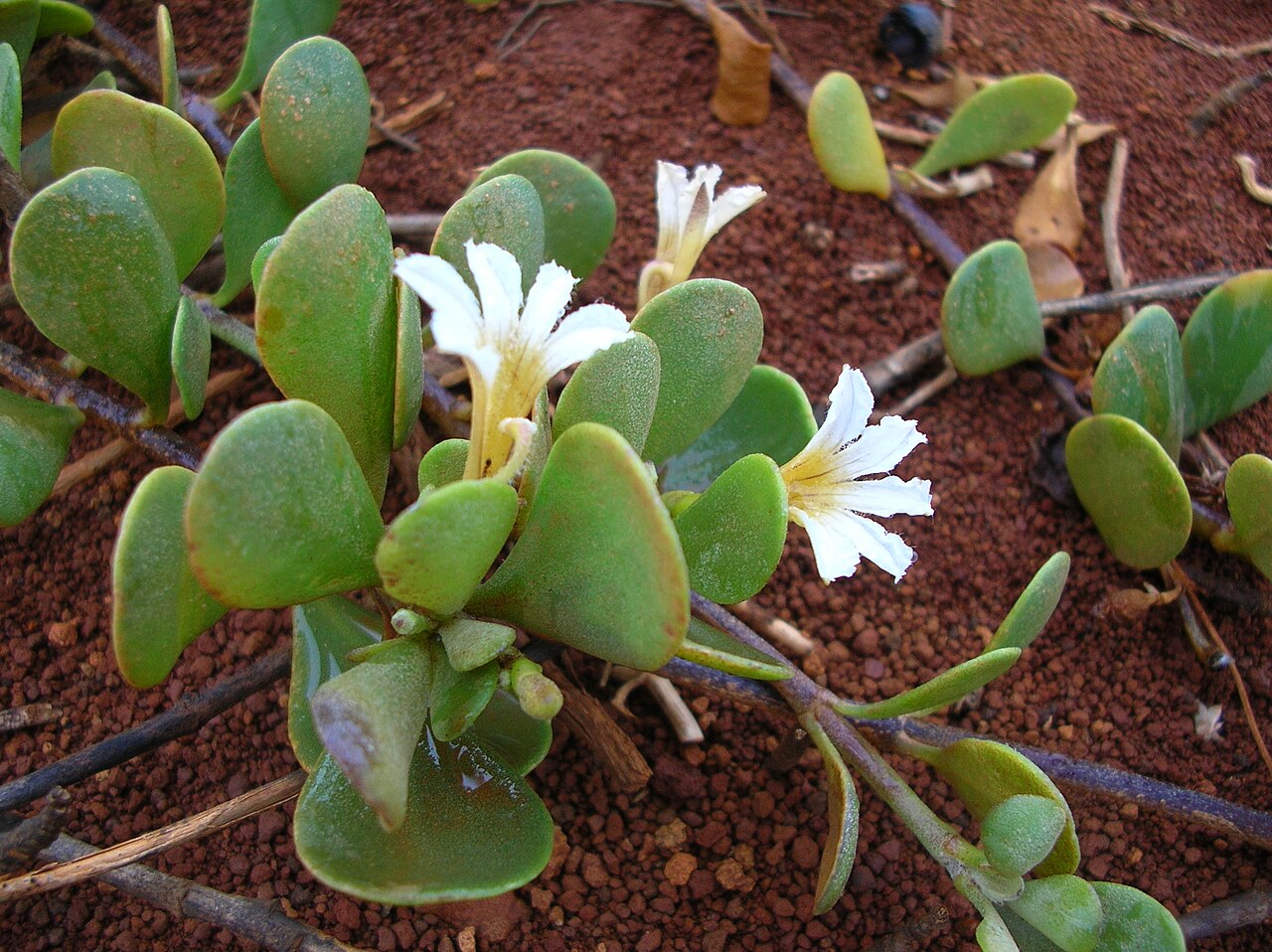
Scaevola coriacea, known in Hawaiian as naupaka papa and in English as dwarf naupaka, is a low, mat-forming coastal plant found only in the Hawaiian Islands. It hugs the ground on sand dunes and coastal rocks, with thick, leathery, rounded leaves, white half-flowers like those of its well-known cousin beach naupaka, and glossy black fruits.
Naupaka papa was once found along the coasts of several of the main Hawaiian Islands, but coastal development, off-road vehicles, introduced animals and invasive plants have pushed it to the brink. It is federally listed as Endangered under the U.S. Endangered Species Act. Wild plants now survive mainly on the northwest coast of Maui and on two small offshore islets, with a total wild population estimated at fewer than about 300 plants.
The good news is that naupaka papa grows well in cultivation, and nursery-grown plants have been used in coastal restoration projects on Maui. Gardeners in Hawaiʻi can grow it as a tough, salt-tolerant groundcover, as long as they buy only nursery-propagated plants from Hawaiʻi native plant nurseries and never collect from the wild. This guide covers how to recognize it, where it grows, how to grow it and why it matters.
Identification
Hawaiʻi has about ten native Scaevola species, all with the distinctive fan-shaped half-flower. Naupaka papa is the only one that grows as a flat mat on the coast, which makes it easy to recognize once you know it.
Growth Habit
Naupaka papa is a low, sprawling perennial that rarely grows more than about 4 to 6 inches tall. Its stems creep along the ground and root where they touch moist sand, forming loose mats that can spread several feet across. Older stems become somewhat woody near the base.
Leaves
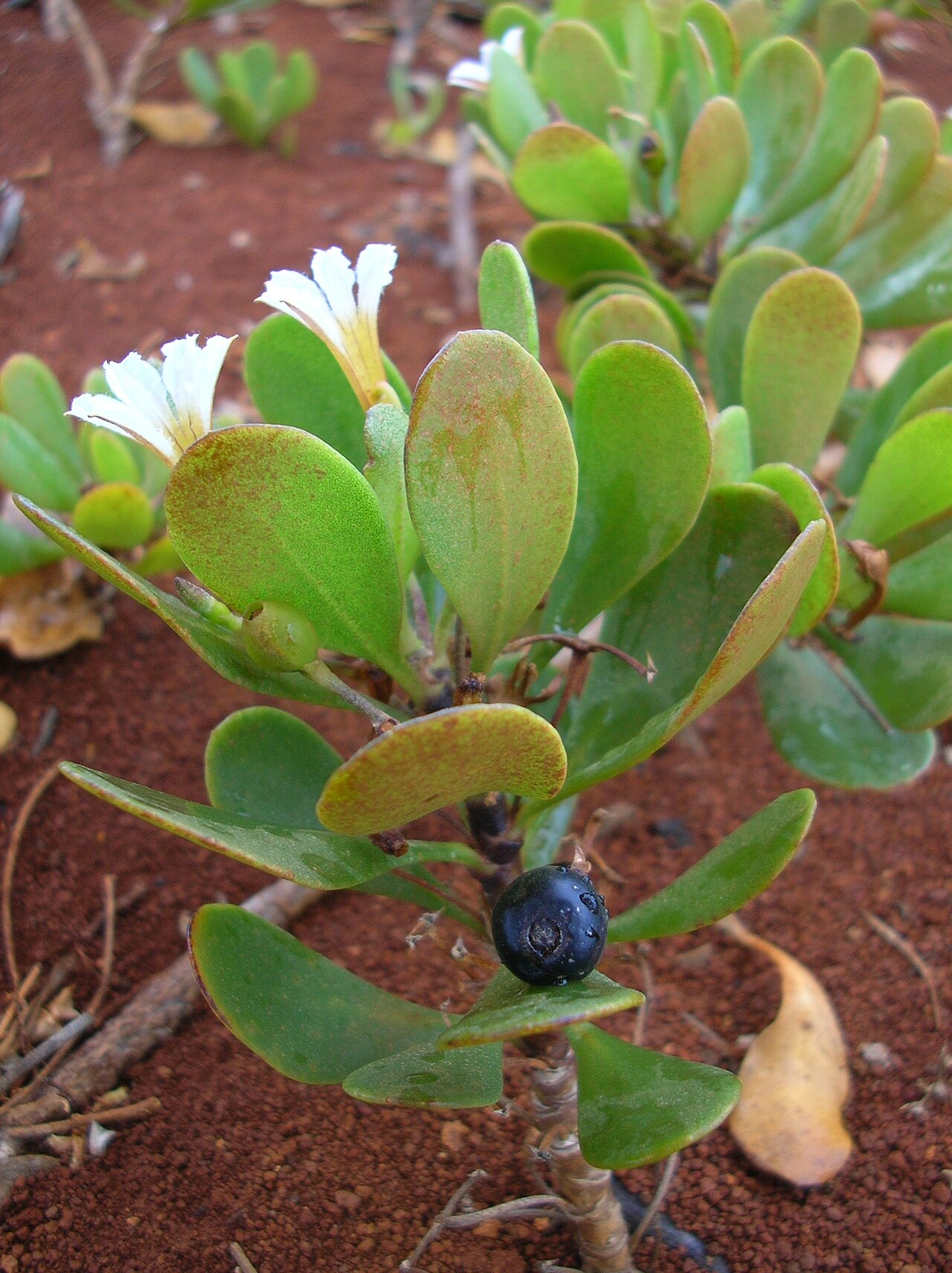
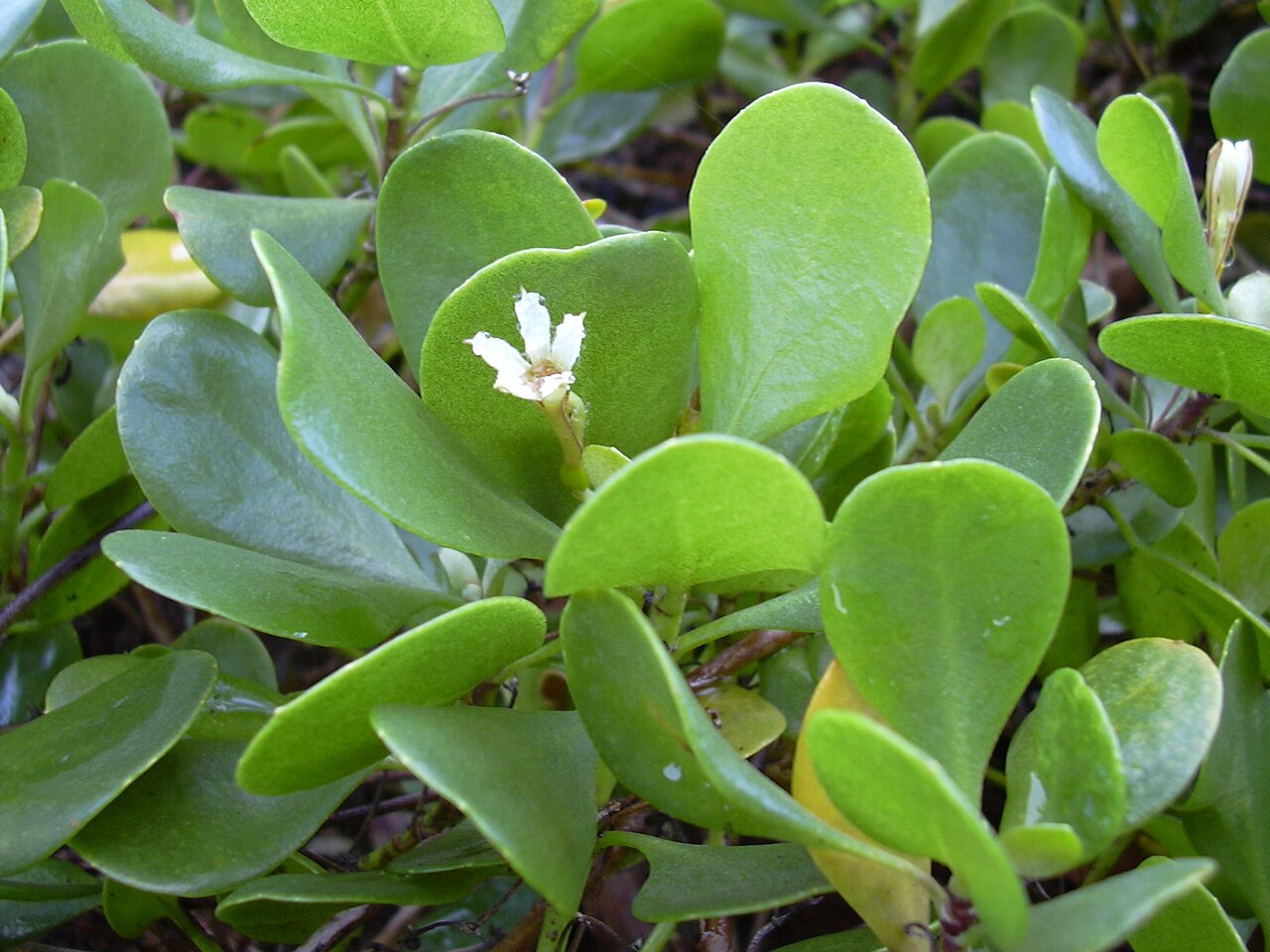
The leaves are thick, fleshy and leathery, oval to spoon-shaped with rounded tips, usually about 1 to 2 inches long. They are pale to bright green, smooth or slightly scurfy, and spaced rather far apart along the stems, often crowded toward the stem tips. The species name coriacea comes from the Latin for leather.
Flowers
The white flowers appear in small clusters of one to three in the leaf axils. Like all naupaka, each flower looks like half a flower: the five petals are fanned out to one side of a split tube. They often have a pale yellowish center and can appear through much of the year.
Fruit
The fruit is a small, round, fleshy drupe, about a third of an inch across, that ripens to a glossy purplish black. Each contains a hard seed.
Similar Species
Beach Naupaka (Scaevola sericea) is the familiar shrub of Hawaiian beaches, often 3 to 10 feet tall, with larger leaves and white fruits. Mountain Naupaka (Scaevola gaudichaudiana) and other upland naupaka are shrubs of mountain forests with dark fruits and white to yellow or purple-streaked flowers. No other Hawaiian naupaka forms a ground-hugging mat on the coast.
Quick Facts
| Scientific Name | Scaevola coriacea Nutt. |
| Family | Goodeniaceae (goodenia family) |
| Plant Type | Prostrate, mat-forming perennial groundcover; endemic to Hawaiʻi; federally Endangered |
| Mature Height | 4–6 in |
| Mature Spread | 2–6 ft |
| Growth Rate | Moderate |
| Sun Exposure | Full sun |
| Water Needs | Low; drought-tolerant once established |
| Soil Type | Sandy, very well-drained soil; tolerates salt spray |
| Soil pH | About 6.5–8.5 |
| Bloom Time | Much of the year |
| Flower Color | White, sometimes with a yellowish center |
| Fall Color | None (evergreen) |
| Fruit | Small round drupe, glossy purplish black |
| Deer Resistant | Not applicable; vulnerable to trampling and off-road vehicles |
| USDA Hardiness Zones | 10–12 |
Native Range
Naupaka papa is endemic to the Hawaiian Islands. USDA PLANTS lists it only from Hawaiʻi. Historically it was recorded from six of the main islands, but it has disappeared from most of them. Today wild plants survive mainly on the northwest coast of Maui and on two small offshore islets.
It grows close to the ocean, on coastal sand dunes, consolidated dunes and low, rocky shorelines, usually within a short distance of the shore and only a few feet to a few tens of feet above sea level. These sites are hot, sunny, windy and exposed to salt spray, with little rainfall. Its companions include other low coastal natives such as Pōhuehue, ʻĀkulikuli and ʻIlima.
The main threats are coastal development, off-road vehicles and foot traffic on dunes, introduced deer and other animals, and invasive plants such as kiawe and buffelgrass that crowd out low coastal natives. Recovery efforts on Maui have included growing plants in state and private nurseries and outplanting them at coastal sites such as Kanahā Beach and on Kahoʻolawe.
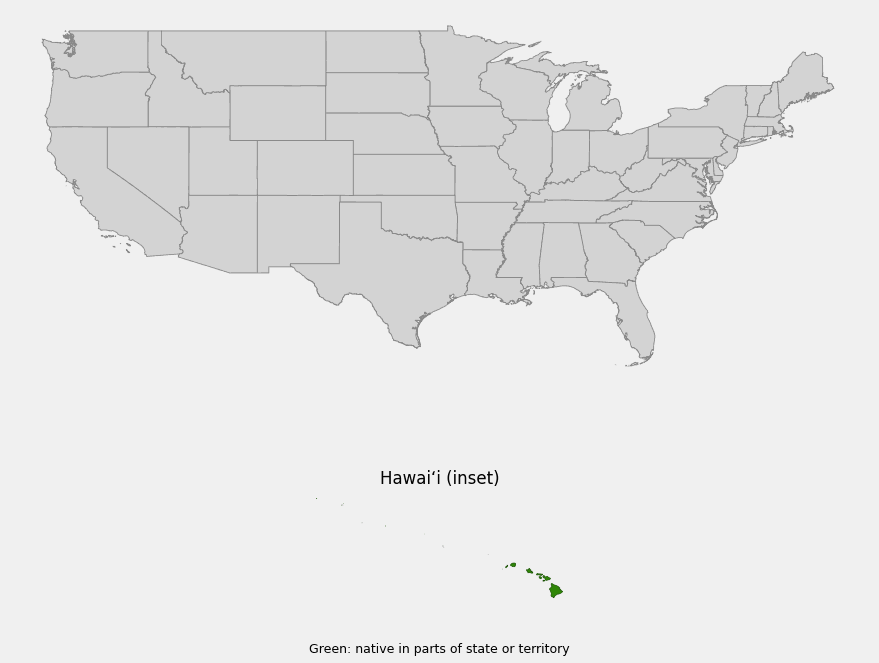
📋 Regional plant lists featuring Naupaka Papa: Hawaii
Growing & Care Guide
Naupaka papa is an excellent, low-maintenance groundcover for sunny, dry coastal gardens in Hawaiʻi, and growing it helps keep this endangered species alive. Buy only nursery-propagated plants from a Hawaiʻi native plant nursery. Never collect plants, cuttings or seeds from the wild, which is illegal for federally endangered plants without permits. Hawaiʻi also restricts bringing plants in from other states, so source plants locally.
Light
Full sun. Naupaka papa grows on open, sunny coastal sites and becomes sparse and leggy in shade.
Soil & Water
Plant in sandy, gravelly or other very well-drained soil; beach sand and coralline soils are ideal, and it tolerates salt spray and alkaline soil. Water regularly for the first few weeks, then taper off. Established plants are drought-tolerant and need only occasional deep watering in long dry spells. Overwatering and heavy, poorly drained soil can cause root rot.
Planting Tips
Space plants about 2 to 3 feet apart for a groundcover; the stems will knit together. It works well along walkways, in rock gardens, on banks, in large containers and in coastal native plantings with ʻakulikuli, pōhuehue and ʻilima. Keep it out of foot traffic, because the brittle stems break easily.
Pruning & Maintenance
Very little pruning is needed. Trim stray stems to keep it within bounds and remove weeds, which easily overtop such a low plant. Watch for mealybugs, scale and aphids, especially on stressed or overwatered plants.
Propagation
Naupaka papa roots readily from stem cuttings taken from cultivated plants: use tip cuttings a few inches long in a well-drained mix kept lightly moist. Stems that root where they touch the ground can also be separated. Seeds from ripe black fruits can be cleaned and sown, but germination is slower and less predictable. Use only nursery stock, never wild material.
Landscape Uses
- Coastal gardens: a salt- and wind-tolerant native groundcover
- Xeriscapes: drought-tolerant once established
- Rock gardens and containers: a compact, fleshy-leaved mat
- Dune restoration: helps hold sand alongside other coastal natives
- Conservation plantings: cultivated plants help preserve an endangered species
Wildlife & Ecological Value
Naupaka papa is part of Hawaiʻi’s native coastal strand community, much of which has been lost to development and invasive plants.
For Pollinators
The white half-flowers offer nectar and pollen to insects, including native yellow-faced bees (Hylaeus), several of which are rare coastal specialists that depend on native shoreline plants such as naupaka.
For Birds
The fleshy fruits are eaten by birds, which may carry the seeds along the coast. Low coastal vegetation is also used by nesting and foraging seabirds and shorebirds.
For Mammals
Hawaiʻi has only two native land mammals, the Hawaiian hoary bat and the Hawaiian monk seal, which hauls out on beaches where coastal plants like naupaka papa grow. Introduced deer, goats and rodents damage plants and eat fruits.
Ecosystem Role
As a mat-forming plant on dunes and coastal rocks, naupaka papa helps trap and stabilize sand, shelters ground-dwelling insects and adds to the diversity of the coastal strand. Restoring it alongside other native coastal plants is part of rebuilding Hawaiʻi’s shoreline ecosystems.
Cultural & Historical Uses
Naupaka papa was described in 1842 by the English-American naturalist Thomas Nuttall. The Hawaiian word papa means flat or low, a fitting description of this ground-hugging naupaka.
All naupaka share the famous half-flower, which is the subject of several Hawaiian legends. In one well-known story, two lovers are separated, one sent to the mountains and one to the shore, and the naupaka flowers of the mountains and the beach are each left as half a blossom; when the two halves are placed together they form a whole flower.
Naupaka papa has become a symbol of coastal plant conservation on Maui. State and private nurseries have propagated it, and volunteers have planted it at restoration sites, showing how gardeners and land managers can help bring an endangered species back from the edge.
Frequently Asked Questions
Is dwarf naupaka endangered?
Yes. Scaevola coriacea is federally listed as Endangered. Wild plants survive mainly on the northwest coast of Maui and two small offshore islets, with an estimated total of fewer than about 300 plants.
Can I grow naupaka papa in my garden?
Yes. In Hawaiʻi it makes an excellent coastal groundcover in full sun and sandy, well-drained soil. Buy only nursery-propagated plants from a Hawaiʻi native plant nursery and never take plants, cuttings or seeds from the wild.
How is naupaka papa different from beach naupaka?
Beach naupaka (Scaevola sericea) is a large shrub with big leaves and white fruits, common on beaches throughout the Pacific. Naupaka papa is a flat, mat-forming Hawaiian endemic with thick, leathery leaves and black fruits.
What does naupaka papa mean?
Naupaka is the Hawaiian name for Scaevola plants, and papa means flat or low, describing its ground-hugging habit.
Is naupaka papa salt-tolerant?
Yes. It grows naturally on dunes and rocky shores exposed to salt spray and wind, making it one of the best native groundcovers for oceanfront gardens in Hawaiʻi.

Looking for a nursery that carries Naupaka Papa?
Browse our native plant nursery directory: Hawaii

