
Hawaiʻi Woodrush (Luzula hawaiiensis)
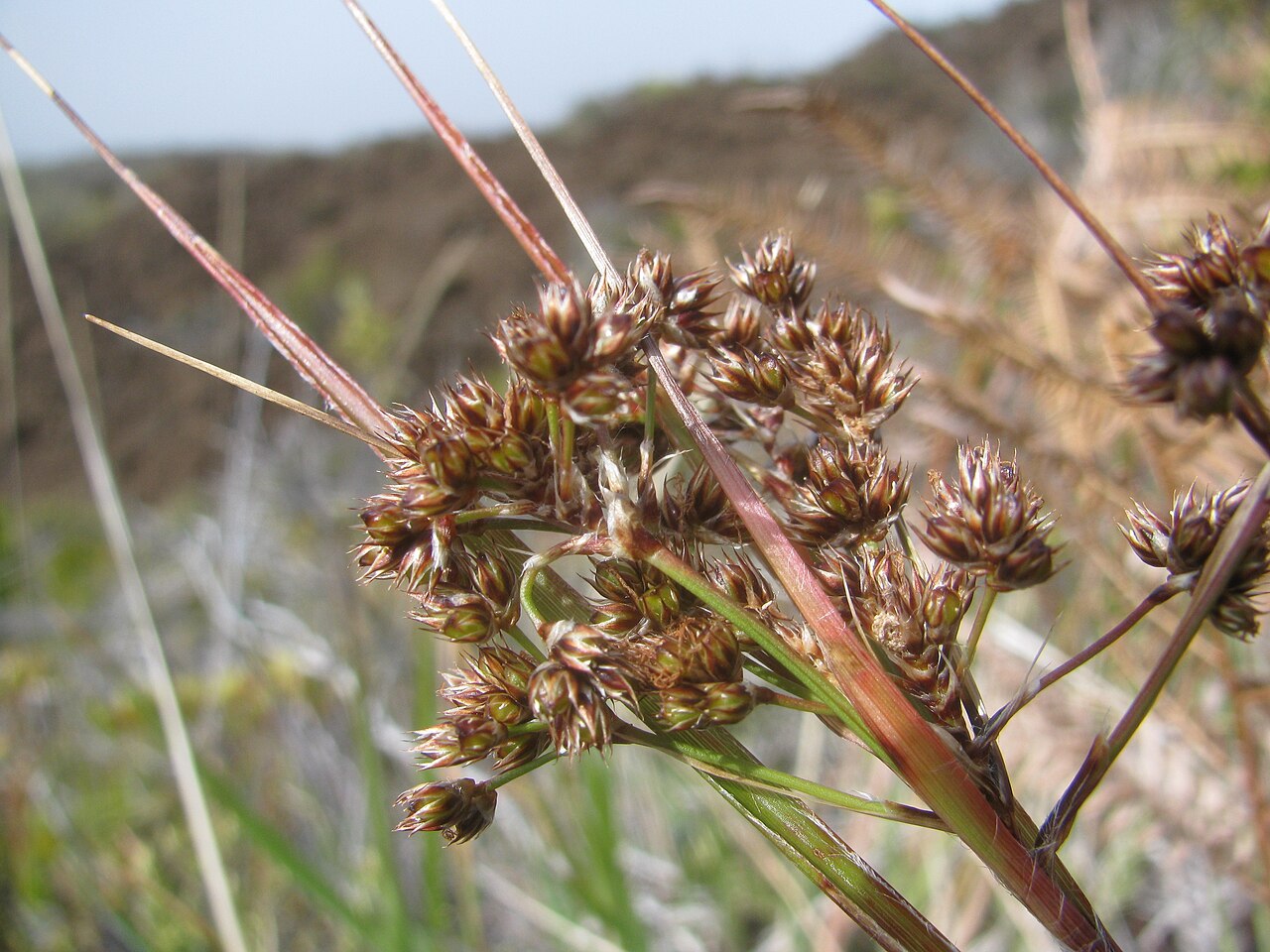
Luzula hawaiiensis, the Hawaiʻi woodrush or Hawaiian wood-rush, is a tufted, grass-like perennial of the rush family (Juncaceae) found only in the Hawaiian Islands. It forms clumps of flat, green to reddish leaves edged with long white hairs and sends up stems to about 2 feet tall topped with clusters of small, chestnut-brown flowers. No traditional Hawaiian name for it is widely recorded, so it is usually called by its English or scientific name.
Hawaiʻi woodrush is endemic to Hawaiʻi and grows on all the main high islands: Kauaʻi, Oʻahu, Molokaʻi, Lānaʻi, Maui and Hawaiʻi Island. It is most common in upland and subalpine areas, on rocky slopes, cliffs, ridges, lava, open grassland and shrubland, and in forest openings. Botanists recognize three varieties, including one found only in Oʻahu’s Waiʻanae Range.
It is not federally listed, though NatureServe ranks it globally vulnerable (G3). It is rarely grown, but it can be raised from seed and is used in some upland restoration plantings. If you want to grow it, buy nursery-propagated plants or seed from a Hawaiʻi native plant source, and never collect from the wild, especially in national parks and natural area reserves.
Identification
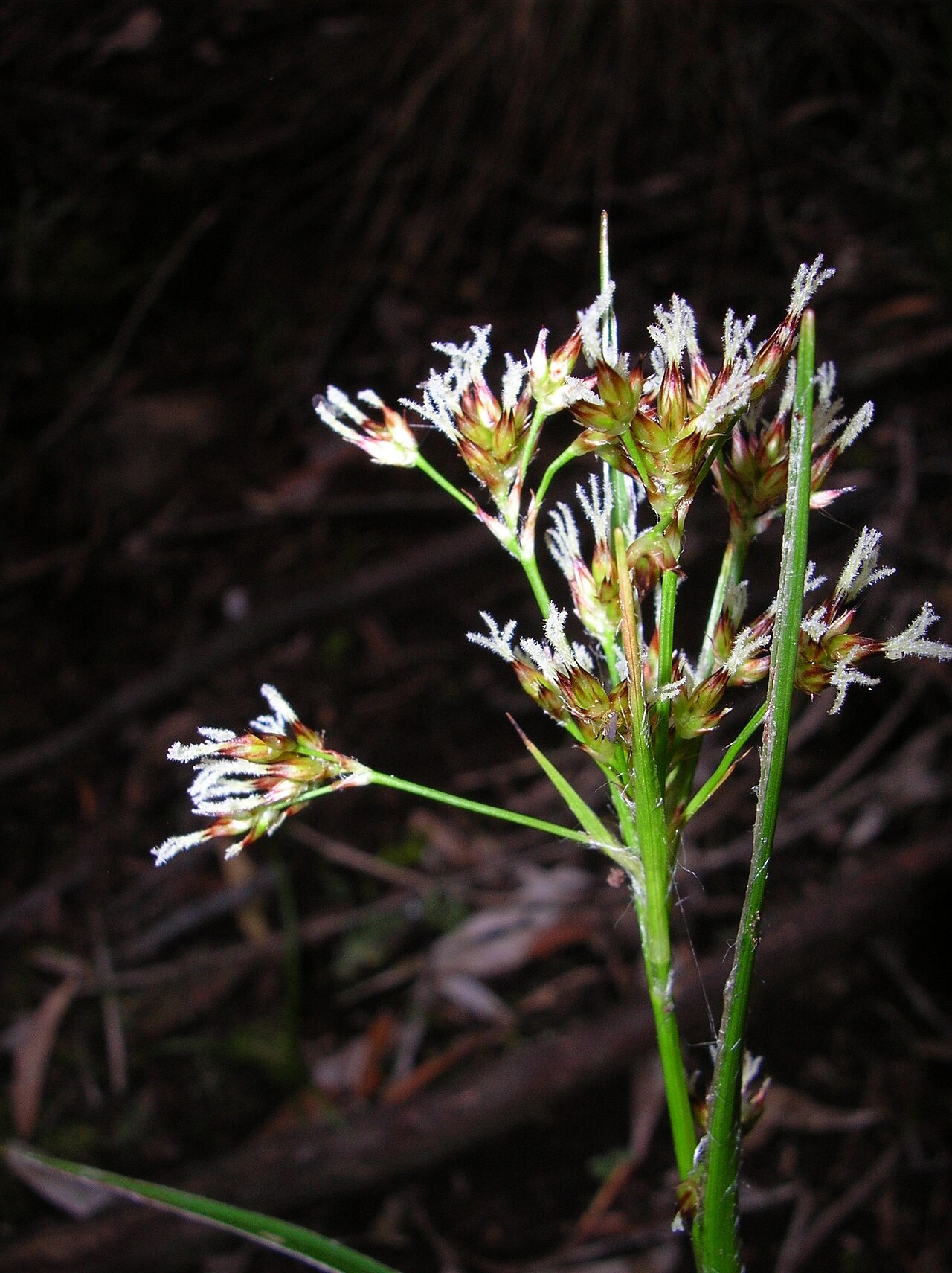
Woodrushes look like grasses but belong to the rush family. The quickest way to tell Hawaiʻi woodrush from a grass is to look at the leaf edges, which carry long, soft, white hairs, and at the flowers, which have six small, papery tepals like a tiny lily.
Growth Habit
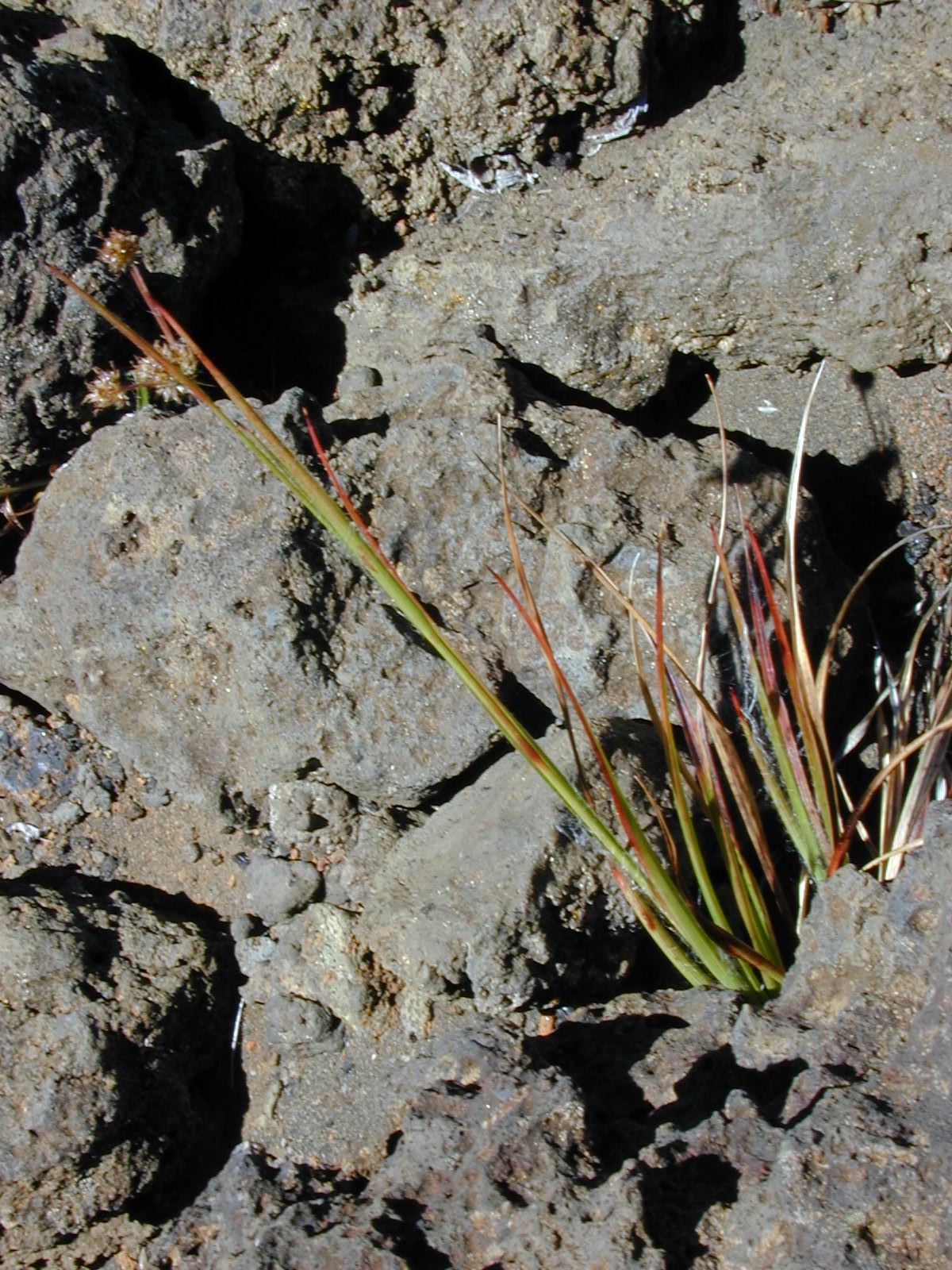
A tufted, clump-forming perennial, with leaves mostly in a basal rosette and flowering stems up to about 28 inches tall. Plants in exposed, rocky sites are small and compact; in moist, sheltered forest they form lusher clumps.
Leaves
Leaves are flat, narrow and grass-like, green and often tinged red or bronze, especially in sun. The margins carry long, white, cobwebby hairs, most visible on young leaves and near the leaf base, a hallmark of the genus Luzula. Leaf sheaths are closed, unlike those of most grasses.
Flowers
Small flowers are packed into dense, rounded clusters at the ends of branched stalks. Each flower has six papery, chestnut-brown tepals with pale edges, six stamens and a three-branched, feathery white stigma. They are wind-pollinated.
Fruit & Look-alikes
The fruit is a small, three-seeded capsule that splits open when ripe. Native and introduced grasses and sedges can look similar from a distance. Grasses have open leaf sheaths and no white marginal hairs, and sedges such as Hawaiʻi sedge (Carex alligata) have triangular stems and flowers in spikes without six-parted tepals.
Quick Facts
| Scientific Name | Luzula hawaiiensis Buchenau |
| Family | Juncaceae (rush family) |
| Plant Type | Tufted, grass-like perennial; Hawaiian endemic |
| Mature Height | 6–28 in (flowering stems) |
| Mature Spread | 6–12 in |
| Growth Rate | Moderate |
| Sun Exposure | Full sun to partial shade |
| Water Needs | Low to moderate; well-drained soil |
| Soil Type | Rocky, cinder or volcanic soils; tolerates thin soil |
| Soil pH | Acidic to neutral |
| Bloom Time | Variable; spring through fall |
| Flower Color | Chestnut brown with pale edges |
| Fall Color | Leaves often tinged red or bronze |
| Fruit | Small three-seeded capsule |
| Deer Resistant | Unknown; grazed by goats and sheep |
| USDA Hardiness Zones | 9–12 (outdoors in Hawaiʻi; best in cool uplands) |
Native Range
Hawaiʻi woodrush is endemic to the Hawaiian Islands. USDA PLANTS lists it as native only in Hawaiʻi. The Smithsonian’s Flora of the Hawaiian Islands records three endemic varieties: var. hawaiiensis on Kauaʻi, Lānaʻi, Maui and Hawaiʻi Island; var. glabrata on Kauaʻi, Molokaʻi and Maui; and var. oahuensis only in the Waiʻanae Mountains of Oʻahu.
It grows in a wide range of open, often rocky places: cliffs, ridges, slopes, lava flows, grasslands, shrublands and forest openings. It is most frequent in montane and subalpine zones, for example around Polipoli and the summit area of Haleakalā on Maui and on the upper slopes of Hualālai on Hawaiʻi Island, where it may grow among cinders and boulders.
The species is not federally listed and the Smithsonian rates it apparently secure, but NatureServe ranks it vulnerable. Grazing by feral goats, sheep and mouflon, fire and invasive grasses are the main threats in its upland habitats.
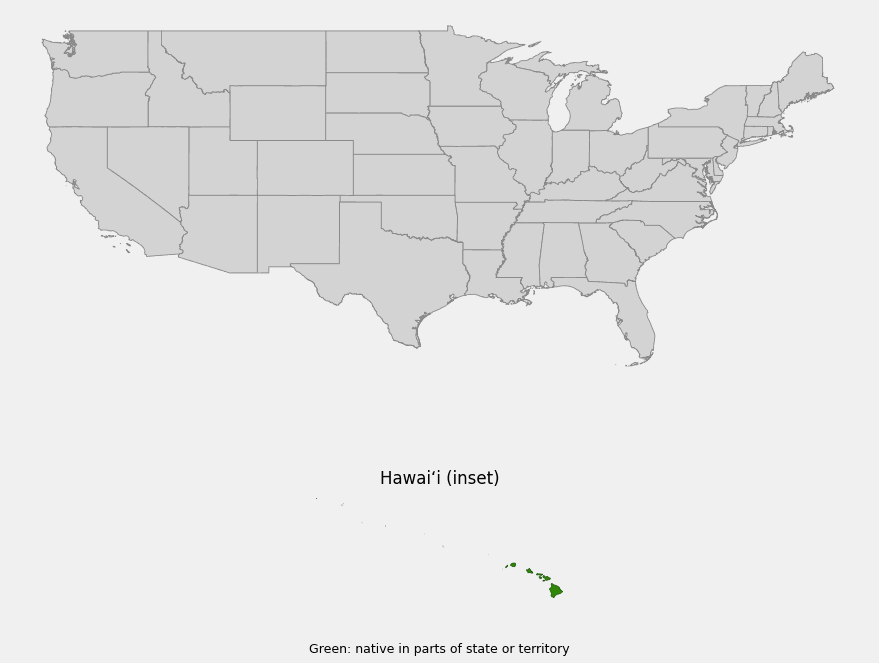
📋 Regional plant lists featuring Hawaiʻi Woodrush: Hawaii
Growing & Care Guide
Hawaiʻi woodrush is rarely sold, but it is not difficult to grow in the right place. It does best in cool, sunny, upland Hawaiian gardens, roughly USDA zones 9–12, and is less happy in hot, humid lowlands. It suits rock gardens and restoration plantings more than formal beds. Use only nursery-propagated plants or seed from a Hawaiʻi native plant source, and never collect from the wild. Hawaiʻi restricts bringing plants in from other states, so look for local growers.
Light
Full sun to partial shade. In full sun the leaves color up red and bronze; in shade they stay greener and softer.
Soil & Water
Well-drained, rocky, cinder or volcanic soil. Water regularly until established, then only in long dry spells. It grows naturally in both dry, rocky sites and moister forest openings, but soggy soil can cause rot.
Planting Tips
Plant in groups between rocks, along paths, or among low native shrubs such as pūkiawe and ʻaʻaliʻi. It makes a fine-textured, grass-like accent in a native rock garden.
Pruning & Maintenance
Very little care is needed. Pull out old flower stalks and dead leaves to keep clumps tidy, and keep aggressive weedy grasses away, since they can crowd it out.
Propagation
Grown from seed sown on the surface of a well-drained mix, or by dividing established clumps. Home gardeners should propagate only from their own nursery-bought plants.
Landscape Uses
- Upland native rock gardens: a fine-textured tuft for cinder and rock
- Restoration plantings: a native ground-layer plant for upland and subalpine sites
- Containers: a small, grass-like accent for pots
- Education: a native member of the rush family, often mistaken for a grass
Wildlife & Ecological Value
Hawaiʻi woodrush is a modest but widespread part of the native ground layer in Hawaiʻi’s uplands.
For Pollinators
The flowers are wind-pollinated and offer little to pollinators.
For Birds
Small seeds and low tufts offer food and cover for ground-foraging birds; in subalpine areas these include the nēnē, Hawaiʻi’s native goose.
For Mammals
Hawaiʻi’s only native land mammal is the Hawaiian hoary bat. Feral goats, sheep and mouflon graze woodrush and its upland habitat.
Ecosystem Role
Its tufts help stabilize thin, rocky soils and cinder on open slopes, and it is one of the native plants that can colonize lava and rocky ground in the uplands.
Cultural & Historical Uses
The genus name Luzula is thought to come from the Italian lucciola, “glow-worm” or “shining,” perhaps after the way dew sparkles on the hairy leaves. Woodrushes are found worldwide, mostly in cool and mountainous regions; Hawaiʻi woodrush descends from a lineage that reached the islands and became a separate endemic species.
The species was described by the German botanist Franz Buchenau, a specialist in the rush family. It has also been treated as a variety of the widespread Luzula campestris, and its three Hawaiian varieties reflect how it varies from island to island.
Because it grows in rocky, open places with few other plants, Hawaiʻi woodrush is often one of the first native plants a hiker notices on the summit trails of Haleakalā, a small sign of how native life fills even the harshest corners of the islands.
Frequently Asked Questions
Is Hawaiʻi woodrush a grass?
No. It is a member of the rush family (Juncaceae). Its closed leaf sheaths, white hairs on the leaf edges and six-parted flowers set it apart from grasses.
Is it endangered?
It is not federally listed, but NatureServe ranks it globally vulnerable (G3).
Where does it grow?
Only in Hawaiʻi, on Kauaʻi, Oʻahu, Molokaʻi, Lānaʻi, Maui and Hawaiʻi Island, mostly in rocky upland and subalpine areas.
Can I grow it?
Yes, in a sunny, well-drained spot in a cool upland garden in Hawaiʻi. It is rarely sold, so ask Hawaiʻi native plant nurseries or restoration programs.
Does it have a Hawaiian name?
No widely used traditional Hawaiian name is recorded for it; it is generally called Hawaiʻi woodrush or by its scientific name.

Looking for a nursery that carries Hawaiʻi Woodrush?
Browse our native plant nursery directory: Hawaii

