
Golden Hala Pepe (Dracaena aurea)
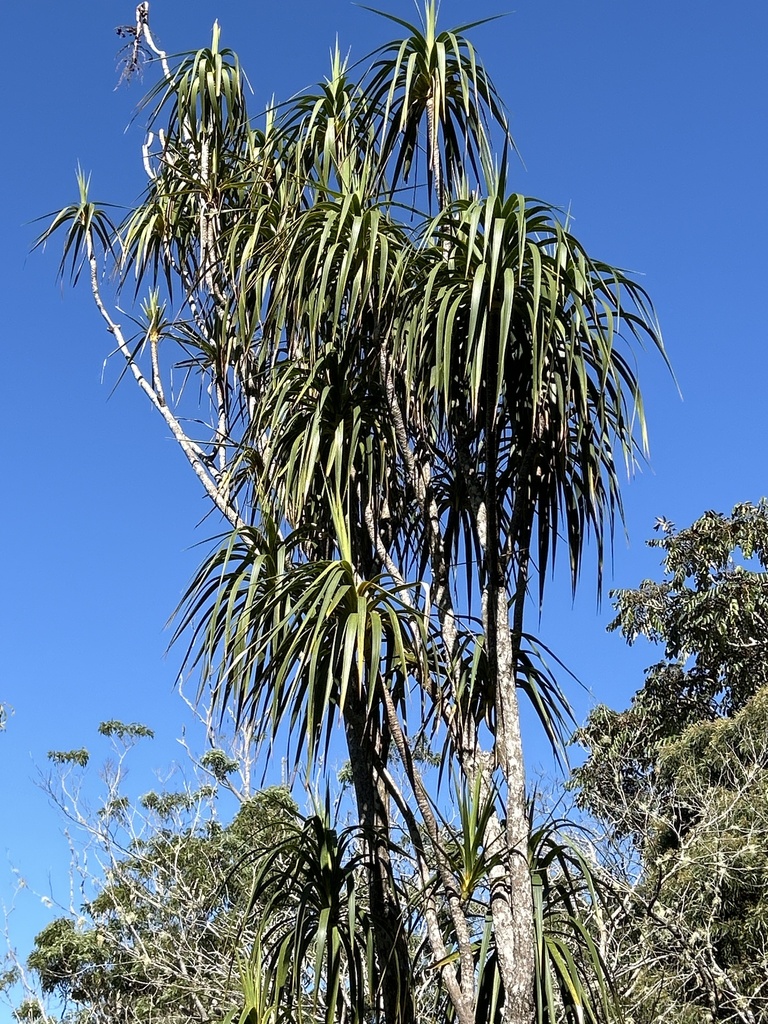
Dracaena aurea, the Golden Hala Pepe, is a small evergreen tree found only on the island of Kauaʻi. Like the other hala pepe of Hawaiʻi, it carries dense tufts of long, sword-shaped leaves at the ends of its branches, which give it the look of a small hala (pandanus) tree, and it produces hanging clusters of golden-yellow, tubular flowers.
Its botanical name has changed several times. It was first described as Dracaena aurea in 1867, then moved to Pleomele aurea, the name still used by USDA PLANTS, and later to Chrysodracon aurea, the type species of a genus created for the Hawaiian hala pepe. Plants of the World Online and iNaturalist now place it back in Dracaena, the genus of dragon trees and the familiar corn plant. All these names refer to the same Kauaʻi tree.
Golden hala pepe grows in mesic forests on the west side of Kauaʻi, around Waimea Canyon and Kōkeʻe. It is rare and slow-growing, but it is a striking plant for native gardens. This guide covers how to recognize it, where it grows, how to grow it, and its role in Hawaiian culture.
Identification
Hala pepe means “baby hala,” after the resemblance of its leaf tufts to those of the Hala tree. Golden hala pepe is the Kauaʻi species; its relatives include Royal Hala Pepe of Oʻahu and the Maui Hala Pepe (Dracaena auwahiensis).
Growth Habit
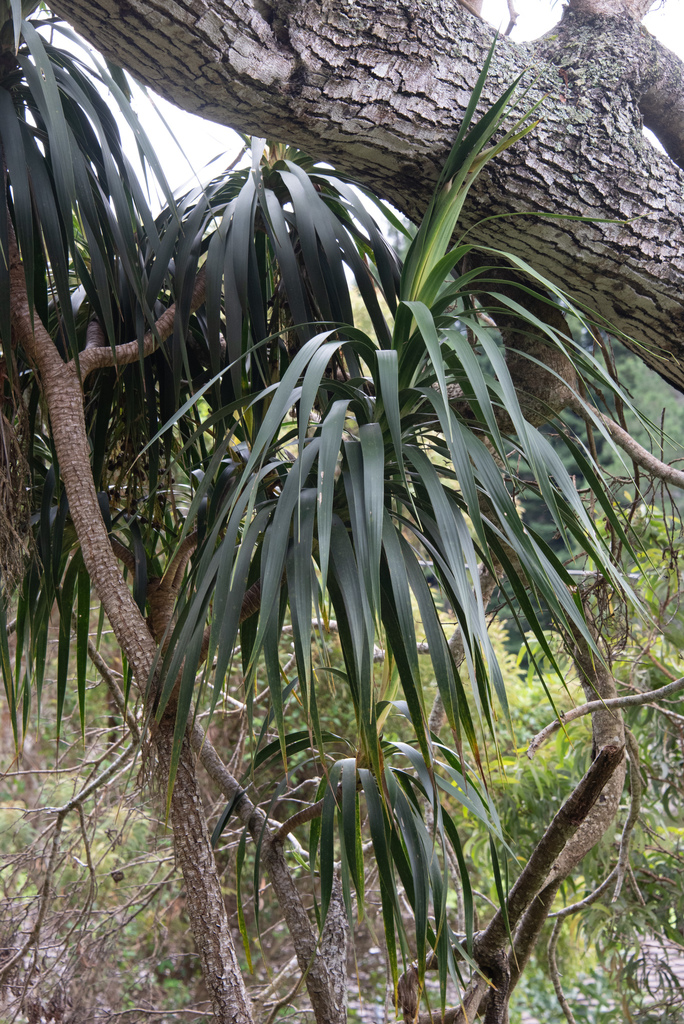
Golden hala pepe is a small tree, usually 15 to 25 feet tall and sometimes taller, with a straight gray trunk and a few stout, forking branches. Each branch ends in a dense tuft of leaves, so older trees have an open, candelabra-like crown. Young plants are single-stemmed and look like a tuft of leaves on a stick.
Leaves
The leaves are long, narrow and sword-shaped, about 8 to 20 inches long and less than an inch and a half wide, with smooth edges. They are crowded in spiraling tufts at the branch tips, and the older leaves arch outward and droop. Fallen leaves leave ring-like scars on the trunk and branches.
Flowers
Golden hala pepe flowers only occasionally. When it does, it produces large, drooping branched clusters of tubular flowers from the center of a leaf tuft. The flowers are golden-yellow to yellow-green, about an inch long, and are the source of the species name aurea, meaning golden.
Fruit
The fruit is a small, round berry containing one to a few hard seeds. Fruits ripen over several months.
Similar Species
Other hala pepe species grow on Oʻahu, Molokaʻi, Lānaʻi, Maui and Hawaiʻi Island, but on Kauaʻi golden hala pepe is the only native Dracaena. Hala (Pandanus tectorius) has much larger, spiny-edged leaves and is supported by prop roots. Introduced corn plants and other ornamental dracaenas planted in gardens have broader or variegated leaves.
Quick Facts
| Scientific Name | Dracaena aurea H. Mann (syn. Pleomele aurea, Chrysodracon aurea) |
| Family | Asparagaceae (asparagus family) |
| Plant Type | Small evergreen tree; endemic to Kauaʻi |
| Mature Height | 15–25 ft (rarely to about 40 ft) |
| Mature Spread | 6–15 ft |
| Growth Rate | Slow |
| Sun Exposure | Full sun to part shade |
| Water Needs | Low to medium; drought tolerant once established |
| Soil Type | Well-drained volcanic, rocky or loamy soil |
| Soil pH | About 5.5–7.5 |
| Bloom Time | Irregular; flowers only occasionally |
| Flower Color | Golden-yellow to yellow-green |
| Fall Color | None; evergreen |
| Fruit | Small round berry with hard seeds |
| Deer Resistant | Moderately; seedlings damaged by goats and deer |
| USDA Hardiness Zones | 10–12 |
Native Range
Golden hala pepe is endemic to Kauaʻi. It grows mainly on the western and northwestern side of the island, in places such as Waimea Canyon, Kōkeʻe and the slopes above the Nā Pali coast.
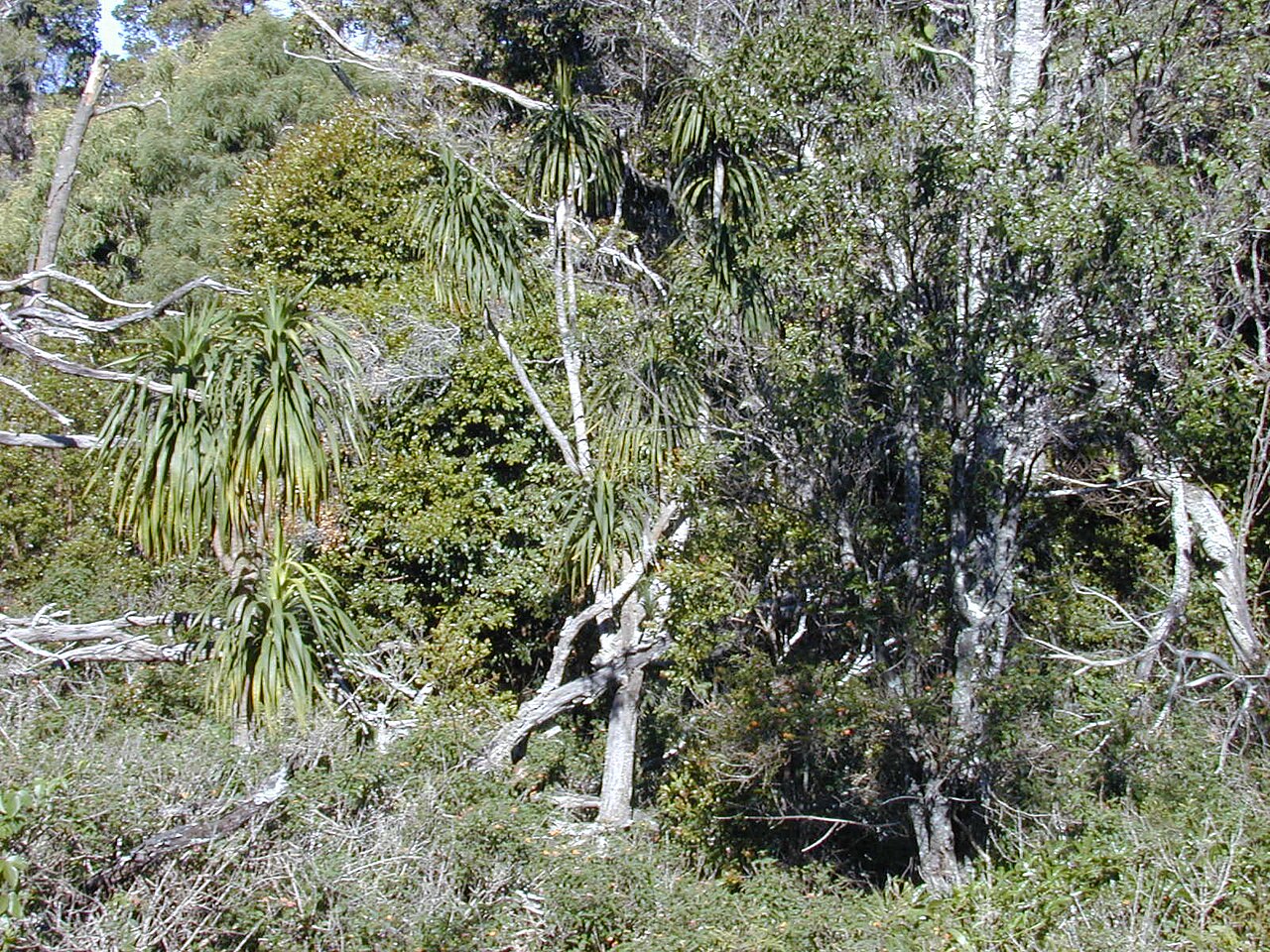
Its habitat is coastal mesic and mixed mesic forest, from about 400 to 3,500 feet (120 to 1,070 meters). There it grows with trees such as Koa, ʻŌhiʻa Lehua and Olopua, often on ridges and steep slopes.
Golden hala pepe is not listed under the federal Endangered Species Act, but it is rare and ranked imperiled in Hawaiʻi. Its forests have been reduced by fire, feral goats and pigs, black-tailed deer on Kauaʻi, and invasive plants that crowd out native seedlings. Because it flowers irregularly and grows slowly, natural regeneration is limited.
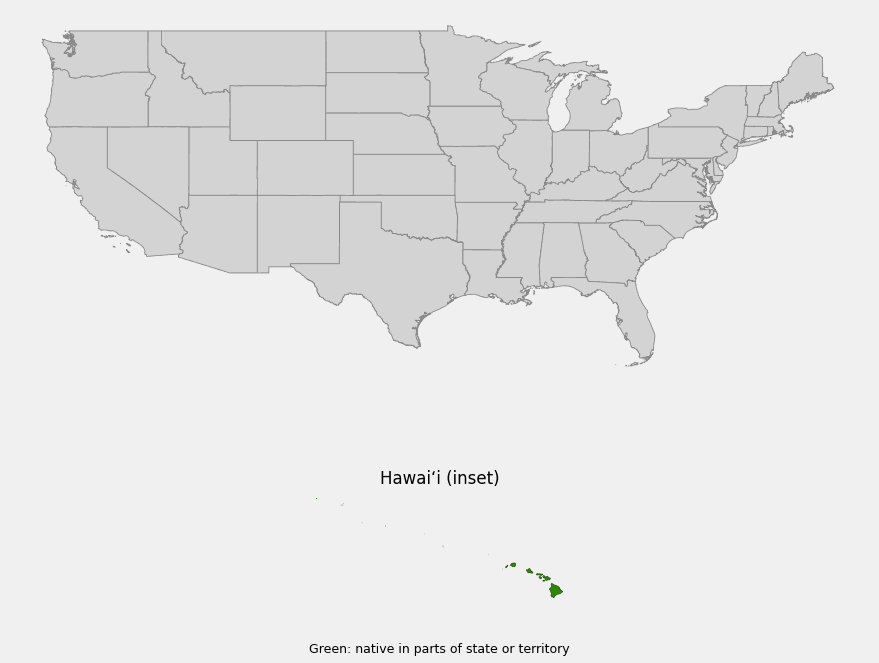
📋 Regional plant lists featuring Golden Hala Pepe: Hawaii
Growing & Care Guide
Golden hala pepe is slow-growing but easy to care for in warm, sunny gardens in Hawaiʻi, and it makes a sculptural accent plant. Buy only nursery-propagated plants from a Hawaiʻi native plant nursery, and never dig plants or collect seed from the wild. Hawaiʻi restricts bringing plants in from other states. Like other dracaenas, its leaves contain saponins that can upset pets, so keep cats and dogs from chewing on it.
Light
It grows best in full sun to light shade. In deep shade it becomes leggy and slow. Young plants tolerate more shade than older ones.
Soil & Water
Plant in well-drained soil; rocky, volcanic or loamy soils all work if water drains quickly. Water regularly for the first year, then water deeply during dry spells. Once established it is fairly drought tolerant, and overwatering in heavy soil causes root rot.
Planting Tips
Use it as a specimen or accent among lava rocks, in a mixed native planting, or in a large container on a sunny lanai. It looks good with ʻaʻaliʻi, ʻilima and native grasses. Give it shelter from strong wind, which can tatter the leaves.
Pruning & Maintenance
Little pruning is needed. Remove dead lower leaves if you prefer a clean trunk. Cutting the top of a stem encourages branching, which takes many years to happen naturally. Fertilize lightly once or twice a year.
Propagation
It can be grown from fresh seed, which germinates slowly, or from stem cuttings. Cuttings of mature stems, allowed to dry for a few days and then rooted in a gritty, well-drained mix, are the usual method in nurseries.
Landscape Uses
- Accent plant: a sculptural, tropical-looking native tree
- Dry and mesic native gardens: pairs with other Kauaʻi natives
- Containers: grows slowly in large pots on sunny lanai
- Restoration: planted in Kauaʻi mesic forest restoration
- Cultural plantings: a plant associated with hula and the goddess Laka
Wildlife & Ecological Value
Golden hala pepe is part of the rich mesic forests of western Kauaʻi, which hold many rare plants found nowhere else.
For Pollinators
The tubular flowers produce nectar. They may once have been visited by native nectar-feeding birds, and today native and introduced insects visit them.
For Birds
Native forest birds such as Kauaʻi ʻamakihi and ʻapapane forage in mesic forest trees, and birds may eat and disperse the fruits.
For Mammals
Hawaiʻi’s only native land mammal is the Hawaiian hoary bat, which forages over Kauaʻi’s forests. Introduced goats, deer, pigs and rats damage seedlings and eat seeds.
Ecosystem Role
As a long-lived small tree, golden hala pepe adds structure to mesic forests and provides shelter for native insects and snails. Its slow growth and rarity make each surviving tree important for the species’ future.
Cultural & Historical Uses
In traditional Hawaiian culture, hala pepe was associated with Laka, goddess of hula, and was placed on the kuahu (altar) in the hālau hula.
The species was first described by Horace Mann Jr., a young American botanist who collected in Hawaiʻi in the 1860s. In 2014 botanists placed the Hawaiian hala pepe in their own genus, Chrysodracon, meaning “golden dragon,” with this species as its type. Later work merged them back into Dracaena.
Today golden hala pepe is grown by Hawaiʻi native plant nurseries and botanical gardens and used in gardens on Kauaʻi and elsewhere in the islands. Seeing one in the wild, along the trails of Kōkeʻe and Waimea Canyon, is a reminder of the island’s unique forest flora.
Frequently Asked Questions
Is golden hala pepe native to Hawaiʻi?
Yes. It is endemic to Kauaʻi, which means it grows wild nowhere else in the world.
Is golden hala pepe endangered?
It is not federally listed, but it is rare and considered imperiled in Hawaiʻi. Buy only nursery-propagated plants and never collect from the wild.
Why are there so many names for this plant?
It was first named Dracaena aurea, then moved to Pleomele and later Chrysodracon. Current botanical sources place it back in Dracaena. All refer to the same Kauaʻi species.
Is golden hala pepe toxic to pets?
Like other dracaenas, it contains saponins that can cause vomiting and drooling in cats and dogs if chewed. Keep pets from eating the leaves.
How fast does golden hala pepe grow?
Slowly. It may take many years to form a trunk and branch, which is part of its appeal as a long-lived accent plant.

Looking for a nursery that carries Golden Hala Pepe?
Browse our native plant nursery directory: Hawaii

