
Naʻenaʻe (Dubautia arborea)
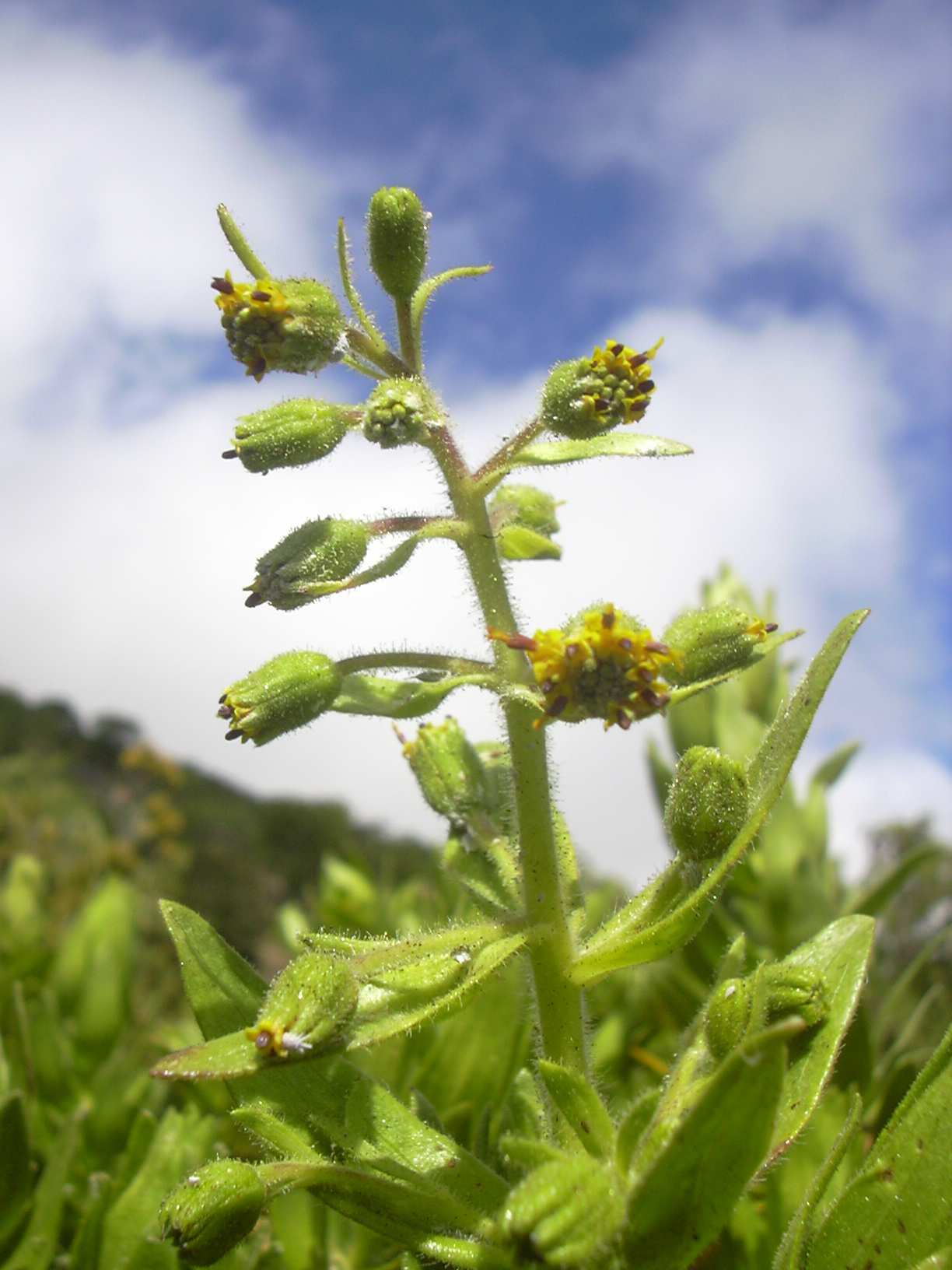
Dubautia arborea, called naʻenaʻe (also kūpaoa) in Hawaiian and Mauna Kea dubautia or tree dubautia in English, is a rare shrub or small tree of the sunflower family (Asteraceae). It belongs to the Hawaiian silversword alliance, the same group as the famous ʻāhinahina, or silversword. It is one of the largest Dubautia, growing up to about 20 feet tall and 13 feet across, with narrow, crowded leaves and branched clusters of small yellow flower heads from about July to December.
Naʻenaʻe is endemic to Hawaiʻi Island, where it grows high on the slopes of Mauna Kea (and has also been reported from Hualālai) at roughly 7,000 to 10,000 feet. It lives in subalpine dry forest of māmane and naio, in high-elevation shrubland and up into the stony alpine zone above treeline. It is not listed under the federal Endangered Species Act; the U.S. Fish and Wildlife Service lists it as a species of concern. It is, however, rare and considered critically imperiled, mainly because feral sheep, goats and mouflon have browsed its habitat for two centuries.
Because it is adapted to cold, dry, high-elevation conditions, it is very difficult to grow in ordinary lowland gardens and is raised mainly for restoration on Mauna Kea. Never collect plants or seed from the wild. This guide explains how to identify it, where it grows, what it needs in cultivation, and how it fits into the remarkable silversword story.
Identification
Most Dubautia are modest shrubs. Naʻenaʻe stands out on Mauna Kea’s upper slopes as a dense, rounded, small tree with a dark, gnarled trunk, its branch tips crowded with narrow leaves and, in late summer and fall, upright clusters of yellow flower heads.
Growth Habit
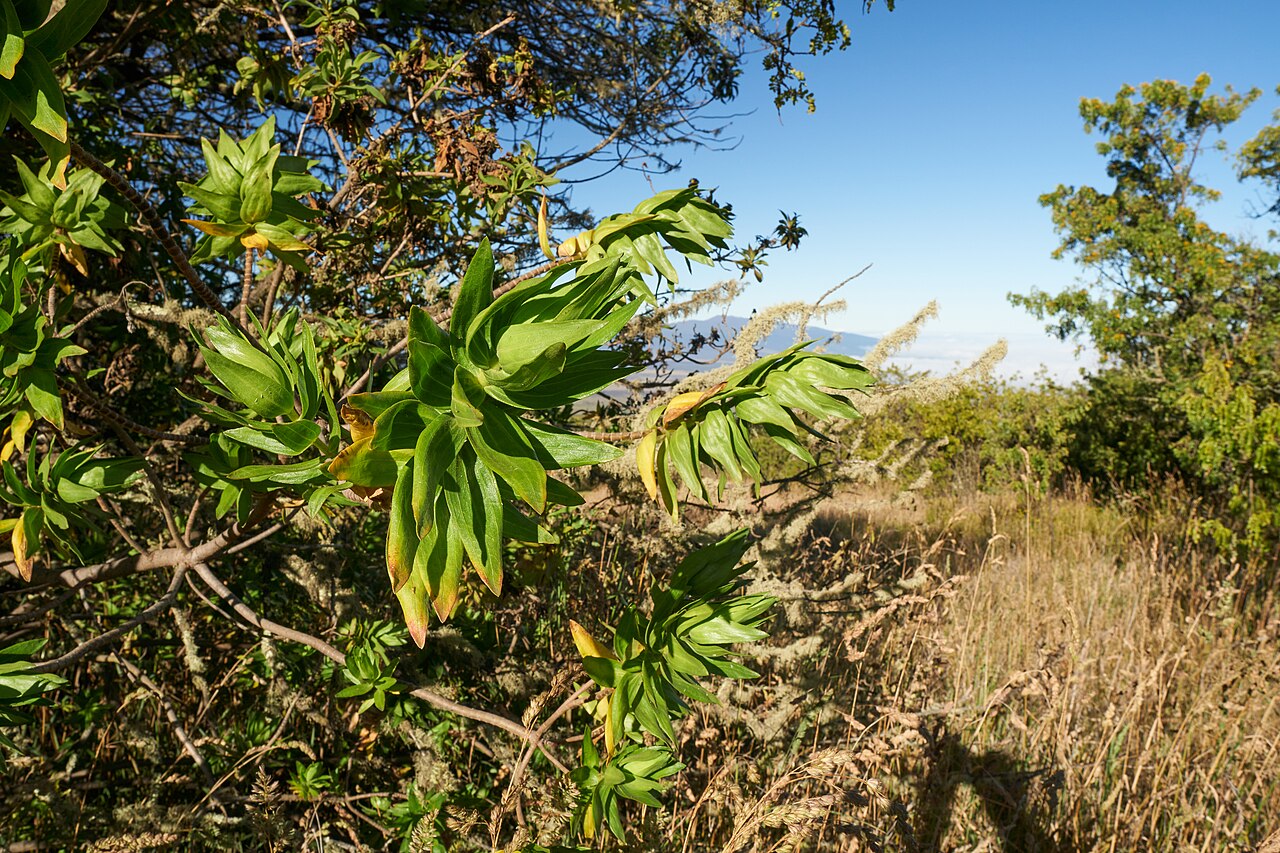
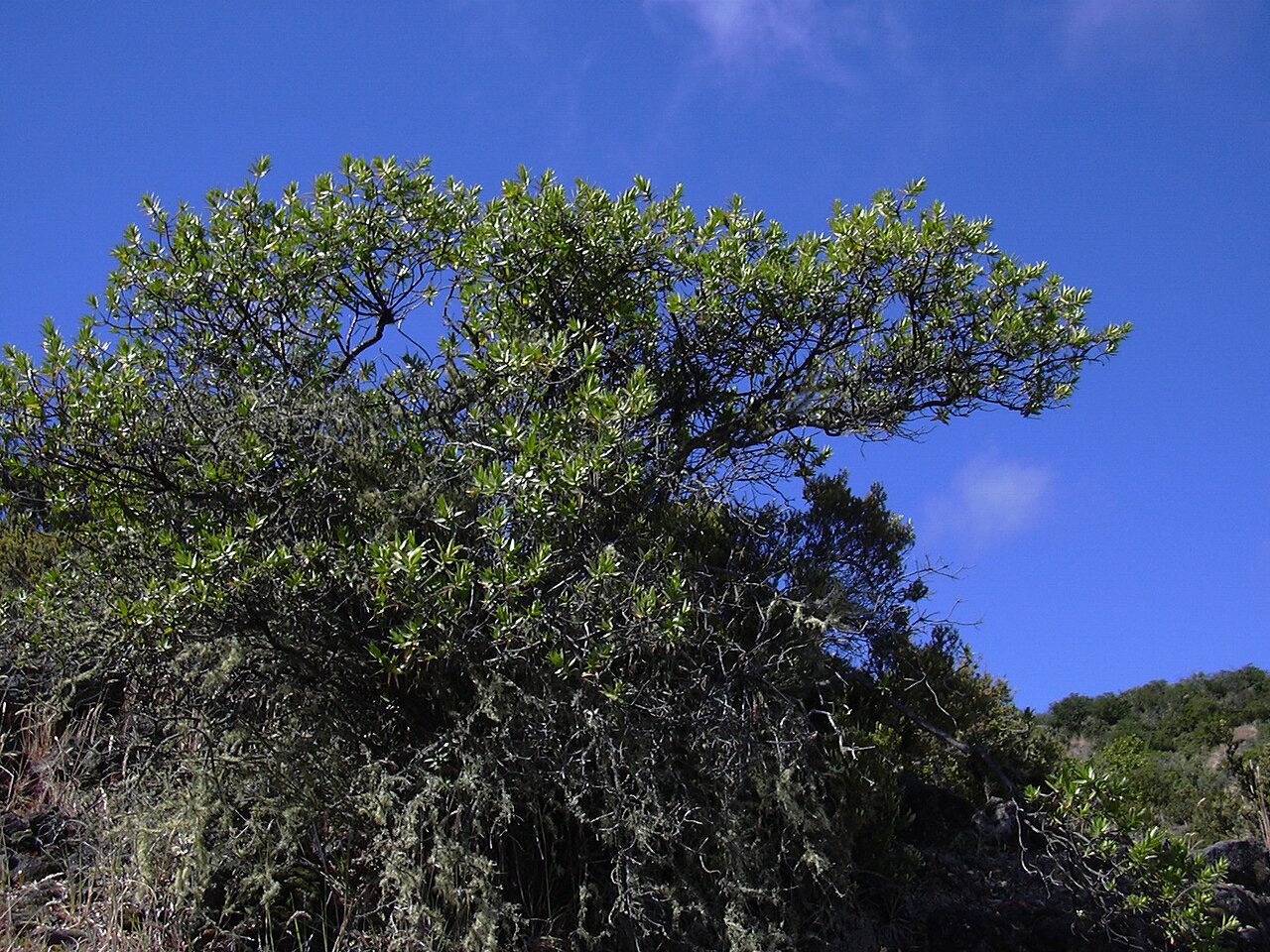
A large shrub or small tree, usually 6 to 20 feet tall, often with a single short trunk and a broad, rounded crown. Old plants become gnarled and spreading. In exposed alpine sites it stays shorter and more shrubby.
Leaves
Leaves are narrow and lance-shaped, about 1½ to 3 inches long, and crowded near the branch tips, often in whorls. They are green and slightly fleshy, with a few fine hairs, and the older leaves fall to leave the lower branches bare.
Flowers
Small, rayless yellow to orange-yellow flower heads are borne in upright, branched clusters at the branch tips, mostly from July to December. Each head is a little cup of tiny tubular disk florets, like those of other Dubautia, rather than a daisy with petals.
Fruit & Look-alikes
The fruits are small, dry achenes topped with a short tuft of bristles that helps them blow in the wind. Other naʻenaʻe on Hawaiʻi Island, such as Dubautia scabra and D. ciliolata, are much smaller shrubs of lava fields. Māmane, which grows beside it, also has yellow flowers but has compound leaves and pea-like flowers that hang in clusters.
Quick Facts
| Scientific Name | Dubautia arborea (A. Gray) D.D. Keck |
| Family | Asteraceae (sunflower family); Hawaiian silversword alliance |
| Plant Type | Evergreen shrub or small tree; endemic to Hawaiʻi Island |
| Mature Height | 6–20 ft |
| Mature Spread | 6–13 ft |
| Growth Rate | Slow to moderate |
| Sun Exposure | Full sun |
| Water Needs | Low; dry, very well-drained soil |
| Soil Type | Young volcanic cinder, ash and rocky soil |
| Soil pH | Slightly acidic to neutral |
| Bloom Time | July–December |
| Flower Color | Yellow to orange-yellow |
| Fall Color | None; evergreen |
| Fruit | Small achene with a short bristly tuft |
| Deer Resistant | No; heavily browsed by feral sheep, goats and mouflon |
| USDA Hardiness Zones | About 9–11; needs cool subalpine conditions |
Native Range
Naʻenaʻe is endemic to Hawaiʻi Island, and USDA PLANTS lists it as native only in Hawaiʻi. Its stronghold is the upper slopes of Mauna Kea, at roughly 7,000 to 10,000 feet (about 2,100 to 3,100 m), and it has also been reported from Hualālai. These elevations sit above the clouds much of the year: days are sunny and dry, nights are cold, and frost is possible in winter.
It grows in subalpine dry forest dominated by māmane and naio, in open high-elevation shrubland with pūkiawe and ʻaʻaliʻi, and in scattered spots in the stony alpine zone above treeline. The māmane-naio forest on Mauna Kea is also the last stronghold of the palila, an endangered Hawaiian honeycreeper, so efforts to protect that forest also benefit naʻenaʻe.
Feral sheep, goats and mouflon introduced in the 1800s browsed Mauna Kea’s subalpine forest for generations, reducing naʻenaʻe to scattered plants. Fencing, removal of hoofed animals and replanting by state and community restoration programs on Mauna Kea are helping native plants, including naʻenaʻe, to recover in places. Fire and invasive grasses are additional threats.
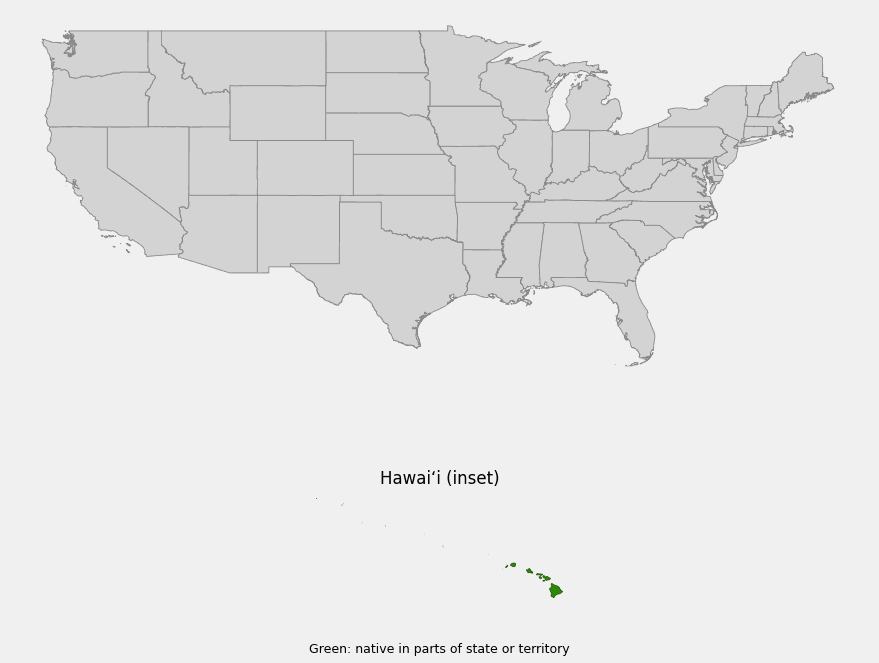
📋 Regional plant lists featuring Naʻenaʻe: Hawaii
Growing & Care Guide
Be realistic about naʻenaʻe: it is a subalpine plant from 7,000 feet and up, adapted to cold nights, strong sun, dry air and loose cinder soils. It rarely thrives in warm, humid lowland gardens, where it tends to rot or decline, and it is not sold by typical garden centers. It is grown mainly by conservation nurseries for restoration on Mauna Kea, and gardeners at high elevations on Hawaiʻi Island have the best chance with it. Never collect plants, cuttings or seed from the wild; use only nursery-propagated material from a conservation or native plant nursery. Hawaiʻi also restricts bringing plants in from other states, so source plants within the islands.
Light
Full sun. In shade it becomes weak and leggy.
Soil & Water
Very well-drained cinder, ash or gravelly soil with little organic matter. Water to establish, then only sparingly; soggy soil and warm, humid conditions quickly lead to root rot. In containers, use a coarse cinder-based mix.
Planting Tips
Best at high elevations (above about 4,000 to 5,000 feet) on Hawaiʻi Island or Maui, where nights are cool. Plant with other dry-land natives such as māmane, naio, pūkiawe and ʻaʻaliʻi. Fence out goats, sheep and pigs, and protect young plants from wind and frost while they establish.
Pruning & Maintenance
Little pruning is needed; remove dead or broken branches. Keep invasive grasses away from the base, both to reduce competition and to lower fire risk.
Propagation
Conservation nurseries grow it from fresh seed, which is small and short-lived, and some Dubautia also root from cuttings. Seedlings are sensitive to damping off and overwatering. Wild seed collection is done only by permitted restoration programs.
Landscape Uses
- Subalpine restoration: replanting Mauna Kea māmane-naio forest after removing grazing animals
- High-elevation native gardens: for experienced growers in cool, dry upland sites
- Education: a large, tree-like member of the silversword alliance
- Habitat for native insects: supports the native insects that forest birds feed on
Wildlife & Ecological Value
Naʻenaʻe is part of one of the best-known examples of adaptive radiation in the world, and it plays a role in the subalpine forest that sustains rare native birds.
For Pollinators
The small flower heads attract native insects, including native bees (Hylaeus), flies and moths, as well as introduced honeybees.
For Birds
In the subalpine forest of Mauna Kea it grows alongside the māmane that the endangered palila depends on. Insects living on naʻenaʻe and other native shrubs feed ʻamakihi and other forest birds.
For Mammals
Hawaiʻi’s only native land mammal, the Hawaiian hoary bat (ʻōpeʻapeʻa), forages over upland forest. Feral sheep, goats and mouflon browse naʻenaʻe heavily and are the main reason it is rare.
Ecosystem Role
As one of the few tree-sized plants above about 8,000 feet, it adds structure and shelter to open subalpine forest and shrubland and helps stabilize loose cinder slopes.
Cultural & Historical Uses
The silversword alliance, about 30 species in the genera Argyroxiphium, Dubautia and Wilkesia, descends from a single tarweed ancestor that arrived from western North America a few million years ago. From that ancestor came rosette plants, cushion plants, vines, shrubs and small trees like naʻenaʻe, adapted to habitats from bogs to alpine cinder.
Naʻenaʻe is a general Hawaiian name for Dubautia, and kūpaoa is used for some species, especially fragrant ones. The genus Dubautia was named by the French botanist Charles Gaudichaud-Beaupré. Asa Gray first described this plant, and David D. Keck later placed it in Dubautia.
Naʻenaʻe benefits from the long effort to restore Mauna Kea’s subalpine forest, which began with court orders in the late 20th century to remove feral sheep and goats from palila habitat. Fenced areas, replanting and community restoration projects have since brought native plants back to parts of the mountain.
Frequently Asked Questions
Is na’ena’e (Dubautia arborea) endangered?
It is rare and considered critically imperiled, but it is not listed under the federal Endangered Species Act. The U.S. Fish and Wildlife Service lists it as a species of concern.
Where does it grow?
Only on Hawaiʻi Island, mainly on the upper slopes of Mauna Kea at about 7,000 to 10,000 feet, in subalpine māmane-naio forest and high shrubland.
Is it related to the silversword?
Yes. It belongs to the Hawaiian silversword alliance, along with the ʻāhinahina (silversword) and the iliau, all descended from a single North American tarweed ancestor.
Can I grow it in a lowland garden?
Usually not well. It needs cool, dry, high-elevation conditions and sharply drained cinder soil, and it tends to rot in warm, humid lowlands. It is grown mainly for restoration on Mauna Kea.
When does it bloom?
Mostly from July to December, with upright clusters of small yellow flower heads at the branch tips.

Looking for a nursery that carries Naʻenaʻe?
Browse our native plant nursery directory: Hawaii

