
ʻAiakanēnē (Coprosma ernodeoides)
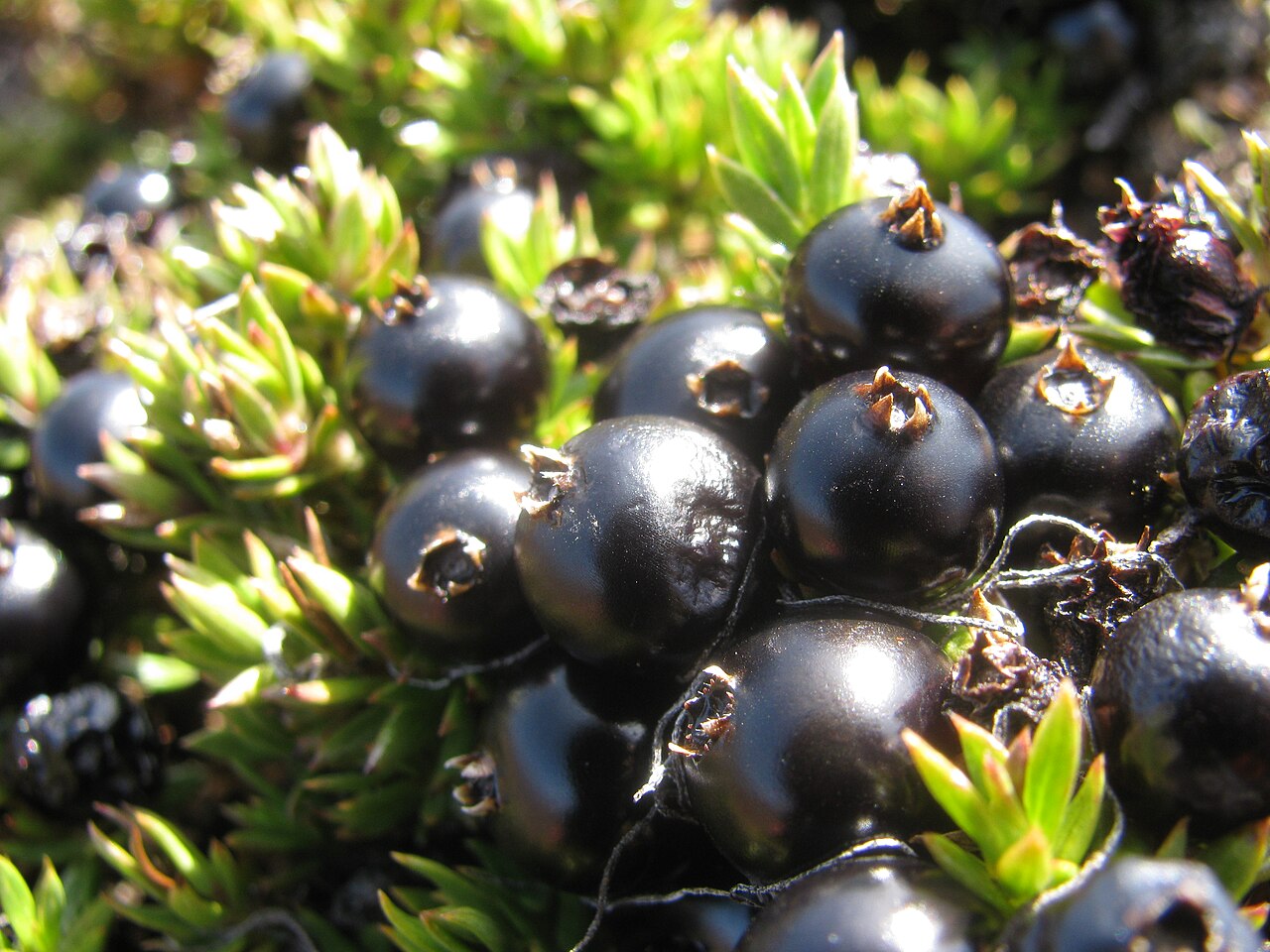
Coprosma ernodeoides is a low, sprawling shrub of the high volcanoes of Maui and Hawaiʻi Island, known in Hawaiian as ʻAiakanēnē (“food of the nēnē”) or kūkaenēnē (“nēnē droppings”), and in English as black-fruited coprosma. It forms dense mats of tiny, needle-like, glossy green leaves over lava, cinder and ash, and in season it is covered with shiny black berries about the size of a blueberry.
Both Hawaiian names come from the nēnē, the endemic Hawaiian goose, which eats the fruit, and whose droppings the fruit resembles. The genus name Coprosma means “smelling of dung” in Greek, after the odor of some species’ crushed leaves, so the plant has a scatological name in two languages. It is the only Hawaiian Coprosma with black fruit; the other native species have orange or red fruit.
ʻAiakanēnē is a characteristic plant of the subalpine and alpine landscapes of Haleakalā, Mauna Kea, Mauna Loa and Hualālai, and it is a valued groundcover for cool upland gardens in Hawaiʻi. This guide covers how to recognize it, where it grows, and how to grow it.
Identification
On the high volcanoes, ʻaiakanēnē grows alongside several other low native shrubs, including pūkiawe and the ʻōhelo species, so look closely at the leaves and fruit.
Growth Habit
ʻAiakanēnē is a prostrate to low, mounding shrub, usually under a foot tall, with trailing branches several feet long that root along the ground and knit together into mats. On sheltered sites it can build up into mounds a foot or two high. The stems are densely leafy.
Leaves
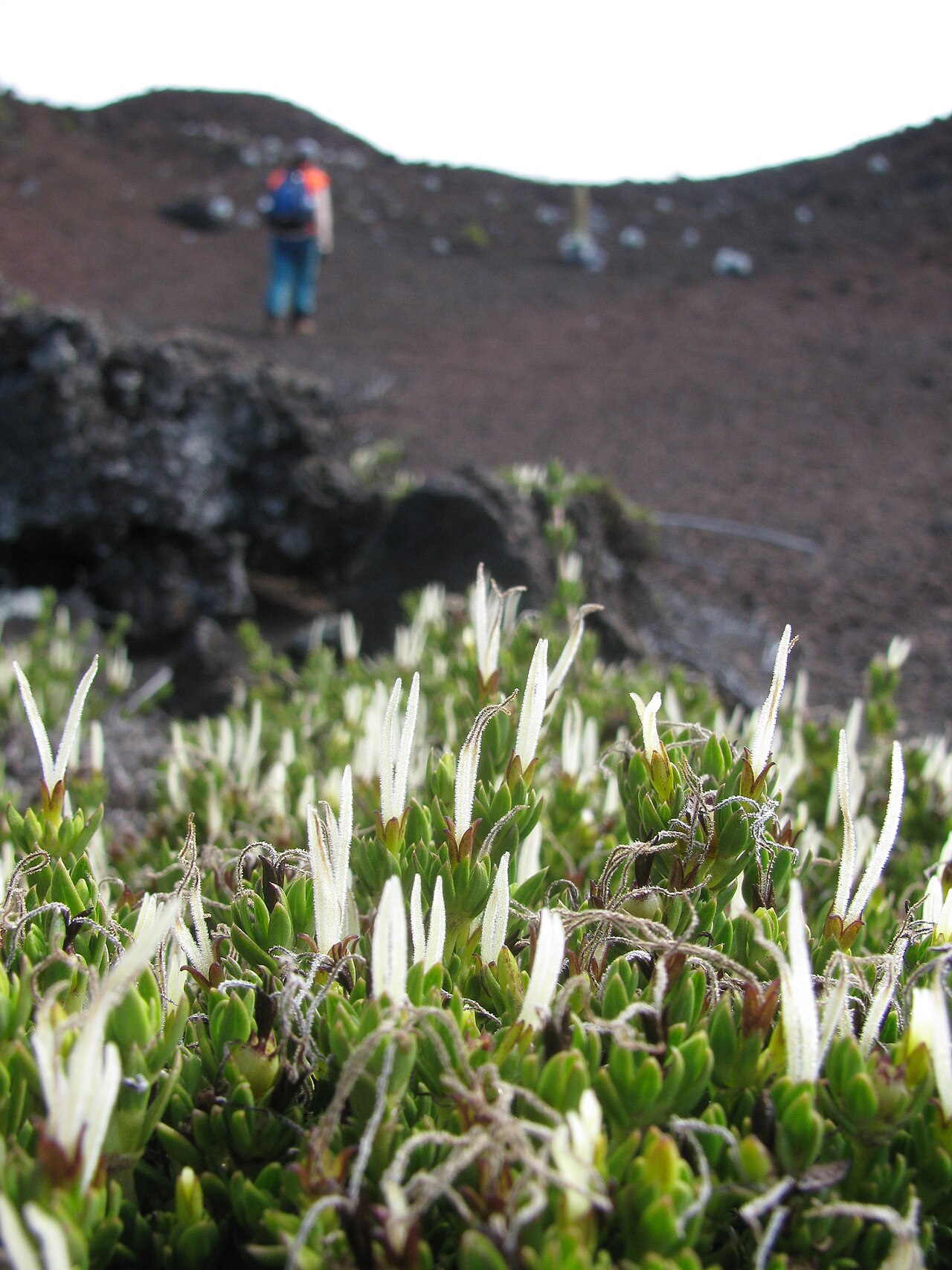
The leaves are small (about a quarter to half an inch long), narrow and needle- or scale-like, thick, shiny and dark green, and arranged in opposite pairs that crowd tightly along the stems. Tiny stipules sit between the leaf bases, a family trait of the coffee family (Rubiaceae).
Flowers
Like other Coprosma, ʻaiakanēnē has separate male and female plants. The flowers are tiny, greenish and easy to miss, but female flowers have long, pale, thread-like style branches, about a third to three-quarters of an inch long, that stick out above the foliage to catch wind-borne pollen. Male flowers dangle stamens. Flowering is mainly in spring and summer.
Fruit
Female plants carry round, glossy, jet-black fleshy fruits about a third to half an inch across (8 to 13 mm), each with two seeds. They are its most distinctive feature and can be abundant, often lasting on the plant for months.
Similar Species
Pūkiawe has similar small, stiff leaves, but they are alternate and pale beneath, and its small fruits are white, pink or red. ʻŌhelo ʻai has broader, toothed, alternate leaves and red to yellow berries. Other Hawaiian Coprosma species are upright shrubs or trees with broader leaves and orange to red fruit.
Quick Facts
| Scientific Name | Coprosma ernodeoides A. Gray |
| Family | Rubiaceae (coffee family) |
| Plant Type | Prostrate, mat-forming evergreen shrub; endemic to Hawaiʻi |
| Mature Height | 4–12 in (occasionally mounding to 2 ft) |
| Mature Spread | 3–6 ft or more |
| Growth Rate | Slow |
| Sun Exposure | Full sun |
| Water Needs | Low to medium; drought tolerant once established |
| Soil Type | Very well-drained cinder, lava, ash or gravelly soil |
| Soil pH | About 5.0–6.5 |
| Bloom Time | Mainly spring–summer |
| Flower Color | Greenish; female flowers with long pale styles |
| Fall Color | None; evergreen |
| Fruit | Glossy black berry, 8–13 mm, on female plants |
| Deer Resistant | Browsed by goats and other feral animals |
| USDA Hardiness Zones | 9–11 (cool upland conditions; tolerates light frost) |
Native Range
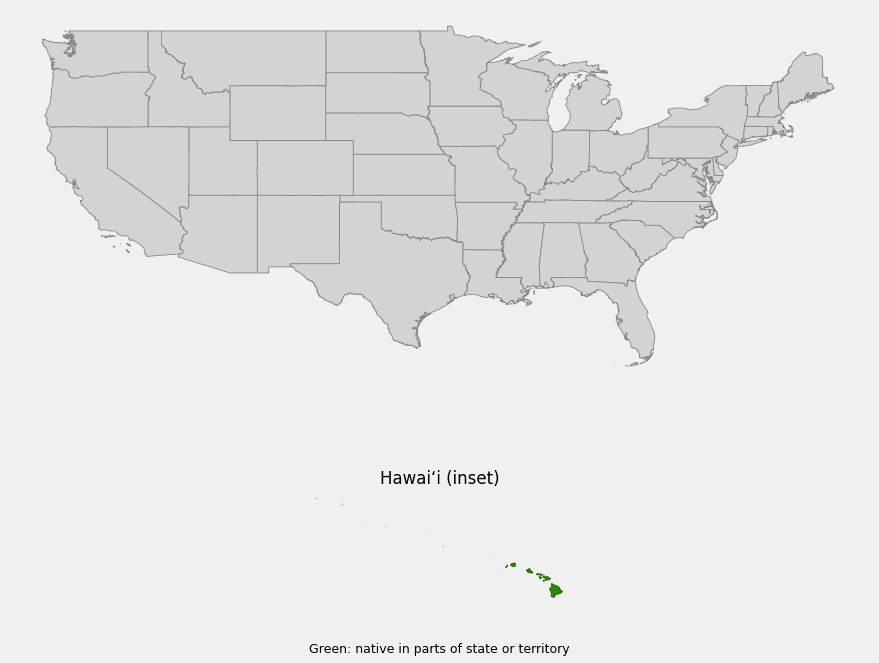
ʻAiakanēnē is endemic to Hawaiʻi and grows only on Maui and Hawaiʻi Island. USDA PLANTS records it only from Hawaiʻi. On Maui it is common on the upper slopes and in the crater of Haleakalā; on Hawaiʻi Island it grows on Mauna Kea, Mauna Loa, Hualālai and around the summit of Kīlauea.
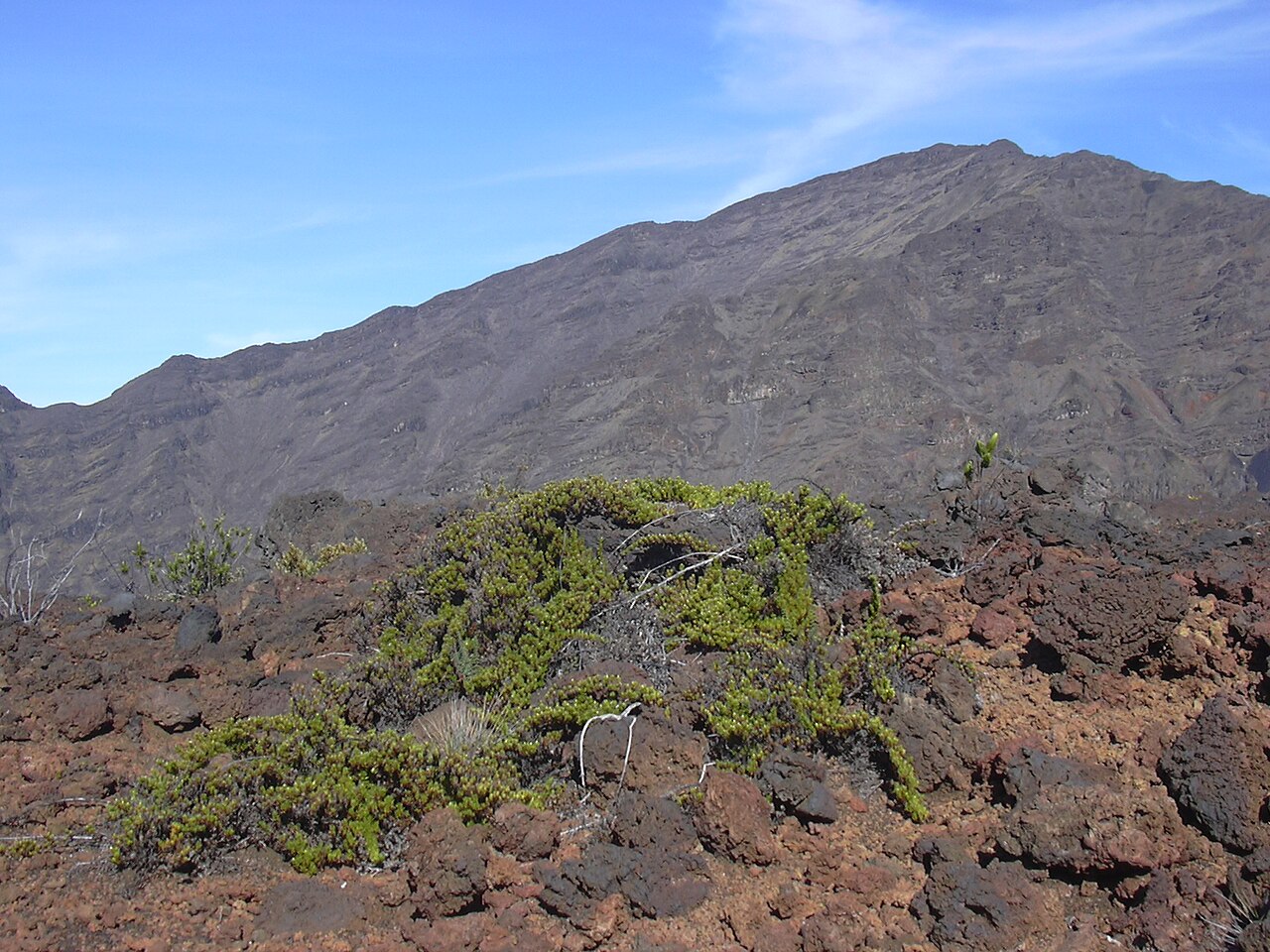
It grows in open subalpine and alpine habitats, from bare lava flows and cinder fields to dry subalpine shrubland and open forest, at elevations of roughly 3,500 to 10,000 feet (about 1,050 to 3,050 m). It is one of the first plants to colonize young lava and cinder in these zones, and it often grows with pūkiawe, ʻōhelo, ʻaʻaliʻi, māmane and native grasses.
ʻAiakanēnē is not federally listed and is still common in protected areas such as Haleakalā and Hawaiʻi Volcanoes national parks. Grazing by feral goats and sheep, fire and invasive grasses are threats in parts of its range. Buy nursery-propagated plants from Hawaii native plant nurseries, and never collect plants, cuttings or fruit inside the national parks.
📋 Regional plant lists featuring ʻAiakanēnē: Hawaii
Growing & Care Guide
ʻAiakanēnē is a fine groundcover for cool, sunny upland gardens in Hawaiʻi, roughly above 2,500 feet, where it gets the cool nights and sharp drainage it needs. It is slow and often short-lived in hot, humid lowland gardens. Buy nursery-propagated plants from a Hawaii native plant nursery. Because plants are male or female, grow several if you want the black fruit.
Light
Give it full sun. In the wild it grows fully exposed on lava and cinder, and in shade it becomes sparse and stops flowering and fruiting.
Soil & Water
Plant in very well-drained cinder, crushed lava or a gritty mix; standing water and heavy soil cause root rot. Water regularly until plants root in and spread, then water deeply but infrequently. Established plants handle dry spells, but in containers they should not dry out completely.
Planting Tips
Use ʻaiakanēnē as a groundcover over rocks and walls, in a cinder or rock garden, or between larger upland natives such as māmane and ʻaʻaliʻi. Space plants 2 to 3 feet apart. Plant at least one male among several female plants for fruit. It is very difficult in hot lowland gardens; there, grow it in a pot of pure cinder in a bright, breezy spot. Hawaiʻi restricts bringing plants in from other states, so source it locally.
Pruning & Maintenance
Little pruning is needed. Trim stray stems to keep the mat within bounds, and hand-weed carefully until the mat closes, because grasses and weeds easily overrun young plants. Avoid heavy fertilizer, which causes weak, leggy growth.
Propagation
ʻAiakanēnē is grown from seed or cuttings. Clean seeds from ripe black fruit and sow them in a gritty mix; germination is slow and can take several months. Stem tip cuttings root fairly readily in a cinder-perlite mix with rooting hormone, and trailing stems that have rooted where they touch the ground can be separated. Cuttings let you choose male or female plants.
Landscape Uses
- Upland groundcover: a tough, evergreen mat for cool, sunny gardens above about 2,500 ft
- Rock and cinder gardens: spreads over lava rock and walls
- Restoration: an early colonizer of lava and cinder in subalpine restoration
- Wildlife plantings: fruit for nēnē and native birds
- Cultural plantings: fruit and bark used for lei and dye
Wildlife & Ecological Value
ʻAiakanēnē is a key food plant in the high-elevation landscapes of Maui and Hawaiʻi Island, and its mats help stabilize loose cinder.
For Pollinators
Its flowers are pollinated mainly by wind, which is why the female flowers have long, exposed styles. Insects may visit the flowers, but they are not a major nectar source.
For Birds
The black fruits are eaten by the nēnē (Hawaiian goose), which gave the plant both of its Hawaiian names, and by other birds, including native forest birds and introduced game birds. Birds disperse the seeds across lava fields.
For Mammals
Hawaiʻi has only one native land mammal, the Hawaiian hoary bat, which forages for insects over the upland slopes. Feral goats and sheep browse ʻaiakanēnē, and their removal from Haleakalā has helped native shrubs recover.
Ecosystem Role
As an early colonizer of young lava and cinder, ʻaiakanēnē helps stabilize loose ground, collects organic matter and creates sheltered spots where other plants can establish. Its mats also shelter native insects and spiders in the alpine zone.
Cultural & Historical Uses
The two Hawaiian names reflect the plant’s close link with the nēnē. ʻAiakanēnē means “food of the nēnē,” while kūkaenēnē means “nēnē droppings,” because the black fruits look like the goose’s droppings. Coincidentally, the scientific genus name Coprosma also refers to dung.
Native Hawaiians used the shiny black fruits in lei, made a yellow dye from the inner bark, and used the fruits to make a purple to black dye. Lei made with kūkaenēnē fruit are associated with the high country of Haleakalā and the volcanoes of Hawaiʻi Island.
The species was described by the American botanist Asa Gray in 1860 from specimens collected by Archibald Menzies, the Scottish naturalist who climbed Mauna Loa and Hualālai in the 1790s. Today it is familiar to everyone who hikes the trails of Haleakalā and Hawaiʻi Volcanoes national parks.
Frequently Asked Questions
Are ʻaiakanēnē berries edible?
They are not a recognized food for people; the berries are known as food for the nēnē and other birds. Native Hawaiians used them mainly for lei and dye. Don’t pick fruit in national parks, where collecting is prohibited.
Is ʻaiakanēnē native to Hawaiʻi?
Yes. Coprosma ernodeoides is endemic to Hawaiʻi and grows only on Maui and Hawaiʻi Island, mostly at high elevations on Haleakalā, Mauna Kea, Mauna Loa, Hualālai and Kīlauea.
What does kūkaenēnē mean?
Kūkaenēnē means “nēnē droppings,” after the resemblance of the black fruits to the droppings of the Hawaiian goose. The other name, ʻaiakanēnē, means “food of the nēnē.”
Why doesn’t my plant have berries?
ʻAiakanēnē has separate male and female plants, and only females produce fruit. A female plant also needs a male nearby for pollination. Plant several plants, or ask your nursery for propagated plants of known sex.
Can I grow ʻaiakanēnē in a lowland garden?
It is difficult. It is adapted to cool, sunny, high-elevation sites with very fast drainage. In lowland gardens it tends to decline in heat and humidity; try it in a pot of cinder in full sun with good air movement, or choose a lowland groundcover instead.

Looking for a nursery that carries ʻAiakanēnē?
Browse our native plant nursery directory: Hawaii

