
Naupaka Kuahiwi (Scaevola chamissoniana)
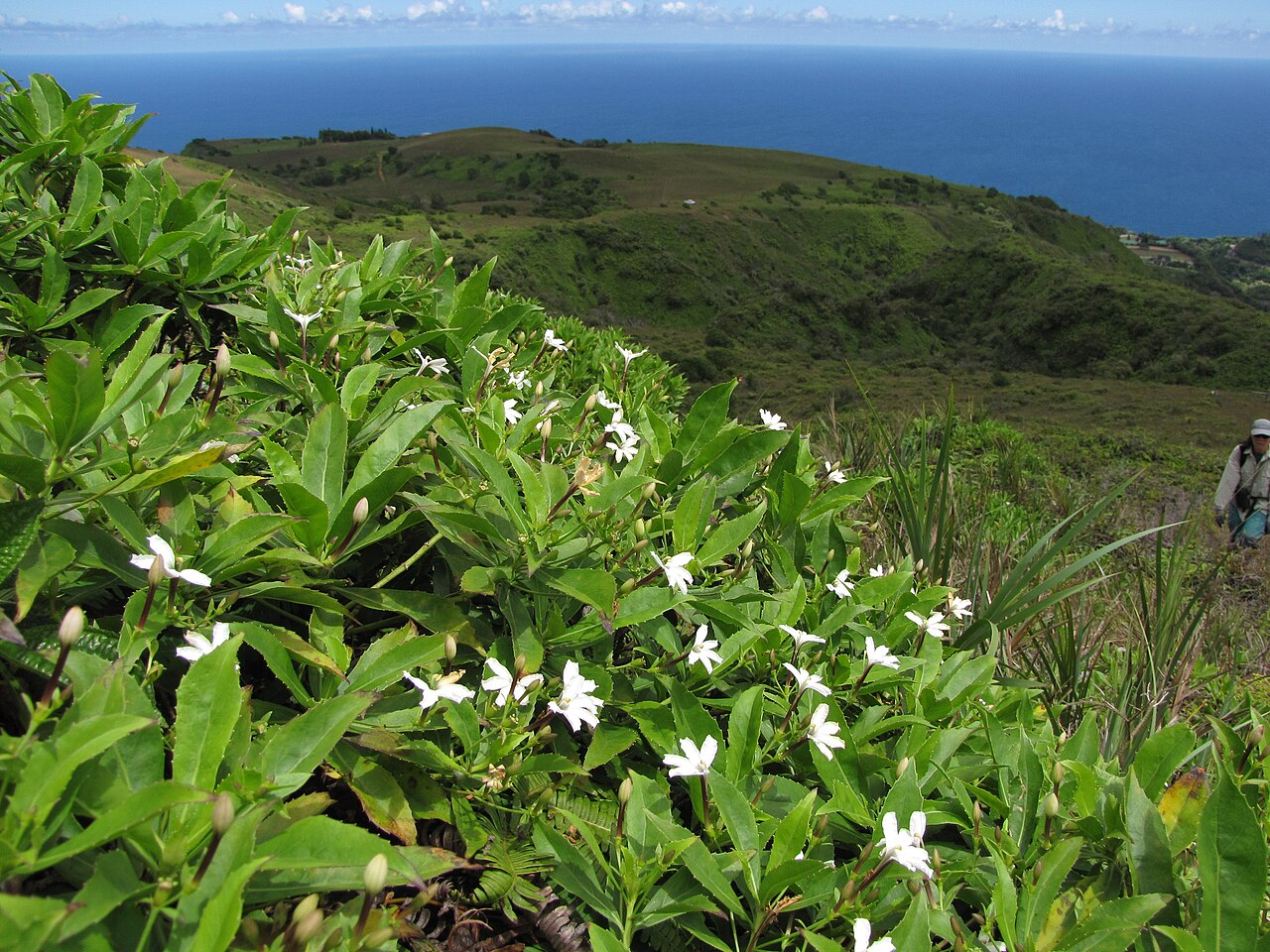
Scaevola chamissoniana, known in Hawaiian as Naupaka Kuahiwi, “mountain naupaka,” and in English as Chamisso’s scaevola, is an endemic Hawaiian shrub with fragrant white “half-flowers” whose five petals fan out on one side only. It grows in wet forests, shrublands and open ridges on Molokaʻi, Lānaʻi, Maui and Hawaiʻi Island, often flowering heavily in summer and sporadically through the rest of the year.
Naupaka kuahiwi is the upland partner in one of Hawaiʻi’s best-known legends. The half-flowers of the mountain naupaka and of Beach Naupaka are said to be two separated lovers, one sent to the mountains and one to the sea, and the two halves fit together to make a whole flower. Six upland Scaevola species share the name naupaka kuahiwi; Oʻahu and Kauaʻi have their own, Mountain Naupaka (Scaevola gaudichaudiana), a separate species.
It is a handsome, fairly fast-growing shrub for cool, moist gardens in upland Hawaiʻi and a good choice for hedges and native plantings. This guide covers how to recognize it, where it grows, how to grow it, and its place in Hawaiian culture.
Identification
Hawaiʻi has about ten native Scaevola species, from the coastal beach naupaka to several upland shrubs. Naupaka kuahiwi (S. chamissoniana) is most closely related to S. gaudichaudiana of Oʻahu and Kauaʻi, but has longer leaves, longer flower stalks and larger flowers.
Growth Habit
Naupaka kuahiwi is an evergreen, much-branched shrub, usually 3 to 10 feet tall, and it can reach about 15 feet with age if left unpruned. Branches are stout and leafy at the tips, giving the plant a dense, rounded or spreading shape. On exposed ridges it may form low, sprawling thickets.
Leaves
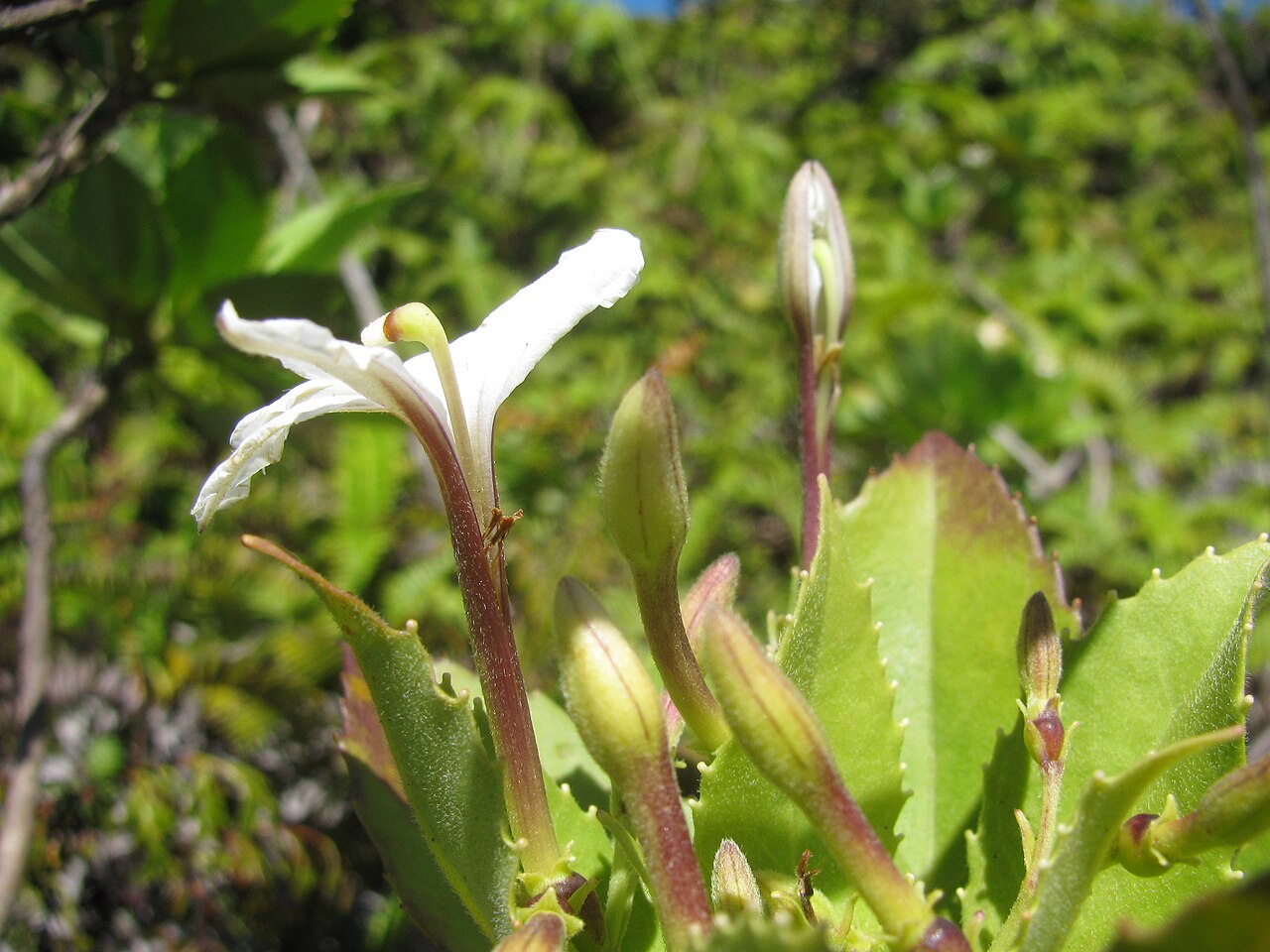
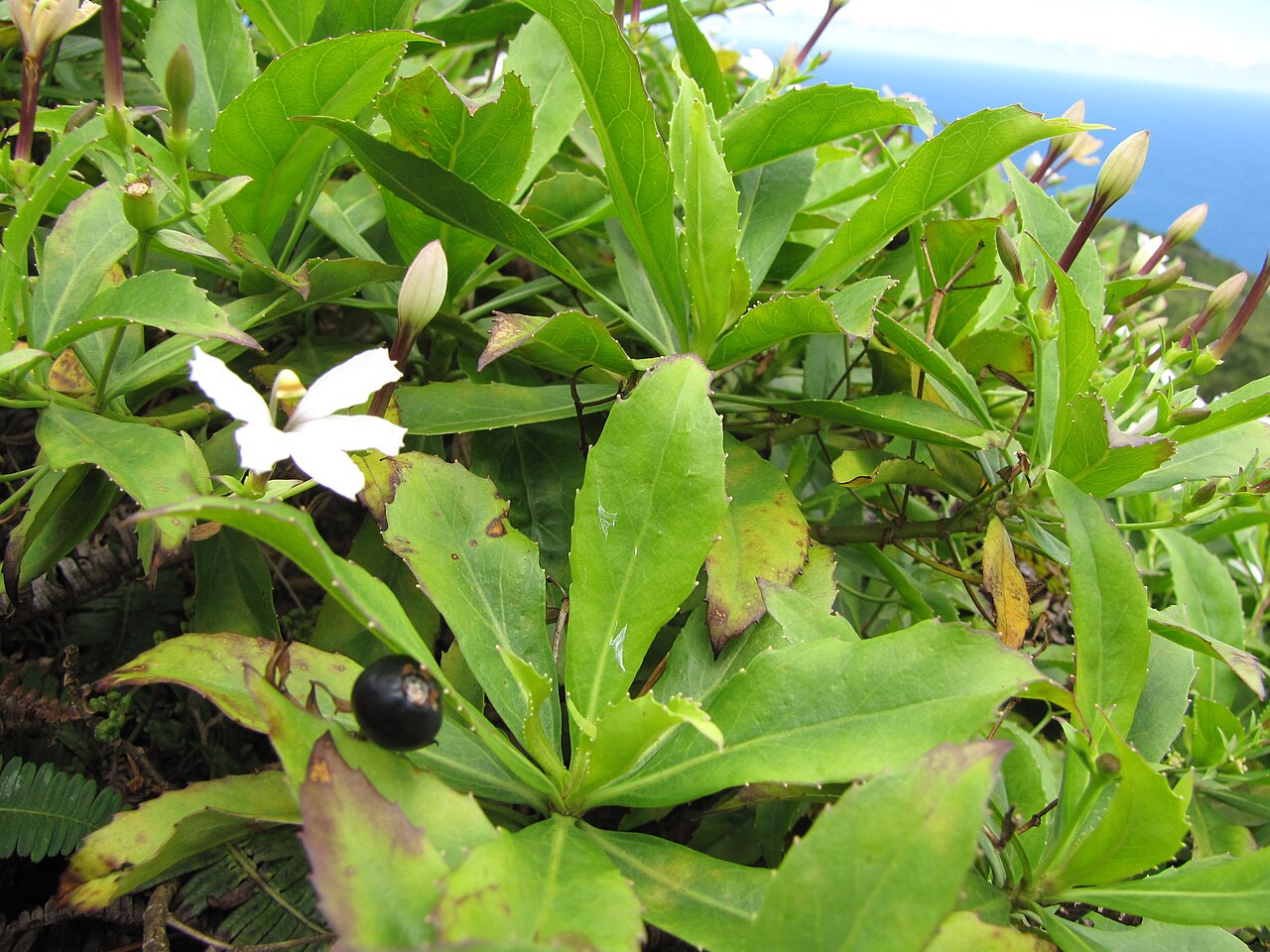
The leaves are clustered toward the branch tips, simple and alternate, about 3½ to 5½ inches long, narrowly oblong to lance-shaped, and medium to dark green. The margins are usually toothed toward the tip, and the surface is smooth to slightly glossy.
Flowers
The flowers are white and fragrant, about an inch or more across, with a slender curved tube and five petal lobes that spread fan-like to one side, the classic naupaka “half-flower.” Long, slender, pale green buds are held on stalks above the leaves. Flowers appear mostly in summer and sporadically year-round.
Fruit
The fruit is a round, fleshy drupe about ⅓ inch across that ripens dark purple to purplish black. Each contains a hard seed. The purple-black fruit clearly separates it from beach naupaka, whose fruits are white.
Similar Species
Beach Naupaka grows on coasts, has thick, succulent leaves and white fruit. Mountain Naupaka (S. gaudichaudiana) is a similar shrub of Oʻahu and Kauaʻi with shorter leaves and flowers. Other naupaka kuahiwi species, such as the dry-forest Scaevola gaudichaudii, have yellowish flowers.
Quick Facts
| Scientific Name | Scaevola chamissoniana Gaudich. |
| Family | Goodeniaceae (goodenia family) |
| Plant Type | Evergreen shrub; endemic to Hawaiʻi |
| Mature Height | 3–10 ft (to about 15 ft if unpruned) |
| Mature Spread | 4–6 ft |
| Growth Rate | Moderate to fast |
| Sun Exposure | Full sun to part shade |
| Water Needs | Medium to high |
| Soil Type | Moist, well-drained loam, cinder or organic soils |
| Soil pH | Acidic to neutral, about 5.0–7.0 |
| Bloom Time | Mainly summer; sporadically year-round |
| Flower Color | White |
| Fall Color | None; evergreen |
| Fruit | Round purple-black drupe |
| Deer Resistant | No; browsed by feral goats and deer |
| USDA Hardiness Zones | 10–12 (best in cool upland conditions) |
Native Range
Naupaka kuahiwi is endemic to the Hawaiian Islands. USDA PLANTS records it only from Hawaiʻi, and it grows on Molokaʻi, Lānaʻi, Maui and Hawaiʻi Island. It is not found on Oʻahu or Kauaʻi, where its close relative S. gaudichaudiana fills a similar niche. Most iNaturalist records come from Hawaiʻi Island and the West and East Maui mountains.
It grows in wet forest, wet shrubland, open ridges, forest edges and disturbed openings such as landslides and old burns, mainly at middle elevations from roughly 1,000 to about 4,000 feet, in areas with high rainfall. It often grows with ʻŌhiʻa Lehua, Uluhe and other native shrubs, and it is one of the first woody plants to recover after fires and landslides in wet areas.
Naupaka kuahiwi is not federally listed on the USFWS ECOS database and is fairly common in suitable habitat. Like other upland natives, it is affected by feral goats and deer, by invasive plants such as strawberry guava and Koster’s curse, and by fire.
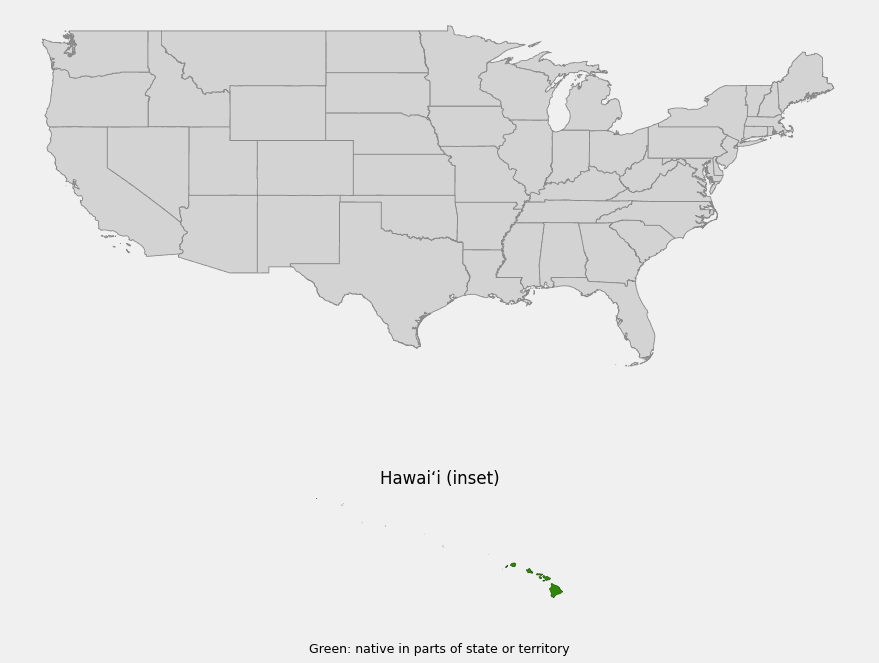
📋 Regional plant lists featuring Naupaka Kuahiwi: Hawaii
Growing & Care Guide
Naupaka kuahiwi is a rewarding shrub for gardens in Hawaiʻi at middle to upper elevations, where it is cooler and wetter. Nurseries describe it as a mid- to high-elevation landscape plant that grows faster than many natives. It struggles in hot, dry, salty or very windy lowland sites; for the coast, choose beach naupaka instead. Buy nursery-propagated plants from Hawaiian native plant nurseries, and note that Hawaiʻi restricts bringing plants in from other states.
Light
It grows in full sun to part shade. In cool upland gardens full sun gives the densest growth and most flowers; at lower, warmer elevations, afternoon shade helps.
Soil & Water
Plant in moist, well-drained soil: loam, cinder with compost, or other organic soils all work. Give medium to high water and keep it from drying out, especially while it establishes. It is susceptible to root rot in soggy, poorly drained soil, so drainage matters as much as moisture. Fertilize lightly and often.
Planting Tips
Space plants about 6 feet apart for a hedge or screen, or use one as a specimen shrub. Shelter it from strong winds and salt spray. It combines well with other upland natives such as ʻākia, ʻōhiʻa and native ferns.
Pruning & Maintenance
No pruning is required, but it tolerates trimming well, which makes it useful as a hedge. Left alone, it can reach about 15 feet. Watch for scale, spider mites and spittlebugs, and avoid overwatering in heavy soils.
Propagation
Grow it from seed or cuttings. Clean the pulp from ripe purple-black fruit and sow the seeds in a well-drained mix; germination can be slow and uneven. Semi-hardwood tip cuttings root fairly readily with rooting hormone under mist or high humidity.
Landscape Uses
- Hedges and screens: a dense evergreen shrub that tolerates trimming
- Upland native gardens: fragrant white half-flowers for cool, moist gardens
- Cultural plantings: pairs with beach naupaka to tell the legend of the two lovers
- Restoration: quick to recolonize wet-forest openings and old burns
- Dye plants: purple-black fruit was used as a dye
Wildlife & Ecological Value
Naupaka kuahiwi is a common, hard-working shrub in Hawaiʻi’s wet uplands, healing openings and feeding wildlife.
For Pollinators
The fragrant white flowers are visited by insects, including bees, moths and flies; native yellow-faced bees (Hylaeus) are well-known visitors of naupaka flowers. The half-flower shape places the stigma where visiting insects brush against it.
For Birds
Birds eat the fleshy purple-black fruits and spread the seeds to new openings. Native birds also forage for insects among the dense foliage.
For Mammals
Hawaiʻi’s only native land mammal, the Hawaiian hoary bat, hunts insects over the forests and shrublands where naupaka kuahiwi grows. Feral goats and deer browse the shrub heavily.
Ecosystem Role
Naupaka kuahiwi quickly recolonizes landslides, ridge tops, burns and other openings in wet forest, helping hold soil on steep slopes and shading out some weeds while slower native trees recover.
Cultural & Historical Uses
The best-known Hawaiian story about naupaka tells of two lovers who were separated: one was sent to live in the mountains and the other by the sea. The flowers of the mountain naupaka and the beach naupaka each bloomed as half-flowers, and when the two halves are placed together they form a whole flower. Many versions of the story exist, with Pele or other figures causing the separation.
Early Hawaiians used the fruit of naupaka kuahiwi to produce a purplish-black dye. The genus name Scaevola comes from Latin for “left-handed,” a reference to the lopsided half-flower, and the species name honors the poet and naturalist Adelbert von Chamisso, who visited Hawaiʻi with the Russian Rurik expedition in 1816–1817.
The species was described by the French botanist Charles Gaudichaud-Beaupré from specimens collected on the French Uranie expedition. Today naupaka kuahiwi is planted in native gardens and restoration projects in upland Maui and Hawaiʻi Island.
Frequently Asked Questions
What is the difference between naupaka kuahiwi and beach naupaka?
Naupaka kuahiwi grows in wet upland forest and has thinner leaves and purple-black fruit. Beach naupaka grows on coasts, has thick, succulent leaves and white fruit. Both have white half-flowers.
Is naupaka kuahiwi the same as Scaevola gaudichaudiana?
No. Both are upland naupaka species called naupaka kuahiwi, but S. gaudichaudiana grows on Oʻahu and Kauaʻi, while S. chamissoniana grows on Molokaʻi, Lānaʻi, Maui and Hawaiʻi Island and has longer leaves and flowers.
Why are naupaka flowers only half a flower?
The five petals all spread to one side, forming a fan. It is a natural feature of Scaevola; the Hawaiian legend explains it as two separated lovers.
Can I grow naupaka kuahiwi at sea level?
It prefers cooler, wetter upland conditions and does not tolerate salt spray or strong wind. It may survive in shaded, well-watered lowland gardens, but beach naupaka is the better choice near the coast.
Is naupaka kuahiwi endangered?
No. It is not federally listed and is fairly common in wet upland habitats on Molokaʻi, Lānaʻi, Maui and Hawaiʻi Island.

Looking for a nursery that carries Naupaka Kuahiwi?
Browse our native plant nursery directory: Hawaii

