
Pāʻiniu (Astelia argyrocoma)
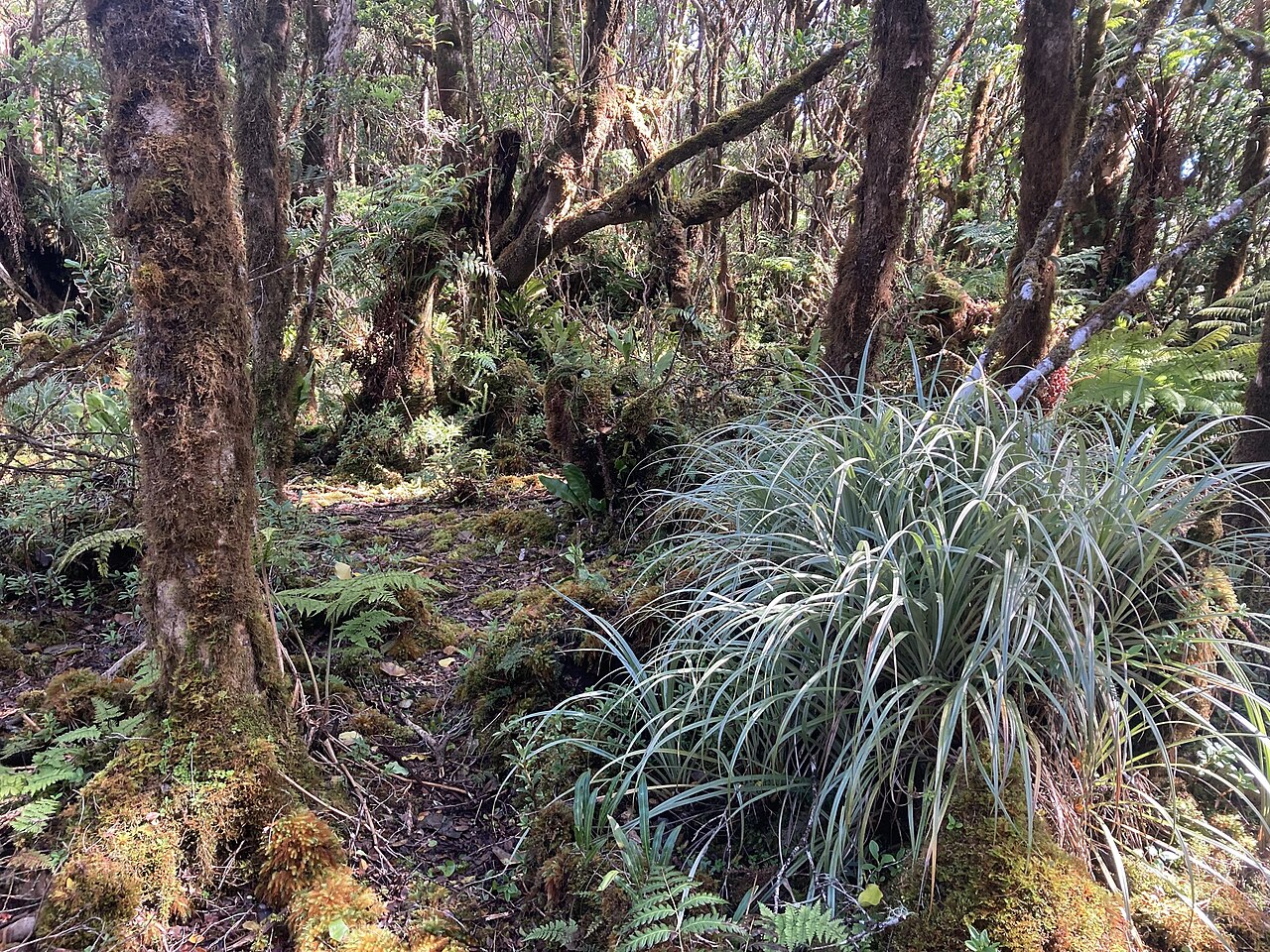
Astelia argyrocoma, known in Hawaiian as pāʻiniu and listed by USDA as silverhair pineapplegrass, is a clump-forming, grass-like plant found only on the island of Kauaʻi. It grows in the cool, misty cloud forests of the Alakaʻi plateau and surrounding uplands, where its fountains of long, narrow, silvery leaves light up the dim, mossy forest floor.
Astelia is a genus of about 25 to 30 species spread across the Pacific, from New Zealand and Australia to Hawaiʻi and the tip of South America, and several are grown as ornamental silver-leaved plants. Hawaiʻi has a few native species, all called pāʻiniu. The name argyrocoma means silver hair, after the silky, silvery scales that cover the leaves, especially on their undersides.
Pāʻiniu is endemic to Kauaʻi and is not federally listed, but it is confined to the island’s upland wet forests and is honestly hard to grow outside them. This guide covers how to recognize it, where it grows, what it takes to grow it, and its place in Hawaiian culture and ecology.
Identification
In Kauaʻi’s upland forests, pāʻiniu is easy to spot: no other native plant there forms large tufts of long, silvery, strap-like leaves on the ground and on mossy logs. Hawaiʻi’s other pāʻiniu species grow on different islands or in different habitats.
Growth Habit
Pāʻiniu forms dense, arching tufts or clumps, often 2 to 4 feet tall and wide, from short, thick rhizomes. It grows on the forest floor, on mossy logs and banks and sometimes on the lower trunks of trees. Old clumps can spread into broad colonies.
Leaves
The leaves are long and narrow, about 16 to 39 inches (40 to 100 cm) long and less than half an inch wide, tapering to a fine point and arching outward. They are green above and covered with silvery, silky scales, especially on the undersides, so the clumps look silver-gray in the forest. The leaf bases overlap and are densely covered in silky hairs.
Flowers
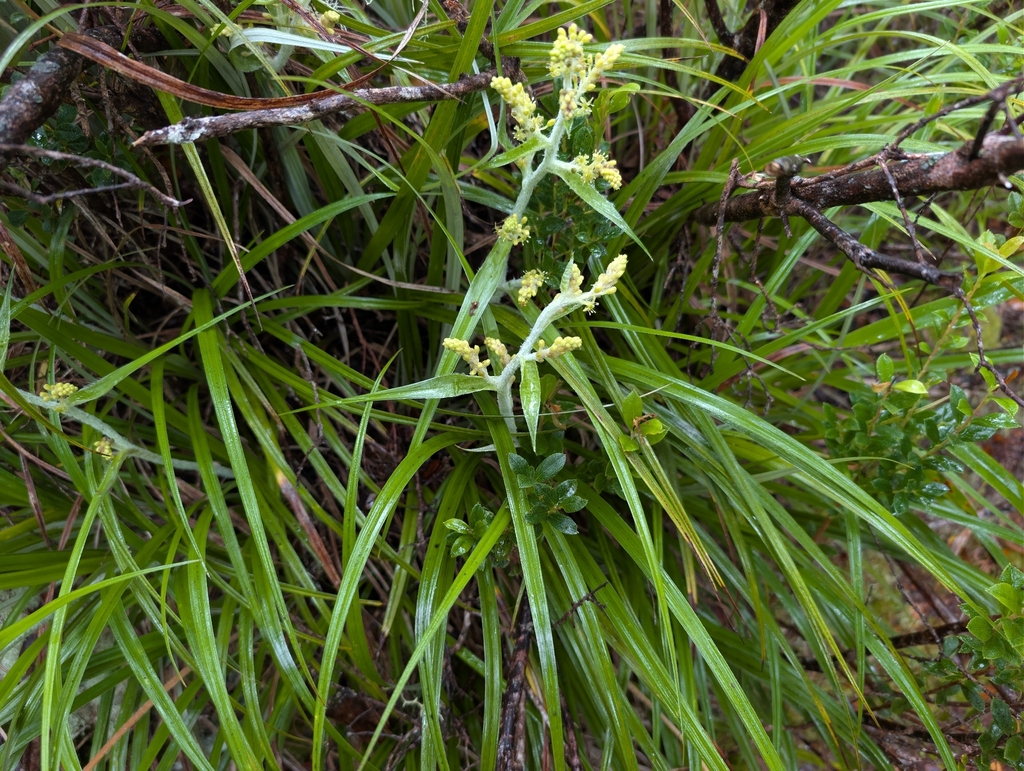
Plants are either male or female. The small flowers are greenish to reddish-brown and are borne on short, branched stalks that rise from the center of the clump among the leaves. Like the leaves, the flower stalks are covered with silvery or rusty hairs.
Fruit
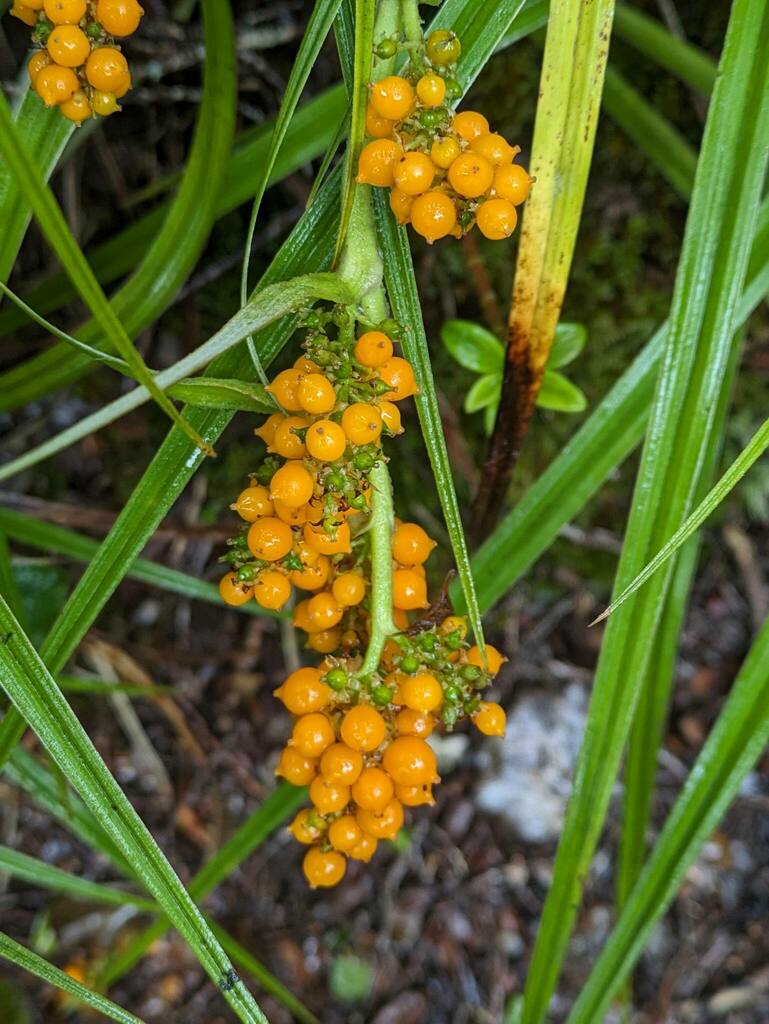
Female plants produce dense clusters of round berries, about a quarter of an inch across, that ripen bright orange. The colorful fruit is very conspicuous against the silvery leaves.
Similar Species
Puaʻakuhinia (Astelia menziesiana) is a more widespread pāʻiniu found on several islands, often growing on tree trunks, with broader leaves. Astelia waialealae is a small, federally endangered pāʻiniu of the summit bogs of Waiʻaleʻale on Kauaʻi. Native sedges such as ʻUki (Gahnia beecheyi) have tough, green, saw-edged leaves without the silvery coating.
Quick Facts
| Scientific Name | Astelia argyrocoma A. Heller ex Skottsb. |
| Family | Asteliaceae (astelia family) |
| Plant Type | Clump-forming evergreen perennial; endemic to Kauaʻi |
| Mature Height | 2–4 ft |
| Mature Spread | 2–4 ft; can form colonies |
| Growth Rate | Slow |
| Sun Exposure | Part shade to filtered light |
| Water Needs | High; constant moisture and humidity |
| Soil Type | Moist, acidic, organic-rich, well-aerated soil or moss |
| Soil pH | About 4.0–6.0 |
| Bloom Time | Variable; fruits often seen in summer |
| Flower Color | Greenish to reddish-brown |
| Fall Color | None (evergreen, silvery foliage) |
| Fruit | Round berries, bright orange, on female plants |
| Deer Resistant | Not applicable; damaged by feral pigs and goats |
| USDA Hardiness Zones | 10–11 (cool, wet upland conditions) |
Native Range
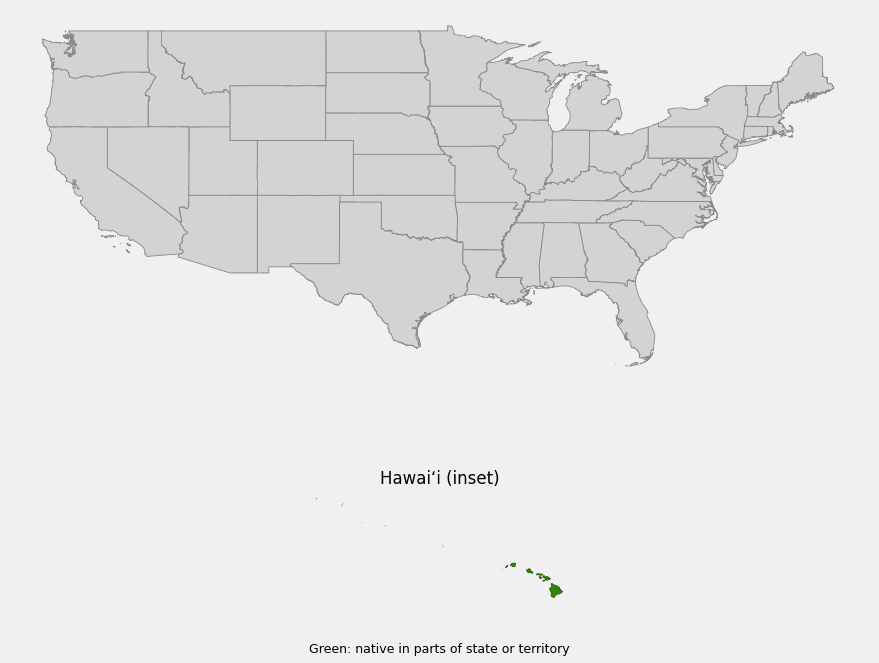
Pāʻiniu is endemic to Kauaʻi. USDA PLANTS records it only from Hawaiʻi, and on Kauaʻi it grows in the upland wet forests and cloud forests of the island’s interior, especially on and around the Alakaʻi plateau, at roughly 1,600 to 4,600 feet (about 500 to 1,400 m). It is absent from the very highest, wettest summit bogs, where the related Astelia waialealae grows instead.
Its habitat is montane wet forest dominated by ʻŌhiʻa Lehua, with a thick layer of mosses, ferns and shrubs. These forests are cloudy, cool and very wet. Pāʻiniu grows on the forest floor, on mossy logs and banks and along the edges of trails, often in large numbers, as along the Pihea and Alakaʻi Swamp trails in Kōkeʻe.
Pāʻiniu is not federally listed and is still common in protected upland forests on Kauaʻi. Feral pigs and goats, which root up and eat native plants, and invasive species such as kāhili ginger, strawberry guava and Australian tree fern are the main threats to its habitat.
📋 Regional plant lists featuring Pāʻiniu: Hawaii
Growing & Care Guide
Pāʻiniu is honestly difficult to grow away from Kauaʻi’s cool cloud forests. It needs constant moisture, high humidity, cool temperatures and an airy, acidic, organic growing medium, and it grows slowly. It can be grown by experienced native-plant growers in cool, wet upland gardens in Hawaiʻi or in a misted shade house. Buy only nursery-propagated plants from a Hawaiʻi native plant nursery, never dig plants from the wild, and note that Hawaiʻi restricts bringing plants in from other states.
Light
Part shade or bright, filtered light, as under the open canopy of an ʻōhiʻa forest. The silvery leaves tolerate some sun in cool, cloudy sites, but hot, direct sun scorches them.
Soil & Water
Use a moist, acidic, very airy mix such as tree-fern fiber or coir, peat, compost and cinder or perlite; in the wild it often grows in moss and on rotting logs. Keep the medium consistently moist and the air humid, but never stagnant or waterlogged, which leads to rot at the base of the clump.
Planting Tips
Plant it on a raised, well-drained mound, a mossy log or a large container rather than in heavy soil. It suits cool, misty gardens, ideally above about 2,000 feet in Hawaiʻi, and does poorly in hot, dry lowland gardens. Grow it with native ferns and other wet-forest plants that keep the air humid. Plants are male or female, so you need both to get the orange berries.
Pruning & Maintenance
Remove dead leaves gently from the base. Keep slugs and snails away from new growth, mulch with moss or leaf litter, and fence out pigs in rural areas. Feed lightly, if at all, with a dilute fertilizer for acid-loving plants.
Propagation
Pāʻiniu can be grown from seed cleaned from ripe orange berries, sown on a moist, sterile, acidic mix and kept humid; germination is slow. Large clumps can also be carefully divided, keeping roots on each division, but divisions recover slowly. Use only nursery stock or material collected with permission.
Landscape Uses
- Upland and cloud-forest gardens: silvery foliage for cool, misty native gardens
- Shade-house collections: grows best with steady humidity and moisture
- Forest restoration: part of the native ground layer of Kauaʻi wet forest
- Cultural plantings: silvery pāʻiniu leaves were traditionally used in lei
- Educational gardens: illustrates the Pacific-wide genus Astelia
Wildlife & Ecological Value
In Kauaʻi’s upland forests, pāʻiniu adds both color and food: silvery leaves and bright orange fruit that birds eat.
For Pollinators
The small flowers are visited by insects, which carry pollen from male to female plants. Native flies and other small insects are likely pollinators in these cool forests.
For Birds
The orange berries are eaten by birds, which spread the seeds across the forest. The upland forests where it grows are the last stronghold of Kauaʻi’s remaining native forest birds.
For Mammals
Hawaiʻi’s only native land mammal, the Hawaiian hoary bat, forages over upland forests. Feral pigs and goats damage pāʻiniu and its habitat.
Ecosystem Role
The dense clumps and silky leaf bases hold moisture and organic matter and shelter native snails, insects and spiders. As part of the ground layer of Kauaʻi’s cloud forests, pāʻiniu helps protect the soil and capture water from fog and rain.
Cultural & Historical Uses
The genus Astelia is spread across the Pacific, and botanists believe its ancestors reached Hawaiʻi by long-distance dispersal, probably carried by birds. Astelia argyrocoma was named from a collection by the American botanist Amos Heller and formally described by the Swedish botanist Carl Skottsberg, who studied Pacific island plants.
Hawaiians call the native astelias pāʻiniu, and the silvery leaves were traditionally used in lei. Their silvery sheen made them a distinctive material among the greens of the upland forest.
Today pāʻiniu is one of the plants hikers notice most on the boardwalks of the Pihea and Alakaʻi Swamp trails in Kōkeʻe State Park. Protecting these upland forests from pigs and invasive plants keeps the silvery clumps of pāʻiniu, and the water the forest provides, for future generations.
Frequently Asked Questions
What is pāʻiniu?
Pāʻiniu is the Hawaiian name for the native astelias, grass-like plants with long, silvery leaves. Astelia argyrocoma is the pāʻiniu of Kauaʻi’s upland forests.
Is pāʻiniu endangered?
Astelia argyrocoma is not federally listed and is still common in protected upland forests on Kauaʻi. A related Kauaʻi species, Astelia waialealae, is federally endangered.
Can I grow pāʻiniu?
It is hard to grow outside cool, misty, wet conditions. Experienced growers can keep nursery-propagated plants in a cool upland garden or misted shade house in Hawaiʻi. Never dig plants from the wild.
Why are the leaves silver?
The leaves are covered with fine, silky scales, especially on their undersides. The species name argyrocoma means silver hair.
Where can I see pāʻiniu?
Along the Pihea and Alakaʻi Swamp trails in Kōkeʻe State Park on Kauaʻi, where it grows in large numbers in the mossy ʻōhiʻa forest. Stay on the boardwalk and do not pick plants.

Looking for a nursery that carries Pāʻiniu?
Browse our native plant nursery directory: Hawaii

