
Kūpaoa (Dubautia menziesii)
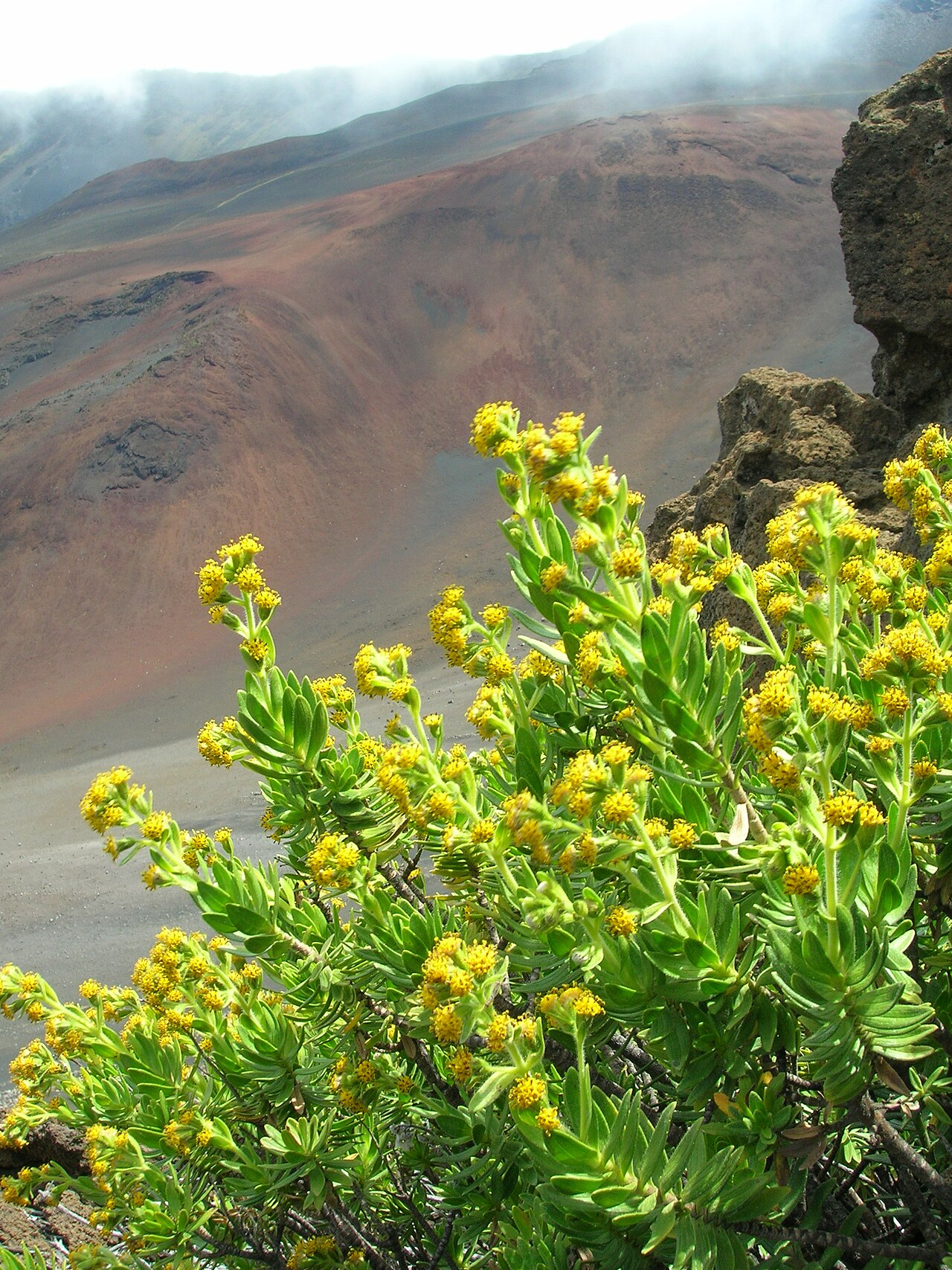
Dubautia menziesii, known in Hawaiian as kūpaoa and also naʻenaʻe, is a stiff, rounded shrub of the aster family (Asteraceae) that grows only on the upper slopes of Haleakalā, East Maui. It has crowded, thick, fleshy leaves and, in season, masses of small, rayless, golden-yellow flower heads with a strong, sweet fragrance; the name kūpaoa refers to that heavy scent. It is sometimes called Menzies’ dubautia in English.
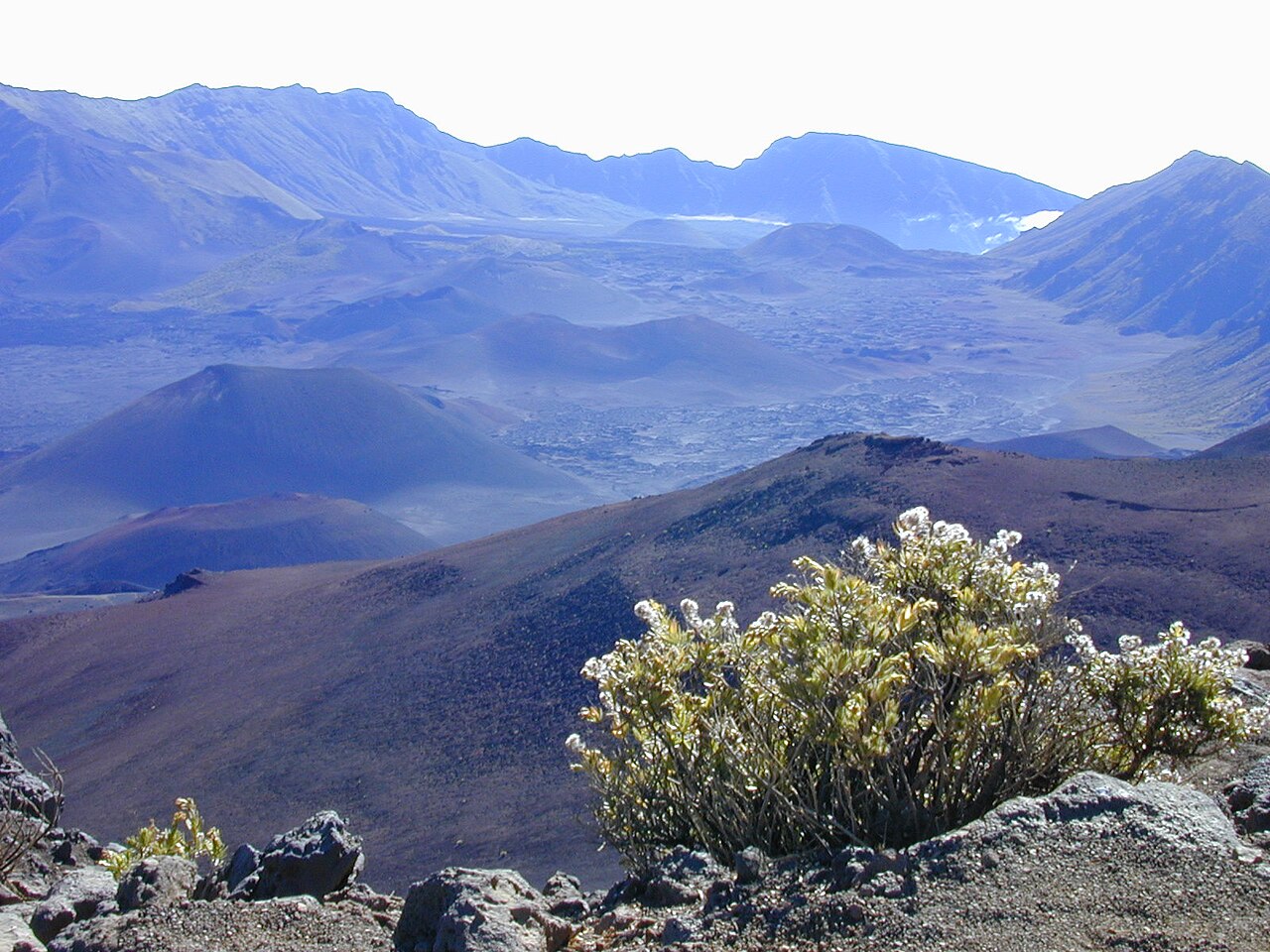
Kūpaoa is one of the most conspicuous plants of Haleakalā’s summit area. It grows in subalpine and alpine shrubland and on cinder and lava, roughly from 6,500 feet to near the 10,000-foot summit, and is easy to see from the park road, the crater rim and the Sliding Sands Trail. It belongs to the Hawaiian silversword alliance and is a close relative of the Haleakalā silversword, with which it occasionally forms natural hybrids.
It is endemic to Maui, not federally listed, and the Smithsonian rates it apparently secure, though its range is limited to one mountain. Outside its cold, sunny, high-elevation home it is very difficult to grow and is almost never sold. Never collect plants, cuttings or seeds in Haleakalā National Park or anywhere in the wild; the best way to enjoy kūpaoa is to see it on the mountain.
Identification
Kūpaoa is easy to recognize on Haleakalā: a compact, bright green to yellow-green shrub with stubby, upturned branches packed with thick leaves, often growing alone on bare cinder.
Growth Habit
A rounded, stiffly branched evergreen shrub, usually 1 to 4 feet tall and occasionally taller, with thick, upright branches. Lower stems are bare and marked by old leaf scars, with leaves crowded at the branch tips.
Leaves
Leaves are opposite and densely crowded in overlapping ranks, thick, fleshy and lance-shaped, about 1 to 2 inches long, green to yellow-green and covered with short hairs. The succulent, hairy leaves help it cope with intense sun, drying wind and freezing nights.
Flowers
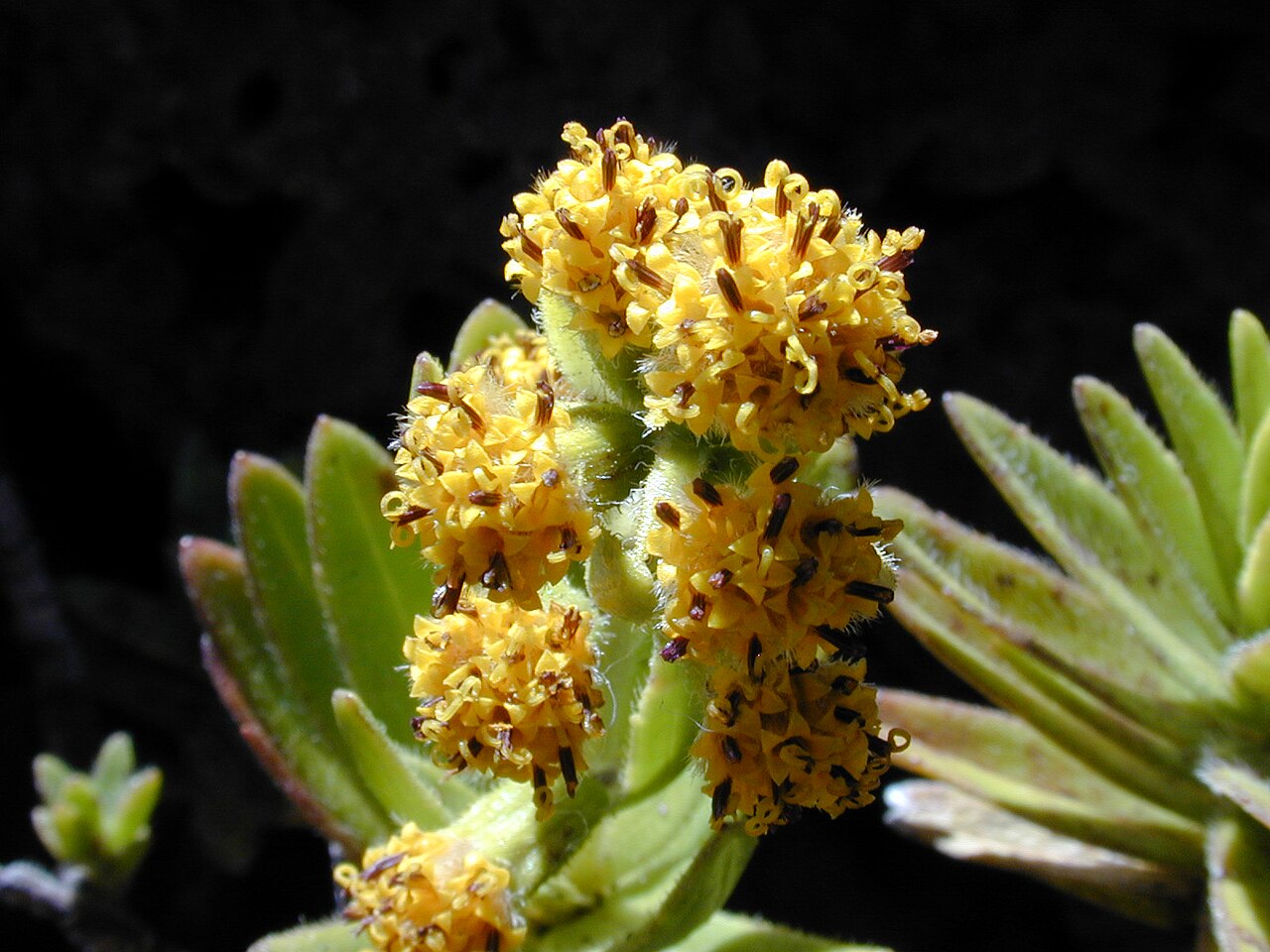
Flower heads are small, rayless and made of tubular disc florets, golden yellow to orange-yellow, packed into dense, rounded clusters at the branch tips. They are strongly and sweetly fragrant. Plants flower mainly from late summer into fall, when the summit shrubland turns gold.
Fruit & Look-alikes
The fruits are small achenes with a fluffy, whitish pappus that carries them on the wind. Other upland shrubs such as pūkiawe have tiny, needle-like leaves and red, pink or white berries. The Haleakalā silversword is a silver rosette, but rare hybrids between it and kūpaoa have intermediate leaves. Plantainleaf dubautia of the wet forests has much larger, thinner leaves.
Quick Facts
| Scientific Name | Dubautia menziesii (A. Gray) D.D. Keck |
| Family | Asteraceae (aster family) |
| Plant Type | Evergreen shrub; Hawaiian endemic (East Maui) |
| Mature Height | 1–4 ft, occasionally taller |
| Mature Spread | 2–4 ft |
| Growth Rate | Slow |
| Sun Exposure | Full sun |
| Water Needs | Low; sharply drained soil |
| Soil Type | Cinder, lava and rocky volcanic soils |
| Soil pH | Slightly acidic to neutral |
| Bloom Time | Mainly late summer to fall |
| Flower Color | Golden yellow to orange-yellow |
| Fall Color | None; evergreen |
| Fruit | Small achene with a fluffy pappus |
| Deer Resistant | No; damaged by goats where they occur |
| USDA Hardiness Zones | Not reliably rated; native to cold, frosty alpine sites in Hawaiʻi |
Native Range
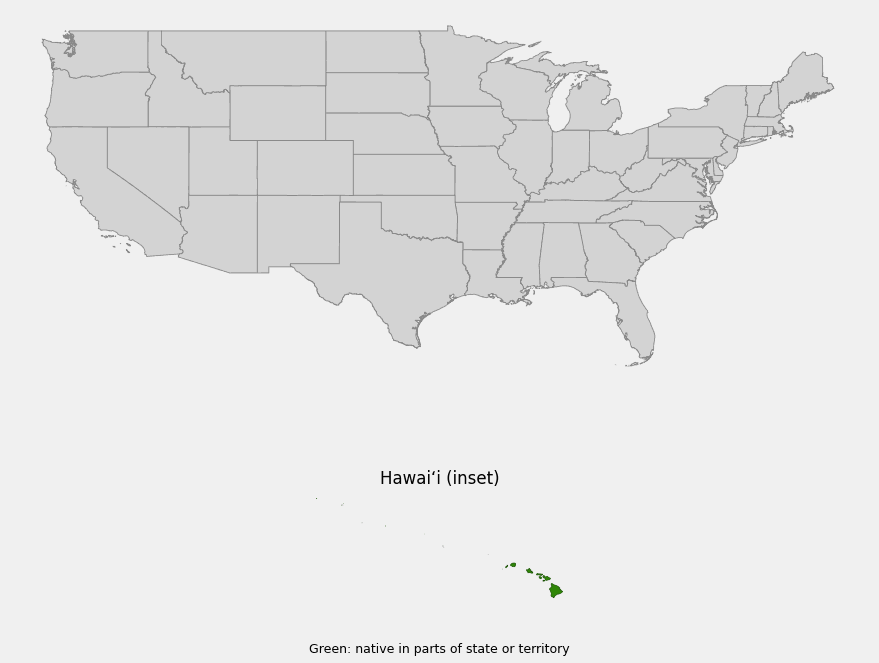
Kūpaoa is endemic to the island of Maui. USDA PLANTS lists it as native only in Hawaiʻi, and the Smithsonian’s Flora of the Hawaiian Islands records it only from East Maui, where it grows on the upper slopes and in the crater of Haleakalā.
It is a characteristic plant of the subalpine and alpine shrublands, growing on cinder, ash and lava from roughly 6,500 feet to near the summit at about 10,000 feet. Here nights are often near or below freezing, days are bright and dry, and soils are thin and porous. It grows with pūkiawe, ʻōhelo, māmane, hinahina and the famous ʻāhinahina, or silversword.
The Smithsonian rates kūpaoa apparently secure and it has no federal status, and much of its range is protected within Haleakalā National Park. Fencing and the removal of feral goats have helped the summit vegetation, though invasive plants, fire and a changing climate remain concerns for all of Haleakalā’s high-elevation species.
📋 Regional plant lists featuring Kūpaoa: Hawaii
Growing & Care Guide
Honestly, kūpaoa is very hard to grow away from Haleakalā. It is adapted to cold nights, intense high-altitude sun, dry air and porous cinder, and it usually fails in warm, humid lowland gardens. It is almost never offered for sale and is grown mainly in restoration projects and research collections at high elevation. If you garden at high elevation on Maui or Hawaiʻi Island and can find nursery-propagated plants from a Hawaiʻi native plant nursery or restoration program, the tips below apply. Never collect plants, cuttings or seeds in Haleakalā National Park or anywhere in the wild. Hawaiʻi also restricts bringing plants in from other states.
Light
Full, all-day sun. It does not tolerate shade.
Soil & Water
Pure or nearly pure cinder or a very gritty, fast-draining volcanic mix. Water sparingly once established; wet roots in warm weather quickly lead to rot. In its native habitat it gets most of its moisture from passing clouds and occasional rain.
Planting Tips
Only plant it at high elevations, roughly above 5,000 feet, in an open, windy, sunny site. Space plants apart as they grow in the wild, and avoid irrigation systems that keep the soil moist.
Pruning & Maintenance
No pruning is needed. Keep invasive grasses and weeds away, and protect young plants from browsing animals.
Propagation
Restoration programs grow it from seed collected under permit and from cuttings. Germination and early growth are slow. Home gardeners should propagate only from their own nursery-bought plants.
Landscape Uses
- High-elevation restoration: a key shrub of subalpine and alpine cinder slopes
- Upland native gardens: only in cold, sunny, high-elevation sites with cinder soil
- Nature viewing: one of the signature plants of Haleakalā National Park
- Education: a living link in the evolutionary story of the silversword alliance
Wildlife & Ecological Value
Kūpaoa is one of the most important flowering shrubs in Haleakalā’s sparse summit landscape.
For Pollinators
The fragrant, nectar-rich flower heads attract native insects, including native yellow-faced bees (Hylaeus), moths and flies, at elevations where few other plants are flowering.
For Birds
Shrubs on the summit slopes give shelter to ground-nesting birds such as the nēnē, and insects on the flowers and foliage feed native birds that forage at high elevation.
For Mammals
Hawaiʻi’s only native land mammal, the Hawaiian hoary bat, hunts insects over the mountain. Feral goats once damaged summit vegetation; their removal from the park has helped plants like kūpaoa.
Ecosystem Role
As one of the few shrubs that can establish on bare cinder, kūpaoa helps stabilize slopes, traps windblown soil and organic matter, and provides shelter for seedlings of other alpine plants.
Cultural & Historical Uses
The name kūpaoa refers to its strong fragrance, and naʻenaʻe is the general Hawaiian name for Dubautia. Hawaiians valued fragrant plants, and the name shows that this plant’s scent was well known.
The species was first described by Asa Gray as Railliardia menziesii, honoring Archibald Menzies, the Scottish naturalist who climbed Hawaiʻi’s volcanoes with Captain George Vancouver’s expedition in the 1790s. The botanist David D. Keck later moved it to Dubautia.
Kūpaoa is famous among evolutionary biologists because it hybridizes in the wild with the Haleakalā silversword, despite the two looking completely different. These hybrids show how closely related the members of the silversword alliance remain, after evolving from a single tarweed ancestor that arrived in Hawaiʻi from western North America.
Frequently Asked Questions
Where can I see kūpaoa?
On the upper slopes and in the crater of Haleakalā, Maui. It is common along the summit road, the crater rim overlooks and the Sliding Sands Trail in Haleakalā National Park.
Is kūpaoa endangered?
No. Dubautia menziesii is not federally listed and is considered apparently secure, but it grows wild only on Haleakalā.
Why is it called kūpaoa?
The name refers to its strong, sweet fragrance, noticeable when the shrubs are in flower.
Can I grow it in my garden?
Only at high elevations with full sun and cinder soil. It usually fails in warm, humid lowland gardens and is almost never sold.
Is it related to the silversword?
Yes. Both belong to the Hawaiian silversword alliance, and kūpaoa occasionally forms natural hybrids with the Haleakalā silversword.

Looking for a nursery that carries Kūpaoa?
Browse our native plant nursery directory: Hawaii

