
Naʻenaʻe (Dubautia plantaginea)
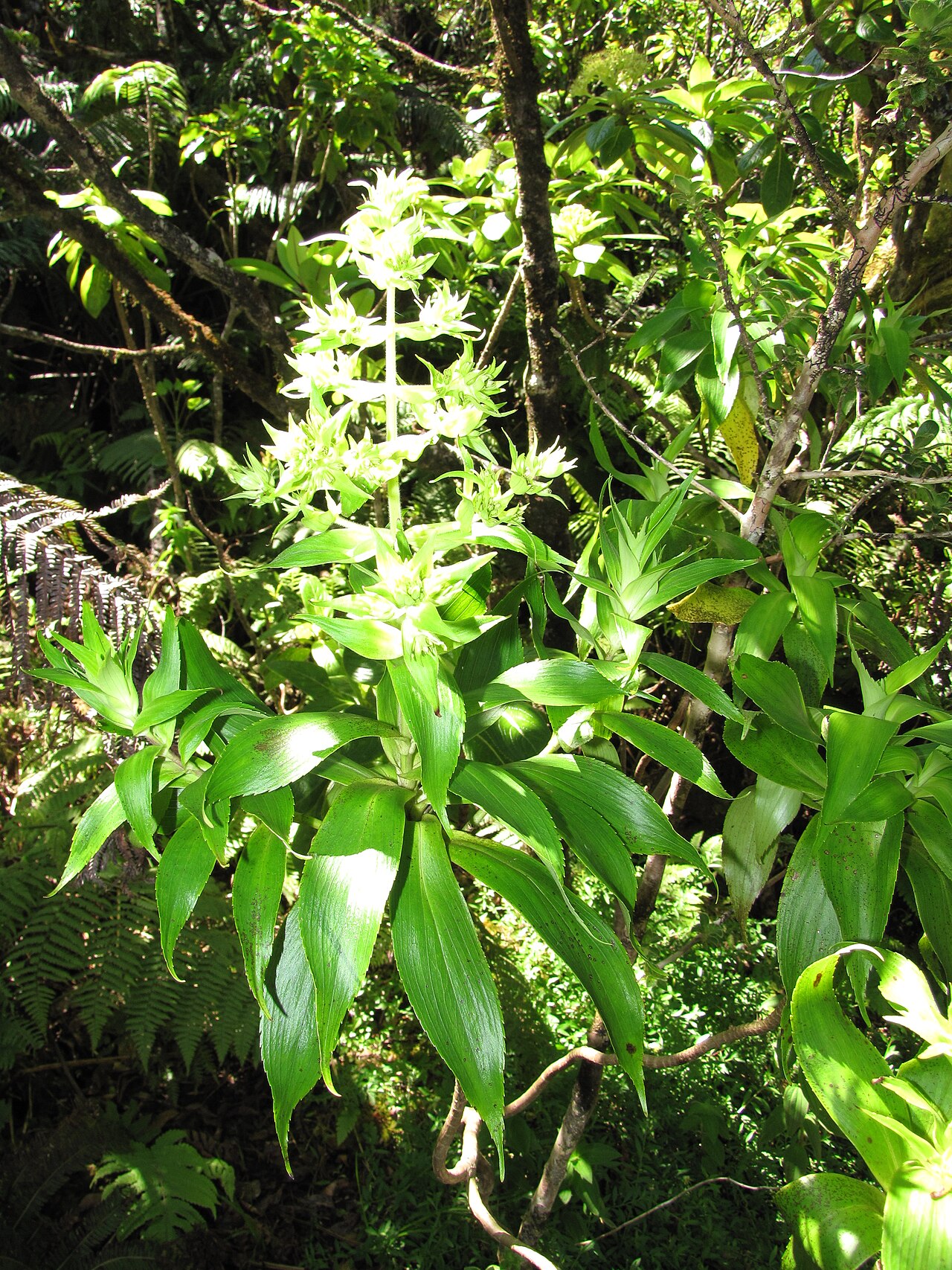
Dubautia plantaginea, known in Hawaiian as naʻenaʻe (a name shared by the other Dubautia) and sometimes kūpaoa, and in English as plantainleaf dubautia, is a shrub or small tree of the aster family (Asteraceae) found only in the Hawaiian Islands. It has long, glossy, lance-shaped leaves with nearly parallel veins, like a plantain leaf, crowded at the branch tips, and large, branched clusters of small, creamy flower heads.
It belongs to the Hawaiian silversword alliance, the famous group that includes the Haleakalā silversword and is descended from tarweeds that reached Hawaiʻi from California. It is the only member of that group found on all six of the largest islands, Kauaʻi, Oʻahu, Molokaʻi, Lānaʻi, Maui and Hawaiʻi Island, where it grows in mesic and wet forests, gulches and stream banks.
The widespread typical subspecies is not listed, but two of its three subspecies are federally listed as endangered: subsp. humilis on West Maui (listed 1999) and subsp. magnifolia on Kauaʻi (listed 2010). It is rarely cultivated. Never collect plants, cuttings or seeds from the wild; grow it only from nursery-propagated stock from a Hawaiʻi native plant nursery or conservation program.
Identification
Naʻenaʻe looks like a leafy, upright shrub with tufts of long, shiny leaves at the ends of the branches. In flower, it carries big, airy clusters of small, pale heads that look nothing like the daisies most people expect in the aster family.
Growth Habit
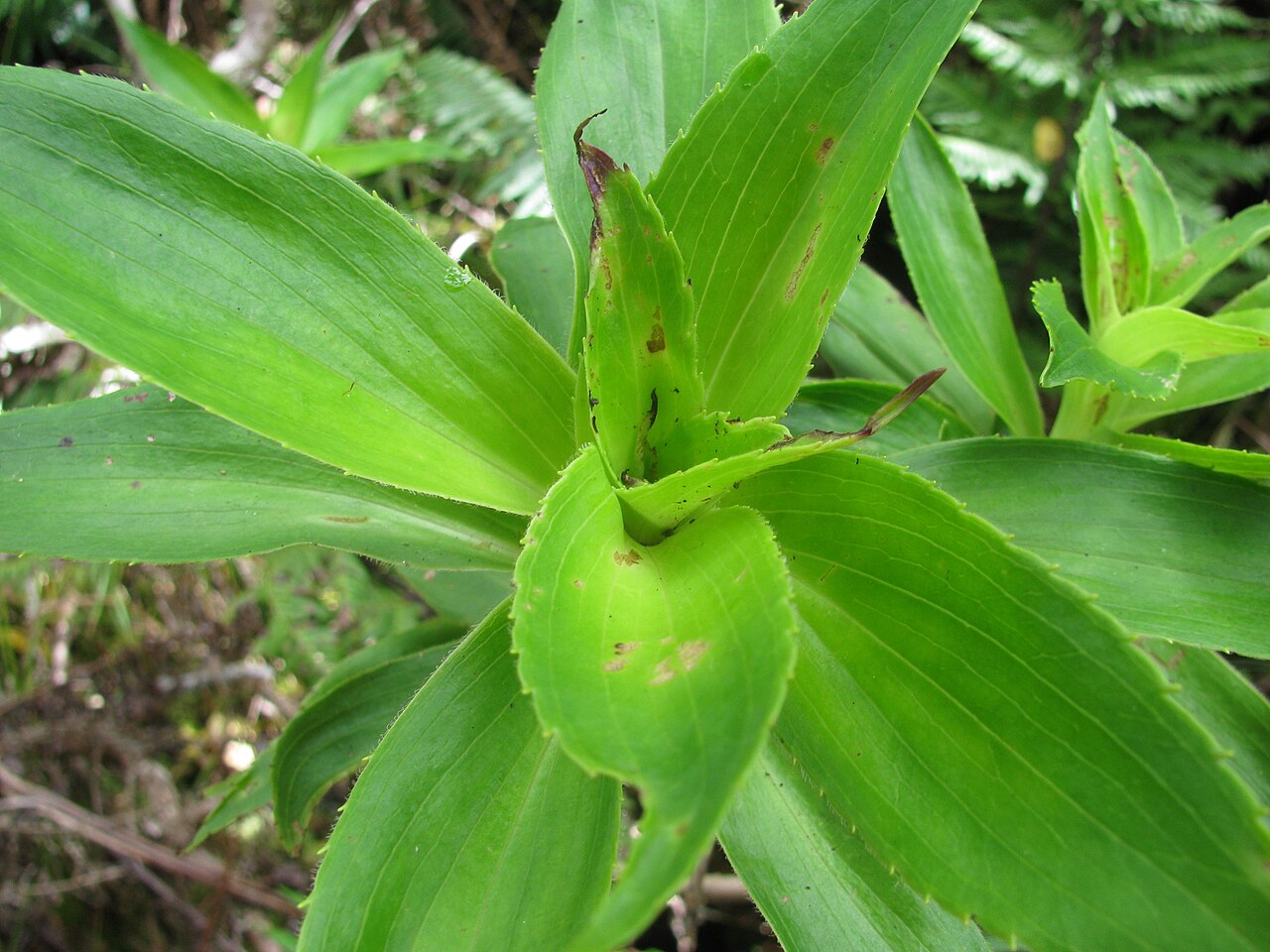
Highly variable: from a sprawling shrub about 3 feet tall to an upright shrub or tree up to about 23 feet (7 m). The rare West Maui subspecies humilis is a dwarf shrub. Branches are stout and marked with leaf scars, and the leaves are clustered toward the tips.
Leaves
Leaves are opposite or in whorls, long and lance-shaped, several inches long, glossy green, with several nearly parallel main veins and finely toothed to nearly smooth edges. The leaf bases sheathe or clasp the stem. The parallel veins, unusual in the aster family, are the source of the name plantaginea, “plantain-like.”
Flowers
Flower heads are small and rayless, made up only of tubular disc florets, and are creamy white to pale yellow. They are borne in large, branched, pyramid-shaped clusters at the branch tips. Flowering in the wild has been photographed mainly from late summer into fall.
Fruit & Look-alikes
The fruits are small, dry achenes topped with a pappus of bristles or scales, spread by wind. Other Dubautia species, such as kūpaoa (D. menziesii) of Haleakalā’s alpine zone, have much smaller, thicker leaves. Plantainleaf dubautia’s long, parallel-veined leaves and wet forest habitat set it apart.
Quick Facts
| Scientific Name | Dubautia plantaginea Gaudich. |
| Family | Asteraceae (aster family) |
| Plant Type | Evergreen shrub or small tree; Hawaiian endemic |
| Mature Height | 3–23 ft |
| Mature Spread | 3–10 ft |
| Growth Rate | Moderate |
| Sun Exposure | Partial shade to full sun |
| Water Needs | High; constantly moist soil |
| Soil Type | Moist, well-drained, organic volcanic soils |
| Soil pH | Acidic |
| Bloom Time | Mainly late summer to fall; variable |
| Flower Color | Creamy white to pale yellow |
| Fall Color | None; evergreen |
| Fruit | Small achene with a bristly pappus |
| Deer Resistant | No; browsed by goats, deer and pigs |
| USDA Hardiness Zones | 10–12 (cool, wet upland sites in Hawaiʻi) |
Native Range
Plantainleaf dubautia is endemic to the Hawaiian Islands. USDA PLANTS lists it as native only in Hawaiʻi. The Smithsonian’s Flora of the Hawaiian Islands recognizes three subspecies: subsp. plantaginea on Oʻahu, Molokaʻi, Lānaʻi, Maui and Hawaiʻi Island; subsp. magnifolia on Kauaʻi; and subsp. humilis only in Black Gorge, West Maui.
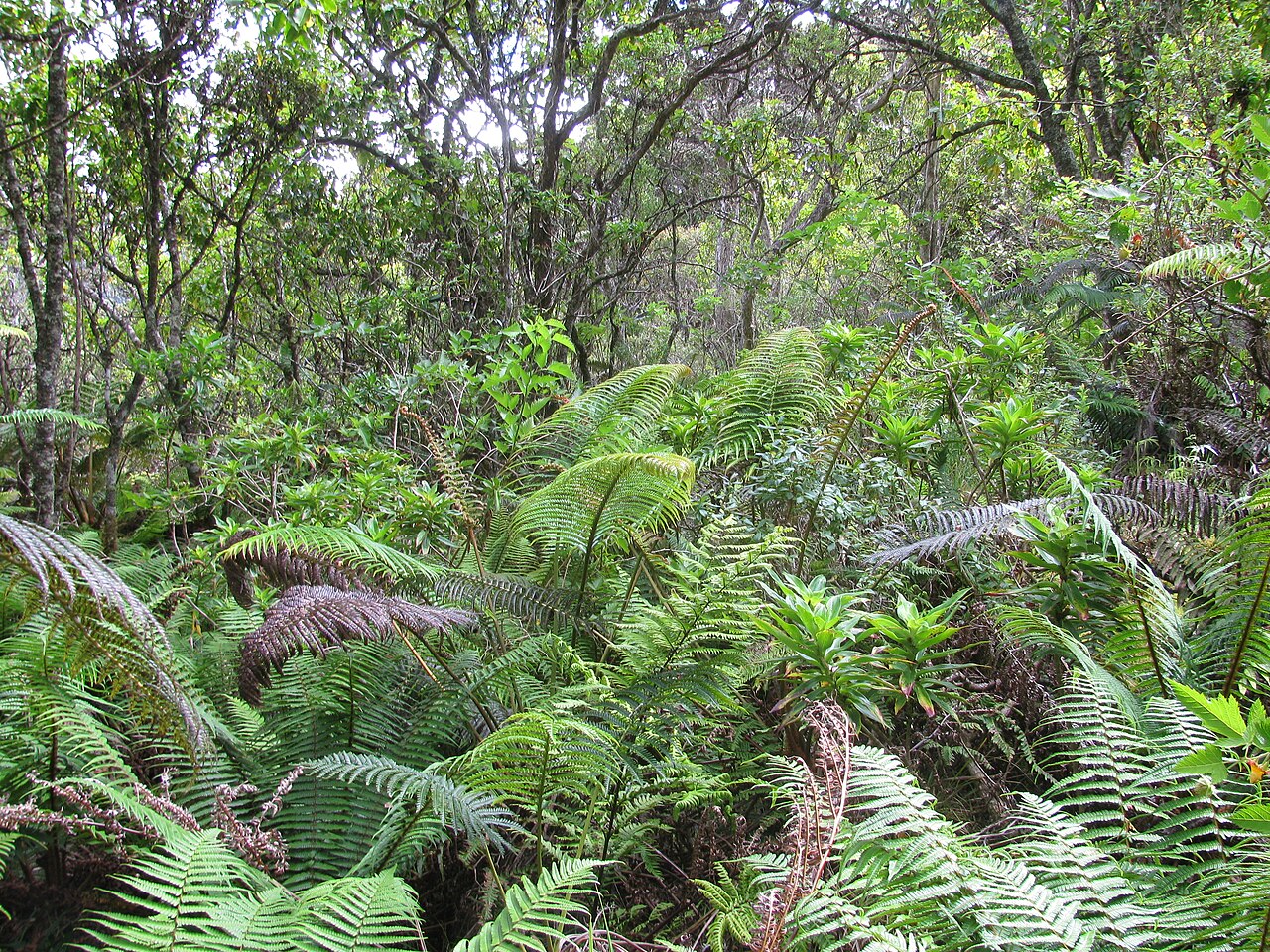
It grows in mesic and wet forest, in gulches, on stream banks and on wet slopes and cliffs, in places that receive roughly 30 to more than 275 inches of rain a year. On Maui it is common in some areas, such as the forests of Koʻolau Gap and Hanaʻula, where it grows among ʻōhiʻa, tree ferns and native shrubs.
Its rare subspecies face landslides, rockslides, erosion, flooding and invasive plants such as Hilo grass. Subsp. humilis is known from a single population of about 50 plants, and subsp. magnifolia was badly damaged by Hurricane ʻIniki in 1992 and survives in no more than two populations. Both are protected under the Endangered Species Act.
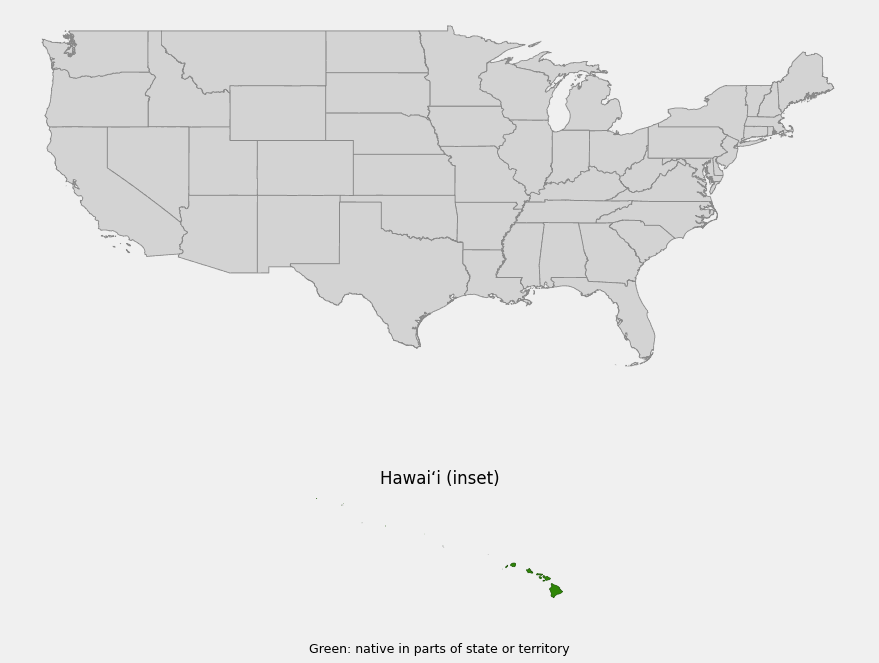
📋 Regional plant lists featuring Naʻenaʻe: Hawaii
Growing & Care Guide
Naʻenaʻe is rarely grown outside conservation nurseries and botanical gardens. It is a plant of cool, wet upland forest and needs steady moisture and humidity, so it is best suited to rainy, upland gardens in Hawaiʻi, roughly USDA zones 10–12, and it does poorly in hot, dry lowlands. The endangered subspecies are protected by federal and state law; never collect plants, cuttings or seeds from the wild. If you can find it, buy only nursery-propagated plants of the common subspecies from a Hawaiʻi native plant nursery. Hawaiʻi restricts bringing plants in from other states.
Light
Partial shade to full sun in cool, cloudy upland areas. In warmer sites give it afternoon shade.
Soil & Water
Rich, organic, well-drained soil kept constantly moist. It does not tolerate drought. Mulch to keep the roots cool and moist.
Planting Tips
Plant it in a sheltered, humid spot such as a gulch-side garden, near a stream or among tree ferns. Give a tree-forming plant room to reach 10 feet or more.
Pruning & Maintenance
Little pruning is needed; remove spent flower stalks if you want a tidier plant. Keep invasive grasses and weeds away from the base, and protect young plants from slugs and browsing animals.
Propagation
Conservation programs grow it from seed and cuttings. The small, wind-dispersed seeds are best sown fresh. Home gardeners should propagate only from their own nursery-bought plants.
Landscape Uses
- Wet-forest restoration: an understory shrub or small tree for upland restoration sites
- Upland native gardens: a bold, glossy-leaved native for rainy districts
- Conservation collections: the rare subspecies are maintained in conservation nurseries
- Education: a forest member of the famous silversword alliance
Wildlife & Ecological Value
Naʻenaʻe is a common shrub of the wet forest understory on several islands and part of one of the most celebrated plant radiations on Earth.
For Pollinators
The many small flower heads attract insects, including native bees, flies and moths, which visit for nectar and pollen.
For Birds
Native forest birds forage for insects among the dense leaf tufts and flower clusters.
For Mammals
Hawaiʻi’s only native land mammal, the Hawaiian hoary bat, forages over these forests. Feral pigs, goats and deer damage the plants and their habitat.
Ecosystem Role
Naʻenaʻe hosts native insects; on Maui, the native fruit fly Trupanea waikamoi has been reared from galls in its stems. As an understory shrub it helps stabilize steep, wet slopes and stream banks.
Cultural & Historical Uses
Naʻenaʻe is the Hawaiian name for the native Dubautia, and the related word kūpaoa, “strongly fragrant,” is applied to some species whose flowers are scented. The species was described by Charles Gaudichaud-Beaupré, who visited Hawaiʻi in 1819 aboard the French ship Uranie.
The Hawaiian silversword alliance, about 30 species in the genera Argyroxiphium, Dubautia and Wilkesia, descends from a single ancestor related to California tarweeds that arrived in Hawaiʻi several million years ago. From that ancestor came the spiky alpine silverswords, cushion plants, vines, shrubs and wet-forest trees like this one.
Plantainleaf dubautia is a key species in studies of that radiation because it is the most widespread member, found on all the major islands. Its rare subspecies are part of federal and state recovery work, including fencing, weed control and propagation for outplanting.
Frequently Asked Questions
Is plantainleaf dubautia endangered?
The species as a whole is not listed, but two subspecies are federally endangered: subsp. humilis on West Maui and subsp. magnifolia on Kauaʻi.
Where does it grow?
Only in Hawaiʻi, on Kauaʻi, Oʻahu, Molokaʻi, Lānaʻi, Maui and Hawaiʻi Island, in mesic and wet forests, gulches and stream banks.
Is it related to the silversword?
Yes. Dubautia, the silverswords and the greenswords together form the Hawaiian silversword alliance, descended from California tarweeds.
Can I grow it?
Only in cool, wet, upland conditions, and it is rarely available. Buy only nursery-propagated plants of the common subspecies, and never collect from the wild.
Why is it called plantainleaf?
Its long leaves have several nearly parallel veins, like the leaves of plantain (Plantago).

Looking for a nursery that carries Naʻenaʻe?
Browse our native plant nursery directory: Hawaii

