
Naʻenaʻe (Dubautia waialealae)
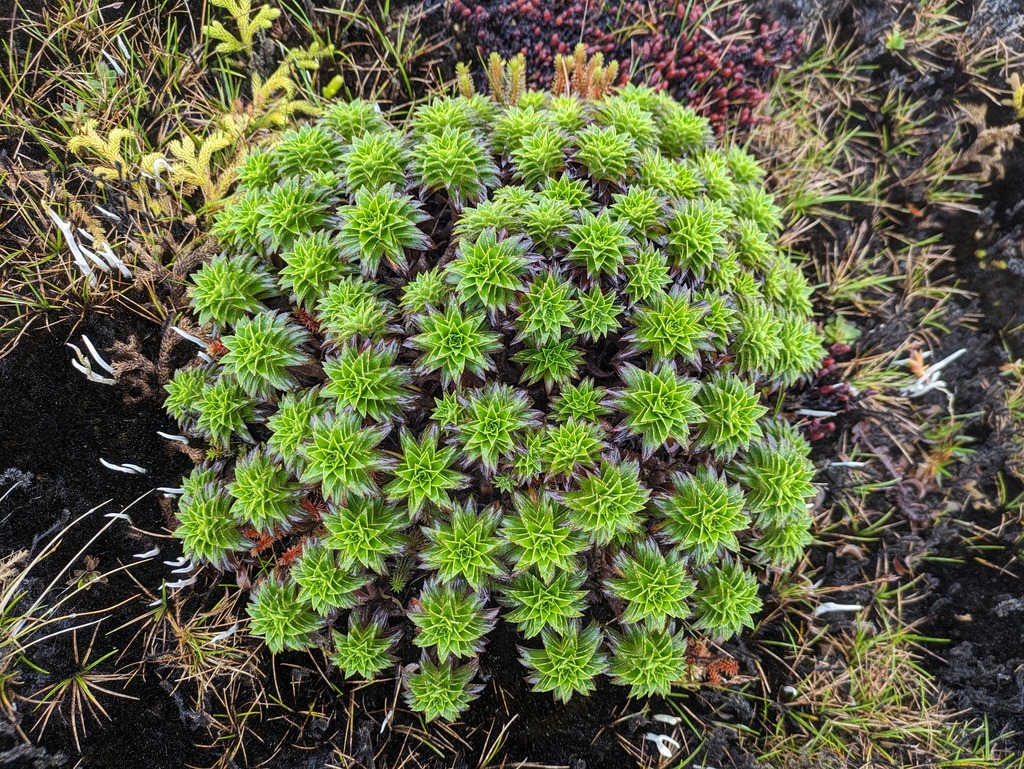
Dubautia waialealae, known in Hawaiian as naʻenaʻe and in English as Waiʻaleʻale dubautia, is a small, cushion-forming shrub of the sunflower family (Asteraceae) and a member of the Hawaiian silversword alliance. It forms dense, rounded clumps about 4 to 20 inches tall, made of tightly packed whorls of narrow leaves, and bears small yellow flower heads from about August to November.
It is endemic to Kauaʻi and grows only in the bogs and boggy wet forest on and just below the summit of Mount Waiʻaleʻale, one of the rainiest places on Earth. It was federally listed as Endangered under the Endangered Species Act in 2010. Its entire population is confined to a small area, where feral pigs and goats, and invasive plants such as broomsedge and the rush Juncus planifolius, threaten the fragile bog.
Be clear about one thing: this is a specialized bog plant that is very hard to grow anywhere outside its habitat, and it is not available to gardeners. It is grown only by conservation programs for safeguarding and research. Never collect plants or seed from the wild. This guide covers how to identify it, the extraordinary place it lives, and what is being done to protect it.
Identification
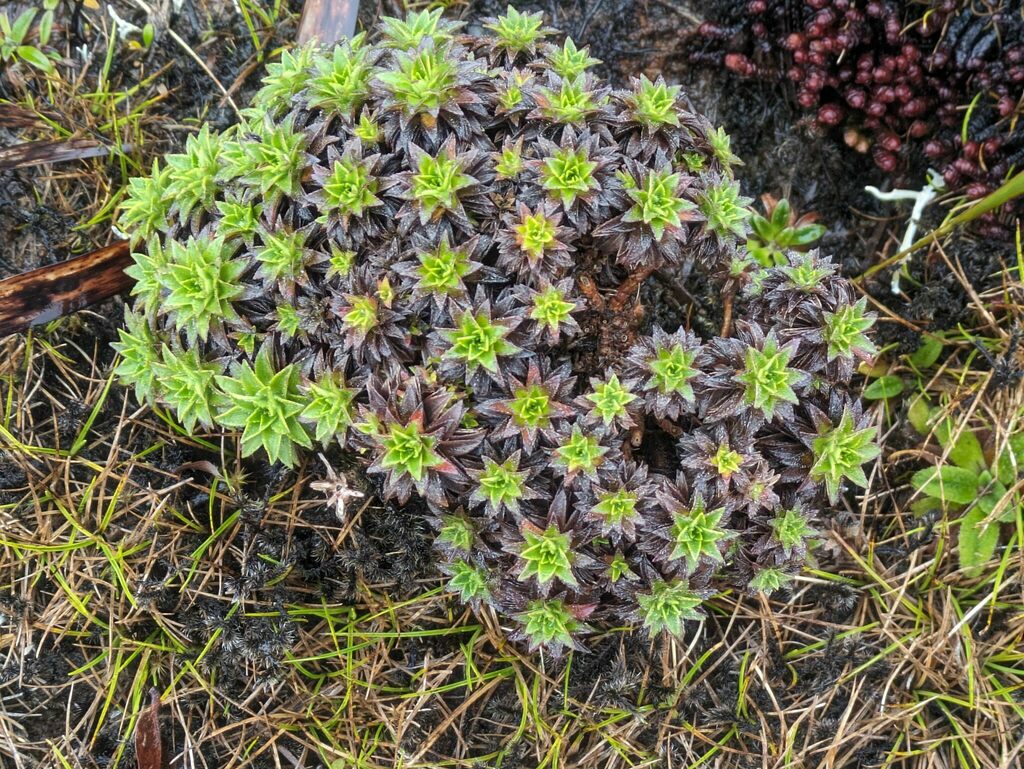
In the summit bogs of Kauaʻi, naʻenaʻe looks like a neat green or purplish cushion or mound among the sedges and mosses. Up close, each branch tip is a star-shaped whorl of narrow leaves.
Growth Habit
A dense, rounded, cushion-like subshrub about 4 to 20 inches tall and up to a foot or more across. Many short branches grow so close together that the plant forms a tight mound, a shape that helps it cope with constant wind, rain and cloud.
Leaves
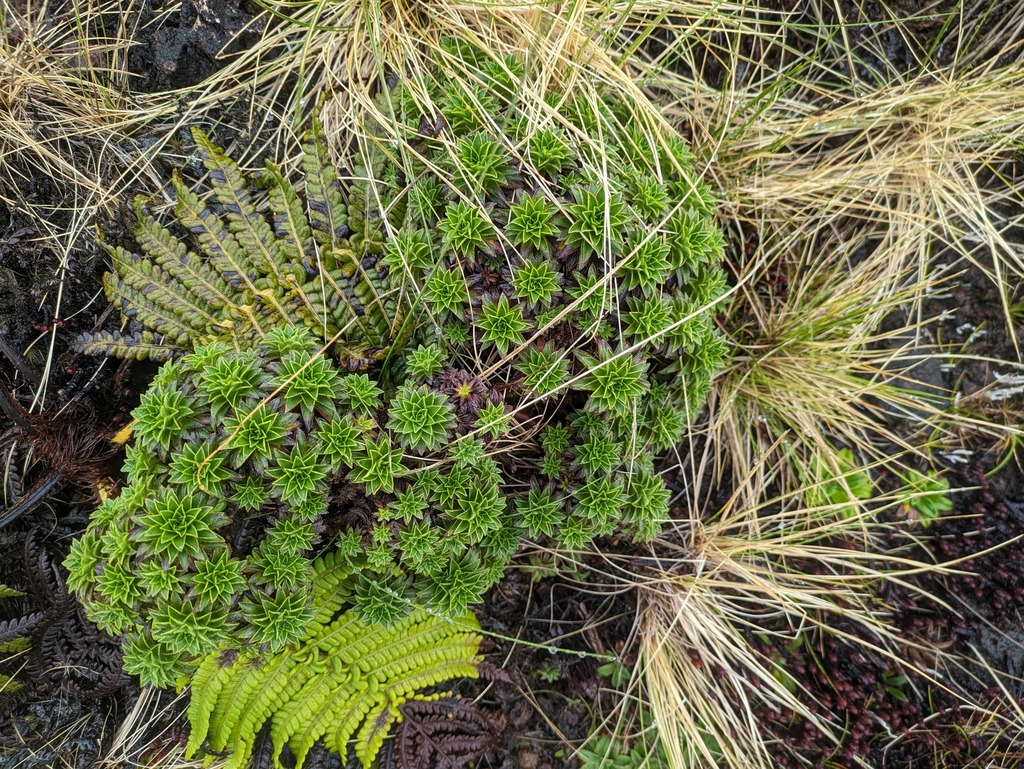
Leaves are narrow and pointed, about ½ to 1½ inches long, and packed in tight whorls at the branch tips, forming star-like rosettes. They are bright green to dark green, often tinged purple or reddish, and somewhat leathery.
Flowers
Small, rayless, yellow flower heads are held on short stalks above the cushion, mainly from August through November. Like other Dubautia, each head contains a cluster of tiny tubular disk florets.
Fruit & Look-alikes
The fruits are small, dry achenes with a short tuft of bristles. In Kauaʻi’s summit bogs, other cushion and rosette plants grow side by side, including bog forms of ʻōhiʻa lehua only inches tall, sedges, and the sticky rosettes of great sundew. Naʻenaʻe is recognized by its whorled, narrow leaves and yellow flower heads.
Quick Facts
| Scientific Name | Dubautia waialealae Rock |
| Family | Asteraceae (sunflower family); Hawaiian silversword alliance |
| Plant Type | Cushion-forming subshrub; Kauaʻi endemic; federally endangered |
| Mature Height | 4–20 in |
| Mature Spread | 6–18 in |
| Growth Rate | Slow |
| Sun Exposure | Full sun to bright cloud cover |
| Water Needs | Very high; constantly wet bog |
| Soil Type | Waterlogged, acidic, nutrient-poor organic bog soil |
| Soil pH | Strongly acidic |
| Bloom Time | August–November |
| Flower Color | Yellow |
| Fall Color | None; leaves often tinged purple |
| Fruit | Small achene with a short bristly tuft |
| Deer Resistant | No; feral pigs and goats damage its habitat |
| USDA Hardiness Zones | Not practical to rate; restricted to Kauaʻi summit bogs |
Native Range
Naʻenaʻe is endemic to Kauaʻi, and USDA PLANTS lists it as native only in Hawaiʻi. It is known only from the summit region of Mount Waiʻaleʻale, at roughly 5,000 feet, and a short way down its slopes. A single plant was once found several miles away, but it has since died.
Its habitat is montane bog and boggy wet forest near the summit, where the long-term average rainfall is well over 400 inches a year and the ground is almost always saturated and cloud-covered. These open bogs are carpeted with sedges, grasses, mosses and dwarf shrubs, including tiny forms of ʻōhiʻa, on deep, acidic, waterlogged peat.
The main threats are feral pigs, whose rooting tears up the bog surface, feral goats, and invasive plants that spread into disturbed patches, including broomsedge (Andropogon virginicus) and the rush Juncus planifolius. Because the whole species lives in one small area, a single disturbance such as a landslide, hurricane or new invasive species could affect most of its population.
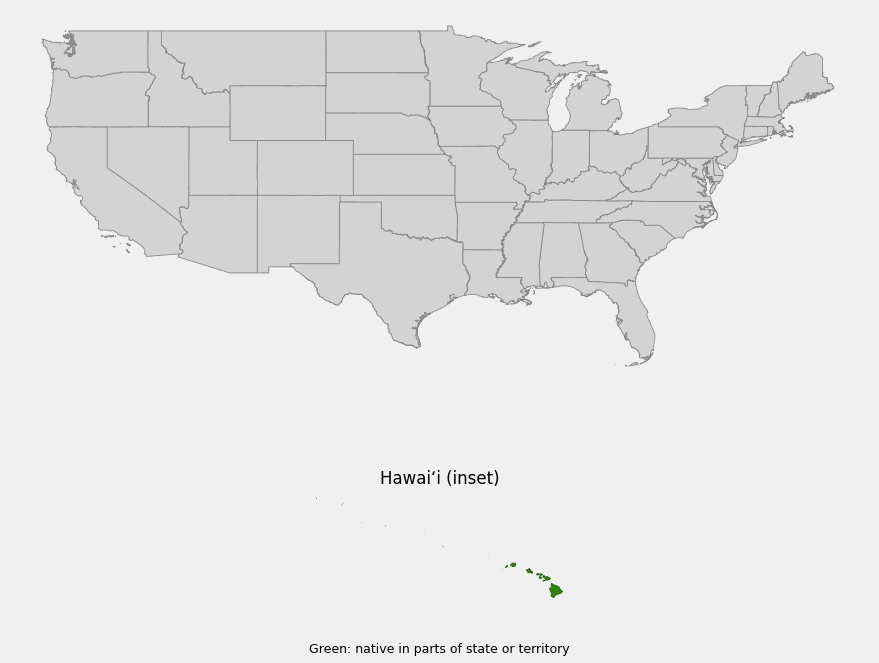
📋 Regional plant lists featuring Naʻenaʻe: Hawaii
Growing & Care Guide
Honestly, naʻenaʻe is very hard to grow outside its habitat. Like many Hawaiian bog plants, it depends on a combination of conditions that a garden cannot easily copy: constant rain and cloud, cool temperatures, saturated acidic peat and steady wind. It is not sold by nurseries, and as a federally endangered species it may only be collected and propagated under permit. Conservation programs on Kauaʻi and partner botanical gardens hold it for safeguarding and research. Never collect plants, cuttings or seed from the wild. If you want to support it, support Kauaʻi watershed and bog protection, or grow other, easier native plants of wet forest at home. The notes below describe its needs for interest and for conservation growers.
Light
Bright light under almost constant cloud. In the wild it is exposed and unshaded, but it rarely sees strong, hot sun.
Soil & Water
Waterlogged, strongly acidic, nutrient-poor peat that never dries, with frequent rain or mist. Fertilizer, hard water and warm, stagnant conditions all harm bog plants like this.
Planting Tips
Not suitable for home gardens. Conservation growers keep bog plants in cool, humid, well-ventilated shadehouses at higher elevations, in peat-based media kept constantly moist. Outplanting is done only inside protected, fenced bog habitat by permitted programs.
Pruning & Maintenance
No pruning is needed. In the wild, maintenance means keeping pigs and goats out with fences and removing invasive plants such as broomsedge and Juncus planifolius before they spread.
Propagation
Conservation programs collect small amounts of seed under permit and store it in seed banks, and some Dubautia can be raised from cuttings or tissue culture. Growing it to maturity away from the summit bogs is challenging, which is why protecting the wild habitat remains essential.
Landscape Uses
- Conservation safeguarding: seed banking and living collections held by permitted programs
- Habitat restoration: recovery of Waiʻaleʻale bogs after fencing and weed control
- Education: a striking example of silversword-alliance adaptation to bogs
- Watershed protection: part of the summit bogs that feed Kauaʻi’s rivers
Wildlife & Ecological Value
Naʻenaʻe is part of one of the most unusual plant communities in the world, the summit bogs of Kauaʻi, which also store and release water for much of the island.
For Pollinators
Its small yellow heads are visited by native insects such as flies, moths and native bees that live in the bog. Little has been published about which insects pollinate it.
For Birds
Kauaʻi’s native forest birds, including several endangered honeycreepers, forage in the wet forest around the summit bogs, where native shrubs support the insects they eat.
For Mammals
Hawaiʻi’s only native land mammal is the Hawaiian hoary bat (ʻōpeʻapeʻa). Introduced pigs and goats are the main animal threat to naʻenaʻe, damaging the bog surface and the plants.
Ecosystem Role
The cushion form helps hold the thin bog surface together. With its neighbors, it forms the low, spongy vegetation that soaks up the summit’s rainfall and releases it slowly to Kauaʻi’s streams.
Cultural & Historical Uses
The species name honors Mount Waiʻaleʻale, whose name is often translated as “rippling water” or “overflowing water,” a fitting name for one of the wettest places on Earth. The botanist Joseph F. Rock, who explored Hawaiian forests in the early 20th century, described the species.
Naʻenaʻe is the general Hawaiian name for Dubautia. Within the silversword alliance, Dubautia has evolved into an extraordinary range of forms, from trees on Mauna Kea to vines and cushion plants like this one, all from a single ancestor that came from western North America. Dubautia waialealae is an example of how plants in this group adapted to the constant wet of Kauaʻi’s summit.
The Waiʻaleʻale summit area has deep significance in Hawaiian tradition. Today the bogs are largely inaccessible and protected for their watershed and biological value. The U.S. Fish and Wildlife Service listed Dubautia waialealae as Endangered in 2010 as part of a rule covering dozens of Kauaʻi species.
Frequently Asked Questions
Is na’ena’e (Dubautia waialealae) endangered?
Yes. It was federally listed as Endangered in 2010. It is found only near the summit of Mount Waiʻaleʻale on Kauaʻi.
Where does it grow?
Only in the summit bogs and boggy wet forest of Mount Waiʻaleʻale, Kauaʻi, at about 5,000 feet, one of the rainiest places on Earth.
Can I grow it?
Not realistically. It is a specialized bog plant that needs constant rain, cool temperatures and wet, acidic peat, and it is not sold by nurseries. It is grown only by permitted conservation programs.
How is it related to the silversword?
It belongs to the Hawaiian silversword alliance, along with the ʻāhinahina (silversword) and other naʻenaʻe, all descended from a single tarweed ancestor from western North America.
What threatens it?
Feral pigs and goats that damage the bog, invasive plants such as broomsedge and Juncus planifolius, and the risk that a single event could affect its one small range.

Looking for a nursery that carries Naʻenaʻe?
Browse our native plant nursery directory: Hawaii

