
Koʻokoʻolau (Bidens torta)
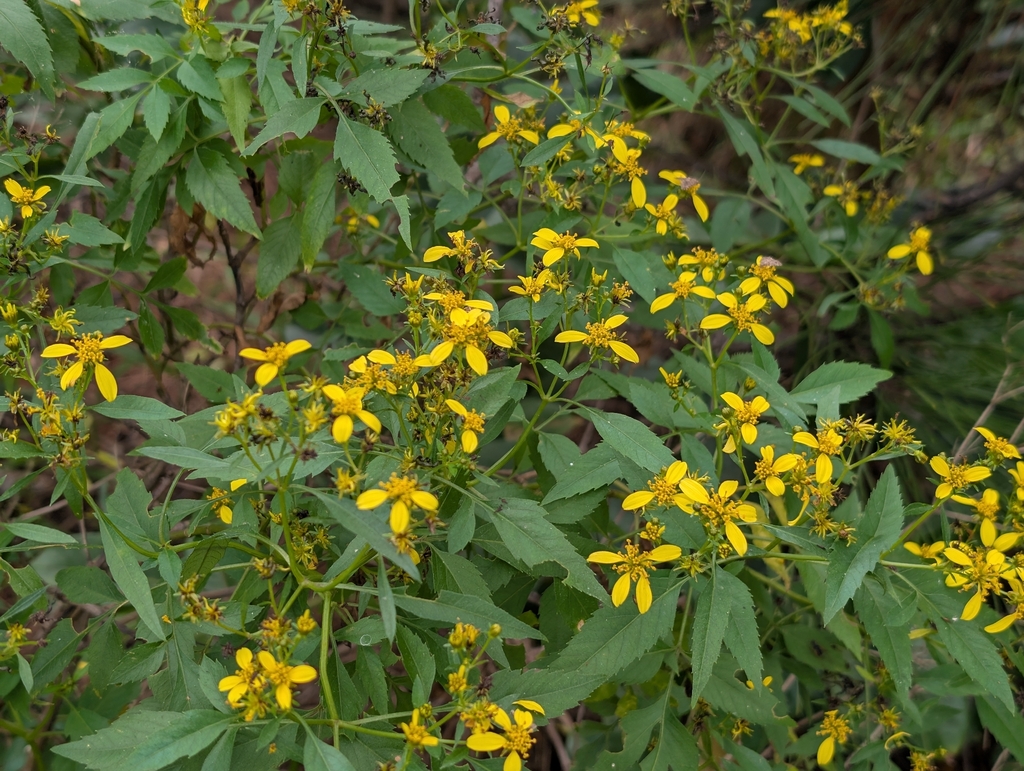
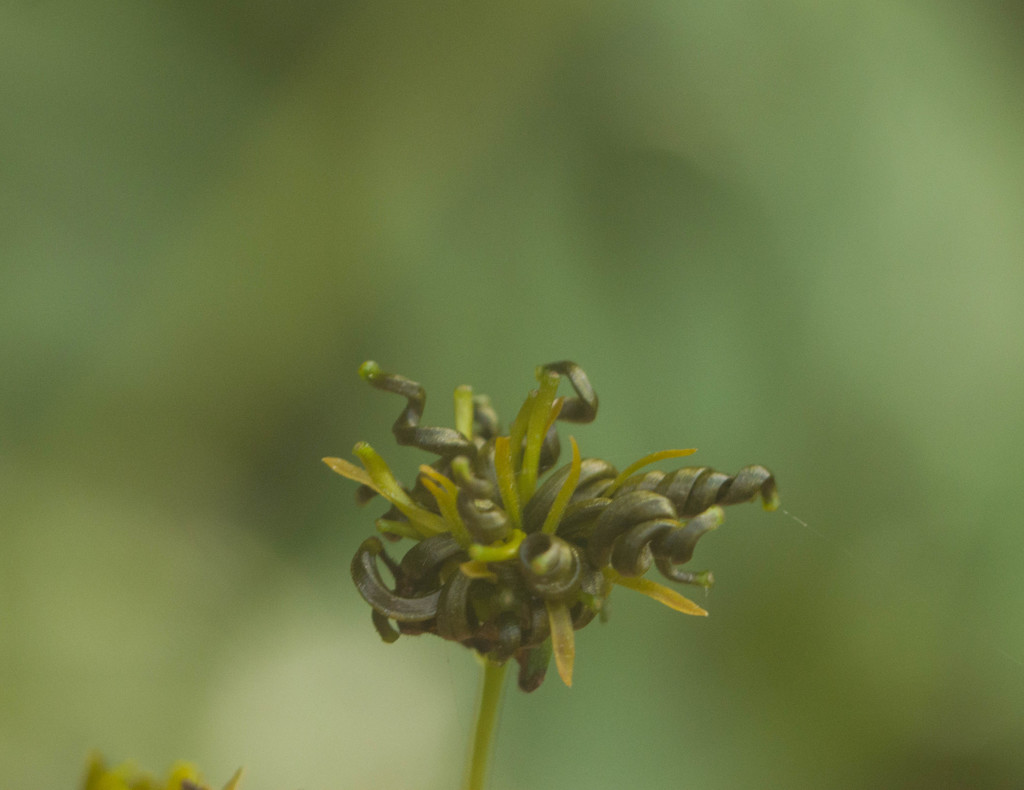
Bidens torta, known in Hawaiian as Koʻokoʻolau and in English as corkscrew beggarticks, is a native shrubby wildflower found only on the island of Oʻahu. It forms a bushy plant with dark green, toothed compound leaves and, for much of the year, masses of bright yellow, daisy-like flower heads. Its seeds are long and spirally twisted, the “corkscrew” of its English name and the torta (twisted) of its scientific name.
Hawaiʻi’s native Bidens are a classic example of adaptive radiation. About 19 species evolved in the islands from one or a few colonizing ancestors, and they now range from small herbs on sea cliffs to tall shrubs in wet forest. Unlike the weedy, hitchhiking beggarticks of the mainland, many Hawaiian species lost their barbed seed hooks, and their twisted or curled fruits are a hallmark of the group.
Koʻokoʻolau is the traditional Hawaiian name for the native Bidens, whose leaves were used for a medicinal tea. Bidens torta is uncommon and ranked imperiled to vulnerable, but it is one of the more garden-friendly native wildflowers on Oʻahu. This guide covers how to recognize it, where it grows, how to grow it, and its cultural uses.
Identification
Several species of koʻokoʻolau grow on Oʻahu, and they hybridize easily, so identification can be tricky. Bidens torta is best recognized by its bushy habit, compound leaves and strongly twisted fruits.
Growth Habit
Koʻokoʻolau is a perennial herb to small shrub, usually 1 to 4 feet tall, with several branching stems that become woody at the base. Plants can be upright or sprawling, especially on steep slopes.
Leaves
The leaves are opposite and compound, usually divided into three to five leaflets. The leaflets are lance-shaped to oval, with sharply toothed margins, and they are dark green and somewhat glossy.
Flowers
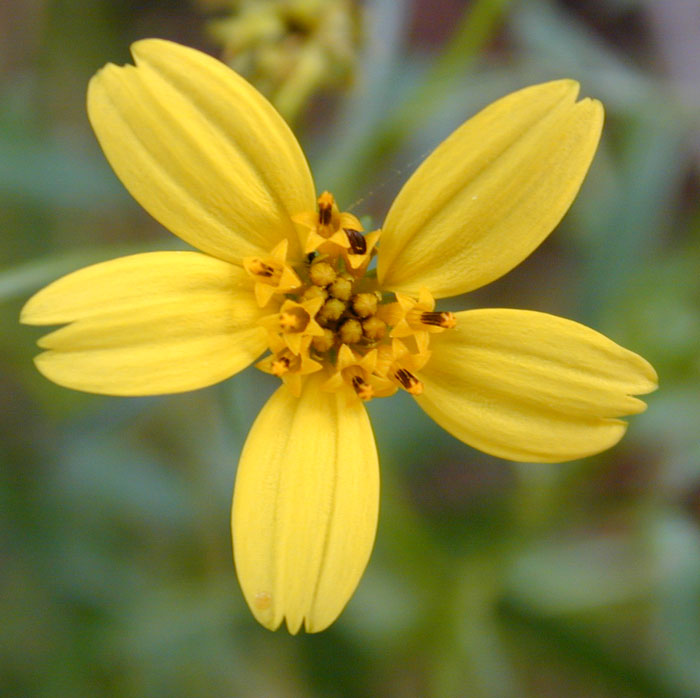
The flower heads are about 1 to 1.5 inches across, with typically five to eight broad, bright yellow ray florets around a disk of small yellow to orange tubular florets. They are borne in loose, branched clusters at the ends of the stems, and plants can bloom for months, especially from late fall to spring.
Fruit
The fruits are long, narrow, dark achenes that are spirally twisted, like a corkscrew. They usually lack the barbed hooks of mainland beggarticks, so they do not cling to clothing in the same way.
Similar Species
Other Oʻahu koʻokoʻolau, such as Bidens populifolia and B. amplectens, differ in leaf shape, flower head size and fruit shape; hybrids are common. The weedy introduced Bidens pilosa (Spanish needles) has small white-rayed flower heads and straight, barbed seeds that stick to clothing.
Quick Facts
| Scientific Name | Bidens torta Sherff |
| Family | Asteraceae (aster family) |
| Plant Type | Perennial herb to subshrub; endemic to Oʻahu |
| Mature Height | 1–4 ft |
| Mature Spread | 2–4 ft |
| Growth Rate | Fast |
| Sun Exposure | Full sun to part shade |
| Water Needs | Low to medium |
| Soil Type | Well-drained loam, clay or rocky soil |
| Soil pH | About 5.5–7.5 |
| Bloom Time | Much of the year, mainly late fall to spring |
| Flower Color | Bright yellow |
| Fall Color | None; evergreen |
| Fruit | Spirally twisted dark achenes |
| Deer Resistant | No; browsed by goats where present |
| USDA Hardiness Zones | 10–12 |
Native Range
Koʻokoʻolau (Bidens torta) is endemic to Oʻahu. It grows mainly in the Waiʻanae Mountains, including the slopes above Waialua, Mokulēʻia and Kolekole Pass. Most records come from the northern and central Waiʻanae Range.
It grows in dry to mesic forest and shrubland, on open ridges, slopes, cliffs and gulch walls, from low to middle elevations. Like many Hawaiian Bidens, it favors sunny, open sites and often appears along trail edges and in clearings after disturbance.
The species is not listed under the federal Endangered Species Act, but it is uncommon and ranked imperiled to vulnerable in Hawaiʻi. Threats include feral goats and pigs, fire, invasive grasses and shrubs, and hybridization with other Bidens.
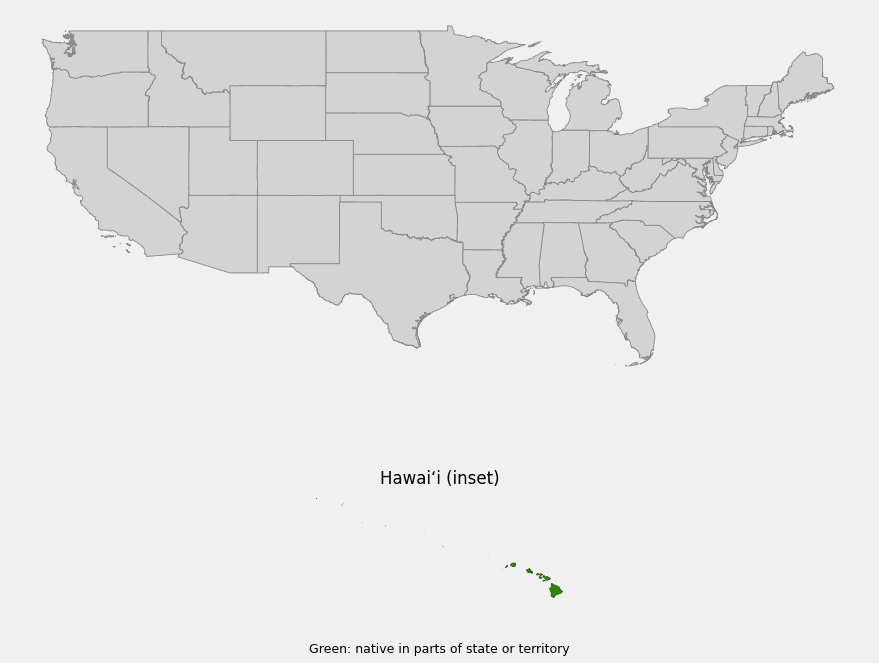
📋 Regional plant lists featuring Koʻokoʻolau: Hawaii
Growing & Care Guide
Koʻokoʻolau is one of the easier native Hawaiian wildflowers to grow, and Hawaiʻi native plant nurseries sometimes offer it. It thrives in sunny, well-drained gardens at low to middle elevations. Buy nursery-propagated plants, and don’t collect from the wild. Hawaiʻi restricts bringing plants in from other states.
Light
Plant in full sun to light shade. In full sun it stays compact and flowers heavily; in more shade it becomes leggy.
Soil & Water
It grows in most well-drained soils, from rocky ground to clay loam. Water regularly while plants establish, then water only during long dry spells. It is fairly drought tolerant but blooms longer with occasional deep watering.
Planting Tips
Use it in a sunny border, on a slope or in a mixed native planting with ʻaʻaliʻi, ʻilima and native grasses. Space plants 2 to 3 feet apart. To keep the species pure, avoid planting different Bidens species close together, since they cross readily.
Pruning & Maintenance
Cut plants back by about a third after a major flush of bloom to keep them bushy and encourage new flowers. Plants are often short-lived, lasting a few years, so let a few seedlings grow or take cuttings to replace older plants. Watch for aphids and mites on stressed plants.
Propagation
Koʻokoʻolau grows readily from seed sown on the surface of a well-drained mix; germination is usually quick. Tip cuttings of non-flowering shoots root easily in a moist, gritty mix.
Landscape Uses
- Sunny native gardens: long-blooming yellow flowers in a compact shrub
- Pollinator gardens: nectar and pollen for native bees and butterflies
- Slopes and borders: a quick-growing filler for dry to mesic sites
- Restoration: suits dry and mesic forest restoration on Oʻahu
- Cultural plantings: koʻokoʻolau leaves were used for medicinal tea
Wildlife & Ecological Value
Koʻokoʻolau’s long flowering season makes it a valuable food source for insects in Oʻahu’s dry and mesic forests.
For Pollinators
The bright yellow flower heads attract native yellow-faced bees (Hylaeus), butterflies, moths and flies. Hawaiian Bidens are considered important nectar and pollen plants for native insects.
For Birds
Native birds such as the Oʻahu ʻamakihi forage for insects on koʻokoʻolau, and seed-eating birds take the achenes.
For Mammals
Hawaiʻi’s only native land mammal is the Hawaiian hoary bat, which feeds on night-flying insects, including moths that visit flowers. Feral goats browse koʻokoʻolau.
Ecosystem Role
Koʻokoʻolau colonizes open, disturbed sites such as landslides and trail edges, helping stabilize soil and providing early cover in native plant communities.
Cultural & Historical Uses
Koʻokoʻolau is the Hawaiian name for the native Bidens. Its leaves were brewed into a tea used as a tonic and in traditional medicine, and koʻokoʻolau tea is still made today.
The species was described by the American botanist Earl Edward Sherff, who spent decades studying Bidens and named many Hawaiian species in the 1920s and 1930s. Later botanists combined some of his narrowly defined species, but Bidens torta is still recognized.
Hawaiian Bidens are studied as a textbook case of island evolution. Their seeds show how dispersal ability can change: their ancestors probably arrived stuck to birds, but many island species, including B. torta, have fruits that lack strong barbs or twist into corkscrews.
Frequently Asked Questions
Is koʻokoʻolau native to Hawaiʻi?
Yes. Bidens torta is endemic to Oʻahu, and the other koʻokoʻolau species are also endemic to the Hawaiian Islands.
Why is it called corkscrew beggarticks?
Its long, dark seeds are spirally twisted like a corkscrew. Beggarticks is the common name for Bidens, whose mainland species have barbed seeds that stick to clothing.
Can I make koʻokoʻolau tea?
Hawaiians traditionally brewed tea from the leaves. Only use plants you have grown yourself or bought from a nursery, never wild plants, and check with a health professional before using any herbal remedy.
Is koʻokoʻolau easy to grow?
Yes. It grows quickly from seed or cuttings and blooms freely in full sun and well-drained soil. Plants are often short-lived, so replace them every few years.
Will koʻokoʻolau cross with other Bidens?
Yes. Hawaiian Bidens hybridize easily, so keep different species apart if you want to save true seed.

Looking for a nursery that carries Koʻokoʻolau?
Browse our native plant nursery directory: Hawaii

