
Forked Fimbry (Fimbristylis dichotoma)
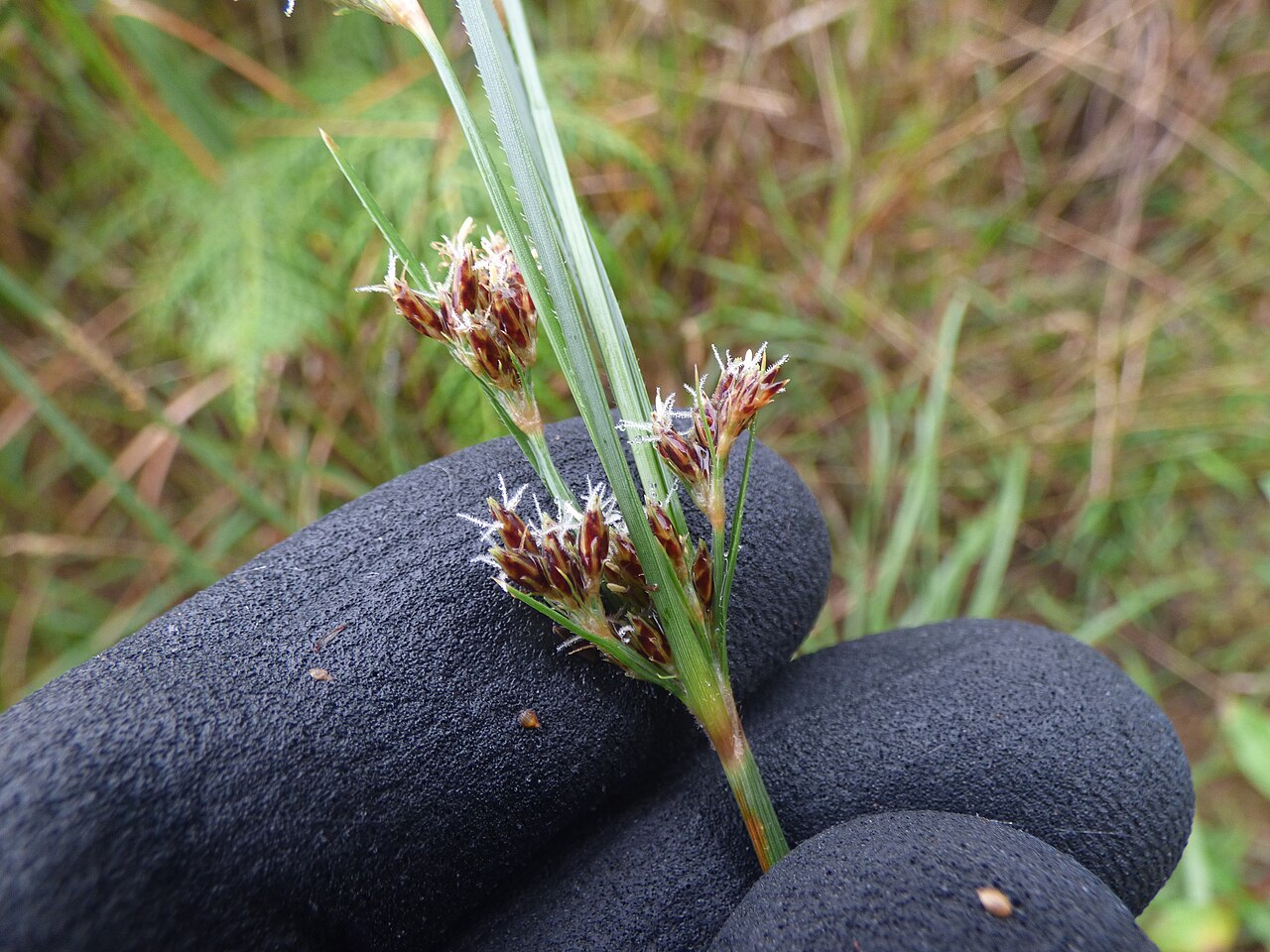
Fimbristylis dichotoma, known as Forked Fimbry, common fringe-rush or eight-day grass, is a small, tufted sedge found across the tropics and subtropics of the world. It forms clumps of fine, grass-like leaves and slender stems, topped by loosely forked clusters of small, egg-shaped, reddish-brown spikelets. It grows in wet meadows, ditches, pond edges, damp sandy ground and seasonally wet grasslands.
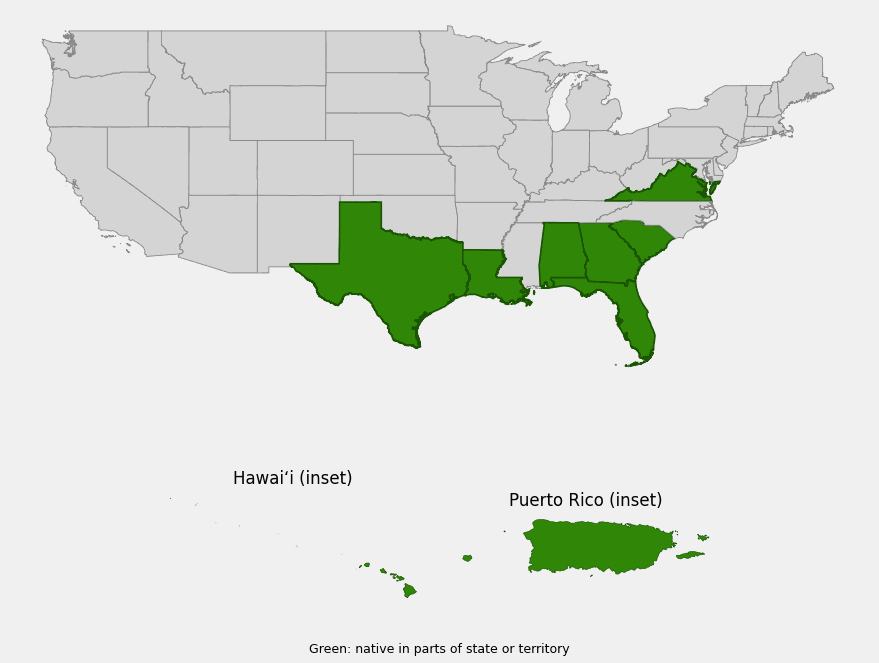
It is one of the few plants native both to Hawaiʻi and to the U.S. mainland. In Hawaiʻi it is indigenous, meaning it arrived naturally and grows wild on the main islands in open, damp places from the coast into the lower mountains. On the mainland, USDA PLANTS lists it as native in the Gulf and southern Atlantic states, and it is also native in Puerto Rico. There is no widely used specific Hawaiian name for it; Hawaiian speakers generally group small grass-like sedges under the word mauʻu.
Forked fimbry is not a showy plant, but it is useful in native rain gardens, pond margins and wetland restoration, where it fills gaps quickly and holds damp soil. This guide covers how to recognize it, where it grows, and how to use it in a garden.
Identification
Fimbristylis is a large genus of small sedges, and several species can look similar. Forked fimbry is best identified by its flattened leaves, its loosely forked flower cluster, and its spikelets.
Growth Habit
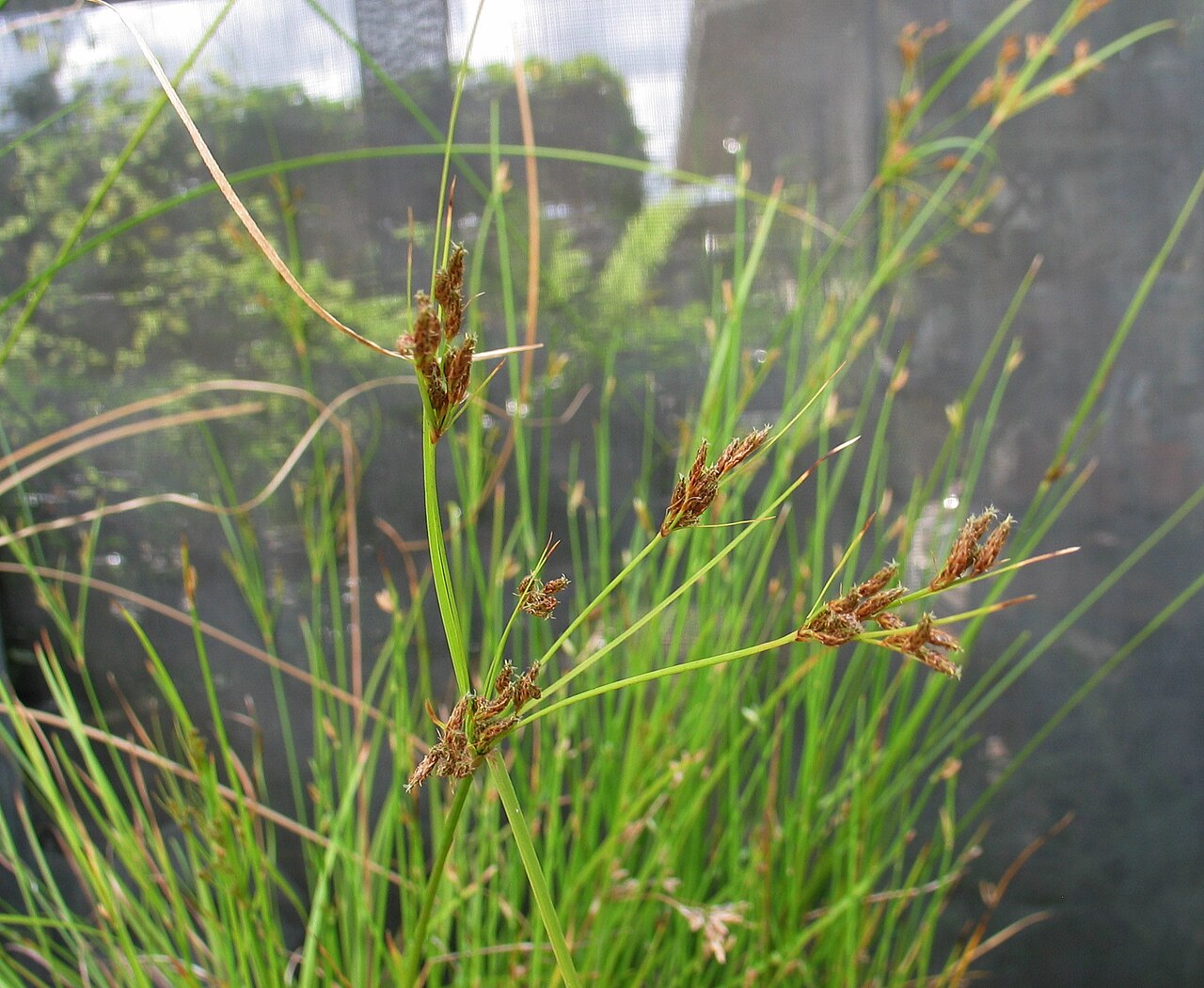
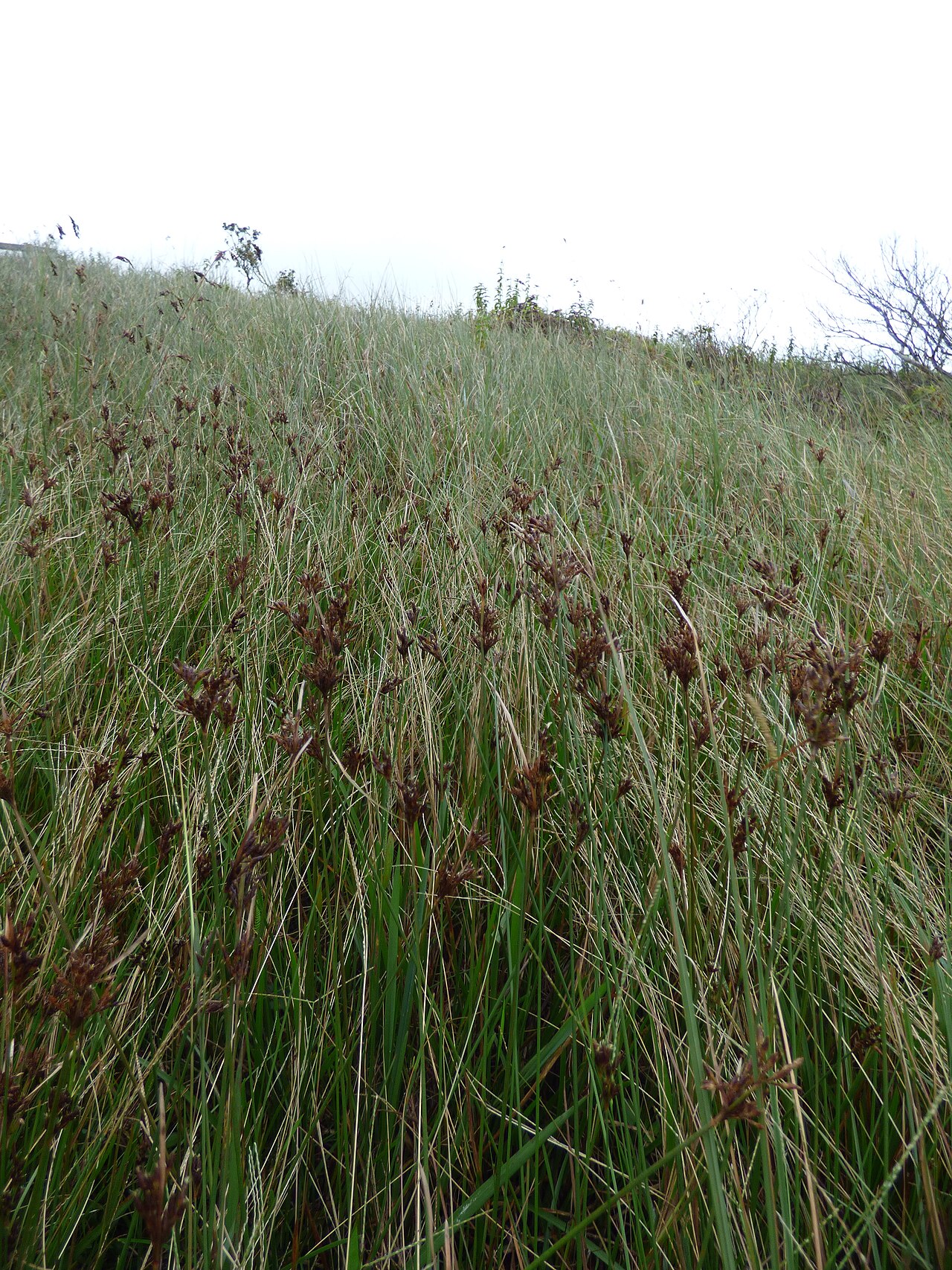
Forked fimbry is a tufted annual or short-lived perennial, usually 4 to 20 inches tall and sometimes taller (10 to 80 cm), with numerous stems and wiry, blackish fibrous roots and short rhizomes. Plants form dense clumps and can carpet moist open ground.
Leaves & Stems
The leaves are numerous and crowded at the base, narrow and flat, often at least half as long as the stems, and they may be smooth or somewhat hairy. The stems are slender (about 2 mm thick), smooth, slightly three-angled and flattened just below the flower cluster, and they have no nodes, as is typical of sedges.
Flowers & Spikelets
The flowers are tiny and wind-pollinated, packed into small, oval to egg-shaped spikelets about an eighth to a third of an inch long, reddish brown to chestnut brown when mature. The spikelets sit at the ends of a loose cluster whose branches fork repeatedly (the “dichotoma” in the name), with a few narrow leafy bracts at the base. On the mainland it blooms mainly from early summer to fall; in Hawaiʻi and Puerto Rico it can flower much of the year.
Fruit
The fruit is a tiny, lens-shaped achene, whitish to pale brown, with fine ribs and cross-lines on its surface. Plants set abundant seed, which helps them colonize new wet ground.
Similar Species
Hurricane grass (Fimbristylis cymosa), another native Hawaiian sedge, grows on rocky coasts and has stiffer, thicker leaves and dense, compact flower heads. Grasslike fimbry (F. littoralis, also known as F. miliacea) has many tiny round spikelets on a much-branched cluster. Spikerushes such as Dwarf Spikerush have a single spikelet at the top of each stem.
Quick Facts
| Scientific Name | Fimbristylis dichotoma (L.) Vahl |
| Family | Cyperaceae (sedge family) |
| Plant Type | Tufted annual or short-lived perennial sedge |
| Mature Height | 4–20 in (to about 30 in) |
| Mature Spread | 6–12 in clumps |
| Growth Rate | Fast |
| Sun Exposure | Full sun |
| Water Needs | Medium to high; moist to wet soil, tolerates brief flooding |
| Soil Type | Moist sandy, loamy or clay soils; disturbed wet ground |
| Soil pH | About 5.0–7.5 |
| Bloom Time | June–November on the mainland; much of the year in the tropics |
| Flower Color | Reddish brown to chestnut (spikelets) |
| Fall Color | Tan to brown as it dries |
| Fruit | Tiny ribbed lens-shaped achene |
| Deer Resistant | Moderate; grazed by livestock |
| USDA Hardiness Zones | 8–13 (often grown as an annual) |
Native Range
Forked fimbry has one of the widest ranges of any sedge, growing across tropical and subtropical Asia, Africa, Australia, the Pacific and the Americas. In the United States, USDA PLANTS lists it as native in Alabama, Florida, Georgia, Louisiana, South Carolina, Texas and Virginia, as well as in Hawaiʻi, Puerto Rico and the U.S. Virgin Islands. USDA also lists North Carolina and Mississippi, but NatureServe treats it as introduced there, so this guide leaves those states off the map. The Virginia records are at the northern edge of its range. The Atlas of Florida Plants lists it as native in Florida.
In Hawaiʻi it is indigenous and grows on the main islands in open, moist to wet places: seeps, streambanks, wet pastures and grassy slopes, roadside ditches and disturbed ground, from near sea level into the lower mountains. On the mainland it grows in wet pine flatwoods and savannas, marshes, ditches, pond and lake margins, wet sandy clearings and moist roadsides, mostly on the Coastal Plain.
It is not federally listed and is common through much of its range. Because it readily colonizes disturbed wet ground, it is sometimes treated as a weed in rice fields and lawns in the tropics, but in native plantings it is a modest, well-behaved sedge.
📋 Regional plant lists featuring Forked Fimbry: Hawaii · North & South Florida · Alabama, Georgia & Mississippi · North & South Carolina · Arkansas, Louisiana, Eastern Oklahoma & Eastern Texas · Maryland, Virginia & West Virginia · Puerto Rico
Growing & Care Guide
Forked fimbry is easy to grow in sunny, moist to wet spots and often seeds itself in. It is a good filler for rain gardens, bioswales, pond edges and wet meadows in the Southeast, Hawaiʻi and Puerto Rico. Use seed or plants from local native sources; in Hawaiʻi, buy from Hawaii native plant nurseries, since Hawaiʻi restricts bringing plants in from other states.
Light
Give it full sun. It tolerates light shade but becomes sparse and flowers less, and it is quickly crowded out by taller plants in shady, overgrown sites.
Soil & Water
Plant it in moist to wet soil: sand, loam or clay all work. It tolerates brief flooding and seasonal standing water and also handles drier spells better than many wetland sedges once it has set seed. In containers, keep the pot standing in a shallow saucer of water.
Planting Tips
Plant small plugs 8 to 12 inches apart along pond and stream edges, in rain gardens and in the wet bottom of bioswales, or sow seed directly on bare, moist soil. In a native garden, combine it with other low wetland natives so it fills gaps without being shaded out. Because it seeds freely, avoid planting it next to lawns or vegetable beds where you don’t want volunteers.
Pruning & Maintenance
Little care is needed. Cut back old, browned clumps in late winter on the mainland, or anytime they look tired in the tropics. Because plants are often short-lived, let some seed fall to keep a stand going. Pull unwanted seedlings while they are small.
Propagation
Forked fimbry grows easily from seed sown on the surface of moist soil in warm weather; it germinates within a few weeks. Larger clumps can also be divided. Collect seed when the spikelets turn brown and the achenes loosen.
Landscape Uses
- Rain gardens and bioswales: a fast, low filler for wet, sunny spots
- Pond and stream margins: holds damp soil along water edges
- Wetland restoration: quickly covers bare, wet ground
- Hawaiian native gardens: an indigenous sedge for moist, open sites
- Wildlife plantings: seeds for birds and cover for small animals
Wildlife & Ecological Value
Forked fimbry is a small but useful part of open wetland communities, feeding seed-eating birds and holding soil in wet ground.
For Pollinators
Like other sedges, forked fimbry is wind-pollinated and offers little nectar. Insects occasionally collect pollen, and the plant is a host for some small insects that feed on sedges.
For Birds
The abundant small seeds are eaten by sparrows, finches, doves, rails and other seed-eating birds, and the dense tufts give cover to ground-feeding birds. In Hawaiʻi, wetland and grassland birds forage among sedges in damp, open places.
For Mammals
Rabbits, rodents and grazing livestock eat the foliage, and small mammals use the clumps for cover.
Ecosystem Role
Forked fimbry is a pioneer of open, wet and disturbed ground. Its fibrous roots bind soil on banks and ditch edges, reducing erosion, and its quick growth fills gaps in wetland and wet meadow plantings while slower plants establish.
Cultural & Historical Uses
The genus name Fimbristylis comes from the Latin fimbria, “fringe,” and stylus, “style,” after the fringed styles of many species. The species name dichotoma refers to the repeatedly forked branches of the flower cluster. Linnaeus first described it as Scirpus dichotomus in 1753, and the Danish botanist Martin Vahl moved it to Fimbristylis in 1805.
Across tropical Asia and Africa, forked fimbry is a familiar plant of rice paddies, pastures and roadsides, where it is grazed by livestock and sometimes treated as a weed. Botanists recognize several subspecies and varieties across its huge range, including forms in Japan, India, Cuba and Australia.
In Hawaiʻi it is one of several native Fimbristylis species, alongside the coastal hurricane grass (F. cymosa) and the rare F. hawaiiensis. Native Hawaiian sedges like these are increasingly used in restoration of wetlands and stream corridors.
Frequently Asked Questions
Is forked fimbry native to Hawaiʻi?
Yes. It is indigenous to Hawaiʻi, meaning it reached the islands naturally and also grows widely elsewhere in the tropics. It is not endemic to Hawaiʻi.
Is forked fimbry a grass?
No. It is a sedge (family Cyperaceae). Like other sedges, its stems are solid, slightly angled and without joints or nodes, unlike the hollow, jointed stems of grasses.
Where is forked fimbry native in the mainland United States?
USDA PLANTS lists it as native in the Southeast and Gulf states, including Florida, Georgia, Alabama, South Carolina, Louisiana, Texas and Virginia. It is also native in Puerto Rico and the U.S. Virgin Islands.
Will forked fimbry spread in my garden?
It seeds freely in moist, open ground, so expect volunteers nearby. Plants are small and easy to pull, and in a rain garden or pond edge the self-seeding helps keep a stand going.
Does forked fimbry have a Hawaiian name?
No widely used specific Hawaiian name is recorded for it. Small grass-like sedges and grasses are generally called mauʻu in Hawaiian.

Looking for a nursery that carries Forked Fimbry?
Browse our native plant nursery directory: Alabama · Florida, Georgia & Hawaii · Louisiana · South Carolina, Texas & Virginia

