
ʻAlaʻala Wai Nui (Peperomia cookiana)
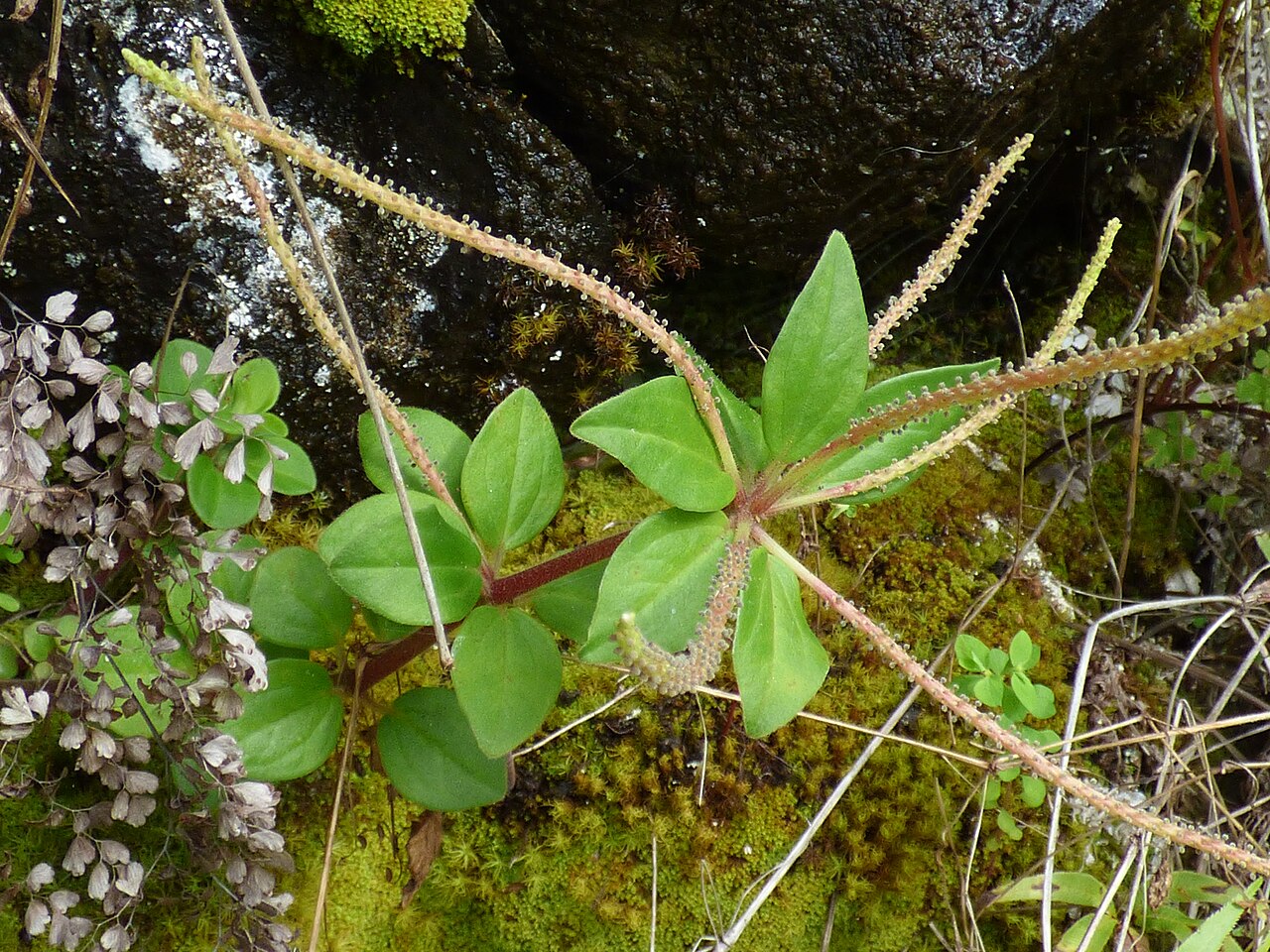
Peperomia cookiana is a small, succulent-leaved herb of the pepper family (Piperaceae) found only in the Hawaiian Islands. Like other native peperomias, it is called ʻAlaʻala wai nui in Hawaiian, a name shared by several Peperomia species; its English name in USDA PLANTS is weakstem peperomia. It grows on mossy ground, rocks, logs and tree trunks in mesic and wet forest.
It is a soft, upright to sprawling plant with leaves in whorls of three or four along slender, often reddish stems, and long, thin, tail-like flower spikes. It is a cousin of the houseplant peperomias and, more distantly, of black pepper; the tiny fruits of Hawaiian peperomias have a peppery taste. Botanists recognize several varieties, which differ in leaf size, shape and hairiness.
ʻAlaʻala wai nui is not federally listed under the Endangered Species Act and is fairly widespread, though it is considered vulnerable because of habitat loss, feral pigs and invasive plants. It is rarely offered by nurseries and does best in cool, humid upland conditions. Buy only nursery-propagated plants, and never collect plants or cuttings from the wild. This guide covers how to identify it, where it grows and how it can be grown.
Identification
Look for a small, soft herb with fleshy leaves arranged in whorls around the stem, and long, thin, green spikes that look like rat tails sticking up from the stem tips.
Growth Habit
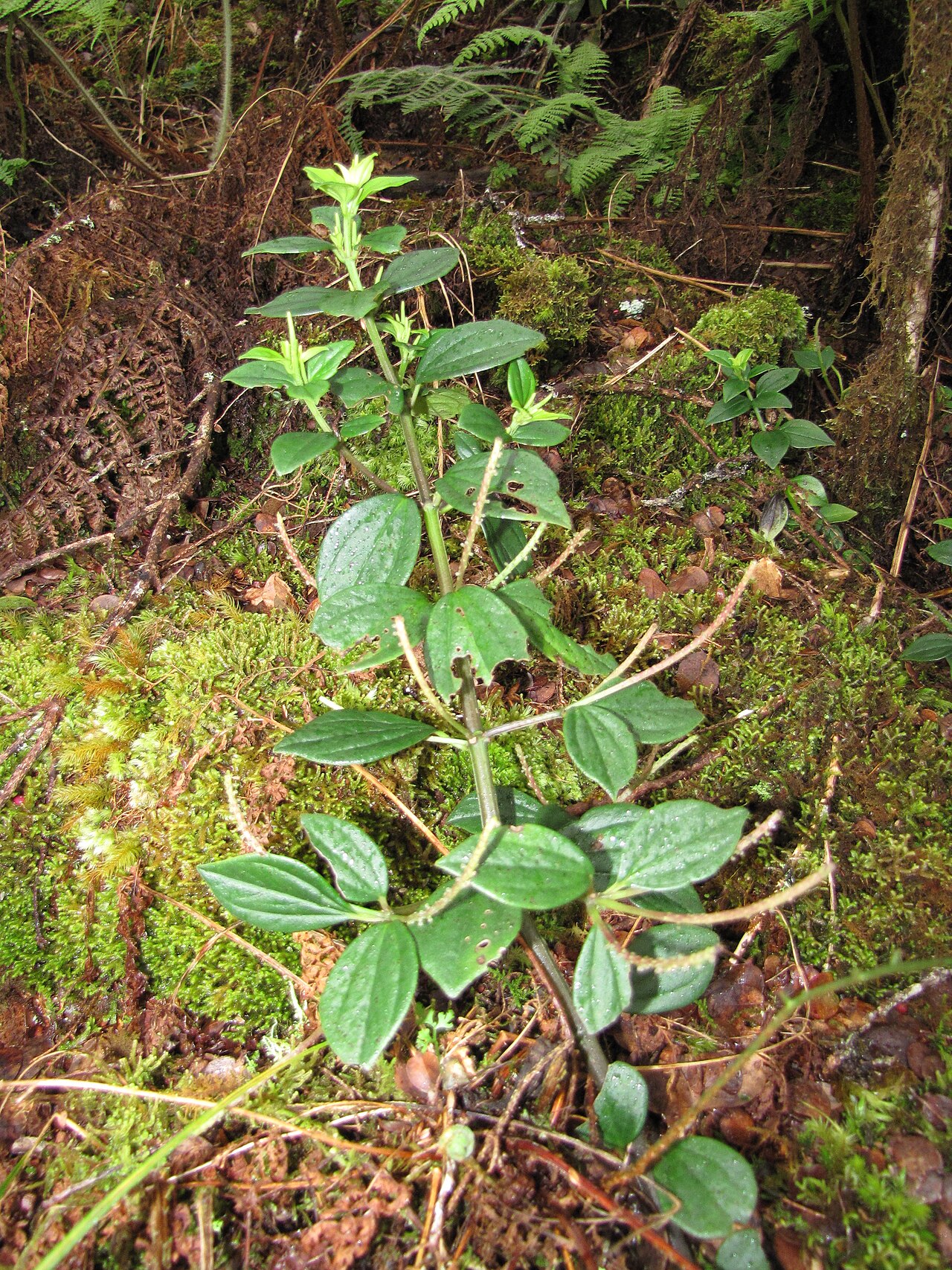
A small perennial herb, usually 4 to 12 inches tall, with weak, upright to sprawling stems that may root where they touch moss or soil, which explains the name weakstem peperomia. The stems are fleshy and often reddish. It grows on the ground and on mossy rocks and logs, and sometimes as an epiphyte on mossy tree trunks.
Leaves
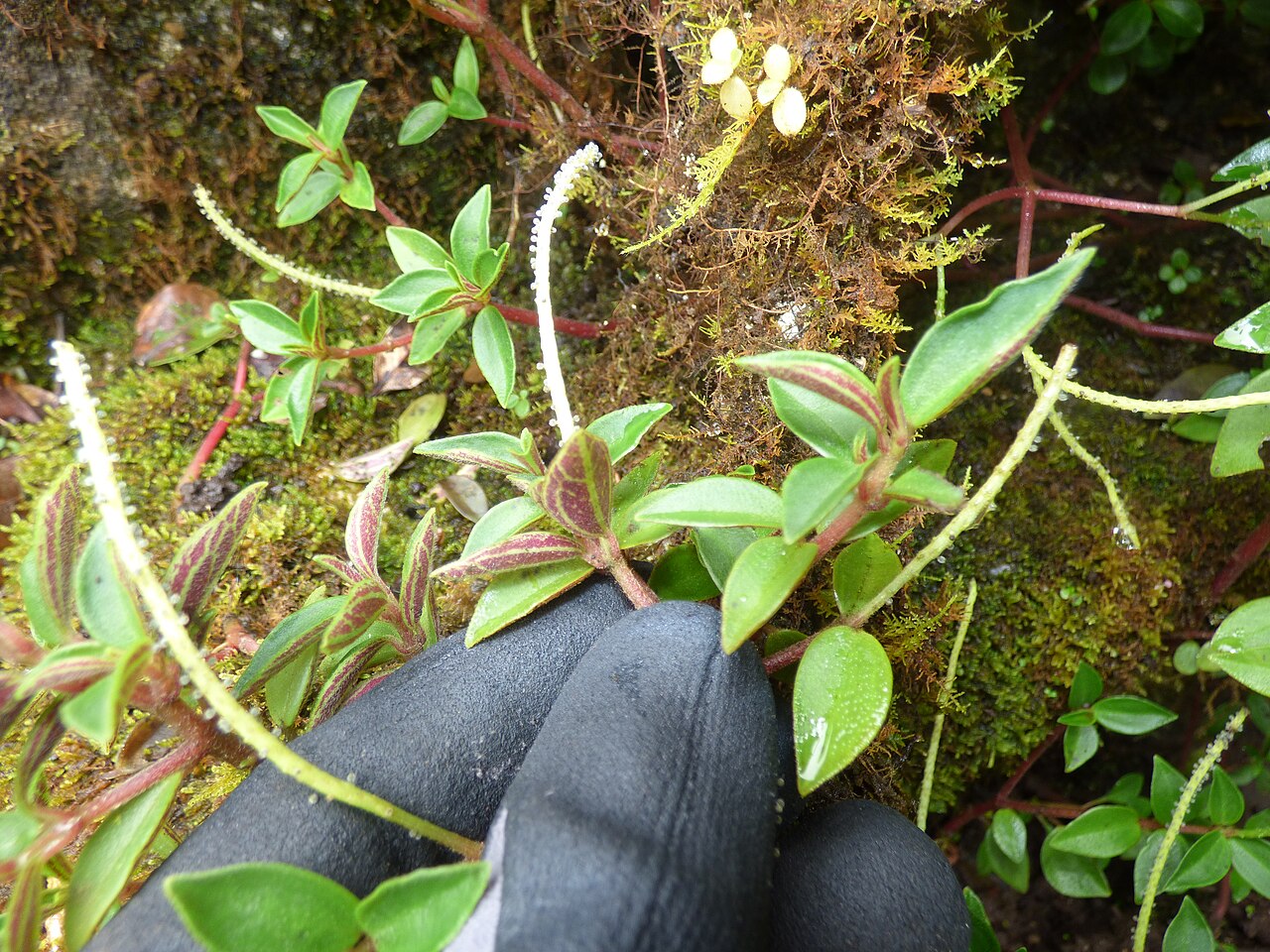
Leaves are borne in whorls of three or four (sometimes in pairs) along the stem. They are thick and slightly succulent, elliptic to oval or nearly round, about ½ to 1½ inches long, with smooth edges and a few faint veins from the base. They are medium to dark green above, paler beneath, and on some plants the undersides or margins are reddish. Some varieties are smooth and others finely hairy.
Flowers
The flowers are tiny and lack petals. They are packed along slender, green, tail-like spikes 2 to 4 inches long or more, which grow from the stem tips and upper leaf axils. Plants can flower and fruit at various times of year.
Fruit & Look-alikes
The fruits are tiny, sticky, seed-like berries that cover the spike as it matures; their stickiness helps them cling to birds and animals. Hawaiʻi has many native peperomias, and they can be hard to tell apart. The Acorn Peperomia (P. tetraphylla) is a smaller, creeping epiphyte with tiny, rounded leaves in fours. P. sandwicensis (singlespike peperomia) usually has a single spike at each stem tip. Leaf arrangement, size, hairiness and spike length all help separate them.
Quick Facts
| Scientific Name | Peperomia cookiana C. DC. |
| Family | Piperaceae (pepper family) |
| Plant Type | Succulent perennial herb, terrestrial or epiphytic; Hawaiian endemic |
| Mature Height | 4–12 in |
| Mature Spread | 6–12 in |
| Growth Rate | Slow to moderate |
| Sun Exposure | Partial shade to shade |
| Water Needs | Moderate to high; moist, humid conditions |
| Soil Type | Moss, humus or a loose, well-drained organic mix |
| Soil pH | Acidic to slightly acidic |
| Bloom Time | Various times of year |
| Flower Color | Green (tiny flowers on slender spikes) |
| Fall Color | None; some leaves reddish beneath |
| Fruit | Tiny, sticky berries along the spike |
| Deer Resistant | No; damaged by feral pigs, slugs and snails |
| USDA Hardiness Zones | 10–12 (cool, humid uplands of Hawaiʻi) |
Native Range
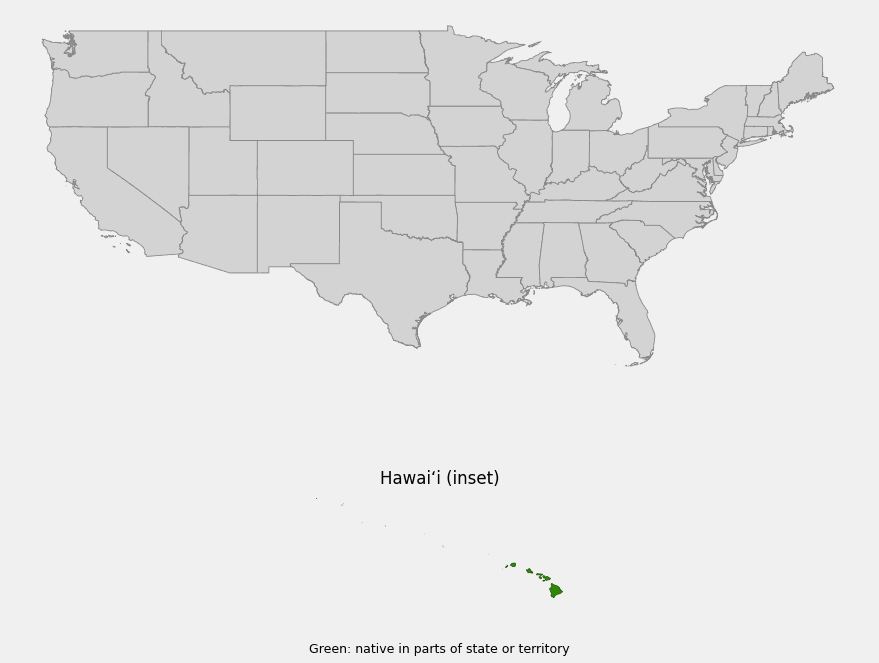
ʻAlaʻala wai nui is endemic to the Hawaiian Islands and grows nowhere else in the wild. USDA PLANTS lists it as native only in Hawaiʻi. It has been recorded on Kauaʻi, Oʻahu, Molokaʻi, Maui and Hawaiʻi Island, and is most often seen on Hawaiʻi Island and East Maui.
It grows in mesic and wet forest and in wet shrubland, on mossy ground, banks, rocks and fallen logs, and sometimes on mossy tree trunks. On Maui it has been photographed at Waikamoi, Makawao and Kīpahulu forest reserves, Koʻolau Gap, Waiheʻe Ridge and the Kahikinui forest, mostly at middle to upper elevations.
Wild populations are affected by feral pigs that root up the forest floor, by slugs and snails, and by invasive plants that smother the moss layer. It does best in fenced, protected forest where the native understory is intact.
📋 Regional plant lists featuring ʻAlaʻala Wai Nui: Hawaii
Growing & Care Guide
Native Hawaiian peperomias can be grown as potted plants, groundcovers and hanging-basket plants, and some species are offered by Hawaiʻi native plant nurseries. Peperomia cookiana itself is rarely available, and it is happiest in cool, humid upland conditions; it is harder to keep in hot, dry lowland gardens. Buy only nursery-propagated plants, and never collect plants or cuttings from the wild. Hawaiʻi restricts bringing plants in from other states, so gardeners in Hawaiʻi should buy native peperomias from local native plant nurseries. Outside Hawaiʻi it could be grown like other peperomias indoors or in a humid greenhouse, but it is essentially unavailable.
Light
Partial shade to bright shade. Avoid hot, direct afternoon sun, which bleaches and scorches the fleshy leaves.
Soil & Water
Use a loose, fast-draining organic mix, such as potting mix with bark, cinder or sphagnum moss. Keep it lightly moist and the air humid, but do not let the pot sit in water; the succulent stems rot if kept soggy. Allow the surface to dry slightly between waterings.
Planting Tips
Grow it in a shallow pot, a hanging basket, on a mossy log or rock in a shade garden, or in a terrarium. In the ground, plant it on a raised, mossy, well-drained spot in a cool, humid, shady part of the garden.
Pruning & Maintenance
Pinch back leggy stems to keep it bushy. Slugs and snails are the main pests, so check plants often. Mealybugs occasionally appear and can be removed with a cotton swab dipped in alcohol. Feed lightly with a diluted fertilizer during active growth.
Propagation
Like other peperomias, it roots easily from stem cuttings and sometimes from single leaves placed on moist mix. Seeds can also be sown on the surface of a fine, moist mix. Home gardeners should propagate only from their own nursery-bought plants.
Landscape Uses
- Shade and fern gardens: a small, succulent native for mossy rocks and logs
- Containers, baskets and terrariums: grown like other peperomias in humid conditions
- Native plant collections: one of Hawaiʻi’s many endemic peperomias
- Forest restoration: understory herb for mesic and wet forest plantings
Wildlife & Ecological Value
ʻAlaʻala wai nui is a small part of the mossy understory of Hawaiian forests.
For Pollinators
The tiny flowers have no petals and are not showy. They may be visited by small insects, but pollination of Hawaiian peperomias is not well studied.
For Birds
The tiny, sticky fruits can cling to the feathers and feet of birds, which is thought to be how peperomias spread between forests and islands. Native forest birds also forage for insects in the understory.
For Mammals
Hawaiʻi’s only native land mammal, the Hawaiian hoary bat, hunts insects over the forest. Introduced feral pigs root up and trample the mossy forest floor where this plant grows.
Ecosystem Role
It is one of the many small plants that make up the moss and herb layer of mesic and wet forests, helping hold moisture on logs, rocks and the forest floor.
Cultural & Historical Uses
ʻAlaʻala wai nui is a Hawaiian name used for several native peperomias, sometimes with extra words added to describe particular kinds. Peperomias were among the plants used in traditional Hawaiian medicine. Today, native peperomias are appreciated by Hawaiian gardeners as small, easy-to-propagate container plants.
The species was described by the Swiss botanist Casimir de Candolle, a specialist in the pepper family, and was later studied by the American botanist Truman Yuncker, who treated several of its varieties: var. flavinervia, var. minutilimba, var. ovatilimba and var. pukooana. Varieties within Hawaiian peperomias are often hard to separate.
Hawaiʻi has more than 20 native Peperomia species, most of them found nowhere else, all thought to descend from a few ancestors whose sticky fruits hitched a ride to the islands on birds. They are a good example of how small, inconspicuous plants can diversify on islands as dramatically as better-known groups.
Frequently Asked Questions
What is ʻalaʻala wai nui?
It is a Hawaiian name used for several native peperomias, including Peperomia cookiana, a small, succulent herb of mesic and wet forests.
Is it related to houseplant peperomias?
Yes. It belongs to the same genus as popular houseplant peperomias and to the pepper family, which also includes black pepper.
Can I grow it?
Yes, in a shady, humid spot or a pot of loose, well-drained organic mix, but it is rarely available. Buy only nursery-propagated plants from Hawaiʻi native plant nurseries, and never collect from the wild.
Is it poisonous?
Peperomias are generally considered non-toxic to people and pets, but no part of this plant is a food, so do not eat it.
Is it endangered?
It is not federally listed under the Endangered Species Act and is fairly widespread, but it is considered vulnerable because of feral pigs, invasive plants and habitat loss.

Looking for a nursery that carries ʻAlaʻala Wai Nui?
Browse our native plant nursery directory: Hawaii

