
ʻŌhiʻa Hā (Syzygium sandwicense)
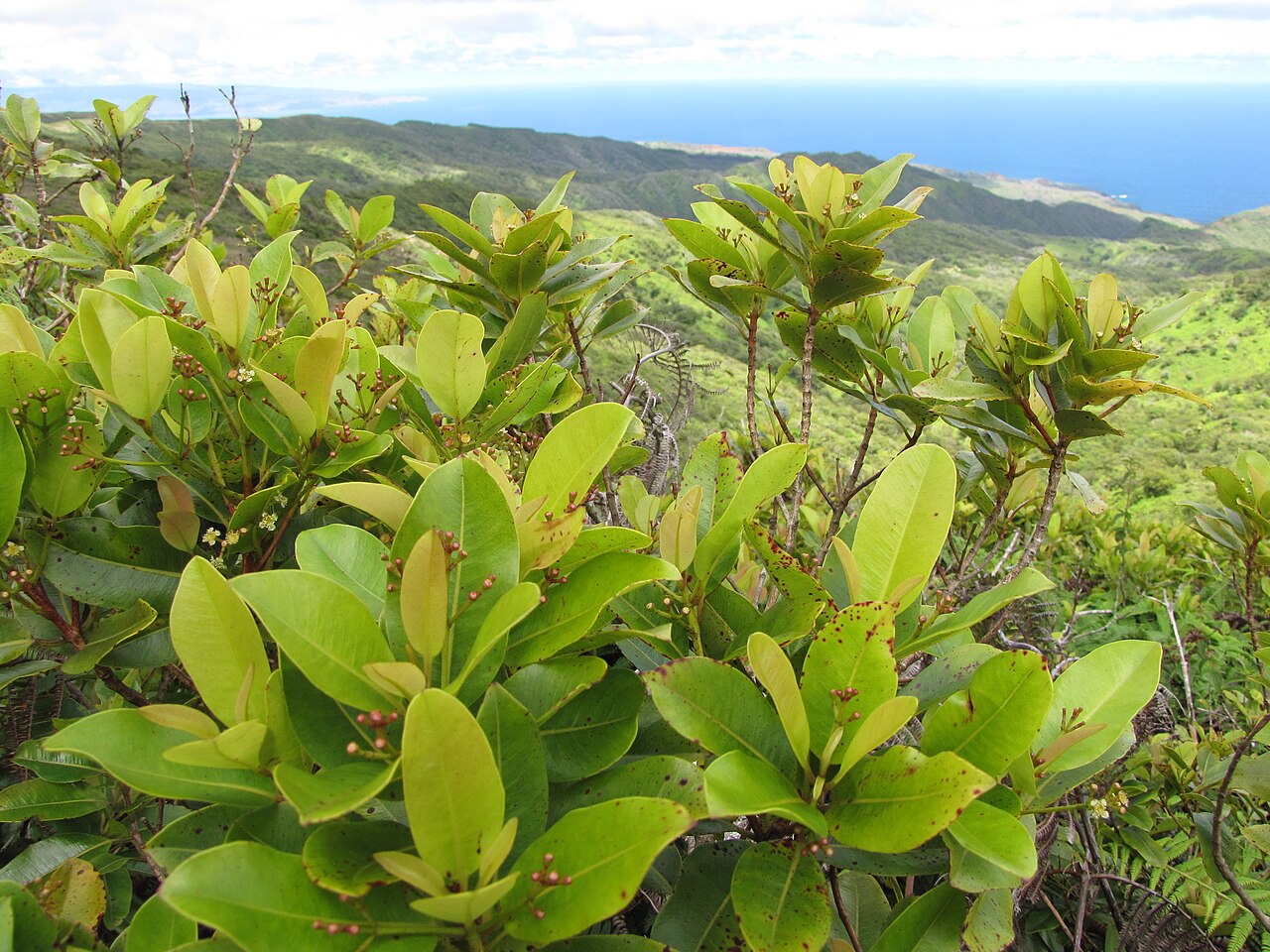
Syzygium sandwicense, known in Hawaiian as ʻŌhiʻa Hā and also as hā or pāʻihi, is a native Hawaiian tree in the myrtle family. It has thick, glossy, leathery leaves with reddish new growth, clusters of small fluffy white to pinkish flowers, and round red to purple fruits. It is a relative of the rose apple and Java plum, and the only Syzygium native to Hawaiʻi.
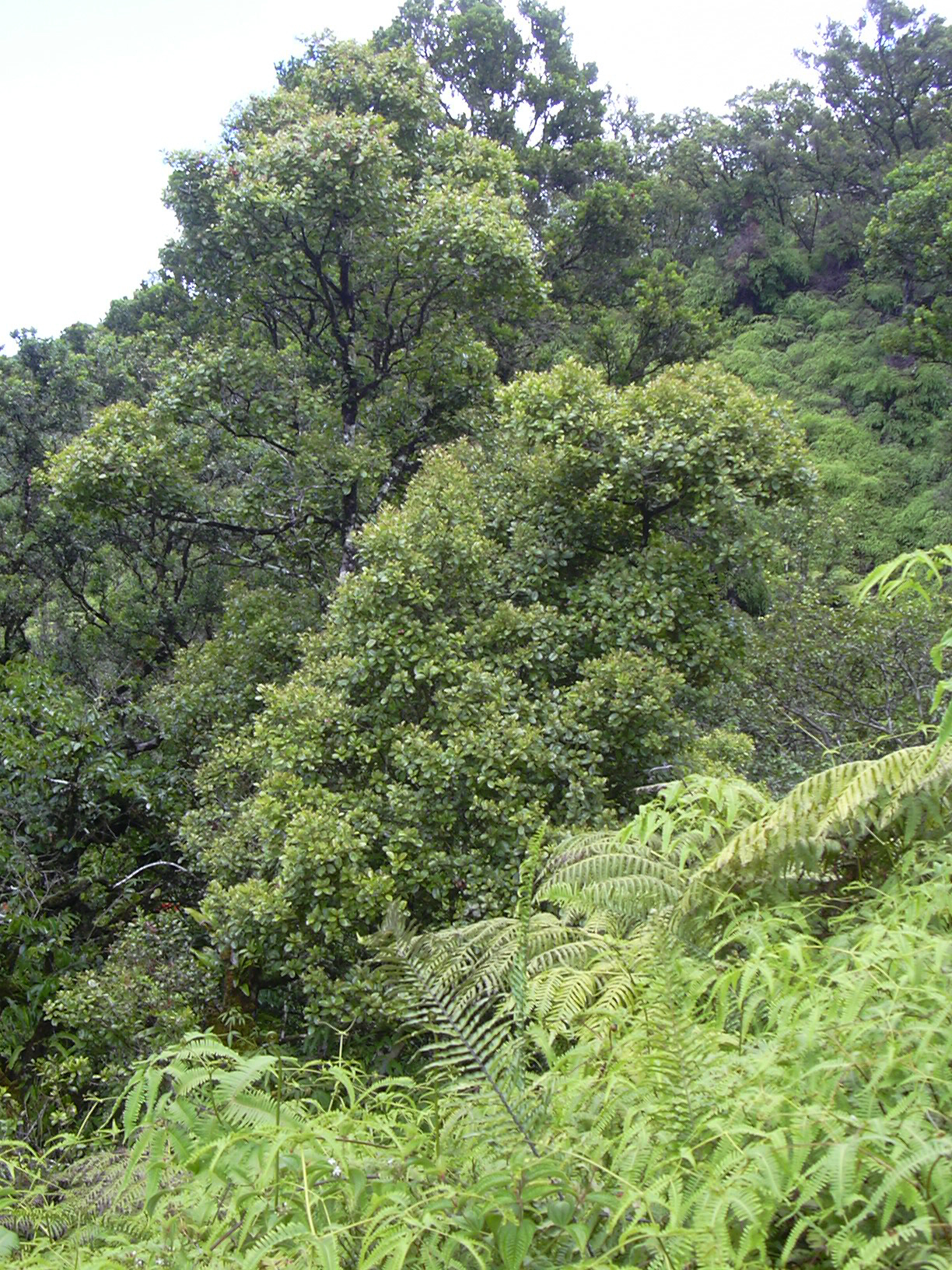
ʻŌhiʻa hā is endemic to the Hawaiian Islands and grows on most of the main islands, in coastal mesic, mixed mesic and wet forests and even in bogs. In sheltered valleys it can become a large tree up to about 60 feet tall, but on windswept ridges it stays a dense, rounded shrub.
Despite the shared name, ʻōhiʻa hā is not closely related to ʻŌhiʻa Lehua; both are in the myrtle family, but in different genera. ʻŌhiʻa hā is a handsome, tough tree for native gardens in Hawaiʻi. This guide covers how to recognize it, where it grows, how to grow it, and its traditional uses.
Identification
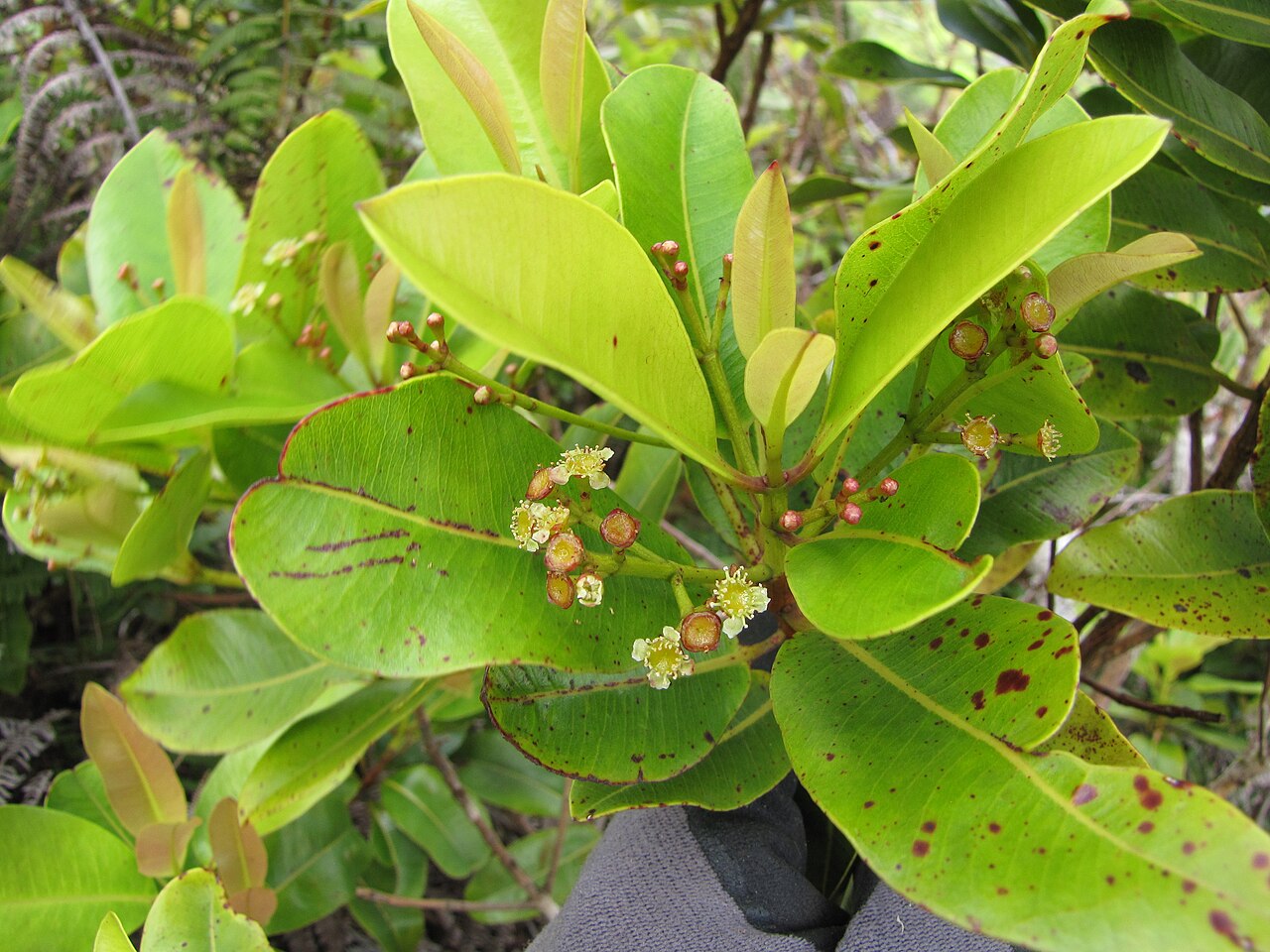
Hawaiians used the word ʻōhiʻa for several trees in the myrtle family. ʻŌhiʻa hā can be recognized by its broad, glossy, opposite leaves, its reddish twigs and new growth, and its small white flowers.
Growth Habit
ʻŌhiʻa hā ranges from a compact shrub a few feet tall on exposed ridges to a tree up to about 60 feet tall with a trunk up to 3 feet across in sheltered forest. The crown is dense and dark green, and the bark is grayish and somewhat flaky on older trunks.
Leaves
The leaves are opposite, thick and leathery, elliptic to rounded, usually about 1.5 to 4 inches long, with smooth edges. They are glossy dark green above and paler below, and new leaves and twigs are often red, coppery or pinkish, giving the tree a two-toned look in a growth flush.
Flowers
Small flowers, about half an inch across, are borne in short, branched clusters at the branch tips. Each flower has four small petals and a fluffy tuft of white to pink stamens. Flowering is irregular, often in spring and summer.
Fruit
The fruit is a round to slightly flattened berry, about a third to half an inch across, ripening from green to red, purple or nearly black, with the remains of the calyx at the tip. It contains one or two seeds.
Similar Species
ʻŌhiʻa Lehua has smaller leaves and showy pompom flowers that are usually red. Introduced rose apple (Syzygium jambos) has long, narrow, lance-shaped leaves and large, rose-scented yellowish fruit, and Java plum (S. cumini) has thinner leaves and dark purple, olive-sized fruits. Both are invasive in Hawaiian forests.
Quick Facts
| Scientific Name | Syzygium sandwicense (A. Gray) Nied. |
| Family | Myrtaceae (myrtle family) |
| Plant Type | Evergreen tree or shrub; endemic to Hawaiʻi |
| Mature Height | 10–60 ft (shrubby on exposed ridges) |
| Mature Spread | 8–30 ft |
| Growth Rate | Slow to moderate |
| Sun Exposure | Full sun to part shade |
| Water Needs | Medium to high; regular moisture |
| Soil Type | Moist, well-drained, organic-rich or volcanic soils |
| Soil pH | About 4.5–6.5 |
| Bloom Time | Irregular, often spring and summer |
| Flower Color | White to pinkish |
| Fall Color | None; evergreen, with red new growth |
| Fruit | Small round red to purple-black berry |
| Deer Resistant | No; seedlings browsed by deer, goats and pigs |
| USDA Hardiness Zones | 10–12 |
Native Range
ʻŌhiʻa hā is endemic to the Hawaiian Islands and grows on most of the main islands, including Kauaʻi, Oʻahu, Molokaʻi, Lānaʻi, Maui and Hawaiʻi Island. It is found from about 750 to 4,000 feet (230 to 1,220 meters).
Its habitats include coastal mesic forest, mixed mesic forest, wet forest and the margins of montane bogs. It grows with ʻŌhiʻa Lehua, Koa, ʻŌlapa and Kōpiko, and on ridges it forms dense thickets with Uluhe fern.
ʻŌhiʻa hā is not federally listed and remains fairly common in intact native forest. Like other Hawaiian forest trees, it is threatened by invasive plants, feral pigs and habitat loss. Like other myrtle-family plants, it may also be susceptible to myrtle rust (ʻōhiʻa rust), a fungal disease that has damaged many myrtle-family plants in Hawaiʻi.
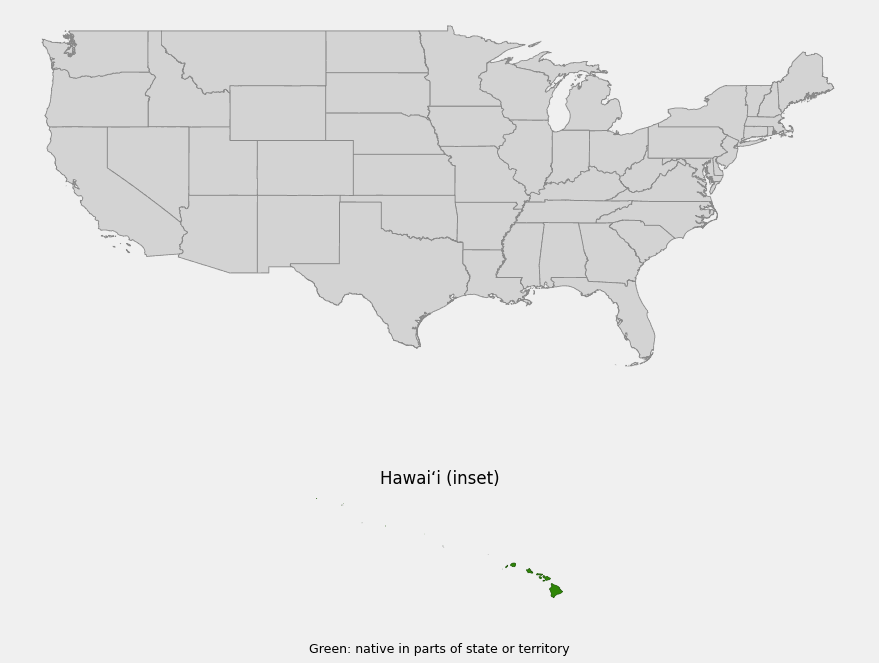
📋 Regional plant lists featuring ʻŌhiʻa Hā: Hawaii
Growing & Care Guide
ʻŌhiʻa hā is a slow-growing but long-lived native tree for gardens in Hawaiʻi with regular rainfall or irrigation, from low to middle elevations. Buy plants from Hawaiʻi native plant nurseries, and never collect from the wild without permission. Hawaiʻi restricts bringing plants in from other states, and myrtle-family plants in particular, to keep out new strains of rust.
Light
It grows in full sun to part shade. Young plants benefit from some shade and shelter, while established plants handle full sun well if they have enough water.
Soil & Water
Plant in moist, well-drained soil rich in organic matter. ʻŌhiʻa hā tolerates acidic and nutrient-poor soils, including those of wet upland areas. Water regularly, especially during dry spells; it does not like prolonged drought.
Planting Tips
Use it as a specimen tree, a screen or hedge, or as part of a mixed native canopy. On windy sites it stays compact and makes a good windbreak. Mulch around the base to keep the soil moist and cool.
Pruning & Maintenance
ʻŌhiʻa hā responds well to pruning and can be shaped as a hedge or small tree. Prune after the main growth flush. Watch for myrtle rust, which shows as bright yellow powdery spots on young leaves; remove and bag infected shoots, and don’t move plant material between islands.
Propagation
It is usually grown from fresh seed. Clean the pulp from ripe fruit and sow promptly, since the seeds do not store well. Germination usually takes a few weeks. Cuttings and air layering are also possible.
Landscape Uses
- Specimen tree: glossy foliage with colorful new growth
- Hedges and screens: takes pruning and stays dense
- Windbreaks: tolerates wind on exposed sites
- Forest restoration: a canopy and subcanopy tree for mesic and wet forest
- Wildlife plantings: fruit for birds; flowers for insects
Wildlife & Ecological Value
ʻŌhiʻa hā is a common component of Hawaiian mesic and wet forests, providing food and shelter for native wildlife.
For Pollinators
The small white flowers produce pollen and nectar and attract native bees, flies, moths and other insects.
For Birds
The fruits are eaten by birds, which disperse the seeds. Native forest birds such as the ʻapapane and ʻamakihi forage among the foliage for insects.
For Mammals
Hawaiʻi’s only native land mammal, the Hawaiian hoary bat, forages over forests where ʻōhiʻa hā grows. Introduced pigs, rats and deer eat seeds and damage seedlings.
Ecosystem Role
As a canopy and subcanopy tree, ʻōhiʻa hā provides structure, shade and habitat in native forests, and its fallen leaves add organic matter to the soil.
Cultural & Historical Uses
Hawaiians valued ʻōhiʻa hā for its hard wood, and its bark has been recorded as a source of dye. The fruits are edible but small and not widely eaten.
The tree was first described by Asa Gray as Eugenia sandwicensis from specimens collected by the U.S. Exploring Expedition, and later moved to Syzygium. The genus also includes the clove (S. aromaticum), the wax apple and the rose apple.
Today ʻōhiʻa hā is grown by native plant nurseries across Hawaiʻi and is used in forest restoration and landscaping. Its glossy leaves and red new growth make it an attractive and dependable native tree.
Frequently Asked Questions
Is ʻōhiʻa hā native to Hawaiʻi?
Yes. ʻŌhiʻa hā (Syzygium sandwicense) is endemic to Hawaiʻi and grows on most of the main islands.
Is ʻōhiʻa hā related to ʻōhiʻa lehua?
Both are in the myrtle family, but they belong to different genera. ʻŌhiʻa lehua is Metrosideros, while ʻōhiʻa hā is Syzygium, the genus of the clove and rose apple.
Is ʻōhiʻa hā fruit edible?
The small red to purple berries are edible, but they are not especially tasty and were not an important food.
Can I grow ʻōhiʻa hā in my garden?
Yes. It grows well in moist, well-drained soil with regular water, in full sun to part shade, and it can be grown as a tree or a pruned hedge.
Does myrtle rust affect ʻōhiʻa hā?
It may. Myrtle rust (ʻōhiʻa rust) attacks many plants in the myrtle family. Watch for yellow powdery spots on new leaves, and do not move plant material between islands.

Looking for a nursery that carries ʻŌhiʻa Hā?
Browse our native plant nursery directory: Hawaii

