
Mauʻu ʻAkiʻaki (Fimbristylis cymosa)
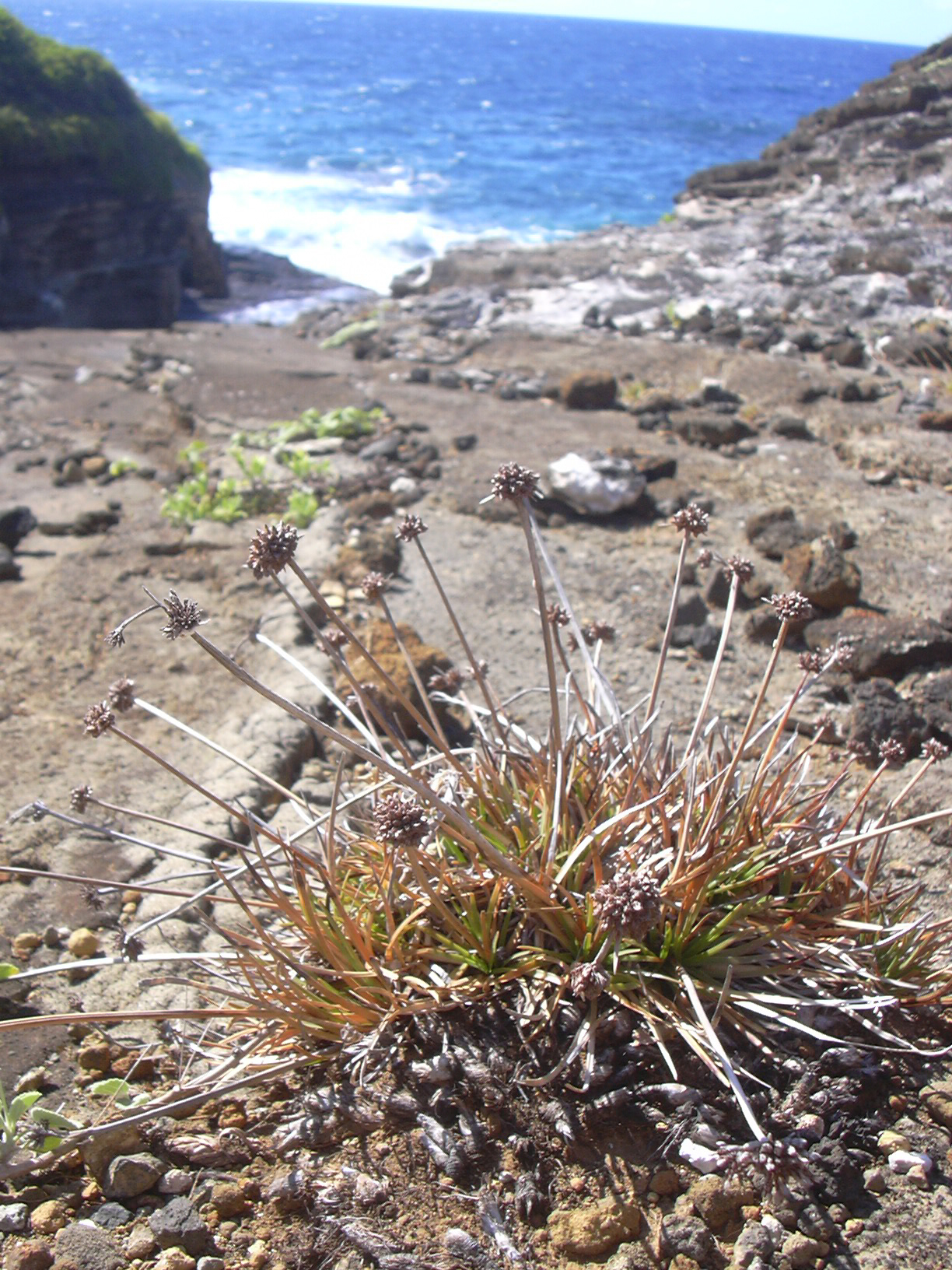
Fimbristylis cymosa, called Mauʻu ʻAkiʻaki in Hawaiian and hurricanegrass, tropical fimbry or St. John’s sedge in English, is a small, tough, tufted coastal sedge. It forms dense, cushion-like clumps of stiff, narrow, dark green leaves and sends up short stalks topped with clusters of dark brown spikelets. Despite the name “grass,” it is a sedge (Cyperaceae).
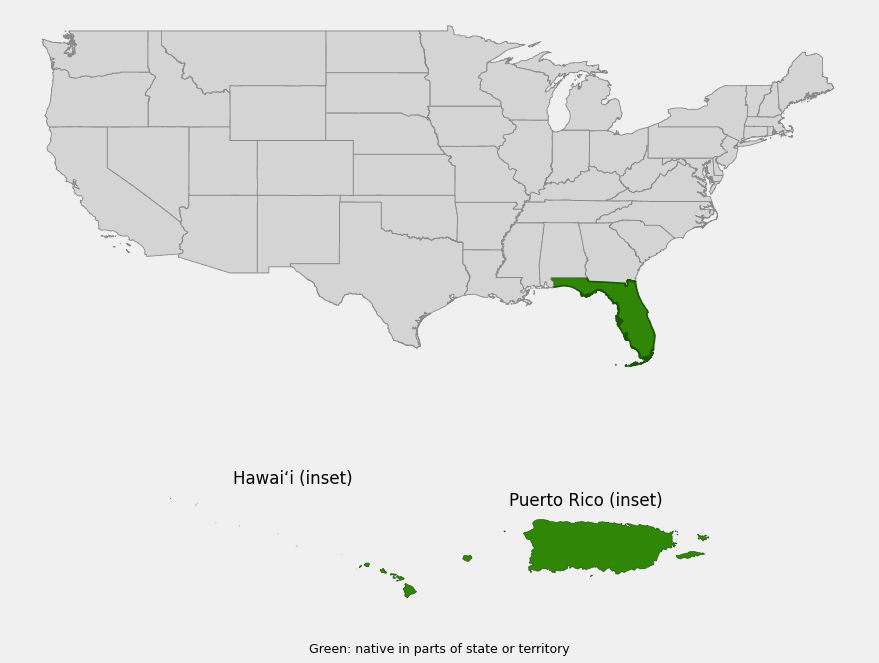
Mauʻu ʻakiʻaki is indigenous to Hawaiʻi: it is also native to tropical and subtropical coasts around the world, from the Americas to Africa, Asia, Australia and the Pacific. In the United States, USDA PLANTS lists it as native in Hawaiʻi, Florida and Puerto Rico, and in the U.S. Virgin Islands. It grows on rocky and sandy shores, lava, coral rubble and coastal flats, often in places where little else can survive. It is not federally listed.
Its compact, cushion-like form, drought and salt tolerance, and ability to grow in cracks and gravel make it one of the best native plants for coastal rock gardens, beach plantings and restoration in Hawaiʻi. This guide covers how to identify it, where it grows, how to grow it and its role on the coast.
Identification
On Hawaiian and Florida coasts, look for a low, dense tuft of stiff, narrow leaves with short stalks bearing clusters of small, dark brown, egg-shaped spikelets.
Growth Habit
A tufted perennial sedge, usually 4 to 16 inches tall, occasionally to about 2½ feet. It grows from a short, thick base and forms dense clumps or cushions. On exposed, windswept shores, plants are often very compact, with the flower stalks barely rising above the leaves.
Leaves
The leaves are narrow (about ¹⁄₁₆ to ⅛ inch wide), stiff, flat to slightly curved, and dark green, often with rough edges. They spread in a rosette from the base of the plant, and old leaf bases persist as a brownish thatch.
Flowers & Spikelets
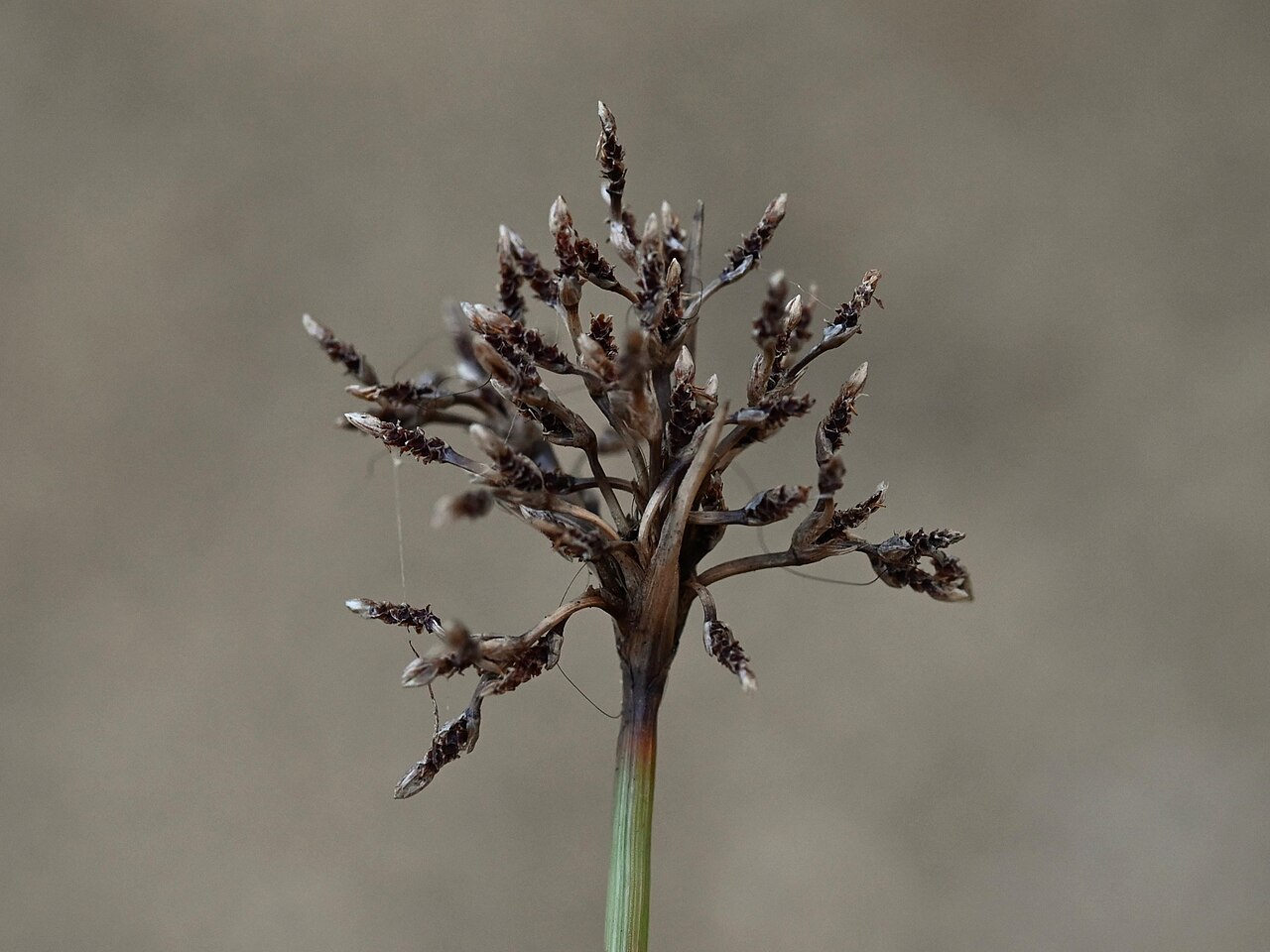
The flowering stems are smooth and slightly flattened. Each ends in a cluster of small, egg-shaped, reddish-brown to dark brown spikelets, either in a compact head or on short, spreading branches above a few small leafy bracts. The flowers are tiny and wind-pollinated, and plants bloom through much of the year in Hawaiʻi.
Fruit & Look-alikes
Each flower produces a tiny, lens-shaped, brown nutlet. Forked Fimbry (Fimbristylis dichotoma) is a related sedge with softer, often hairy leaves and more open, branching flower clusters, and it grows mostly inland. ʻAkiʻaki (seashore dropseed), the native grass whose name mauʻu ʻakiʻaki recalls, spreads by long runners rather than forming tufts.
Quick Facts
| Scientific Name | Fimbristylis cymosa R. Br. |
| Family | Cyperaceae (sedge family) |
| Plant Type | Tufted perennial sedge; indigenous to Hawaiʻi |
| Mature Height | 4–16 in (rarely to 2½ ft) |
| Mature Spread | 6–12 in |
| Growth Rate | Moderate |
| Sun Exposure | Full sun |
| Water Needs | Low; very drought tolerant once established |
| Soil Type | Sand, coral rubble, gravel, cracks in lava and rock |
| Soil pH | Neutral to alkaline |
| Bloom Time | Much of the year |
| Flower Color | Reddish-brown to dark brown spikelets |
| Fall Color | None; evergreen |
| Fruit | Tiny lens-shaped brown nutlet |
| Deer Resistant | Yes; tough, wiry foliage is rarely browsed |
| USDA Hardiness Zones | 9–13 |
Native Range
In Hawaiʻi, mauʻu ʻakiʻaki is indigenous and grows along the coasts of all the main islands. It is a plant of the coastal strand: rocky shores and sea cliffs, cracks in lava, coral rubble, sandy beaches, dunes and coastal flats, mostly within reach of salt spray. It occasionally grows a short distance inland on dry, open ground.
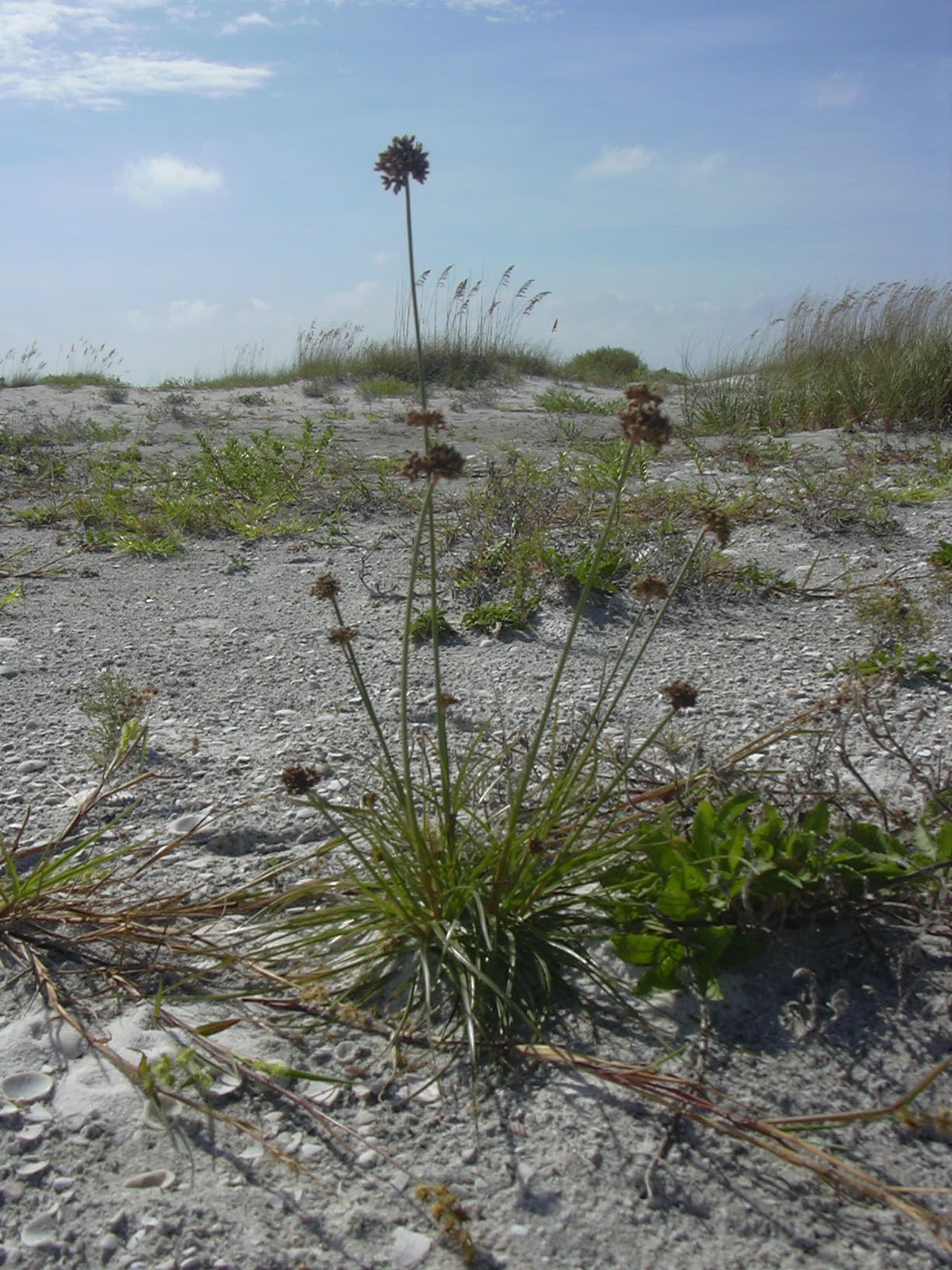
In Florida it grows on beaches, dunes, coastal rock and sandy disturbed sites, mainly along the peninsula’s coasts and the Keys. In Puerto Rico and the U.S. Virgin Islands it grows in similar coastal habitats. USDA PLANTS lists some introduced records of the species as well, but it is native in all three places.
Worldwide it is one of the most widespread coastal sedges, found from the Caribbean and tropical America to Africa, the Middle East, southern Asia, Australia and across the Pacific. Its seeds are carried by ocean currents and birds, which explains its huge range.
📋 Regional plant lists featuring Mauʻu ʻAkiʻaki: Hawaii · North & South Florida · Puerto Rico
Growing & Care Guide
Mauʻu ʻakiʻaki is sold by Hawaiian native plant nurseries and is easy to grow in sunny, well-drained sites. In Florida, look for it at native plant nurseries that carry coastal and dune plants. Buy nursery-grown plants and never dig plants from beaches and shorelines, where they help hold sand and rock. Hawaiʻi restricts bringing plants and soil in from other states, so use island-grown stock.
Light
Full sun. It tolerates light shade but stays more compact and flowers more in sun.
Soil & Water
Sand, gravel, coral rubble or any very well-drained soil. It is highly tolerant of salt spray, wind and drought. Water young plants until they root in, then only in long dry spells. Heavy, wet soil causes rot.
Planting Tips
Use it in coastal rock gardens, between stepping stones, in gravel beds and pavers, along walls, in beach plantings and green roofs, or as a fine-textured edging. Plant 8 to 12 inches apart for a continuous low cover. Outdoors it is suited to zones 9 to 13, including coastal South Florida and all lowland Hawaiʻi.
Pruning & Maintenance
Very little care is needed. Trim off old flower stalks and comb out dead leaves if you want a tidy look. It may self-seed in gravel and pavement cracks.
Propagation
Grows from seed sown on the surface of a sandy, well-drained mix and kept lightly moist, or by dividing established clumps.
Landscape Uses
- Coastal rock gardens: a tough, tufted native for cracks, gravel and rocky soil
- Beach and dune plantings: tolerates salt spray, wind and drought
- Paver and path plantings: compact enough to tuck between stones
- Restoration: used to revegetate rocky and sandy coastal sites
Wildlife & Ecological Value
On wind-blasted coasts, mauʻu ʻakiʻaki is one of the first plants to take hold in bare rock and sand.
For Pollinators
It is wind-pollinated and offers little to pollinators, but its dense tufts shelter small native insects and spiders.
For Birds
Its small seeds are eaten by seed-eating birds, and on seabird islets and coasts its clumps add cover around nesting areas.
For Mammals
Hawaiʻi’s only native land mammal is the Hawaiian hoary bat, which hunts insects along coasts. In Florida, small mammals eat the seeds.
Ecosystem Role
Its roots bind sand and fill cracks in lava and rock, helping to start soil formation and stabilize the coastal strand for other plants.
Cultural & Historical Uses
The Hawaiian name mauʻu ʻakiʻaki pairs mauʻu, a general word for grasses and sedges, with ʻakiʻaki, the name of the native seashore dropseed with which it often grows. The English name hurricanegrass reflects its ability to survive storms on exposed coasts.
The Scottish botanist Robert Brown described the species in 1810 from Australian material. Several forms are recognized across its huge range; Hawaiian plants are often compact, with tight heads of spikelets, while some Florida and Caribbean plants have more open, branched clusters.
Because it is native to Hawaiʻi, Florida and Puerto Rico and tolerates some of the harshest growing conditions in the country, hurricanegrass is a good example of a modest native plant that can replace non-native turf and groundcovers in tough coastal sites.
Frequently Asked Questions
Is mauʻu ʻakiʻaki native to Hawaiʻi?
Yes. It is indigenous: native to Hawaiʻi and also to tropical coasts worldwide. It grows along the coasts of all the main islands.
Is hurricanegrass a grass?
No. Despite its English name, it is a sedge in the family Cyperaceae.
Where does it grow on the U.S. mainland?
USDA PLANTS lists it as native in Florida, where it grows on beaches, dunes and coastal rock. It is also native in Puerto Rico and the U.S. Virgin Islands.
How do I use it in a garden?
Plant it in full sun in sand, gravel or very well-drained soil, in coastal rock gardens, between pavers or in beach plantings. It needs little water once established.
Does it tolerate salt?
Yes. It grows within reach of salt spray on rocky and sandy shores.

Looking for a nursery that carries Mauʻu ʻAkiʻaki?
Browse our native plant nursery directory: Florida & Hawaii

