Best Fruit Trees for Small Spaces: Compact and Productive Options
We independently select all products and services. If you click through links we provide, Plant Native may earn a commission with no extra cost to you.
Last updated: November 13, 2026
Fruit trees are a great addition to any garden or outdoor space. Not only do they provide fresh, delicious fruit, but they also add natural beauty and shade. However, for those with limited space, finding the right fruit tree can be a challenge. That’s where the best fruit trees for small spaces come in.
When it comes to small spaces, it’s essential to choose fruit trees that are compact and can thrive in containers. Dwarf fruit trees are an excellent option for those with limited space. They are smaller in size and can be grown in pots, making them perfect for balconies, patios, or small gardens.
When selecting the best fruit trees for small spaces, it’s crucial to consider the type of fruit you want to grow, the climate in your area, and the amount of sunlight your outdoor space receives. Additionally, you’ll want to pay attention to the rootstock, which determines the size of the tree and its ability to adapt to different growing conditions.
In this article, we spent hours researching and testing the best fruit trees for small spaces. We’ve narrowed down the top options, taking into account factors such as size, fruit quality, and ease of care. Whether you’re a seasoned gardener or a beginner, we’ve got you covered with our comprehensive guide to the best fruit trees for small spaces.
Best Fruit Trees for Small Spaces
When it comes to growing fruit trees, space can be a limiting factor for many. However, that doesn’t mean you have to give up on the idea of having your own fruit trees. With the right varieties and some careful planning, you can grow delicious fruit even in small spaces. In this article, we’ve rounded up the best fruit trees for small spaces, so you can enjoy fresh fruit right from your own backyard.
Our top pick

- The attached banana stand keeps bananas off the countertops, preventing early rotting and bruising.
- The open design of the fruit basket helps fruit ripen at the same time, preventing early rotting and spoilage.
- The sleek design goes well with any existing kitchen aesthetic or theme.
Cons
- The fruit tree is not dishwasher safe and requires manual cleaning.
- The size might be too small for larger families or households.
- The fruit tree might wobble if there are no fruits or items in the bottom section.
The Spectrum Euro Small Fruit Bowl pairs an open wire bowl with an attached banana hook in one compact unit. Overall, we highly recommend it for anyone looking for a space-saving solution to keep their fruits fresh and organized. When you weigh all the factors, this one rises above the rest.
Best for trees
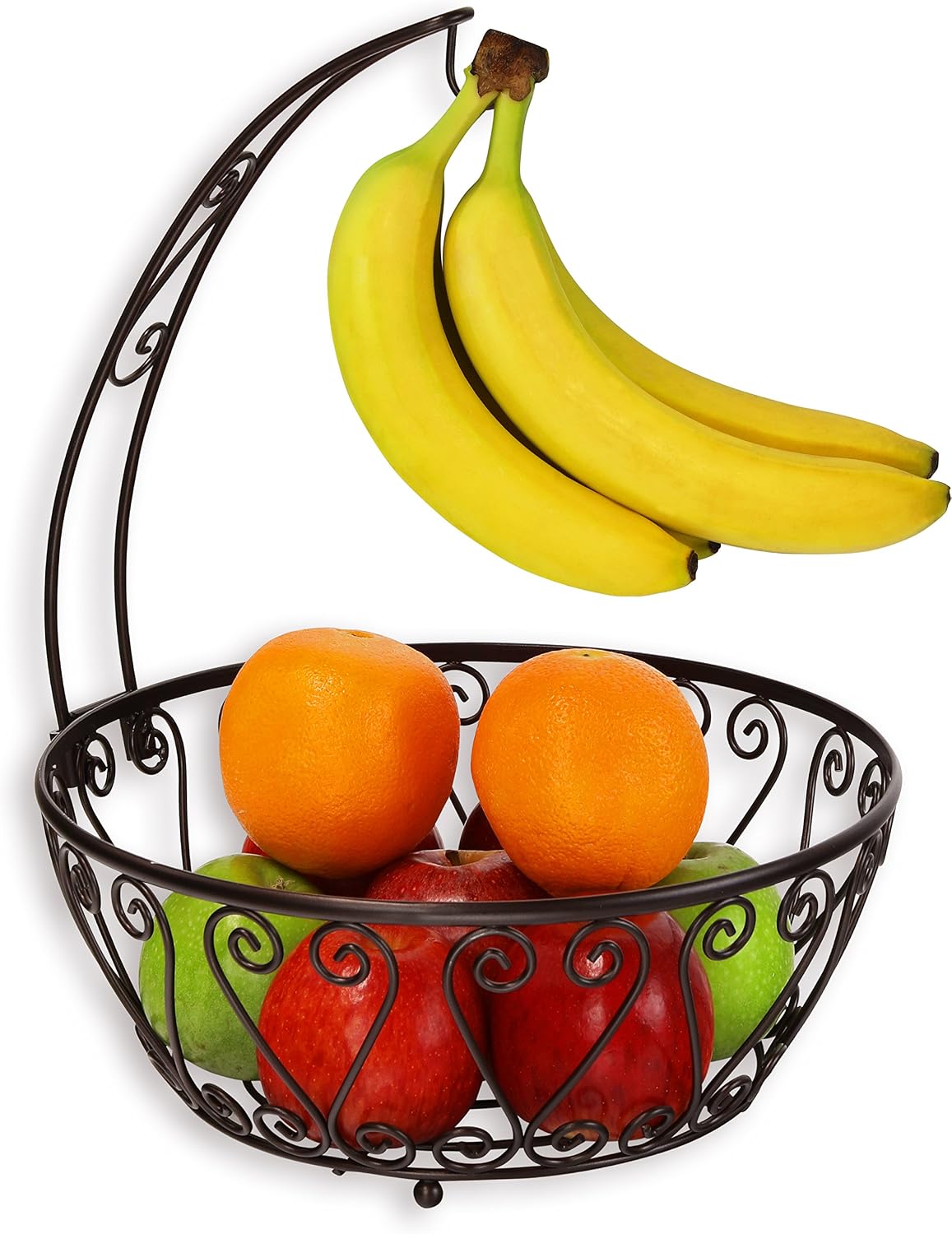
- Hanging bananas off the countertop helps prevent bruising
- Removable hanger works for bananas or grapes, or can be taken off entirely
- Bronze finish with decorative scrollwork; one of the most-reviewed fruit baskets on Amazon
Cons
- At 15.65 inches tall it needs some clearance under upper cabinets
- The ornate style may not suit a modern kitchen
- Holds a family-size amount of fruit, but not bulk produce
The SimpleHouseware Fruit Basket Bowl is a well-reviewed, space-saving way to keep fruit and bananas within easy reach. It’s a well-earned pick that lives up to the promise.
Best for small spaces

- The beautiful blooming design adds a touch of freshness to your kitchen countertop.
- The open wire design encourages even ripening in fruit, and prevents buildup of ethylene gas, so your fruits will stay fresh for longer.
- The sturdy steel construction ensures the base sits evenly on countertops, dining room tables, bars, and more.
Cons
- The metal center arm and hook may bend under the weight of too many bananas.
- The basket is not dishwasher safe, so it requires hand-washing.
- The compact dimensions may not be suitable for larger families or those who buy a lot of fruit.
We’ve noticed that our fruits stay fresh for longer, which means less waste and more enjoyment. Overall, we highly recommend the Spectrum Bloom Wire Small Fruit Tree & Basket for anyone looking for a stylish and functional way to store and display their fruits and vegetables. It fits neatly into tight spots without sacrificing performance.
Best mesh option
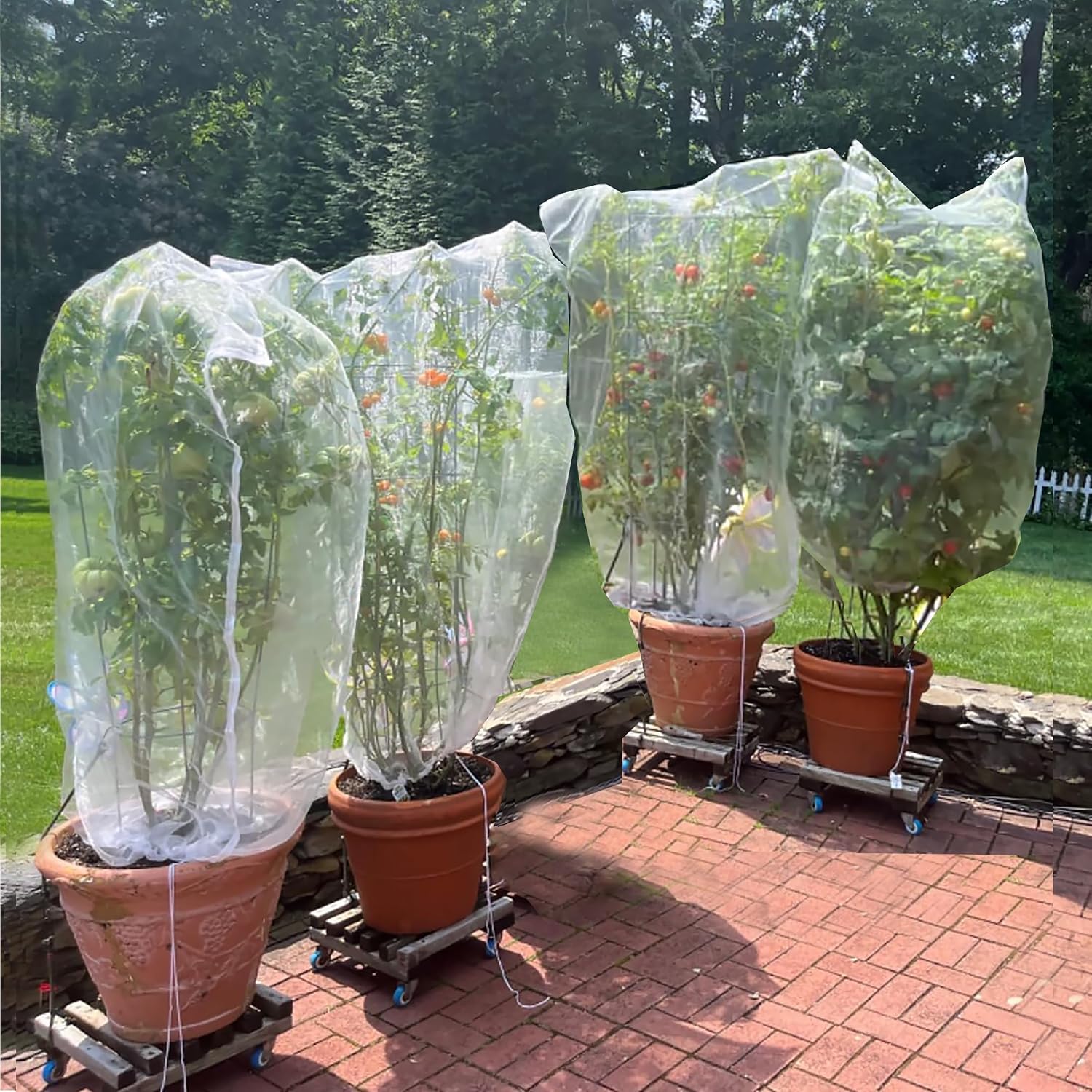
- Reinforced 60D tear-resistant mesh made from UV-resistant PET material.
- The drawstring closure makes it easy to tighten the bag around a bush or pot.
- The package includes 4 reusable netting bags, each 3.28 x 2.62 ft, suitable for blueberry bushes, tomato plants and small fruit trees.
Cons
- Each bag is sized for small bushes and potted plants, not full-size fruit trees.
- The bags have to be opened or removed to harvest.
- The rectangular shape may not fit all types of fruit trees.
The SATXTREM 4-pack covers blueberry bushes, tomatoes and small fruit trees with fine mesh that blocks birds, squirrels and insects. Overall, if you want to protect your fruits and vegetables from birds and insects, this netting is a reliable and easy-to-use solution. For this particular need, it’s the clear frontrunner.
Best for indoors
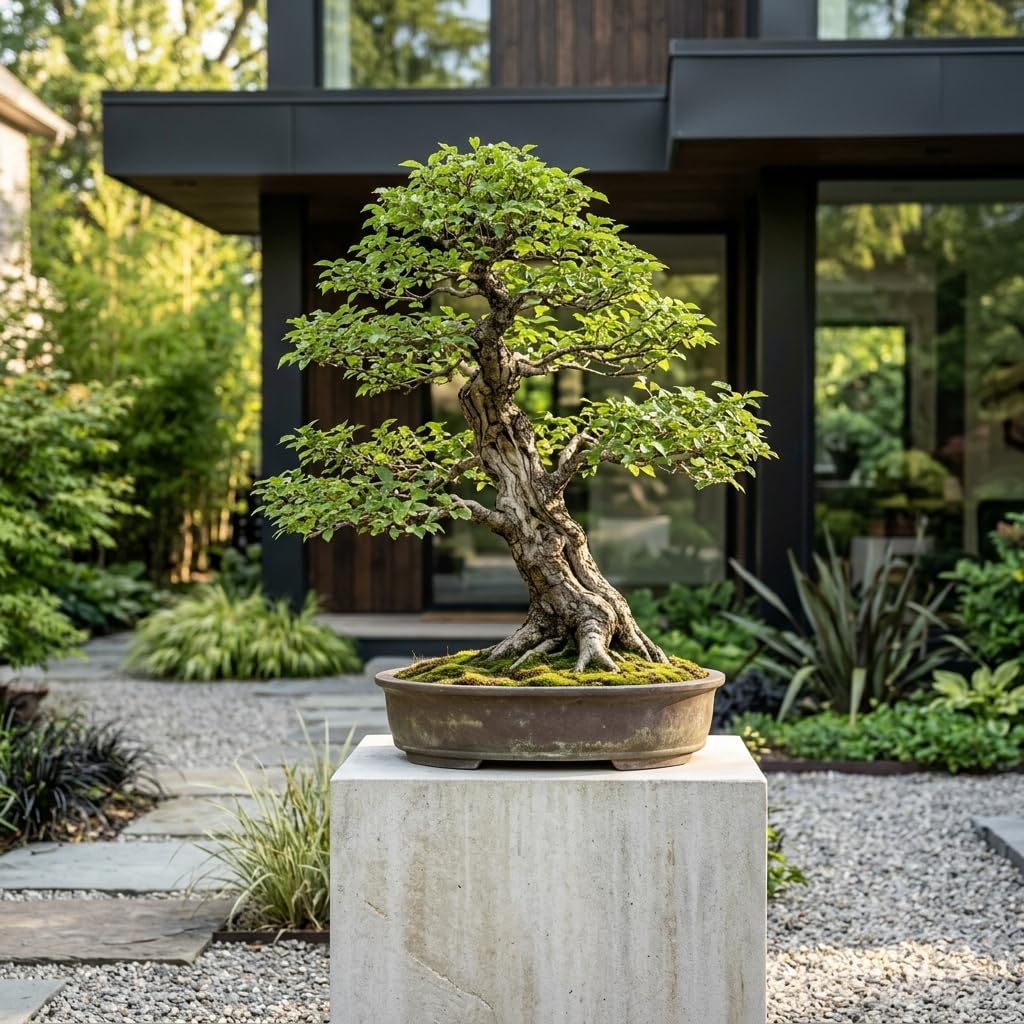
- The seeds can be planted indoors or outdoors, giving you flexibility in growing them.
- The package contains 20 seeds, which is a good value for the price.
- The listing includes guidance on stratification, sowing and bonsai training.
Cons
- Many customers reported that the seeds did not germinate, even when following the instructions.
- Some buyers received a package with fewer seeds than advertised.
- The product’s rating is only 2.8 out of 5 stars, which suggests that many customers were dissatisfied with their purchase.
The listing notes that cherry seeds often need cold, moist stratification before they will germinate, so expect a slow start. However, if you’re an experienced gardener looking for a challenge, you might enjoy trying to grow these seeds. It delivers exactly where it counts most.
Best for large areas
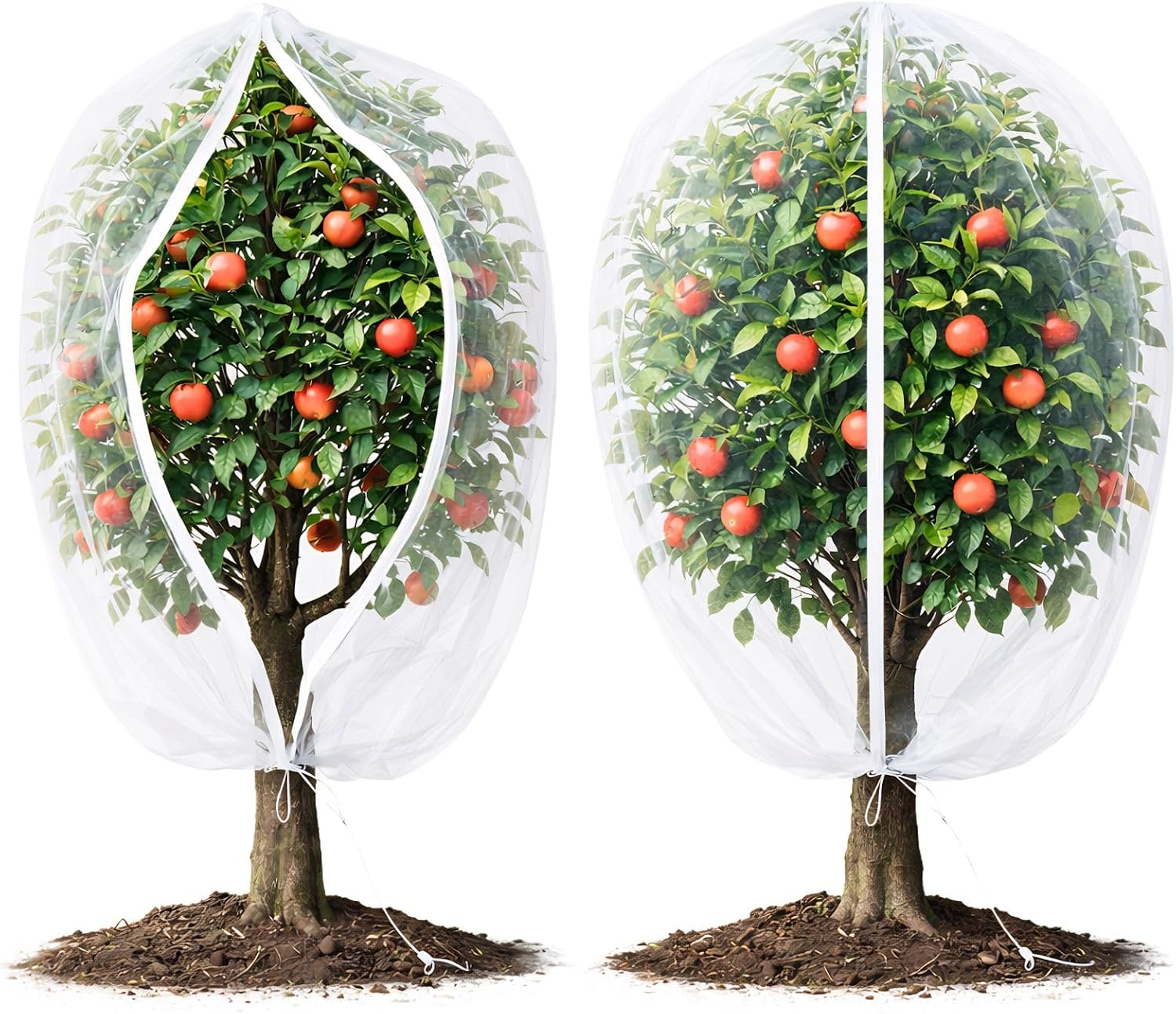
-
The ultra-fine mesh cloth with HDPE material is lightweight and durable, providing excellent protection for your fruit trees, berry plants, flowers, and garden crops throughout the growing season.
-
The zipper and drawstring design make it effortless to put on and take off, and the practical design lets you secure it tightly, keeping the cover from flying off with the wind.
-
The garden netting is designed to allow rain, sunlight, and water to penetrate while keeping insects out. Its see-through mesh ensures your plants can breathe while allowing you to monitor their growth.
Cons
-
The cords may break easily with just a few tightening and loosening sessions.
-
The netting may rip easily within a few weeks of use, and animals can get underneath it.
-
The sizes offered may not fit larger fruit trees and plants.
The Homoda 2-pack gives you two 8 x 8 ft zippered covers for small fruit trees, shrubs and berry bushes, and the netting allows rain, sunlight, and water to penetrate while keeping insects out. If you’ve got a big area to cover, this is the way to go.
Best wooden option
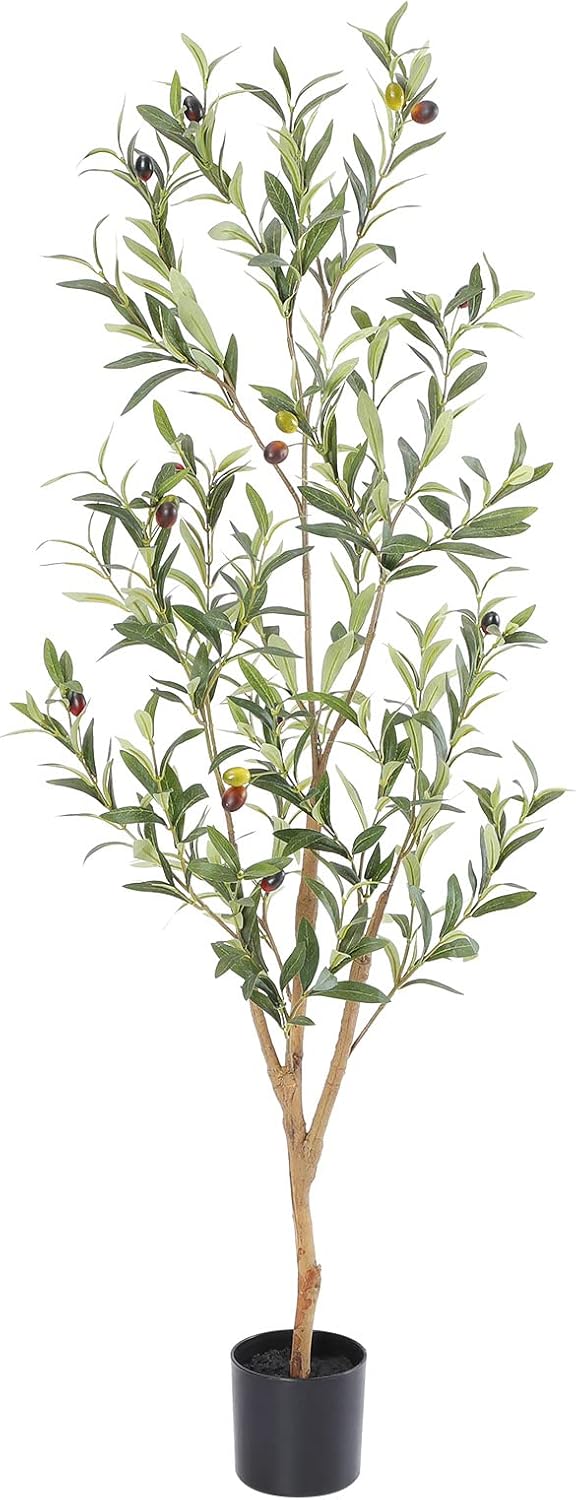
- Natural wood trunk and silk leaves give it a realistic, airy look
- No watering, light or pruning needed; just dust it occasionally
- Bendable branches can be shaped to your liking
Cons
- Requires some assembly and branch shaping after unboxing
- Sold as a single tree, so matching pairs cost more
- An artificial plant, so it provides no fruit or habitat
The Bellacat Faux Olive Tree is a well-reviewed, maintenance-free way to bring an olive-tree look into a small indoor space. It’s a well-earned pick that lives up to the promise.
Buying Guide
When choosing the best fruit tree for small spaces, there are a few important factors to consider. Here are some key features to look for:
Size and Shape
First and foremost, consider the size and shape of the tree. For small spaces, it’s important to choose a tree that will fit comfortably in your yard or container. Look for varieties that are naturally compact or can be trained to grow in a specific shape, such as espalier or columnar.
Pollination
Many fruit trees require cross-pollination to produce fruit, so it’s important to choose a tree that is compatible with other varieties in your area. Check with your local nursery or extension service to find out which varieties are best suited for your location.
Climate and Hardiness
Make sure to choose a tree that is well-suited to your climate and hardiness zone. Some fruit trees require a certain number of chill hours to produce fruit, while others are more tolerant of heat and drought. Check the label or ask a knowledgeable nursery staff member for advice.
Disease Resistance
Finally, consider the disease resistance of the tree. Some varieties are more susceptible to pests and diseases than others, so it’s important to choose a tree that is known for its resistance to common problems in your area.
By considering these factors, you can choose the best fruit tree for your small space that will provide you with delicious fruit for years to come.
We independently select all products and services. If you click through links we provide, Plant Native may earn a commission with no extra cost to you. As an Amazon Associate I earn from qualifying purchases.