
Best Wildlife Cameras for Observing Garden Fauna in 2026
We independently select all products and services. If you click through links we provide, Plant Native may earn a commission with no extra cost to you.
Last updated: November 13, 2026

Gardening is a popular hobby for many people, and observing the wildlife that visits your garden can be a rewarding experience. Whether you’re interested in identifying the birds that visit your birdbath or the squirrels that raid your bird feeder, a wildlife camera can help. Wildlife cameras are designed to capture images and videos of animals in their natural habitat without disturbing them.
When it comes to observing garden fauna, there are several factors to consider when choosing a wildlife camera. One of the most important is the camera’s resolution. A high-resolution camera will capture clear, detailed images and videos, making it easier to identify the animals you’re observing. Another important factor is the camera’s battery life. Since wildlife cameras are often placed in remote locations, it’s important to choose a camera with a long battery life to ensure that it will continue to function even if you’re not able to check it regularly.
In this article, we’ll be reviewing some of the best wildlife cameras for observing garden fauna. We’ll be looking at cameras with a range of features, including high-resolution sensors, long battery life, and motion detection. We’ll also be discussing some of the factors you should consider when choosing a wildlife camera for your garden. With our help, you’ll be able to choose the best camera for your needs and start observing the wildlife in your garden in no time.
Best Wildlife Cameras for Observing Garden Fauna
We have researched and tested various wildlife cameras to bring you the best options for observing the diverse range of fauna that may be visiting your garden. Whether you want to capture images of birds, squirrels, or even nocturnal animals, our list of top wildlife cameras has got you covered. These cameras are equipped with advanced features such as motion detection, night vision, and long battery life to ensure that you never miss a moment of the action. Check out our roundup below to find the perfect camera for your garden wildlife observations.
Our top pick
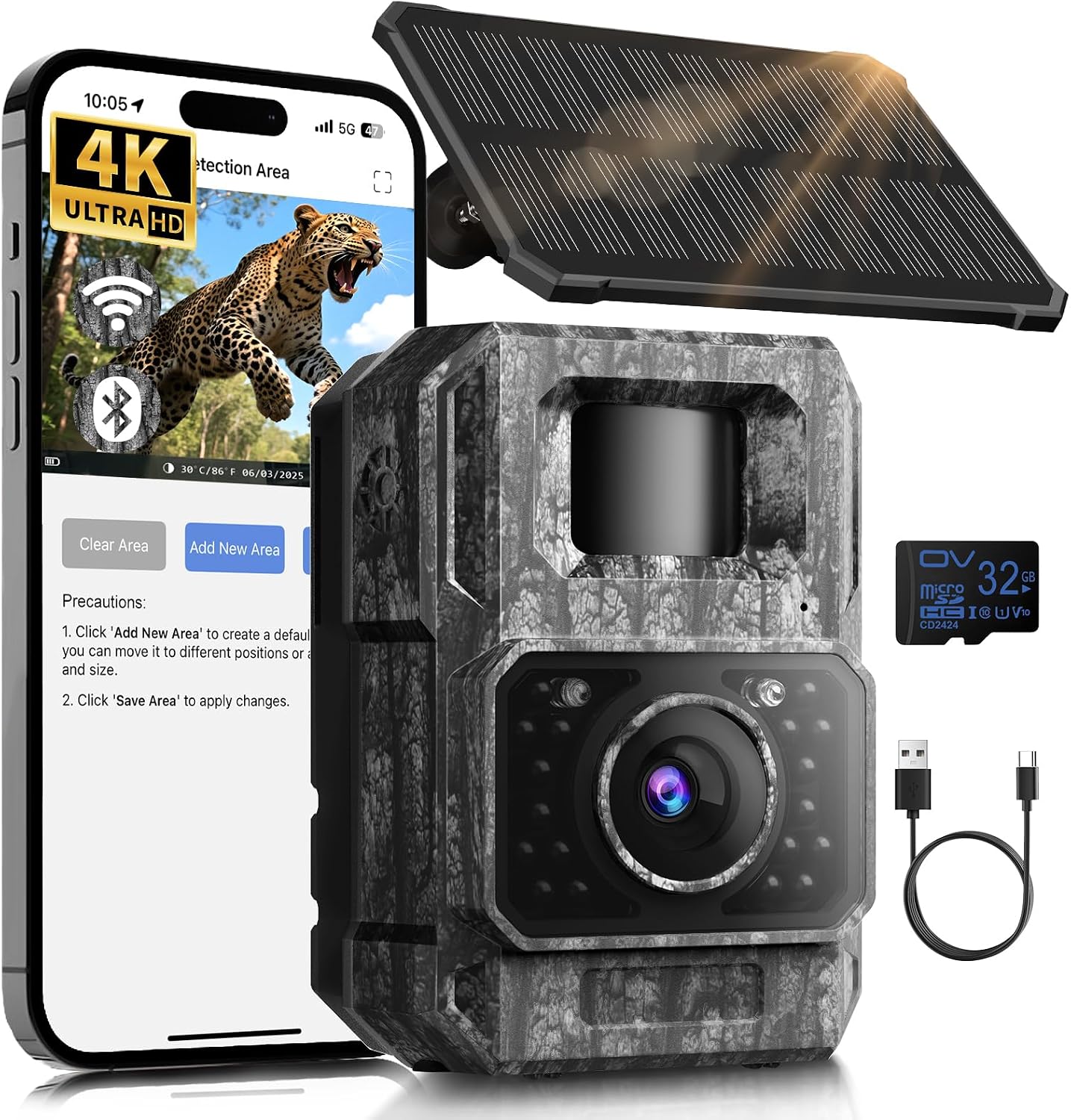
- Solar panel keeps the battery topped up, so no AA batteries to replace.
- 4K video, 64MP photos and a 0.1-second trigger.
- Phone transfer over the camera’s WiFi hotspot, no subscription.
- IP66 weather rating and infrared night vision to about 65 ft.
Cons
- Does not join home WiFi or cellular networks, so there are no remote alerts.
- WiFi range is roughly 33 to 50 ft.
- The solar panel needs a sunny spot to keep the battery charged.
The MAXDONE solar camera is a low-maintenance choice for watching a garden: once the panel faces the sun, it keeps recording without battery swaps, and you can pull photos to your phone from nearby.
Best for gardens
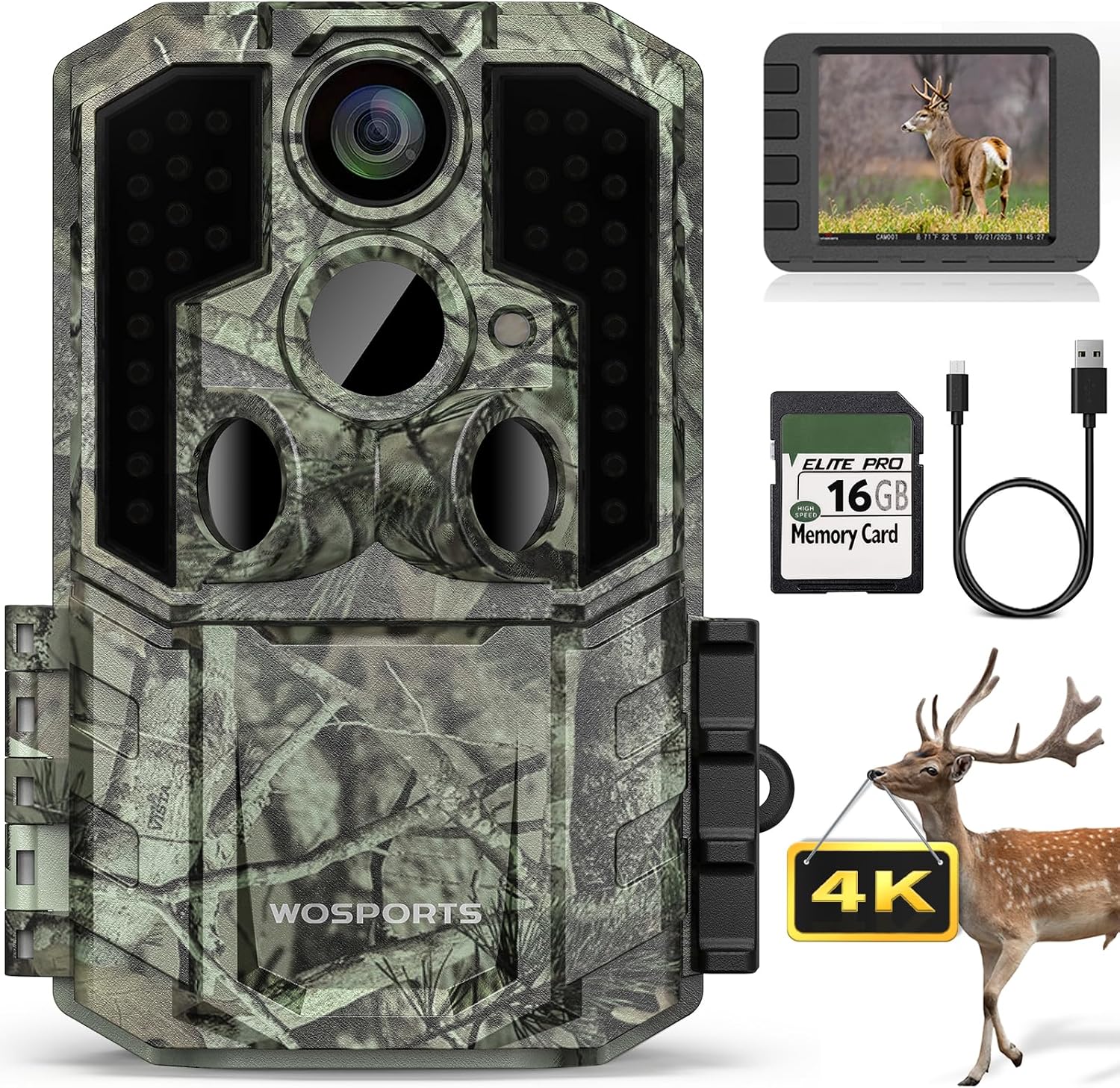
- No-glow infrared is less likely to scare off visiting animals.
- Built-in 2-inch screen for checking clips on the spot.
- Time-lapse, timer and burst modes.
- Thousands of Amazon ratings.
Cons
- No WiFi or app, so you have to pull the SD card or use the screen.
- AA batteries are not included.
- A solar panel or rechargeable battery is sold separately.
The WOSPORTS G600 is a simple, well-reviewed camera for a garden or backyard: strap it to a fence post or tree, and its no-glow night vision records nocturnal visitors without a visible flash.
Best from KJK
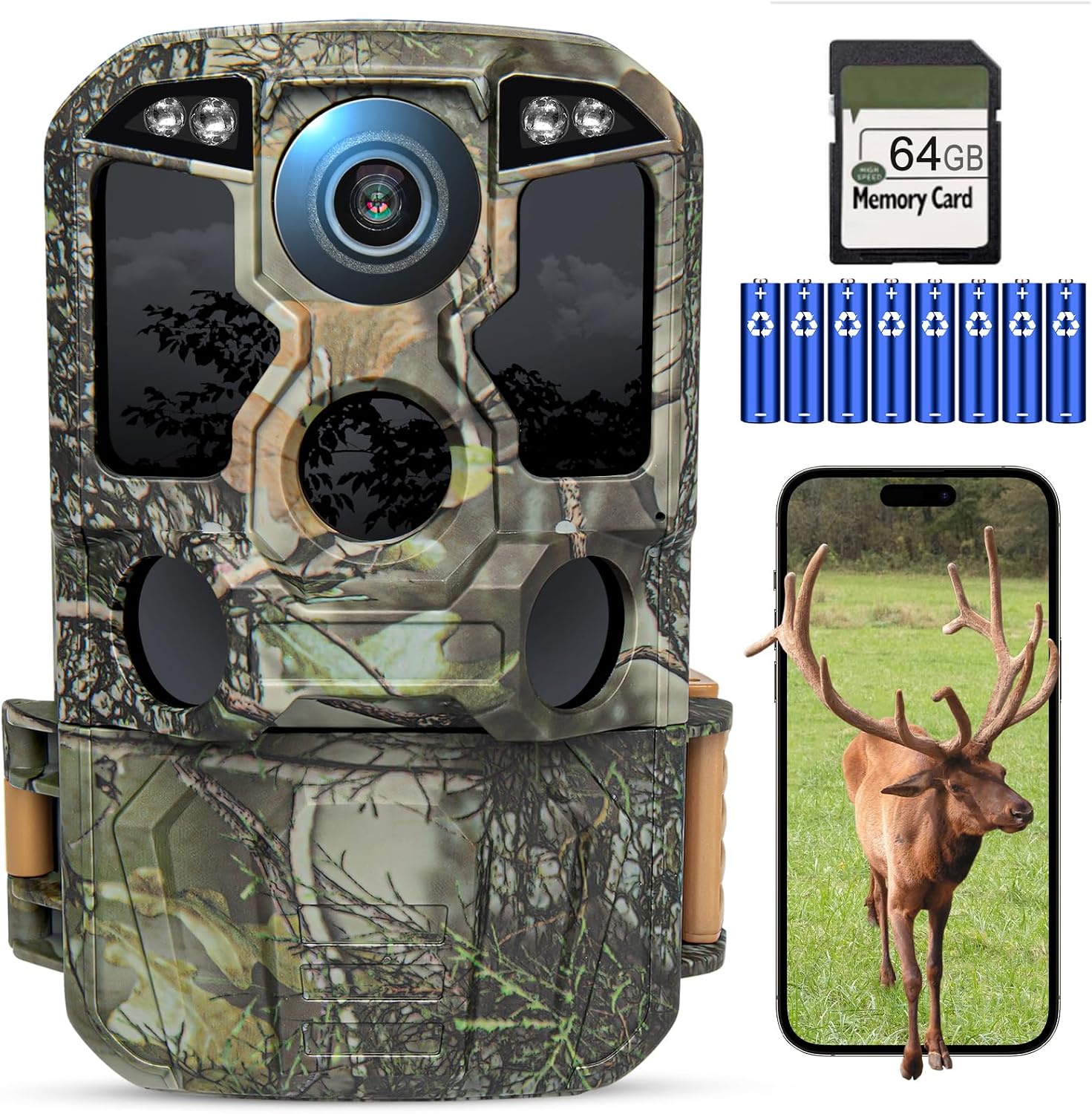
- Free app lets you set up the camera and view clips on your phone.
- 64GB card and 8 AA batteries included.
- IP67 waterproof and dustproof housing.
- Wide 130-degree detection angle.
Cons
- Costs more than basic non-WiFi cameras.
- WiFi range is limited to near the camera.
- Camo housing may be overkill for a small garden.
The KJK WiFi camera suits gardeners who want to browse their wildlife clips on a phone instead of pulling the SD card, and it comes with the card and batteries you need.
Best from GardePro

- Sony Starvis sensor for clearer dusk and night images.
- Fast 0.1-second trigger with 5-shot burst mode.
- Motion, time-lapse and hybrid recording modes.
- Low power draw without WiFi or cellular.
Cons
- No WiFi or app; you retrieve the SD card to see captures.
- 8 AA batteries and SD card are not included.
- Solar panel is sold separately.
The GardePro A3 is a good pick for gardens with lots of dawn and dusk activity, where its low-light sensor helps capture clearer images of foxes, raccoons and deer.
Best budget pick
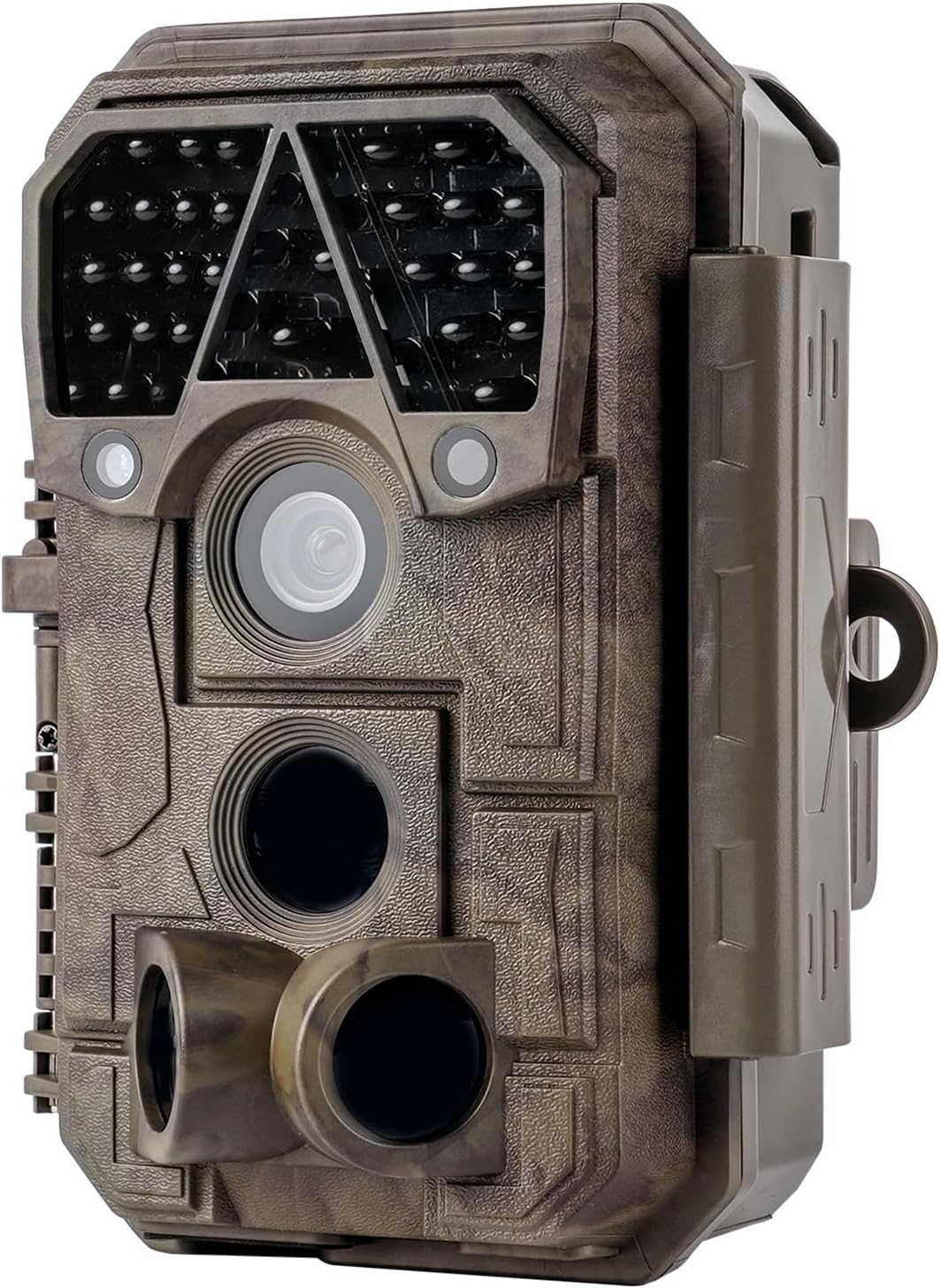
- Low price for a 64MP, 0.1-second-trigger camera.
- No-glow night vision out to about 100 ft.
- Large 2.4-inch preview screen.
- Thousands of Amazon ratings.
Cons
- No WiFi or app.
- Batteries and SD card are not included.
- Solar panel is an extra purchase.
The Meidase P70 shows you don’t have to spend a lot to get sharp day and night captures of garden wildlife.
Another great option #2
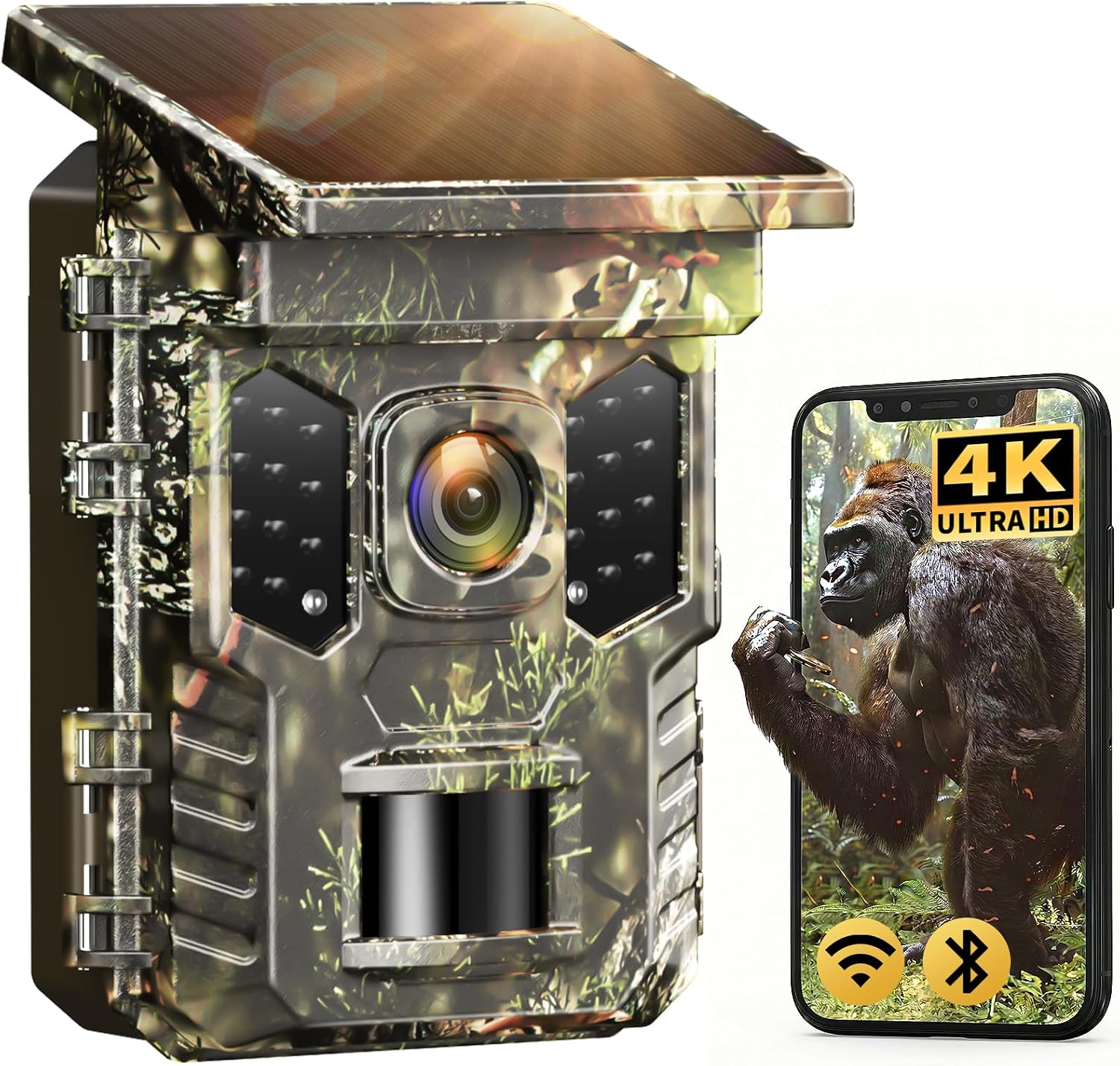
- Solar charging plus several backup power options.
- On-site phone viewing with no monthly fee.
- Time-lapse, scheduled recording and 1 to 5 shot burst.
- IP66 weatherproof housing.
Cons
- No home WiFi or remote viewing.
- MicroSD card is not included.
- Detection range is shorter than some AA-powered cameras.
The XTU solar camera is a budget-friendly way to get solar power and phone access in one unit for watching birds and garden visitors.
Best WiFi pick
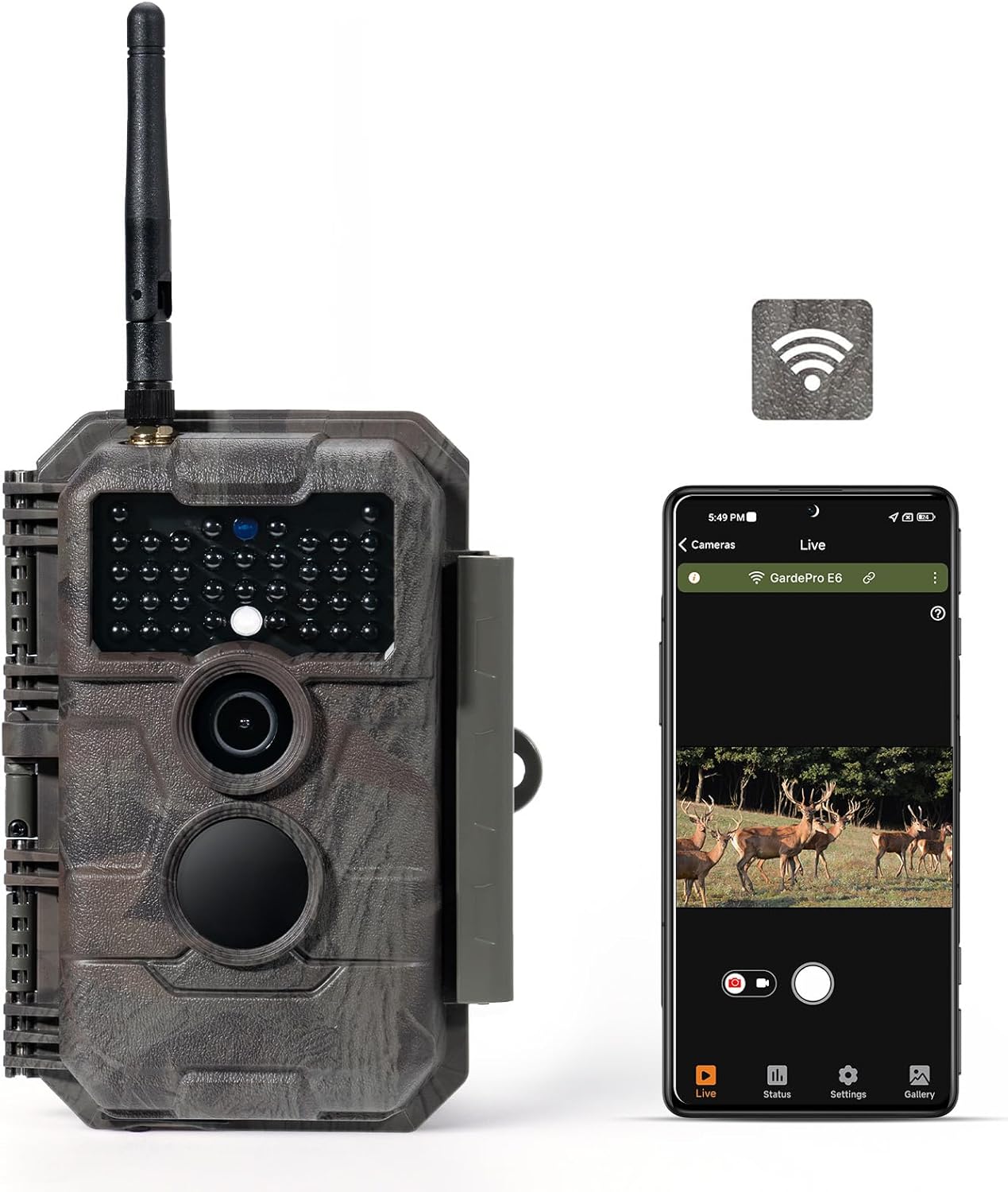
- Live View on your phone for aiming and watching in real time.
- No subscription for the app.
- No-glow infrared that won’t disturb animals.
- Supports GardePro’s optional solar panel.
Cons
- Connects to your phone only, not to home WiFi or cellular networks.
- 8 AA batteries are not included.
- Phone range is limited to about 45 ft in open areas.
The GardePro E6 is a good choice if you want to check what is happening at a feeder or pond from your phone without disturbing the animals.
Another great option #3
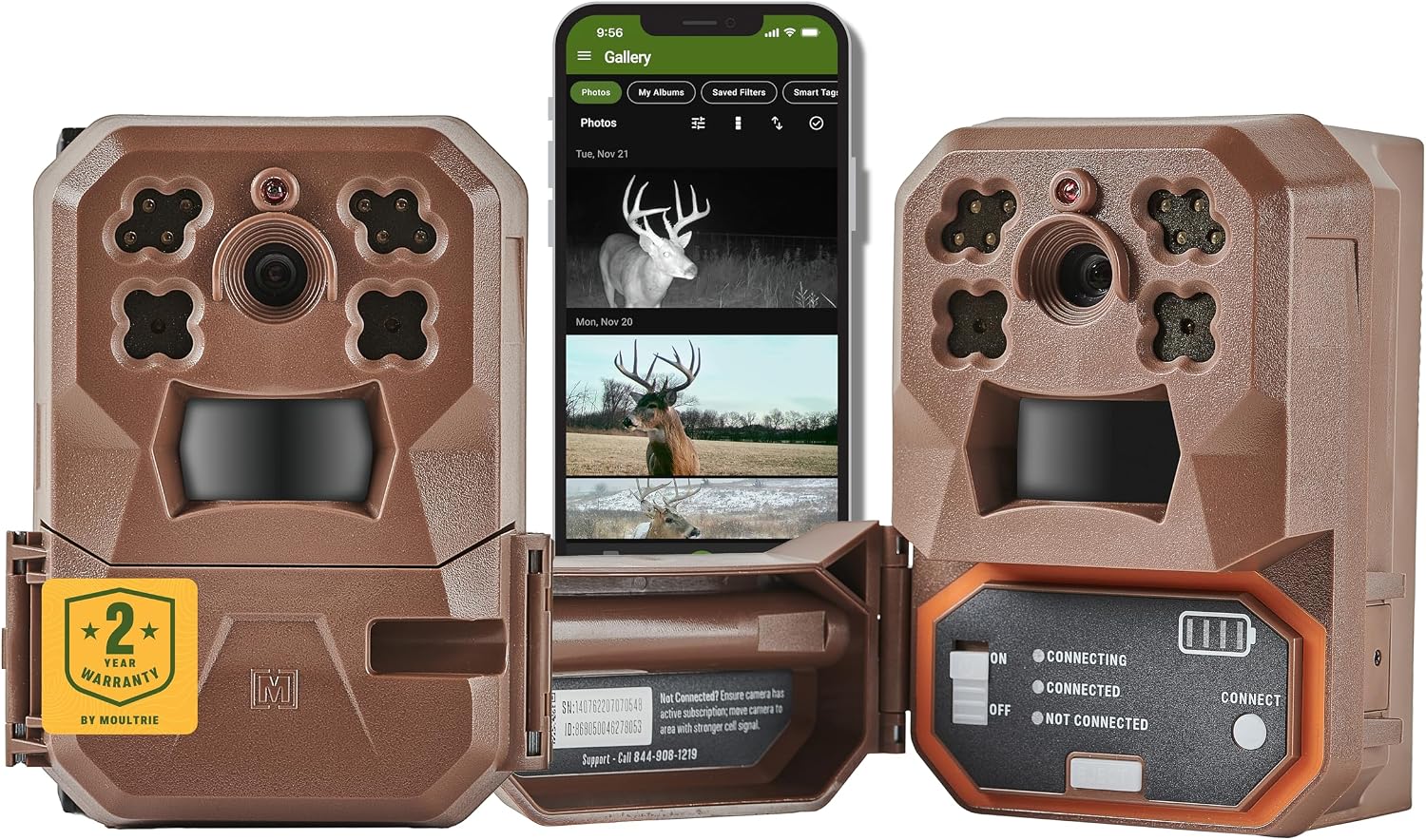
- Photos arrive on your phone from anywhere with cell coverage.
- Built-in memory, so no SD card to buy.
- Two cameras to cover different parts of the yard.
- Unlimited cloud storage in the app.
Cons
- Needs a paid Moultrie Mobile data plan for cellular uploads.
- Video is only 720p.
- Higher upfront cost than single non-cellular cameras.
The Moultrie Edge 2-pack is the pick for keeping an eye on a garden or property while you are away, since photos upload over cellular networks to your phone.
Also great
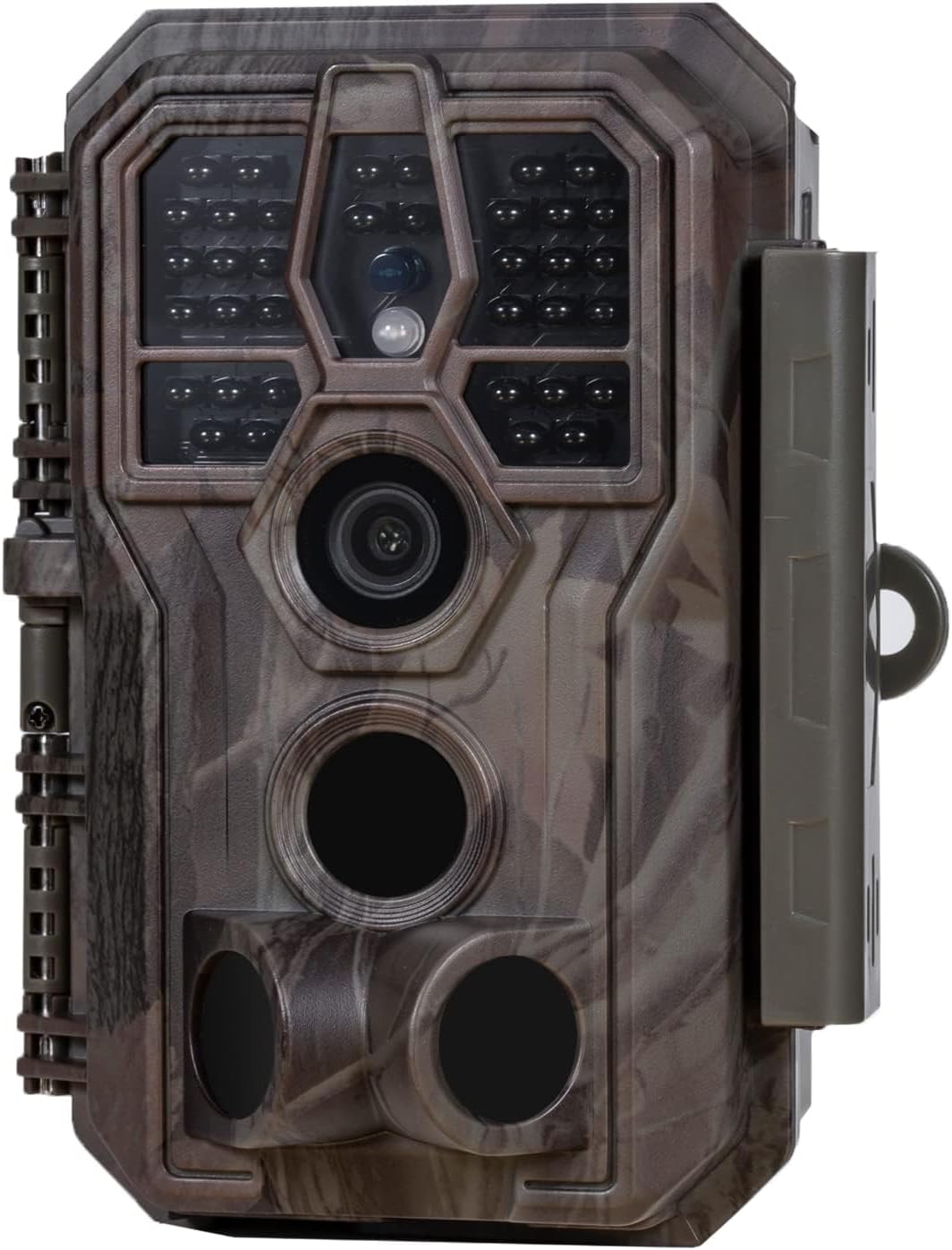
- Three PIR sensors for a fast 0.1-second trigger.
- IP66 rated for rain and snow.
- Standard tripod thread for flexible mounting.
- Low price for the features.
Cons
- No WiFi or app; you check the SD card.
- Batteries and SD card are not included.
- Solar panel is sold separately.
The GardePro E5S is an affordable, easy-to-mount camera for catching quick visitors like birds and squirrels in the garden.
Buying Guide
When it comes to choosing the best wildlife camera for observing garden fauna, there are a few key features to consider. Here are some factors to keep in mind when making your decision:
Image Quality
One of the most important features to consider when choosing a wildlife camera is image quality. Look for cameras that offer high resolution and sharp, clear images. This will allow you to capture detailed images of the wildlife in your garden, even in low light conditions.
Motion Detection
Another important feature to consider is motion detection. Look for cameras that offer fast and accurate motion detection, as this will ensure that you capture all the action in your garden. Some cameras even offer advanced motion detection features, such as facial recognition or heat sensing, which can help you capture even more detailed images.
Battery Life
Battery life is another important factor to consider when choosing a wildlife camera. Look for cameras that offer long battery life, as this will allow you to capture images for extended periods of time without needing to recharge or replace the batteries.
Durability
Finally, consider the durability of the camera. Look for cameras that are weatherproof and can withstand the elements, as well as those that are built to withstand rough handling. This will ensure that your camera lasts for years to come and can capture images in any conditions.
By keeping these factors in mind when choosing a wildlife camera, you can find the best product to capture all the amazing wildlife in your garden.
We independently select all products and services. If you click through links we provide, Plant Native may earn a commission with no extra cost to you. As an Amazon Associate I earn from qualifying purchases.
Thanks for stopping by, Zach! We appreciate our readers and love the engagement. Wishing you a great growing season!
Interesting. My experience has been a little different but every garden is unique I guess.
Thanks for the constructive input! We’ll look into updating with more detail. -Plant Native Team
Glad I found this.
Thanks Diane! Let us know how it goes. -Plant Native Team
Has anyone tried this in raised beds? That’s all we have to work with.