Low Maintenance Native Plants Tennessee for Easy and Sustainable Gardening
Last updated: October 13, 2026
Low maintenance native plants in Tennessee are perfect for gardeners who want attractive landscapes with less work. These plants already know the local climate and soil, so they need way less water, fertilizer, and fuss than non-native species.
Choosing native plants like Eastern Redbud, Black-eyed Susan, and Virginia Bluebells makes for a sustainable garden that pretty much takes care of itself.
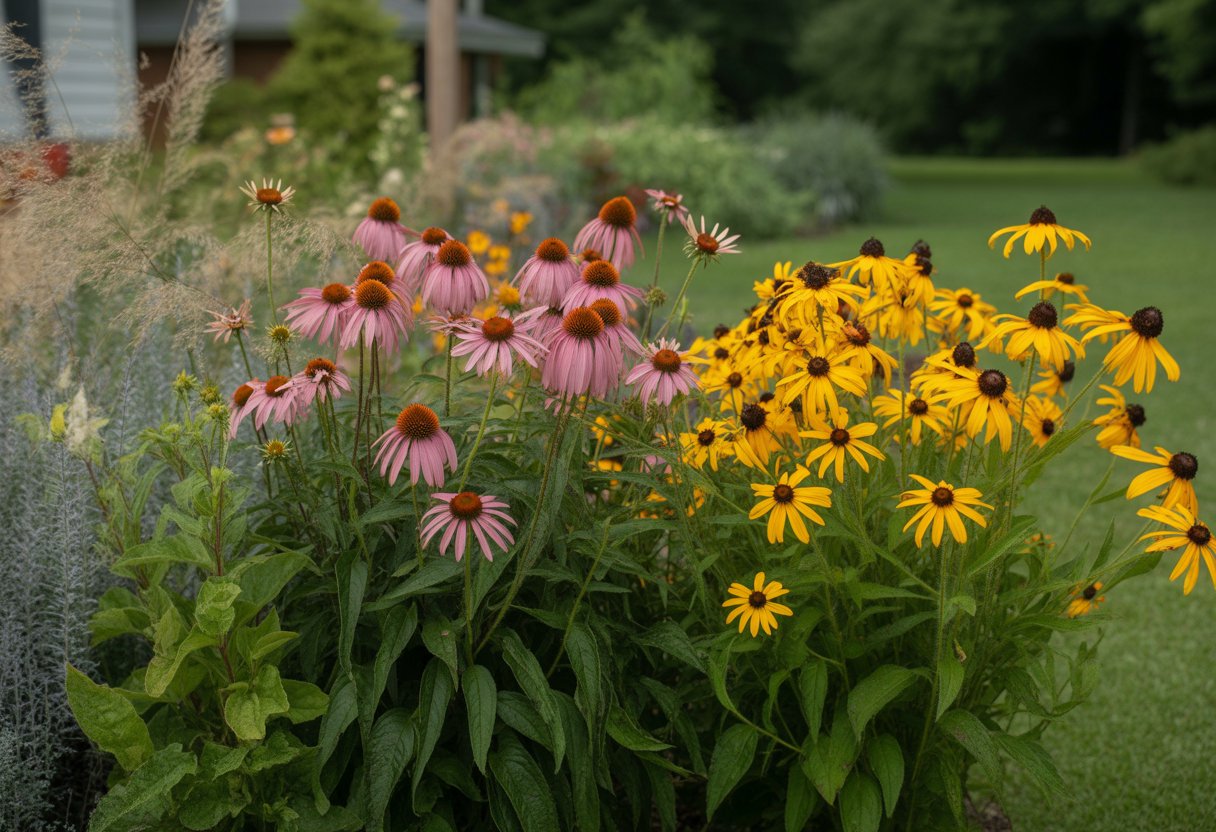
Native plants also help local wildlife by offering food and shelter for birds, pollinators, and helpful insects. Since these plants are tough, you won’t need as many pesticides or hours of upkeep—good news for both new and seasoned gardeners.
Benefits of Low Maintenance Native Plants in Tennessee
Low maintenance native plants just make sense for Tennessee. They use less water and fertilizer, and they help keep your garden—and the local ecosystem—steady and healthy.
Supporting Local Wildlife
Native plants in Tennessee feed and shelter local wildlife. The Eastern Tiger Swallowtail butterfly and native bees show up for the blooms on black-eyed Susan and coneflower.
Birds get a boost from native shrubs like serviceberry, which fruit during migration. These plants also give insects, amphibians, and small mammals a place to hide and breed.
When you use native plants, you don’t need as many pesticides. That helps keep insect populations healthy, which is honestly vital for the whole food web.
Enhancing Biodiversity
Planting native species brings more life to your garden and the region. Natives help avoid the boring monocultures you get with some non-native plants.
Tennessee’s wild columbine and bee balm pull in all sorts of pollinators, so you get better pollination and more seeds. That means stronger, more diverse plant communities.
Native plants add resilience, helping the ecosystem weather disease and wild weather swings. The more variety, the stronger and more stable things get.
Adaptation to Tennessee Climate
Native plants know how to handle Tennessee’s hot summers, cold winters, and unpredictable rain. They just don’t need much help from us.
Eastern redbud and switchgrass shrug off drought and tricky soils, making them easier to care for than most exotics. You’ll spend less time watering and worrying.
Since these plants are used to local pests and diseases, you can skip a lot of the chemicals. They stay healthy and good-looking almost all year.
Top Low Maintenance Native Plants for Tennessee Gardens
Low maintenance native plants for Tennessee look great and help the local ecosystem. Once they’re settled in, they need barely any care, and pollinators like bees and butterflies love them.
You’ll find a mix of hardy perennials, grasses, and groundcovers that just fit right in with Tennessee’s climate.
Black-Eyed Susan and Other Rudbeckia Varieties
Black-Eyed Susan (Rudbeckia hirta) stands out with its sunny yellow petals and dark centers. It loves full sun, handles poor soil, and puts up with dry spells.
Bumblebees and butterflies flock to Rudbeckia, so it’s a pollinator favorite. Rudbeckia triloba gives you a longer bloom time and the same easy care.
These plants don’t need much pruning and can fill in open spaces on their own. Their flexibility with soil types makes them a no-brainer for Tennessee gardens.
Switchgrass and Native Grasses
Switchgrass (Panicum virgatum) is a native ornamental grass that doesn’t mind clay or sandy soil. It grows tall—anywhere from 3 to 6 feet—and shows off with airy seed heads and nice fall color.
Once it’s established, switchgrass barely needs watering and doesn’t want fertilizer. Other native grasses shelter small wildlife and keep erosion in check.
They add movement and texture to your garden and don’t get bothered by pests or diseases. It’s hard to beat their low-maintenance vibe.
Purple Coneflower and Pollinator Favorites
Purple Coneflower (Echinacea purpurea) blooms from early summer straight into fall. It handles drought, brings in bees and butterflies, and its seed heads feed birds in winter.
Other pollinator favorites like Salvia lyrata and Asclepias tuberosa (butterfly weed) grow easily in Tennessee. They don’t need special soil or much trimming—just the occasional cutback to keep the flowers coming.
Groundcovers and Rhizome Spreaders
Low-growing natives like Phlox stolonifera and Lobelia cardinalis add color and keep the soil in place. They spread by rhizomes, so you get less bare dirt and fewer weeds.
Native sedges, which also spread by rhizomes, handle shade and wet spots where other plants fail. Their roots help the soil hold water and stay healthy—no fertilizer or pesticides needed.
Groundcovers form thick mats that protect your soil and give local wildlife a boost.
Designing and Maintaining Low Care Tennessee Landscapes
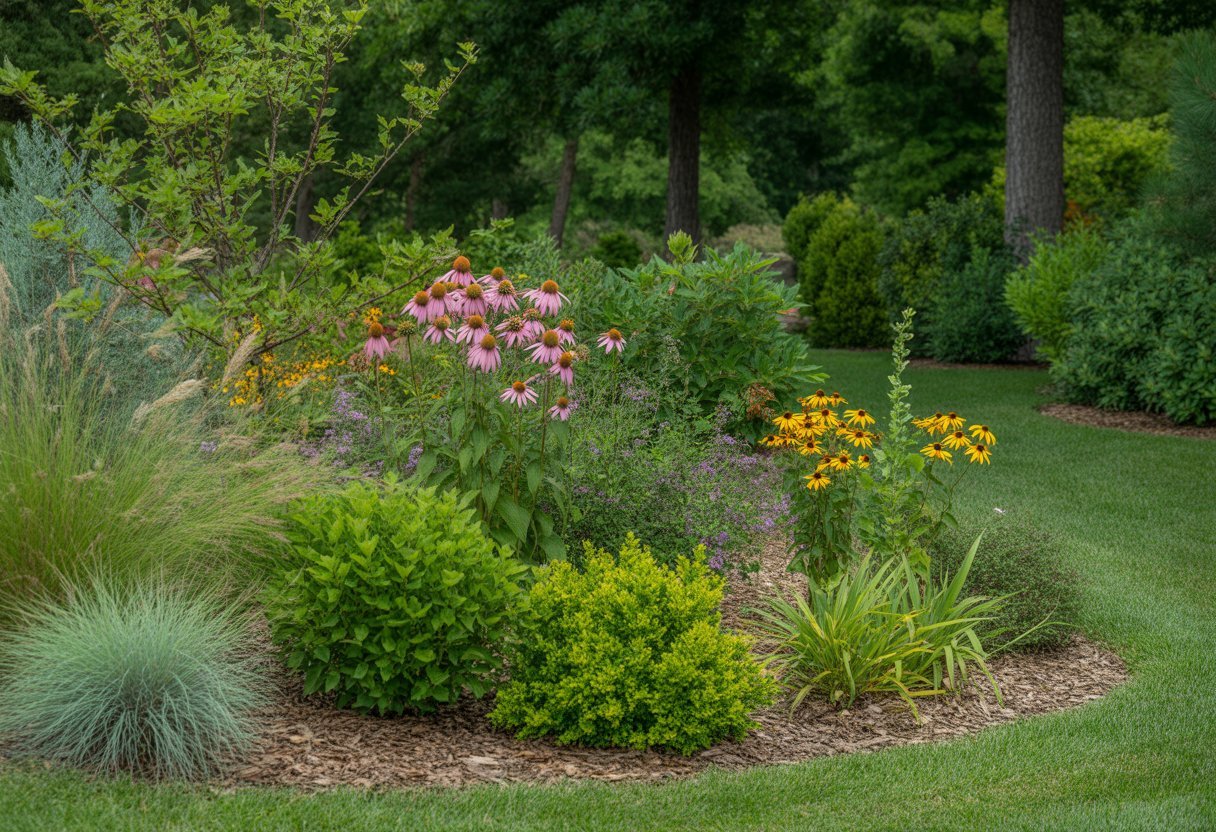
A low-maintenance Tennessee landscape starts with picking the right spot and prepping your soil. These choices make a huge difference for plant health and water needs.
Mulch keeps weeds down and holds in moisture. Mixing up your plantings adds interest and keeps things looking good all year.
Site Selection and Soil Preparation
Finding the right spot matters. Native plants want conditions that feel like home, so pay attention to sunlight, drainage, and exposure.
Soil tests tell you what you’re working with—nutrients and pH can really vary across Tennessee. Adding some compost or other organic matter helps the soil hold water and keeps things loose, which is great for cold-hardy natives and xeriscapes.
Don’t overwork the soil. Keeping its natural life intact cuts down on how much you’ll need to water or fertilize.
Mulching Strategies for Low Maintenance
Mulch is your friend. It blocks weeds and keeps soil moist, even when Tennessee’s weather gets weird.
Go for organic mulch like shredded bark or leaves—they break down and feed the soil. Lay it down about 2-3 inches thick, but don’t pile it right up against stems.
Top it off each year to keep weeds away and buffer temperature swings. In rain gardens, mulch helps soak up water and stop erosion, so your native plants get what they need with less work.
Integrating Plantings for Year-Round Interest
Mix evergreens and deciduous natives to keep your landscape lively in every season. Eastern Redbud, Black-Eyed Susan, and Switchgrass all bring something different to the table.
Try layering groundcovers, shrubs, and trees for depth and better wildlife habitat. Group plants with similar needs to make watering and care simpler.
Pick a mix of bloom times for nonstop color. Grouping plants thoughtfully means less trimming and fewer replacements, which keeps maintenance low in front yards or wherever you plant.
Resources and Expert Guidance in Tennessee
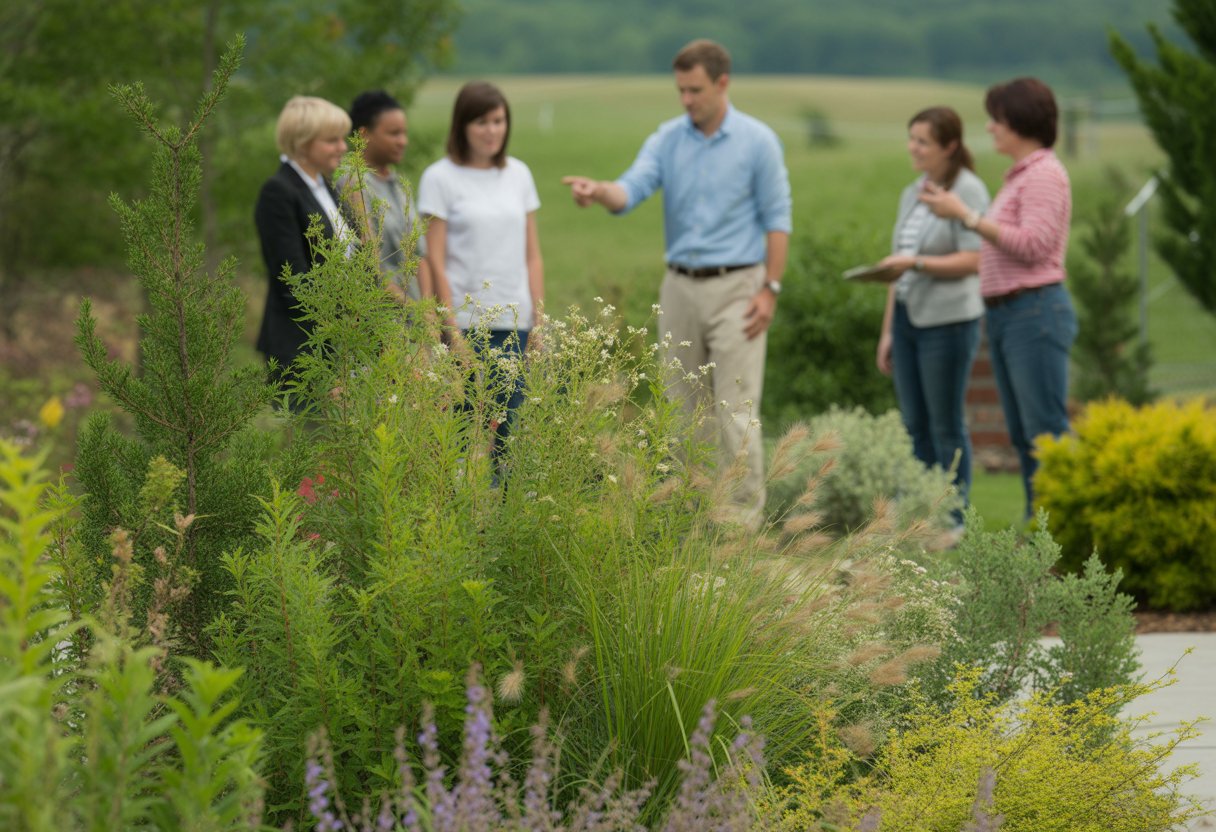
Tennessee has plenty of resources if you’re into low maintenance native plants. You’ll find research-backed advice, hands-on workshops, and local support focused on the region’s climate and native species.
University of Tennessee and UT Gardens
The University of Tennessee leads the way on native plant info, especially through its ag extension and horticulture programs. They dig into sustainable planting for Tennessee’s many environments.
UT Gardens in Knoxville is a living example. You can see native plants in action across different garden styles.
They run workshops, plant sales, and share resources online. You’ll find plant lists and guides that focus on low-water, low-care options, plus help with pest control and soil prep.
Master Gardener Programs
The Tennessee Master Gardener program trains volunteers in all things gardening, with a big focus on natives and sustainability. The University of Tennessee Extension backs them up with solid education.
Master Gardeners answer questions at clinics, lead garden tours, and help with community projects. Their advice is gold if you want less maintenance and more native biodiversity.
Most counties have active groups, so expert help is never far away. They’ll give you tips on plant selection, problem-solving, and seasonal care—all tailored to Tennessee’s native plants.
Local Native Plant Societies
Local native plant societies in Tennessee dive into conservation and education about indigenous flora. Groups like the Tennessee Native Plant Society host field trips, lectures, and plant sales that highlight regionally adapted species.
These societies serve as a lively hub for community engagement and specialized knowledge. They’ll often suggest low-maintenance native plants and help gardeners find native plant nurseries.
Members work with universities and extension services, so their advice usually lines up with the latest research. If you’re hoping to start a native plant garden that doesn’t need much fuss, their expertise is hard to beat.