A Native Privacy Planting for a Narrow Yard: Seasonal vs. Year-Round Screening
Last updated: November 7, 2026
A narrow yard makes privacy feel urgent. The neighbor’s window is close, the side fence is low, and there is only a strip of soil to work with.
The first decision is not which plant to buy. It is when you actually need the screen: all year, or only during the months you are outside.
This plan sorts the yard into year-round and seasonal screening zones, then fits native evergreens, deciduous shrubs and tall grasses into the width you have. It also flags which popular screening plants are too wide for a narrow lot.
Plan at a Glance
| Site | Side yards, narrow backyards and fence lines with a 4- to 10-foot planting strip |
| Size | The example uses a 6-foot-wide by 40-foot-long strip |
| Sun | Full sun to part shade; most evergreens screen best in sun |
| Soil | Varies; match each plant to wet, average or dry soil |
| Maintenance | Low for seasonal plantings; moderate where evergreens need occasional thinning |
| Best regions | Eastern U.S. palette with Southeast, Pacific Coast and Interior West alternates |
| Key decision | Evergreens only where you need winter privacy; seasonal plants everywhere else |
Step 1: Map Your Sightlines by Season
Stand where you sit, eat, cook and look out. Note what you want to hide from each spot, and in which months you are usually there.
Clemson Extension explains that when the element you are screening must be blocked all year, the screen may need to be mostly evergreen. When it only matters in the growing season, deciduous plants can carry more of the load.
For many narrow yards, that sorts out quickly:
- Year-round zones: windows that face a neighbor’s windows, a bedroom view or a street light.
- Seasonal zones: a summer patio, a vegetable bed or a hammock spot that you rarely use in winter.
- Open zones: paths, gates, meter access and spots you want to keep bright.
Step 2: Measure the Strip and Check Mature Width
University of Maryland Extension’s privacy-screen guidance starts with a practical question: will your site accommodate the mature height and width of the plants? It also reminds you to check for utilities above or below the planting area.
Measure the strip from fence to path or wall. In a 6-foot strip, any plant listed wider than about 6 feet will need regular cutting or will spill into the yard.
That rules out some favorite screens. UMD lists wax myrtle at 10 to 15 feet wide and American holly at 10 to 20 feet wide, so both need a deeper bed or a corner.
For a deeper look at width-based spacing, our guide to choosing a native hedge by mature width walks through the calculation.
Step 3: Choose Year-Round Plants for the Few Places That Need Them
Evergreens are the most expensive and slowest part of a screen, so use them where they matter most. In a narrow yard, that may be only one or two windows.
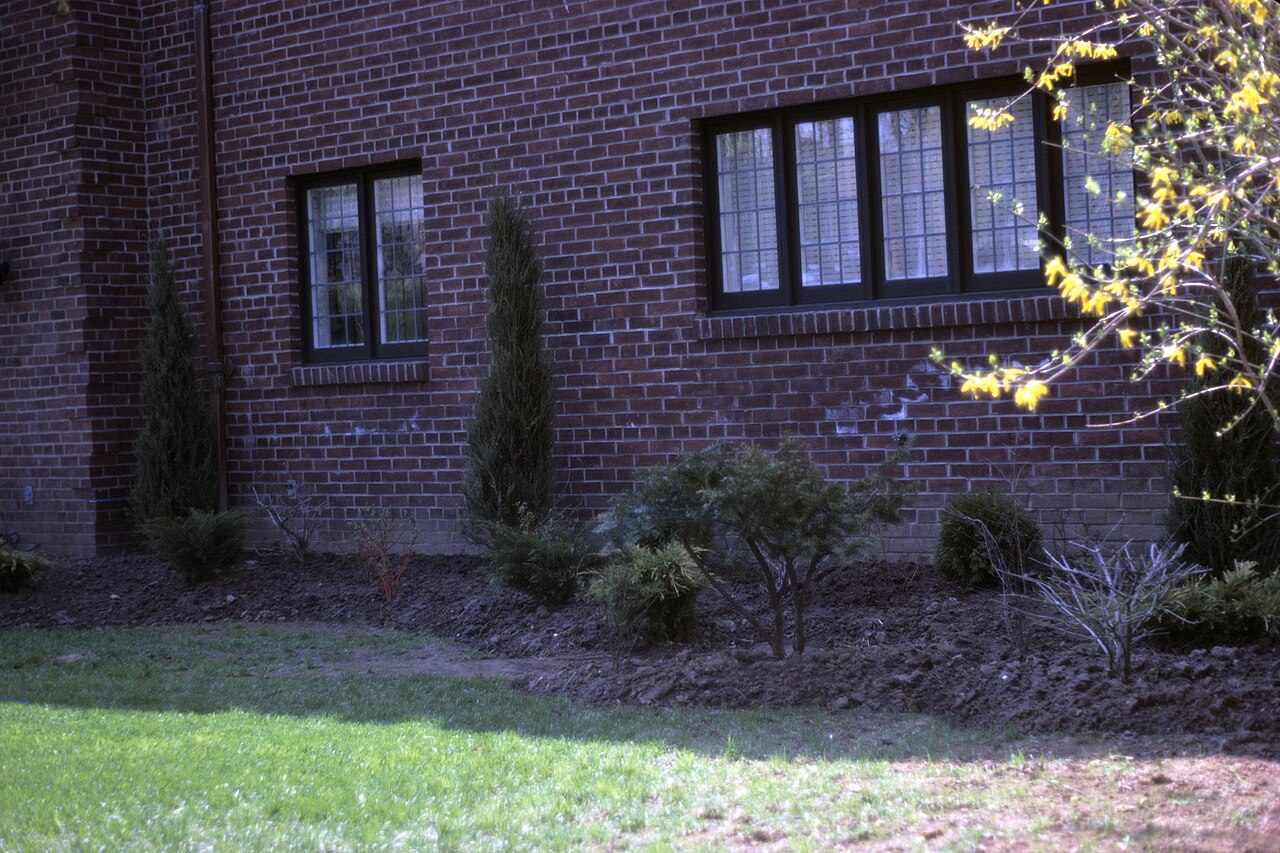
Narrow evergreens. UMD lists the Rocky Mountain juniper selections ‘Blue Arrow’ and ‘Skyrocket’ at 12 to 20 feet tall and only 2 to 3 feet wide. The species is native to western North America, so these are the most natural fit in the Interior West.
Low evergreens. Inkberry stays around 5 to 8 feet tall and wide in the UMD list. It will block a seated view from a patio but not a second-story window.
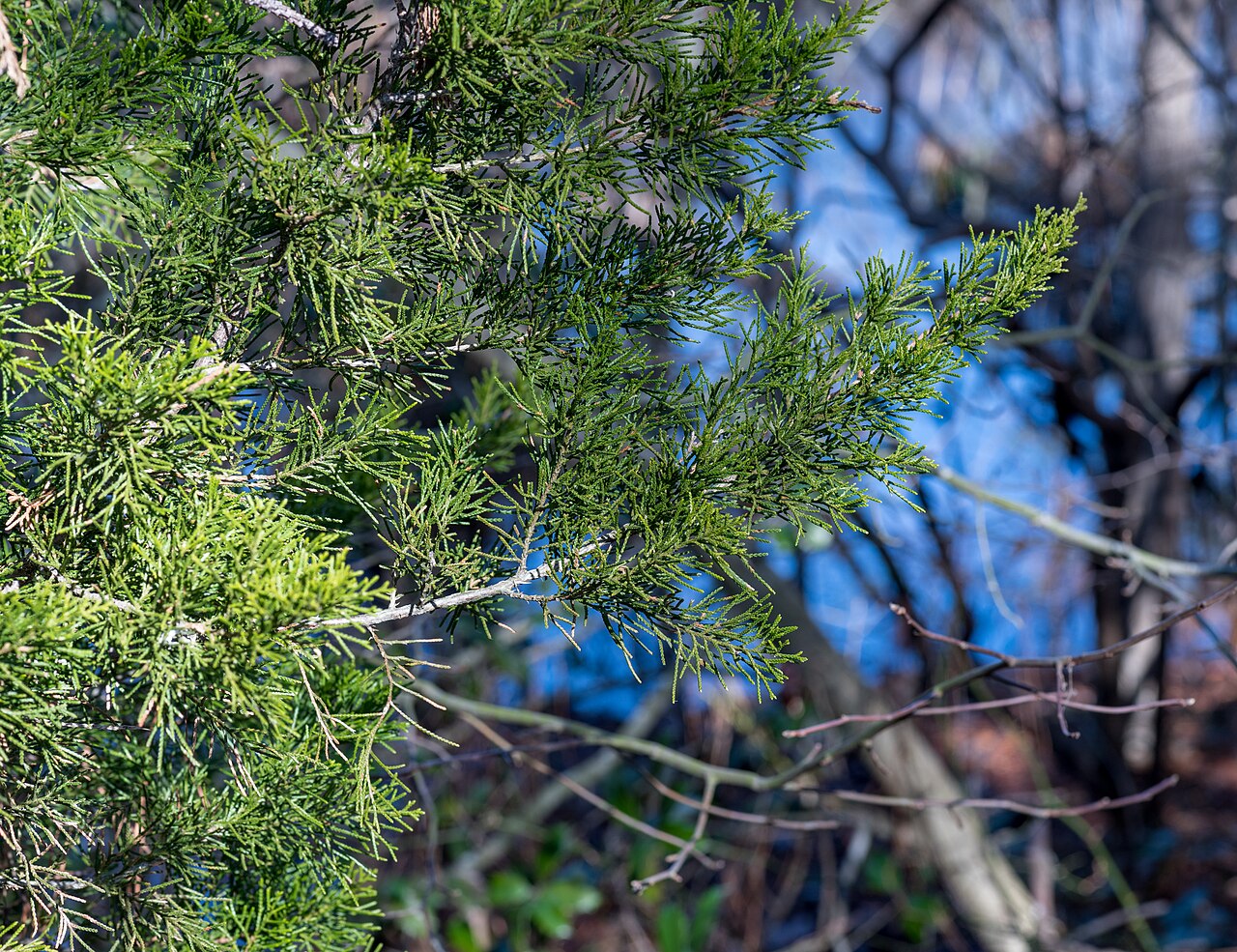
Large evergreens for a wider spot. Eastern red cedar reaches 40 to 50 feet tall and 8 to 20 feet wide in the UMD list. NC State notes it needs full sun and does not tolerate continuously wet soil.
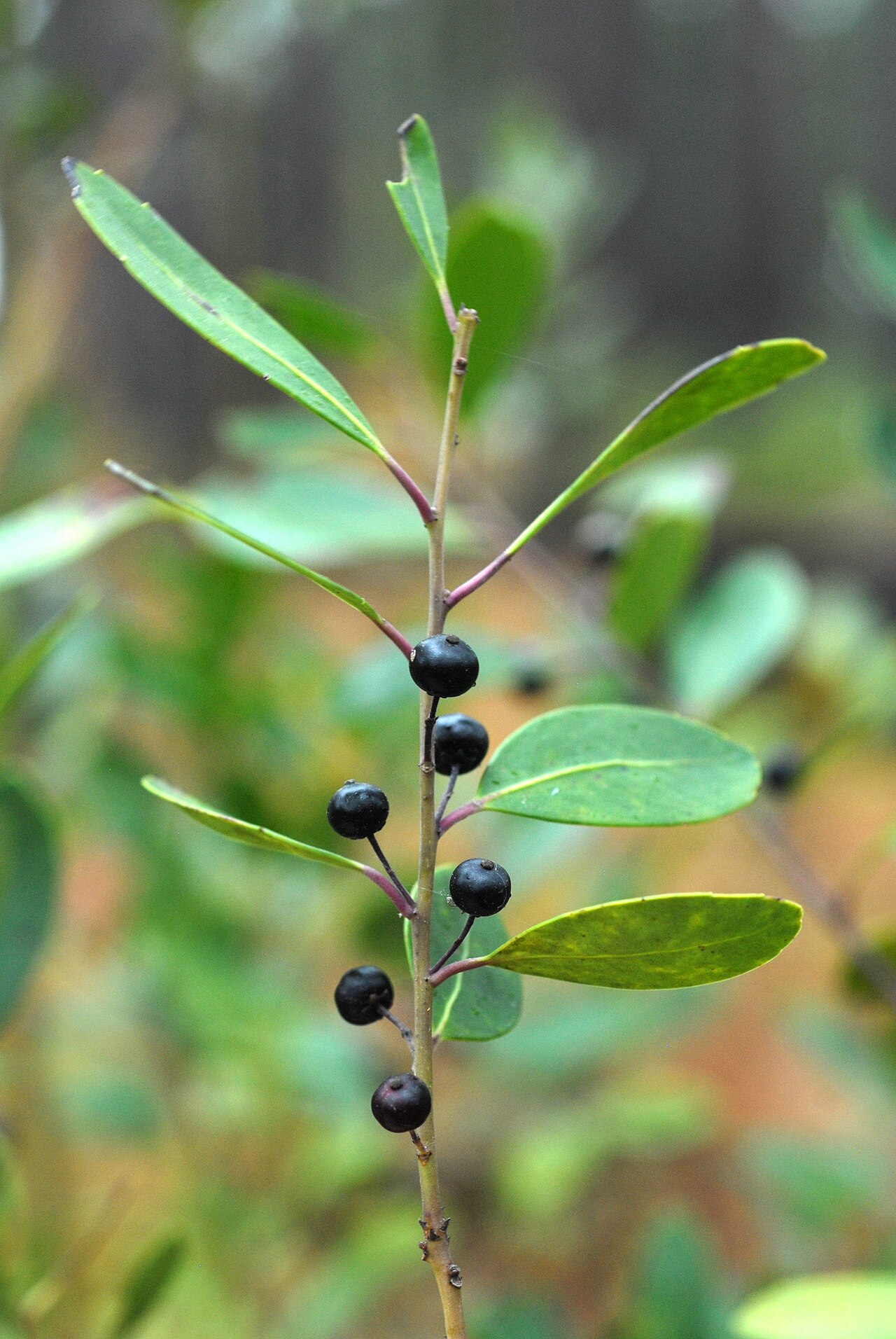
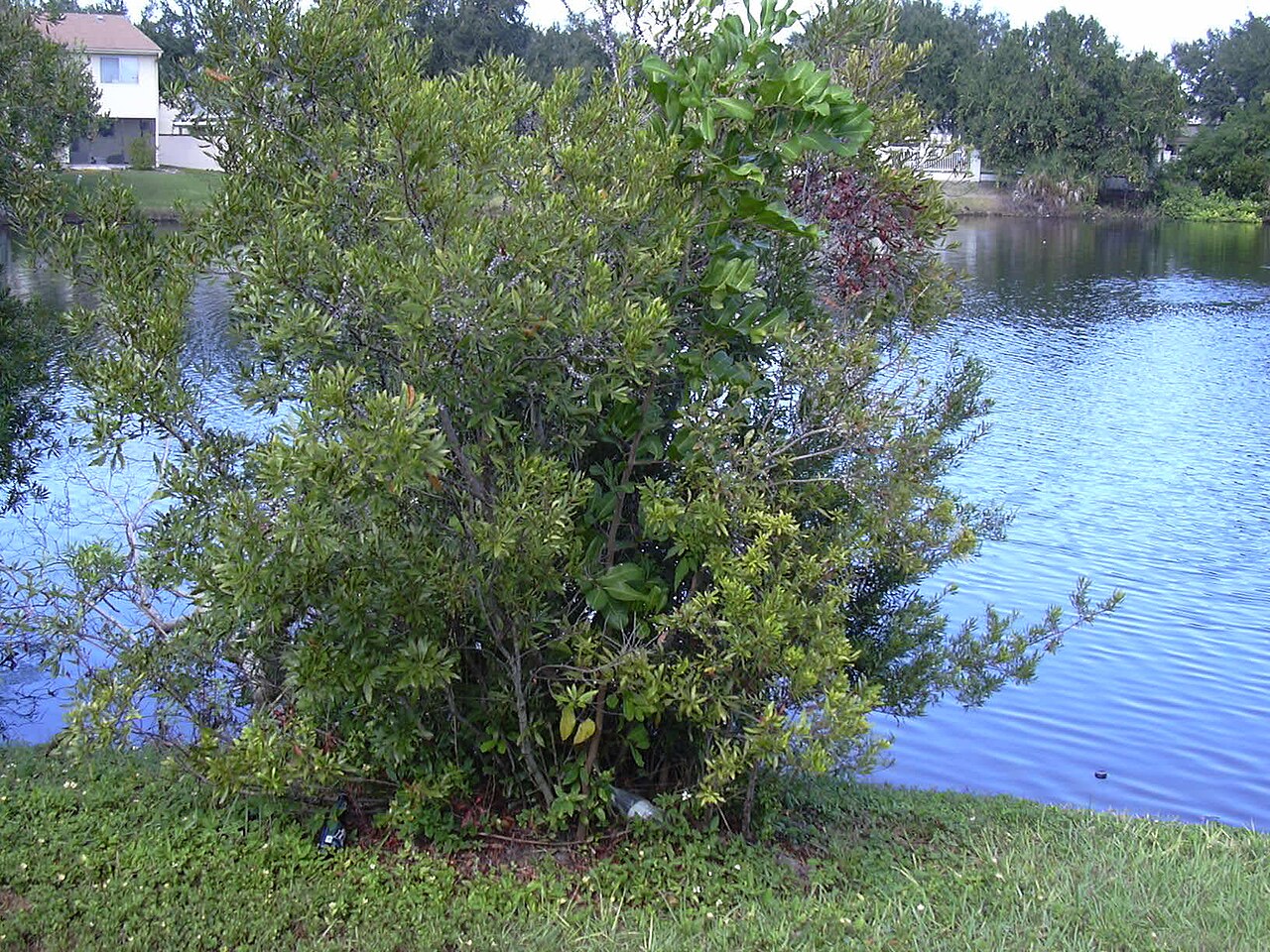
Southern and coastal evergreens. Wax myrtle is native from New Jersey to Central America and tolerates salt spray, according to NC State Extension. The same source notes it is only semi-evergreen in the northern part of its range and tends to sucker into colonies.
Step 4: Fill Seasonal Zones With Deciduous Shrubs and Grasses
Seasonal screening can be narrower, cheaper and more varied. Deciduous shrubs leaf out in spring and hide a patio through the warm months, then let winter light reach the yard.
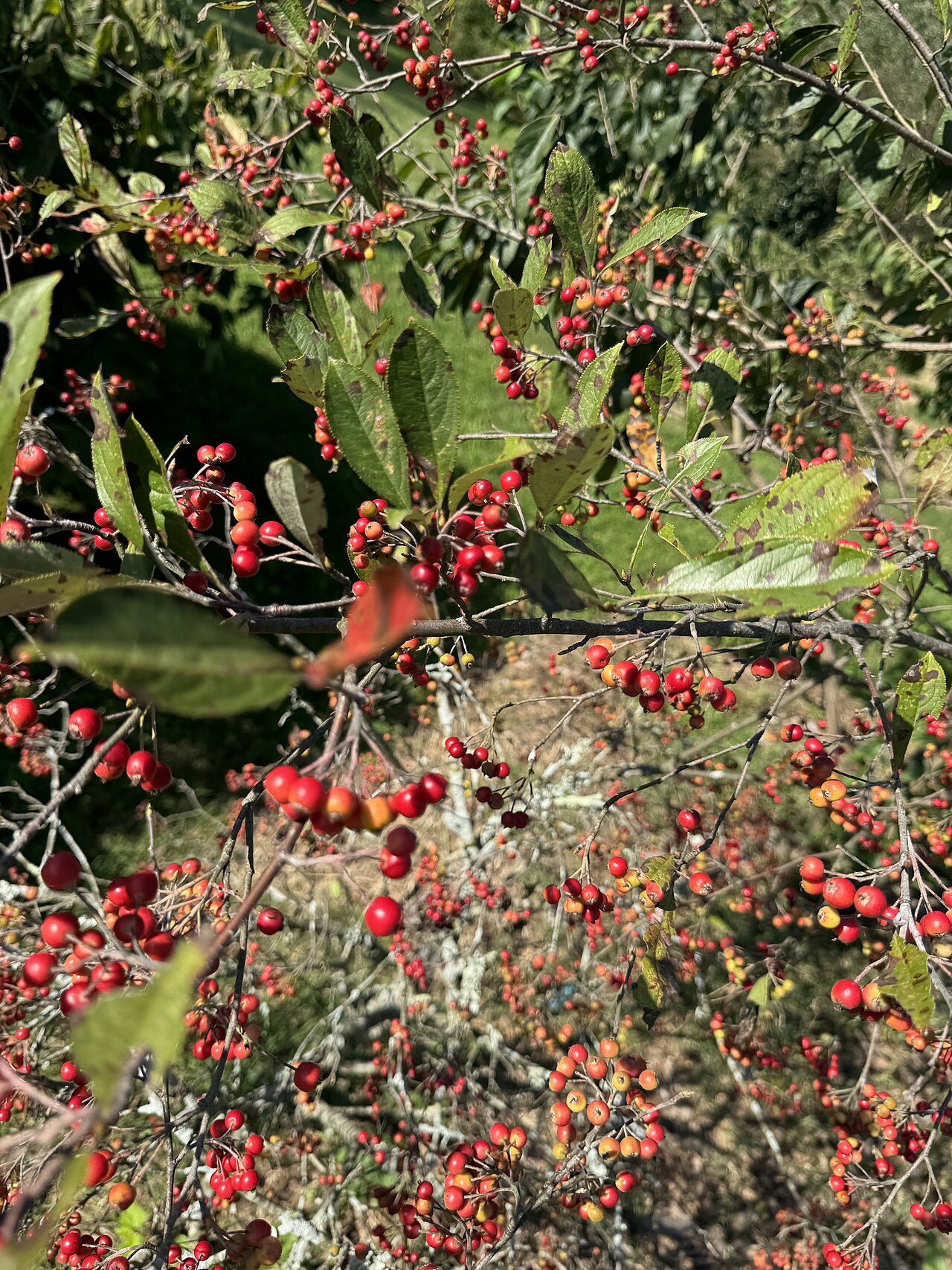
Red chokeberry is a good narrow choice. UMD lists it at 2 to 10 feet tall and only 3 to 5 feet wide, and its fruit carries color into fall.
Summersweet is another narrow seasonal shrub at 4 to 6 feet wide in the UMD list. It suits moist soil and part shade, which many side yards have.
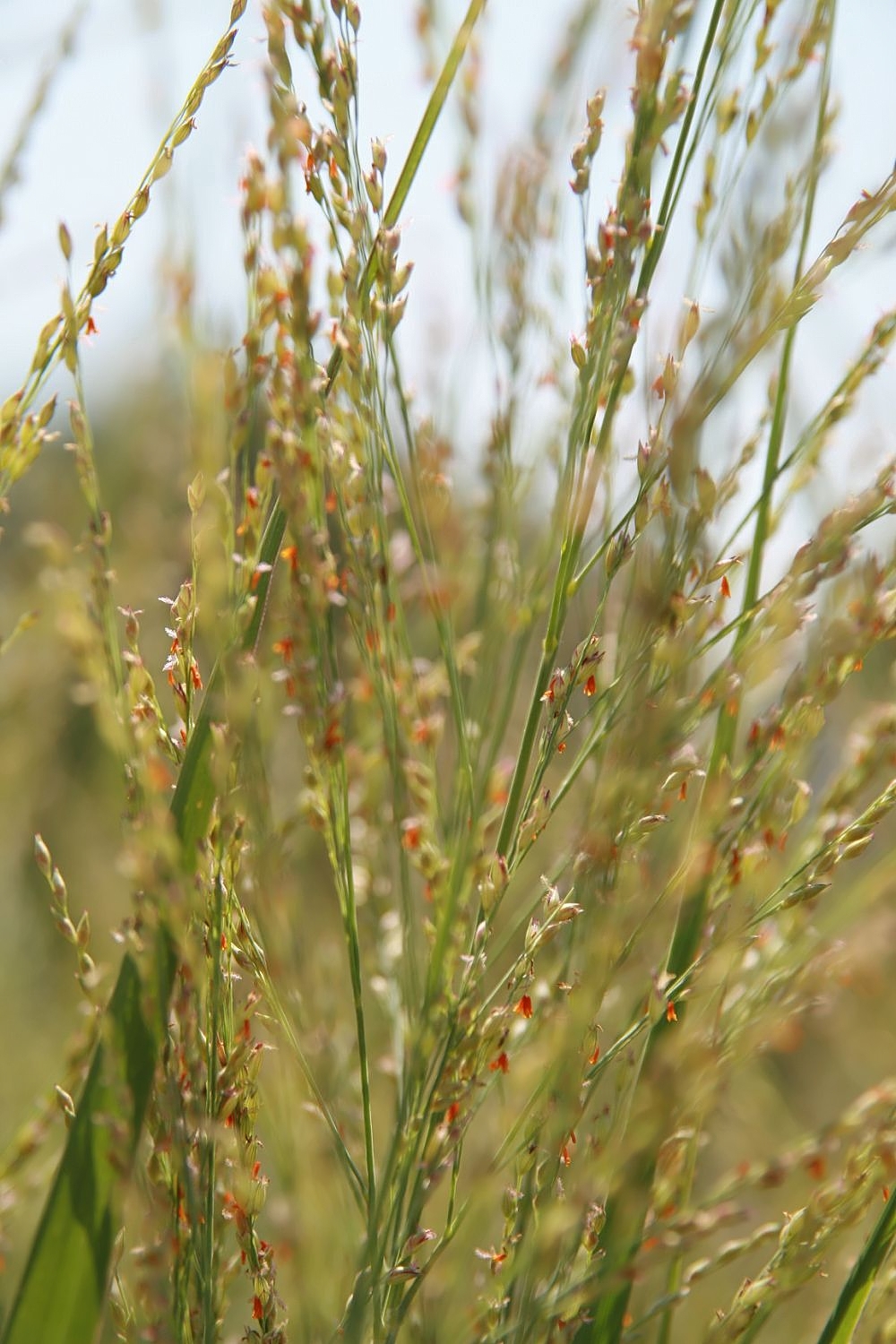
Tall native grasses are the narrowest seasonal screen of all. NC State describes switchgrass as forming a dense columnar clump that reaches 3 to 4 feet in leaf and up to 7 feet in flower.
Our article on switchgrass as a seasonal screen covers what it can and cannot hide. In short, it screens best from summer into winter, and NC State recommends pruning it in late winter.
Step 5: Lay Out the Strip
Clemson Extension describes three ways to arrange a mixed screen: layered plantings with taller plants behind, staggered rows offset from each other, and clusters in odd-numbered groups. A narrow strip usually only fits one row, so use a zigzag where you can.
Both Clemson and UMD recommend mixing species instead of planting one kind. A single-species screen can lose several plants to the same pest or bad year, leaving large gaps.
Example Layout: 6-by-40-Foot Side Strip
- 0–10 ft (facing the neighbor’s kitchen window): two narrow evergreens, such as columnar junipers in the West or inkberry in the East, with a low groundcover in front.
- 10–25 ft (summer patio zone): three red chokeberry or summersweet in a slight zigzag, about 4–5 ft apart.
- 25–35 ft (open view to the garden): a drift of switchgrass for summer-through-winter texture.
- 35–40 ft (gate and meter access): keep clear with low plants only.
- Along the fence, if allowed: a native vine on a trellis for extra height without extra width.
Vines are often the best answer where the strip is under 4 feet. Our existing roundup of native vines for trellises lists options for that job.
Plant Palette
Native Screening Plants by Season and Width
Sizes are from UMD Extension’s privacy-screen list unless noted (NC State Extension for California wax myrtle and switchgrass width). Ranges are summarized from NC State Extension; confirm each species for your county.
| Plant | Screening role | Height × width | Sun / moisture | Native range |
|---|---|---|---|---|
| Inkberry | Year-round, low | 5–8 ft × 5–8 ft | Sun to part shade; moist | Coastal plain, Nova Scotia to Florida and Louisiana |
| Rocky Mountain juniper | Year-round, very narrow selections | 12–20 ft × 2–3 ft (‘Blue Arrow’, ‘Skyrocket’) | Full sun; well drained | Western Canada and western U.S. |
| Eastern red cedar | Year-round, tall | 40–50 ft × 8–20 ft | Full sun; dry to moist, not wet | Maine to Florida, west to South Dakota and Texas |
| Wax myrtle | Year-round in the South; semi-evergreen farther north | 6–15 ft × 10–15 ft | Sun to part shade; wet to dry | New Jersey to Central America |
| American holly | Year-round, wide; corners only | 15–30 ft × 10–20 ft | Sun to shade; adaptable | Pennsylvania and Massachusetts to Florida, west to Texas |
| California wax myrtle | Year-round, Pacific Coast | 10–30 ft × 10–30 ft | Sun to part shade; moist to dry | British Columbia to California |
| Red chokeberry | Seasonal, narrow | 2–10 ft × 3–5 ft | Sun to part shade; moist to wet | Eastern Canada to central and eastern U.S. |
| Summersweet | Seasonal, narrow | 3–10 ft × 4–6 ft | Sun to part shade; moist | Maine to Florida, west to Texas |
| Switchgrass | Seasonal, summer to late winter | 3–6 ft × 2–3 ft | Full sun; adaptable | Much of North America |
Use the regional rows that fit your area, and treat the rest as examples of the role you need to fill.
Installation Steps
- Mark year-round, seasonal and open zones on the ground with flags or paint.
- Call your utility locator before digging, as UMD Extension advises.
- Plant evergreens first, in their final spots, since they set the structure.
- Add seasonal shrubs and grasses between them, keeping mature widths inside the strip.
- Prune circling roots and spread them in the hole, following UMD’s planting guidance.
- Mulch 2 to 3 inches deep, keeping mulch off trunks.
- Water regularly through the first one to two years, when UMD notes a screen is establishing.
The First Three Years
- Year one: Expect gaps. Water through dry spells and keep weeds out of the strip.
- Year two: Seasonal shrubs and grasses will start to screen. Note any spot where you still feel exposed.
- Year three: Add a second evergreen or a trellis vine where you still need cover. Thin suckers from wax myrtle or chokeberry that stray outside the strip.
Mistakes to Avoid
- Making everything evergreen. It costs more, darkens the yard in winter and often isn’t needed.
- Planting wide evergreens in a narrow strip. Wax myrtle and American holly need far more width than most side yards have.
- Planting a single species. UMD and Clemson both recommend mixing plants so one problem can’t wipe out the screen.
- Choosing invasive screens. UMD warns against bamboo, privet, burning bush and Japanese barberry. Our guide to native burning bush alternatives covers one common swap.
- Forgetting access. Keep gates, meters and hose bibs reachable. Our narrow fence-and-path garden plan shows how to measure for this.
- Ignoring your region. Pick native evergreens that occur in your area; an eastern palette won’t suit the Interior West or Pacific Coast.
📋 Wax myrtle, American holly and summersweet appear on our Georgia, Alabama and Mississippi native plant list. Check your own regional list for local evergreen options.
FAQs
What is the best native evergreen for a narrow yard?
It depends on your region. In the West, narrow Rocky Mountain juniper selections are only 2 to 3 feet wide. In the East, inkberry is a good low option, while taller evergreens like eastern red cedar need more room.
Is wax myrtle evergreen?
In the South, yes. NC State Extension notes it is only semi-evergreen in the northern part of its range, so it may thin out in cold winters.
Do I need a year-round screen?
Only where you need privacy in winter, such as facing windows. Seasonal screens of deciduous shrubs and grasses are fine for summer patios and gardens.
How do I screen a yard that’s only 3 or 4 feet wide?
Use a trellis or fence with a native vine, or narrow columnar evergreens. Shrubs and tall grasses usually need more width.
Why mix species instead of planting one kind of hedge?
Clemson and UMD Extension both note that single-species screens can lose many plants to the same pest, disease or weather problem, leaving gaps that are hard to fill.
Sources
- University of Maryland Extension: Plants for Mixed Privacy Screens
- Clemson Cooperative Extension HGIC: Mixed Screens
- NC State Extension Gardener Plant Toolbox: Morella cerifera, Juniperus virginiana, Juniperus scopulorum, Ilex opaca, Morella californica, Aronia arbutifolia, Panicum virgatum