Choose a Native Hedge by Mature Width, Not the Nursery Pot Size
Last updated: November 7, 2026
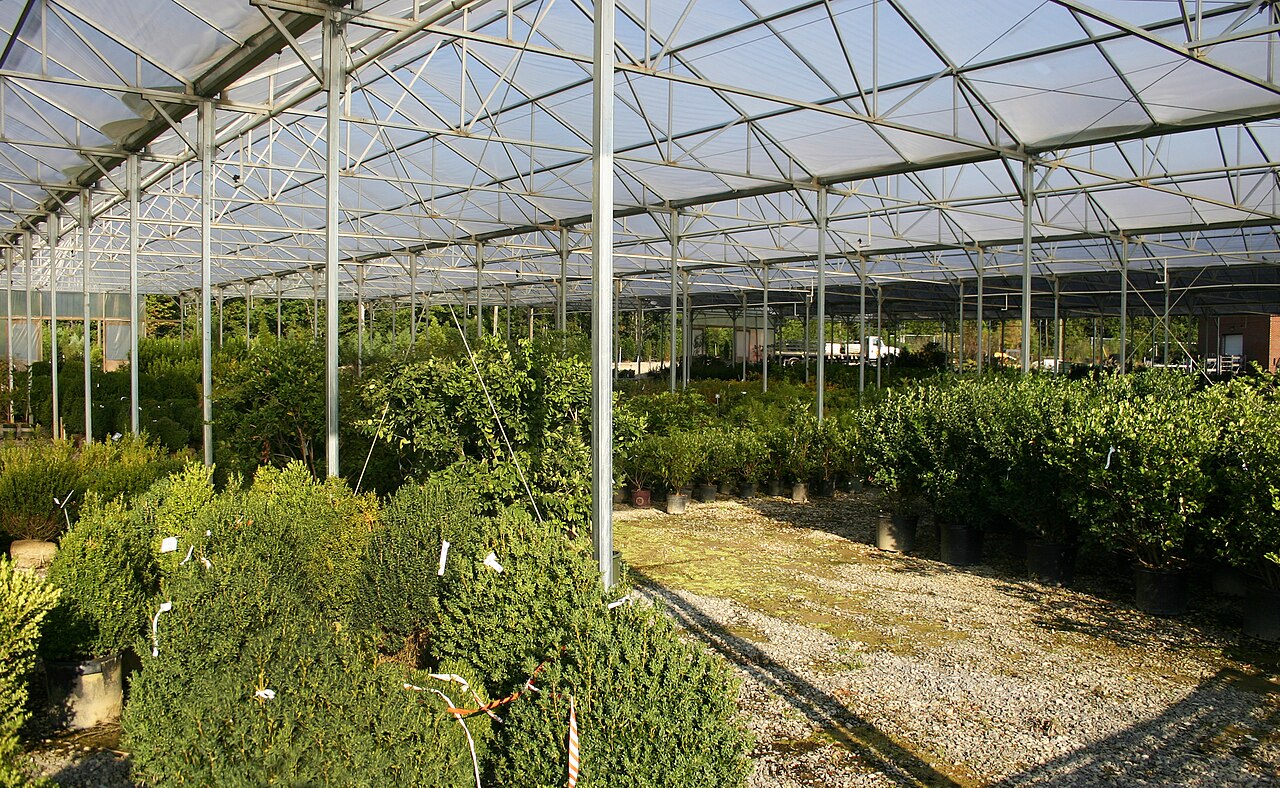
A row of one-gallon or three-gallon shrubs looks tidy on planting day. Spaced a foot or two apart, they seem to make an instant hedge.
Five years later, the same shrubs can be wrestling each other, swallowing the walk and leaning over the neighbor’s fence. Native hedge shrubs vary a lot in mature width, from about 3 feet to 15 feet across.
This guide shows how to choose and space a native hedge by the width each shrub will reach. It uses published size ranges, a simple spacing calculation and a palette sorted by width.
Plan at a Glance
| Site | Property lines, fences, walks or garden edges where a living hedge will grow |
| Size | Any length; the example uses a 30-foot run |
| Sun | Full sun to part shade for most palette shrubs |
| Soil | Match the shrub to the soil; several palette shrubs tolerate wet or dry spells |
| Maintenance | Low for informal hedges spaced to mature width; higher for sheared hedges |
| Best regions | Eastern and central U.S. for most of the palette, with northern and western alternates |
| Key number | The shrub’s mature width, not its pot size |
Why Pot Size Misleads Hedge Planting
Colorado State University Extension notes that shrubs in smaller containers cost less but take more time to grow into a dense hedge. Large balled-and-burlapped shrubs look mature sooner but cost more and are harder to handle.
Either way, the container only reflects how far along the plant is. A one-gallon fragrant sumac and a one-gallon black chokeberry look similar on the bench, but NC State Extension lists fragrant sumac at 6 to 10 feet wide and black chokeberry at 3 to 6 feet.
CSU also warns that poorly placed shrubs can overtake walkways and crowd access ways, easements and property lines. It recommends planting and spacing shrubs by their mature height and spread to reduce maintenance problems later.
Step 1: Measure the Width You Actually Have
Before you look at plants, measure the planting band. That is the distance from the hedge line to whatever must stay clear: a walk, a driveway, a fence, a window or a property line.
- Measure from the fence or boundary to the nearest edge you need to keep open, such as a path.
- Subtract any access strip you want to keep for maintenance, fence repair or mowing.
- The remaining number is the maximum mature width your hedge shrubs can have.
- Check overhead for utility lines, which CSU Extension also flags as a hazard.
If you have a 6-foot band, a shrub listed at 6 to 10 feet wide will spill out of it. Our guide to a native garden beside a fence covers the sun mapping and width planning for that situation in more detail.
Step 2: Sort Candidates Into Width Classes
Size ranges from extension plant databases give you the numbers you need. Sort candidate shrubs into three practical classes:
- Narrow (about 3–6 feet wide): fits most side yards and walkway edges.
- Medium (about 5–10 feet wide): fits a typical boundary band or the back of a border.
- Wide (up to 12–15 feet wide): needs a deep boundary planting or a corner.
Use the upper end of the published range for planning. Shrubs in good conditions often reach the top of the range, and colony-forming shrubs keep spreading by suckers.
Plant Palette by Mature Width
Height and width are from the NC State Extension Gardener Plant Toolbox. Native ranges are summarized from the same source; confirm each species for your county.
| Plant | Role in the hedge | Height × width | Sun / moisture | Native range |
|---|---|---|---|---|
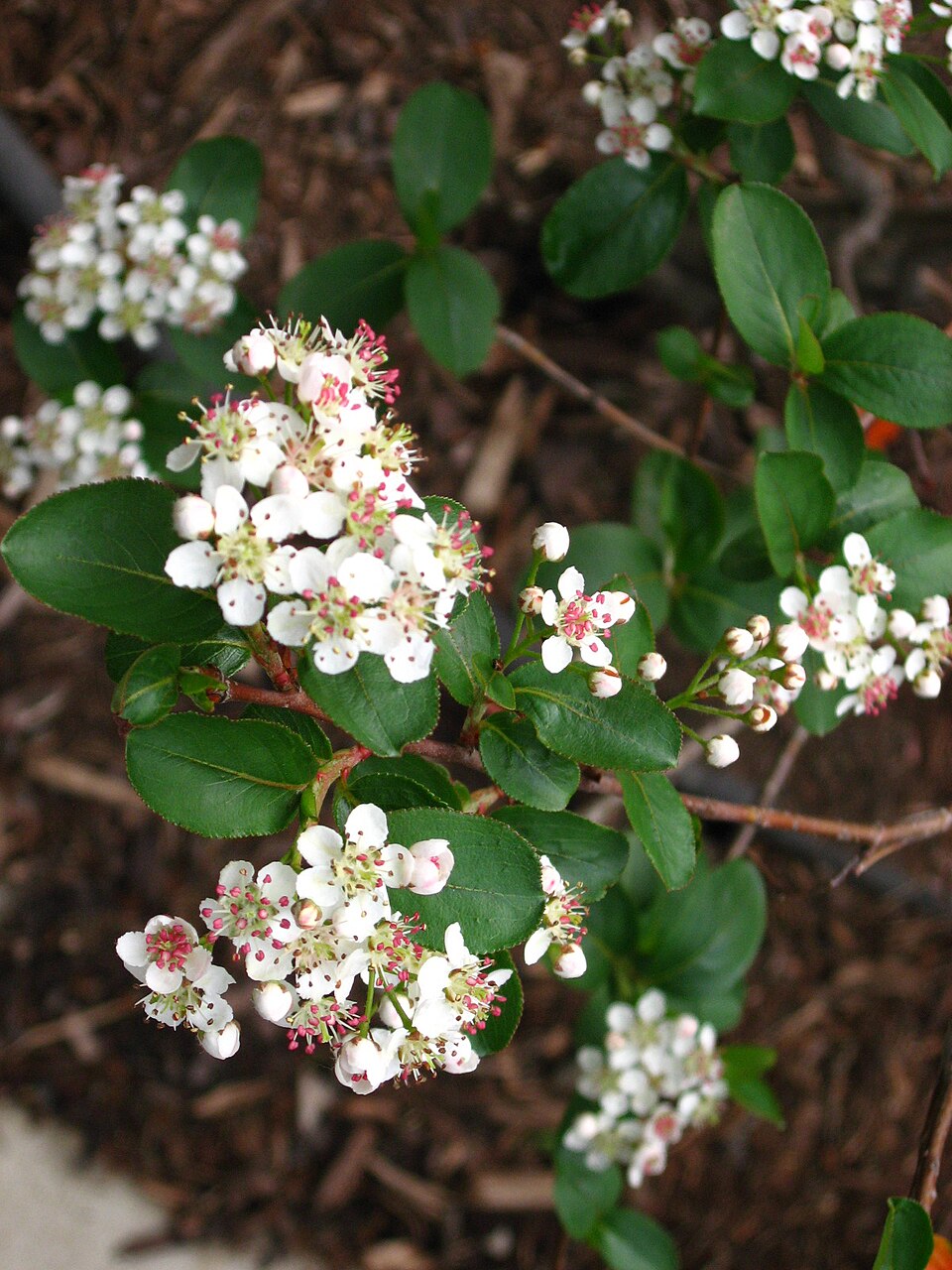
| Black chokeberry | Narrow; suckers into a thicket | 3–10 ft × 3–6 ft | Sun to part shade; moist, tolerates wet or dry spells | Eastern North America |
| Summersweet | Narrow; fragrant summer flowers | 5–10 ft × 4–6 ft | Sun to part shade; moist, tolerates wet or dry spells | Maine to Florida, west to Texas |
| Common ninebark | Narrow to medium; tough and fast | 5–8 ft × 4–6 ft | Sun to part shade; well drained, tolerates dry spells | Central and eastern North America |
| Common snowberry | Narrow; northern and western option | 3–6 ft × 3–6 ft | Sun to part shade; adaptable | Northern and western U.S. and Canada |
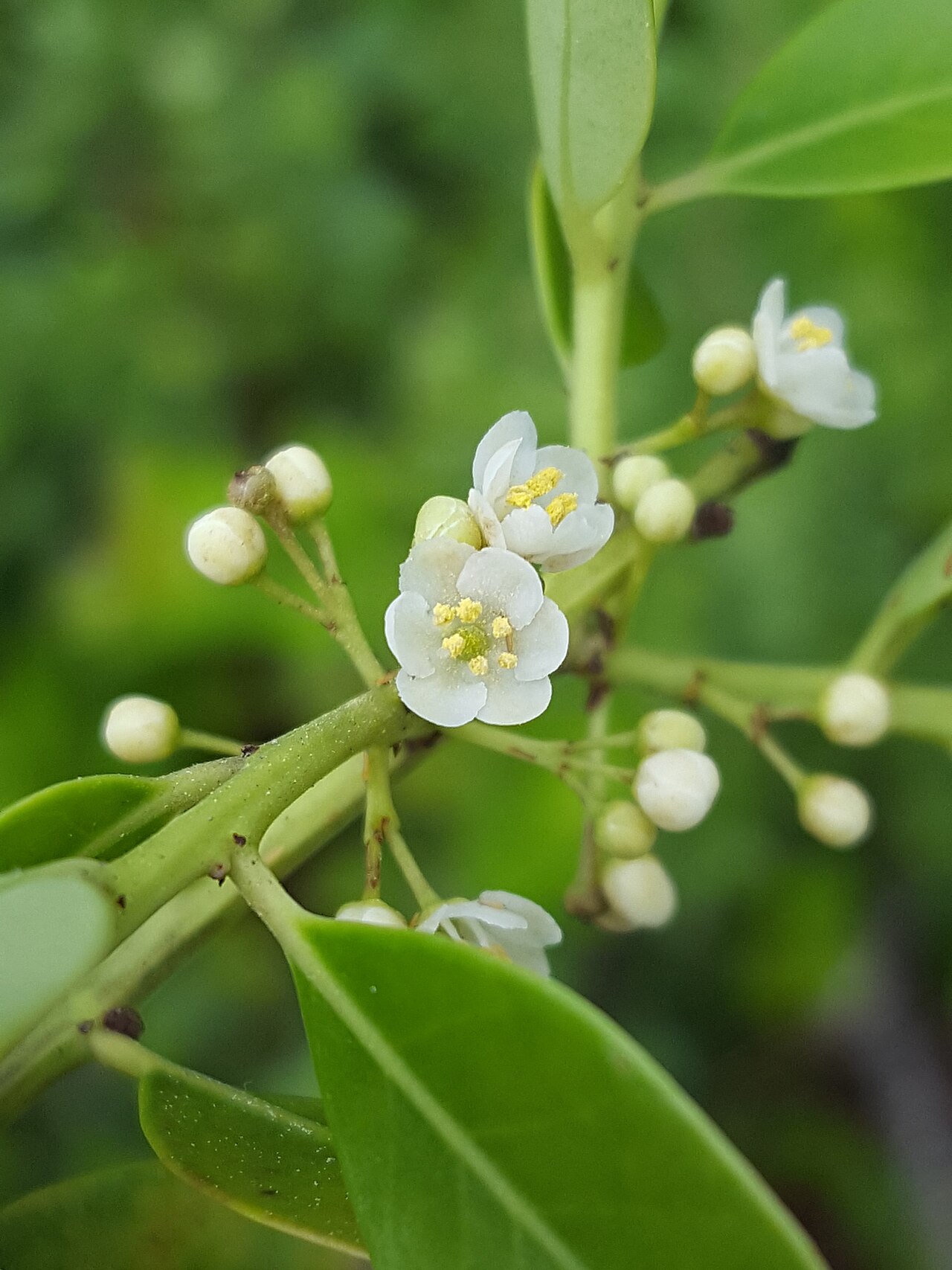
| Inkberry | Medium; evergreen | 5–10 ft × 5–8 ft | Sun to part shade; moist, tolerates wet spells | Coastal plain, Nova Scotia to Florida and Louisiana |
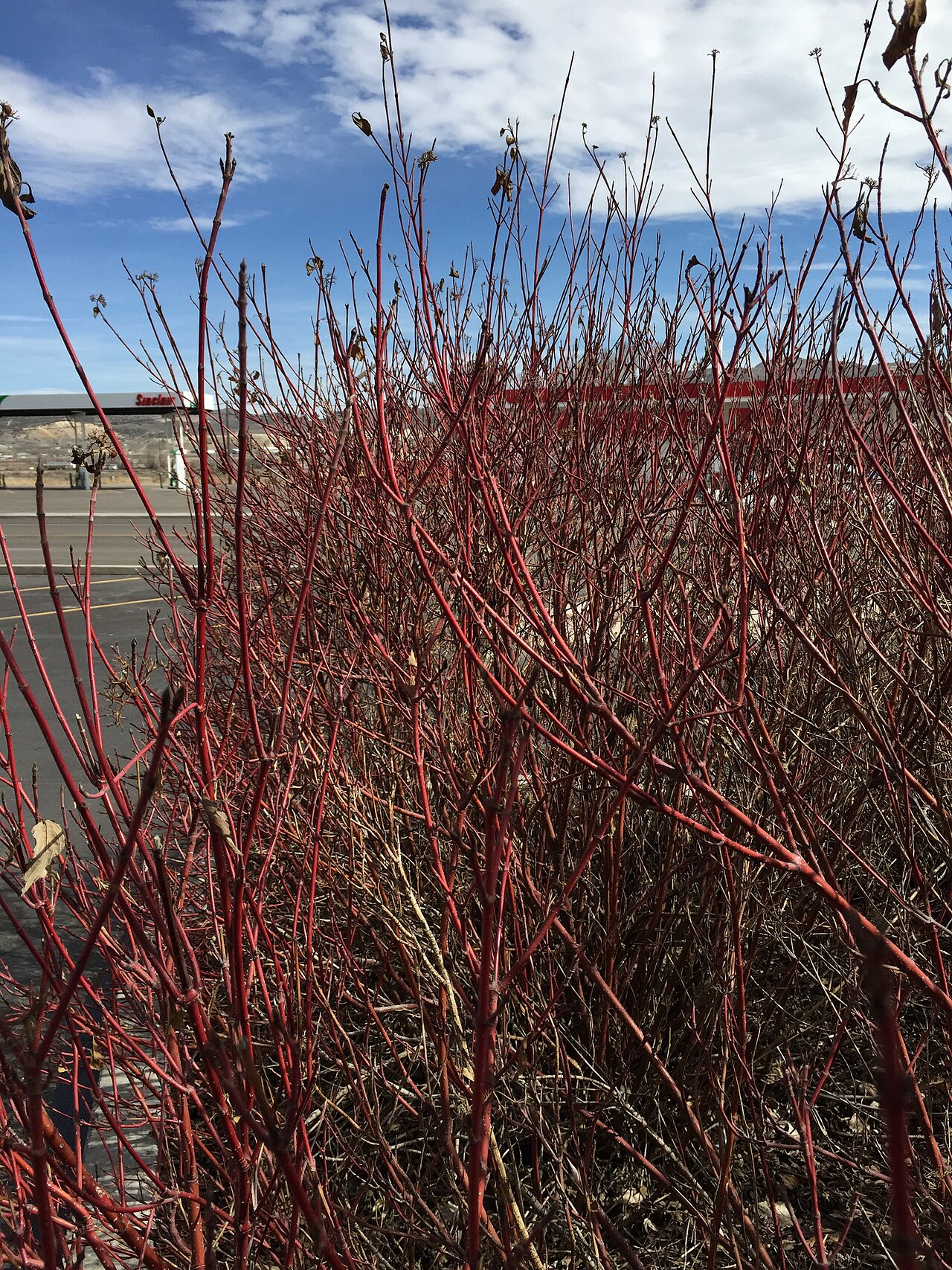
| Red-osier dogwood | Medium; red winter stems | 5–9 ft × 5–10 ft | Sun to part shade; moist to wet | Much of Canada and the northern and western U.S. |
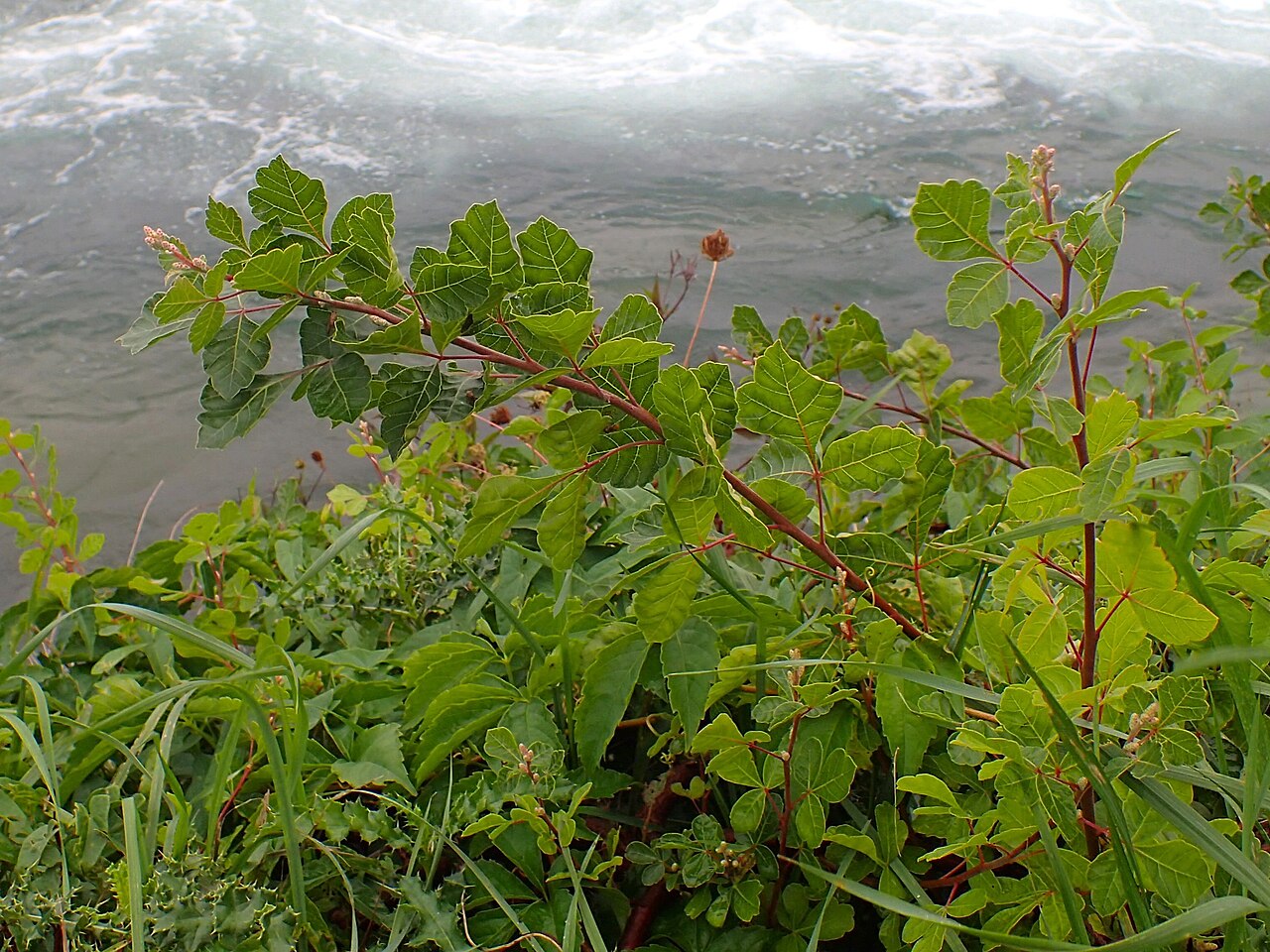
| Fragrant sumac | Low but wide | 2–6 ft × 6–10 ft | Sun to part shade; well drained, tolerates dry spells | Eastern Canada to Mexico |
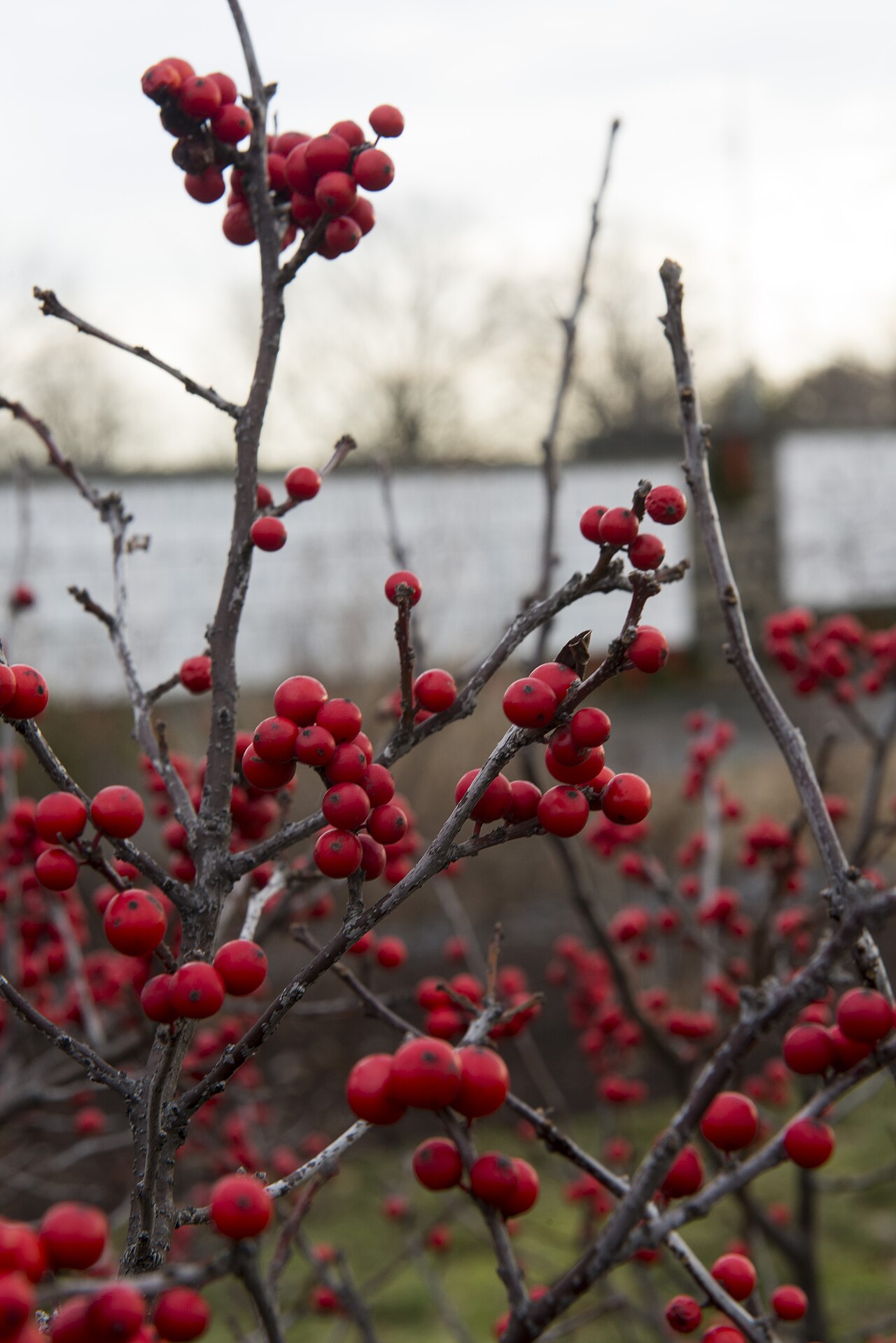
| Winterberry | Medium to wide; red winter fruit | 3–15 ft × 3–12 ft | Sun to shade; moist to wet | Eastern North America |
| Spicebush | Wide; part-shade boundary | 8–15 ft × 6–15 ft | Part shade; moist | SE Canada to central and eastern U.S. |
Step 3: Calculate Spacing From Mature Width
CSU Extension explains the two main approaches. Sheared, formal hedges are planted slightly closer than their natural spread, while informal hedges are planted at wider spacing and allowed to grow together.
For a low-maintenance native hedge, start from the informal approach. Set plant centers about one mature width apart, then tighten slightly if you want the shrubs to knit together sooner.
Then set the row back from the edge. Put the center of each shrub at least half its mature width away from the fence, walk or property line, plus any access strip you need.
Example: A 30-Foot Hedge Run
- Inkberry (5–8 ft wide): centers about 6 ft apart gives 5 plants; the row sits about 4 ft from the fence.
- Black chokeberry (3–6 ft wide): centers about 4–5 ft apart gives 7 plants; the row sits about 3 ft from the fence.
- Pot-size spacing (2 ft apart): about 15 plants of either shrub, most of which will be crowded out or need constant cutting.
- Rule of thumb: divide hedge length by center spacing and round; start the end plants half a spacing in from each end.
The pot-spaced hedge costs more and grows into a tangle. The width-spaced hedge looks thin for a few seasons, then fills in without fighting.
If your space is truly narrow, compare compact selections with the straight species. Our article on choosing straight species or native cultivars explains which cultivar traits are reasonable trade-offs.
Step 4: Plan for Suckering and Spreading Shrubs
Some native shrubs grow wider than their listed width by sending up new stems from the roots. Black chokeberry is a common example, and our black chokeberry low-hedge layout shows how to give it a band to sucker into.
Red-osier dogwood can also form broad masses over time. Plan a mowed or mulched edge you can maintain, so spreading stems stay in the hedge band.
When a Sheared Hedge Makes Sense
CSU Extension points out that sheared hedges need more maintenance. Shearing trains a dense habit, but the hedge then depends on a regular pruning schedule.
An informal native hedge is the lower-effort option. CSU notes that informally used species are spaced so their natural habit and form can be preserved, which is why species selection has to fit the site.
If you need a crisp edge in a tight space, choose a naturally narrow shrub and shear lightly. Don’t plant a wide shrub and fight it with shears every year.
Installation Steps
- Mark the hedge line with string at the setback you calculated, not along the fence itself.
- Mark plant centers along the string using the mature-width spacing.
- Prepare the band as the species needs; CSU Extension advises amending soil to suit the species you plant.
- Plant at the same depth the shrub grew in the pot, and loosen any circling roots.
- Water deeply after planting. CSU recommends a soaker hose or drip line with mulch in the first season to reduce drying.
- Mulch the whole band, not just rings around each plant, so the gaps stay weed-free while the hedge fills in.
- If the gaps bother you, fill them with short-lived native perennials or grasses rather than extra shrubs.
The First Three Years
- Year one: Water through dry spells. Keep mulch topped up and pull weeds from the gaps.
- Year two: Expect visible growth. Remove dead or broken stems, but let the shrubs keep their natural form.
- Year three: The hedge should start to close. Thin only what crosses into paths or onto the fence, and pull any suckers outside the band.
Mistakes to Avoid
- Spacing by the pot. Container size reflects nursery age, not mature width.
- Planting on the property line. Half the hedge will end up in the neighbor’s yard. In a tight side yard, see our narrow-yard privacy planting plan.
- Ignoring the low-but-wide shrubs. Fragrant sumac is a classic example of a short shrub that spreads far.
- Using the low end of the size range. Plan for the upper end, especially on good soil.
- Replanting an invasive hedge in kind. If you’re replacing burning bush, start with our native burning bush alternatives.
- Overfilling to look finished. Extra shrubs become future pruning work. For bed-level counts, our native plant spacing calculator guide helps.
- Copying an eastern palette elsewhere. In the northern Plains and West, start with locally native shrubs such as snowberry or red-osier dogwood where they occur.
📋 Several palette shrubs appear on our New York, Pennsylvania and northern New Jersey native plant list. Check your own regional list and confirm each species for your county.
FAQs
How far apart should I plant native hedge shrubs?
For an informal hedge, set plant centers about one mature width apart, or slightly closer if you want faster closure. CSU Extension notes sheared formal hedges are planted slightly closer than their natural spread.
Does a bigger pot mean a bigger shrub?
Only at the start. A bigger container usually means an older plant, but mature width depends on the species and your site, not the pot.
How far from a fence should I plant a hedge?
Put each shrub’s center at least half its mature width from the fence, plus any access strip you want for repairs or mowing.
Which native shrubs make the narrowest hedges?
In the NC State Extension listings, black chokeberry, summersweet, common ninebark and common snowberry all top out around 6 feet wide.
What if my hedge looks sparse for the first few years?
That is normal for a hedge spaced to mature width. Fill gaps with native perennials or grasses for a few seasons instead of adding more shrubs.
Sources
- Colorado State University Extension: Hedges
- NC State Extension Gardener Plant Toolbox: Aronia melanocarpa, Clethra alnifolia, Physocarpus opulifolius, Symphoricarpos albus, Ilex glabra, Cornus sericea, Rhus aromatica, Ilex verticillata, Lindera benzoin