Native Elderberry for Texas: Growth Tips and Benefits in Local Landscapes
Last updated: November 5, 2026
Native elderberry thrives in Texas because it adapts to so many soil types and climates across the state. It’s a valuable plant for both wildlife and people, offering berries that support birds and can be used in jams, wines, and natural remedies.
The elderberry species native to Texas is Sambucus nigra ssp. canadensis, a hardy shrub well-suited to the region’s conditions.
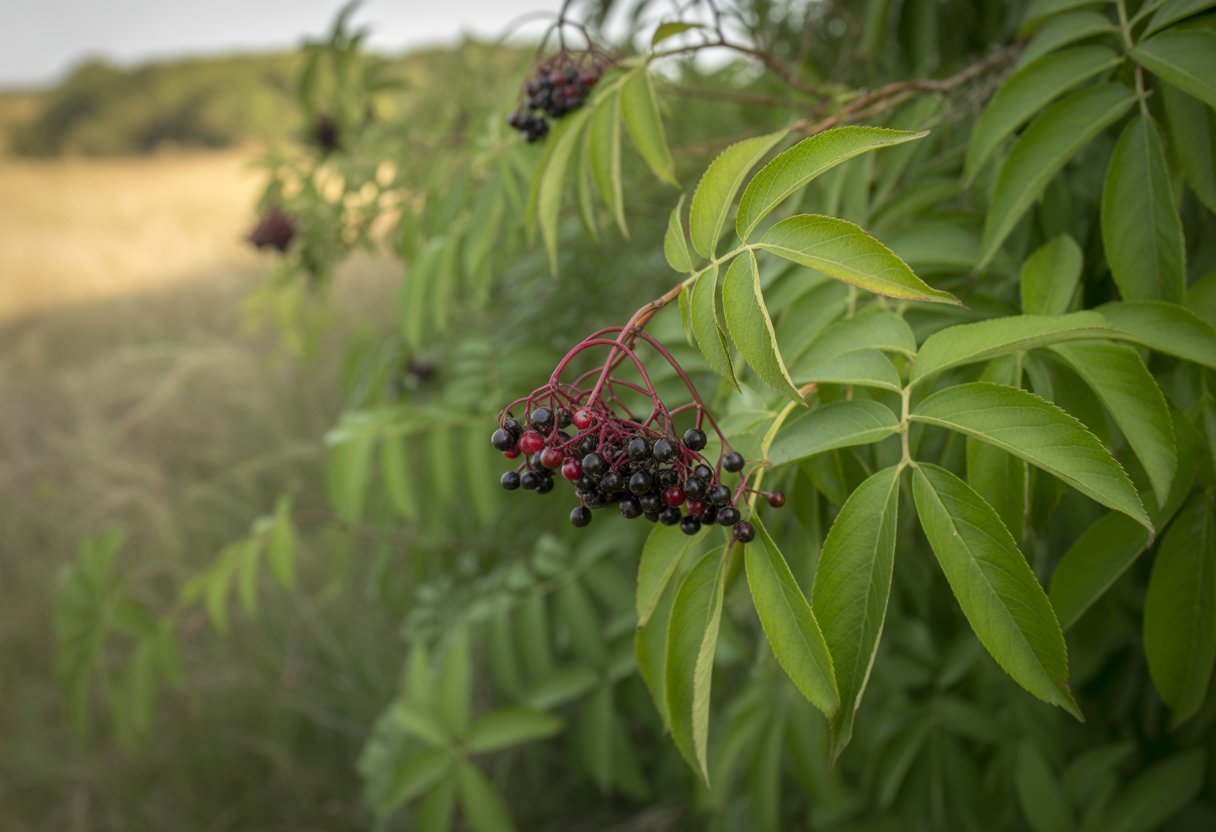
You’ll usually spot this shrub in moist areas like creek banks and lowlands, but honestly, it can handle drier soils if you give it a little extra care. Its early blooms bring in pollinators, which is great for the local ecosystem.
If you take a closer look at native elderberry, you’ll see it’s a solid pick for Texans who want a plant that supports biodiversity and has plenty of practical uses.
Understanding Native Elderberry in Texas
Texas native elderberries include a few important species, each with its own quirks and preferred habitats. You’ll notice their showy white flowers and edible berries, which play roles in both local ecology and traditional recipes.
Elderberry Species Native to Texas
Texas is home to three main native elderberry species: Sambucus canadensis (American elderberry), Sambucus nigra ssp. canadensis (usually grouped with American elderberry), and Sambucus caerulea (blue elderberry).
- American elderberry (Sambucus canadensis) grows all over eastern and central Texas.
- Blue elderberry (Sambucus caerulea), or blue elder, shows up mostly in western and southwestern parts of the state.
- Mexican elderberry (Sambucus mexicana) overlaps some regions and sometimes gets lumped in with Sambucus nigra.
All three have compound leaves and clusters of small, white flowers that eventually turn into dark berries. They differ in berry color and have their own favorite growing spots.
Distribution and Habitat
You’ll find American elderberry near streams, moist woods, and lowlands from eastern to central Texas. It likes well-drained soils but doesn’t mind wetter spots.
Blue elderberry prefers drier, rockier places, especially in western Texas and the Trans-Pecos. It can handle arid climates better than most.
Mexican elderberry grows in some southern areas, especially in riparian zones and along canyon slopes. The way these plants spread out across Texas depends a lot on soil, moisture, and elevation.
Botanical Features
Texas elderberries all have compound leaves with 5 to 9 serrated leaflets that grow opposite each other. Young stems feel smooth, but the bark roughens up as the plant ages.
You’ll spot flat-topped clusters of small, white flowers—corymbs, if you want the botanical term. Bees and butterflies can’t seem to resist these blooms.
Berry color is a giveaway: American elderberry has dark purple to black berries, blue elderberry’s fruit is bluish with a whitish coating, and Mexican elderberry ranges from red to deep purple. Each cluster holds dozens of berries, ripening from late summer into early fall.
Growing and Caring for Elderberry in Texas
Elderberry grows best when you pay attention to soil, sun, and a few basic care steps. If you get these right, you’ll probably have a healthy harvest in Texas.
Soil and Sun Requirements
Elderberry likes well-drained, loamy soils with a pH between 5.5 and 6.5. If you’re stuck with heavy clay, mix in organic matter to help with drainage.
Full sun really matters—shoot for 6 to 8 hours a day. Sure, they’ll survive with less, but you’ll get fewer berries and weaker plants.
Raised beds or mounds can help keep roots from getting waterlogged, especially in low-lying areas. It’s worth testing your soil’s pH and nutrients before you plant.
Planting and Propagation Methods
You can propagate elderberry by taking hardwood cuttings during dormancy and rooting them in moist, prepped soil. Dividing older plants works too.
Give each bush 6 to 10 feet of space for air flow and growth. Late winter or early spring is the sweet spot for planting in Texas, before things really start growing.
If you buy container-grown plants, transplant them carefully and keep the root ball together. Mulch after planting to lock in moisture and keep weeds in check.
Watering, Mulch, and Maintenance
Elderberry needs consistent watering, especially for the first two growing seasons. Aim for about an inch of water per week, and bump it up if things get dry.
Spread mulch—straw or shredded leaves work well—to keep soil moist and temperatures steady. Just don’t pile it right against the stem or you’ll risk rot.
Prune after harvest to strengthen branches and let air move through the plant. Cut out dead or weak wood each year to lower disease risk and help the plant produce better fruit.
Managing Pests and Common Issues
Aphids, spider mites, and elder shoot borers can show up, but ladybugs or insecticidal soap usually keep them in check. Check your plants often so you can act fast if pests appear.
Powdery mildew and rust sometimes pop up in humid Texas weather. Pruning and good air flow help, and you can use fungicides if you really need to.
Rodents and deer might nibble on young plants or berries, so consider fencing or netting if you’re having issues. Choosing the right spot and keeping plants healthy makes them less tempting to pests.
Uses and Benefits of Texas Native Elderberry
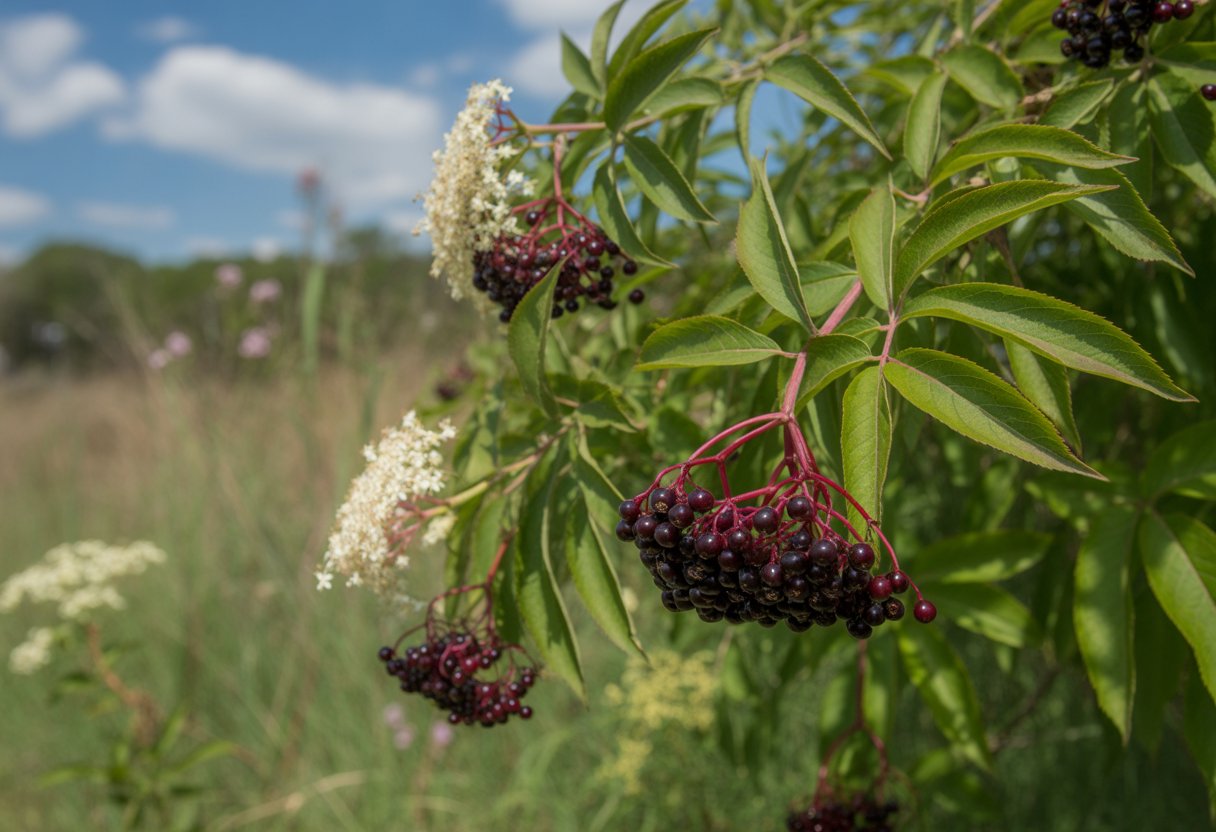
Texas native elderberry gives you a lot to work with—both the berries and flowers have practical uses, from nutrition to the kitchen. It’s got a reputation for being both tasty and good for you.
Nutritional Value and Health Benefits
Elderberries from Texas pack plenty of vitamins A and C, which help with immune support. There’s also iron and calcium for your bones and blood.
Antioxidants in elderberries can help fight oxidative stress, which is always a plus. The flowers, meanwhile, have mild anti-inflammatory effects and sometimes end up in teas.
Don’t eat raw elderberries, though—they can be mildly toxic. Cooking makes them safe and turns them into a nutrient-rich food.
Harvesting Berries and Flowers
You’ll want to harvest elderberries in late summer when they’re deep purple-black. Only pick ripe, full clusters—unripe berries aren’t safe to eat.
Flowers are best gathered in late spring, preferably on dry, sunny days to keep their fragrance and flavor. Handle both berries and flowers gently so they don’t get crushed or spoil.
Culinary Applications
You can get creative with Texas elderberries and flowers in the kitchen. Cook the berries into pies, jams, or syrups—elderberry pie, for example, balances tart fruit with sugar and spice.
Elderflowers shine in syrups and teas, adding a light floral note to desserts and drinks. Both berries and flowers work well in homemade preserves and baked goods, bringing nutritional value and a unique taste to your table.
Elderberry Wines and Products
Texas native elderberries bring a deep, rich color and this kind of balanced acidity to elderberry wines. These wines usually taste fruity, with a hint of something floral lingering in the background.
You can use the berries for more than just wine—think jams, jellies, or even concentrated syrups. There’s really a lot you can do with them if you’re willing to experiment.
Commercial products love to highlight the nutritional value of elderberries. They’re often marketed to folks who care about health and want something a bit different.
Winemakers need to handle elderberries with care and ferment them properly to get safe, high-quality results. It’s a bit of an art, honestly.