American Beautyberry Not Producing Berries: What to Check Before Pruning
Last updated: November 5, 2026
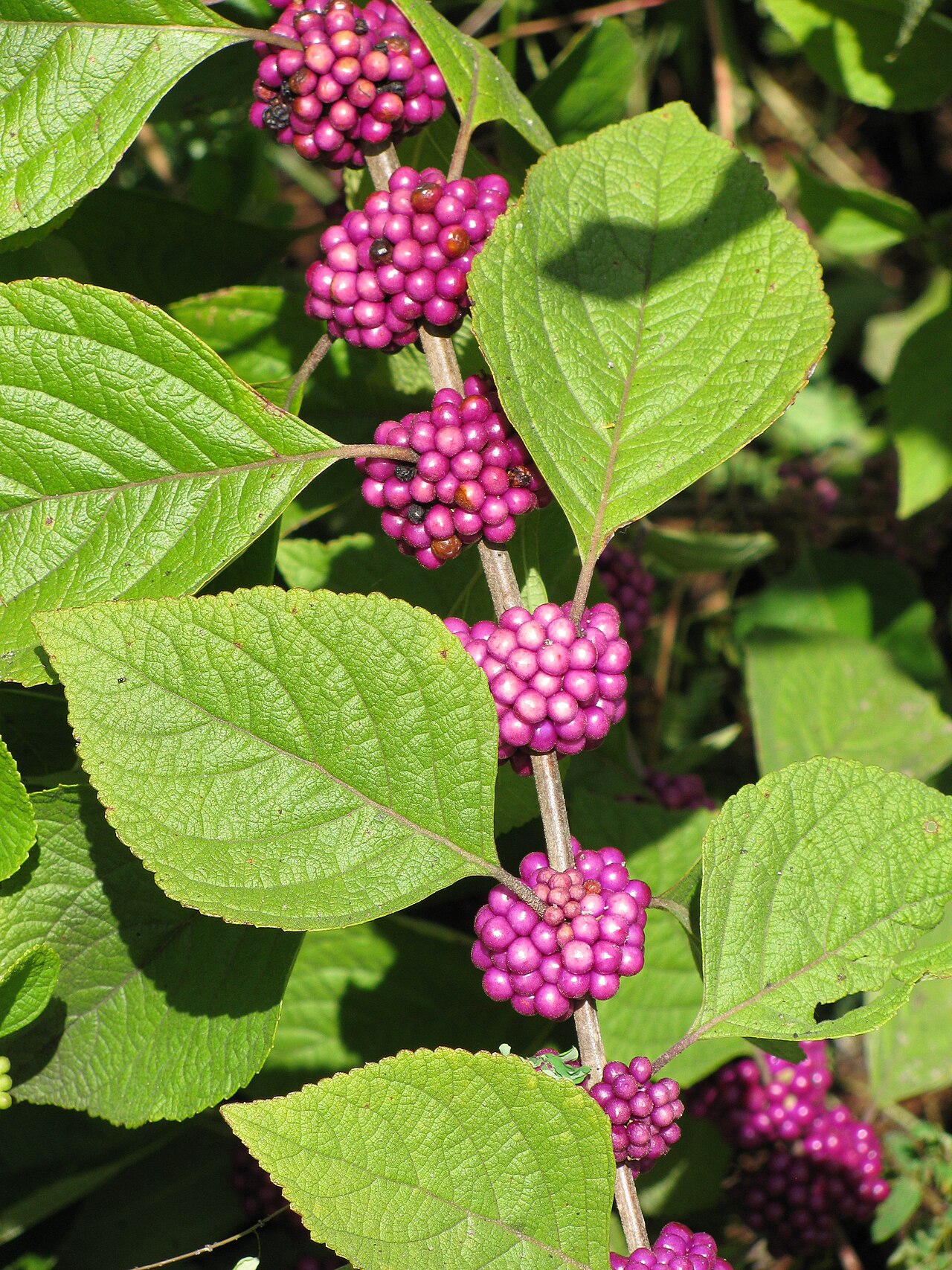
You planted American beautyberry for its purple berries. This fall, the shrub is green and leafy, and the berries never showed up.
Your first move might be to cut it back hard. Hold off. Cutting at the wrong time is one of the most common reasons beautyberry goes without fruit in the first place.
Use this guide to work out what actually happened this year. Each check takes a few minutes, and most of them can be done before you pick up the pruners.
The Short Answer
American beautyberry (Callicarpa americana) flowers and fruits on the current year’s shoots. No berries usually traces back to one of these causes:
- Pruning after spring growth started, which removed the shoots that would have flowered.
- Too much shade. The plant survives in shade but fruits poorly there.
- A young or recently moved plant that is still growing roots.
- Drought during bloom or too much nitrogen fertilizer.
- Berries that formed and were eaten before you noticed.
- A different Callicarpa, or a white-fruited form.
How Beautyberry Makes Berries
Beautyberry doesn’t set flower buds in fall the way azaleas or dogwoods do. Over winter, its bare stems hold no flower buds at all.
In spring, new shoots grow from the old wood and from the base. As those shoots lengthen, small flower clusters form in the leaf axils, where each leaf joins the stem.
The flowers open in late spring and summer. Each pollinated cluster becomes a ring of berries that ripens from late summer into fall, then lasts into early winter if wildlife leaves it alone.
The Beautyberry Year
| Late winter | Dormant stems, no flower buds. This is the safe time to prune. |
| Spring | New shoots grow. Flower clusters begin forming in the leaf axils. |
| Late spring – summer | Small pink to lavender flowers open in flushes along the stems. |
| August – October | Berries turn from green to purple. |
| Late fall – early winter | Berries persist on bare stems until birds and mammals eat them. |
That timeline explains most fruit problems. Anything that removes, stresses, or shades the new shoots between spring and midsummer removes this year’s berries along with them.
Check 1: Did It Flower This Year?
Start here, because this answer tells you which half of the guide applies to you.
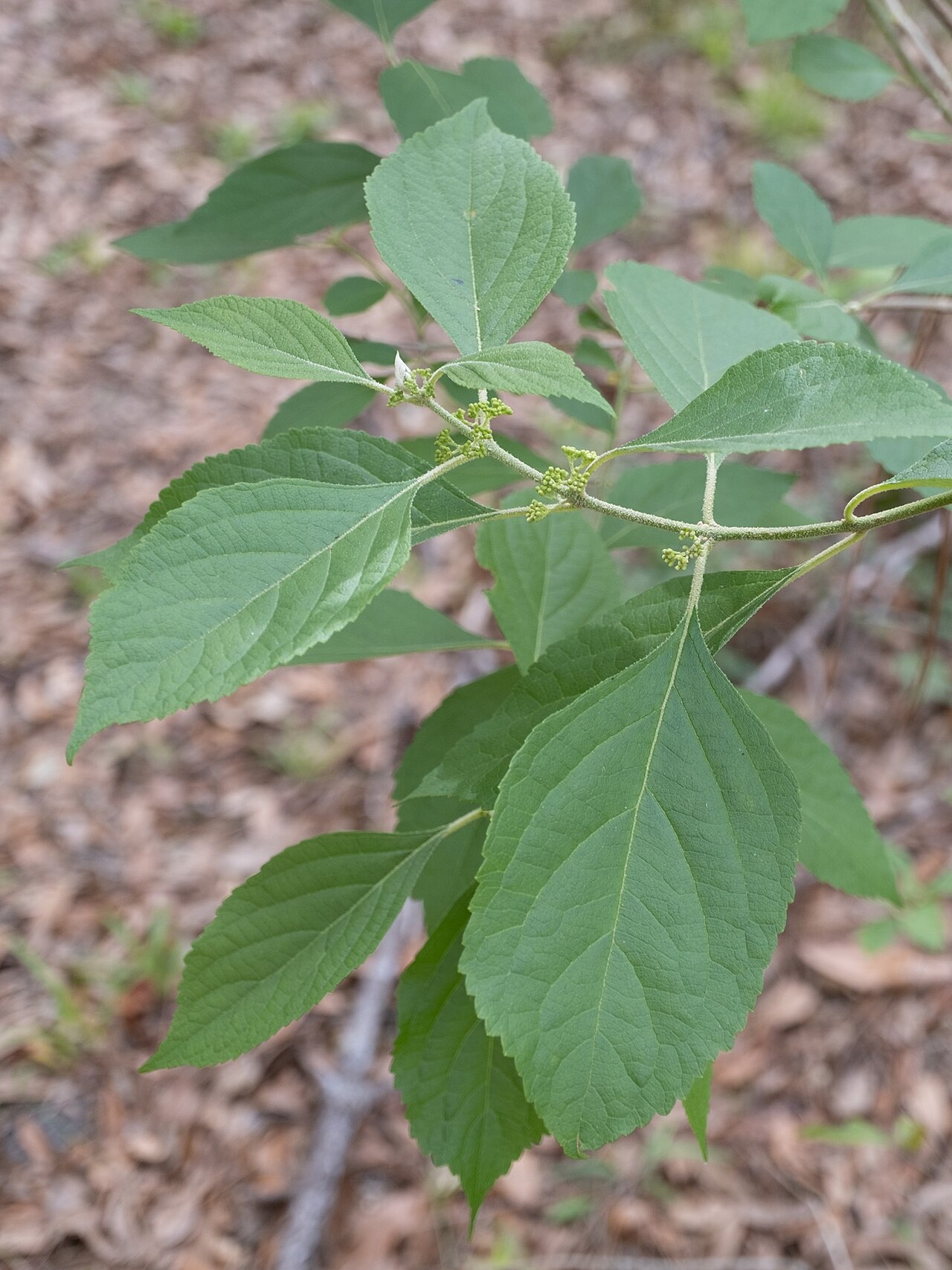
Look closely at the leaf axils along the stems. Spent flower clusters leave behind tiny stalks or dried, brownish remnants. Small green berries that never colored count as flowering too.
- No sign of flowers: the problem is pruning, light, age, or stress. Go to Checks 2 through 5.
- Flowers but no berries: the problem is fruit set, weather, or wildlife. Go to Checks 5 through 7.
- Berries that look wrong (white, pale, or on long stalks): go to Check 8.
Check 2: Review When It Was Last Pruned
This is the “before pruning” step in the title, and for good reason.
Since flowers form on new shoots, any cut made after spring growth begins removes flowering wood. Shearing in early summer for neatness is enough to wipe out a season of fruit. A trim after flowering does the same thing, because the cut-off stems are carrying the developing berries.
A plant cut back in late summer or fall won’t make up for it. Extension specialists note that beautyberry doesn’t replace flowers or fruit lost to a late trim. It simply loses that season’s display.
Ask everyone who works in the yard. Landscape crews often shear shrubs on a fixed summer schedule. A beautyberry treated like a boxwood rarely fruits.
Pruning in late winter is a different story. Cutting the whole plant back to about a foot tall before growth starts is a standard method. It resets the shrub to a compact shape without costing you berries. See our general guide to pruning trees and shrubs for clean-cut technique.
Check 3: Measure the Light
Beautyberry grows in woodland edges and openings. It takes part shade, but NC State Extension describes it as intolerant of deep shade.
In heavy shade the plant stays alive, stretches out, and flowers sparsely. A few scattered berries on long, leaning stems is the classic shade pattern.
Count the hours of direct sun the shrub actually gets in summer, not in winter when nearby trees are bare. Check it in the morning, at midday, and in late afternoon.
- 6+ hours: plenty of light. Look elsewhere.
- About 4 hours: usually fine, especially with afternoon shade in hot southern gardens.
- Less than that, or bright shade only: light is likely the main cause.
Light problems get worse slowly as trees grow. A beautyberry that fruited well five years ago can fade as a maple fills in overhead.
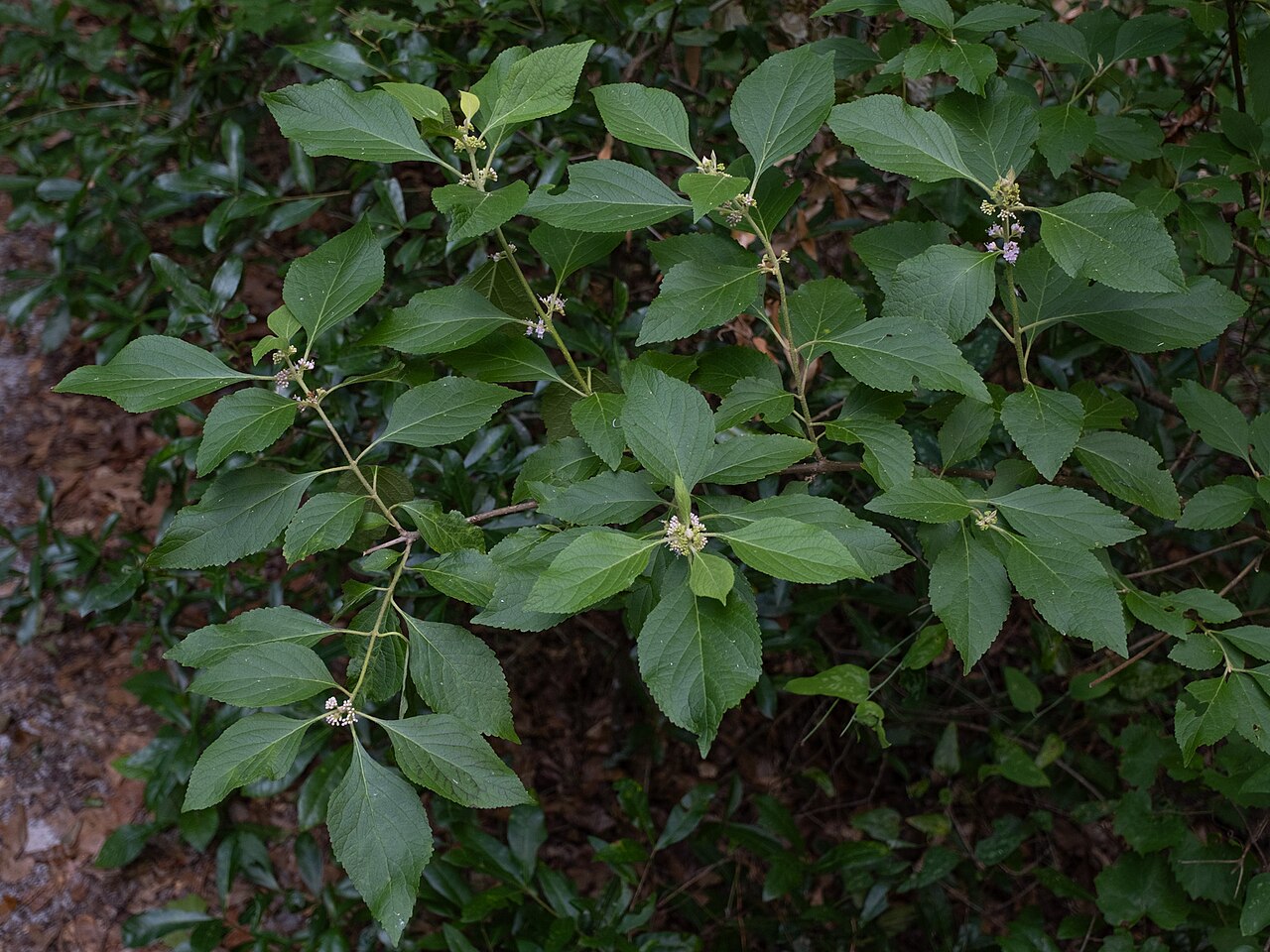
Check 4: Consider Age and Transplanting
A shrub in its first season after planting puts most of its energy into roots. A light crop or no crop that year is normal.
The same goes for a plant that was moved or divided, or one that came from a small pot. Give it a full growing season in the ground before you treat no berries as a problem.
If the plant is still small and slow in its second or third year, look at the root zone. Shrubs planted too deep, or left in a circling pot-bound root ball, often stall for years. Our guide to caring for native shrubs covers planting depth and early aftercare.
Check 5: Look at Water and Fertilizer
Established beautyberry tolerates dry spells. Flowering and fruiting are more sensitive than the leaves are, though.
A long dry stretch while the plant is blooming can cause flowers and young fruit to drop, especially on sandy soil or young plants. If your summer was dry and you saw flowers but no berries, drought is a strong suspect.
In a dry summer, a slow deep soak every week or two during bloom helps. So does a few inches of wood-chip or leaf mulch kept off the stems. See our mulching techniques for native gardens for the details.
Fertilizer is the opposite problem. Beautyberry rarely needs it. High-nitrogen products, including lawn fertilizer that drifts into shrub beds, push lush leaves at the expense of flowers.
If the shrub is unusually big, dark green, and flowerless, check what has been spread nearby. A basic soil test beats guessing. If you do feed, our explainer on reading fertilizer numbers shows how to tell a nitrogen-heavy product from a balanced one.
Check 6: Watch for Pollinators
Beautyberry flowers are insect-pollinated. Records from the Southeast list honey bees, sweat bees, leafcutter bees, and other small native bees as visitors.
NC State Extension notes that beautyberry seems to fruit more heavily when several shrubs grow near one another. A lone plant in a yard with few flowers around it may set a lighter crop than a group would.
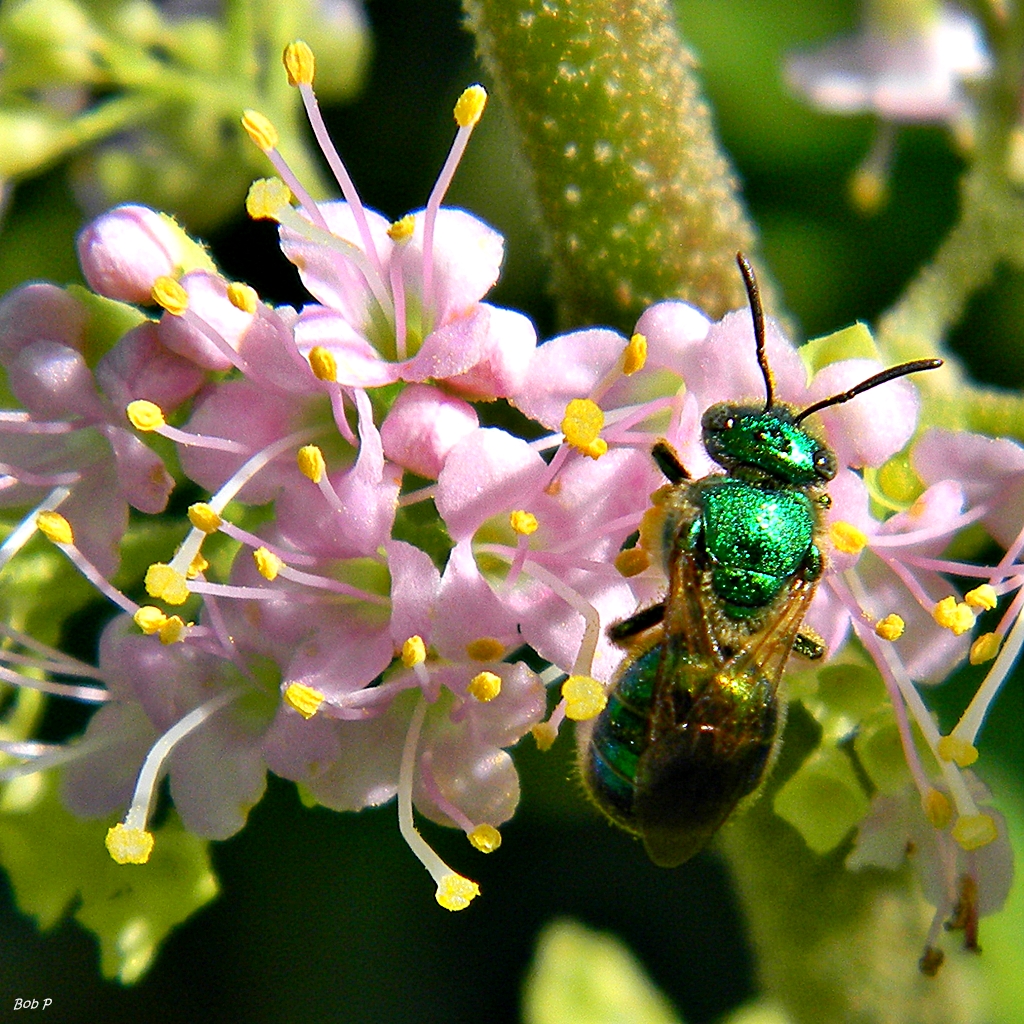
On a warm morning during bloom, spend five minutes watching the flowers. If you see little or no insect activity, think about the bigger picture:
- Insecticide sprays, including mosquito fogging, during the bloom period.
- Few other flowering plants nearby to support a bee population.
- A single isolated shrub. Planting a second beautyberry nearby is an easy upgrade.
For building the kind of bloom sequence that keeps bees around all summer, see our pollinator garden design basics.
Check 7: Rule Out Wildlife and Weather
Sometimes the berries were there, and something got to them first.
Mockingbirds, catbirds, cardinals, brown thrashers, and other birds eat beautyberry fruit. So do deer, raccoons, and other mammals. Deer also browse the leafy shoot tips in spring and summer, which takes off flowering wood the same way an early-summer pruning would.
Clues that berries were eaten rather than never formed:
- Bare fruit stalks or partial clusters left in the leaf axils.
- Purple-stained bird droppings on nearby paths and fences.
- Browsed stem tips with a torn, ragged edge, which points to deer.
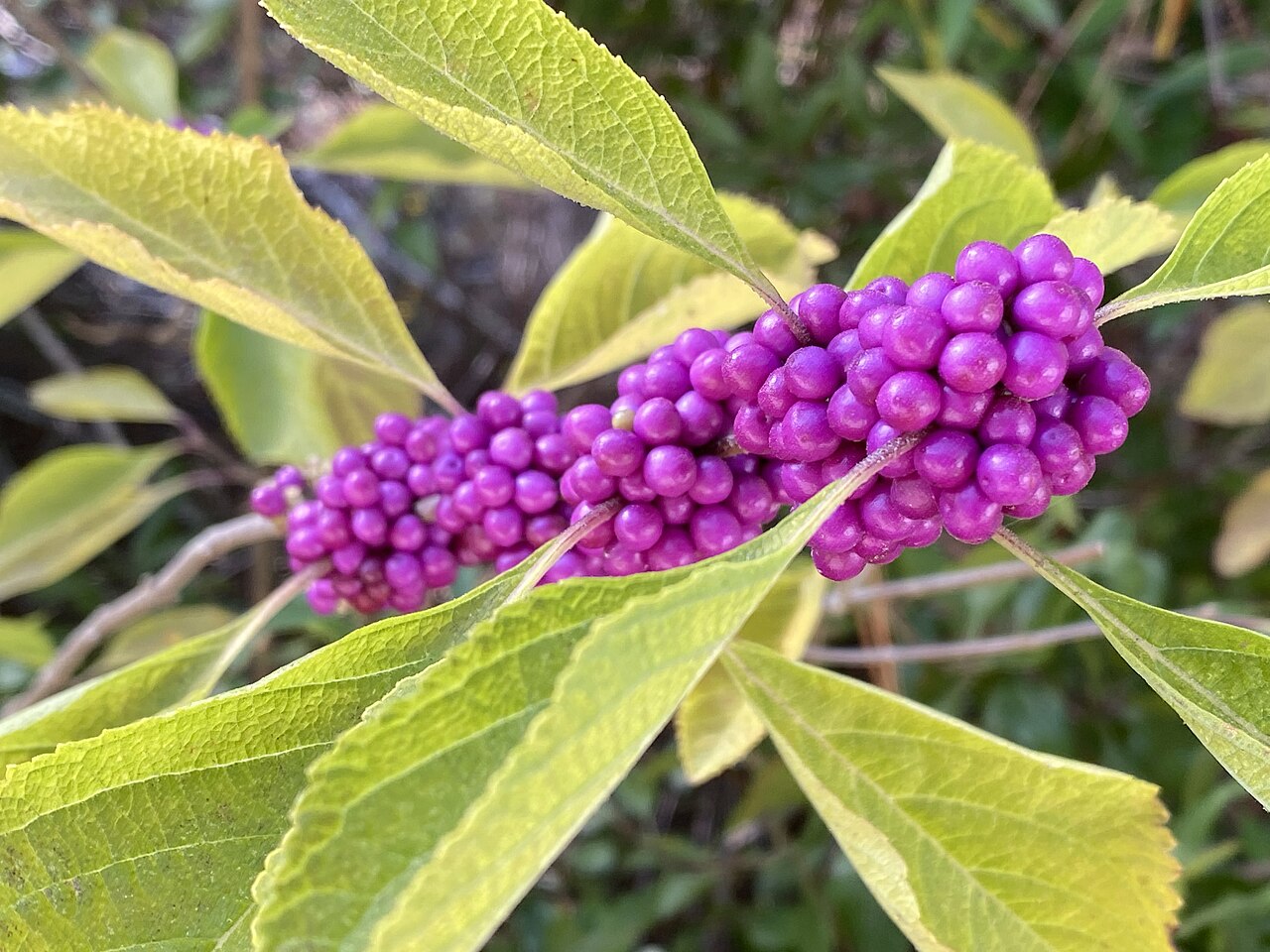
If birds are getting the crop, you’re feeding wildlife, which is what this plant does in the wild. Our guide to attracting songbirds with native plants shows how beautyberry fits into a larger habitat planting.
Weather counts too. Near the northern edge of its range, a cold winter can kill stems back to the ground. The plant usually regrows from the base and can still flower on that new growth, but a late start can mean a later, lighter crop.
Check 8: Make Sure It’s American Beautyberry
Several Asian beautyberries are sold in the nursery trade, mainly purple beautyberry (Callicarpa dichotoma) and Japanese beautyberry (C. japonica). They look similar, and plant tags aren’t always right.
The easiest field check is how the clusters attach to the stem. In American beautyberry, flower and berry clusters sit tight against the stem, on stalks shorter than the leaf stalk. Asian species hold their clusters on a visible stalk, often a little above the leaf axil.
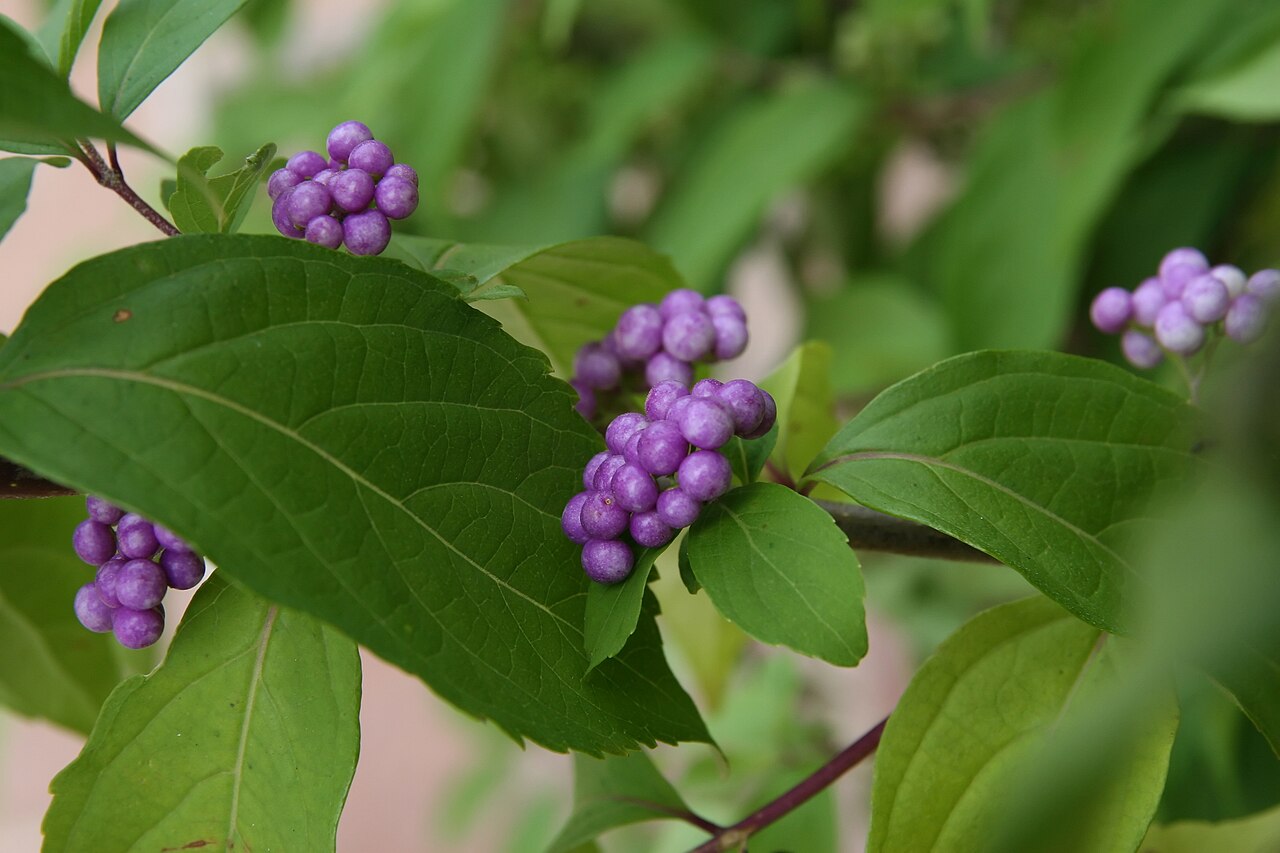
This matters for two reasons. The care advice here is written for the native species. And if you’re growing it for native wildlife value, it’s worth knowing which plant you actually have.
Also check for color forms. White-fruited American beautyberry (often sold as ‘Lactea’) is the same species with white berries. Fruit color also varies naturally from rose-pink to deep purple. A “missing” crop is sometimes a pale one hidden among the leaves. Our purple berry plants guide covers look-alikes in more detail.
Troubleshooting at a Glance
| No flowers, plant was cut in summer | Flowering shoots were removed. Prune only in late winter from now on. |
| Few flowers, long leaning stems | Too much shade. Limb up nearby trees or move the shrub when it’s dormant. |
| Big, dark green, flowerless | Excess nitrogen. Stop feeding and keep lawn fertilizer out of the bed. |
| First year after planting | Normal establishment. Water during dry spells and wait a season. |
| Flowered, then nothing, in a dry summer | Drought stress during fruit set. Deep-water during bloom and mulch the root zone. |
| Flowered, few bees seen | Low pollinator activity. Avoid sprays during bloom and add a second shrub or more flowers. |
| Berries formed, then vanished | Birds or mammals ate them. No treatment needed. |
| Clusters on visible stalks | Likely an Asian Callicarpa, not the native species. |
So Should You Prune It Now?
Probably not yet. Here’s how to decide.
If it’s late summer or fall: leave it alone. A cut now won’t produce berries this year. Wait for late winter.
If it’s late winter and the shrub is overgrown, leggy, or shaded: this is the right window. Choose one approach:
- Renewal cut: cut all stems back to about 12 inches. The plant will regrow into a compact, well-branched shrub that flowers on the new growth that same summer.
- Thinning cut: remove about a third of the oldest, thickest stems at ground level and leave the rest. This works well if you want to keep some height.
If the shrub fruited well in past years and looks healthy: it may not need pruning at all. Clemson’s Home & Garden Information Center points out that beautyberry doesn’t require pruning to fruit well. Many unpruned plants fruit heavily every year.
If it’s spring or summer: limit cuts to dead, broken, or crossing stems. Leave every healthy green shoot that could carry flowers.
A Season-by-Season Plan for Next Year
- Late winter: make any renewal or thinning cuts. Note how much sun the site gets once trees leaf out.
- Spring: don’t fertilize. Keep lawn fertilizer and herbicide drift out of the bed, and protect new shoots from deer if browsing was a problem.
- Late spring – summer: water deeply during dry spells while the plant blooms. Skip insecticide sprays and watch for bees.
- Late summer: look for green berry clusters in the leaf axils. If they’re there, the problem is solved. Now it’s a question of who eats them.
- Fall – winter: enjoy the fruit and leave it for the birds. Hold off on cleanup until late winter.
📋 More on this plant: read the full American Beautyberry (Callicarpa americana) profile, or see it in our native plant lists for Georgia, Alabama & Mississippi, Arkansas, Louisiana, Eastern Oklahoma & Eastern Texas, Kentucky & Tennessee, and Illinois, Iowa & Missouri.
Frequently Asked Questions
Why is my beautyberry growing well but not producing berries?
Vigorous growth with no fruit usually means pruning after spring growth began, too much shade, or too much nitrogen fertilizer. Start by checking whether it flowered at all, then work through those three.
How long does it take a new beautyberry to produce berries?
A healthy plant often fruits in its first or second summer in the ground. A light crop or none in the first season after planting is common while roots establish.
Can I prune beautyberry in the fall after the berries are gone?
It won’t harm a healthy plant, but there’s no benefit. Waiting until late winter leaves the stems for winter wildlife cover. It also avoids stimulating growth before cold weather and gives you the same result next summer.
Do you need two beautyberry plants to get berries?
No. A single plant can fruit. NC State Extension notes that plants seem to fruit more heavily when several grow near each other, so a group is a reasonable way to improve a light crop.
Will fertilizer make my beautyberry produce more berries?
Usually not. Beautyberry grows well in average soil, and nitrogen-rich fertilizer tends to produce more leaves, not more fruit. Fix light, pruning timing, and summer water first.
Sources
- North Carolina Extension Gardener Plant Toolbox, Callicarpa americana: light tolerance, late-winter pruning, flowering on new shoots, fruit timing and group planting.
- Ask Extension, When and how much to cut beautyberry: no dormant flower buds over winter, berries lost to post-flowering pruning, and native vs. Asian cluster stalks.
- Clemson Cooperative Extension Home & Garden Information Center, American Beautyberry: pruning not required for good fruit production.
- Wikipedia, Callicarpa americana: inflorescence and fruit description, color forms, wildlife use and recorded bee visitors.
- USDA PLANTS Database, Callicarpa americana profile.