American Beautyberry Winter Dieback: Checking for Live Growth Before Cutting
Last updated: November 5, 2026
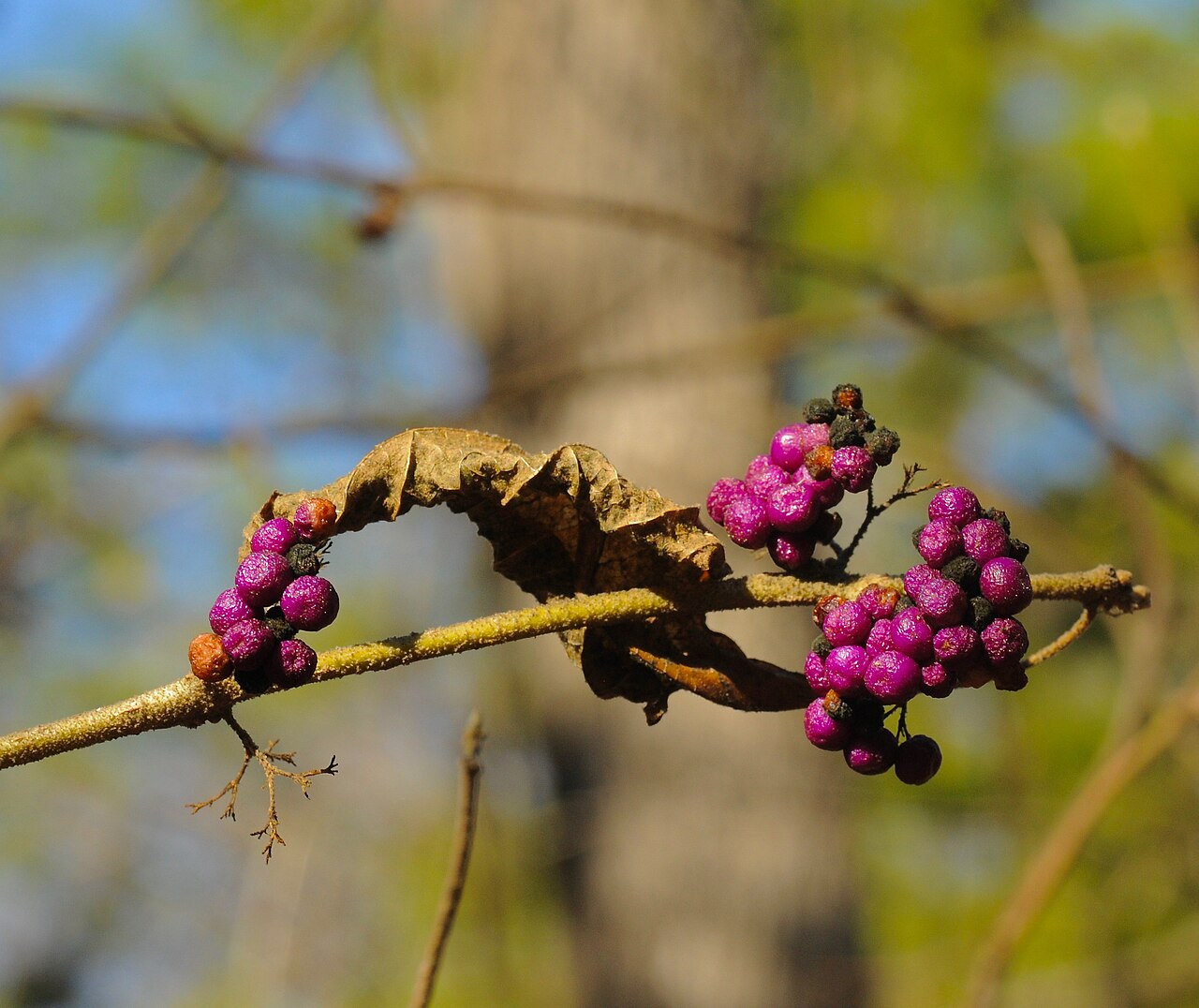
After a hard winter, your American beautyberry looks like a bundle of gray sticks. Some stems snap when you bend them. You wonder whether the whole plant is gone.
Usually it isn’t. Beautyberry is a shrub that often dies back in cold winters and then regrows strongly from lower stems or the base.
The trick is knowing where the dead wood ends and the live wood begins before you cut. This guide shows you how to check, when to check, and what to do with what you find.
The Short Answer
- Winter dieback is common near the cold edge of beautyberry’s range. Extension sources describe plants dying back to the ground in harsh winters and regrowing from the roots.
- It rarely costs you berries. Beautyberry flowers and fruits on new growth, so shoots that grow back this spring still carry this year’s crop.
- Don’t cut too early. Wait until late winter or early spring, when the worst freezes have passed.
- Check before you cut: bend stems, scratch the bark for green tissue, and watch for swelling buds.
- Be patient at the base. A plant with no live stems may still sprout from the roots well into spring.
How Beautyberry Handles Cold
Our beautyberry profile lists it as hardy in USDA Zones 6 to 11. University of Illinois Extension says it is known to die back to the ground in Zone 5, or even in Zone 6 during harsh winters.
The Missouri Department of Conservation describes it as long-lived but likely to die back to the ground during especially harsh Missouri winters. Gardeners at the Dyck Arboretum in Kansas treat it almost like a perennial, because it dies back to the ground there each winter.
Further south, cold snaps can still kill the tips or upper stems of plants that normally stay woody all winter.
The important part: Illinois Extension and the Dyck Arboretum both note that this dieback doesn’t affect flowering. Beautyberry blooms and fruits on the current year’s shoots, so a plant that regrows from the base can still produce a full crop that fall.
What Your Dieback Means
| Tips dead, most stem alive | Minor. Trim to live buds in early spring or fold into a normal late-winter prune. |
| Stems dead partway down | Common after a hard winter. Cut back to the highest live buds once they show. |
| All stems dead to the ground | Expected in the coldest parts of its range. Cut low and wait for shoots from the base. |
| No shoots by late spring | Check the crown and roots. The plant may have died from cold, drought, or root problems. |
Check 1: Is It Time to Look?
The worst time to judge winter damage is right after a freeze. LSU AgCenter horticulturist Jason Stagg points out that it’s impossible to determine the full scope of freeze damage early on.
UF/IFAS Gardening Solutions gives the same advice: don’t prune cold-damaged plants right away. Dead growth looks bad but helps insulate the plant from further injury. To be certain where to prune, wait until plants begin to sprout new growth.
For beautyberry, that works out to late winter or early spring, the same window as normal pruning. If you can wait until the first buds are swelling, the line between live and dead wood will show itself.
In the meantime, the old stems do useful work. They mark the plant’s location, hold any remaining berries for birds, and give some shelter at the base.
Check 2: Bend the Stems
Start with a quick bend test on several stems, working from the tips down.
- Flexible, springs back: probably alive.
- Snaps cleanly with a dry crack: probably dead at that point.
- Dry and brittle at the tip, flexible lower down: partial dieback. The live line is somewhere between.
Bending is a first pass, not proof. Dormant wood can feel stiff even when alive, so confirm with the scratch test.
Check 3: Do the Scratch Test
This is the most reliable home check. Use a fingernail or a pocketknife to scrape a small patch of bark off the stem.
UF/IFAS explains that cold-injured wood will be black or brown under the bark. LSU AgCenter adds that green tissue inside the stem means the plant is alive and likely worth saving.
- Bright green, moist layer: alive.
- Brown, tan, or dry: dead at that spot.
- Pale or mixed: damaged. Check a few inches lower.
Start near the tip and work down each stem in steps of a few inches. Keep scratches small. The goal is to find the highest point where every stem is still green.
Check 4: Look at the Buds
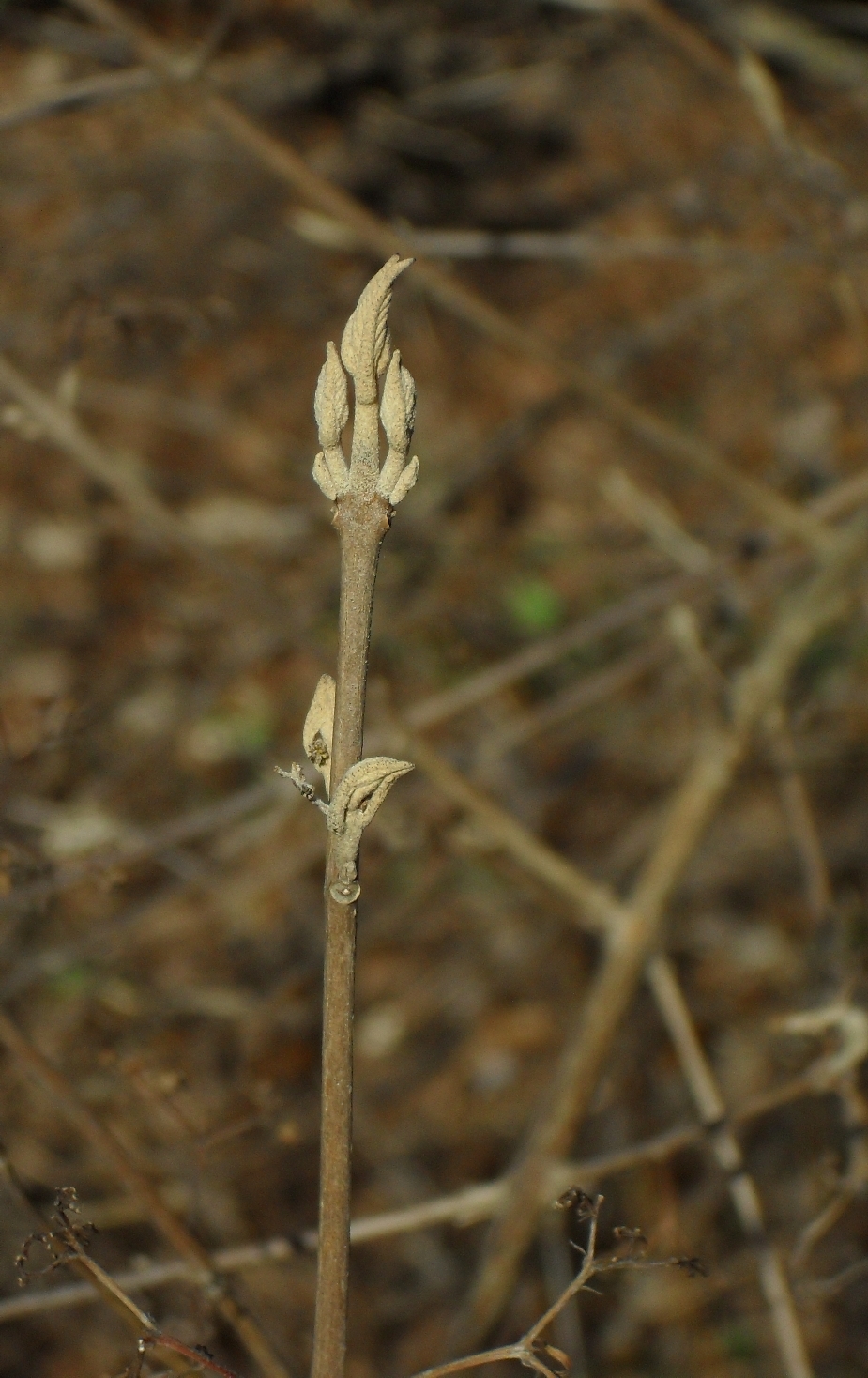
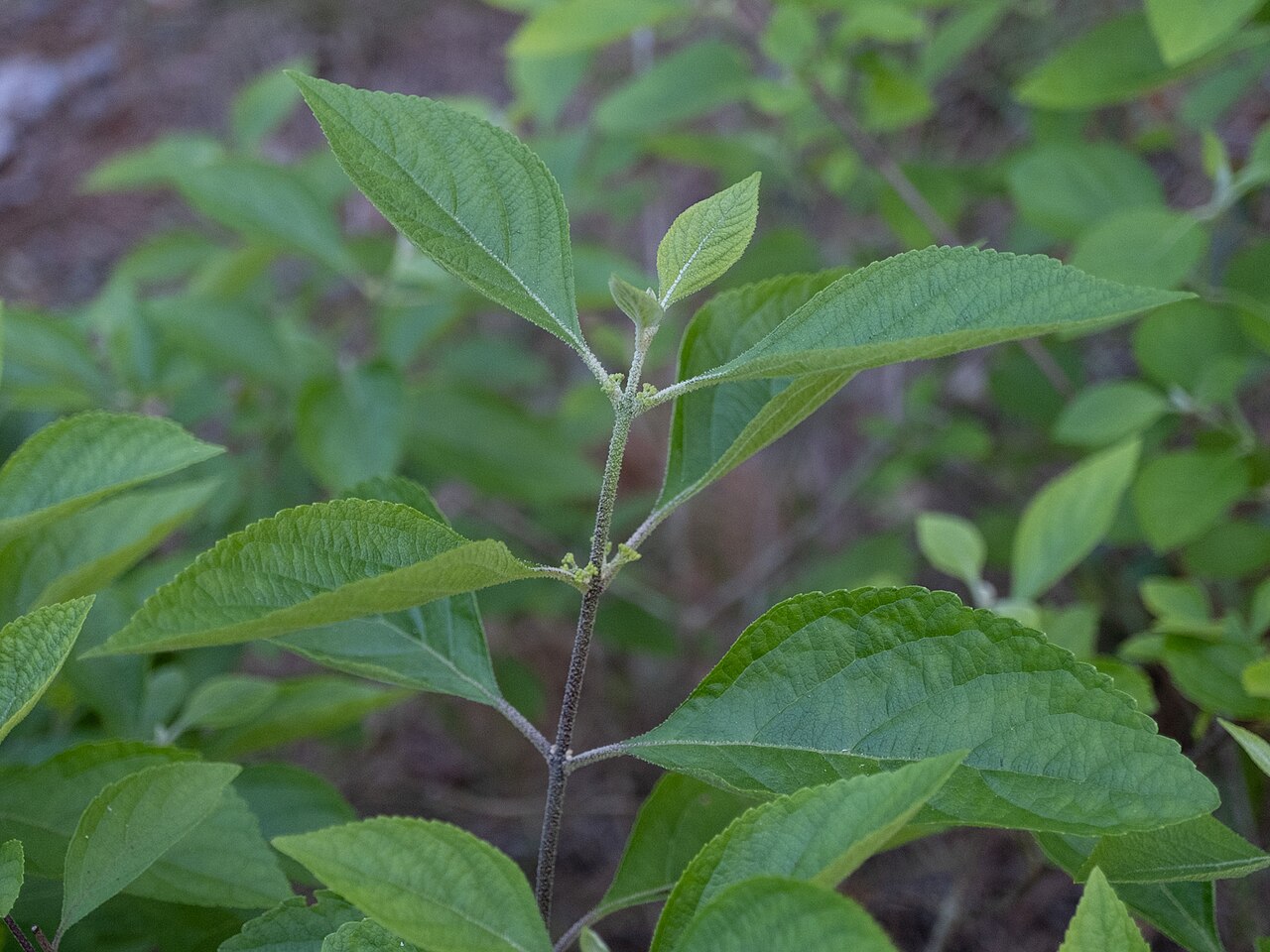
Beautyberry’s winter buds are small and fuzzy, sitting in pairs at the nodes where last year’s leaves were attached.
Live buds look plump and firm. Dead buds look shriveled, dark, or hollow, and they crumble when pressed.
As spring arrives, watch for buds swelling and showing green. Once a few pairs break open along a stem, you know exactly where its live wood starts.
Check 5: Check the Base and Crown
If every stem tests dead, don’t give up. Move down to the base of the plant.
Pull back mulch and scratch the stems just above the soil line. Look for small buds or new shoots emerging from the crown or from just below ground.
Beautyberry regrows readily from its base. Our profile notes it regenerates quickly after fire, browsing, and other disturbance. The USDA NRCS describes it as very tolerant of fire. That same ability lets it recover from stems killed by cold.
Give a plant with no live stems until late spring before deciding it’s dead. Shoots from the base can appear later than buds on surviving stems would.
Check 6: Rule Out Other Causes
Not every dead stem in spring is caused by winter cold. Consider these too:
- Late frost on early growth. University of Maryland Extension notes that warm spells can push buds into growth early, and a following frost kills that tender new growth. Prune remaining bare branches if new growth doesn’t emerge as spring progresses.
- Drought last summer or fall. Dry stress can kill stems that then look like winter damage.
- A first-winter plant. Young plants with small root systems are more vulnerable. If yours went in last fall, see our guide to newly planted beautyberry problems for root-zone checks.
- A different species. The Missouri Department of Conservation notes that Asian beautyberries may be somewhat more cold-tolerant than the native one. If two similar shrubs fared very differently, one may be an Asian Callicarpa. Our purple berry plants guide covers look-alikes.
How to Cut Back After Dieback
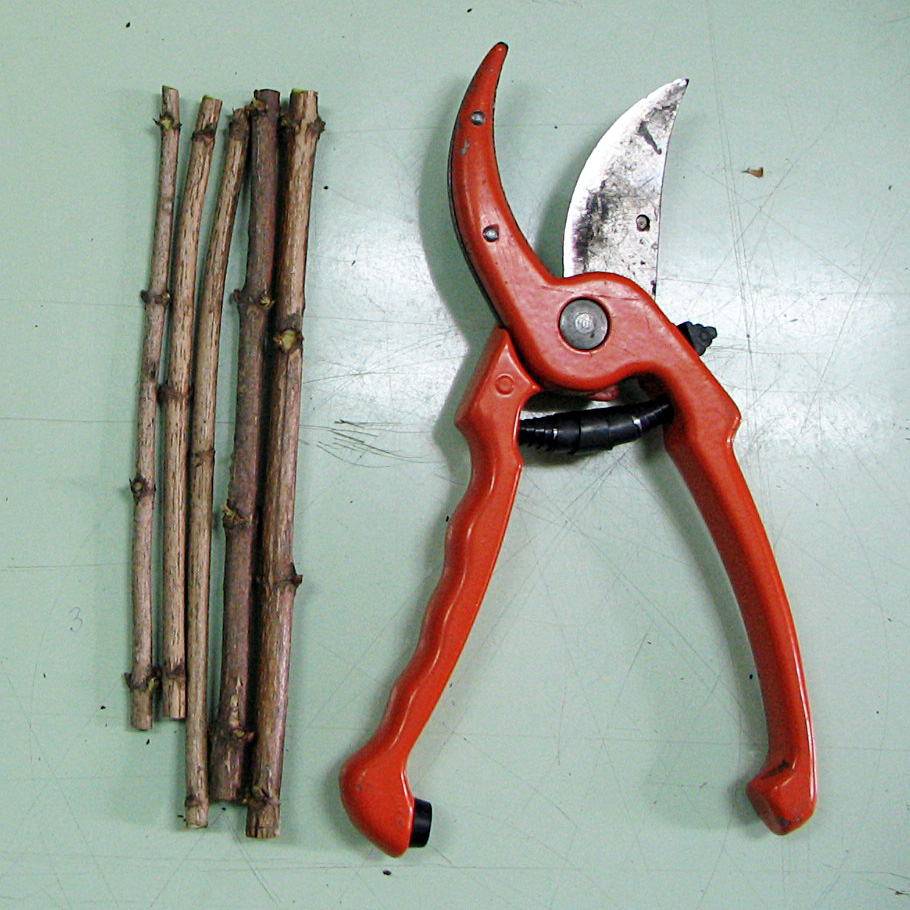
Once you’ve found the live line, the cuts are simple.
Partial dieback: cut each damaged stem just above the highest pair of healthy buds. Leave the live wood below. Remove any stem that’s dead all the way down at the base.
Total dieback: cut all dead stems low, a few inches above the soil, so new shoots from the base aren’t tangled with dead wood. The Missouri Department of Conservation recommends cutting away old stems in late winter, since berries form only on new growth.
Not sure yet: wait. There’s no harm in leaving a questionable stem a few more weeks. LSU’s advice for early cleanups is to prune as little as possible, because the more stem you leave, the better.
If you were planning a size-control prune anyway, combine the two jobs. Our guide to pruning American beautyberry in a small garden explains renewal and thinning cuts. For general cut technique, see how to prune trees and shrubs.
Troubleshooting at a Glance
| Stems snap, scratch shows brown | Dead at that point. Test lower down. |
| Green under bark, buds firm | Alive. Leave it, or prune only for size. |
| All stems dead, crown green | Cut stems low and wait for basal shoots. |
| Early leaves blackened after frost | Late-frost damage. Wait for a second flush, then trim bare tips. |
| Only the native shrub died back | Normal at the cold edge of its range. Asian species may be hardier. |
| Nothing by late spring | Dig gently at the crown. Firm roots mean keep waiting; soft, dark, mushy roots suggest the plant has died. |
Reducing Dieback Next Winter
You can’t change your climate, but a few habits help a beautyberry come through winter in better shape.
- Mulch the root zone in fall. A few inches of leaves or wood chips insulate the crown, where regrowth starts. Our mulch choices for native beds guide compares options.
- Don’t prune in late summer or fall. Leave stems standing until late winter. They hold berries for wildlife and protect the base.
- Skip late-season fertilizer. Beautyberry rarely needs it, and late growth is more easily damaged by cold.
- Water before a freeze in dry weather. UF/IFAS notes that plants may not get the water they need if the soil is dry or frozen.
- Choose a sheltered spot. In the coldest parts of its range, a site protected from harsh winter wind can help.
For broader cold-weather strategies, see our guide to frost protection for tender plants.
A Season-by-Season Plan
- Winter: leave damaged stems alone. Note which ones look dead, but don’t cut yet.
- Late winter – early spring: bend and scratch-test stems. Remove clearly dead wood, and cut damaged stems to the highest live buds once they show.
- Spring: watch for basal shoots on plants that died to the ground. Water if spring is dry.
- Summer: no pruning. New shoots are flowering. If berries are scarce, check our guide to beautyberry not producing berries.
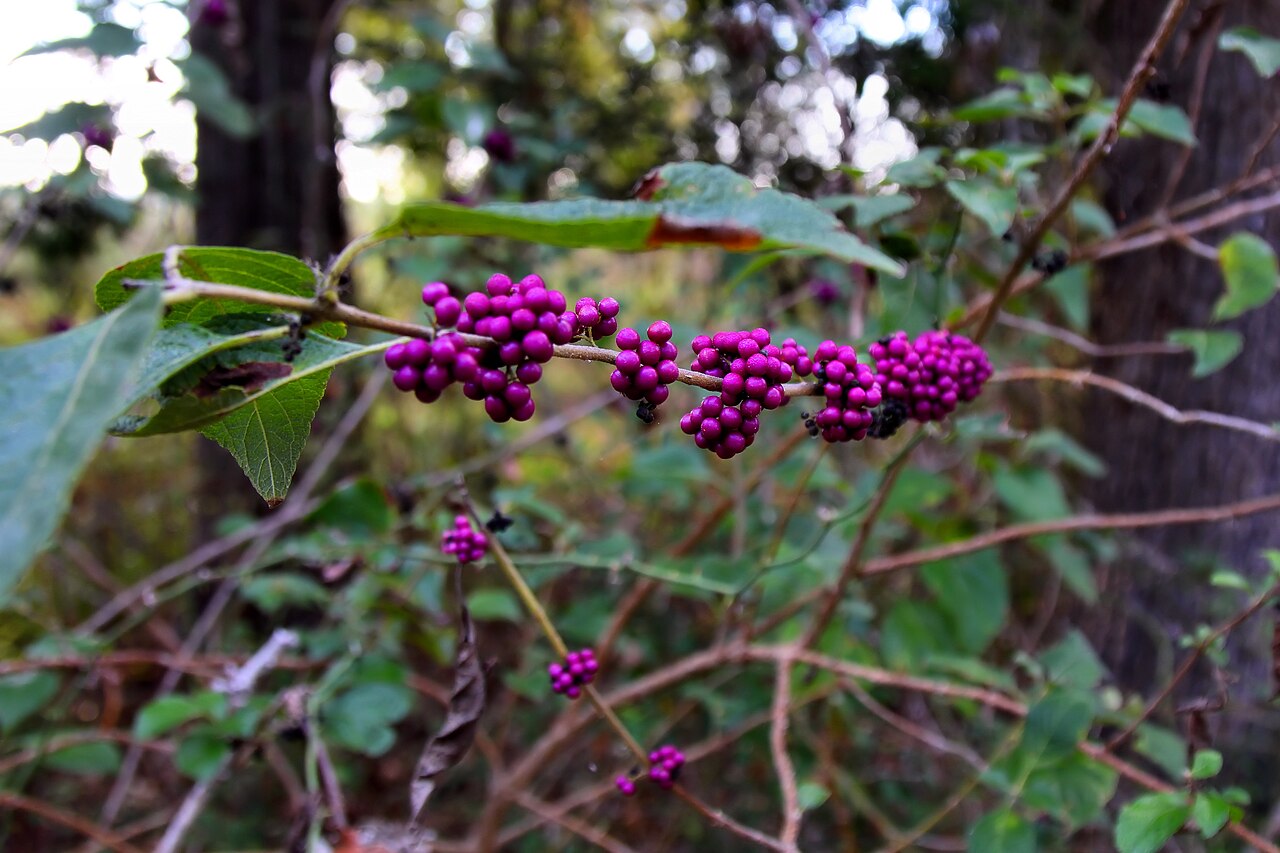
- Fall: enjoy the fruit, then mulch the root zone before the first hard freeze.
📋 More on this plant: read the full American Beautyberry (Callicarpa americana) profile, or find it in our native plant lists for Georgia, Alabama & Mississippi, Arkansas, Louisiana, Eastern Oklahoma & Eastern Texas, Kentucky & Tennessee, and Illinois, Iowa & Missouri.
Frequently Asked Questions
Is my beautyberry dead if all the stems are brown?
Not necessarily. In cold winters beautyberry often dies back to the ground and regrows from the roots. Scratch the stems at the base and wait until late spring before deciding.
Will a beautyberry that died back still have berries this year?
Usually yes. It flowers and fruits on new growth, so regrowth from the base can carry a full crop. Extension sources note that winter dieback doesn’t affect flowering.
When should I cut back winter-killed beautyberry stems?
In late winter or early spring, after the worst freezes have passed. Ideally wait until buds start to swell so you can see exactly where live wood begins.
How do I tell if a beautyberry stem is alive?
Scratch the bark with a fingernail. Green, moist tissue underneath means alive; brown or dry tissue means that part is dead. Flexible stems and plump buds are also good signs.
Should I protect beautyberry from winter cold?
In most of its native range it needs no protection. Near its cold limit, a few inches of mulch over the root zone in fall helps protect the crown where new shoots form.
Sources
- University of Illinois Extension, Beautyberry: A flashy fall performer with purple pop: hardiness, dieback in Zones 5 and 6, berries on new wood.
- Missouri Department of Conservation, American Beautyberry: dieback in harsh winters, late-winter removal of old stems, Asian species cold tolerance.
- Dyck Arboretum of the Plains, Plant Profile: American Beautyberry: annual dieback in Kansas without loss of flowering.
- UF/IFAS Gardening Solutions, Treating Cold-Damaged Plants: delaying pruning, bark scrape test, watering after freezes.
- LSU AgCenter, Don’t rush to cut back, discard freeze-damaged plants: waiting to assess damage, stem scrape test, minimal early pruning.
- University of Maryland Extension, Winter Damage on Landscape Plants: late-frost damage to early growth.
- USDA NRCS, Plant Fact Sheet: American Beautyberry: fire tolerance and berries on new growth.