
Anderson’s Thistle (Cirsium andersonii)
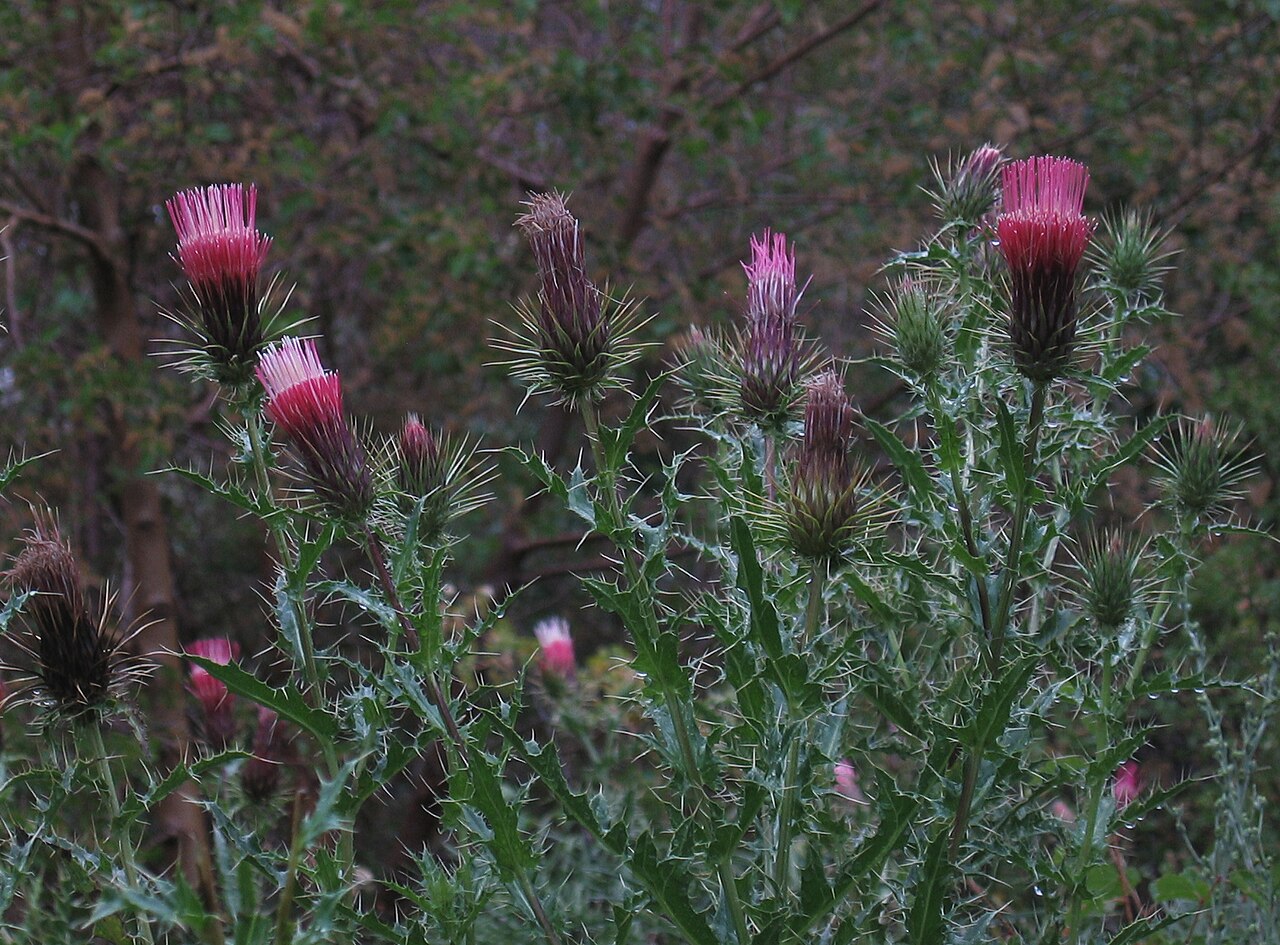
Cirsium andersonii, known as Anderson’s Thistle or rose thistle, is a native thistle of the high mountains of California and neighboring Nevada and Oregon. It is a stately, spiny perennial up to about 3 feet tall, and from midsummer to early fall it carries narrow, rose-red to reddish-purple flower heads with long florets that flare out like a shaving brush. It belongs to the aster family (Asteraceae).
Anderson’s thistle grows in dry, open conifer forests, rocky slopes and forest openings, mostly in the Sierra Nevada and the southern Cascades. Its slender, red flowers are unusual among thistles: they are visited by hummingbirds as well as bees and butterflies, and they bloom late in the season when many other mountain wildflowers have finished.
This is a native thistle, not one of the invasive weeds such as bull thistle or Canada thistle. Native thistles like this one are important to pollinators and seed-eating birds, and in many places they have declined. Anderson’s thistle deserves a place in mountain and dry-garden plantings within its range, and it should be left alone, not pulled, where it grows wild.
Identification
Look for a spiny, gray-green thistle up to about 3 feet tall in open mountain forests, with narrow, rose-red flower heads whose long florets flare like a brush above spine-tipped, purple-tinged bracts, blooming from July to September.
Leaves
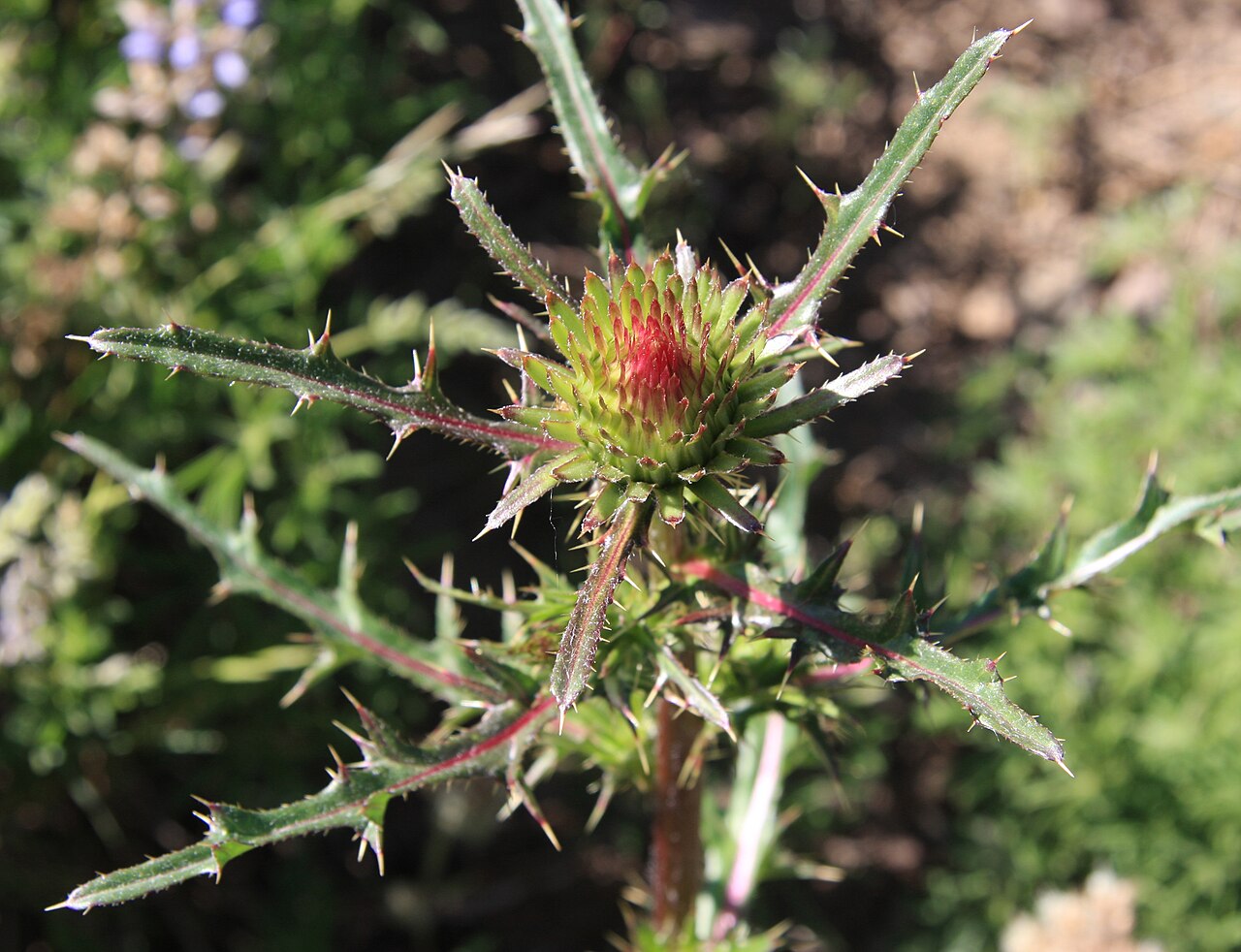
The leaves are deeply lobed and sharply cut into narrow, spine-tipped segments. The lower leaves are the largest, up to about 12 inches long, and taper to a spiny-winged stalk; the upper leaves are smaller and clasp the stem. Leaf surfaces range from green and nearly hairless to gray with cobwebby hairs.
Stems
One to several erect stems rise from a deep root, simple or branched in the upper part, and hairless to quite woolly. They are often tinged reddish-purple.
Flowers
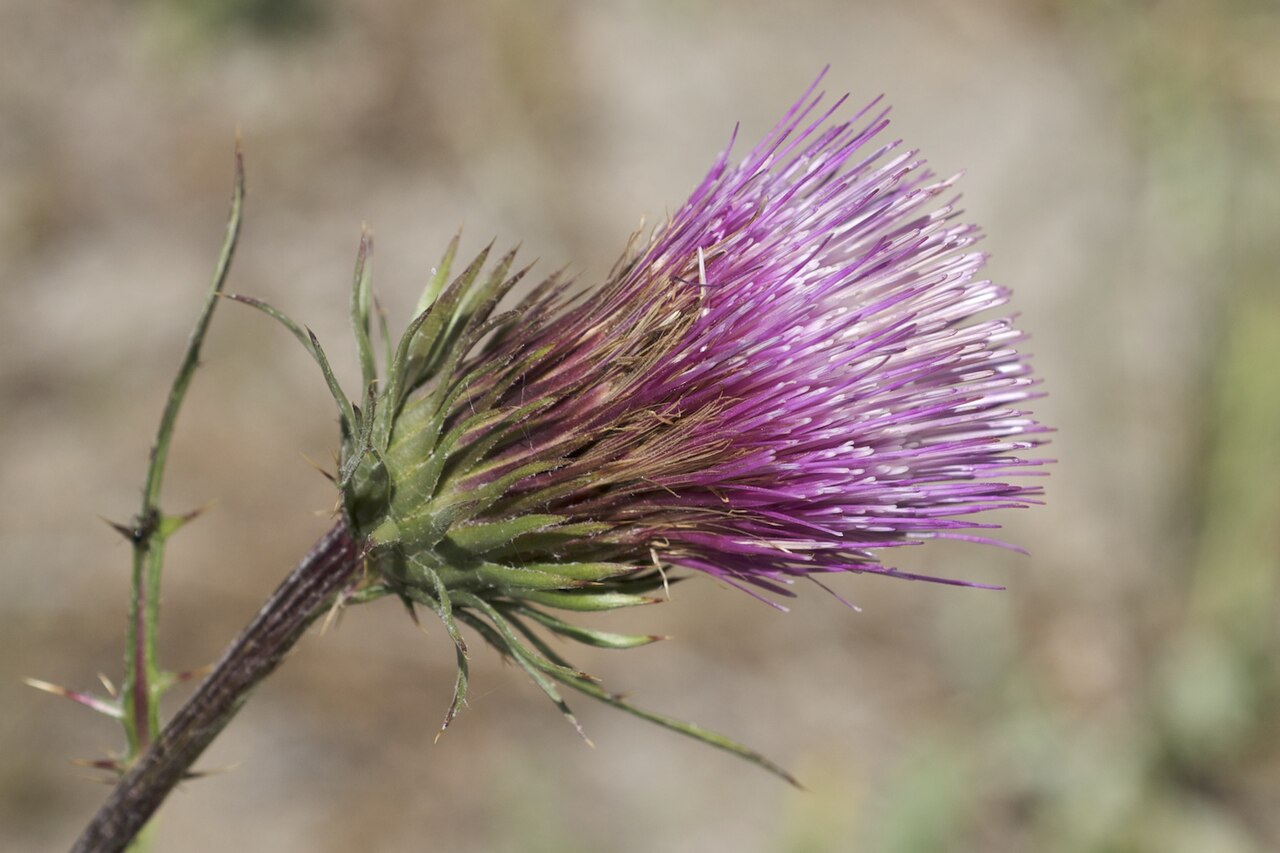
The flower heads grow singly or a few together at the branch tips. Each head is up to about 2 inches long and 1½ inches wide and is narrow and cylindrical rather than round. The bracts (phyllaries) around the base are spine-tipped and often purple-tipped, and they curve outward. The disk florets are red, rose-pink or reddish-purple, up to about 1¾ inches long, with the anthers protruding. There are no ray flowers. Bloom is from about July to September.
Fruit & Seeds
Each floret produces a small, brown achene about 1/4 inch long, topped with a fluffy, feathery pappus up to about 1½ inches long that carries it on the wind.
Look-alikes
Cobwebby Thistle (C. occidentale) has round, heavily cobwebbed heads and grows mostly at lower elevations. Elk Thistle (C. scariosum) is often stemless, with a rosette of heads close to the ground, and its flowers are usually white to pale pink. The invasive bull thistle (Cirsium vulgare) has stout, very spiny stems with spiny wings along their length and rounder, purple heads. Anderson’s thistle is told by its slender, rose-red, brush-like heads and its high mountain forest habitat.
Quick Facts
| Scientific Name | Cirsium andersonii |
| Family | Asteraceae (aster family) |
| Plant Type | Herbaceous perennial or biennial |
| Mature Height | 1–3 ft |
| Mature Spread | 1–2 ft |
| Growth Rate | Moderate |
| Sun Exposure | Full sun to part shade |
| Water Needs | Low; dry to moderately moist |
| Soil Type | Well-drained sandy, gravelly or rocky soil |
| Soil pH | About 5.5–7.5 |
| Bloom Time | July–September |
| Flower Color | Rose-red to reddish-purple |
| Fall Color | None |
| Fruit | Achene with feathery pappus |
| Deer Resistant | Yes; very spiny |
| USDA Hardiness Zones | 5–8 |
Native Range
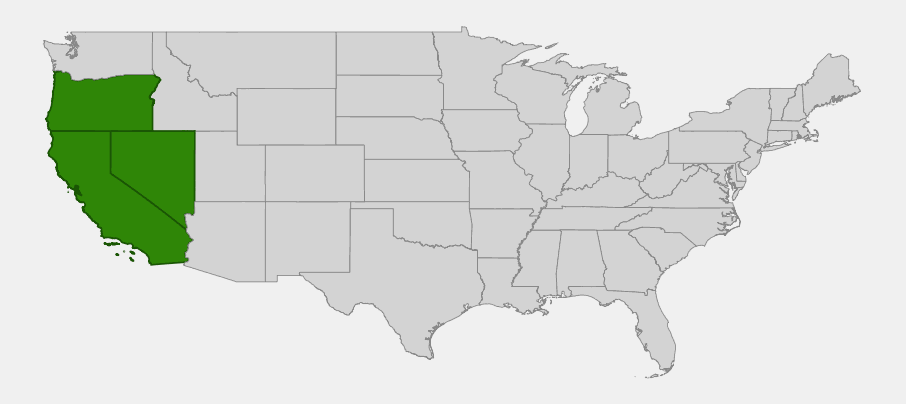
Anderson’s thistle is native to the mountains of California, western Nevada and southern Oregon. USDA PLANTS lists it as native in California, Nevada and Oregon, and it has also been reported from Idaho. Its stronghold is the Sierra Nevada, where it grows on both the western slope and the eastern escarpment.
In California it ranges through the Sierra Nevada and north into the southern Cascades and the mountains of the northern part of the state. In Nevada it grows in the Carson Range and nearby mountains around Lake Tahoe and along the Sierra front. Oregon records are few and lie at the northern edge of its range in the southern part of the state.
It grows in dry, open forests of Jeffrey pine, lodgepole pine, white fir and red fir, on rocky or gravelly slopes, in forest openings and along trails and road cuts, mostly at middle to high elevations. It often grows with manzanita, ceanothus and other mountain shrubs.
📋 Regional plant lists featuring Anderson’s Thistle: California & Nevada
Growing & Care Guide
Anderson’s thistle is rarely sold, but it can be grown from seed in dry, sunny gardens in or near its mountain range. It suits naturalistic and habitat plantings better than tidy beds because it is spiny and reseeds.
Light
Full sun to light shade, like the open pine forests where it grows wild. In hot, low-elevation gardens, afternoon shade helps.
Soil & Water
Plant in lean, well-drained sandy, gravelly or rocky soil. Water seedlings until they are established; mature plants are drought-tolerant and need only occasional deep watering in long dry spells. Rich, wet soil leads to weak, floppy growth and root rot.
Planting Tips
Sow seed or set out young plants where the spines will not be a problem, away from paths and play areas. It fits well in dry meadows, rock gardens and habitat gardens with manzanita, buckwheats and penstemons. Allow room for its 1- to 2-foot spread.
Pruning & Maintenance
Wear thick gloves when handling it. Leave seed heads standing for goldfinches, or cut them before the seed blows if you do not want seedlings. Remove old stems in late fall or early spring. It is not aggressive and does not spread by creeping roots like Canada thistle.
Propagation
Grow from seed collected when the heads turn fluffy in late summer. Sow it outdoors in fall so it receives a cold, moist winter, which improves germination at mountain elevations. Plants usually form a rosette in the first year and bloom in the second or later.
Landscape Uses
- Hummingbird gardens: late-summer red flowers visited by hummingbirds
- Pollinator gardens: nectar for bees and butterflies after most mountain flowers fade
- Bird gardens: seeds and thistledown for goldfinches
- Mountain and dry gardens: drought-tolerant once established
- Habitat restoration: open forest and road-cut revegetation in the Sierra
Wildlife & Ecological Value
Native thistles are among the most valuable wildflowers for pollinators and seed-eating birds, and Anderson’s thistle is a late-season resource in the high Sierra.
For Pollinators
The long, narrow, red florets are visited by hummingbirds, including birds migrating south in late summer. Bumblebees, other native bees and butterflies such as swallowtails, fritillaries and painted ladies also feed on the nectar. Native thistles are larval host plants for the painted lady butterfly.
For Birds
American and lesser goldfinches and other finches eat the seeds, and some birds use the soft thistledown to line their nests.
For Mammals
The spines discourage deer and other browsers, though small mammals may eat fallen seeds.
Ecosystem Role
As a late-blooming native thistle of open mountain forests, it supports pollinators and seed-eaters near the end of the short mountain growing season. It also colonizes disturbed openings such as road cuts and burned areas.
Cultural & Historical Uses
Asa Gray described this species in 1874 as Cnicus andersonii, naming it for Charles Lewis Anderson, a physician and botanist who collected plants in Nevada and California in the 1860s. The Austrian botanist Franz Petrak later moved it to Cirsium. The genus name comes from the Greek kirsion, a kind of thistle.
Many people think of all thistles as weeds, but North America has dozens of native Cirsium species, and several are rare. Unlike invasive European thistles, native thistles rarely spread aggressively, and they feed many insects and birds. Conservation groups encourage gardeners and land managers to learn to tell native thistles from weedy ones before removing them.
On this site, related native thistles include Cobwebby Thistle, Elk Thistle, New Mexico Thistle and Wavyleaf Thistle.
Frequently Asked Questions
Is Anderson’s thistle a weed?
No. It is a native thistle of western mountains and is not invasive. It should not be confused with weedy, introduced thistles such as bull thistle or Canada thistle.
Where does Anderson’s thistle grow?
Mainly in the Sierra Nevada and southern Cascades of California, in the mountains of western Nevada, and in a few places in southern Oregon, in dry, open conifer forests and on rocky slopes.
When does Anderson’s thistle bloom?
From about July to September, later than many mountain wildflowers.
Do hummingbirds visit Anderson’s thistle?
Yes. Its long, narrow, red florets attract hummingbirds, as well as bees and butterflies.
Can I grow Anderson’s thistle?
Yes, from seed in lean, well-drained soil and full sun to light shade, especially in mountain or dry gardens within its native range. Plant it away from paths because of its spines.

Looking for a nursery that carries Anderson’s Thistle?
Browse our native plant nursery directory: California · Nevada · Oregon

