
Aquatic Milkweed (Asclepias perennis)
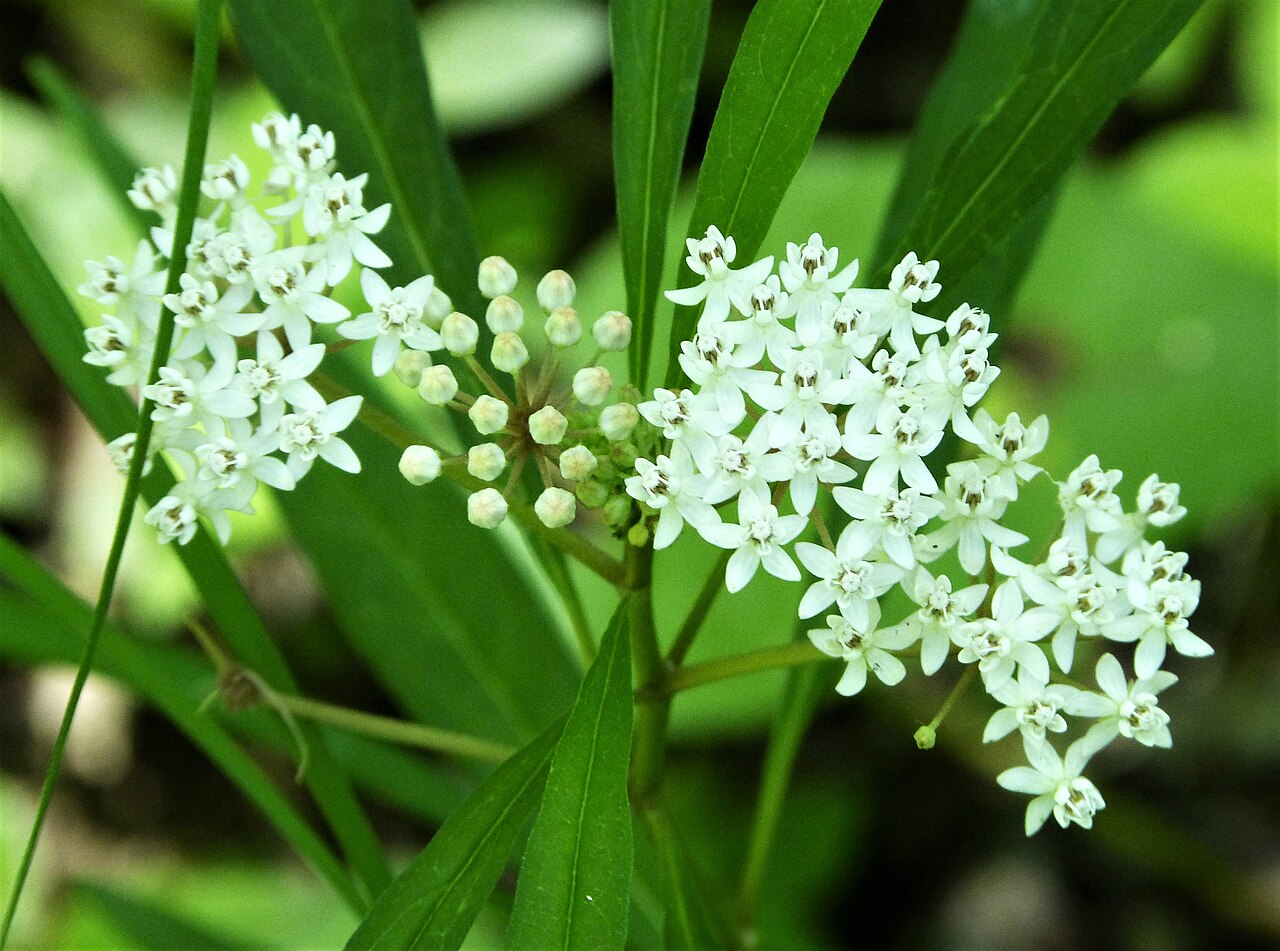
Asclepias perennis, called Aquatic Milkweed by USDA and also known as white swamp milkweed or shore milkweed, is a slender native milkweed of swamps, floodplain forests and wet ditches in the southeastern United States. It grows 1 to 3 feet tall and from late spring into fall carries small, rounded clusters of white to pale pink flowers. The Atlas of Florida Plants lists it under the common name swamp milkweed, but that name is more widely used for Asclepias incarnata, a different and much larger pink-flowered species.
Aquatic milkweed has two traits that set it apart from most milkweeds. It grows well in partial shade under trees, and its seeds have no silky parachute. Instead of drifting on the wind, the flat seeds float and are carried by floodwaters, an adaptation to life along rivers and swamp margins.
For gardeners in the Southeast, especially in Florida, it is one of the most practical milkweeds to grow for monarch and queen butterflies. It is native, stays compact, tolerates wet soil and shade, and is increasingly available from native plant nurseries. Like other milkweeds, its milky sap is toxic if eaten and can irritate eyes.
Identification
Aquatic milkweed is a small, open plant that is easy to overlook among wetland grasses and sedges until it flowers. Its leaf shape, flower color and seeds separate it from the other milkweeds that share its wet habitats.
Stems & Roots
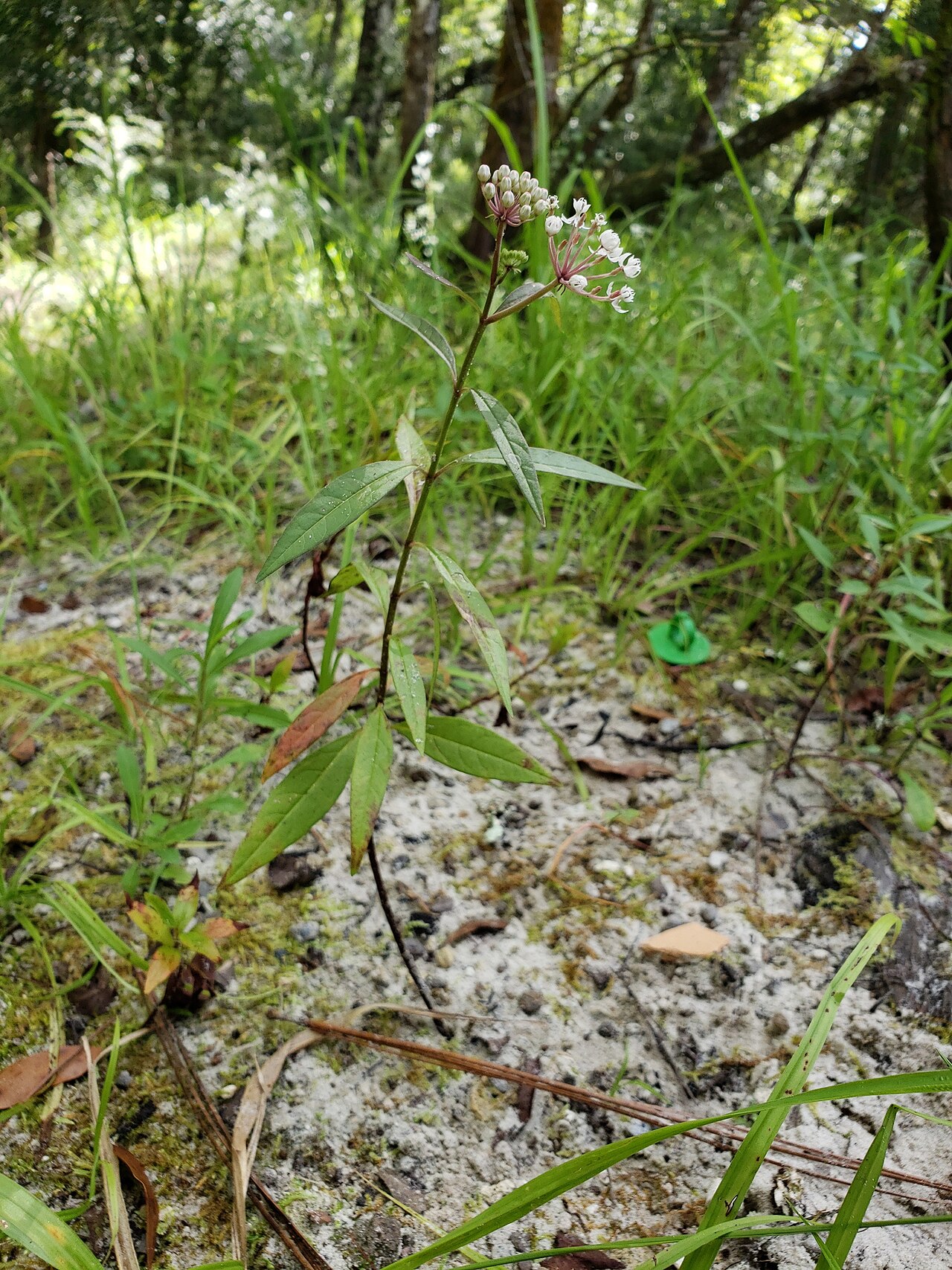
Plants grow from a short, thick rootstock and produce one to several thin, upright or leaning stems. Stems are often dark purplish-green and smooth or finely hairy in lines. Broken stems leak white latex, as in all milkweeds.
Leaves
The leaves are opposite, lance-shaped to narrowly elliptic, about 2 to 5 inches long and ½ to 1¼ inches wide, with short but distinct leaf stalks. They are thin and smooth, with a prominent pale midvein. The stalked, relatively broad leaves distinguish it from the narrow-leaved whorled and Florida milkweeds.
Flowers
Flowers are borne in small, rounded umbels about 1½ to 2 inches across, usually several per stem, in the upper leaf axils and at the stem tip. Each flower is about ¼ inch across, with five reflexed petals and a crown of five small hoods that is white, sometimes tinged pink or lavender. Buds often have pink tips, so an unopened cluster can look pink. Flowering runs from May to September in most of the range and can continue into fall in Florida.
Swamp milkweed (A. incarnata) is taller, with narrower leaves and pink to rose flowers in flatter clusters. Its seeds have silky tufts.
Fruit & Seeds
The seed pods are slender, smooth and spindle-shaped, about 2 to 3 inches long, and often hang downward. The flat, broadly winged seeds have no tuft of silk, or only a very small one, which is unusual among milkweeds. They float and are dispersed by water.
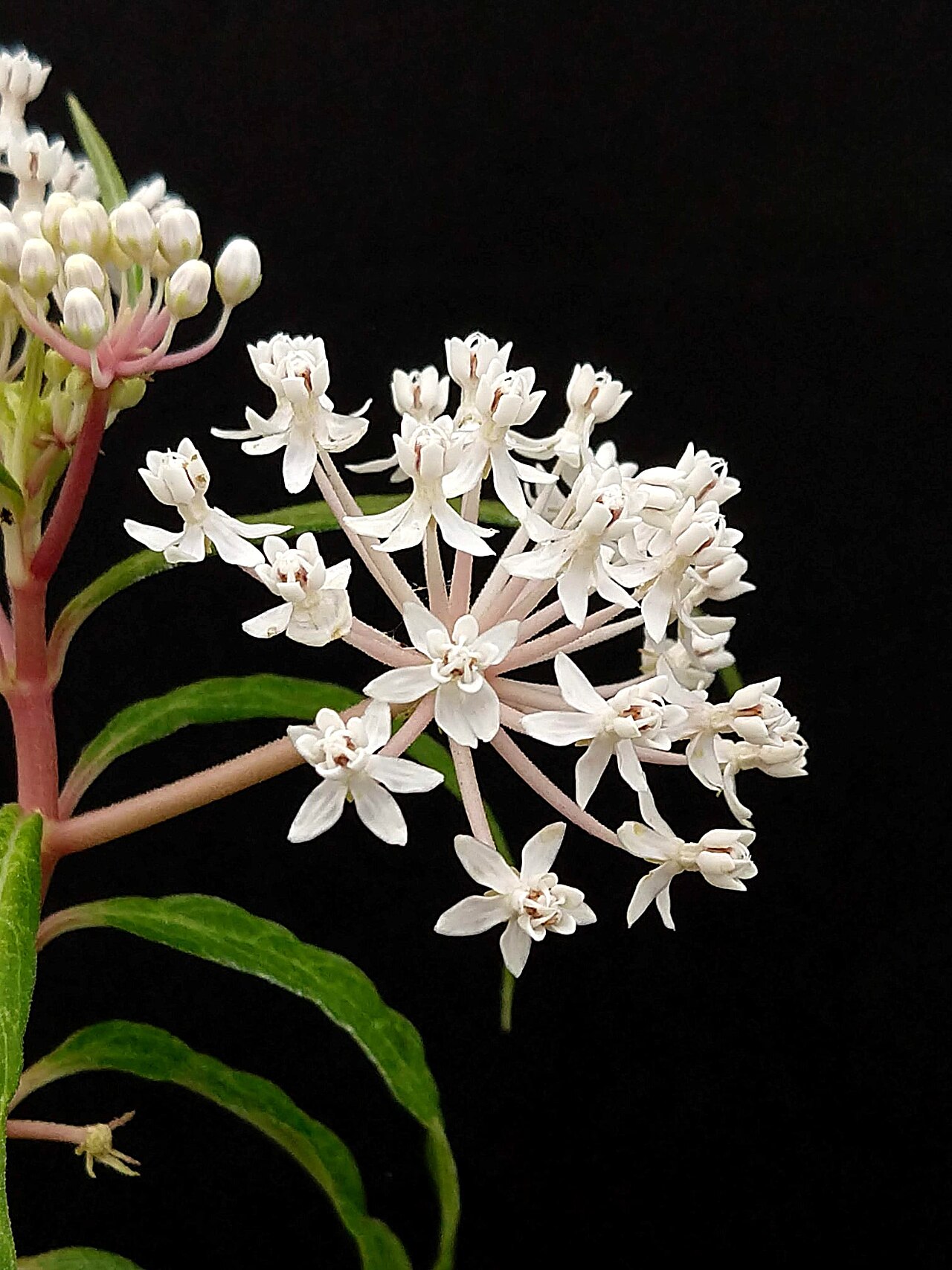
Quick Facts
| Scientific Name | Asclepias perennis |
| Family | Apocynaceae (dogbane family; milkweed subfamily Asclepiadoideae) |
| Plant Type | Herbaceous perennial wildflower |
| Mature Height | 1–3 ft |
| Mature Spread | 1–1½ ft |
| Growth Rate | Moderate |
| Sun Exposure | Full sun to partial shade |
| Water Needs | High; moist to wet soil, tolerates shallow flooding |
| Soil Type | Muck, wet sand, silt and clay in swamps and floodplains |
| Soil pH | About 5.5–7.5 |
| Bloom Time | May–September; often into fall in Florida |
| Flower Color | White, sometimes tinged pink or lavender |
| Fall Color | None notable |
| Fruit | Slender pods with flat, water-dispersed seeds lacking silk |
| Deer Resistant | Yes; the toxic latex deters browsing |
| USDA Hardiness Zones | 6–10 |
Native Range
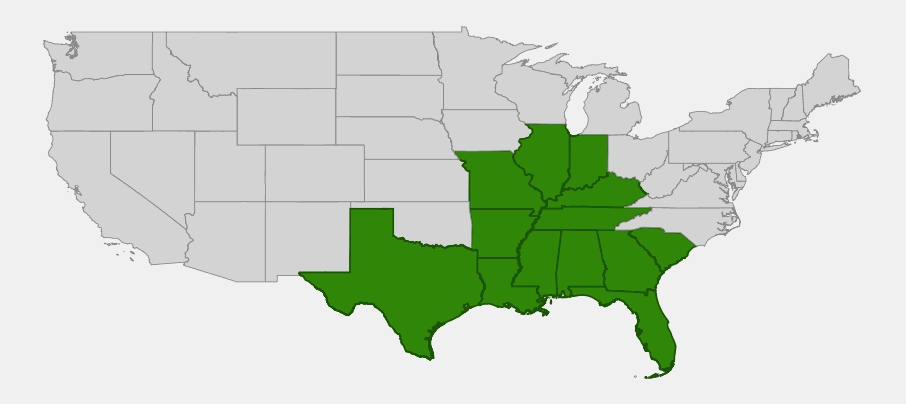
Aquatic milkweed is native to the southeastern and south-central United States. USDA PLANTS and the Lady Bird Johnson Wildflower Center record it from 13 states: Florida, Georgia, South Carolina, Alabama, Mississippi, Louisiana, eastern Texas, Arkansas, Tennessee, Kentucky, Missouri, Illinois and Indiana. Its range follows the Coastal Plain and the floodplains of the Mississippi, Ohio and lower Wabash rivers north to southern Illinois and Indiana.
In Florida it occurs mostly in the northern and central parts of the state, south to about the middle of the peninsula. It grows in floodplain swamps, river and creek banks, cypress domes and strands, wet hammocks, marshes and wet roadside ditches. It usually grows where the soil is saturated or shallowly flooded for part of the year, often in the light shade of cypress, tupelo or bottomland hardwoods.
Because it is scattered and grows in wooded wetlands, it is easy to overlook and is considered uncommon or rare at the northern edge of its range. Draining and clearing of floodplain forests has reduced its habitat in many areas.
📋 Regional plant lists featuring Aquatic Milkweed: North & South Florida · Alabama, Georgia & Mississippi · North & South Carolina · Kentucky & Tennessee · Arkansas, Louisiana, Eastern Oklahoma & Eastern Texas · Illinois, Iowa & Missouri · Ohio & Indiana
Growing & Care Guide
Aquatic milkweed is one of the easier native milkweeds for southeastern gardens, as long as it gets steady moisture. It is now sold by many native plant nurseries in Florida and the Gulf states, both as potted plants and, less often, as seed. It is a better choice in the Deep South than tropical milkweed (Asclepias curassavica), a non-native species that can disrupt monarch migration and spread disease where it grows year-round.
Light
It grows in full sun to partial shade and is one of the few milkweeds that flowers reasonably well with only a few hours of direct sun. In hot southern gardens, afternoon shade helps it keep its leaves fresh.
Soil & Water
Give it consistently moist to wet soil. It thrives at pond and rain-garden edges, in low spots that collect water, and in large containers kept in a saucer of water. It tolerates shallow standing water for part of the year but not prolonged deep flooding. In ordinary garden beds it needs regular watering and usually stays smaller.
Planting Tips
Plant potted plants in spring or early summer, spacing them about 12 to 18 inches apart. Grouping several plants makes a better show and gives caterpillars more to eat, since a single small plant can be stripped quickly. Mulch lightly with leaf litter to hold moisture.
Pruning & Maintenance
No regular pruning is needed. Plants eaten to the ground by monarch or queen caterpillars usually resprout. Cut back old stems in late winter. Watch for oleander aphids, which often colonize milkweeds; they rarely kill the plant and attract predators such as lady beetles, so tolerate them or wipe them off by hand. Avoid insecticides, which would also kill caterpillars.
Propagation
Seed germinates readily without long cold treatment when fresh, and seedlings can flower in their first or second year. Because the seeds lack silk, they are easy to collect and clean. Plants can also be grown from stem cuttings in summer.
Landscape Uses
- Butterfly gardens: a compact larval host for monarch, queen and soldier butterflies in the Southeast
- Rain gardens and pond edges: thrives in wet, low spots and at water margins
- Shade gardens: one of the few milkweeds that tolerates partial shade
- Wetland and floodplain restoration: in swamp margins and wet hammocks within its native range
- Containers: in a large pot kept wet, on a patio or at a water garden
Wildlife & Ecological Value
Aquatic milkweed is a valuable plant in a habitat type where few other milkweeds grow, which makes it especially useful for butterflies in wooded wetlands and shady southern gardens.
For Pollinators
The flowers are visited by bees, wasps, flies and butterflies. Like all milkweeds, the pollen is packaged in paired sacs (pollinia) that clip onto the legs of visiting insects and are carried to the next flower. Pollinator information from the Xerces Society, published by the Lady Bird Johnson Wildflower Center, lists it as having special value to native bees, bumble bees and honey bees.
For Birds
Birds do not eat milkweed, but insect-eating birds forage on the many insects it supports. Its seeds have no silk for birds to use as nest lining, unlike most milkweeds.
For Mammals
Its toxic latex and cardiac glycosides make it unpalatable to deer, rabbits and livestock, and it is rarely browsed.
Ecosystem Role
Aquatic milkweed is a larval host for the monarch, the queen and, in South Texas and Florida, the soldier butterfly. In Florida it is one of the native milkweeds most often used by monarchs and queens. Caterpillars store the plant’s cardiac glycosides, which make them and the adult butterflies distasteful to predators. It also hosts milkweed specialists such as milkweed bugs and milkweed tussock moths. Its water-dispersed seeds let it colonize newly exposed sandbars and swamp margins after floods.
Cultural & Historical Uses
Thomas Walter described Asclepias perennis in his Flora Caroliniana of 1788, based on plants from the South Carolina low country. The name perennis simply means perennial.
The genus name honors Asclepius, the Greek god of medicine, a reference to the medicinal uses of some milkweeds. Several species, especially butterfly weed, were used by Native Americans and early settlers. There is little specific record of aquatic milkweed being used, and all milkweeds contain toxic compounds that make home use unwise.
In recent decades aquatic milkweed has gained attention through monarch conservation programs in the Southeast. Native plant societies and university extension services in Florida recommend it, along with other native milkweeds, as an alternative to tropical milkweed in home landscapes.
Frequently Asked Questions
Is aquatic milkweed the same as swamp milkweed?
Not usually. The Atlas of Florida Plants calls Asclepias perennis swamp milkweed, but that name is most widely used for Swamp Milkweed (Asclepias incarnata), a taller species with pink flowers and silky seeds. USDA calls A. perennis aquatic milkweed. Check the scientific name when buying plants.
Does aquatic milkweed need to grow in water?
No, but it needs soil that stays moist to wet. It grows best at pond edges, in rain gardens, or in low spots. It tolerates shallow, temporary flooding.
Will monarchs use aquatic milkweed?
Yes. It is a larval host for monarchs, queens and soldier butterflies. Plant several together, because caterpillars can eat a single plant to the ground.
Can aquatic milkweed grow in shade?
Yes, it tolerates partial shade better than most milkweeds and naturally grows under cypress and floodplain trees. It flowers best with at least a few hours of sun.
Why don’t the seeds have fluff?
Its seeds lack the silky tuft that carries most milkweed seeds on the wind. Instead they float and are spread by water along rivers and swamps, which suits a plant that lives in floodplains.

Looking for a nursery that carries Aquatic Milkweed?
Browse our native plant nursery directory: Alabama & Arkansas · Florida & Georgia · Illinois & Indiana · Kentucky, Louisiana, Mississippi & Missouri · South Carolina, Tennessee & Texas