
Bird’s Nest Fern (Asplenium nidus)
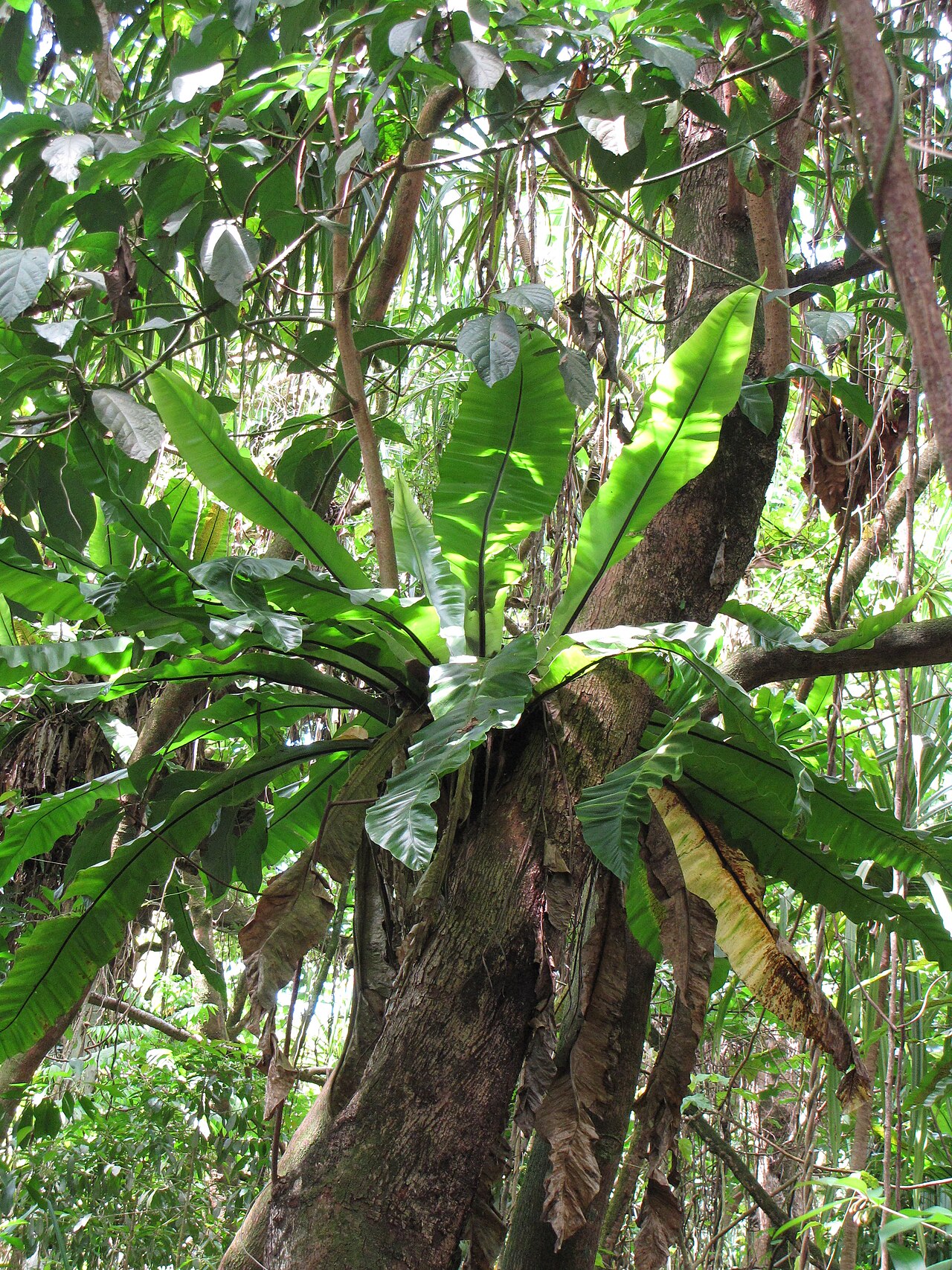
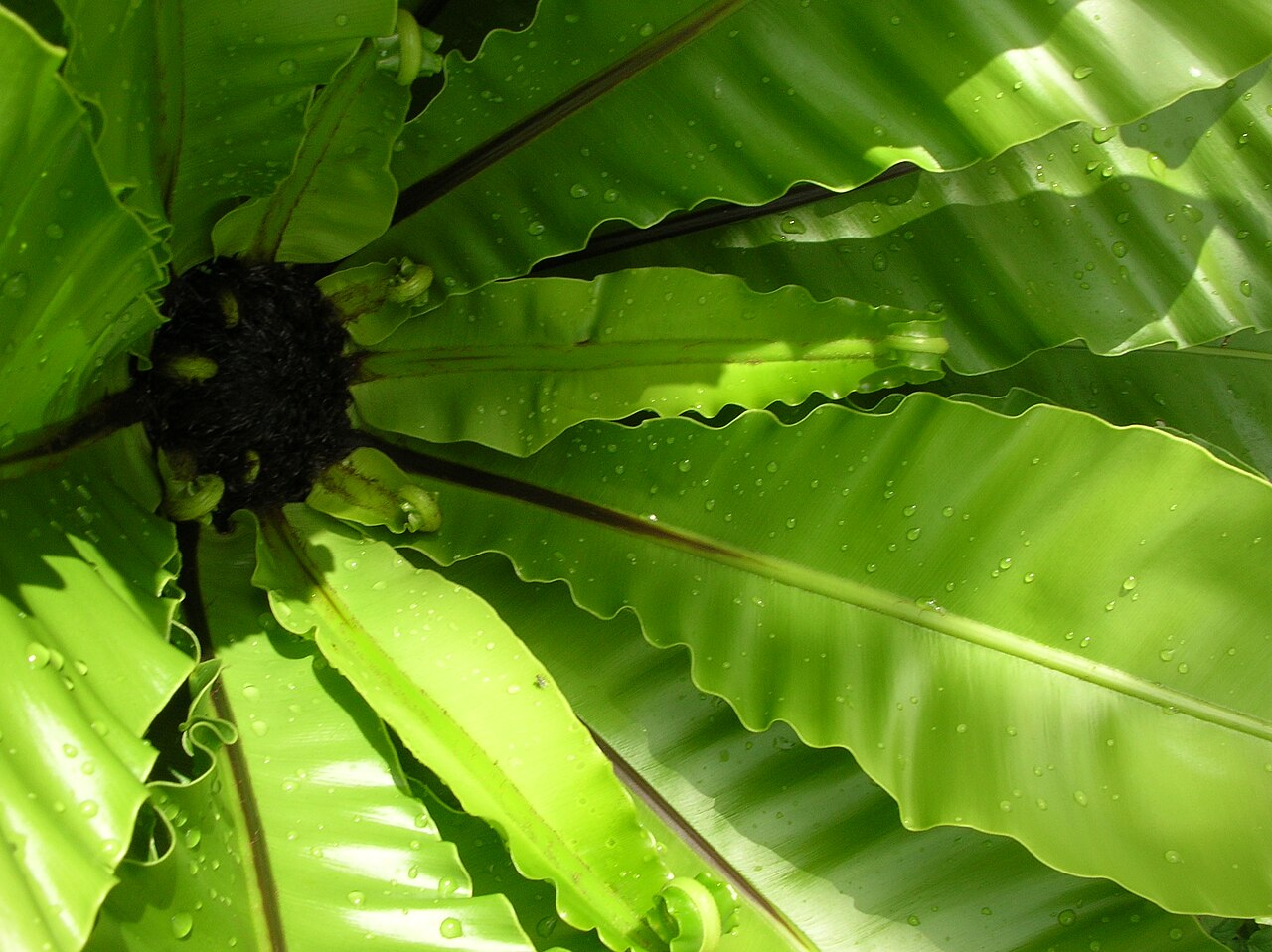
Asplenium nidus, known as Bird’s Nest Fern and in Hawaiian as ʻēkaha, is a large evergreen fern in the spleenwort family (Aspleniaceae). Unlike most ferns, it has simple, undivided, glossy, bright green fronds, 2 to 5 feet long, arranged in a vase-shaped rosette around a dark, fuzzy center that looks like a bird’s nest. In the wild it usually grows on tree trunks and branches as an epiphyte.
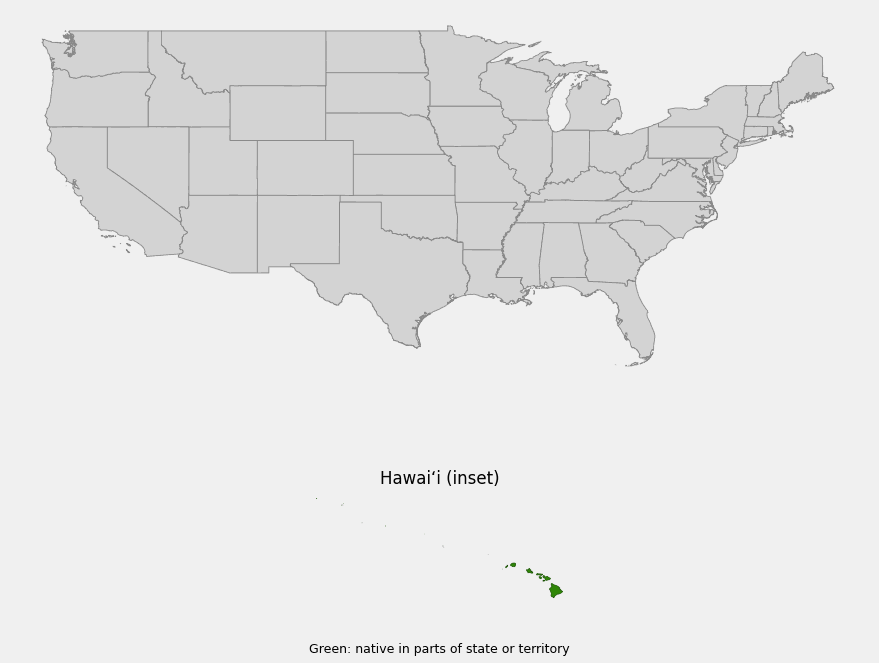
USDA PLANTS lists bird’s nest fern as native in Hawaii, where it is indigenous: it arrived naturally, probably as wind-blown spores, and also grows wild across the tropics of the Old World, from East Africa and Madagascar through South and Southeast Asia to Australia and the Pacific islands. In Hawaii it grows on all the main islands in wet and mesic forests, on trees and mossy rocks.
It is also one of the best-known houseplants in the world, prized for its bold, tropical leaves and its tolerance of lower light. This guide covers how to recognize ʻēkaha in the forest, how it lives in the canopy, and how to grow it in a Hawaiian garden or as a houseplant anywhere.
Identification
Look for a large, open rosette of shiny, undivided, strap-shaped fronds with a dark midrib, growing from a fibrous “nest” on a tree trunk, branch or rock.
Growth Habit
Bird’s nest fern grows from a short, upright rhizome that becomes surrounded by a large mass of roots, old frond bases and trapped debris. The fronds form a funnel-shaped rosette 2 to 6 feet across. Most plants grow on trees, sometimes high in the canopy, but they also grow on rocks, logs and the ground in very wet forest.
Leaves
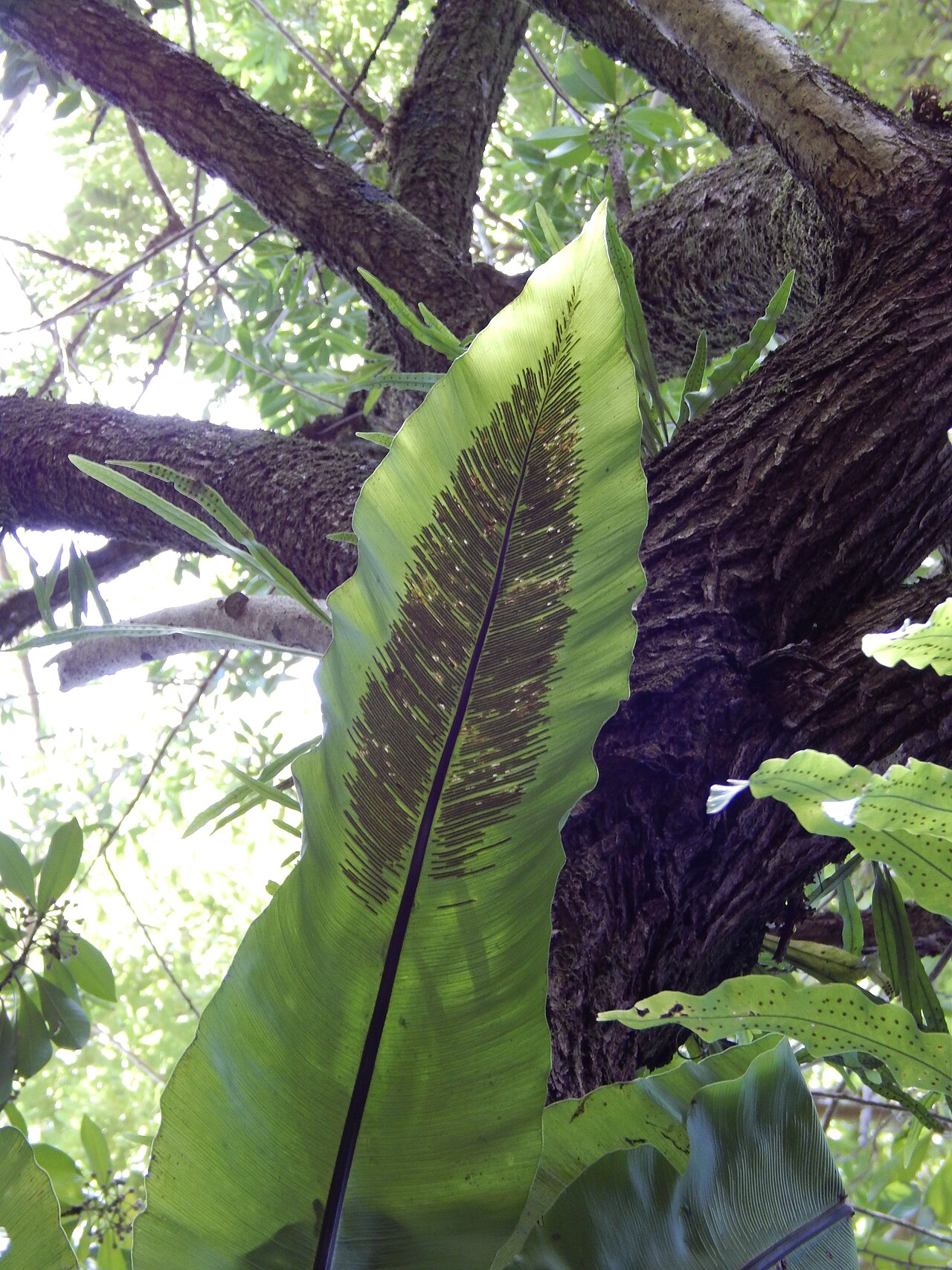
The fronds are simple and undivided, lance-shaped to strap-shaped, usually 2 to 5 feet long and 3 to 8 inches wide, with a smooth or slightly wavy edge and a pointed or rounded tip. They are leathery, glossy and bright apple-green, with a prominent dark brown to black midrib and many fine, parallel side veins. New fronds uncurl from the center of the nest, which is covered in soft, dark brown to black scales.
Spores
Like all ferns, it has no flowers or seeds. Spore cases (sori) form on the underside of mature fronds in long, narrow, brown lines that run along the side veins, mostly on the upper half of the frond, from the midrib halfway or more to the edge.
The Nest
The center of the rosette catches falling leaves, flowers and rainwater. As this material rots, the fern’s roots grow into it and take up the nutrients, so the plant builds its own soil high on a tree. Large nests can weigh many pounds and hold a surprising amount of water.
Look-alikes
Many ferns sold as bird’s nest fern are close relatives, such as Asplenium antiquum (‘Victoria’, ‘Osaka’) and A. australasicum, which differ mainly in the shape of the midrib and how far the sori extend. Florida’s native wild birdnest fern (A. serratum) is smaller, with toothed frond edges. In Hawaii, ʻēkaha is unmistakable among native ferns because of its large, undivided fronds.
Quick Facts
| Scientific Name | Asplenium nidus |
| Family | Aspleniaceae (spleenwort family) |
| Plant Type | Evergreen epiphytic fern |
| Mature Height | 2–5 ft (1–2 ft as a houseplant) |
| Mature Spread | 2–6 ft |
| Growth Rate | Moderate |
| Sun Exposure | Part shade to full shade (bright, indirect light indoors) |
| Water Needs | Moderate to high; evenly moist, high humidity |
| Soil Type | Loose, airy, organic mix; bark, moss or tree trunks |
| Soil pH | Acidic to neutral (about 5.0–7.0) |
| Bloom Time | None (reproduces by spores) |
| Flower Color | None |
| Fall Color | None (evergreen) |
| Fruit | None; brown linear sori under the fronds |
| Deer Resistant | Moderately |
| USDA Hardiness Zones | 10b–13 (houseplant elsewhere) |
Native Range
USDA PLANTS lists Asplenium nidus as native in Hawaii and in the Pacific Basin, including Guam. It is indigenous to Hawaii, not endemic: the same species grows naturally across the Old World tropics, from East Africa, Madagascar and the islands of the Indian Ocean through India, Southeast Asia and southern China to northern Australia and the islands of the tropical Pacific.
In Hawaii, ʻēkaha grows on Kauaʻi, Oʻahu, Molokaʻi, Lānaʻi, Maui and Hawaiʻi Island. It is most common in wet and mesic forests at low to middle elevations, where it perches on ʻōhiʻa, koa and other native trees, on tree ferns and on mossy rocks and cliffs in stream valleys. In the Starr photographs on this page it grows in forests near Hāna on windward Maui.
It is not native anywhere in the continental United States. It is grown outdoors in South Florida and other frost-free areas and as a houseplant everywhere.
📋 Regional plant lists featuring Bird’s Nest Fern: Hawaii
Growing & Care Guide
Bird’s nest fern is one of the easiest large ferns to grow. In Hawaii and other frost-free climates (zones 10b to 13) it thrives outdoors in shade. Everywhere else it is a long-lived houseplant. It is safe to grow around pets: the ASPCA lists it as non-toxic to cats and dogs.
Light
Outdoors, give it bright shade or filtered light, such as under trees or on a shaded lanai. Indoors, place it in bright, indirect light, such as near an east or north window. Direct sun yellows and scorches the fronds, but too little light slows growth and makes the fronds narrow and floppy.
Soil & Water
Use a loose, fast-draining mix, such as an orchid bark and peat-free potting mix blend, or mount it on a slab of wood, tree fern or a tree in the garden. Keep the mix lightly moist but never soggy, and water around the edge of the pot rather than into the central nest, where standing water can rot the crown. It likes humidity above about 50 percent; bathrooms and kitchens with good light suit it well. Keep it above about 55°F.
Planting Tips
Use a pot just large enough for the roots; it grows well slightly root-bound. Feed lightly with a diluted balanced fertilizer once a month in spring and summer. In a Hawaiian garden, tuck young plants into the crotch of a tree or onto a mossy rock or log with some bark or compost, and tie them in place until they root. Older plants in the ground make striking accents in shade gardens.
Pruning & Maintenance
Remove old, damaged or brown fronds at the base. Do not touch or cut the young fronds unfurling in the center, because damaged new fronds stay deformed. Wipe dust from the leaves with a damp cloth; avoid leaf-shine products. Brown frond tips usually mean dry air or uneven watering. Watch for scale insects, mealybugs and slugs.
Propagation
Bird’s nest fern does not divide easily, because it grows from a single crown. It is grown from spores: collect a fertile frond when the sori turn brown, let the spores drop onto paper, and sow them on the surface of sterile, moist mix under a clear cover in warm, bright shade. It takes months to grow young plants. Most gardeners buy nursery-grown plants.
Landscape Uses
- Houseplants: a bold, low-maintenance, pet-safe fern for indoor light
- Shade gardens: a large tropical accent under trees in frost-free areas
- Epiphyte plantings: mounted on trees, tree ferns or rocks in Hawaiian gardens
- Native Hawaiian gardens: pairs with ʻōhiʻa, hāpuʻu and other forest natives
- Bathrooms & conservatories: thrives in humid, bright rooms
Wildlife & Ecological Value
In tropical forests, a single large bird’s nest fern can be a small ecosystem of its own.
For Pollinators
As a fern, it has no flowers and offers nothing to pollinators directly, but the humid, sheltered nest is used by many insects and other small invertebrates.
For Birds
Birds forage in the nests for insects, spiders and snails, and some birds use fern fiber or the shelter of the fronds for nesting in parts of its range.
For Mammals
Hawaii has no native land mammals apart from a bat, which does not use the fern. Elsewhere in its range, small mammals and frogs shelter in large nests.
Ecosystem Role
Studies in Southeast Asian rainforests have found that large bird’s nest ferns hold a large share of the invertebrate life in the forest canopy, along with soil, water and decaying leaves. They capture and recycle nutrients, store water through dry spells and create humid microhabitats for ants, beetles, earthworms, snails and other animals high above the ground.
Cultural & Historical Uses
The species name nidus is Latin for “nest,” describing the fibrous rosette in the center of the plant. The Hawaiian name ʻēkaha is used for this fern, and the same word appears in ʻēkaha kū moana, the Hawaiian name for black coral.
Bird’s nest fern became a popular houseplant in the 20th century because it is tolerant of indoor light and less fussy than lacy ferns. Several cultivars and related species are sold under the name, including crested and ruffled forms such as ‘Crispy Wave’ and ‘Osaka’.
In parts of Southeast Asia and the Pacific the young fronds of related bird’s nest ferns are cooked as a vegetable, and the plants are used in traditional medicine. In Hawaii, ʻēkaha is valued today as a characteristic native fern of the wet forest and in native landscaping.
Frequently Asked Questions
Is bird’s nest fern native to Hawaii?
Yes. USDA PLANTS lists Asplenium nidus as native in Hawaii, where it is called ʻēkaha. It is indigenous, meaning it also grows naturally in other tropical regions, from Africa and Asia to Australia and the Pacific.
Is bird’s nest fern safe for cats and dogs?
Yes. The ASPCA lists bird’s nest fern as non-toxic to cats and dogs.
Why are my bird’s nest fern’s leaves turning brown?
Brown tips usually come from dry air, letting the mix dry out completely or too much fertilizer. Brown, mushy centers come from water sitting in the nest. Yellowing fronds can mean too much direct sun.
Can bird’s nest fern grow outside?
Yes, in frost-free climates (zones 10b–13) in shade. Elsewhere, it can spend summer outdoors in shade and must come indoors before nights drop below about 55°F.
How big does a bird’s nest fern get?
In the wild, fronds can reach about 5 feet long. Houseplants usually stay 1 to 3 feet tall and wide.

Looking for a nursery that carries Bird’s Nest Fern?
Browse our native plant nursery directory: Hawaii

