
Bristly Locust (Robinia hispida)
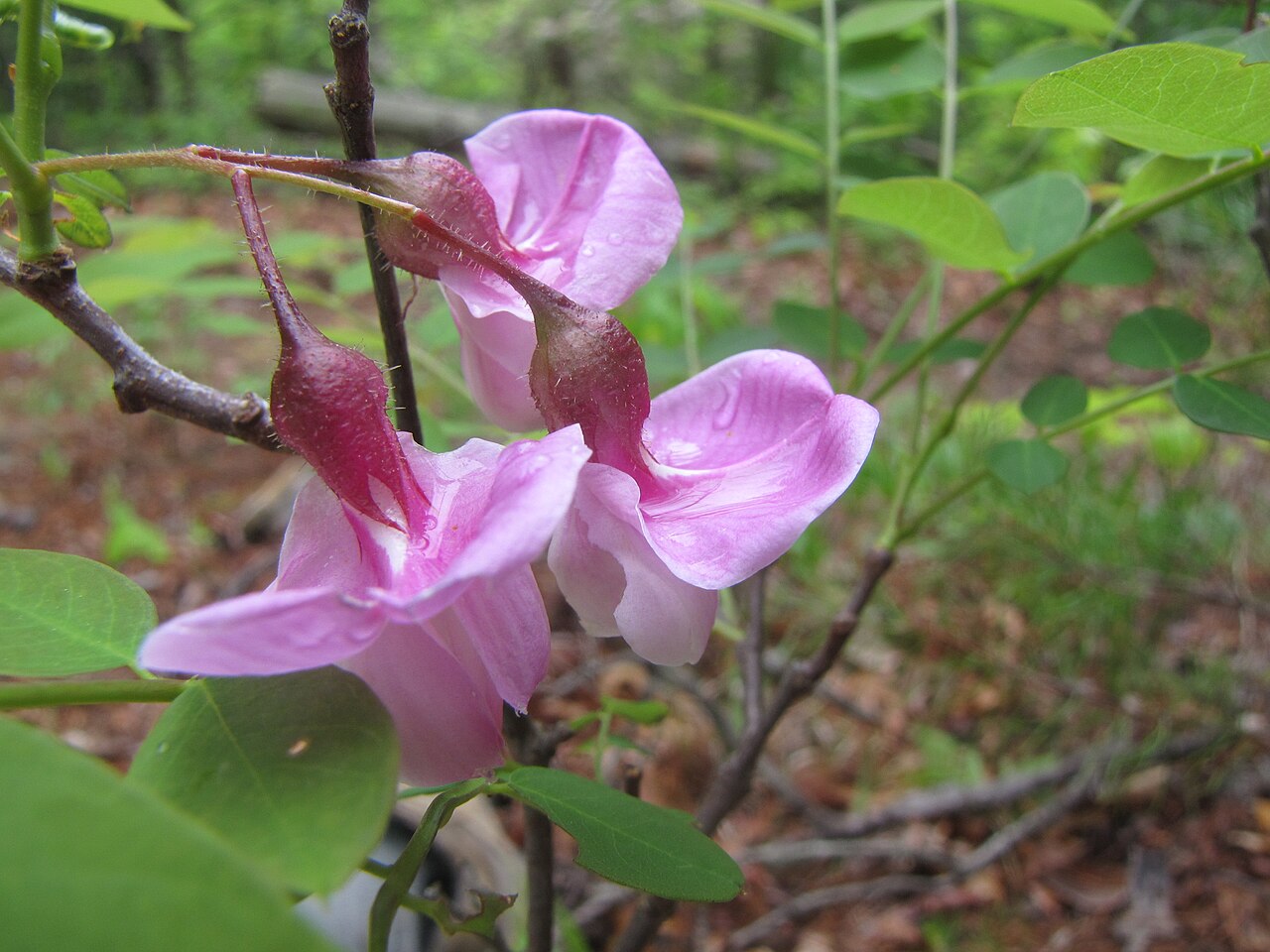
Robinia hispida, the Bristly Locust, also called rose-acacia or moss locust, is a deciduous shrub of the pea family (Fabaceae) native to the southern Appalachians and nearby uplands and sandhills of the Southeast. In late spring it produces hanging clusters of large rose-pink to lavender pea flowers, as showy as wisteria, on stems densely covered in stiff, reddish bristles.
Bristly locust is a close relative of black locust (Robinia pseudoacacia), but it is a shrub rather than a tree, usually 3 to 10 feet tall. It spreads by root suckers into thickets, which makes it useful for stabilizing dry, sandy or eroded banks and too aggressive for small, tidy gardens. Its bark, seeds and leaves, like those of other locusts, are toxic if eaten.
It has been grown as an ornamental since the 18th century and has escaped from cultivation across much of eastern North America and beyond. This guide covers its true native range, how to identify it and its varieties, and how to use it responsibly in native landscapes.
Identification
In bloom, bristly locust is unmistakable: pink wisteria-like flowers on a bristly shrub. Out of flower, the compound leaves and bristly stems separate it from other southeastern shrubs.
Stems & Habit
An upright, loosely branched shrub usually 3 to 10 feet tall, often forming colonies from root sprouts. Young stems, leaf stalks and flower stalks are covered with stiff, reddish-brown, often glandular bristles, the “hispid” of the scientific name. Unlike black locust, it usually lacks paired thorns at the leaf bases. The wood is brittle, and branches break easily in wind or under snow.
Leaves
The leaves are alternate and pinnately compound, 6 to 10 inches long, with 7 to 13 (sometimes more) oval to nearly round leaflets about 1 to 2 inches long, each with a tiny bristle at the tip. They are dark green above and paler below and often finely hairy. They turn yellow before dropping in fall.
Flowers
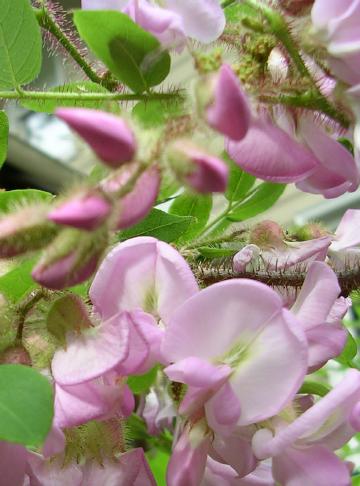
The flowers hang in loose clusters (racemes) of 3 to 8 from the leaf axils in late spring, from April to June, and sometimes a lighter rebloom follows in summer. Each pea-shaped flower is about 1 inch long, larger than black locust flowers, in rose-pink to purplish pink. The calyx and flower stalks are bristly. Unlike black locust, the flowers have little or no fragrance.
Fruit
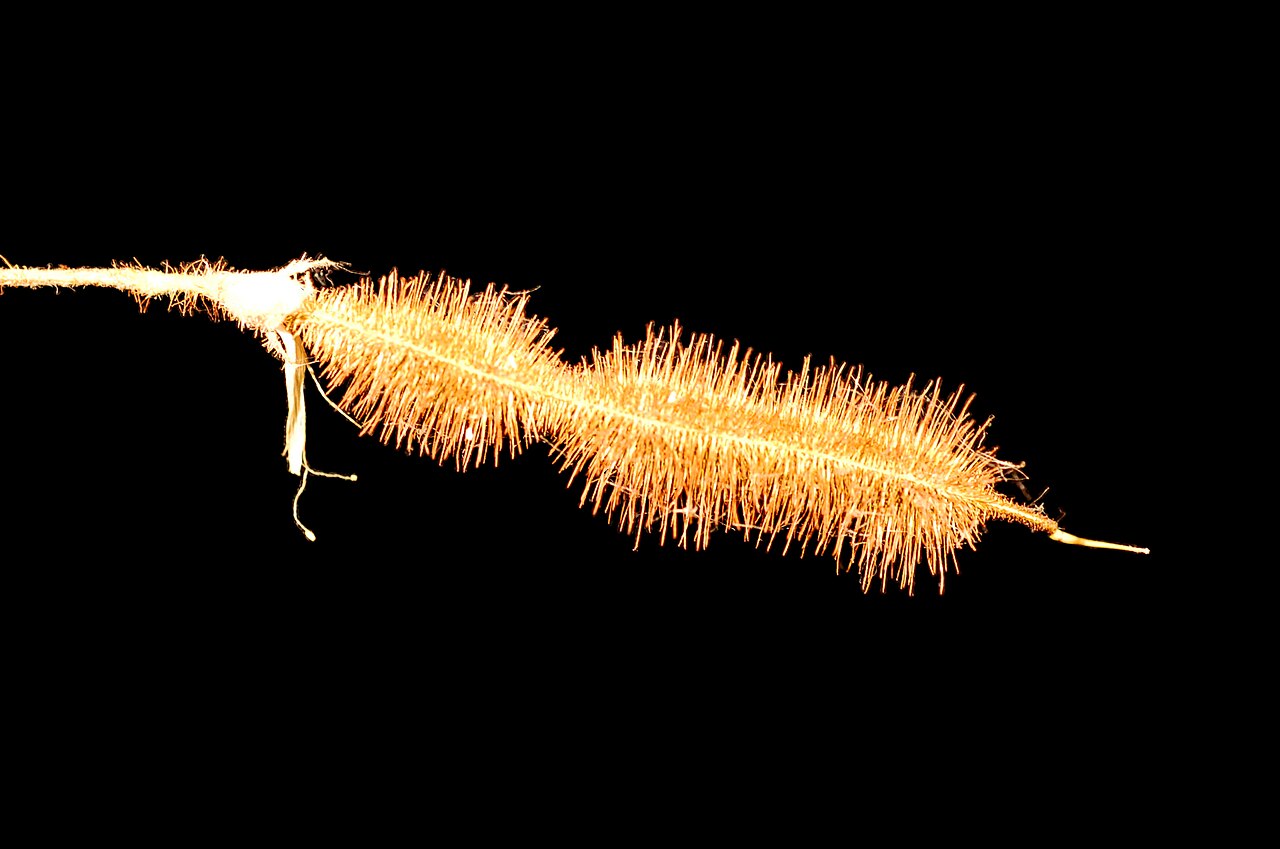
When fruit forms, it is a flat pod 2 to 3 inches long, densely covered in bristles, with a few hard seeds. The common form of bristly locust is mostly sterile and seldom sets pods, reproducing mainly by suckers. The fertile variety (var. fertilis) produces pods more regularly.
Botanists recognize several varieties: var. hispida, the widely planted form; var. fertilis, of North Carolina and Tennessee; var. rosea, with fewer bristles; var. kelseyi (Kelsey locust), sometimes treated as a separate species; and var. nana, a dwarf form of sandhills and dry woods from North Carolina to Alabama.
Quick Facts
| Scientific Name | Robinia hispida (vars. hispida, fertilis, kelseyi, nana, rosea) |
| Family | Fabaceae (pea or legume family) |
| Plant Type | Deciduous suckering shrub |
| Mature Height | 3–10 ft |
| Mature Spread | Spreads by suckers into thickets 10 ft or more wide |
| Growth Rate | Fast |
| Sun Exposure | Full sun to part shade |
| Water Needs | Low; drought tolerant once established |
| Soil Type | Dry, sandy, gravelly or thin rocky soils; tolerates poor soil |
| Soil pH | About 5.5–7.5 |
| Bloom Time | April–June (occasional summer rebloom) |
| Flower Color | Rose-pink to purplish pink |
| Fall Color | Yellow |
| Fruit | Bristly flat pod (often absent) |
| Deer Resistant | Moderately; bristles discourage browsing |
| USDA Hardiness Zones | 5–8 |
Native Range
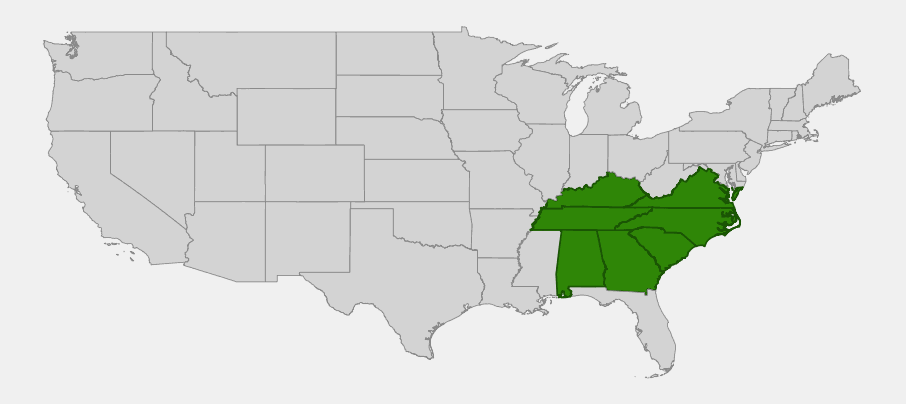
The native range of bristly locust is the southern Appalachian Mountains and nearby uplands, from Virginia and Kentucky south through Tennessee, North Carolina and South Carolina to Georgia and Alabama. The Lady Bird Johnson Wildflower Center describes its native range as the mountains from Virginia to Kentucky, south to Georgia and Alabama, and notes that it has been introduced elsewhere. It grows on open wooded slopes, ridges, road banks and rocky clearings, and the dwarf var. nana grows in dry, sandy soils of the Piedmont and Sandhills.
Because it has been planted for so long, bristly locust now grows wild far outside that range. USDA PLANTS records it from about 40 states, from Maine and Minnesota to Florida, Texas and Washington, and from Ontario, Nova Scotia and British Columbia. Most of those populations are escapes from cultivation or plantings for erosion control. NatureServe, for example, treats it as introduced in West Virginia, Pennsylvania, New York, New Jersey, Delaware and most of New England. The map on this page shows only the native core.
Even within its native range, the plants along roadsides and in towns may come from cultivated stock. Some of its varieties are very local: Kelsey locust, for example, is known in the wild only from North Carolina.
📋 Regional plant lists featuring Bristly Locust: Maryland, Virginia & West Virginia · Kentucky & Tennessee · North & South Carolina · Alabama, Georgia & Mississippi
Growing & Care Guide
Bristly locust is easy to grow in sun and poor, dry soil, and it rewards you with spectacular pink flowers. It is also a vigorous suckering shrub. Plant it where it can spread, or where its spread can be controlled, and plant it only within or near its native range in the Southeast. Outside that range it can escape and form thickets in natural areas.
Light
Full sun gives the most flowers and the densest growth. It tolerates light shade but blooms less and grows leggy there.
Soil & Water
It thrives in dry, sandy, gravelly or thin soils and does not need fertilizer. Like other legumes, its roots host nitrogen-fixing bacteria. Avoid rich, wet soil, where it grows weak and is prone to root rot. Water only until established.
Planting Tips
Use it on dry banks, road cuts and slopes that need stabilizing, or as a loose thicket at the back of a wild garden. Allow plenty of room, or contain it with a mowed edge, pavement or a deep root barrier. Keep it away from play areas because the plant is toxic. Avoid planting it next to natural areas outside its native range.
Pruning & Maintenance
Remove unwanted suckers each year by cutting them at ground level or mowing around the planting. The wood is brittle, so place it out of strong wind and prune storm-damaged branches back to sound wood. Locust borers, leaf miners and other insects sometimes damage it, and the Lady Bird Johnson Wildflower Center notes it can suffer from frequent pest and disease problems. Cut old, weak stems to the ground to renew the clump.
Propagation
Most plants are propagated from root cuttings or by digging rooted suckers in early spring. When seed is available, it needs scarification (nicking or a hot-water soak) because of its hard, impermeable seed coat. Some ornamental forms are grafted onto black locust trunks to make small “standard” trees.
Landscape Uses
- Erosion control: its suckering roots stabilize dry, sandy or eroded banks and road cuts
- Native shrub borders: showy late-spring flowers for large, informal plantings in the Southeast
- Pollinator gardens: large pea flowers visited by bumble bees and other native bees
- Wildlife thickets: dense, bristly cover for birds and small mammals
- Poor-soil sites: a nitrogen-fixing shrub for thin, dry soils where little else grows
Wildlife & Ecological Value
Bristly locust is a legume, and like its relatives it improves poor soils while feeding pollinators.
For Pollinators
Bumble bees and other large native bees are the main visitors. They are strong enough to open the pea flowers and reach the nectar and pollen, and honey bees also visit. The Xerces Society notes it as having special value to native bees. The flowers come in late spring, after many early spring shrubs have finished.
For Birds
Its dense, bristly thickets give nesting and escape cover to songbirds such as catbirds, thrashers and towhees. The seeds are not an important food source because many plants set few or no pods.
For Mammals
The bristles and the plant’s toxins discourage most browsing, though deer and rabbits may nibble new growth. Thickets give cover to rabbits and other small mammals.
Ecosystem Role
Like other legumes, bristly locust forms partnerships with nitrogen-fixing bacteria in its root nodules, adding nitrogen to poor soils on slopes, ridges and sandhills. Its suckering roots knit loose soil together. Outside its native range, the same traits allow it to spread into fields and open woods.
Cultural & Historical Uses
Bristly locust was introduced to European gardens in the 18th century, and Linnaeus gave it its scientific name. The genus honors Jean Robin and his son Vespasien Robin, gardeners to the kings of France, who grew black locust in Paris in the early 1600s. Gardeners prized the “rose-acacia” for its pink flowers, and it is still sold, often grafted on black locust trunks.
The Cherokee used bristly locust in several ways, according to ethnobotanical records. They used the root medicinally, fed an infusion of the plant to cattle as a tonic, and used the wood for fences, bows, blowgun darts and building.
Safety note: The bark, seeds, roots and leaves of Robinia species contain toxic proteins (lectins) and other compounds. Black locust has poisoned children, livestock and horses that ate bark, sprouts or seeds, with symptoms such as vomiting, abdominal pain, weakness and, in severe cases, heart effects. Treat bristly locust the same way: do not eat any part of it, keep it out of horse and livestock pastures, and teach children not to chew the stems or pods. If anyone swallows part of the plant, contact a poison control center (in the U.S., 1-800-222-1222) or a veterinarian for animals.
Frequently Asked Questions
Is bristly locust native?
Yes, to the southern Appalachians and nearby parts of the Southeast, from Virginia and Kentucky to Georgia and Alabama. It has been widely planted and has escaped in many other states, where it is considered introduced.
Is bristly locust poisonous?
Yes. Like black locust, its bark, seeds and leaves are toxic if eaten, especially to horses and livestock. Keep it out of pastures and away from children who might chew the stems or pods.
Does bristly locust spread?
Yes. It sends up suckers from its roots and can form large thickets. That makes it good for erosion control on banks and slopes, but it needs room or regular removal of suckers in a garden.
What is the difference between bristly locust and black locust?
Black locust is a large tree with paired thorns and fragrant white flowers. Bristly locust is a shrub with bristly stems instead of thorns and larger, rose-pink flowers with little scent.
Why doesn’t my bristly locust make seed pods?
The common form of bristly locust is mostly sterile and rarely sets pods. It spreads by root suckers instead. The fertile variety, var. fertilis, produces bristly pods more often.

Looking for a nursery that carries Bristly Locust?
Browse our native plant nursery directory: Alabama · Georgia · Kentucky · North Carolina · South Carolina, Tennessee & Virginia

