
Narrowleaf Cattail (Typha angustifolia)
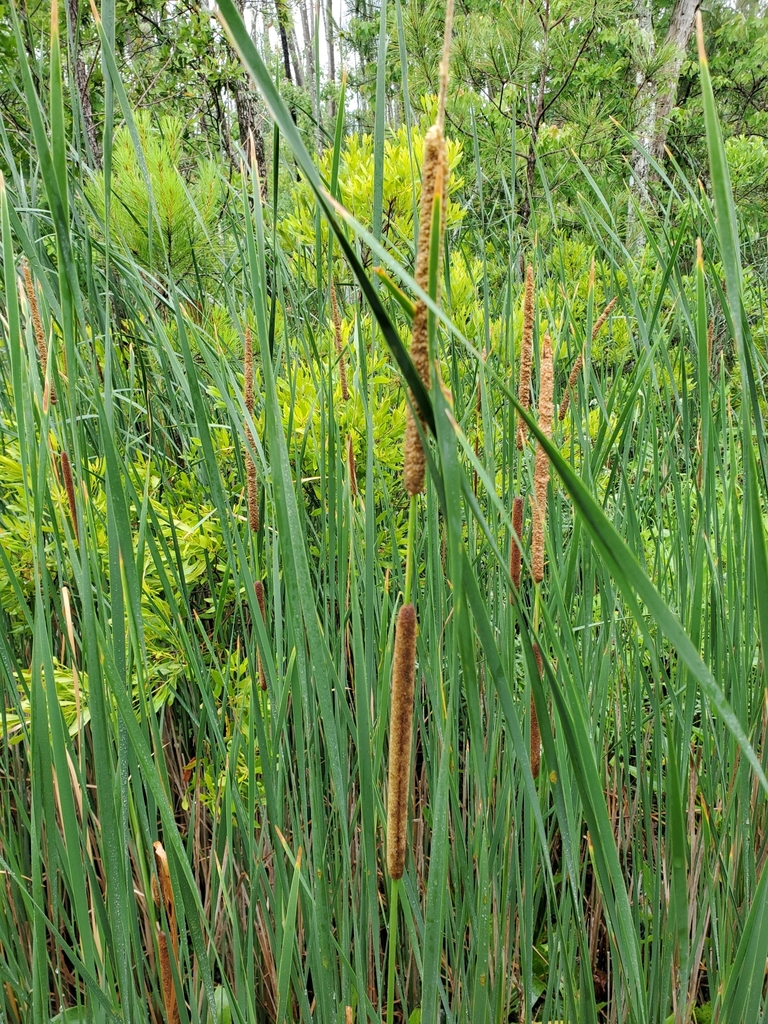
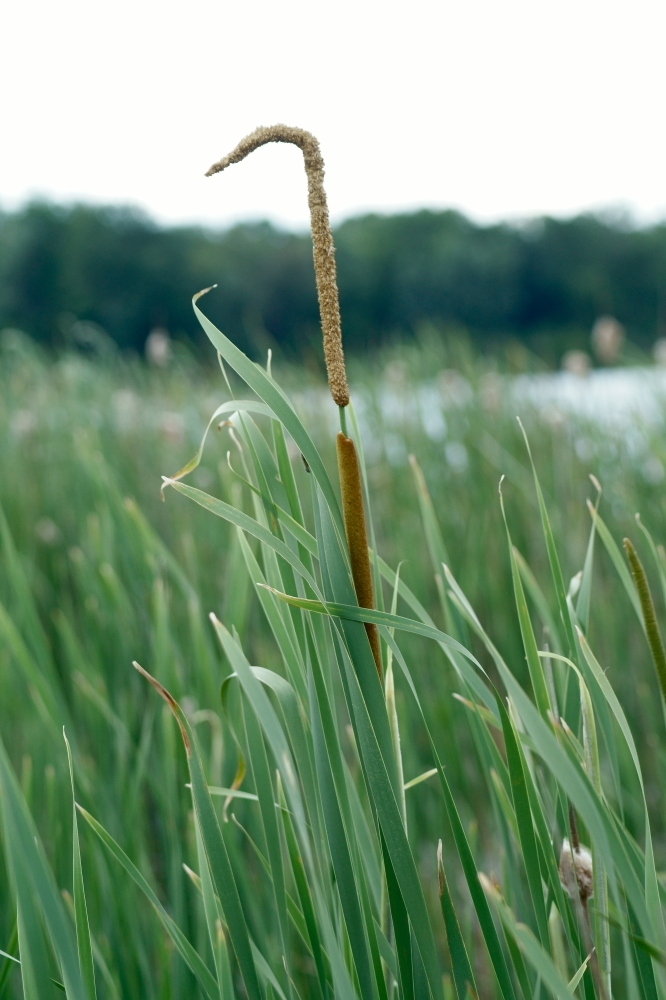
Typha angustifolia, known as Narrowleaf Cattail, narrow-leaved cattail or, in Britain, lesser bulrush, is a tall wetland perennial in the cattail family (Typhaceae). It looks like a slimmer version of the familiar common cattail (Typha latifolia), with narrow leaves, 3 to 7 feet tall, and slender brown “cattail” spikes in which the male and female flower spikes are separated by a bare gap of stem.
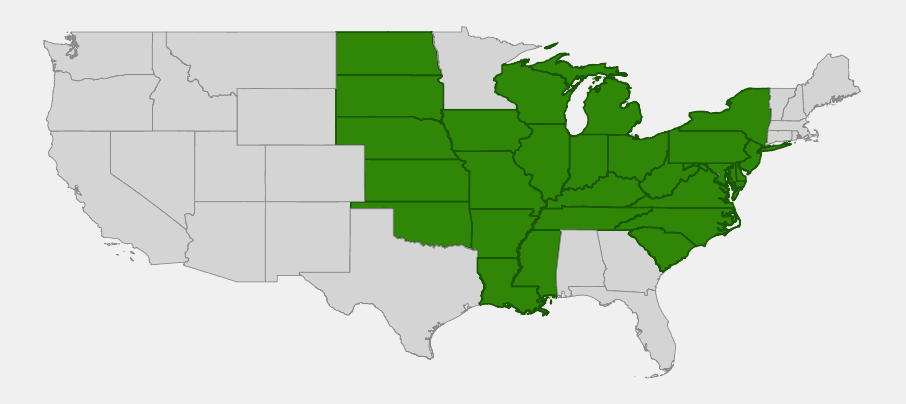
Its status in North America is genuinely uncertain. It is native across most of Europe and Asia. USDA PLANTS lists it as both native and introduced in the lower 48 states. Some botanists think it was native to the coastal marshes of the Atlantic seaboard and spread inland; others argue it arrived from Europe on the East Coast in the early 1800s. Several regional floras call it introduced: Go Botany treats it as non-native in New England, Minnesota Wildflowers says it is not native to Minnesota, and the Burke Herbarium treats Washington plants as introduced. The map on this page shows the states from the Great Plains to the Atlantic where it may be native, and leaves out the states where reliable floras say it is introduced.
Whatever its origin, narrowleaf cattail and its hybrid with common cattail, hybrid cattail (Typha × glauca), have become aggressive wetland invaders in much of the northern United States, forming dense stands that crowd out other marsh plants. We do not recommend planting it. For a native cattail, plant common cattail, which is native throughout the United States, and use it with care.
Identification
Look for a tall cattail with leaves less than 1/2 inch wide and a slim, dark brown female spike separated from the male spike above it by a bare gap of stem.
Growth Habit
Narrowleaf cattail is a perennial that grows from thick, starchy rhizomes and spreads into dense colonies in shallow water and wet soil. The flowering stems are usually 3 to 7 feet tall, sometimes taller, and stand slightly above or level with the leaves. The plants die back to the rhizomes each winter, leaving the brown stems and spikes standing.
Leaves
The leaves are long, narrow and strap-like, usually 1/8 to 1/2 inch wide (about 3 to 12 mm), dark green, flat on the inner face and rounded on the back, and spongy inside. Each shoot has up to about a dozen leaves, sheathing the stem at the base.
Flowers
The tiny flowers are packed into two cylindrical spikes at the top of the stem. The upper male spike is pale yellow when it sheds pollen in early summer and then withers, leaving a bare tip. The lower female spike is green at first, turning dark brown. In this species the two spikes are separated by a bare gap of stem, usually 1/2 inch to 3 inches long. Flowering is from May to July.
Fruit & Seeds
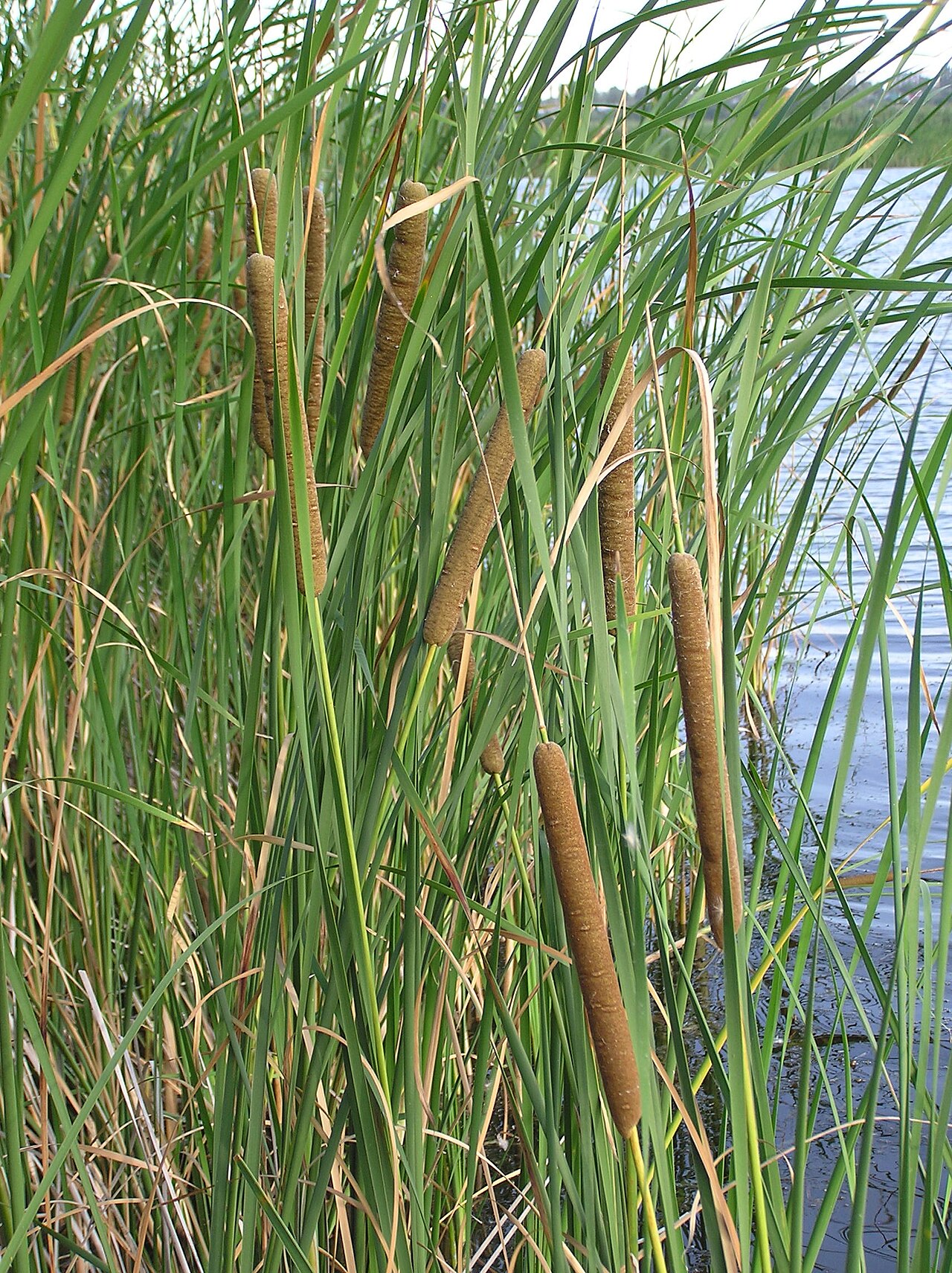
The female spike matures into a slender, dark brown “cattail” about 1/2 to 3/4 inch thick and 4 to 8 inches long. In fall and winter it breaks apart into a fluffy mass of tiny seeds, each with fine hairs that carry it on the wind.
Look-alikes
Common cattail (T. latifolia) has wider leaves, usually 1/2 to 1 inch wide, and a thicker, lighter brown female spike with no gap between it and the male spike. Hybrid cattail (T. × glauca) is intermediate, with a short gap or none, and is now very common in the Great Lakes region. Southern cattail (T. domingensis) of the South and West also has a gap, but its spikes are lighter cinnamon-brown and its leaves are paler. Young shoots can be confused with irises, which are poisonous.
Quick Facts
| Scientific Name | Typha angustifolia |
| Family | Typhaceae (cattail family) |
| Plant Type | Emergent wetland perennial (native status in North America disputed) |
| Mature Height | 3–7 ft (sometimes to 10 ft) |
| Mature Spread | Spreads indefinitely by rhizomes |
| Growth Rate | Fast |
| Sun Exposure | Full sun |
| Water Needs | High; wet soil to about 3 ft of standing water |
| Soil Type | Mud, muck and silty or sandy wetland soils; tolerates brackish water |
| Soil pH | Neutral to alkaline (about 6.0–8.5) |
| Bloom Time | May–July |
| Flower Color | Yellow male spike; green to dark brown female spike |
| Fall Color | Tan to brown |
| Fruit | Slim, dark brown spike breaking into fluffy, wind-borne seeds |
| Deer Resistant | Yes |
| USDA Hardiness Zones | 3–10 |
Native Range
Narrowleaf cattail now grows across most of the lower 48 states and southern Canada, but its history here is debated. A 1987 study argued that it was introduced from Europe to the East Coast in the early 1800s. Later pollen studies suggested it may have been present before European settlement, but a more recent review concluded that it is likely not native and is at most possibly native to the tidal wetlands of the Atlantic seaboard. It is generally agreed that it has spread inland from the coast over the last century or two, helped by roadside ditches, road salt, drainage and nutrient pollution.
USDA PLANTS lists it from 42 of the lower 48 states. On this page we map the 26 states from the Great Plains to the Atlantic where it may be native: Arkansas, Delaware, Iowa, Illinois, Indiana, Kansas, Kentucky, Louisiana, Maryland, Michigan, Missouri, Mississippi, North Carolina, North Dakota, Nebraska, New Jersey, New York, Ohio, Oklahoma, Pennsylvania, South Carolina, South Dakota, Tennessee, Virginia, Wisconsin and West Virginia. We leave out the New England states, Minnesota and the western states, where Go Botany, Minnesota Wildflowers and the Burke Herbarium treat it as introduced. Even within the mapped states, many botanists consider it introduced, especially inland.
It grows in fresh to brackish marshes, pond and lake margins, slow streams, ditches and wet roadsides, usually in full sun and often in deeper water than common cattail. It tolerates salt and nutrient-rich water better than most marsh plants, so it does well in brackish coastal marshes and along salted highways.
📋 Regional plant lists featuring Narrowleaf Cattail: New York, Pennsylvania & Northern New Jersey · Delaware, Southern New Jersey & Long Island · Maryland, Virginia & West Virginia · North & South Carolina · Kentucky & Tennessee · Ohio & Indiana · Michigan, Wisconsin & Eastern Minnesota · Illinois, Iowa & Missouri · Nebraska, Kansas & Eastern Colorado · North Dakota, South Dakota & Western Minnesota · Arkansas, Louisiana, Eastern Oklahoma & Eastern Texas · Alabama, Georgia & Mississippi
Should You Plant It?
In most cases, no. Narrowleaf cattail is an aggressive spreader whose native status is doubtful, and it is considered invasive in many northern states. If you want cattails in a large pond or a wetland restoration, use common cattail grown from local seed or stock, and consider less aggressive natives such as pickerelweed, arrowhead, softstem bulrush and blue flag iris. The notes below describe how it grows and how to manage it.
Light
It needs full sun and does not persist under trees or tall shrubs.
Soil & Water
It grows in wet mud and in standing water up to about 3 feet deep, in fresh or brackish water, and does especially well where the water is rich in nutrients from runoff. It cannot tolerate drying out for long.
Planting Tips
If it is used at all, plant it only in large, contained ponds or stormwater basins where its spread will not harm other wetlands, and never in or near a natural marsh. In small ponds, grow any cattail in a submerged pot so the rhizomes cannot escape.
Pruning & Maintenance
To control stands, cut the stems below the water surface in mid to late summer, when the food reserves in the rhizomes are lowest, and repeat for several years; flooding the cut stems helps. Remove seed heads before they break apart. Large infestations may require professional management under wetland permits.
Propagation
It spreads mainly by rhizomes and also by huge numbers of wind-borne seeds that germinate on wet, bare mud. Avoid moving rhizome pieces from one wetland to another.
Uses and Values
- Wildlife cover: dense stands shelter marsh birds and muskrats
- Stormwater treatment: takes up nutrients in constructed wetlands
- Edible plant: shoots, rhizomes and pollen are used like common cattail
- Crafts: leaves used for weaving mats, chair seats and baskets
- Shoreline buffer: rhizomes bind soft mud
Wildlife & Ecological Value
Like other cattails, narrowleaf cattail provides food and cover for many marsh animals, but its dense, single-species stands are much less diverse than mixed native marshes.
For Pollinators
Cattails are wind-pollinated. Bees sometimes collect the abundant pollen, and many moth caterpillars and other insects feed on the leaves, stems and seed heads.
For Birds
Red-winged blackbirds, marsh wrens, least bitterns and other marsh birds nest in cattail stands, and some birds use the seed fluff to line nests. Dense, closed stands, however, offer less open water and fewer feeding areas than diverse marshes.
For Mammals
Muskrats eat the rhizomes and shoots and build their lodges from cattail stems, and their feeding helps open up dense stands.
Ecosystem Role
Cattails trap sediment and take up nutrients, which is useful in stormwater and treatment wetlands. But narrowleaf cattail and hybrid cattail can form huge, dense stands with thick layers of dead litter that shade out native sedges, grasses and wildflowers, reduce open water and change the way marshes function. In the Great Lakes region these invasive cattails have replaced large areas of diverse native wetlands.
Cultural & Historical Uses
The genus name Typha is an old Greek name for cattails, and angustifolia means “narrow-leaved.” In Britain cattails are often called bulrushes or reedmace, and this species is the lesser bulrush.
Cattails have been used by people for thousands of years. The rhizomes are rich in starch and can be ground into flour, young shoots are eaten as a vegetable, and the pollen is used like flour. The leaves are woven into mats, baskets and chair seats, and the seed fluff has been used as stuffing and insulation. In Vietnam, the young stems of this species are a popular vegetable.
Safety note: if you forage cattails, be certain of identification, because young shoots of poisonous irises can look similar, and collect only from clean water. Cattails are very good at absorbing nutrients, metals and other pollutants, so plants from roadside ditches, stormwater ponds and polluted water should not be eaten.
Frequently Asked Questions
Is narrowleaf cattail native to North America?
Its status is disputed. It is native to Eurasia, and many botanists think it was introduced to North America from Europe, perhaps in the early 1800s. Some consider it possibly native to Atlantic coastal marshes. It is treated as introduced in New England, Minnesota and the western states.
How do I tell narrowleaf cattail from common cattail?
Narrowleaf cattail has narrower leaves, usually under 1/2 inch wide, and a bare gap of stem between the male and female spikes. Common cattail has wider leaves and no gap.
Is narrowleaf cattail invasive?
Yes, in many northern states. It and its hybrid with common cattail form dense stands that crowd out other wetland plants, especially in disturbed and nutrient-rich wetlands.
Is narrowleaf cattail edible?
Yes. Its shoots, rhizomes and pollen are used like those of common cattail. Collect only from clean water and be sure not to confuse young shoots with poisonous irises.
What should I plant instead?
For a cattail, plant common cattail in a contained setting. For pond edges and rain gardens, consider pickerelweed, arrowhead, softstem bulrush, blue flag iris and native sedges.

Looking for a nursery that carries Narrowleaf Cattail?
Browse our native plant nursery directory: Arkansas · Delaware · Illinois, Indiana, Iowa & Kansas · Kentucky, Louisiana, Maryland, Michigan, Mississippi & Missouri · Nebraska, New Jersey, New York, North Carolina, North Dakota, Ohio & Oklahoma · Pennsylvania, South Carolina, South Dakota, Tennessee & Virginia · West Virginia & Wisconsin

