
Cahaba Lily (Hymenocallis coronaria)
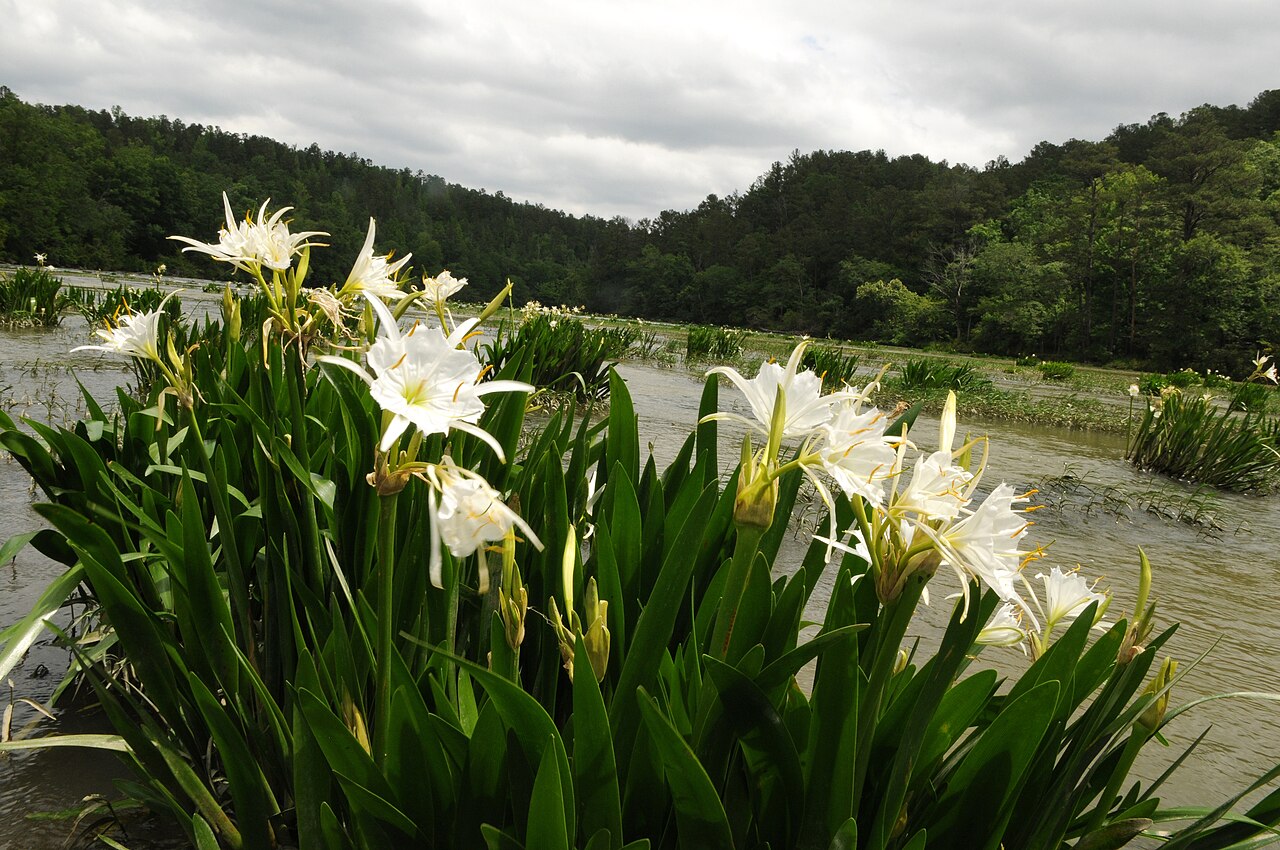
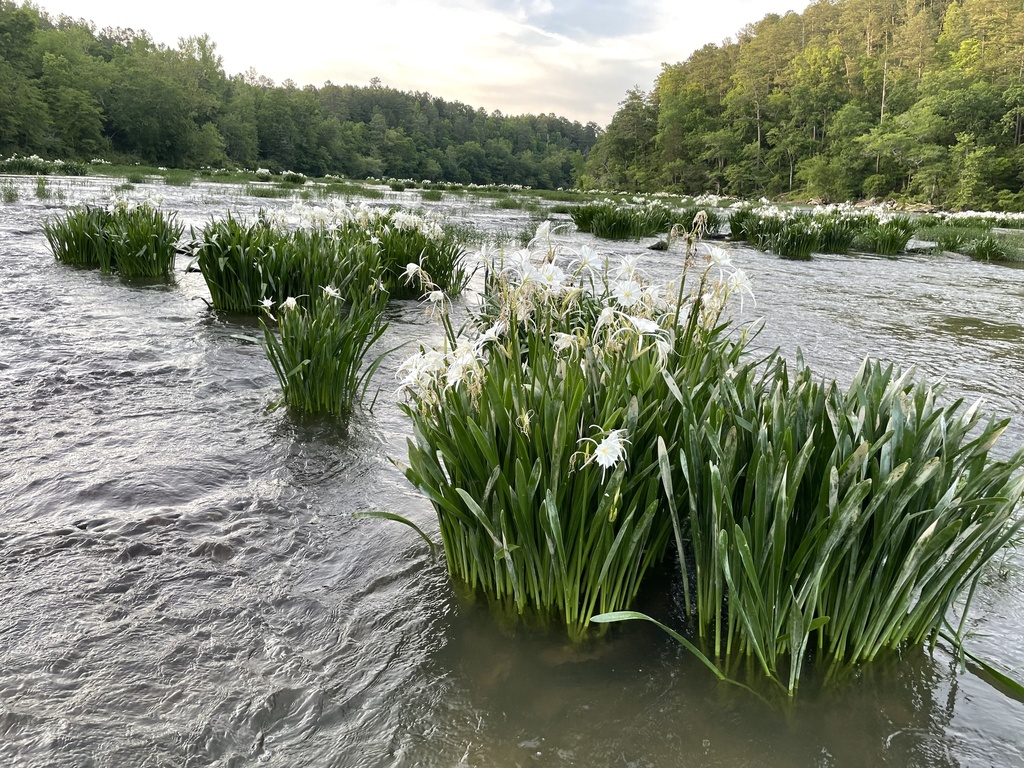
Hymenocallis coronaria, known as the Cahaba Lily, shoals spiderlily or shoal lily, is a spectacular white-flowered bulb that grows in an unusual place: wedged into cracks in the bedrock of fast, shallow, sunny river shoals. In late spring it raises stalks about 3 feet tall, each topped by a cluster of large, fragrant white flowers, so that whole shoals turn white above the rushing water. It belongs to the amaryllis family (Amaryllidaceae).
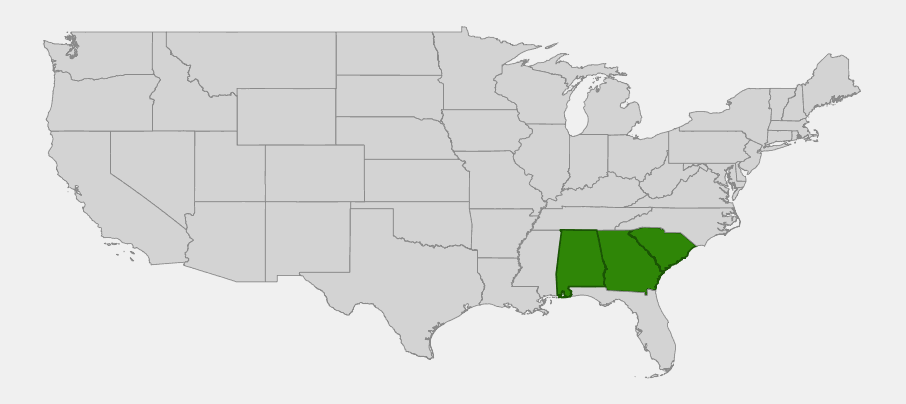
It is found only in Alabama, Georgia and South Carolina, mainly along the Fall Line where rivers drop from the Piedmont onto the Coastal Plain. Only about 50 populations are known to remain, and many others were drowned by dams. The best-known stands are on the Cahaba River in Alabama, where the Cahaba River National Wildlife Refuge protects some of the largest, on the Catawba River at Landsford Canal State Park in South Carolina, and on the Flint and Savannah Rivers in Georgia.
Conservation note: the Cahaba lily is globally rare and protected by state law in Georgia. Never dig bulbs or collect seed from the wild. This guide is mainly about identifying the plant and where to see it. The rare gardeners who want to grow it should buy only nursery-propagated bulbs from reputable native plant nurseries. Like other spiderlilies, its bulbs are poisonous if eaten.
Identification
In its rocky river habitat the Cahaba lily is unmistakable. Other native spiderlilies, such as Woodland Spiderlily (H. occidentalis), grow in woods, swamps and marshes rather than in the swift water of shoals.
Bulb & Leaves
Each plant grows from a large bulb lodged in a crack or pocket in the rock, held fast by thick roots. The leaves are long, smooth, strap-shaped and slightly fleshy, about an inch wide and up to 2 to 3 feet long, arranged in a fan-like clump. In the current they stream downstream, and they die back in late summer or fall.
Flowering Stalk
In spring a stout, leafless stalk (scape) rises 2 to 3 feet from the center of the clump, holding its flowers well above the water. Each stalk ends in a cluster (umbel) of about 6 to 9 flower buds, enclosed at first by papery bracts.
Flowers
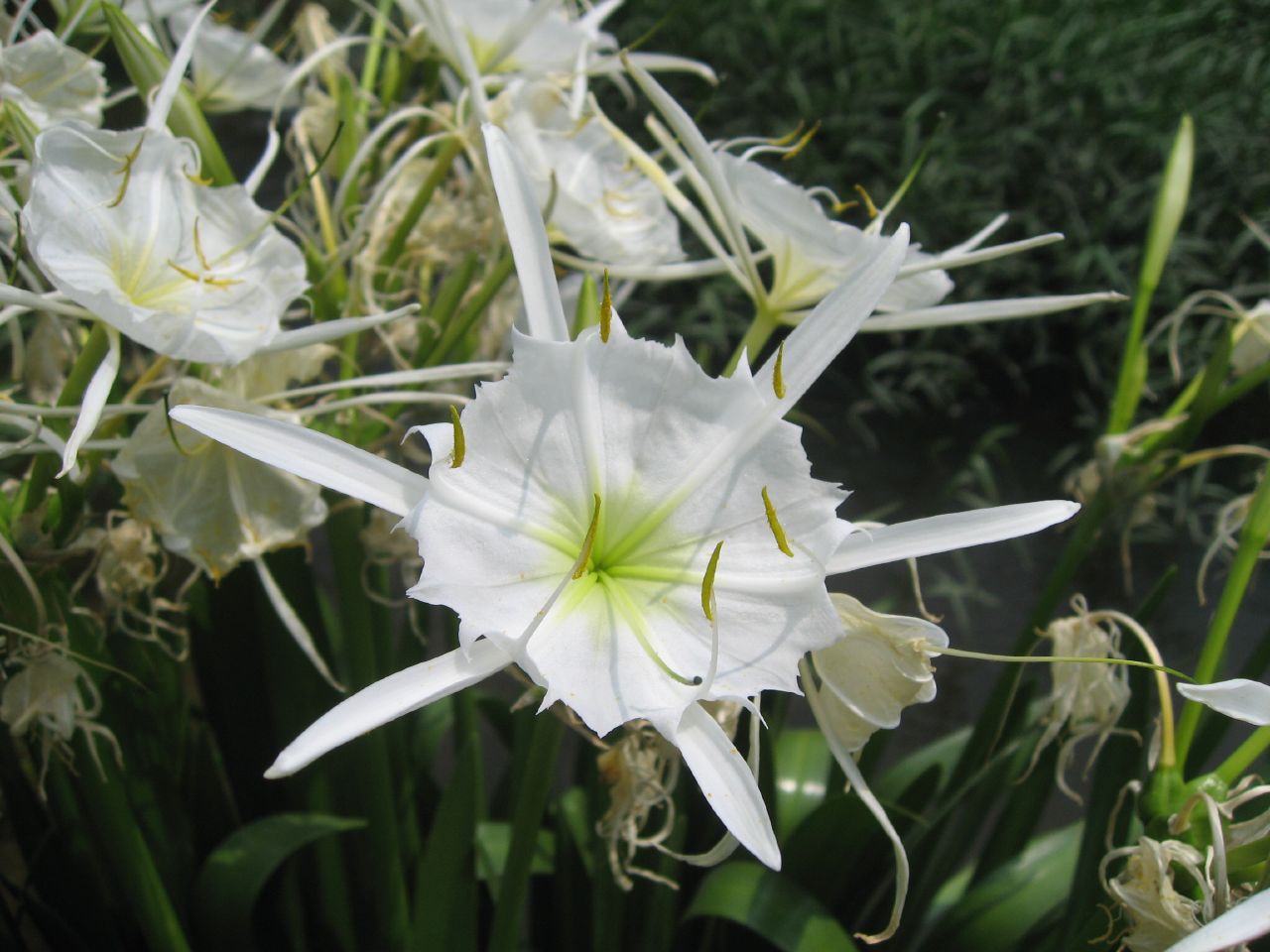
The flowers open one or two at a time from about early May into late June, with the peak usually in late May. Each is white, 3 to 5 inches across, and powerfully fragrant, especially in the evening. Six long, narrow tepals radiate like the arms of a spider around a broad, funnel-shaped crown (corona) about 2 inches wide, formed by a thin membrane joining the bases of the six stamens. The tips of the stamens carry orange-yellow anthers. Each flower opens in the evening and lasts about a day.
Fruit & Seeds
Pollinated flowers form a green capsule that holds a few large, green, fleshy seeds about an inch long. The seeds drop into the water, where many float or roll along the bottom until they lodge in a crack in the rock and sprout. Seedlings take several years to reach flowering size.
Quick Facts
| Scientific Name | Hymenocallis coronaria (basionym Pancratium coronarium) |
| Family | Amaryllidaceae (amaryllis family) |
| Plant Type | Aquatic bulbous perennial |
| Mature Height | 2–3 ft in flower |
| Mature Spread | 1–2 ft per clump |
| Growth Rate | Slow |
| Sun Exposure | Full sun |
| Water Needs | Aquatic; swift, shallow, well-oxygenated flowing water |
| Soil Type | Cracks and pockets in bedrock shoals with sand and gravel |
| Soil pH | About 6.0–7.5 |
| Bloom Time | May–June (peak late May to early June) |
| Flower Color | White with yellow-green throat |
| Fall Color | None; leaves die back in late summer or fall |
| Fruit | Capsule with large, fleshy green seeds |
| Deer Resistant | Yes, mostly, though deer sometimes browse plants near shore |
| USDA Hardiness Zones | 7–9 |
Native Range
The Cahaba lily is endemic to three southeastern states. USDA PLANTS records it from Alabama, Georgia and South Carolina, and it grows almost entirely on rocky shoals near the Fall Line of the Piedmont, where rivers flow fast and shallow over exposed bedrock. It was first recorded in 1773 by the naturalist William Bartram, who saw it on the rocky islets of the Savannah River near Augusta, Georgia, and called it the “odoriferous Pancratium fluitans.”
The largest remaining populations are on the Cahaba River in central Alabama (including three stands within the Cahaba River National Wildlife Refuge and one on Buck Creek), on the Catawba River at Landsford Canal State Park in South Carolina, and on the Flint River in Georgia, with others in the Savannah River basin and other Piedmont rivers. About 50 populations are thought to survive.
Many historical populations were lost when dams flooded or dewatered the shoals they depended on, and others have declined because of sediment, pollution and changes in river flow. The plant needs swift, clear water, full sun and stable rock to anchor its bulbs, which makes it a sensitive indicator of free-flowing rivers.
📋 Regional plant lists featuring Cahaba Lily: Alabama, Georgia & Mississippi · North & South Carolina
Growing & Care Guide
The Cahaba lily is best enjoyed in the wild. It needs flowing, sunny, well-oxygenated water and rarely thrives in ordinary gardens. Never take bulbs or seeds from the wild: populations are few, and collecting is illegal on protected lands and harmful everywhere. If you want to try growing it, buy nursery-propagated bulbs from a reputable native plant nursery.
Light
It needs full sun. In the wild it grows only on open shoals where the sun reaches the water all day, and stands decline when trees shade the river.
Soil & Water
In cultivation, growers who succeed with it keep the bulb in a large container of coarse sand and gravel, set in a sunny pond or water garden where water moves over or around it, ideally from a pump or fountain. Still, warm, stagnant water and heavy, rich soil encourage rot. The plant tolerates winter cold within zones 7 to 9.
Planting Tips
Plant nursery-grown bulbs in spring with the neck at or just below the gravel surface, and keep the container submerged a few inches below the water. Weight the pot with stones so it cannot tip in a current. In a bog garden, keep the soil permanently wet and well aerated. Expect it to take several years to settle in and bloom.
Pruning & Maintenance
Remove faded flower stalks only if you do not want seed. Leave foliage until it yellows naturally in late summer, since the leaves feed the bulb for next year. Keep the water clean and moving, and clear away algae and silt that collect around the bulbs.
Propagation
Fresh seeds germinate readily if kept moist and planted promptly; they are fleshy and do not store well. Mature bulbs slowly produce offsets that can be separated while dormant. Propagation should be done only from nursery or cultivated stock, never from wild plants.
Landscape Uses
- Where to see it: Cahaba River National Wildlife Refuge in Alabama, Landsford Canal State Park in South Carolina, and Flint and Savannah River shoals in Georgia, from mid-May to mid-June
- River conservation: a flagship species for protecting free-flowing southern rivers
- Paddling and nature tourism: viewed by canoe, kayak and wading during bloom season
- Specialist water gardens: only with nursery-propagated bulbs and moving water
- Education: a vivid example of a plant adapted to life in fast-flowing rivers
Wildlife & Ecological Value
The Cahaba lily is part of a remarkable community of plants and animals that live on southern river shoals, among the most species-rich freshwater habitats in North America.
For Pollinators
The fragrant flowers open in the evening and are visited by hawk moths, including the plebeian sphinx moth, which hover and probe for nectar with long tongues. Pipevine swallowtails and other large butterflies also visit the flowers during the day.
For Birds
The plant offers little direct food for birds, but its shoals are feeding grounds for herons, kingfishers and other birds that hunt fish and crayfish in the shallows.
For Mammals
Deer sometimes browse plants near the bank. Like other members of the amaryllis family, it contains toxic alkaloids, which limit grazing.
Ecosystem Role
The clumps of leaves and roots slow the current and trap sediment, creating sheltered pockets used by small fish, snails, mussels and aquatic insects. The Cahaba River shoals where it grows are home to many rare fish, snails and mussels, and the lily is a highly visible symbol of that biodiversity.
Cultural & Historical Uses
John Eatton Le Conte described the plant as Pancratium coronarium in 1836, and Carl Sigismund Kunth later moved it to Hymenocallis, a genus name meaning “beautiful membrane,” for the crown that joins the stamens. The species name coronaria also refers to that crown.
In Alabama the plant is celebrated every May at the Cahaba Lily Festival in West Blocton, near the famous shoals of the Cahaba River, and the lily has become an emblem of the Cahaba River, one of the longest free-flowing rivers in Alabama. The Cahaba River National Wildlife Refuge was established in 2002 in part to protect these shoals.
In South Carolina, the Catawba River stand at Landsford Canal State Park draws visitors every spring for the bloom, and in Georgia, shoals on the Flint and Savannah Rivers support important populations. Conservation groups in all three states have worked to protect river flows and shoal habitat on which the lily depends.
Frequently Asked Questions
When do Cahaba lilies bloom?
Mainly from mid-May to mid-June, with the peak usually in late May or early June. Each flower lasts about a day, but a clump opens new flowers over several weeks. Check with the Cahaba River National Wildlife Refuge or Landsford Canal State Park for current bloom reports.
Where can I see Cahaba lilies?
The best-known sites are the Cahaba River National Wildlife Refuge near West Blocton, Alabama, and Landsford Canal State Park on the Catawba River in South Carolina. Populations also grow on the Flint and Savannah Rivers in Georgia. Stay on trails and viewing areas and do not trample plants on the shoals.
Can I dig up a Cahaba lily for my garden?
No. The species is rare, protected by law in Georgia and on refuges and parks, and wild bulbs rarely survive transplanting. Never collect bulbs or seeds from the wild. If you want to grow it, buy nursery-propagated bulbs from a reputable native plant nursery.
Is the Cahaba lily poisonous?
Yes. Like other spiderlilies and members of the amaryllis family, its bulbs contain toxic alkaloids and should never be eaten. Keep cultivated bulbs away from children and pets.
Is the Cahaba lily an endangered species?
It is not federally listed, but it is considered globally rare (NatureServe rank G3), and it has been considered for protection under the Endangered Species Act because so many populations were lost to dams. It is protected by state law in Georgia.

Looking for a nursery that carries Cahaba Lily?
Browse our native plant nursery directory: Alabama · Georgia · South Carolina

