
Christmas Senna (Senna pendula)
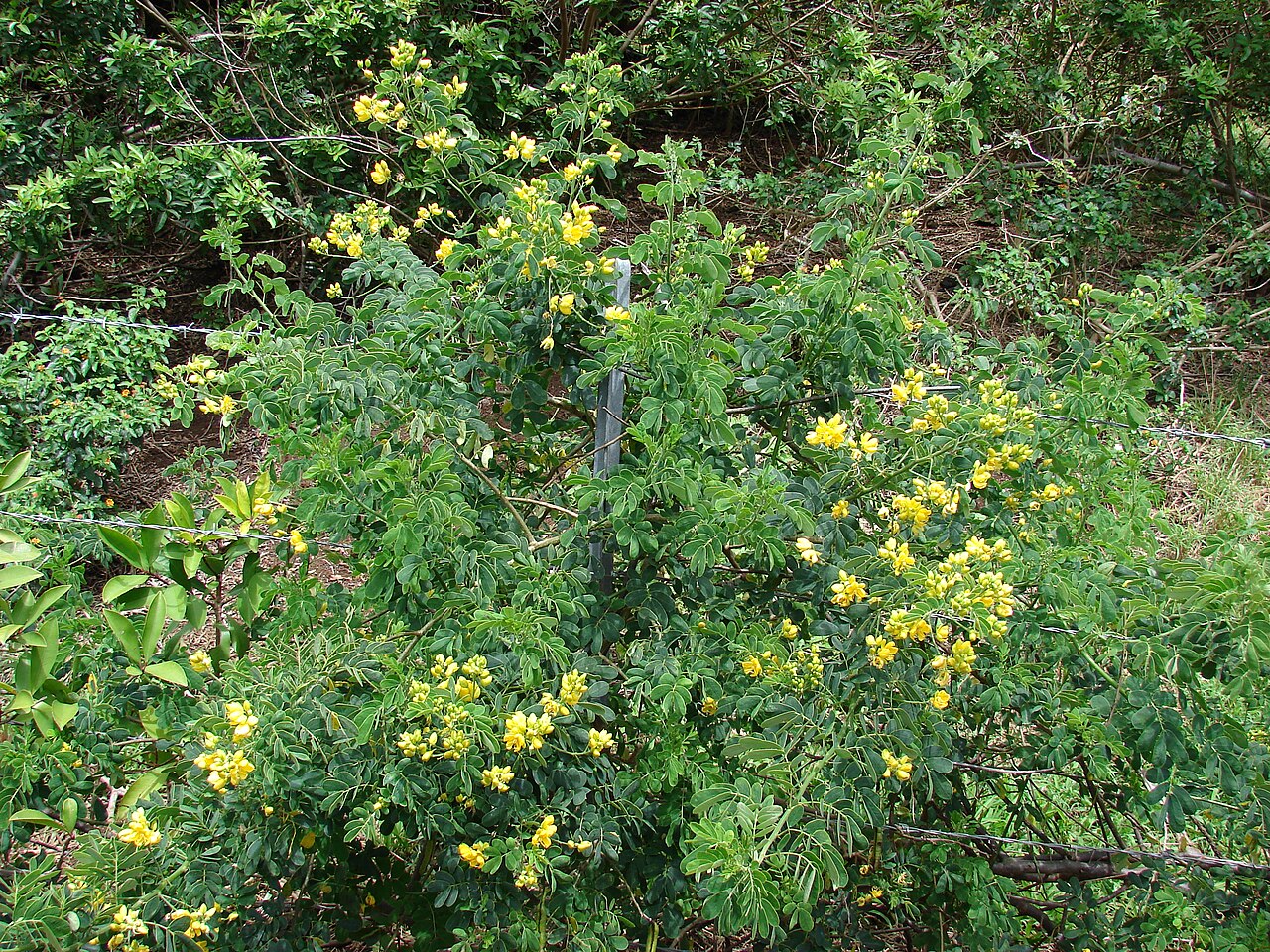
Senna pendula, known as Christmas Senna, climbing cassia, Easter cassia or, in Puerto Rico, valamuerto, is a sprawling shrub in the pea family (Fabaceae) that smothers itself in golden yellow flowers in fall and winter, around the holidays in the Northern Hemisphere. Its long, dangling pods give the species its name (pendula, hanging).
This is a plant to approach with care. USDA PLANTS lists the species as native to Puerto Rico, and its wider native range covers Central and South America and the Caribbean. In Florida, however, the commonly grown form, var. glabrata, is a Florida Invasive Species Council Category I invasive. USDA lists that variety as native in the lower 48 states, but the Atlas of Florida Plants treats it as non-native, so this guide maps the species in Puerto Rico only. It is also a serious invader in parts of Australia, South Africa and other warm regions.
So the advice depends on where you live. In Puerto Rico, Christmas senna is a native shrub for wildlife gardens. In Florida, Hawaii and other frost-free areas, do not plant it, and replace it with native sennas such as Chapman’s wild sensitive plant (Senna mexicana var. chapmanii) or privet senna (S. ligustrina). This guide covers how to recognize it, its ecology, how to grow it responsibly where it is native, and its toxicity.
Identification
Christmas senna is easy to spot in bloom, but several yellow-flowered sennas are grown in warm climates. Its sprawling, semi-climbing habit, rounded leaflets, cool-season bloom and long, thin, hanging pods are the best clues.
Growth Habit
It is a fast-growing, evergreen to semi-evergreen shrub, usually 6 to 10 feet tall and as wide, with long, arching or scrambling stems that can lean on and climb through other shrubs and trees to 15 feet or more. Untended plants form dense, tangled thickets.
Leaves
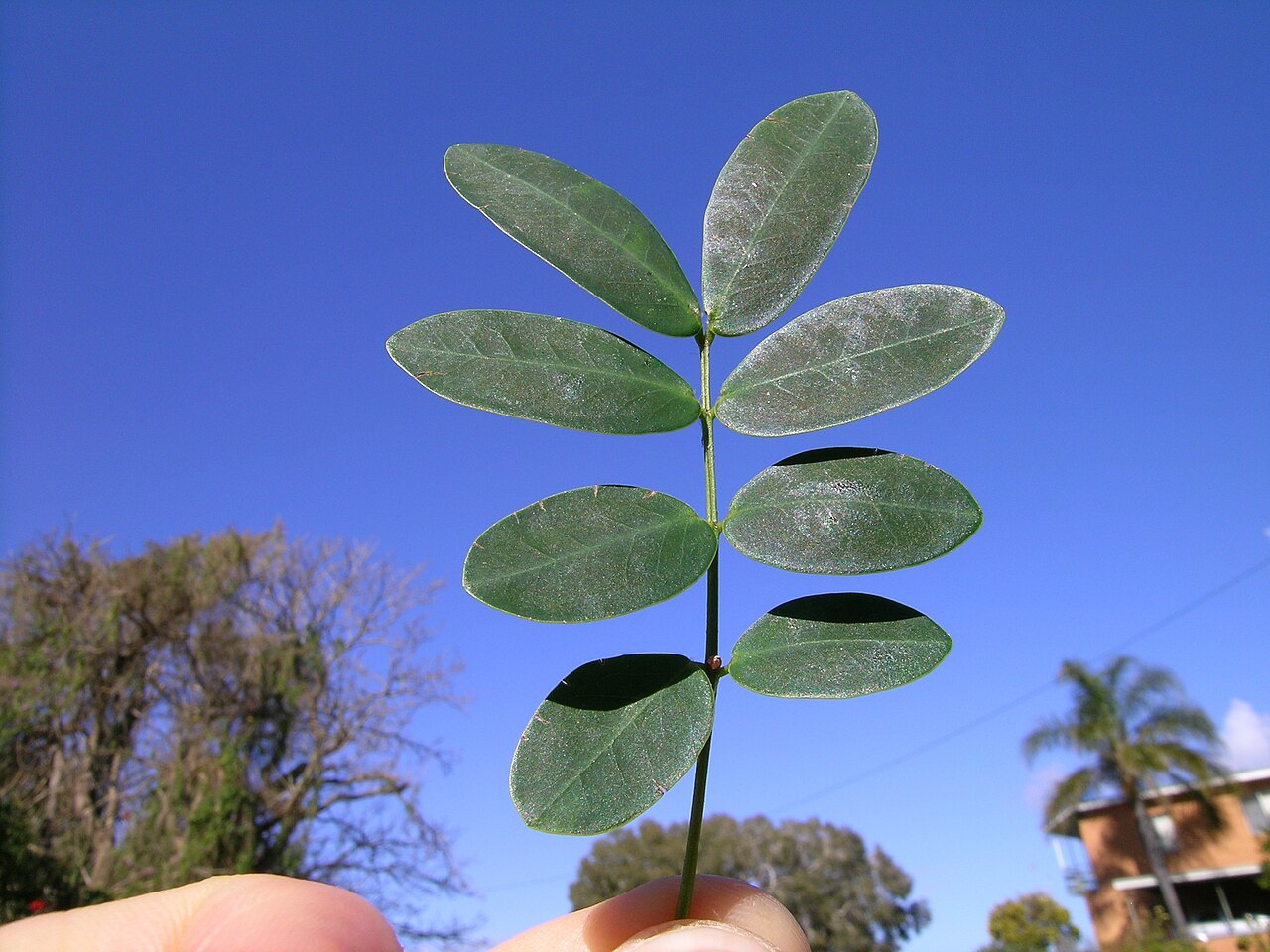
The leaves are alternate and pinnately compound, about 2 to 4 inches long, with three to six pairs of leaflets. Each leaflet is obovate to oblong, ½ to 1½ inches long, rounded at the tip, smooth and slightly blue-green in var. glabrata. A small, raised gland sits on the leaf axis between the lowest pair of leaflets, a useful feature for telling sennas apart.
Flowers
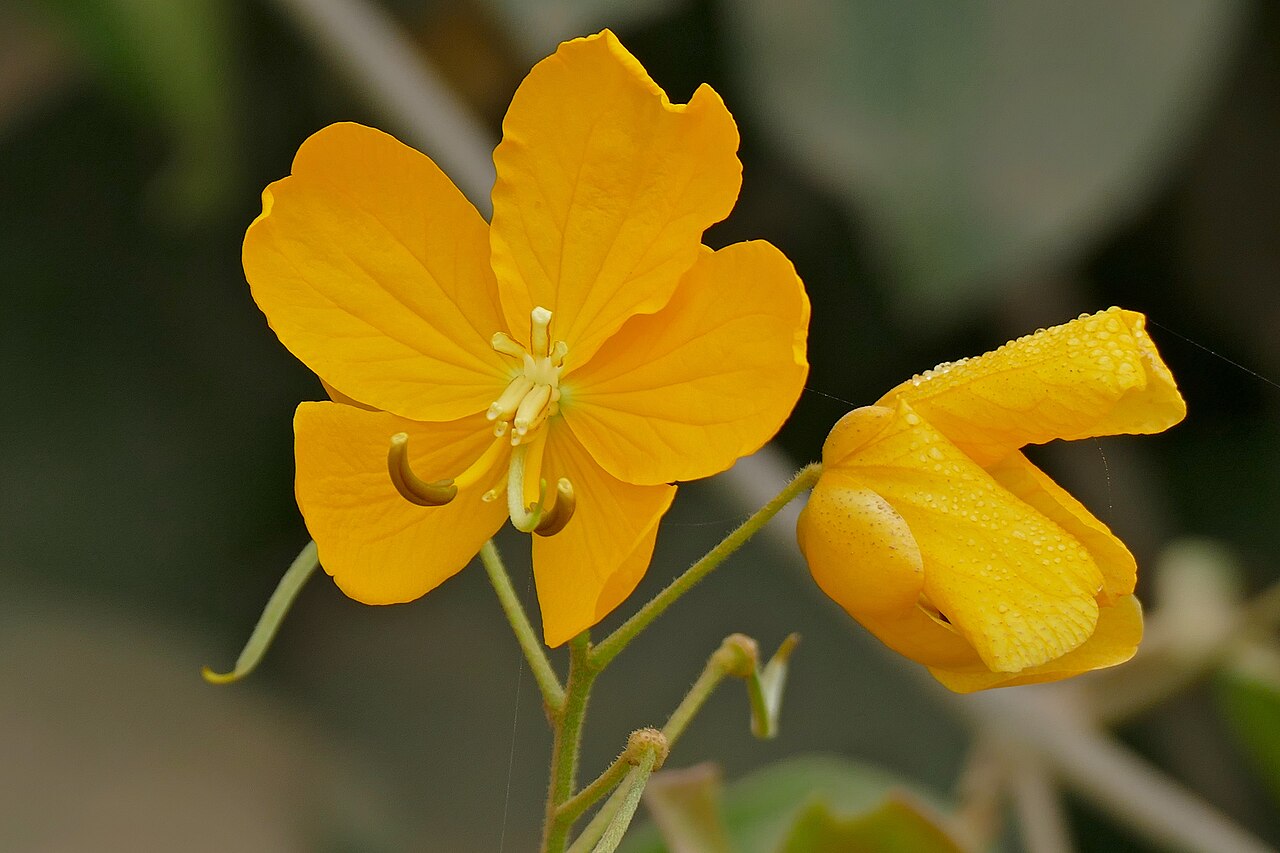
Clusters of five to fifteen flowers form at the branch tips and leaf axils, mostly from October through January in Florida and the Caribbean. Each flower is cup-shaped, about 1 to 1½ inches across, with five bright golden yellow petals of slightly unequal size. Inside are curved stamens of different lengths, with pores at their tips instead of slits, typical of sennas.
Fruit & Seeds
The pods are long and slender, cylindrical, about 4 to 8 inches long, and hang in clusters. They ripen from green to brown and stay on the plant for months, each holding many small, hard seeds. The heavy seed production and long-lived seeds are what make the plant so invasive outside its native range.
Quick Facts
| Scientific Name | Senna pendula (Humb. & Bonpl. ex Willd.) H.S. Irwin & Barneby (syn. Cassia pendula) |
| Family | Fabaceae (pea or legume family) |
| Plant Type | Sprawling to semi-climbing evergreen shrub |
| Mature Height | 6–10 ft; scrambling stems to 15 ft or more |
| Mature Spread | 6–10 ft |
| Growth Rate | Fast |
| Sun Exposure | Full sun to part shade |
| Water Needs | Low to moderate; drought tolerant once established |
| Soil Type | Sandy, loamy or rocky; adaptable |
| Soil pH | About 5.5–8.0 |
| Bloom Time | Fall to winter (about October–January) |
| Flower Color | Golden yellow |
| Fall Color | None; blooms in fall instead |
| Fruit | Long, slender, hanging pods with many seeds |
| Deer Resistant | Moderately; foliage contains bitter anthraquinones |
| USDA Hardiness Zones | 9–13 (frost kills stems back; often resprouts) |
Native Range
USDA PLANTS lists Senna pendula as native in Puerto Rico. The species is widespread in the American tropics, from Central America and the Caribbean through much of South America to Argentina. Several varieties are recognized, and the one most often cultivated, var. glabrata, comes from South America. In Puerto Rico it grows in thickets, forest edges, pastures and roadsides in the lowlands and hills.
USDA also lists var. glabrata as native in the lower 48 states and records the species in Florida, Texas, Arizona and California. The Atlas of Florida Plants treats it as non-native in Florida, where it has escaped widely from gardens into hammocks, pinelands, mangrove edges and disturbed areas in the central and southern peninsula and is listed by the Florida Invasive Species Council as Category I, the highest level. Records in Texas, Arizona and California represent garden plants or escapes. Following our range rule, the map shows Puerto Rico only.
It is also introduced in Hawaii and the Pacific islands, and it is a recognized weed in eastern Australia and South Africa, where its tangled thickets smother native vegetation along rivers and forest edges.
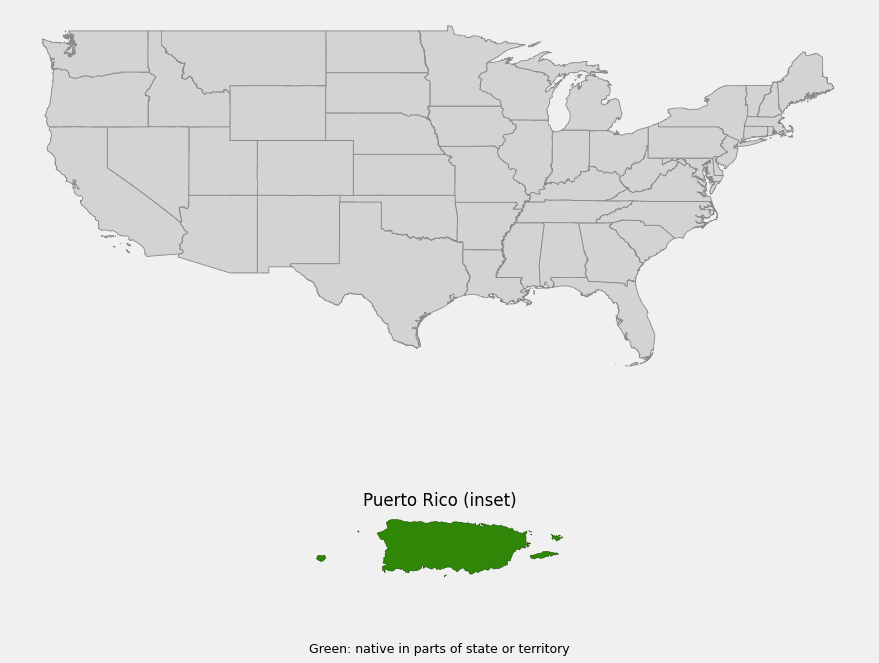
📋 Regional plant lists featuring Christmas Senna: Puerto Rico
Growing & Care Guide
Christmas senna is one of the easiest flowering shrubs for warm climates, which is exactly why it became invasive in Florida and elsewhere. Grow it only where it is native, in Puerto Rico and the wider Caribbean. In Florida, do not plant it, and consider removing existing plants and replacing them with native sennas. The care notes below are for Puerto Rican gardens.
Light
Full sun gives the most flowers and the most compact growth. It tolerates part shade but becomes lanky and flowers less.
Soil & Water
It grows in almost any well-drained soil, from sand to rocky limestone. Water regularly during establishment; after that, it needs watering only in long dry spells. Like most legumes it forms partnerships with soil bacteria and does not need much fertilizer.
Planting Tips
Give it room or something to lean on, such as a fence or a sturdy trellis. In Puerto Rico, plant it in sunny wildlife and butterfly gardens, along fences, or at the edge of native shrub plantings. Pair it with other native shrubs rather than letting it form a solid thicket.
Pruning & Maintenance
Prune hard after flowering, in late winter or spring, to keep it compact and bushy; it flowers on new growth. Removing the pods before they ripen reduces seedlings and keeps the plant tidy. Wear gloves when handling pods and seeds.
Propagation
It grows readily from seed. Nick or soak the hard seeds in hot water before sowing, and they germinate within a couple of weeks in warm weather. Semi-hardwood cuttings also root. Outside its native range, do not propagate or share it.
Landscape Uses
- Butterfly gardens in Puerto Rico: a host plant for sulphur butterflies and a nectar-free pollen source for large bees
- Cool-season color: one of the few shrubs that blooms heavily in fall and winter
- Fence and trellis plant: its arching stems can be trained on fences and arbors
- Native shrub borders in Puerto Rico: in sunny, informal plantings with other native shrubs
- Not recommended in Florida: choose native sennas such as Chapman’s wild sensitive plant or privet senna instead
Wildlife & Ecological Value
Where it is native, Christmas senna is an important cool-season resource for insects. The same features that support wildlife in Puerto Rico let it overrun native plants in Florida and elsewhere.
For Pollinators
Senna flowers offer pollen but little or no nectar, and their pollen is locked inside anthers that open only through tiny pores. Large bees, such as carpenter bees and bumble bees, grip the flower and vibrate their flight muscles to shake the pollen out, a behavior called buzz pollination.
For Birds
The plant’s dense, tangled growth gives cover and nesting sites for small birds. Few birds eat the hard seeds.
For Mammals
Its foliage and seeds contain anthraquinone compounds, and the plant is not a preferred food for mammals. Seeds of related sennas are toxic to livestock.
Ecosystem Role
Sennas are larval host plants for sulphur butterflies, including the cloudless sulphur (Phoebis sennae) and orange-barred sulphur (Phoebis philea), whose green caterpillars feed on the leaves and flowers. This is why Christmas senna was widely planted in Florida butterfly gardens, but native sennas support the same butterflies without the risk of invasion.
Cultural & Historical Uses
The species was first described from South America in the early 19th century as Cassia pendula, and it was moved to Senna in 1982 by Howard Irwin and Rupert Barneby, whose monograph separated the sennas from the related Cassia and Chamaecrista. Many gardeners still call it a cassia.
The Puerto Rican and Spanish name valamuerto is shared with several related plants. In the 20th century the plant spread through the nursery trade as an easy, showy shrub for butterfly gardens, especially in Florida, where it naturalized and became a recognized invasive by the late 20th century.
Christmas senna is a good example of how native status depends on place. The same plant is a valuable native shrub in Puerto Rico and a harmful invader a few hundred miles away in Florida. Knowing a plant’s native range helps gardeners make the right choice for their own region.
Frequently Asked Questions
Is Christmas senna invasive?
Yes, outside its native range. In Florida, var. glabrata is listed as a Category I invasive by the Florida Invasive Species Council, and it is invasive in parts of Australia and South Africa. In Puerto Rico it is native. Do not plant it in Florida, Hawaii or other frost-free areas outside its native range.
Is Christmas senna poisonous?
Treat it as toxic. Like many sennas, its leaves, pods and seeds contain anthraquinones, which have a strong laxative effect and can cause vomiting, diarrhea and cramping. Seeds of related sennas have poisoned livestock. Keep children and pets from eating any part of the plant, and contact Poison Control (1-800-222-1222 in the U.S.) or a veterinarian if someone swallows it.
Is Senna pendula native to the United States?
USDA PLANTS lists it as native in Puerto Rico, and also lists var. glabrata as native in the lower 48 states. The Atlas of Florida Plants treats it as non-native in Florida, and it is a Category I invasive there. We follow the Atlas and consider it native to Puerto Rico only.
What can I plant instead of Christmas senna in Florida?
Native alternatives include Chapman’s wild sensitive plant (Senna mexicana var. chapmanii), privet senna (Senna ligustrina), and partridge pea. All are larval hosts for sulphur butterflies.
How do I remove Christmas senna?
Cut stems near the ground and dig out the root crown, or treat cut stumps with herbicide following label directions and local extension guidance. Bag ripe pods so seeds do not spread, and pull seedlings for several years afterward, because seeds in the soil keep germinating.

Looking for a nursery that carries Christmas Senna?
Our nursery directory does not yet include Puerto Rico. Browse the native plant nursery directory by state: Alabama–Arkansas · California · Colorado–Hawaii · Idaho–Kansas · Kentucky–Montana · Nebraska–Oklahoma · Oregon · Pennsylvania–Virginia · Washington · West Virginia–Wyoming

