
Cliff Spurge (Euphorbia misera)
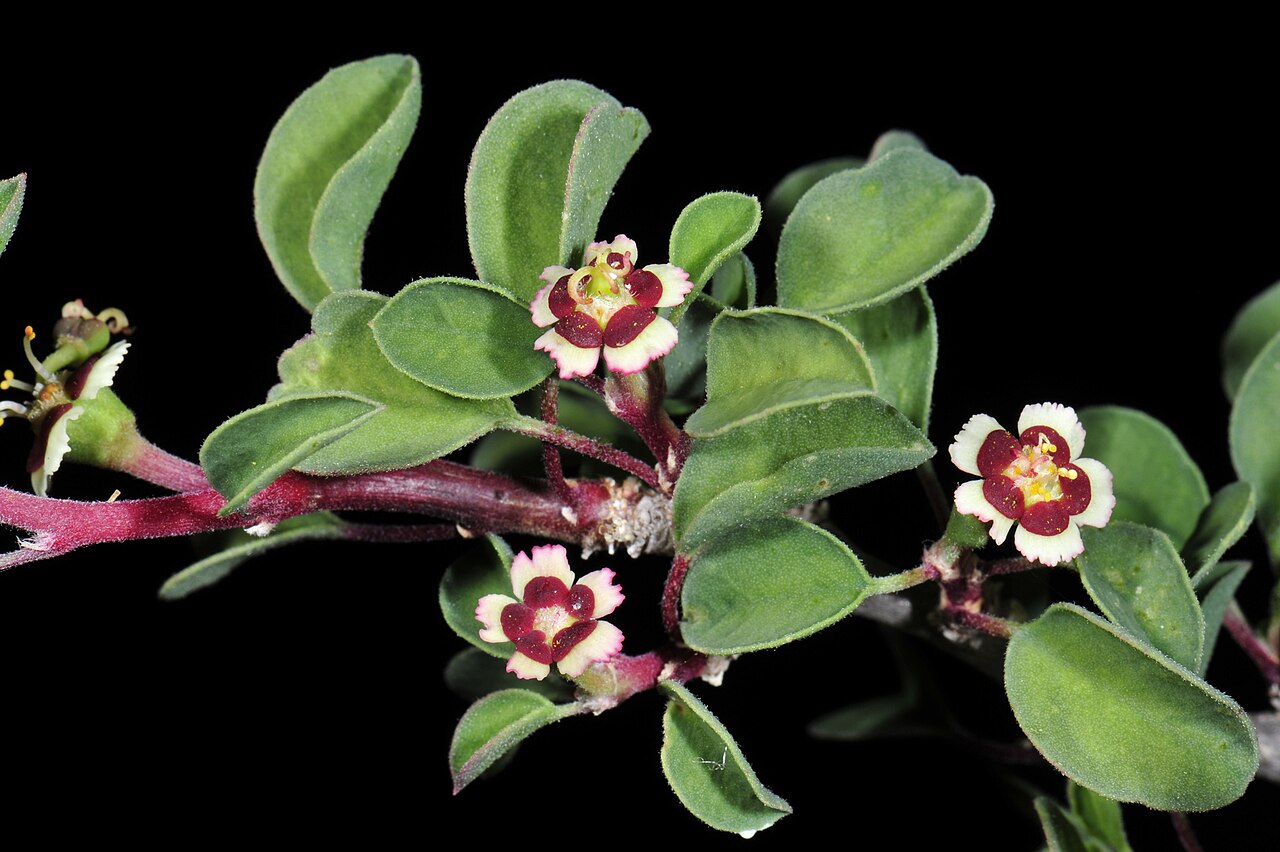
Euphorbia misera, known as Cliff Spurge or coast spurge, is a gnarled, semi-succulent shrub of coastal bluffs and desert slopes in southern California and the Baja California peninsula. In the United States it grows mainly along the coast from Orange County to the Mexican border and on several of the Channel Islands, with a small, isolated population in the Coachella Valley. In California it is a rare plant, on the California Native Plant Society’s Rare Plant Inventory (California Rare Plant Rank 2B.2).
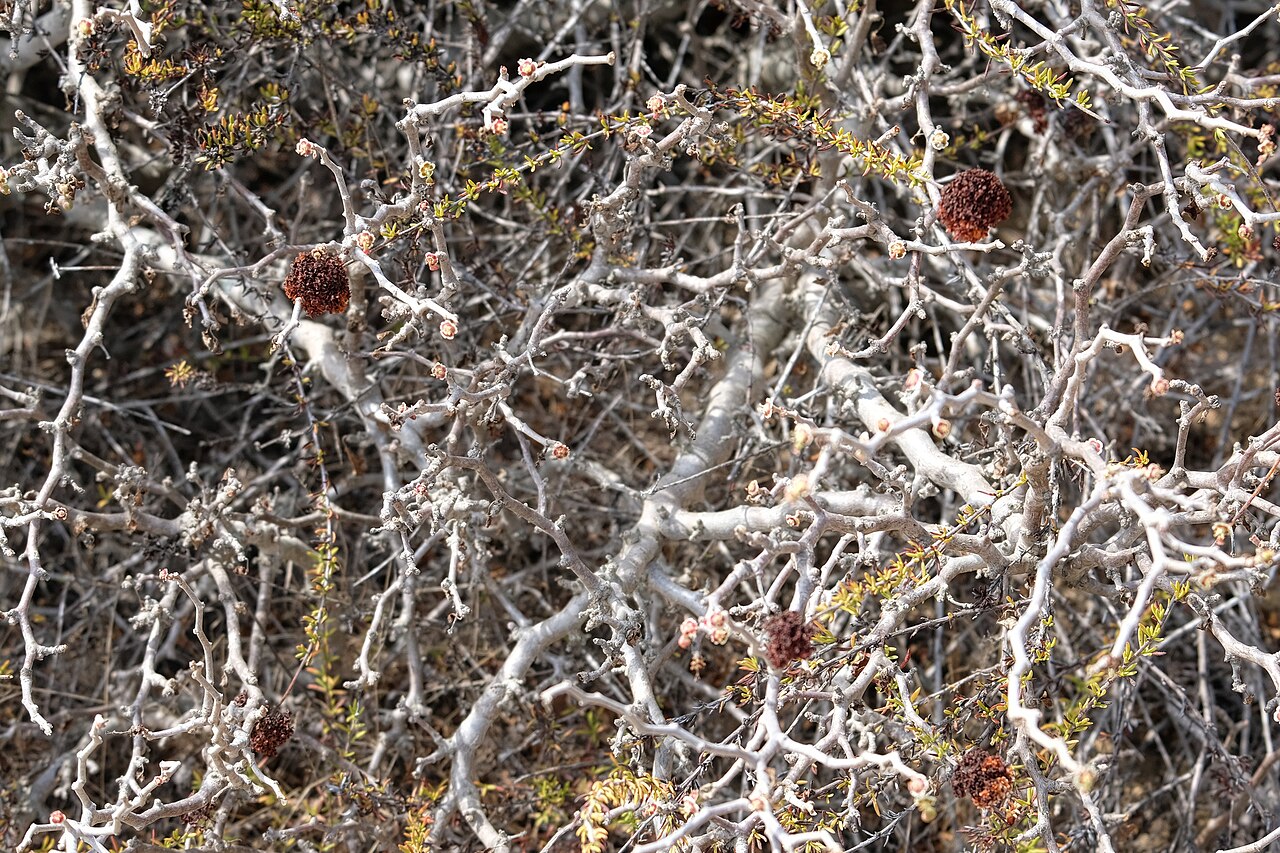
It is a sprawling to upright shrub, usually 1½ to 4 feet tall, with stout, rubbery, pale gray stems, small, rounded, softly hairy leaves, and tiny but intricate “flowers” (cyathia) with maroon glands edged in cream. It is drought-deciduous: after the winter rains it is lush and green, and in the dry season it drops its leaves to become a sculptural tangle of silvery branches.
Safety note: like other spurges, cliff spurge contains a milky, acrid latex that irritates skin and eyes and is toxic if eaten. Wear gloves when pruning, keep sap away from your eyes, and plant it away from where small children and pets play. This guide covers how to identify cliff spurge, where it grows, how to grow it in dry, coastal gardens, and its value to wildlife.
Identification
Cliff spurge is a typical coastal sage scrub shrub in appearance, but its milky sap, gray, rubbery stems and tiny cup-like flower structures mark it as a spurge.
Growth Habit & Stems
A shrub 1½ to 4 feet tall (occasionally to 5 feet) and up to 4 feet wide, erect, mounding or sprawling over rocks and cliff faces. The stems are stout, semi-succulent, flexible and rubbery, covered in light gray bark, and often gnarled and twisted. Broken stems or leaves exude a white, milky latex.
Leaves
Leaves are small, about ⅙ to ⅝ inch long, round to ovate, often folded along the middle, and covered in fine hairs. They are clustered on short side spurs. Leaves appear after winter rains and drop during summer drought.
Flowers
Spurges have highly reduced flowers grouped into a cup-like structure called a cyathium. In cliff spurge each cyathium is about ⅛ inch long, usually borne singly at branch tips, with five maroon to yellow glands, each edged with a white to pale yellow, petal-like, scalloped appendage. Inside are 30 to 40 tiny male flowers around a single female flower. Blooms can appear in almost any month, especially in winter and spring after rains.
Fruit & Look-alikes
The fruit is a round, three-lobed capsule about 3/16 inch long, finely hairy to smooth, that splits explosively to release wrinkled, white to gray seeds. The closely related California spurge (Euphorbia californica) of the Sonoran Desert has larger, nearly hairless leaves. Unlike shrubs such as Bush Rue or Lemonade Berry, cliff spurge has milky sap and cup-shaped cyathia.
Quick Facts
| Scientific Name | Euphorbia misera Benth. |
| Family | Euphorbiaceae (spurge family) |
| Plant Type | Drought-deciduous semi-succulent shrub |
| Mature Height | 1½–4 ft (occasionally to 5 ft) |
| Mature Spread | 2–4 ft |
| Growth Rate | Slow to moderate |
| Sun Exposure | Full sun |
| Water Needs | Very low; summer-dry |
| Soil Type | Rocky, sandy or gravelly, very well-drained soils |
| Soil pH | Neutral to alkaline |
| Bloom Time | Year-round, mainly winter–spring |
| Flower Color | Maroon to yellow glands with cream to pale yellow margins |
| Fall Color | Leafless and silvery-gray in the dry season |
| Fruit | Round, three-lobed capsule |
| Deer Resistant | Yes; toxic milky sap |
| USDA Hardiness Zones | About 9–11 |
Native Range
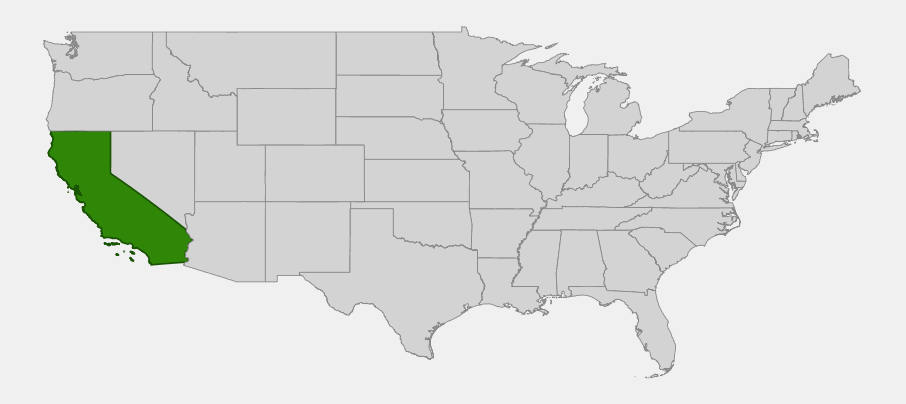
Cliff spurge is native to southern California and northwestern Mexico. USDA PLANTS lists it as native in California, where it grows on coastal bluffs and mesas from Corona del Mar in Orange County south to the Mexican border in San Diego County, and on Santa Cruz, Santa Catalina and San Clemente Islands. A disjunct population grows in the Coachella Valley of Riverside County, in a much hotter, drier desert setting.
Its main range is in Mexico, on the Baja California peninsula, where it is a common shrub from near Tijuana south into Baja California Sur, on adjacent Pacific and Gulf of California islands, and along part of the Gulf coast of Sonora. Because so much of the southern California coast has been developed, the California populations are limited and fragmented, and the plant is listed as rare in the state.
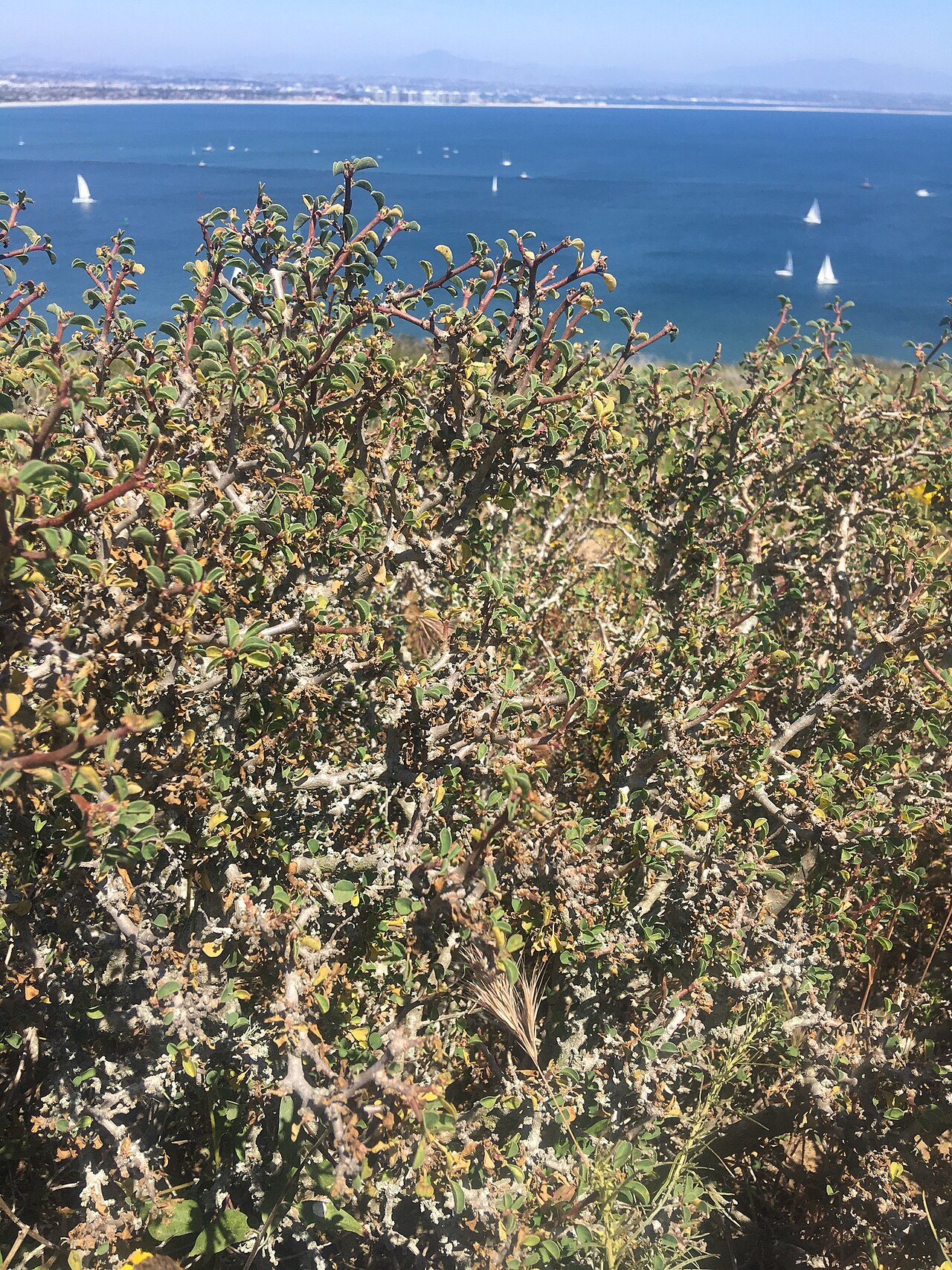
It grows on rocky slopes, vertical cliff faces, coastal bluffs and mesas, and in desert scrub. It is a characteristic plant of the maritime succulent scrub, the coastal community of drought-tolerant shrubs, cacti and succulents that grows in the foggy, summer-dry climate of the southern California and Baja California coast.
📋 Regional plant lists featuring Cliff Spurge: California & Nevada
Growing & Care Guide
Cliff spurge is grown by some California native plant nurseries and botanic gardens, such as the Santa Barbara Botanic Garden, and is an excellent sculptural shrub for dry coastal gardens. Because it is rare in California, buy nursery-grown plants only and never dig or collect it from the wild. It is hardy outdoors in about USDA zones 9 to 11 and tolerates light frost only. Remember the toxic, irritating sap: wear gloves and eye protection when pruning.
Light
Full sun. It thrives in coastal sun and fog and tolerates the hot, reflected heat of rock gardens and slopes.
Soil & Water
It needs excellent drainage: rocky, sandy or gravelly soil, a slope, or a raised bed. Water occasionally in winter if rains fail and keep it dry in summer, when it is naturally dormant. Summer water and heavy soil invite root rot.
Planting Tips
Plant in fall or early winter so it can establish with the rains. It is well suited to coastal bluffs, rock gardens, succulent gardens and dry slopes, and to large containers with a gritty mix. It is not a houseplant, though it can be grown in a sunny greenhouse or conservatory in cold climates.
Pruning & Maintenance
Very little pruning is needed; its gnarled, natural shape is part of its appeal. If you must prune, do so in the dormant season, wearing gloves and eye protection, and rinse tools afterward. Avoid getting the latex on skin or near eyes.
Propagation
Grow it from seed sown in fall or winter, or from cuttings. Let cuttings dry for a few days so the latex seals the cut before rooting them in very fast-draining mix. Wear gloves throughout.
Landscape Uses
- Coastal and Mediterranean gardens: a sculptural, drought-deciduous accent for bluffs and slopes
- Succulent and rock gardens: combines well with agaves, dudleyas and cacti
- Habitat restoration: maritime succulent scrub plantings within its range
- Pollinator gardens: winter and spring nectar for bees and other insects
Wildlife & Ecological Value
Cliff spurge is a small but useful part of the coastal scrub, offering food when little else is in bloom.
For Pollinators
Its nectar glands attract native bees, flies, wasps and other small insects, and because it can flower after almost any good rain, it provides nectar in winter and early spring when few other shrubs bloom.
For Birds
Its dense, tangled branches give cover to small birds such as wrens and sparrows in coastal scrub. Some birds may eat the seeds.
For Mammals
The toxic latex makes it unpalatable to most browsing mammals, so it is rarely eaten by deer or rabbits.
Ecosystem Role
As a long-lived shrub on bluffs and cliffs, it helps stabilize rocky soils. It is a characteristic member of the maritime succulent scrub, one of the rarest and most threatened plant communities in California.
Cultural & Historical Uses
George Bentham described Euphorbia misera in 1844 from plants collected during the voyage of HMS Sulphur along the Pacific coast. The species name misera means “poor” or “wretched” in Latin, probably a reference to its scraggly, leafless look in the dry season.
The genus Euphorbia is one of the largest genera of flowering plants, ranging from small weeds to tree-like succulents. Its name honors Euphorbus, physician to King Juba II of Mauretania, who according to tradition used a spurge latex as medicine. Most spurges, including cliff spurge, have caustic latex that is dangerous to handle.
In California, cliff spurge has become a symbol of the vanishing coastal scrub of San Diego and Orange counties, where much of its habitat has been replaced by homes and roads. Remaining stands survive on protected coastal bluffs and in reserves along the San Diego and Orange County coast.
Frequently Asked Questions
Is cliff spurge poisonous?
Yes. Like other spurges, it has a milky latex that irritates skin and eyes and is toxic if eaten. Wear gloves and eye protection when handling or pruning it.
Why does cliff spurge lose its leaves?
It is drought-deciduous. It leafs out after winter rains and drops its leaves in the dry summer to conserve water, leaving gray, gnarled branches.
Is cliff spurge rare?
In California, yes. It is on the California Native Plant Society’s Rare Plant Inventory (Rank 2B.2) because its coastal habitat is limited and much has been developed, though it is common in Baja California.
Can I grow cliff spurge in my garden?
Yes, in frost-free, dry climates with very well-drained soil. Buy nursery-grown plants only and never collect from the wild.
Where can I see cliff spurge?
On coastal bluffs and mesas in San Diego and Orange counties, and in botanic gardens such as the Santa Barbara Botanic Garden and the native plant garden at Torrey Pines State Natural Reserve.

Looking for a nursery that carries Cliff Spurge?
Browse our native plant nursery directory: California

